Who Was Adi Shankaracharya?
Adi Shankaracharya, also known as Adi Shankara or simply Shankara, was one of the most influential philosophers in the history of Indian thought. He is most closely associated with Advaita Vedanta, a philosophical tradition that teaches a radical form of non-duality and investigates the relationship between the individual self and ultimate reality.
Shankara's philosophy centers on fundamental questions concerning ultimate reality, consciousness, the nature of the self, knowledge, ignorance, and liberation. In Advaita Vedanta, Brahman is understood as ultimate reality, while the deepest self, or Atman, is ultimately identical with Brahman. The apparent separation between the individual and ultimate reality is explained through ignorance and mistaken understanding.
A central concern of Shankara's philosophical project was to explain how human beings come to mistake the changing body, mind, and ego for their true self. He argued that ordinary experience is shaped by avidya, or ignorance, which obscures knowledge of the non-dual nature of reality. Overcoming this ignorance through genuine knowledge is therefore essential to the attainment of liberation, or moksha.
Shankara is particularly important because he developed systematic philosophical interpretations of the Upanishads, the Bhagavad Gita, and the Brahma Sutras. His commentaries examined difficult metaphysical and epistemological questions while defending a non-dual interpretation of the Vedantic tradition. These writings became foundational to the later development of Advaita Vedanta.
His influence extended far beyond the period in which he lived. Later philosophers and commentators continued to debate, develop, and interpret his ideas concerning Brahman, Atman, the world, knowledge, and liberation. As a result, Adi Shankaracharya remains one of the central figures for understanding both the history of Indian philosophy and the development of Vedanta as a major philosophical tradition.
Adi Shankaracharya: Quick Facts
- Name — Adi Shankaracharya, Adi Shankara, or Shankara
- Period — Generally associated with the early medieval period of Indian philosophy; his exact dates are disputed
- Philosophical tradition — Advaita Vedanta
- Known for — Non-dualism, Vedanta philosophy, commentaries on major Hindu philosophical texts, and teachings on knowledge and liberation
- Central concept — Brahman as ultimate reality
- View of the self — Atman is ultimately identical with Brahman
- Important concepts — Brahman, Atman, Maya, ignorance, knowledge, and moksha
- Major philosophical sources — Upanishads, Bhagavad Gita, and Brahma Sutras
- Historical importance — One of the most influential philosophers in the development of classical Advaita Vedanta
Adi Shankaracharya and the History of Indian Philosophy
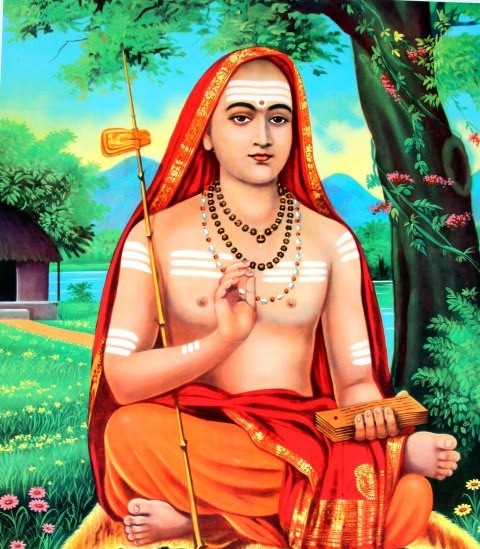
Adi Shankaracharya occupies a central position in the history of Indian philosophy, particularly in the development of Advaita Vedanta. He lived during a period in which Indian philosophers were developing sophisticated theories concerning reality, knowledge, consciousness, language, the self, causation, and liberation. Vedanta itself had a much longer history, developing through philosophical interpretations of the Upanishadic tradition before Shankara's time.
Shankara's philosophical environment included several competing traditions, including different schools of Buddhism, Nyaya, Mimamsa, and other Vedantic interpretations. These traditions did not agree about fundamental questions such as whether a permanent self exists, how reliable knowledge is obtained, what constitutes ultimate reality, or how liberation is possible. Shankara's surviving commentaries demonstrate his engagement with this wider intellectual environment and contain arguments directed toward rival philosophical positions.
It is therefore more accurate to describe Shankara as a major systematizer of Advaita Vedanta rather than simply calling him its founder. Important philosophical developments associated with non-dual Vedanta existed before him, and earlier thinkers such as Gaudapada played an important role in the intellectual tradition that preceded Shankara. Shankara's distinctive contribution was to provide a highly influential and systematic interpretation of major Vedantic sources.
Shankara's commentaries on the Upanishads, Bhagavad Gita, and Brahma Sutras became particularly important for the subsequent history of Vedanta. Through these works, he developed arguments concerning Brahman, Atman, ignorance, knowledge, and liberation while interpreting earlier scriptural teachings within a coherent Advaita framework. His commentarial method subsequently became a major model for later Vedantic philosophers.
The historical evidence concerning Shankara's personal life is considerably more limited than the evidence provided by his philosophical writings. Later biographical traditions describe extensive journeys across India, philosophical debates with prominent opponents, encounters with disciples, and associations with monastic institutions. These traditions are important for understanding the historical memory of Shankara, but their individual narratives cannot all be treated as independently verified historical facts.
The dating of Shankara's life is also subject to scholarly discussion. Traditional accounts have proposed different chronologies, while modern historical scholarship generally places him in the early medieval period. Because the surviving biographical evidence is limited and much of the detailed material comes from later sources, claims about particular events in his life should be presented with appropriate historical caution.
Despite these uncertainties, Shankara's philosophical importance is not dependent upon accepting every traditional story about his life. His commentarial works provide substantial evidence for reconstructing his interpretation of Advaita Vedanta and his understanding of Brahman, the self, knowledge, ignorance, and liberation. These ideas became enormously influential in later Indian philosophy and helped establish Shankara as one of the most important figures in the history of Vedanta.
Shankara should therefore be understood within the larger historical development of Indian philosophy rather than as an isolated thinker who created an entirely new tradition. His importance lies in the way he interpreted earlier Vedantic sources, engaged with competing philosophical arguments, and gave Advaita Vedanta a systematic form that profoundly influenced subsequent philosophical debate.
Who Was Adi Shankara in Indian Philosophy?
Adi Shankara, also known as Shankaracharya, was an Indian philosopher, commentator, and teacher whose work became central to the development of Advaita Vedanta. He is regarded as one of the most influential interpreters of the Upanishadic tradition and played a major role in shaping the philosophical language and arguments of classical Vedanta.
His philosophical project was concerned with explaining fundamental questions about Brahman, the nature of the self, consciousness, knowledge, ignorance, and liberation. Shankara sought to provide a systematic interpretation of the teachings found in important Vedantic texts while defending the view that ultimate reality is fundamentally non-dual.
A central feature of his philosophy is the distinction between ordinary experience and ultimate reality. Human beings ordinarily perceive a world composed of separate individuals, objects, and changing forms, and they generally identify themselves with the body, mind, and individual ego. Shankara argued that these distinctions do not reveal the deepest nature of reality as understood through Advaita Vedanta.
According to Shankara, ordinary experience is characterized by avidya, or ignorance, which produces mistaken identification and obscures the true nature of the self. Because of this ignorance, the individual experiences limitation and separation rather than recognizing the ultimate identity of Atman and Brahman. The removal of this fundamental misunderstanding is closely connected with the attainment of liberation, or moksha.
Shankara did not reject reasoning or philosophical argument altogether. His commentaries contain extensive logical analysis and engage critically with competing philosophical traditions and interpretations. Reasoning was important for clarifying concepts, resolving apparent contradictions, and removing intellectual doubts concerning the teachings of Advaita Vedanta.
However, Shankara maintained that independent reasoning alone cannot fully establish knowledge of Brahman, which transcends ordinary sense perception and conceptual categories. For knowledge concerning ultimate reality, he gave particular authority to the Upanishads and the broader tradition of Vedic revelation. Philosophical reasoning therefore supports and interprets these teachings rather than replacing them entirely.
Through his commentaries and philosophical writings, Adi Shankara helped establish Advaita Vedanta as one of the most influential traditions in the history of Indian philosophy. His ideas concerning non-duality, consciousness, knowledge, and liberation continued to shape later philosophical debates and remain central to the study of Vedanta today.
What Is Advaita Vedanta According to Shankaracharya?
Advaita Vedanta is one of the major schools of Indian philosophy and refers to a form of Vedanta centered on the principle of non-duality. The Sanskrit term advaita literally means "not two," expressing the idea that ultimate reality is not fundamentally divided into separate and independently existing realities.
Shankara's Advaita Vedanta teaches that ultimate reality is Brahman, which is non-dual, infinite, and not limited by the distinctions found in ordinary experience. The changing world appears to contain countless separate objects, persons, and forms, yet Advaita philosophy asks whether this apparent multiplicity represents the final nature of reality.
A central teaching of Advaita Vedanta concerns the relationship between Atman and Brahman. The deepest self is not ultimately separate from ultimate reality, even though individuals ordinarily experience themselves as distinct and independent beings. Shankara interprets the teachings of the Upanishads as pointing toward the ultimate identity of Atman and Brahman.
The apparent distinction between the individual self and ultimate reality results from avidya, or ignorance, and mistaken identification with the body, mind, emotions, and ego. Because these aspects of experience are constantly changing, Advaita Vedanta does not regard them as the deepest or ultimate nature of the self. Ignorance therefore produces the sense of limitation and separation experienced in ordinary life.
This understanding also explains why knowledge occupies such an important position in Shankara's philosophy. Liberation, or moksha, involves overcoming ignorance and recognizing the true nature of reality. The goal is not to create a new identity or acquire an entirely new self, but to remove the mistaken understanding that obscures the non-dual reality of Atman and Brahman.
Advaita Vedanta is therefore fundamentally different from philosophical systems that regard individual selves and ultimate reality as permanently separate. While Advaita recognizes the distinctions experienced within ordinary empirical life, Shankara maintains that these distinctions do not represent the highest level of truth. At the ultimate level, reality is understood as non-dual Brahman.
Through this philosophical framework, Shankara connects questions about metaphysics, consciousness, knowledge, and liberation into a single system. Understanding what is ultimately real is directly connected with understanding the true nature of the self and overcoming the ignorance that produces bondage. For this reason, Advaita Vedanta remains the central framework for understanding Shankaracharya's philosophical thought.
What Is Brahman in Shankaracharya's Philosophy?
In Shankaracharya's philosophy, Brahman is the ultimate reality and the foundational principle of all existence. Brahman is not merely one object among countless other objects in the universe, nor is it simply a powerful being existing somewhere within creation. Rather, it is the fundamental reality upon which the existence and intelligibility of the entire world ultimately depend.
According to Advaita Vedanta, everything encountered in ordinary experience appears within a world of change, difference, and multiplicity. Bodies are born and die, thoughts arise and disappear, and material things constantly undergo transformation. Brahman, however, represents that which is not limited by these changing conditions and is understood as the unchanging reality underlying all apparent forms of existence.
Brahman is often described through the expression Sat-Chit-Ananda, meaning existence, consciousness, and fullness or bliss. These terms should not be understood as separate qualities that are added to Brahman in the way that color or shape may be attributed to an ordinary object. Instead, they are used to indicate the nature of ultimate reality as understood within the Advaita tradition.
Shankaracharya's interpretation places particular emphasis on the non-dual nature of Brahman. Brahman is not one separate entity standing alongside other equally ultimate entities. At the highest level of philosophical truth, reality is ultimately one rather than divided into completely independent and self-existing substances. The apparent multiplicity of the world therefore requires a different level of explanation within Advaita Vedanta.
This understanding of Brahman is closely connected with Shankara's teaching concerning Atman, the deepest self. One of the central insights of Advaita Vedanta is that the ultimate reality known as Brahman is not fundamentally separate from the true nature of the self. The apparent distinction between the individual and ultimate reality is associated with ignorance and mistaken identification with the body, mind, and ego.
The realization of Brahman therefore has profound importance in the Advaita path toward moksha, or liberation. Liberation is not understood simply as travelling to another place or acquiring an entirely new reality. Instead, it involves overcoming ignorance and recognizing the truth that has been obscured by mistaken understanding. Through knowledge and philosophical inquiry, the individual comes to recognize the non-dual reality that Advaita Vedanta identifies as Brahman.
For this reason, Brahman occupies the central position in Shankaracharya's metaphysics. Questions concerning the nature of the self, the world, consciousness, ignorance, and liberation are all connected to the Advaita understanding of ultimate reality. To understand Brahman is therefore not merely to study one philosophical concept among many, but to approach the central principle around which Shankara's entire philosophical system is developed.
What Is Atman in Advaita Vedanta?
Atman refers to the deepest reality of the self in Indian philosophy. In Shankara's Advaita Vedanta, Atman is not understood as the ordinary individual personality that changes throughout life. The body ages, thoughts arise and disappear, emotions change, and personal identities develop over time, but none of these changing elements represents the ultimate nature of the self.
The true Atman is understood as pure consciousness—the fundamental awareness through which experiences are known. It is not an object that can be observed in the same way as the body or the external world, because it is the very principle of awareness that makes observation and experience possible. For Advaita Vedanta, the deepest self remains present through changing states of waking, dreaming, thought, memory, and perception.
One of the central teachings of Advaita Vedanta is the identity of Atman and Brahman. Brahman represents the ultimate and infinite reality underlying all existence, while Atman refers to the deepest reality of the self. Shankara argues that, at the highest level of truth, these are not two separate realities. The apparent separation between the individual self and ultimate reality arises through ignorance (avidya) and mistaken understanding.
This realization has profound importance for the Advaita understanding of liberation, or moksha. Human beings ordinarily identify themselves with the body, mind, social position, desires, memories, and personal history. Because these things are temporary and subject to change, attachment to them can produce fear, suffering, and a sense of limitation. Knowledge of one's true nature is therefore understood as a path toward freedom from mistaken self-identification.
Atman Is Not Simply the Ego
Shankara carefully distinguishes Atman from the ordinary sense of "I" that is associated with the ego. The ego belongs to empirical experience and is connected with individual thoughts, emotions, memories, preferences, and the feeling of being a separate person. These features are real within everyday experience, but Advaita Vedanta does not regard them as the final or ultimate reality of the self.
According to this perspective, the discovery of Atman does not mean creating a new identity or acquiring something that was previously absent. Rather, it involves recognizing the deeper reality that has always been present beneath changing experiences. Through philosophical inquiry, reflection, and spiritual knowledge, the individual gradually overcomes ignorance and recognizes that the deepest self is not fundamentally separate from Brahman.
What Is Maya in Shankaracharya's Philosophy?
Maya is one of the concepts most commonly associated with Advaita Vedanta. However, it is often oversimplified as meaning that "the world does not exist."
Shankara's philosophy is more subtle. Ordinary experience takes place at an empirical level in which people, objects, actions, causes, and effects are experienced as distinct. Advaita Vedanta nevertheless maintains that ultimate reality is non-dual Brahman.
Maya is therefore connected with the appearance of plurality and the conditions under which reality is experienced through distinctions. The relationship between Brahman, Maya, ignorance, and the empirical world became an important subject of interpretation in later Advaita philosophy.
It is therefore misleading to reduce Shankara's position to the simple statement that "everything is an illusion." His philosophy distinguishes different levels or senses of reality and experience.
What Does Ignorance Mean in Advaita Vedanta?
Ignorance, often discussed through the Sanskrit concept avidya, is central to Shankara's account of human bondage. According to Advaita Vedanta, ignorance prevents individuals from recognizing the true nature of the self and the ultimate non-dual nature of reality. It is therefore closely connected with the experience of limitation, separation, attachment, and suffering.
The fundamental problem is not simply a lack of information or education. A person may possess considerable intellectual knowledge while still misunderstanding the deepest nature of the self. Avidya refers more fundamentally to a mistaken way of understanding reality and identifying oneself with what is temporary, changing, and limited.
This mistaken identification occurs when the self is understood primarily in terms of the body, mind, emotions, memories, desires, and individual personality. These aspects belong to ordinary empirical experience and are constantly subject to change. Shankara argues that they cannot represent the ultimate and unchanging nature of the self, which Advaita identifies with Atman.
Shankara explains this problem through the concept of superimposition, often associated with the Sanskrit term adhyasa. Superimposition occurs when characteristics belonging to one thing are mistakenly attributed to another, producing a distorted understanding of what is actually present. This process plays a fundamental role in Advaita Vedanta's explanation of ordinary human experience.
Through this fundamental confusion, the individual experiences the self as a limited and separate being existing independently from ultimate reality. The changing conditions of the body and mind are taken to belong to the deepest self, while the true nature of Atman remains unrecognized. From this mistaken identification arise attachment, fear, desire, and the sense of being subject to limitation and bondage.
Ignorance is also closely connected with the apparent distinction between Atman and Brahman. According to Shankara, the deepest self is not ultimately separate from Brahman, but ignorance makes this non-duality difficult to recognize. The individual therefore perceives a reality structured by fundamental divisions that Advaita Vedanta does not regard as ultimate.
The removal of ignorance requires knowledge, which is why knowledge occupies such a central position in Shankara's philosophy. Through philosophical inquiry, reflection, and deep contemplation, the individual gradually overcomes mistaken self-identification and recognizes the true nature of reality. The destruction of ignorance is therefore directly connected with moksha, or liberation, in Advaita Vedanta.
What Did Shankaracharya Teach About Knowledge?

For Shankara, knowledge is central to liberation because the fundamental problem of human bondage arises from avidya, or ignorance. This ignorance causes individuals to mistake the changing body, mind, and ego for their deepest identity and to experience themselves as fundamentally separate from ultimate reality.
Liberation therefore requires the removal of this ignorance through genuine knowledge of reality. Shankara argues that ignorance cannot ultimately be removed merely by external action, ritual performance, or temporary experiences. Since bondage originates in mistaken understanding, the final solution involves correcting that misunderstanding through knowledge of the true nature of Atman and Brahman.
This knowledge is not merely intellectual information about Brahman that can be memorized or accepted as an abstract philosophical theory. It involves a transformative recognition of one's true nature and a direct understanding of the non-dual reality taught by Advaita Vedanta. Knowledge becomes liberating when ignorance and false self-identification are genuinely overcome.
Shankara emphasizes a traditional process involving listening, reflection, and deep contemplation. The student first listens to the teachings of the Upanishadic tradition (sravana), then carefully examines and reflects upon their meaning (manana), addressing doubts and philosophical difficulties through rational inquiry.
This process is followed by sustained contemplation or meditation on the truth that has been understood (nididhyasana). Such contemplation helps the student internalize the teaching and overcome deeply rooted habits of identifying with the body, mind, and individual ego. Knowledge is thus supported by disciplined reflection rather than being reduced to a single moment of intellectual understanding.
Shankara also emphasizes the importance of a prepared mind for serious philosophical and spiritual inquiry. Ethical discipline, detachment, concentration, and the ability to distinguish between the permanent and the changing help create the necessary conditions for deeper understanding. In Advaita Vedanta, knowledge therefore stands at the center of liberation while intellectual, ethical, and contemplative disciplines support the individual's path toward realization.
What Is Moksha in Shankaracharya's Philosophy?
Moksha, or liberation, is the ultimate goal of Advaita Vedanta and represents freedom from the cycle of ignorance, bondage, and mistaken self-identification. It is concerned with discovering the deepest truth about the self and its relationship to ultimate reality.
Shankara understands liberation primarily in terms of knowledge (jnana). The realization of the true self as Brahman removes the fundamental ignorance that produces mistaken identification with the body, mind, ego, and other changing aspects of individual experience.
Liberation is therefore not simply reaching a particular physical place or acquiring an extraordinary mystical experience. It involves the recognition of what the self fundamentally is and the overcoming of the false belief that the individual self is ultimately separate from Brahman.
According to Advaita Vedanta, bondage is primarily the result of avidya, or ignorance, rather than a permanent condition of the self. When ignorance causes a person to mistake the temporary and changing aspects of experience for their true identity, attachment, fear, desire, and suffering arise within ordinary empirical life.
The path toward moksha therefore involves philosophical inquiry, reflection, and the disciplined pursuit of self-knowledge. Shankara emphasizes the importance of understanding the teachings of the Upanishads and reflecting deeply upon the nature of Atman, Brahman, and the apparent world of multiplicity.
Shankaracharya on Consciousness and the Self
Consciousness occupies a central position in Shankara's philosophy. The deepest self is understood not as an object that consciousness observes but as the fundamental consciousness through which experience is possible.
Shankara argues that consciousness is not dependent upon particular objects in the way ordinary mental experiences are. The changing contents of experience come and go, while consciousness is understood as their underlying witness.
This account became particularly important in Advaita discussions of waking, dreaming, and deep sleep. Shankara uses these states to investigate the relationship between consciousness, the mind, and objects of experience.
Shankaracharya and the Upanishads
The Upanishads are fundamental sources for Shankara's philosophy and occupy a central position in his interpretation of Vedanta. These ancient philosophical texts explore questions concerning the self, consciousness, ultimate reality, knowledge, and liberation. Shankara interpreted their teachings as pointing toward the non-dual nature of Brahman and the deepest identity of the self.
Shankara did not treat the Upanishads as collections of isolated philosophical statements. Instead, he developed systematic interpretations intended to reconcile passages that may initially appear different or even contradictory. Through detailed commentary, he attempted to identify their underlying philosophical purpose and demonstrate how individual teachings contribute to a coherent understanding of ultimate reality.
A particularly important theme in Shankara's interpretation is the relationship between Atman and Brahman. Statements such as the famous Upanishadic teaching tat tvam asi, commonly translated as "That thou art," are interpreted within the Advaita framework as expressing the ultimate non-duality of the self and Brahman. This interpretation became one of the foundations of Shankara's philosophical understanding of liberation.
Shankara also used the Upanishads to distinguish ultimate knowledge from ordinary empirical understanding. The senses and ordinary reasoning can provide knowledge about objects within the experienced world, but they do not by themselves reveal Brahman as ultimate reality. For Shankara, the Upanishadic teachings provide authoritative knowledge concerning what lies beyond ordinary object-based experience.
His approach involved both scriptural interpretation and philosophical reasoning. Shankara carefully examined language, concepts, and arguments while responding to alternative interpretations of Vedantic teachings. Reasoning helped clarify the meaning of the texts and remove doubts, while the Upanishads remained the authoritative source for knowledge of Brahman that could not be established through perception or inference alone.
Shankara's commentaries on the major Upanishads became highly influential in the later development of Advaita Vedanta. By bringing together metaphysical claims about Brahman, philosophical analysis of the self, and teachings concerning knowledge and liberation, he helped establish a rigorous framework for interpreting the Upanishadic tradition. His approach consequently became one of the most important intellectual foundations of classical Vedanta.
Shankaracharya's Philosophy and the Bhagavad Gita
Shankara also wrote an influential commentary on the Bhagavad Gita, traditionally known as the Gita Bhashya. His interpretation places the Gita within the broader framework of Advaita Vedanta and connects its teachings on action, knowledge, the self, and liberation with the Upanishadic understanding of ultimate reality.
In Shankara's interpretation, knowledge of the self has a central role in the attainment of liberation. The individual must come to understand the distinction between the true self and the changing body, mind, and empirical personality. Ultimately, knowledge reveals the non-dual relationship between Atman and Brahman, removing the ignorance that produces mistaken identification and bondage.
Shankara nevertheless does not treat disciplined action as meaningless. The performance of appropriate action, particularly when carried out without attachment to its fruits, can contribute to the purification and preparation of the mind. Such preparation is important because a mind dominated by attachment and distraction is not well suited to sustained inquiry into the nature of the self and ultimate reality.
A significant feature of Shankara's interpretation is therefore the relationship between karma, or action, and jnana, or knowledge. Action operates within the sphere of ordinary human life and can help prepare the individual for higher understanding, but Shankara gives liberating knowledge the decisive role in overcoming ignorance. Liberation is ultimately associated with knowing reality rather than simply performing actions.
Shankara's commentary also interprets the Gita's teachings on spiritual discipline, detachment, and devotion within his Advaita framework. These practices can support the development of a disciplined and focused mind, helping the seeker become capable of sustained philosophical inquiry. However, they do not replace the knowledge through which ignorance of the true self is removed.
The Bhagavad Gita therefore became one of the major scriptural sources through which Shankara articulated his interpretation of Vedantic philosophy. Along with the Upanishads and the Brahma Sutras, it forms part of the traditional Prasthanatrayi, or "triple canon" of Vedanta. Shankara's commentaries on these texts were fundamental to the later development and systematic presentation of Advaita Vedanta.
Shankaracharya and the Brahma Sutras
Another major work associated with Shankara is his influential commentary on the Brahma Sutras, commonly known as the Brahma Sutra Bhashya. This work occupies a central position within the Advaita Vedanta tradition and presents Shankara's systematic interpretation of fundamental questions concerning Brahman, the self, the world, knowledge, and liberation.
The Brahma Sutras attempt to organize and interpret philosophical teachings associated primarily with the Upanishads. Written in a highly condensed aphoristic style, the text requires extensive interpretation and commentary. Shankara used his commentary to explain how apparently diverse Upanishadic teachings could be understood within a coherent philosophical framework centered on non-duality.
In his interpretation, Shankara argues that the ultimate teaching of the Vedantic scriptures concerns the nature of Brahman as the highest reality. His commentary addresses philosophical disagreements about the relationship between Brahman, the individual self, and the changing world, while defending the Advaita understanding of the ultimate identity of Atman and Brahman.
Shankara's Brahma Sutra Bhashya also became important because it engaged with competing philosophical traditions and interpretations of the Vedic scriptures. Through argument and commentary, Shankara developed a systematic defense of his philosophical position and helped establish Advaita Vedanta as one of the most influential schools within the broader Vedantic tradition.
Together with the Upanishads and the Bhagavad Gita, the Brahma Sutras form the traditional Prasthanatrayi, often described as the "triple canon" of Vedanta. These three sources became foundational texts for different Vedanta traditions, each of which developed distinctive interpretations of their philosophical teachings.
What Did Adi Shankaracharya Write?
Adi Shankaracharya is traditionally credited with a substantial body of philosophical, exegetical, and devotional literature. However, the question of authorship is complex because many works came to be attributed to Shankara in later Advaita traditions. Modern scholarship therefore distinguishes between texts that have strong claims to Shankara's authorship and works whose attribution remains uncertain or disputed.
Major Philosophical Commentaries
- Commentary on the Brahma Sutras (Brahma Sutra Bhashya)
- Commentary on the Bhagavad Gita (Gita Bhashya)
- Commentaries on major Upanishads
These commentaries are particularly important for understanding Shankara's philosophical thought because they present his interpretations of major Vedantic sources in a systematic argumentative form. His commentaries examine questions concerning Brahman, the self, knowledge, ignorance, the status of the experienced world, and the possibility of liberation.
Shankara's commentary on the Brahma Sutras is especially significant because it provides an extended defense of his interpretation of Vedanta against competing philosophical positions. His commentary on the Bhagavad Gita similarly connects teachings concerning action, knowledge, discipline, and liberation with his Advaita interpretation of the Upanishadic tradition.
His commentaries on the Upanishads are equally important because the Upanishadic texts provide the scriptural foundation for his understanding of ultimate reality. Shankara interprets their teachings as establishing the non-dual nature of Brahman and the ultimate identity of Atman and Brahman. Together, these major commentaries became foundational texts for the classical Advaita Vedanta tradition.
Other Works Attributed to Shankara
Numerous independent philosophical and devotional works have traditionally been attributed to Shankara. These include texts dealing with self-knowledge, spiritual practice, devotion, and Advaita philosophy. Some are widely associated with the Shankara tradition, while the authorship of others remains a matter of scholarly debate.
This distinction is important because traditional attribution does not always provide sufficient evidence for modern historical authorship. Scholars examine factors such as language, philosophical terminology, manuscript history, and consistency with works considered more securely attributable to Shankara. Consequently, it is safer to describe disputed texts as "traditionally attributed to Shankara" rather than presenting every traditionally associated work as unquestionably his.
The securely or strongly attributed commentarial works remain the most important sources for reconstructing Shankara's philosophy. They show how he interpreted the Upanishads, Bhagavad Gita, and Brahma Sutras and how he developed arguments concerning non-duality, knowledge, ignorance, the self, Brahman, and liberation. For this reason, Shankara's commentaries occupy a central place in the study of classical Indian philosophy and Advaita Vedanta.
Shankaracharya's Method of Philosophical Inquiry
Shankara's philosophical method combines close interpretation of authoritative Vedantic texts with rigorous philosophical reasoning. His commentaries do not merely repeat scriptural statements; they examine their meaning, address apparent contradictions, and develop systematic arguments concerning Brahman, the self, knowledge, ignorance, and liberation.
A major feature of his method is his engagement with rival philosophical schools. In his commentaries, Shankara considers alternative interpretations and arguments before presenting his own position. He uses distinctions, inference, textual analysis, and philosophical debate to identify weaknesses in competing views and to defend his interpretation of the Vedantic teachings.
However, Shankara does not regard independent logical reasoning as sufficient to establish the ultimate nature of Brahman. Brahman is not an ordinary object available to the senses or something that can be fully established through inference in the same manner as objects within the empirical world. For knowledge of Brahman, Shankara gives a distinctive epistemic authority to the Upanishads and their revelation concerning ultimate reality.
This does not mean that Shankara rejects reason or treats philosophical thinking as unnecessary. Rather, reasoning has an important supporting role: it can remove doubts, clarify the meaning of scriptural statements, expose contradictions in alternative interpretations, and help the student develop a coherent understanding of the teaching. Reason therefore operates within the broader framework of Vedantic inquiry rather than functioning as the sole source of knowledge about Brahman.
Shankara's method is also closely connected with his understanding of ignorance (avidya). Since ignorance involves a mistaken understanding of the self and reality, philosophical inquiry can help expose the errors involved in identifying Atman with the body, mind, ego, and other changing phenomena. The purpose of inquiry is consequently not merely theoretical debate but the removal of misunderstanding concerning the true nature of the self.
The combination of scriptural interpretation, philosophical reasoning, and disciplined inquiry became a defining feature of classical Advaita Vedanta. Shankara's approach allowed him to interpret the Upanishadic teachings systematically while responding to major philosophical disagreements of his time. His method therefore connects epistemology and textual interpretation with the larger Advaita goal of knowledge and liberation.
What Are the Qualifications for Knowledge in Advaita Vedanta?
Shankara emphasizes that the pursuit of liberating knowledge requires a suitably prepared mind. Intellectual ability alone is not considered sufficient for understanding the teachings of Advaita Vedanta. The student must cultivate a degree of mental clarity, self-control, detachment, and genuine commitment to discovering the nature of the self and ultimate reality.
These qualifications are traditionally discussed through the sadhana chatushtaya, or "fourfold discipline." They describe the qualities that prepare a seeker for serious inquiry into the teachings of Vedanta. The four qualifications are not simply theoretical concepts; they concern the individual's capacity to distinguish what is ultimately significant from what is temporary and to maintain a disciplined approach to philosophical and spiritual investigation.
- Discrimination (viveka) — the ability to distinguish between the enduring and the transient, particularly between ultimate reality and the changing phenomena of ordinary experience. This discrimination helps the student recognize that the body, senses, mind, and other changing conditions cannot be regarded as the ultimate self.
- Dispassion (vairagya) — freedom from excessive attachment to temporary objects and experiences of enjoyment. This does not simply mean rejecting the world, but developing an understanding that worldly pleasures and possessions are limited and impermanent. Such detachment allows attention to be directed toward the pursuit of lasting knowledge and liberation.
- Discipline (shamadi shatka sampatti) — a group of mental and ethical qualities involving control of the mind and senses, endurance, withdrawal from unnecessary distractions, faith or trust in the teaching, and concentration. These disciplines help develop the steadiness and clarity required for sustained philosophical inquiry.
- Desire for liberation (mumukshutva) — a genuine and sustained aspiration for moksha, or liberation from ignorance and bondage. The seeker must have a serious motivation to understand the true nature of the self rather than approaching Vedantic study merely as an intellectual exercise or accumulation of information.
Together, these four qualifications describe the kind of mental preparation Shankara considers important for the pursuit of self-knowledge. They help the student develop the discrimination, concentration, and detachment necessary to engage deeply with the Upanishadic teachings. In this sense, ethical and contemplative discipline supports the pursuit of knowledge without being treated as a substitute for the liberating knowledge itself.
The qualifications are therefore closely connected with Shankara's broader account of the path to moksha. A prepared mind is better able to listen to the teachings, reflect upon their meaning, examine philosophical doubts, and contemplate the truth of Atman and Brahman. Through this process, the seeker moves from preparation and inquiry toward the removal of ignorance that Advaita identifies as the fundamental cause of bondage.
Did Shankaracharya Reject Meditation and Religious Practice?
It would be inaccurate to describe Shankara as simply rejecting meditation, devotion, ethics, or disciplined action. Although Advaita Vedanta places great emphasis on knowledge, Shankara recognized that the mind must be sufficiently prepared before an individual can properly understand and realize the teachings concerning Atman and Brahman.
In his philosophical system, practices such as meditation, ethical discipline, devotion, and appropriate action can help prepare and purify the mind. These practices can reduce distraction, attachment, and excessive identification with worldly desires, allowing the individual to develop the concentration and clarity required for serious philosophical and spiritual inquiry.
However, Shankara gives liberating knowledge (jnana) a uniquely important role. According to Advaita Vedanta, bondage is fundamentally caused by avidya, or ignorance concerning the true nature of the self. Since ignorance is a form of mistaken understanding, its ultimate removal requires genuine knowledge of the self as Brahman.
Meditation and other spiritual disciplines may therefore support the path toward liberation, but they are not simply identical with liberating knowledge itself. Meditation can help cultivate concentration and steady reflection, while devotional and ethical practices can transform the individual's attitudes and conduct. Their importance lies partly in creating the intellectual and spiritual conditions necessary for deeper realization.
This distinction between preparatory practices and liberating knowledge is an important feature of Shankara's Advaita Vedanta. Religious and philosophical disciplines have an important place within the path, yet the final realization involves overcoming the fundamental ignorance that makes the individual appear separate from ultimate reality.
What Does Non-Dualism Mean in Shankaracharya's Philosophy?
Non-dualism, expressed by the Sanskrit term Advaita, means that ultimate reality is not fundamentally composed of two or more independent and equally ultimate realities. In Shankara's philosophy, this does not simply mean that there is only one physical object in existence. Rather, it is a metaphysical claim about the deepest nature of reality and the absence of an ultimate division within it.
Shankara's Advaita Vedanta maintains that Brahman is ultimately non-dual and represents the highest reality. Ordinary experience appears to contain countless separate persons, objects, events, and forms, all of which seem to possess distinct identities. Advaita does not deny that such distinctions are experienced in everyday life, but it argues that they should not automatically be regarded as divisions within ultimate reality.
This teaching is closely connected with the relationship between Atman and Brahman. The individual ordinarily experiences the self as a separate person defined by the body, mind, memories, desires, and personal history. Shankara argues that this identification is rooted in avidya, or ignorance, because these changing features do not constitute the deepest nature of the self.
From the Advaita perspective, the apparent separation between individual selves and Brahman belongs to the level of ordinary empirical experience rather than representing the highest truth. Shankara uses the concept of superimposition (adhyasa) to explain how mistaken identification causes characteristics of the body and mind to be attributed to the self. This confusion makes the self appear limited, individual, and fundamentally separate from ultimate reality.
Non-duality therefore does not mean that Shankara simply ignores the diversity encountered in everyday experience. Advaita distinguishes between conventional or empirical experience and the highest level of philosophical truth. Within ordinary life, distinctions between persons and objects have practical significance; however, from the standpoint of ultimate reality, Brahman is not divided into independently existing realities.
The realization of non-duality is consequently connected with moksha, or liberation. When ignorance is removed through liberating knowledge, the seeker recognizes the true nature of the self and understands that Atman is not ultimately separate from Brahman. Liberation therefore involves overcoming the mistaken perception of fundamental separation rather than merely acquiring another piece of intellectual information.
This philosophical position is why Advaita Vedanta is regarded as one of the most influential traditions of philosophical non-dualism in Indian thought. Shankara's interpretation brings together questions about reality, consciousness, knowledge, ignorance, and liberation into a unified philosophical framework centered on the claim that ultimate reality is non-dual Brahman.
Shankaracharya and Other Indian Philosophical Schools
Shankara's philosophy developed within a highly active and competitive intellectual environment in classical India. Philosophers from different traditions debated fundamental questions concerning reality, knowledge, perception, language, consciousness, the self, God, and liberation. Shankara's commentaries frequently engage with these disagreements, making his philosophy part of a much broader tradition of philosophical debate rather than an isolated system.
Advaita Vedanta encountered significant disagreement from several philosophical traditions, including Buddhist schools, Nyaya, Mimamsa, and other Vedantic interpretations. These traditions differed over important questions such as the nature of the self, the status of the external world, the sources of valid knowledge, the authority of scripture, and the possibility and means of liberation. Shankara developed arguments against positions that he considered incompatible with the non-dual interpretation of Vedanta.
Shankara's debates with Buddhist philosophers are particularly significant in the history of Indian philosophy. Buddhist traditions developed influential arguments concerning the self, consciousness, causation, and the nature of reality, while Advaita Vedanta defended the existence of an underlying non-dual reality and the true self as Atman. The relationship between Advaita and Buddhist thought is complex, and scholars continue to examine both the differences and intellectual interactions between these traditions.
Shankara also engaged with the Nyaya and Mimamsa traditions, which had developed sophisticated theories of knowledge, reasoning, language, and scriptural interpretation. Nyaya philosophers emphasized logical analysis and reliable means of knowledge, while Mimamsa developed extensive theories concerning the authority and interpretation of Vedic texts. Shankara adopted philosophical reasoning in his own arguments while placing the Upanishadic teaching at the center of knowledge concerning Brahman.
Disagreement also developed within the broader Vedantic tradition over the relationship between Brahman, individual selves, and the world. Later Vedanta philosophers did not simply repeat Shankara's interpretation; they developed alternative readings of the same major scriptural sources. These differences produced several influential Vedanta traditions with distinct understandings of non-duality, individuality, and the nature of ultimate reality.
Ramanuja, for example, developed Vishishtadvaita Vedanta, or "qualified non-dualism." While accepting Brahman as ultimate reality, Ramanuja maintained a different account of the relationship between Brahman, individual souls, and the material world. Individuality and difference therefore receive a more substantial place in his philosophical system than they do in Shankara's Advaita interpretation.
Madhva later developed Dvaita Vedanta, or dualist Vedanta, which presents a substantially different account of the relationship between God, individual souls, and the world. In contrast with Shankara's Advaita, Madhva emphasizes genuine and enduring distinctions between these realities. The disagreements among Shankara, Ramanuja, Madhva, and other Vedantic thinkers became an important part of the subsequent intellectual history of Indian philosophy.
These debates demonstrate that Shankaracharya's philosophy should be understood within a long history of Indian philosophical argumentation. Advaita Vedanta developed through engagement with competing theories of reality and knowledge, and later philosophers continued to challenge and refine its conclusions. The resulting debates helped make Vedanta one of the most philosophically diverse and influential traditions in the history of Indian thought.
Shankaracharya and Ramanuja: Advaita vs Vishishtadvaita
The philosophical relationship between Shankaracharya and Ramanuja is important for understanding the development and diversity of Vedanta philosophy. Although both thinkers regarded the Upanishads, Bhagavad Gita, and Brahma Sutras as authoritative Vedantic sources, they developed significantly different interpretations of the relationship between ultimate reality, individual selves, and the world.
Shankara's Advaita Vedanta emphasizes the ultimate non-duality of Brahman. The deepest self, or Atman, is not ultimately separate from Brahman, and the perception of fundamental separation is explained through ignorance (avidya). Liberation therefore involves knowledge that removes this ignorance and reveals the true nature of the self and its relationship to ultimate reality.
Ramanuja, by contrast, developed Vishishtadvaita Vedanta, commonly translated as "qualified non-dualism." He also affirms Brahman as the ultimate reality, but his interpretation gives a more substantial and enduring place to individual selves and the material world. Rather than treating their distinction as ultimately dissolving into an undifferentiated non-duality, Ramanuja understands individual selves and the world as real modes or aspects of Brahman.
The two philosophers also differ in their understanding of the nature of Brahman. For Ramanuja, ultimate reality is identified with a personal and qualified Brahman, understood as Narayana, possessing auspicious qualities. The individual self remains distinct from God while existing in an inseparable relationship with the divine. This gives devotion (bhakti) a particularly prominent role in Ramanuja's account of spiritual life and liberation.
Their approaches to liberation consequently differ as well. In Shankara's Advaita, liberating knowledge involves realizing the non-dual truth of Atman and Brahman and overcoming ignorance. In Ramanuja's Vishishtadvaita, liberation does not consist in the loss of individual identity but in attaining a state of freedom and intimate relationship with the supreme Brahman. Devotion, knowledge, and surrender to God therefore receive a different philosophical emphasis.
The contrast between Advaita and Vishishtadvaita should not be understood as a simple disagreement over whether Brahman exists. Both traditions accept Brahman as ultimate and draw upon the same broad Vedantic scriptural foundation. Their fundamental disagreement concerns what the unity of reality means and how Brahman, individual selves, and the world are related.
The philosophical differences between Shankara and Ramanuja illustrate the diversity and intellectual depth of the Vedanta tradition. Later Vedantic thinkers developed competing interpretations of the same foundational texts, producing different theories of reality, selfhood, knowledge, devotion, and liberation. Their debates demonstrate that Indian philosophy developed through sustained interpretation, criticism, and philosophical argument rather than through a single universally accepted doctrine.
Shankaracharya and the Advaita Monastic Tradition
Shankara is traditionally associated with the development and organization of monastic and renunciant traditions connected with Advaita Vedanta. Renunciation (sannyasa) already had a long history within Indian religious traditions before Shankara, but later Advaita traditions came to regard him as an important figure in the organization and preservation of a disciplined lineage devoted to Vedantic study, teaching, and spiritual practice.
Later traditions connect Shankara with major monasteries, or mathas, established at important locations across India. These institutions became associated with the transmission of Advaita teachings, the training of renunciants, the study of Sanskrit philosophical texts, and the preservation of particular teaching lineages. The traditional accounts commonly associate Shankara with four principal monastic centers located at Sringeri, Dvaraka, Puri, and Jyotirmatha.
Shankara is also traditionally connected with the Dashanami, or "ten names," tradition of Hindu renunciants. This monastic framework is associated with ten renunciant names or designations and became closely connected with the broader Advaita institutional tradition. Members of these lineages historically played important roles in the transmission of Vedantic learning, although the precise historical development of these institutions and their relationship to Shankara remains a subject of scholarly discussion.
The relationship between Shankara himself and the later monastic institutions should therefore be described with some historical caution. Traditional biographies and institutional histories attribute the establishment or organization of important mathas and renunciant lineages to Shankara, but the surviving historical evidence does not allow every detail of these traditional accounts to be verified with certainty. Some institutional histories developed and expanded considerably after Shankara's lifetime.
Despite these historical uncertainties, Shankara's name became deeply connected with the Advaita monastic tradition. The institutions associated with his lineage helped preserve and transmit philosophical texts, commentarial traditions, methods of Vedantic inquiry, and practices of renunciation across generations. They consequently became important centers for the continuing interpretation of Advaita Vedanta.
The monastic tradition also reflects the connection between Shankara's philosophical teachings and the disciplined pursuit of self-knowledge. Advaita places liberating knowledge at the center of moksha, while preparation of the mind, ethical discipline, renunciation, contemplation, and sustained study can support the pursuit of that knowledge. The continuing Advaita monastic tradition therefore represents not only an institutional legacy but also a living framework for preserving and practicing Shankara's philosophical teachings.
What Do We Actually Know About Adi Shankaracharya?
The historical study of Adi Shankaracharya requires separating evidence about his philosophical writings from the later biographical traditions that developed around his life. Shankara is one of the most important figures in the history of Indian philosophy, but the surviving evidence about his biography is considerably less certain than the philosophical tradition associated with his works.
Much of the detailed information about Shankara's life comes from later hagiographical biographies, traditionally known as Shankara-vijayas. These accounts contain stories about his childhood, travels, encounters with other philosophers, miracles, disciples, and establishment of monastic institutions. They are important sources for understanding how later Advaita traditions remembered Shankara, but they should not automatically be treated as contemporary historical records.
Relatively Well-Attested
- Shankara was a major philosopher associated with Advaita Vedanta. His philosophical writings and later influence establish his central importance in the development and systematization of classical Advaita thought.
- He produced important Vedantic commentaries. His commentaries on the Brahma Sutras, the Bhagavad Gita, and several major Upanishads are among the most important sources for understanding his philosophical interpretation.
- His philosophy emphasizes the non-duality of Brahman. Shankara's interpretation of Vedanta identifies the deepest self, Atman, with Brahman at the ultimate level and explains ordinary mistaken identification through ignorance (avidya).
- His writings had a major influence on later Advaita Vedanta. Subsequent Advaita philosophers repeatedly studied, interpreted, defended, and developed the philosophical positions expressed in Shankara's commentarial works.
Traditionally Attributed
- Extensive journeys throughout India. Traditional biographies portray Shankara as travelling widely to teach Vedanta and engage with other philosophical and religious traditions. The broad tradition of his travels is influential, although the details and extent of particular journeys are difficult to establish historically.
- Debates with numerous philosophical opponents. Later accounts describe Shankara engaging in extensive philosophical debates with representatives of Buddhist, Mimamsa, Nyaya, and other traditions. His surviving commentaries certainly demonstrate engagement with rival philosophical positions, but the detailed narratives of particular debates often belong to later biographical traditions.
- Establishment or organization of particular monasteries. Later Advaita traditions strongly associate Shankara with major mathas, or monasteries, across India. Traditional accounts connect him particularly with monastic centers at Sringeri, Dvaraka, Puri, and Jyotirmatha, although the precise historical circumstances of their foundation and development are more difficult to verify.
- Many devotional and philosophical works. A large number of texts have traditionally been attributed to Shankara, including philosophical treatises, devotional hymns, and instructional works. However, modern scholarship does not accept the authorship of every traditionally attributed text as equally certain.
Historically Uncertain
- The exact dates of Shankara's birth and death. Different traditional sources provide substantially different chronological accounts, and there is no universally accepted historical dating for every detail of his life.
- Many details found in later hagiographical biographies. Stories involving miraculous events, extraordinary encounters, and specific episodes from Shankara's childhood and travels belong primarily to later traditional literature and cannot all be independently verified.
- The precise historical circumstances surrounding every monastery traditionally attributed to him. The association between Shankara and major Advaita monastic institutions is deeply established within tradition, but the dates, stages of development, and institutional histories of particular mathas require careful historical treatment.
- The authorship of every work later attributed to Shankara. While his major commentaries are central to the reconstruction of his philosophy, numerous other texts have uncertain or disputed authorship. It is therefore more accurate to describe such works as traditionally attributed to Shankara unless their authorship is supported by stronger evidence.
The distinction between historical evidence and traditional memory does not diminish Shankara's philosophical importance. Even when particular biographical stories cannot be independently confirmed, his surviving philosophical corpus provides substantial evidence for reconstructing his interpretation of Advaita Vedanta. His discussions of Brahman, Atman, knowledge, ignorance, and liberation remain the principal basis for understanding his contribution to Indian philosophy.
A historically responsible account of Shankara should therefore distinguish between what can be established from his philosophical works, what is supported by later Advaita tradition, and what remains uncertain. This approach allows readers to appreciate both the historical Shankara and the powerful intellectual tradition that developed around his name without presenting later legendary material as established historical fact.
Why Is Adi Shankaracharya Important?
Adi Shankaracharya is important because he provided one of the most influential and systematic philosophical interpretations of the Upanishadic tradition. Through his commentaries on major Vedantic texts, he developed a coherent account of the relationship between ultimate reality, the self, ordinary experience, knowledge, and liberation. His interpretation became foundational to the classical Advaita Vedanta tradition.
His Advaita Vedanta developed a sophisticated philosophical account of reality, consciousness, selfhood, knowledge, ignorance, and liberation. At its center is the claim that Brahman is ultimately non-dual and that the deepest self, Atman, is not fundamentally separate from Brahman. Shankara's philosophy also examines why human beings ordinarily experience themselves as limited and separate and how ignorance contributes to this mistaken understanding.
Shankara is also important for the way he practiced philosophical interpretation and argumentation. His commentaries engage with competing interpretations of scripture and with rival philosophical traditions, including Buddhist, Nyaya, and Mimamsa thinkers. He did not merely present conclusions but developed arguments concerning language, knowledge, reasoning, and the interpretation of authoritative Vedantic texts.
His arguments influenced centuries of Indian philosophical debate and became foundational for later Advaita thinkers. Later philosophers both defended and criticized Shankara's interpretation, contributing to continuing debates about the nature of Brahman, the reality of the world, individual identity, consciousness, and the means to liberation. The development of other Vedanta traditions, including Vishishtadvaita and Dvaita, also took place partly through engagement with interpretations associated with Advaita.
Shankara's importance extends beyond metaphysics because his philosophy connects theoretical knowledge with a broader account of human liberation. In Advaita Vedanta, understanding the nature of reality is inseparable from overcoming ignorance and mistaken identification with the body and mind. Knowledge of the true self therefore has not only philosophical significance but also soteriological importance, since it is connected with the attainment of moksha.
His thought also continues to attract scholarly and philosophical interest in the modern study of consciousness, selfhood, and non-duality. Contemporary discussions may interpret Advaita through modern philosophical frameworks, although such comparisons should be made carefully rather than assuming that Shankara's concepts are identical to contemporary theories of consciousness. His enduring importance ultimately lies in the depth and influence of his philosophical analysis and in the continuing debate over the questions his work raises.
For the history of Indian philosophy, Shankara therefore represents much more than a single advocate of non-dualism. His writings helped establish a powerful method of interpreting Vedantic scripture, developed rigorous arguments about the nature of reality and knowledge, and provided a philosophical framework that continued to shape Indian intellectual history for centuries. His legacy remains central to understanding Advaita Vedanta and the wider philosophical tradition of India.
Adi Shankaracharya's Main Philosophical Ideas
Shankara's philosophy can be understood through several interconnected ideas concerning ultimate reality, the self, consciousness, ignorance, knowledge, and liberation. These concepts are not isolated doctrines; they form a unified philosophical framework in which the nature of reality explains the nature of the self, while ignorance and knowledge explain the human condition and the possibility of liberation.
Brahman as Ultimate Reality
Brahman is the ultimate reality in Shankara's Advaita Vedanta and is understood as non-dual and not limited by the distinctions that characterize ordinary experience. Brahman is not simply one object within the universe but the fundamental reality upon which the experienced world depends. Understanding Brahman is therefore central to Shankara's account of metaphysics and the nature of existence.
Atman and Brahman
The deepest self, Atman, is ultimately identical with Brahman. Shankara distinguishes this true self from the body, mind, ego, emotions, memories, and other changing features of individual experience. The apparent separation between the individual self and Brahman arises from ignorance rather than representing the ultimate nature of reality.
Advaita or Non-Duality
Advaita literally means "not two" and expresses Shankara's central claim that ultimate reality is not divided into independent, equally fundamental realities. Although ordinary experience presents a world of plurality and distinction, Advaita argues that such distinctions do not constitute the final nature of reality. At the highest level, reality is understood as non-dual Brahman.
Ignorance and Superimposition
Human bondage is explained through avidya, or ignorance, which produces a mistaken understanding of the self and reality. Shankara describes this confusion through the concept of superimposition (adhyasa), in which characteristics belonging to one thing are mistakenly attributed to another. As a result, people identify the true self with the body, mind, ego, and other changing aspects of empirical experience.
Knowledge and Liberation
Knowledge (jnana) occupies a central position in Shankara's understanding of liberation because ignorance is the fundamental cause of bondage. Liberating knowledge is not simply the acquisition of information about Brahman; it involves recognizing the true nature of the self and overcoming mistaken identification. Through Vedantic inquiry, reflection, and contemplation, the seeker can remove the ignorance that conceals the non-dual nature of reality.
Moksha
Moksha, or liberation, is the culmination of this process of knowledge. It involves freedom from the ignorance and mistaken identification that produce the experience of limitation and bondage. In Shankara's Advaita Vedanta, liberation is connected with recognizing that the deepest self is not ultimately separate from Brahman. Moksha is therefore understood primarily as the realization of one's true nature rather than the attainment of a new physical location or temporary extraordinary experience.
Adi Shankaracharya Explained Simply
Shankara's central philosophical question can be stated simply: What is ultimately real, and what is the true nature of the self? His Advaita Vedanta answers these questions by distinguishing between our ordinary experience of a changing world and the deeper reality that philosophical and spiritual inquiry seeks to understand.
His central answer is that ultimate reality is Brahman, while the deepest nature of the self is Atman. At the highest level of truth, Atman is not ultimately separate from Brahman. The sense that we are completely independent and limited individuals arises because we identify ourselves with the body, mind, ego, and other changing aspects of experience.
- Ultimate reality — Brahman: Brahman is the ultimate and non-dual reality in Shankara's Advaita Vedanta. It is not simply another object within the universe but the fundamental reality underlying existence and experience.
- True self — Atman: Atman refers to the deepest self rather than the ordinary ego or personality. The body, thoughts, emotions, memories, and desires change over time, whereas the true self is understood in relation to consciousness and ultimate reality.
- Relationship — Atman and Brahman: At the ultimate level, Atman is not separate from Brahman. This non-duality is one of the central teachings of Advaita Vedanta and is expressed through Shankara's interpretation of important Upanishadic teachings.
- Problem — Ignorance and mistaken identification: Human beings ordinarily misunderstand their true nature because of avidya, or ignorance. We identify the self with the body, mind, ego, and temporary experiences, creating the sense of limitation and separation from ultimate reality.
- Path to liberation — Knowledge: Shankara gives knowledge (jnana) a central role in overcoming ignorance. Through listening to Vedantic teachings, reflection, philosophical inquiry, and sustained contemplation, the seeker develops an understanding of the true nature of Atman and Brahman.
- Goal — Moksha: Moksha, or liberation, is freedom from the ignorance and mistaken identification that produce bondage. In Advaita Vedanta, liberation is connected with realizing that the deepest self is not ultimately separate from Brahman.
Put very simply, Shankara's philosophy can be understood as a movement from ignorance to knowledge. We ordinarily mistake the changing body, mind, and ego for our deepest identity, but Advaita Vedanta teaches that the true self is Atman and that Atman is ultimately non-different from Brahman. Recognizing this truth is central to Shankara's understanding of liberation.
This is why Shankara's philosophy connects several major areas of Indian philosophical thought. His ideas about reality explain Brahman, his account of selfhood explains Atman, his analysis of ignorance explains human bondage, and his emphasis on knowledge explains the possibility of moksha. Together, these ideas form the basic structure of Advaita Vedanta.
A Famous Saying Associated with Shankaracharya
“Brahman is real, the world is mithya, the individual self is not different from Brahman.”
Frequently Asked Questions About Adi Shankaracharya
Who was Adi Shankaracharya?
Adi Shankaracharya, also known as Adi Shankara, was a major Indian philosopher associated with Advaita Vedanta, a philosophical tradition centered on non-duality and the ultimate reality of Brahman.
What is Adi Shankaracharya famous for?
Shankara is famous for systematizing Advaita Vedanta and for his influential commentaries on the Upanishads, Bhagavad Gita, and Brahma Sutras.
What is Advaita Vedanta?
Advaita Vedanta is a non-dual philosophical tradition of Vedanta that teaches that ultimate reality is Brahman and that the deepest self, Atman, is ultimately identical with Brahman.
What did Shankaracharya believe about Brahman?
Shankara regarded Brahman as ultimate reality and interpreted the Upanishads as teaching the fundamental non-duality of Brahman.
What did Shankaracharya say about Atman?
In Advaita Vedanta, Shankara identifies the deepest self, Atman, with Brahman rather than treating the true self as an independently existing individual substance.
What is Maya according to Shankaracharya?
Maya is associated with the appearance of plurality and the conditions through which the empirical world is experienced. Shankara's philosophy should not be reduced to the simple claim that the world does not exist.
What is Moksha in Advaita Vedanta?
Moksha is liberation. In Shankara's philosophy, liberation is closely connected with knowledge that removes ignorance and reveals the true nature of the self as Brahman.
Did Shankaracharya write the Bhagavad Gita?
No. The Bhagavad Gita predates Shankara. Shankara wrote an influential commentary on the Bhagavad Gita.
Did Shankaracharya found Advaita Vedanta?
Shankara is more accurately described as a major systematizer of Advaita Vedanta rather than its absolute founder. Earlier thinkers, particularly Gaudapada, contributed to the development of the philosophical tradition.
When did Adi Shankaracharya live?
Shankara is generally placed around the early medieval period, often in the eighth century CE. However, his exact dates are disputed among scholars.
Why is Shankaracharya important in Indian philosophy?
Shankara is important because his systematic interpretation of Vedanta became one of the most influential philosophical traditions in Indian intellectual history.
What is the difference between Shankaracharya and Ramanuja?
Shankara's Advaita Vedanta teaches ultimate non-duality and identifies Atman with Brahman, while Ramanuja's Vishishtadvaita Vedanta gives a different account of the relationship between Brahman, individual selves, and the world.
Related Indian Philosophers and Thinkers
Shankaracharya belongs to a long and diverse tradition of Indian philosophy. Explore thinkers who developed different approaches to consciousness, reality, religion, ethics, and liberation.
Philosophy Branches Connected to Shankaracharya
Shankaracharya's philosophy is especially connected with metaphysics, epistemology, philosophy of mind, and the philosophical study of consciousness. His investigation of reality and knowledge also raises questions about the relationship between appearance and ultimate reality.
Why Adi Shankaracharya Still Matters
Adi Shankaracharya remains one of the most important figures in the history of Indian philosophy because of the depth and influence of his interpretation of Advaita Vedanta.
His philosophical investigation of Brahman, Atman, consciousness, ignorance, knowledge, and liberation created a powerful framework for thinking about the relationship between the self and ultimate reality.
Whether studied as a philosopher of metaphysics, consciousness, epistemology, or liberation, Shankara's work continues to occupy a central position in discussions of classical Indian philosophy and non-dualism.
Explore Great Philosophers