From sweeping historical systems to individual freedom to the precise
analysis of language itself — the fracturing of philosophy into the
many distinct traditions still active today.
Introduction
Modern philosophy, in the sense used on this page, spans broadly from
the early 19th century into the 20th century and begins in the
intellectual world transformed by
Immanuel Kant. Kant had attempted to
explain how human knowledge depends both on experience and on the active
structures of the mind, but his critical philosophy opened as many
questions as it answered. What is the relationship between consciousness
and reality? Can reason comprehend history as a whole? Is the individual
primarily a rational subject, a social being, or an embodied creature
thrown into a world whose meaning is uncertain? Modern philosophers
pursued these questions in increasingly different directions.
Unlike earlier periods that can sometimes be organized around a
relatively unified intellectual framework, the history of modern
philosophy became increasingly plural. German Idealists attempted to
develop comprehensive accounts of consciousness, nature, society, and
history. Critics of such systems turned toward the concrete individual,
emphasizing freedom, anxiety, choice, suffering, and the problem of
creating meaning. At the same time, new developments in logic and
mathematics encouraged another group of philosophers to make conceptual
clarity and the analysis of language central to philosophical method.
This diversity eventually produced what is often described as a division
between the Continental and Analytic traditions, although the historical
reality is more complicated than a simple geographical separation.
Existentialism,
phenomenology, hermeneutics,
Marxism,
critical theory, and
later structuralist and post-structuralist thought developed important
conversations on the European continent, while Analytic Philosophy
became especially influential in Britain, the United States, and other
English-speaking academic communities. Yet these traditions frequently
shared concerns about knowledge, language, science, freedom, and human
existence even when they approached them differently.
The history of modern philosophy is therefore also the history of
philosophy becoming more self-conscious about its own methods. Should
philosophy build a complete system of reality, describe the structures
of lived experience, analyze the logic of scientific language, expose
hidden social and economic forces, or clarify the concepts through which
human beings understand their world? Modern philosophers gave radically
different answers. This page begins with three major developments —
German Idealism, Existentialism, and Analytic Philosophy — and follows
the transformation of philosophy from the grand systems of the 19th
century toward the increasingly diverse movements of the modern world.
Timeline at a Glance
1807
Hegel publishes Phenomenology of Spirit
1843
Kierkegaard publishes Either/Or and Fear and Trembling
1883
Nietzsche publishes Thus Spoke Zarathustra
1921
Wittgenstein publishes the Tractatus Logico-Philosophicus
1927
Heidegger publishes Being and Time
1943
Sartre publishes Being and Nothingness
🏺 After Kant: A Fracturing Discipline
Industrialization, revolution, and rapid social change gave
19th-century philosophy a new and urgent set of questions to confront.
By the early 19th century, Kant's critical philosophy had reshaped the
terms of philosophical debate without bringing those debates to an end.
Kant had argued that human beings do not simply receive reality
passively: the mind actively contributes forms and categories through
which experience becomes intelligible. But his distinction between the
world as it appears to us and the unknowable "thing in itself" created
new problems for his successors. German philosophers such as Johann
Gottlieb Fichte, Friedrich Schelling, and Georg Wilhelm Friedrich Hegel
attempted to move beyond what they regarded as unresolved divisions
between subject and object, thought and reality, freedom and nature.
Their efforts produced some of the most ambitious philosophical systems
in modern intellectual history.
Meanwhile, Europe itself was undergoing transformations that made
philosophical questions increasingly urgent and concrete.
Industrialization altered patterns of work, wealth, urban life, and
class relations. The French Revolution and the political upheavals that
followed challenged inherited assumptions about monarchy, citizenship,
rights, and political legitimacy. National movements reshaped ideas of
collective identity, while expanding scientific knowledge raised
difficult questions about whether human beings and societies could be
understood through the same laws and methods used to explain nature.
Religion and traditional systems of meaning also faced new forms of
criticism. Biblical scholarship, historical research, evolutionary
theory, and the growing prestige of the natural sciences encouraged many
thinkers to reconsider humanity's place in the universe. Some
philosophers attempted to reconcile modern knowledge with religious
belief, while others argued that inherited theological and moral
frameworks could no longer provide secure foundations for modern life.
The resulting crisis of meaning became one of the central themes of
philosophers such as Kierkegaard and Nietzsche, whose work focused less
on constructing universal systems than on the individual's confrontation
with uncertainty, freedom, and responsibility.
This period also witnessed the emergence of powerful critiques of
philosophy itself. Karl Marx argued that ideas cannot be understood
independently of material and social conditions, directing philosophical
attention toward labor, class, ideology, and economic power. Other
thinkers questioned the assumption that abstract reason could provide a
complete picture of human existence. The growing importance of
psychology, sociology, history, and the natural sciences meant that
philosophy increasingly shared intellectual territory with specialized
disciplines that had once been contained within philosophy's much
broader domain.
Modern philosophy was therefore shaped by both intellectual disagreement
and institutional change. Universities became increasingly specialized,
logic developed into a highly technical discipline, and philosophical
movements formed around distinct methods and problems. By the 20th
century, it was increasingly difficult to speak of a single
philosophical project guiding the entire discipline. Instead, modern
philosophers developed several major traditions, sometimes engaging
directly with one another and sometimes pursuing separate intellectual
paths. The three chapters that follow introduce some of the most
influential of these paths and explain why the modern history of
philosophy became so diverse.
1️⃣ German Idealism
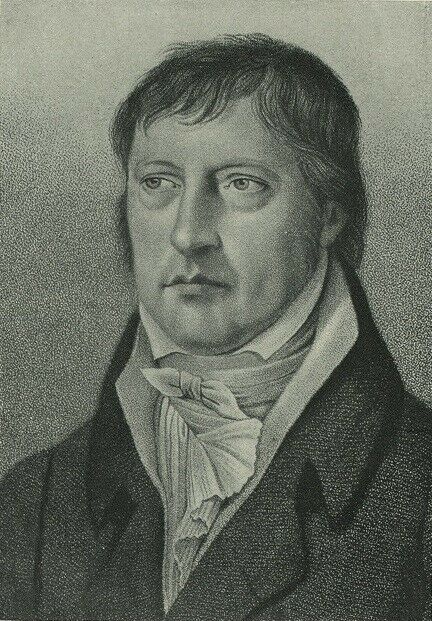
Hegel and the Dialectic of History
Hegel argued that history itself moves through a rational, dialectical
process toward ever-greater freedom and self-understanding.
German Idealism emerged in the decades following Kant and attempted to
address problems that Kant's philosophy had left unresolved. Thinkers
such as Johann Gottlieb Fichte, Friedrich Wilhelm Joseph Schelling, and
Georg Wilhelm Friedrich Hegel asked whether the divisions Kant had drawn
between mind and world, freedom and nature, or appearance and reality
could be understood within a more comprehensive philosophical framework.
Their work was extraordinarily ambitious, extending across epistemology,
metaphysics, ethics, political philosophy, aesthetics, religion, and the
philosophy of history. Hegel became the most systematic and influential
figure in this post-Kantian movement.
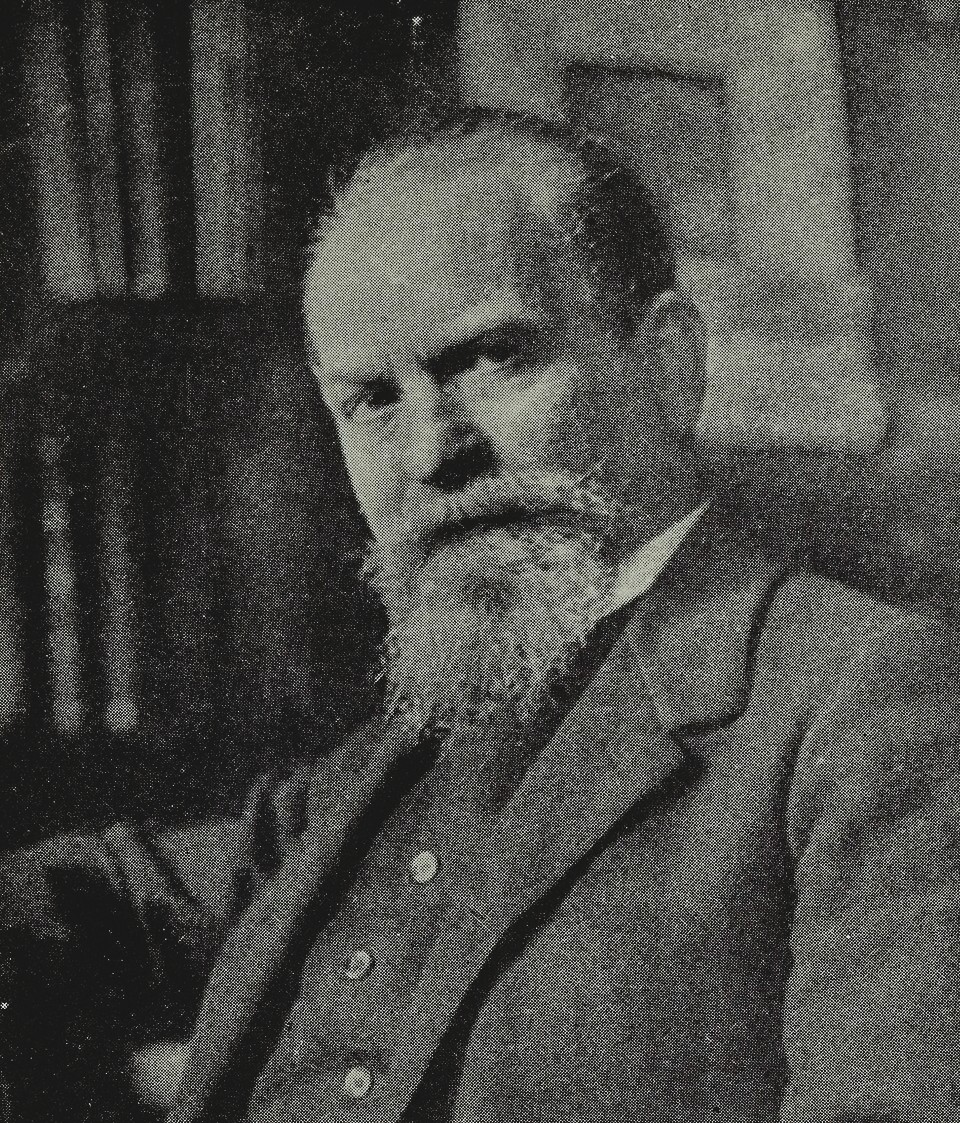
Georg Wilhelm Friedrich Hegel (1770–1831) developed a philosophy in
which reality is understood not as a collection of isolated, fixed
objects but as a dynamic process of development. Human consciousness,
social institutions, concepts, and historical forms all change through
tensions and contradictions internal to their own development. Hegel's
dialectical thinking therefore examines how apparently stable forms
reveal limitations that generate the conditions for more complex forms.
The goal is not simply to arrange every idea into a mechanical
three-step formula, but to understand how concepts and forms of life
develop through their own internal relations and contradictions.
The popular description of Hegel's method as "thesis, antithesis, and
synthesis" can be useful as a very rough introductory image, but it is
not an accurate formula that Hegel himself consistently used to explain
his philosophy. His dialectic is more complex than a fixed sequence in
which every idea simply produces an opposite and then merges with it. A
central Hegelian concept is Aufhebung, often translated as
"sublation," which suggests a process in which an earlier form is
simultaneously overcome, preserved, and transformed within a more
comprehensive one. Development therefore does not merely destroy the
past; earlier stages can remain meaningful while their limitations
become visible from a later perspective.
Hegel applied this developmental approach to the history of
consciousness in his Phenomenology of Spirit (1807), one of the
foundational works of modern philosophy. The book traces a difficult
path through different forms of consciousness and self-consciousness,
showing how each form encounters problems that force it beyond its
initial understanding. One of its most famous discussions concerns the
struggle for recognition, often associated with the master-slave
dialectic. Hegel argued that self-consciousness is not achieved in
complete isolation; human beings seek recognition from other
self-conscious beings, making social relationships central to the
development of individual identity and freedom.
For Hegel, history also has a philosophical dimension because human
freedom becomes conscious and institutionalized through changing social
and political forms. Family, civil society, law, and the state are not
merely external structures imposed upon individuals; they form part of
the social world within which freedom can become concrete. This does not
mean that every event in history is morally justified or that history
follows a simple, predetermined script. Rather, Hegel sought to
understand historical development as an intelligible process in which
human beings gradually become more conscious of freedom and of the
conditions required for its realization.
Hegel's influence proved enormous and deeply divided. Karl Marx adopted
important aspects of Hegelian dialectical thinking while rejecting
Hegel's idealist emphasis on the development of Spirit, arguing instead
that material production and class conflict are fundamental forces in
history. Søren Kierkegaard reacted against what he saw as the tendency
of grand philosophical systems to overlook the concrete individual who
must actually choose and live. Later phenomenologists, existentialists,
Marxists, and critical theorists continued to engage with Hegel, while
early Analytic philosophers often defined themselves partly through a
rejection of Hegelian idealism. Modern philosophy thus developed as much
through arguments with Hegel as through agreement with him.
2️⃣ Existentialism
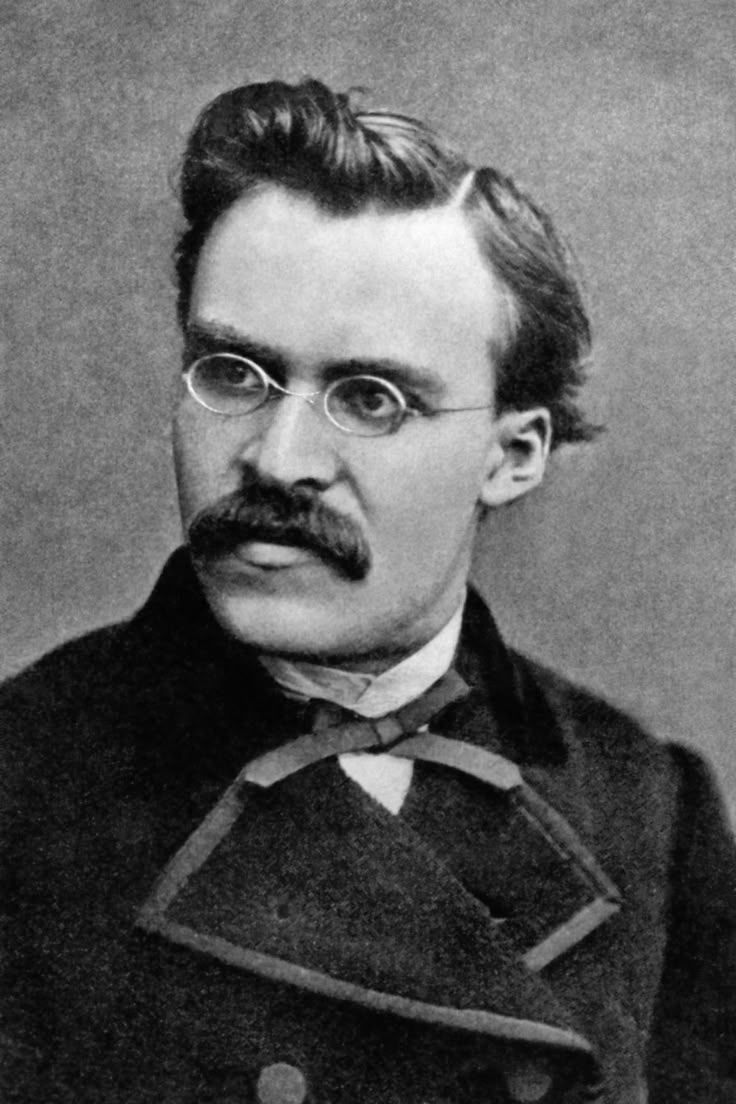
Kierkegaard, Nietzsche, and the Turn to the Individual
Nietzsche's declaration that "God is dead" captured a crisis of
meaning that Existentialist philosophy would spend decades working
through.
Existentialism is one of the most influential movements in modern
philosophy, although many thinkers now described as existentialists
never used the term for themselves. Its central concern is not the
construction of a complete abstract system but the concrete problem of
human existence: what does it mean for an individual to live, choose,
act, suffer, and confront mortality in a world that may provide no
simple or predetermined meaning? This focus emerged partly as a reaction
against philosophical systems that seemed to explain humanity from an
impersonal or universal perspective while leaving the anxiety and
responsibility of individual existence insufficiently addressed.
Søren Kierkegaard (1813–1855) is often regarded as a major precursor of
Existentialism because of his insistence on the importance of the
individual person. Writing partly in opposition to the grand speculative
systems of his age, especially the influence of Hegelian philosophy,
Kierkegaard argued that objective knowledge cannot answer every question
that matters most to a human life. Questions concerning commitment,
faith, despair, love, and personal identity require an individual to
take responsibility for choices that cannot always be settled by an
abstract proof.
Kierkegaard's discussion of faith is especially important. His idea of a
"leap of faith" does not simply mean believing anything without reason.
Rather, it concerns the limits of objective certainty when a person must
make an existential commitment. Religious faith, for Kierkegaard,
involves risk and inward passion because the individual cannot stand
outside existence and obtain a completely detached guarantee before
acting. Concepts such as anxiety and despair therefore became
philosophical tools for examining what it feels like to be free and
responsible rather than merely psychological problems to be eliminated.
Friedrich Nietzsche (1844–1900) approached the crisis of modern meaning
from a radically different direction. He subjected Western morality,
religion, metaphysics, and traditional claims to truth to what later
came to be called genealogical criticism: an investigation into how
supposedly timeless values emerged from particular historical,
psychological, and social conditions. Nietzsche asked whether moral
values should simply be accepted because they are ancient or socially
respected, or whether they should themselves be examined as products of
human history and struggles for power.
Nietzsche's famous declaration that "God is dead" was not a claim that a
divine being had literally died. It was a diagnosis of a cultural
condition: traditional Christian and metaphysical foundations of meaning
were losing their unquestioned authority within modern European society.
Nietzsche believed that this could produce nihilism — the sense that
life has no value or meaning once inherited foundations collapse. His
philosophy therefore confronted a difficult challenge: how can human
beings create, affirm, or transform values without simply returning to
systems whose authority they no longer genuinely believe?
Nietzsche's concepts of self-overcoming, the will to power, and the
Übermensch were attempts to explore this problem, though they
are frequently simplified. The Übermensch, for example, should
not be understood merely as a biologically superior person or a
political ruler. Within Nietzsche's philosophical project, it represents
an image of overcoming inherited forms of value and creatively affirming
life. His provocative style, use of aphorisms, and rejection of
systematic philosophy made him difficult to classify, but his influence
extended across existentialism, psychology, literary theory,
phenomenology, and later critiques of morality and power.
These 19th-century concerns developed further in the 20th century
through Martin Heidegger, Jean-Paul Sartre, Simone de Beauvoir, Albert
Camus, and others. Heidegger's Being and Time (1927)
investigated human existence through the concept of Dasein,
emphasizing that human beings always find themselves already situated
within a world of practical relationships, history, and possibilities.
Sartre later expressed a central existentialist theme through the phrase
"existence precedes essence": human beings are not born with a
completely fixed purpose that determines what they must become, but
create themselves through choices and actions.
Existentialism therefore transformed the modern history of philosophy by
placing freedom, responsibility, authenticity, anxiety, embodiment, and
mortality at the center of philosophical inquiry. It also raised
difficult ethical and political questions. If individuals are free, how
should that freedom be understood when people live within social
structures they did not choose? Simone de Beauvoir, for example,
extended existentialist concerns toward questions of gender, oppression,
and the relationship between one's own freedom and the freedom of
others. The existential tradition thus became much broader than a
philosophy of isolated individuals searching for personal meaning.
3️⃣ Analytic Philosophy
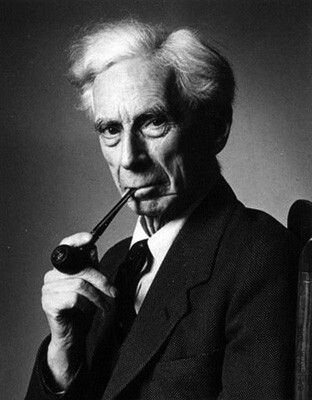
Russell, Wittgenstein, and the Turn to Language
Bertrand Russell sought to ground mathematics in logic and to resolve
philosophical confusion through precise linguistic and logical
analysis.
While phenomenology and existentialism developed largely within
Continental European philosophy, another major transformation was taking
place through developments in logic, mathematics, and the philosophy of
language. Analytic Philosophy emerged from the conviction that
philosophical problems often become clearer when the logical structure
of propositions and concepts is examined with precision. Rather than
beginning with a comprehensive theory of reality, many analytic
philosophers began with particular questions: What makes a statement
meaningful? How do words refer to objects? What is the logical form of a
proposition? How can mathematical reasoning be given secure foundations?
Gottlob Frege provided much of the technical groundwork for this
movement through revolutionary work in modern logic and the philosophy
of language. Frege developed a powerful formal system that helped
separate logical form from the grammatical surface of ordinary language,
making possible new forms of symbolic analysis. His distinction between
the sense and reference of an expression also became foundational for
later debates about meaning. These developments showed philosophers that
apparently simple sentences could contain logical structures not
immediately visible in ordinary speech.
Bertrand Russell (1872–1970), together with Alfred North Whitehead in
Principia Mathematica, pursued the ambitious project of showing
how mathematics could be derived from logical principles. Russell also
used logical analysis to address traditional philosophical problems,
most famously through his theory of descriptions. His work helped
establish the idea that philosophical progress could sometimes be
achieved not by creating a grand metaphysical system but by carefully
analyzing the language through which a problem had been formulated.
Russell was also a leading figure in the British revolt against the
idealist philosophy that had been strongly influenced by Hegel.
Early Analytic Philosophy therefore emphasized clarity, argument, and
logical rigor, but it was never a single doctrine. G. E. Moore defended
the analysis of ordinary propositions and common sense against certain
forms of philosophical idealism, while Russell explored logic,
epistemology, and the foundations of mathematics. The Vienna Circle
later developed logical positivism, arguing that meaningful scientific
statements should be distinguished from metaphysical claims that could
not be empirically verified. Although logical positivism eventually
faced serious criticisms, its demand for conceptual and methodological
clarity profoundly influenced 20th-century philosophy.
Ludwig Wittgenstein (1889–1951) produced two of the most influential and
strikingly different bodies of work in the analytic tradition. His early
Tractatus Logico-Philosophicus attempted to identify the
logical limits of meaningful language. Influenced by Frege and Russell,
Wittgenstein argued that language could represent facts about the world
through logical structure and that many traditional philosophical
problems arose when language attempted to say what could not be
meaningfully stated in this way. Philosophy, on this view, was primarily
an activity of clarification rather than a body of competing scientific
theories.
Wittgenstein's later philosophy moved dramatically away from this
picture. In the work published after his death as
Philosophical Investigations, he rejected the idea that all
meaningful language shares one hidden logical essence. Instead, he
emphasized the diverse practical uses of words within particular
"language games" and "forms of life." The meaning of a word is often
found not by searching for an invisible object or essence behind it, but
by examining how the word is actually used within human practices. This
shift transformed debates about language, rules, private experience,
knowledge, and the nature of philosophy itself.
Analytic Philosophy expanded enormously during the 20th century. It came
to include philosophy of mind, philosophy of science, epistemology,
ethics, metaphysics, political philosophy, and many other fields. Later
analytic philosophers increasingly returned to questions that earlier
movements had sometimes treated with suspicion, including the nature of
reality, consciousness, causation, possibility, and moral truth. The
tradition therefore cannot simply be defined as "philosophy about
language"; language and logic were crucial starting points, but the
movement eventually developed rigorous methods for addressing almost
every major philosophical question.
The rise of Analytic Philosophy illustrates one of the defining features
of modern philosophy: disagreement about philosophical method itself.
Where Hegel sought a systematic account of reality and existential
thinkers began from concrete human existence, analytic philosophers
often asked whether progress required breaking large questions into
smaller, logically manageable problems. These approaches sometimes
developed in isolation from one another, but together they reveal the
extraordinary diversity of modern philosophical thought and prepare the
way for the further movements that would reshape philosophy throughout
the 20th century.
4️⃣ Marxism & Materialism
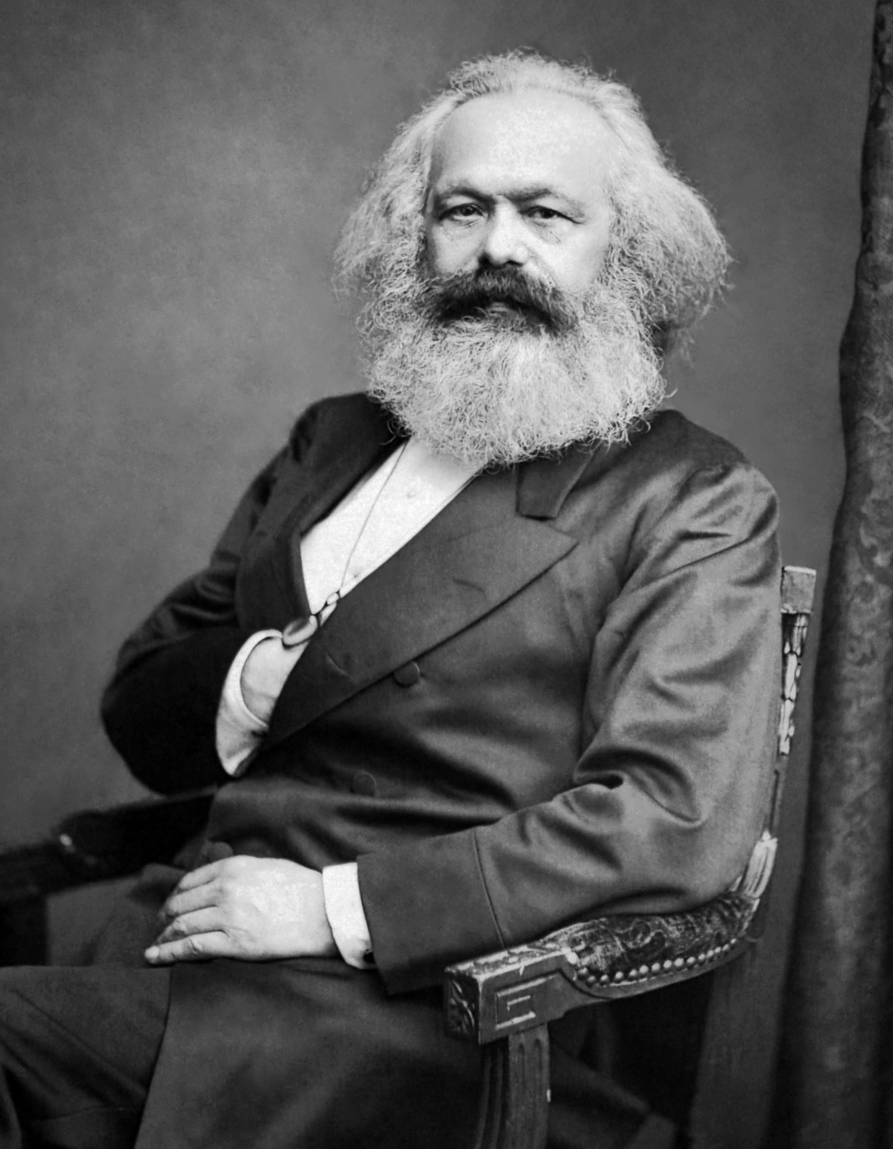
Marx, History, and the Material Conditions of Human Life
Karl Marx transformed Hegel's dialectical approach into a materialist
account of history shaped by economic conditions and social conflict.
Karl Marx (1818–1883) developed one of the most influential
philosophical responses to the social transformations of the nineteenth
century. Industrialization had created unprecedented wealth while also
producing severe inequality, urban poverty, and new forms of dependence
between workers and industrial owners. Marx believed that philosophy
could not adequately understand human life by studying ideas in
isolation from the material conditions in which people actually lived.
Questions about morality, politics, religion, and consciousness, he
argued, had to be connected to the economic and social structures that
shaped human existence.
Marx was deeply influenced by Hegel's dialectical understanding of
history, but he rejected the idea that history was fundamentally the
development of Spirit or consciousness. Instead, he argued that human
societies are shaped primarily by their material organization: how
people produce the necessities of life, who controls productive
resources, and how economic power is distributed. This approach became
known as historical materialism. Different historical
periods, on this view, are characterized by particular forms of
production and by conflicts between social classes whose interests are
fundamentally opposed.
In capitalist society, Marx argued, the central conflict exists between
the bourgeoisie, who own the major means of production, and the
proletariat, who must sell their labor in order to survive. His analysis
was not simply economic. Marx believed that capitalism could produce
alienation: workers become separated from the products
they create, from control over their own activity, from other people,
and ultimately from aspects of their own human potential. Work, which
might ideally express creativity and cooperation, can instead become an
activity organized primarily around survival and profit.
Marx also developed the concept of ideology to explain
how social systems can appear natural or inevitable even when they are
historically created and open to change. Political institutions,
religious beliefs, and dominant moral ideas do not simply float above
society as neutral truths; they may be connected to particular social
and economic interests. This did not mean that every idea could be
reduced mechanically to money or class, but it introduced a powerful
philosophical method: examine the concrete historical conditions and
relations of power within which ideas arise.
Marxism therefore changed the purpose of philosophy itself for many
later thinkers. Philosophy was no longer understood only as the
contemplation of timeless truths but also as a critical investigation of
society capable of revealing domination and supporting transformation.
Marx's influence extended into political philosophy, economics,
sociology, history, literary theory, and twentieth-century movements
such as Western Marxism and Critical Theory. His work ensured that
questions about class, labor, power, and material conditions would
remain central to modern philosophical debate.
5️⃣ Pragmatism
Peirce, James, Dewey, and Philosophy in Practice
While European philosophers were developing Idealism, Marxism, and
Existentialism, a distinct philosophical tradition emerged in the United
States: Pragmatism. Associated above all with Charles
Sanders Peirce, William James, and John Dewey, Pragmatism challenged the
idea that philosophy should begin by searching for absolutely certain
and timeless foundations. Instead, Pragmatists asked how beliefs,
concepts, and theories actually function within human inquiry and
practice. Knowledge was understood not as something completed once and
for all, but as part of an ongoing process of investigation.
Charles Sanders Peirce (1839–1914) helped establish the movement through
what became known as the pragmatic maxim. The meaning
of a concept, he argued, becomes clearer when we consider the practical
difference that accepting it would make to experience and action. Peirce
did not mean that truth was simply whatever happened to be useful at a
particular moment. Instead, he emphasized fallible scientific inquiry:
human beings form hypotheses, test them against experience, correct
their mistakes, and gradually improve their understanding through a
communal process of investigation.
William James (1842–1910) gave Pragmatism a broader psychological and
philosophical influence. He argued that philosophical ideas should be
examined partly through their consequences for lived experience. James
was especially interested in questions that could not always be settled
immediately through abstract deduction alone, including religious
belief, freedom, and the nature of truth. His Pragmatism emphasized a
pluralistic universe in which human experience is richer and more varied
than many rigid philosophical systems had allowed.
John Dewey (1859–1952) extended Pragmatism into education, democracy,
ethics, and social philosophy. For Dewey, intelligence was fundamentally
connected to problem-solving: people encounter difficulties, investigate
their conditions, test possible solutions, and revise their beliefs in
light of consequences. He therefore opposed the sharp separation between
theory and practice. Education should cultivate active inquiry rather
than passive memorization, while democracy should be understood not only
as a political system but also as a way of organizing collective
discussion and cooperative problem-solving.
Pragmatism offered modern philosophy an alternative to both absolute
rationalist systems and radical skepticism. It accepted that human
knowledge is incomplete and revisable without concluding that inquiry is
therefore meaningless. Ideas are tools that can be tested, criticized,
and improved through experience. This emphasis on fallibilism,
experimentation, and practical inquiry influenced philosophy of science,
education, political thought, and later thinkers such as Richard Rorty
and Hilary Putnam, ensuring that Pragmatism remained an important and
continuing tradition rather than merely a nineteenth-century movement.
6️⃣ Phenomenology
Husserl and the Study of Lived Experience
Edmund Husserl founded Phenomenology as a philosophical investigation
of how things appear within conscious experience.
At the beginning of the twentieth century, Edmund Husserl (1859–1938)
founded Phenomenology, a movement that attempted to
return philosophy to the careful description of experience itself.
Husserl was dissatisfied with philosophical approaches that began by
assuming too much about the external world, psychology, or scientific
explanation. Before constructing theories about reality, he argued,
philosophers should investigate how objects, meanings, and other people
actually appear within consciousness. His famous call was to return "to
the things themselves."
A central concept in Husserl's philosophy is
intentionality: consciousness is always consciousness
of something. When a person perceives a tree, remembers a
childhood event, imagines a future possibility, or fears an approaching
danger, consciousness is directed toward an object or meaning. This
meant that the mind could not simply be understood as a sealed container
containing private mental images. Experience is fundamentally oriented
toward a world that appears meaningful to the experiencing subject.
Husserl developed the method of
phenomenological reduction, often described through the
idea of placing ordinary assumptions about the world "in brackets." The
purpose was not necessarily to deny the existence of the external world,
but temporarily to suspend theoretical assumptions in order to examine
the structures of experience more carefully. What is it like to perceive
an object? How does something become recognized as the same thing across
changing perspectives? How are time, memory, expectation, and meaning
woven into ordinary consciousness?
Phenomenology quickly developed beyond Husserl's original project.
Martin Heidegger transformed it into an investigation of being and human
existence, while Maurice Merleau-Ponty emphasized the embodied nature of
perception. Experience, on these accounts, is not the activity of a
detached mind observing a world from outside. Human beings are already
situated within bodies, histories, languages, environments, and social
relationships. This development helped move twentieth-century philosophy
away from purely abstract pictures of the knowing subject.
The influence of Phenomenology was enormous. It shaped Existentialism,
Hermeneutics, psychology, philosophy of mind, and later Continental
philosophy. It also introduced a question that remains fundamental:
before explaining human beings scientifically or politically, how do we
understand the structure of their lived experience? By making
consciousness, embodiment, perception, and the everyday world central
philosophical subjects, Phenomenology opened an entirely new direction
for modern thought.
7️⃣ Critical Theory
The Frankfurt School and the Critique of Modern Society
Critical Theory examined how economic systems, culture, institutions,
and ideology can reproduce forms of domination in modern society.
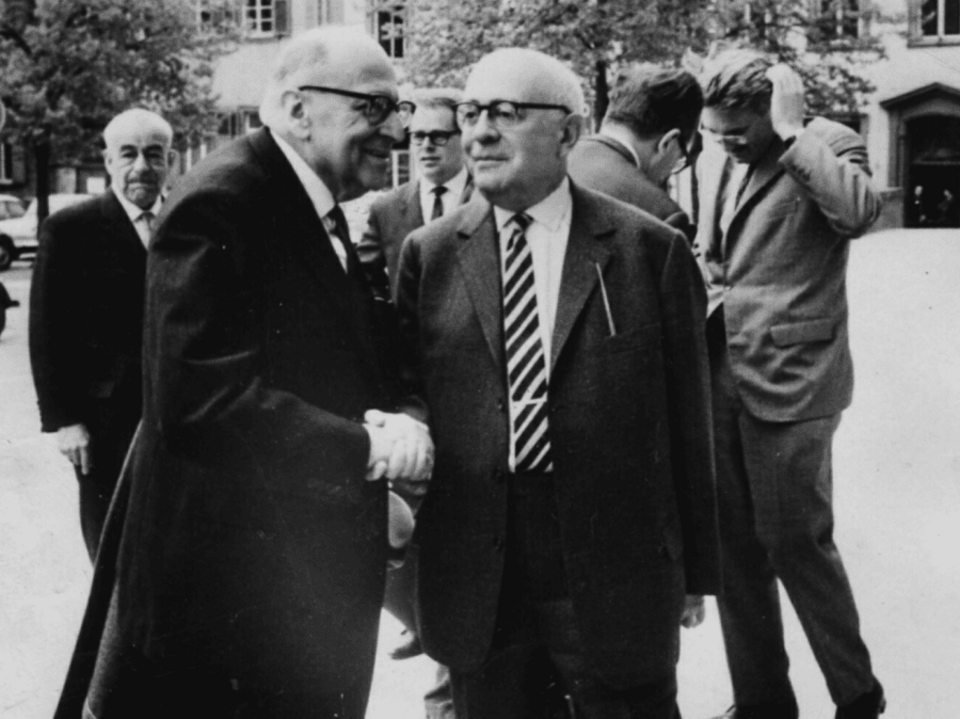
During the twentieth century, a group of philosophers and social
theorists associated with the Frankfurt School developed what became
known as Critical Theory. Drawing inspiration from
Marx, Hegel, Freud, and other traditions, thinkers such as Max
Horkheimer, Theodor Adorno, and Herbert Marcuse argued that philosophy
should not merely describe society from a supposedly neutral position.
It should also investigate the forms of domination that shape social
life and ask how greater human freedom and emancipation might become
possible.
Critical Theory emerged in a historical period marked by fascism, world
war, mass propaganda, industrial capitalism, and the growth of modern
bureaucratic institutions. These developments created a troubling
problem for Enlightenment ideas of progress: how could societies capable
of extraordinary scientific and technological achievement also produce
new forms of mass destruction and political domination? The Frankfurt
School therefore questioned whether reason itself could become
instrumental — reduced to the efficient calculation of
means while losing the ability to criticize the purposes those means
served.
Adorno and Horkheimer famously examined what they called the
culture industry, arguing that mass-produced culture
could shape desires, habits, and consciousness in ways that encouraged
conformity rather than critical independence. Their concern was not that
popular culture was automatically worthless, but that systems of
economic production and mass communication could influence what people
consume, desire, and regard as normal. Philosophy therefore had to study
culture and consciousness alongside economics and formal political
institutions.
Herbert Marcuse extended this critique to affluent industrial societies,
examining how technological development and consumer culture could
create new forms of conformity even where individuals formally possessed
political freedoms. Later Critical Theorists expanded the tradition in
different directions. Jürgen Habermas, for example, placed greater
emphasis on communication, public reasoning, and the possibility of
rational democratic discussion as resources for resisting domination and
coordinating social life.
Critical Theory widened the meaning of philosophical critique. It
connected abstract questions about reason and knowledge with concrete
institutions, media, labor, culture, technology, and political power.
Its central ambition was not simply to interpret society but to reveal
the historical conditions that limit human freedom. This tradition later
interacted with feminist, postcolonial, and other emancipatory
philosophies, helping establish the modern idea that philosophical
inquiry can examine the structures through which power operates in
everyday life.
8️⃣ Structuralism & Post-Structuralism
Language, Power, and the Instability of Meaning
Structuralist and Post-Structuralist thinkers examined how language,
culture, knowledge, and power shape human understanding.
By the middle of the twentieth century, philosophy and the human
sciences were increasingly interested in the structures that shape human
thought and culture. Structuralism, influenced
particularly by the linguistics of Ferdinand de Saussure, argued that
individual meanings are often intelligible only within larger systems of
relationships. A word, for example, does not possess meaning entirely by
itself; its significance depends partly on its differences and relations
within a language. Similar structural approaches were later applied to
anthropology, literature, psychology, and social life.
Structuralist thinkers therefore shifted attention away from the idea of
the completely independent individual subject. Human beings think and
communicate through systems that they do not create alone: languages,
cultural conventions, social classifications, and symbolic structures.
Claude Lévi-Strauss applied structural methods to myths and kinship
systems, searching for recurring patterns beneath the apparent diversity
of human cultures. The movement suggested that much of what appears
natural or personal may be shaped by deeper structures of meaning.
Post-Structuralism emerged partly as a critique of the
confidence that such structures could be completely identified or fixed.
Thinkers including Michel Foucault and Jacques Derrida questioned stable
oppositions, universal categories, and the assumption that meaning could
be secured once and for all. They argued in different ways that meaning
is shaped by historical context, interpretation, language, and systems
of power, making philosophical concepts more unstable and contested than
many earlier systems had assumed.
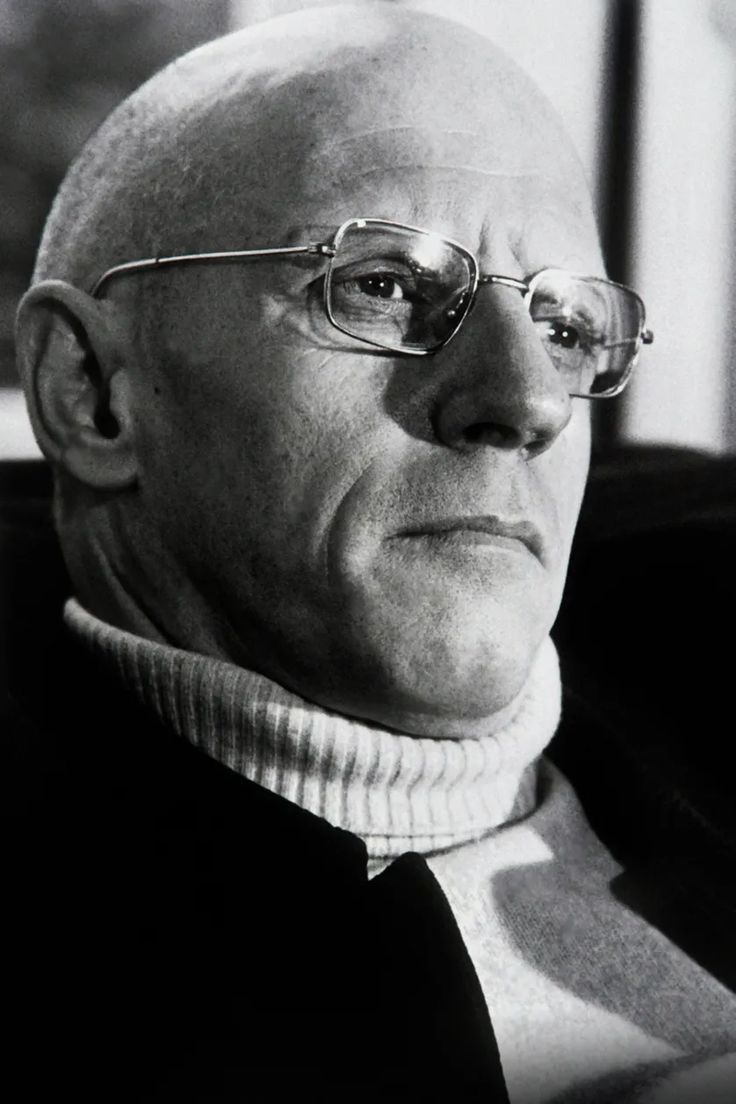
Michel Foucault (1926–1984) investigated the relationship between
knowledge and power. His historical studies examined
institutions such as prisons, hospitals, and systems of sexuality,
asking how societies classify people, define normality, and produce
forms of knowledge about human beings. Power, in Foucault's work, was
not simply something possessed by a king or government and imposed from
above. It could operate through institutions, practices, expert
knowledge, surveillance, and ordinary social norms.
Jacques Derrida (1930–2004) developed
deconstruction, a method of reading that examines the
tensions and assumptions within texts and conceptual oppositions.
Philosophical traditions often privilege one term over another — such as
presence over absence, speech over writing, or reason over difference.
Derrida explored how these oppositions may depend upon and undermine
themselves. Deconstruction was therefore not simply the destruction of
meaning, but a careful examination of how meanings are produced and why
apparently stable concepts often contain unresolved tensions.
Structuralism and Post-Structuralism transformed modern philosophy's
understanding of language, identity, history, and power. They challenged
the Enlightenment image of a completely autonomous rational subject and
asked how subjects themselves are shaped by social and linguistic
conditions. Their influence spread far beyond philosophy into literary
theory, anthropology, history, cultural studies, and political thought,
making them essential to understanding the later development of modern
and contemporary philosophy.
9️⃣ Feminist Philosophy & New Voices
Questioning the Philosophical Canon and Expanding Human Experience
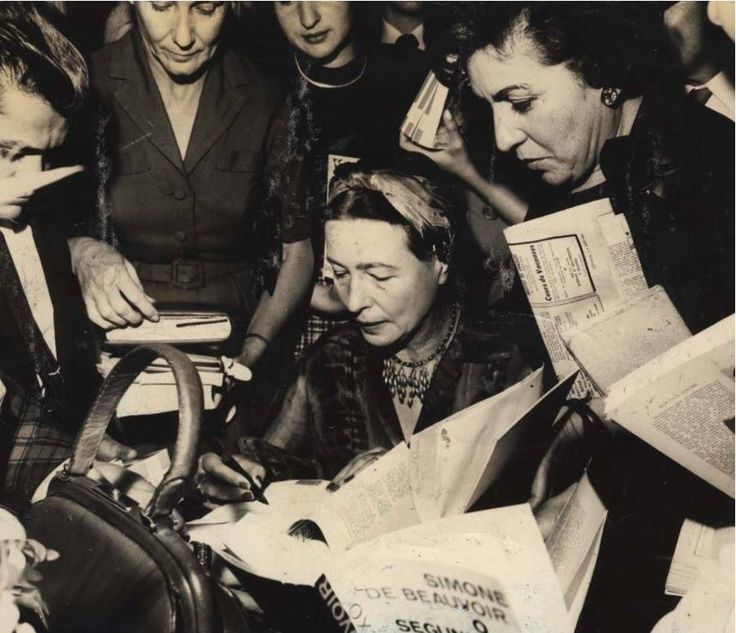
Simone de Beauvoir helped establish feminist philosophy as a major
challenge to inherited assumptions about gender, freedom, and
identity.
One of the most important developments in twentieth-century philosophy
was the expansion of philosophical inquiry beyond assumptions that had
often treated the experience of a relatively narrow group as universal.
Feminist Philosophy asked how philosophical concepts
about reason, knowledge, morality, identity, and political authority had
been shaped by historically unequal relations between men and women. It
also recovered the work of women philosophers whose contributions had
frequently been marginalized or excluded from the traditional
philosophical canon.
Simone de Beauvoir (1908–1986) became one of the movement's most
influential philosophers through The Second Sex (1949). Drawing
partly on Existentialism, she argued that womanhood should not be
understood simply as a fixed biological destiny. Her famous distinction
between biological existence and the social formation of gender opened
new philosophical questions about how identities are produced through
education, institutions, expectations, and lived experience. Freedom,
she argued, must be examined within the concrete social situations in
which individuals actually find themselves.
Feminist epistemology later challenged the assumption that knowledge is
always produced from a completely neutral or detached standpoint.
Philosophers asked whether social position can influence what questions
are considered important, whose experiences are treated as evidence, and
which perspectives are excluded from supposedly objective knowledge.
This did not require abandoning the search for truth. Instead, it
encouraged a more critical examination of the conditions under which
knowledge is produced and the voices that have historically been
excluded from intellectual institutions.
Later feminist thinkers also examined the relationship between gender
and other forms of social difference and power. Questions concerning
race, class, sexuality, colonial history, disability, and cultural
identity increasingly entered philosophical discussion, challenging the
idea that human experience could be represented adequately through a
single universal model. Philosophical traditions concerned with
postcolonialism, critical race theory, and decolonial thought similarly
questioned the historical dominance of European perspectives and called
attention to the philosophical traditions and experiences marginalized
by colonial systems.
The expansion of these voices changed not only the subjects philosophy
studied but also the history philosophy told about itself. Questions
about whose ideas count as philosophy, whose experiences define the
human subject, and which traditions belong within the philosophical
canon became major intellectual debates. Modern philosophy therefore
increasingly moved away from the expectation of a single universal
tradition toward a more plural and self-critical understanding of the
discipline.
This development provides an important bridge toward contemporary
philosophy. Feminist and other critical approaches demonstrated that
philosophical problems are never entirely separate from history,
institutions, and lived experience. They expanded debates about freedom,
justice, identity, knowledge, and power while challenging philosophy to
examine its own inherited assumptions. By the late twentieth century,
the discipline had become more diverse in its methods and subject matter
than at any earlier stage in its Western history.
👤 Major Thinkers
The key figures behind each chapter of this era, in brief.
🔄 Dialectical Development — Hegel's account of
historical development through contradiction and transformation
🏭 Historical Materialism — Marx's analysis of
history through material conditions, production, and class conflict
🙌 The Leap of Faith — Kierkegaard's account of
commitment made in the face of irreducible uncertainty
💀 "God Is Dead" — Nietzsche's diagnosis of a crisis
in inherited meaning and morality
🕊 Existence Precedes Essence — humans create meaning
and identity through freedom and action
🔍 Phenomenology — the careful study of consciousness
and lived experience as they appear to the subject
🛠 Pragmatism — understanding ideas through inquiry,
experience, consequences, and practical problem-solving
🧩 Logical Analysis — clarifying philosophical
problems through precision in logic and language
🎮 Language Games — the later Wittgenstein's view
that meaning arises from social and practical use
⚙ Critical Theory — examining how institutions,
culture, ideology, and economic systems can reproduce domination
🕸 Power & Discourse — the investigation of how
knowledge, language, and social institutions shape human life
♀ Feminist Philosophy — challenging inherited
assumptions about gender, knowledge, identity, and human experience
🌍 Influence on Later Philosophy
Modern philosophy did not develop into a single unified tradition.
Instead, the movements explored throughout this period created many of
the major philosophical approaches that remain active today. German
Idealism shaped Marxism, phenomenology, and later Continental thought;
Existentialism transformed discussions of freedom, anxiety,
authenticity, and human meaning; while Analytic Philosophy established
rigorous methods that became central to philosophy of language, logic,
mind, science, and epistemology, particularly in English-speaking
universities.
Marx's materialist interpretation of history and society had an enormous
influence on political philosophy, sociology, economics, and
revolutionary movements across the nineteenth and twentieth centuries.
At the same time, Pragmatism offered a different model of philosophical
inquiry, emphasizing fallibility, experimentation, democratic
discussion, and the practical consequences of ideas. These traditions
demonstrated that philosophy could no longer be understood only as the
search for abstract and timeless truths; it could also investigate
history, society, scientific inquiry, and the concrete problems of human
life.
Phenomenology and its successors transformed the study of consciousness
by emphasizing lived experience, embodiment, and humanity's situated
existence in the world. Heidegger, Sartre, Merleau-Ponty, and other
thinkers helped establish traditions that would later influence
hermeneutics, psychology, literary theory, and the broader field often
described as Continental philosophy. Their work challenged the image of
the human being as simply a detached rational observer and instead
emphasized the historical, bodily, and existential conditions within
which understanding takes place.
Critical Theory, Structuralism, and Post-Structuralism further expanded
philosophy's investigation of society by examining ideology, culture,
language, institutions, knowledge, and power. Thinkers such as Adorno,
Foucault, and Derrida challenged the assumption that reason, meaning, or
knowledge could always be understood independently of historical and
social structures. Their work influenced cultural studies, political
theory, history, literary criticism, and debates about how power shapes
what a society accepts as normal, rational, or true.
Feminist philosophy and other critical approaches transformed the
philosophical canon itself by asking whose experiences had traditionally
been treated as universal and whose voices had been excluded. Questions
of gender, race, class, colonialism, identity, and social difference
became increasingly central to philosophical inquiry. This expansion did
not simply add new topics to an existing discipline; it challenged
philosophy to examine its own methods, assumptions, historical
boundaries, and claims to universality.
The lasting legacy of Modern Philosophy is therefore not a single
doctrine but an extraordinary diversification of philosophical methods
and subjects. By the late twentieth century, philosophy had become a
collection of interconnected but often sharply different traditions —
analyzing logic and language, consciousness and existence, class and
political power, culture and institutions, identity and lived
experience. These developments provide the direct intellectual
foundation for the increasingly diverse debates of Contemporary
Philosophy.
📊 Quick Facts
Time Period: c. 1800 CE – late 20th century
Key Regions: Germany, France, Britain, the United
States, and increasingly a wider global intellectual world
Major Movements: German Idealism, Marxism,
Existentialism, Pragmatism, Phenomenology, Analytic Philosophy,
Critical Theory, Structuralism, Post-Structuralism, and Feminist
Philosophy
Central Questions: What is the nature of human
freedom, consciousness, language, history, knowledge, power, and
social existence?
Historical Transformation: Philosophy moved away from
a single unified system toward multiple specialized traditions with
different methods and objects of study.
Successor Traditions: Contemporary Analytic
Philosophy, philosophy of mind and language, Continental Philosophy,
critical theory, feminist philosophy, postcolonial thought, and
interdisciplinary social philosophy
As the great philosophical systems of the 19th century confronted the
profound changes brought by industrialization, modern science, political
upheaval, and changing social values, philosophy entered an increasingly
diverse period of questioning. Thinkers began challenging traditional
ideas about reason, morality, religion, society, and the self, giving
rise to movements such as existentialism, pragmatism, phenomenology, and
analytic philosophy. By the early 20th century, these new approaches had
transformed philosophical inquiry and opened the way toward contemporary
debates about language, consciousness, science, politics, and human
existence.