How the intellectual traditions of ancient Iran explored truth and
falsehood, moral choice, wisdom, cosmic order, and humanity's
responsibility for shaping the world through thought, word, and
action.
Introduction
Ancient Persian philosophy refers broadly to the ethical, religious,
metaphysical, and intellectual traditions that developed among the
Iranian peoples before the Islamic period. Although the word
“philosophy” is most often associated with the Greek tradition, ancient
Iran developed its own sustained reflections on truth, wisdom, moral
responsibility, the nature of reality, the human soul, time, fate, and
the relationship between cosmic order and human action. The most
influential foundation of this intellectual world was Zoroastrian
thought, associated with the prophet Zarathustra, also known in Greek
tradition as Zoroaster.
The central philosophical importance of ancient Iranian thought lies in
its powerful connection between knowledge and moral choice. Human beings
were understood not merely as observers of the universe but as
participants in a world shaped by ethical decisions. Concepts associated
with truth, order, wisdom, deception, destruction, and responsibility
therefore became central to Iranian intellectual life. The individual
was repeatedly confronted with a fundamental question: how should one
think, speak, and act in a world where moral choices have consequences?
Ancient Persian philosophy should also be understood within the broader
history of the Iranian world. Iranian-speaking peoples lived across a
vast cultural region extending beyond the boundaries of modern Iran.
Their traditions developed through oral teaching, sacred poetry, ritual,
royal institutions, legal customs, and eventually written literature.
The Achaemenid, Parthian, and Sasanian empires each provided different
political and intellectual environments in which Iranian ideas could
develop, encounter foreign traditions, and acquire new forms.
Zoroastrian philosophy and theology provided many of the most enduring
concepts of this world. Ahura Mazda represented supreme wisdom and
goodness, while Asha expressed a principle associated with truth, right
order, and the proper condition of reality. Against this stood forces
associated with the Lie, deception, disorder, and destruction. These
concepts were not simply abstract theological categories. They shaped
ethical reflection by connecting the condition of the universe with the
conduct and decisions of human beings.
Ancient Persian intellectual history was also a history of exchange.
Iranian empires stood between the Mediterranean world, Mesopotamia,
Central Asia, and India, creating opportunities for contact between
different systems of learning. During the later pre-Islamic centuries,
especially under the Sasanians, Iranian scholars and institutions became
involved in the transmission and interpretation of scientific,
philosophical, religious, and literary knowledge from several cultural
traditions. Ancient Iranian thought was therefore both indigenous and
connected to a much wider intellectual world.
This page traces the history of ancient Persian philosophy from early
Iranian religious thought and the teachings associated with Zarathustra
to the philosophical developments of the Achaemenid, Parthian, and
Sasanian periods. It explores moral choice, Asha, political order,
wisdom, knowledge, time, fate, the soul, and the encounter between
Iranian, Greek, Indian, and later Islamic intellectual traditions.
Ancient Persian philosophy ultimately represents one of the major
pre-Islamic traditions of ethical and metaphysical reflection.
Timeline at a Glance
c. 1500–1000 BCE?
One broad range proposed by some modern scholarship for the life of
Zarathustra, though his exact dates remain uncertain and continue to
be debated.
c. 550 BCE
The Achaemenid Persian Empire emerges as one of the largest and most
influential political powers of the ancient world.
550–330 BCE
Achaemenid royal inscriptions express ideas concerning truth, order,
kingship, and opposition to the Lie within Persian political
ideology.
247 BCE–224 CE
The Parthian period continues and develops Iranian religious,
political, and intellectual traditions across a vast cultural world.
224–651 CE
The Sasanian Empire becomes a major center of Zoroastrian learning,
scholarship, translation, and intellectual exchange.
7th century CE
The fall of the Sasanian Empire marks the end of the ancient Persian
political order and the beginning of a new era in Iranian and
Islamic intellectual history.
🏺 Ancient Iran Before and Beyond Empire
Ancient Iran was home to a diverse world of Iranian peoples whose
intellectual traditions developed across many centuries and several
great empires.
Ancient Persian philosophy developed within a cultural world much larger
than any single Persian empire. The Iranian peoples occupied and moved
across regions stretching from the Iranian plateau toward Central Asia,
Afghanistan, the Caucasus, and other neighboring territories. Their
intellectual traditions emerged gradually through oral poetry, religious
ritual, inherited myths, ethical teachings, and political institutions.
To understand ancient Iranian thought, therefore, it is necessary to see
Persia as part of a wider Iranian cultural and linguistic world.
Before the great Persian empires, Indo-Iranian religious traditions had
already developed concepts concerning divine powers, sacrifice, cosmic
order, and the relationship between human beings and the sacred world.
Over time, the teachings associated with Zarathustra transformed this
intellectual environment by placing exceptional emphasis on wisdom,
truth, moral judgment, and individual choice. The oldest material
associated with Zarathustra, especially the Gathas, remains central to
attempts to understand the earliest philosophical dimensions of
Zoroastrian thought.
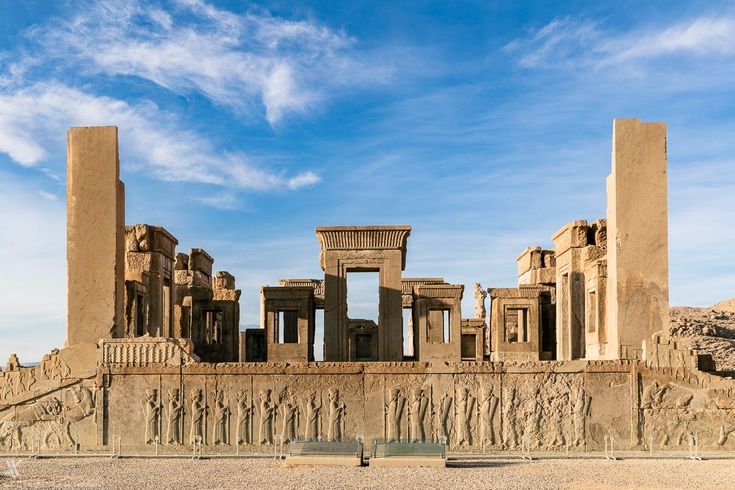
The rise of the Achaemenid Empire brought Iranian peoples into direct
political contact with Egypt, Mesopotamia, Anatolia, Greece, and parts
of South and Central Asia. Founded by Cyrus the Great and expanded by
later rulers, the empire governed an extraordinary diversity of
languages, religions, and customs. Such political connections did not
automatically produce a single shared philosophy, but they created
conditions in which ideas, administrative practices, religious
traditions, and systems of knowledge could encounter one another across
enormous distances.
The Parthian and Sasanian periods continued this position between major
civilizations. Iran remained connected with the Roman and later
Byzantine worlds to the west, Central Asian societies to the northeast,
India to the east, and Mesopotamian intellectual traditions within its
own territories. Iranian thought therefore developed in a region where
cultural isolation was impossible. Indigenous traditions continued to
evolve while foreign ideas were translated, debated, adapted, rejected,
or incorporated into new intellectual frameworks.
Within this long history, Zoroastrianism became one of the most
important sources of Iranian ethical and metaphysical reflection. Its
vocabulary connected wisdom with truth, moral action with cosmic order,
and human responsibility with the wider struggle against destructive
forces. Questions that modern readers might separate into religion,
ethics, and philosophy were often deeply interconnected. A discussion of
the soul, for example, could also involve moral judgment; a discussion
of truth could also concern politics and the legitimate ordering of
society.
Ancient Iranian philosophy should therefore not be reduced either to a
collection of religious beliefs or to a direct equivalent of Greek
philosophical schools. It was a distinct intellectual tradition with its
own problems, vocabulary, and methods of transmission. Its thinkers and
religious scholars asked enduring questions about what is real, what
makes a life good, whether human beings possess genuine responsibility,
how knowledge should guide action, and how order can survive in a world
threatened by falsehood, violence, and destruction.
1️⃣ Zarathustra and the Revolution of Moral Choice
Wisdom, Truth, and the Human Decision
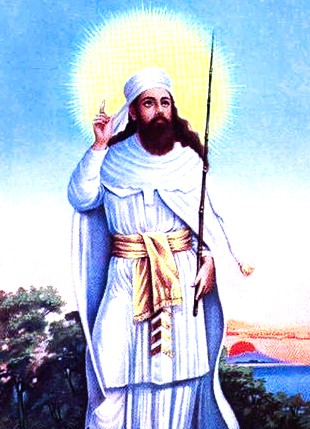
Zarathustra, or Zoroaster, is the central prophetic figure associated
with Zoroastrianism, although the exact dates of his life remain
uncertain.
Zarathustra, known to the Greeks as Zoroaster, is the central figure of
the ancient Iranian tradition now called Zoroastrianism. His precise
historical dates remain uncertain, and scholars continue to debate when
and where he lived. The oldest texts associated with his teachings are
the Gathas, a group of hymns preserved within the Avesta. Whatever the
exact chronology of his life, the ideas connected with Zarathustra
became among the most influential contributions of ancient Iran to the
history of ethics and religious philosophy.
One of the central ideas associated with Zarathustra is that human
beings inhabit a morally meaningful universe. The world is not presented
simply as a sequence of events over which individuals have no influence.
Thinking, speaking, and acting all possess ethical significance. Human
beings must exercise judgment and choose between better and worse paths.
This emphasis on decision makes moral responsibility one of the defining
features of Zoroastrian philosophical thought.
At the center of this vision stands Ahura Mazda, whose name is commonly
understood as the Wise Lord. Wisdom is therefore not merely a human
intellectual achievement but belongs to the deepest structure of
reality. The pursuit of understanding has ethical consequences because
correct judgment helps human beings recognize the difference between
truth and deception. Knowledge, in this sense, cannot be completely
separated from the question of how a person ought to live.
The concept of Asha became fundamental to this moral and metaphysical
vision. Asha is difficult to translate with a single English word
because it can refer to truth, rightness, proper order, and the
harmonious structure of reality. Its importance lies precisely in this
breadth. Truth is not treated merely as a correct statement about a
fact; it is connected with the way things should properly exist and the
way human beings should conduct themselves.
Zarathustra's ethical teaching also gives unusual importance to the
individual. People are not simply passive objects carried by fate or
controlled entirely by external powers. They participate in the moral
condition of the world through their choices. This does not mean that
every later Zoroastrian tradition developed an identical theory of free
will, but the importance of deliberate moral choice became a lasting
feature of Iranian religious and philosophical thought.
The philosophical significance of Zarathustra therefore lies not only in
the origin of a major religious tradition but in the moral questions his
teachings raised. What is truth? How should human beings recognize it?
Are individuals responsible for the consequences of their actions? Can a
person's thoughts and words contribute to the improvement or destruction
of the world? These questions would continue to shape Iranian ethical
reflection long after the earliest period associated with the prophet
himself.
2️⃣ Asha, Ethics, and the Struggle for a Good World
Truth Is Something One Must Live
Asha is one of the most important concepts in ancient Persian philosophy
because it connects metaphysics, ethics, truth, and cosmic order. In
simple terms, Asha refers to the proper, truthful, and rightly ordered
condition of reality. Yet the concept cannot be reduced to a single
definition. It concerns both the structure of the world and the moral
conduct expected from human beings, making it one of the clearest
examples of how ancient Iranian thought united questions about reality
with questions about how one ought to live.
Asha stands in opposition to what is often described as the Lie or
destructive falsehood, represented in later Zoroastrian terminology by
concepts associated with Druj. The contrast is more profound than the
ordinary distinction between telling the truth and telling a lie.
Falsehood can become a force of disorder that damages relationships,
corrupts political authority, weakens moral judgment, and separates
human action from the proper order of reality.
This ethical framework explains why Zoroastrian tradition became famous
for the principle commonly summarized as good thoughts, good words, and
good deeds. Thought matters because intention and judgment influence
action. Speech matters because language can communicate truth or spread
deception. Action matters because moral ideals must eventually become
part of practical life. The three together form an ethical unity in
which inner character, communication, and outward conduct are closely
connected.
Ancient Iranian ethics therefore does not treat morality as something
limited to private belief. Human actions participate in a wider struggle
over the condition of the world. To act truthfully, responsibly, and
constructively is to support a better order; to deceive, destroy, or
deliberately choose harmful action is to contribute to disorder. This
gives Zoroastrian ethics a strongly active character in which goodness
requires participation rather than withdrawal from the world.
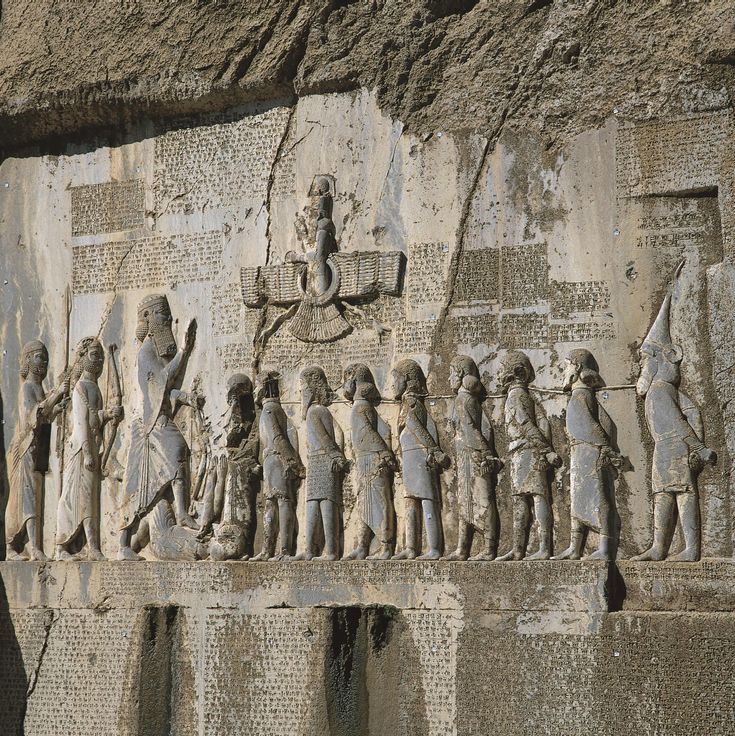
The political importance of truth can also be seen in Achaemenid royal
inscriptions. Kings, especially Darius I, repeatedly used a vocabulary
that opposed rightful order to the Lie. Such statements were part of
royal ideology and cannot simply be treated as neutral philosophical
theories. Nevertheless, they reveal how deeply concepts of truth,
deception, legitimacy, rebellion, and proper order were connected within
the political language of the ancient Persian world.
The philosophical legacy of Asha lies in its refusal to separate truth
completely from life. Knowing what is true carries an ethical demand,
while ethical action helps establish a more truthful and ordered world.
This connection between epistemology and ethics remains one of the most
distinctive features of ancient Iranian thought. The question is not
merely whether a person possesses knowledge, but whether that knowledge
produces wiser speech, better judgment, and constructive action.
3️⃣ Wisdom, Knowledge, Time, and the Soul
The Development of Persian Philosophical Thought
During the later pre-Islamic centuries, Persian intellectual
traditions engaged with questions of wisdom, knowledge, time, fate,
metaphysics, and foreign philosophical learning.
Ancient Persian philosophy did not remain fixed in the form of its
earliest traditions. Across the Parthian and especially the Sasanian
periods, Iranian intellectual life developed increasingly elaborate
discussions of theology, ethics, cosmology, the human soul, knowledge,
fate, and the structure of reality. The surviving evidence is uneven,
and many ancient texts have been lost or preserved only through later
compilations. Nevertheless, the available material reveals a long
tradition of reflection extending far beyond a single set of doctrines.
Wisdom occupied a central place in this intellectual world. The pursuit
of knowledge was often connected with the practical problem of living
well and making correct judgments. A wise person was not necessarily
understood simply as someone possessing abstract information. Wisdom
required the ability to distinguish beneficial from harmful action,
truth from deception, and proper judgment from error. Knowledge
therefore had a strongly ethical dimension within many Iranian
traditions.
Questions concerning the human soul also became increasingly important.
Zoroastrian traditions developed complex accounts of the soul, moral
judgment, death, and the consequences of human action. These teachings
connected metaphysical questions with ethics because a person's choices
were understood to possess significance beyond immediate worldly
consequences. Reflection on the soul therefore became inseparable from
questions about responsibility, justice, memory, and the meaning of a
human life.
Time and fate created another major area of philosophical reflection. If
the universe possesses a meaningful order, what role remains for chance,
necessity, and human freedom? Different Iranian traditions and later
theological schools approached these problems in different ways.
Discussions concerning destiny and time show that ancient Persian
thought was not philosophically uniform. Iranian intellectual history
contained competing attempts to explain how cosmic processes and human
decisions could exist within the same reality.
Later Middle Persian literature preserves evidence of these broader
intellectual interests. Works associated with the Zoroastrian scholarly
tradition discuss cosmology, ethics, knowledge, the soul, correct
action, and the relationship between wisdom and religious understanding.
The Dēnkard, compiled in its surviving form after the fall of the
Sasanian Empire while preserving older traditions, is particularly
important for understanding the breadth of later Zoroastrian
intellectual culture.
These developments demonstrate that ancient Persian philosophy existed
within a changing intellectual environment. Iranian thinkers encountered
ideas from Greek, Mesopotamian, Indian, and other traditions while
continuing to develop their own vocabulary and problems. Ancient Persian
thought was therefore neither isolated nor merely derivative. It was an
indigenous tradition of ethical and metaphysical reflection that also
became an important meeting point between several of the major
intellectual civilizations of the ancient world.
4️⃣ Persian Kingship, Truth, and Political Philosophy
Can Political Power Be Connected with Moral Order?
Ancient Persian political thought repeatedly connected legitimate
authority with the maintenance of order. This does not mean that the
Persian Empire possessed a modern theory of democracy or individual
political rights. Its political world was fundamentally monarchical.
Nevertheless, royal inscriptions and political traditions reveal an
important philosophical problem: what makes authority legitimate, and
what happens when power becomes associated with falsehood, rebellion, or
destructive disorder?
Achaemenid rulers presented kingship as connected with a larger moral
and cosmic order. In the inscriptions of Darius I, the king repeatedly
identifies himself as ruling with the support of Ahura Mazda. The king's
role is presented as the protection and restoration of proper order
against forces described as rebellious or deceitful. These texts are
political documents written to justify imperial authority, but they also
show how political power could be expressed through an ethical
vocabulary.
The concept of the Lie became particularly important within this royal
ideology. Political rebellion could be described not simply as military
opposition but as a form of falsehood that threatened legitimate order.
This language served the interests of imperial power and should
therefore be interpreted critically. Yet it also demonstrates a broader
Iranian concern with the relationship between truth and political
stability: a society cannot remain properly ordered if deception becomes
the foundation of authority.
Persian political philosophy also developed ideas about the duties of a
ruler. The ideal king was expected to defend the realm, maintain
justice, resist destructive forces, and preserve order among diverse
peoples. Historical reality was naturally more complicated than royal
ideals. Ancient empires could be violent and unequal despite their
philosophical language of order and justice. The importance of the ideal
lies in the standard it created against which political conduct could be
judged.
This connection between wisdom and government continued in later Iranian
political traditions. The image of the wise ruler became a powerful
theme in Middle Persian literature and later Persian political thought.
Government required more than force; it required judgment, knowledge,
self-control, and the ability to distinguish beneficial action from
destructive action. The ruler's intellectual and moral character could
therefore become a matter of political importance.
Ancient Persian political philosophy remains significant because it
places a difficult question at the center of government: can political
order survive without a commitment to truth and responsible judgment?
The Iranian answer was shaped by monarchy and religion, but the problem
itself remains universal. Political communities depend not only on power
but also on systems of trust, legitimate authority, truthful speech, and
shared ideas about what constitutes a properly ordered society.
5️⃣ Zurvan, Time, Fate, and the Nature of Reality
Is Time More Powerful Than Human Choice?
Time and fate became major philosophical problems in later Iranian
thought. Human beings experience themselves as making choices, yet they
also live within conditions they did not create: birth, death,
historical circumstances, natural processes, and the apparent movement
of time. Ancient Iranian thinkers therefore explored questions that
remain central to philosophy today. Is the universe governed by
necessity? Does fate determine human life? And if cosmic processes
follow an established order, what room remains for moral freedom?
One important development associated with later Iranian intellectual
history is Zurvanism, a tradition in which Zurvan, often understood as
Time, acquired a central cosmological role. The precise character and
historical extent of Zurvanism remain subjects of scholarly discussion,
and it should not be treated as identical with all forms of
Zoroastrianism. Its philosophical importance, however, is clear: Time
could become a fundamental principle for explaining the origin and
structure of reality.
The problem of time creates a tension between permanence and change.
Everything visible in human life changes, yet philosophical and
religious traditions often seek principles that remain stable beneath
change. Iranian cosmological reflection attempted to understand how a
structured universe could unfold through time while still possessing a
meaningful moral direction. Time was therefore not merely a measurement
of events but part of the attempt to understand reality as a whole.
Fate presented a related difficulty. If certain events are determined by
forces beyond human control, can individuals still be held responsible
for their actions? Iranian traditions produced different answers and
frequently distinguished between circumstances that must be endured and
choices that remain within human power. This distinction allowed moral
responsibility to survive even within a universe containing necessity,
limitation, and forces greater than the individual.
The philosophical tension between destiny and choice became especially
important because ancient Iranian ethics strongly emphasized deliberate
action. A person might not control every event, but thoughts, words, and
deeds still possessed moral significance. The existence of fate
therefore did not necessarily eliminate responsibility. Instead, it
created a more complex question about where the boundary between
necessity and freedom should be placed.
These reflections make time one of the deepest metaphysical themes in
ancient Persian philosophy. Questions about Zurvan, fate, cosmic order,
and human freedom reveal a tradition attempting to explain both the vast
processes of the universe and the immediate experience of moral
decision. The individual stands within time, but must still choose how
to live. This tension between cosmic necessity and ethical
responsibility remains one of the most enduring problems of Persian
philosophical thought.
6️⃣ The Sasanian Intellectual World and Foreign Philosophy
Persia as a Meeting Point of Civilizations
The Sasanian period represents one of the most important stages in the
intellectual history of ancient Persia. From the third to the seventh
century CE, the Sasanian Empire governed a major political and cultural
world positioned between the Byzantine Empire, Central Asia, India, and
Mesopotamia. This geographical position encouraged intellectual exchange
and made Iran an important environment for the movement of scientific,
religious, medical, and philosophical knowledge between civilizations.
Zoroastrian scholars continued to preserve and develop Iranian religious
and intellectual traditions, but they were not the only participants in
the Sasanian intellectual world. Christians, Jews, Manichaeans,
Buddhists, and other communities contributed to a culturally diverse
environment. Syriac, Greek, Middle Persian, Sanskrit, and other
languages became vehicles through which knowledge could travel.
Philosophy therefore developed through encounters between different
traditions rather than within a completely closed Iranian system.
Greek philosophy became particularly important through processes of
translation and transmission. The movement of philosophical and
scientific texts across linguistic boundaries allowed ideas associated
with Plato, Aristotle, late antique commentators, and other Greek
traditions to enter the wider Near Eastern intellectual world. Iranian
scholars did not simply receive a finished body of Greek philosophy.
Foreign knowledge was interpreted within existing religious, political,
and ethical frameworks.
Indian learning also contributed to the broader intellectual
environment. Mathematical, astronomical, medical, literary, and
philosophical ideas traveled through the networks connecting Iran and
South Asia. Such exchanges demonstrate why ancient Persian philosophy
cannot be understood solely through the surviving religious texts of
Zoroastrianism. The Iranian world was part of a larger network in which
different civilizations continually exchanged methods, stories,
concepts, and systems of knowledge.
The Sasanian intellectual tradition is particularly important for the
later history of philosophy because it formed part of the environment
from which knowledge moved into the early Islamic world. After the Arab
conquests, older Iranian institutions changed dramatically, but many
languages, scholars, texts, and intellectual practices continued to
influence the societies that emerged. The transition was not a simple
replacement of one civilization by another; it involved transformation,
adaptation, preservation, and new forms of synthesis.
Persia's role as an intellectual meeting point therefore forms part of
its philosophical legacy. Ancient Iranian thought maintained its own
distinctive concerns with truth, wisdom, moral action, cosmic order, and
the soul while participating in a much larger conversation. The Sasanian
world demonstrates how philosophical traditions develop through both
continuity and exchange. Ideas become more complex when they encounter
other languages, questions, and intellectual methods.
7️⃣ From Ancient Persia to the Islamic Intellectual World
The End of an Empire and the Transformation of a Tradition
The fall of the Sasanian Empire in the seventh century CE marked the end
of the ancient Persian political order, but it did not erase Iranian
intellectual traditions. The Islamic conquests transformed the religious
and political structure of the region, gradually creating a new cultural
world in which Arabic became a major language of scholarship while
Persian later re-emerged as one of the great languages of literature,
philosophy, and political thought. Ancient Iranian ideas therefore
entered a period of transformation rather than simple disappearance.
Zoroastrian communities continued to preserve important elements of the
older tradition, both in Iran and later among communities in South Asia.
Middle Persian religious literature preserved memories of earlier
doctrines, cosmology, ethical teachings, and philosophical questions.
Although many texts were compiled or transmitted after the fall of the
Sasanians, they remain essential evidence for understanding how ancient
Iranian intellectual traditions remembered and interpreted their own
philosophical inheritance.
At the same time, scholars working within the expanding Islamic world
inherited a complex intellectual environment that included Iranian,
Greek, Syriac, Indian, and other traditions. The great translation
movements and philosophical developments of the Islamic Golden Age were
therefore built within a multicultural historical setting. It would be
misleading to claim that ancient Persian philosophy simply became
Islamic philosophy, but Iranian institutions, scholars, languages,
political traditions, and intellectual habits formed part of the broader
background from which later Islamic civilization developed.
Persian thinkers eventually became central figures within Islamic
philosophy. Philosophers writing in Arabic and Persian explored logic,
metaphysics, medicine, ethics, political philosophy, and mysticism while
participating in traditions that had become genuinely transregional.
Their philosophical systems cannot simply be described as continuations
of Zoroastrian thought, since they were deeply shaped by Greek
philosophy and Islamic theology. Nevertheless, they developed within
cultural worlds that retained powerful connections with Iran's older
intellectual past.
The transition from ancient Persian philosophy to Islamic intellectual
history therefore illustrates an important principle in the history of
ideas: traditions rarely disappear completely when political regimes
collapse. Concepts, institutions, stories, languages, and habits of
thought can survive while acquiring new meanings. Ancient Iranian
philosophy continued to exist through preservation within Zoroastrian
communities and through indirect influence within the wider cultures of
the Islamic world.
Understanding this transition helps prevent a false division between
“ancient” and “Islamic” Persia. The seventh century was undoubtedly a
profound historical rupture, but intellectual history does not follow
political boundaries perfectly. Ancient Persian ideas about wisdom,
kingship, ethical conduct, the soul, and cosmic order continued to be
remembered, reinterpreted, and transformed. The history of Persian
philosophy is therefore a history of both continuity and radical change.
8️⃣ The Legacy of Ancient Persian Philosophy
Why Ancient Iranian Thought Still Matters
The legacy of ancient Persian philosophy lies above all in the questions
it placed at the center of human existence. What is truth, and how
should truth guide action? Are human beings genuinely responsible for
their choices? Does the universe possess a moral order? What is the
relationship between wisdom and political power? Can a person remain
ethically free in a world shaped by time, fate, death, and forces beyond
individual control? These questions connect ancient Iranian thought with
the wider history of philosophy.
One of the most distinctive contributions of Zoroastrian philosophy is
its close relationship between moral thought and the condition of the
world. Ethical action is not merely obedience to an arbitrary command.
Thoughts, words, and deeds participate in the continuing struggle
between constructive and destructive possibilities. This gives human
beings an active role within reality and makes moral responsibility
central to the meaning of a life.
Ancient Persian thought also offers an important model for understanding
philosophy beyond the traditional boundaries of Greece and Europe.
Philosophical reflection has appeared in many civilizations through
different forms: dialogues, arguments, hymns, sacred texts, legal
traditions, poetry, political inscriptions, and ethical instruction. The
absence of a philosophical academy identical to Plato's Academy does not
mean the absence of serious philosophical questions or intellectual
traditions.
The Iranian tradition further demonstrates the importance of
intellectual exchange. Ancient Persia stood between several major
civilizations and repeatedly encountered ideas from Mesopotamia, Greece,
Central Asia, and India. The resulting intellectual history cannot be
explained as either pure isolation or simple borrowing. Philosophical
traditions develop by preserving inherited concepts while responding
creatively to new questions, languages, and systems of knowledge.
Modern interest in ancient Persian philosophy has also grown as scholars
attempt to understand the diversity of global intellectual history.
Zoroastrian ethics, Iranian cosmology, Achaemenid political ideology,
Middle Persian wisdom literature, and the Sasanian world of translation
all provide different perspectives on what philosophy can be. Together,
they reveal a tradition concerned with both the largest questions of
existence and the practical decisions made by individual human beings.
Ancient Persian philosophy ultimately invites us to see wisdom as a form
of responsibility. To know is not enough; knowledge must influence how
one speaks, acts, governs, and responds to the world. From Zarathustra's
emphasis on moral choice to later reflections on time, fate, kingship,
and the soul, Iranian thought repeatedly returned to the relationship
between understanding and action. Its enduring question remains both
simple and profound: once we recognize the difference between truth and
falsehood, what will we choose to do?
👤 Major Thinkers & Traditions
The central figures and intellectual traditions behind Ancient Persian
philosophy, in brief.
Zarathustra
Dates Uncertain
The prophetic figure associated with Zoroastrianism and a tradition
centered on wisdom, truth, moral choice, and responsibility.
The Gathic Tradition
Ancient Iranian
The oldest surviving layer of Zoroastrian literature, containing the
teachings traditionally associated with Zarathustra.
Achaemenid Thinkers
c. 550–330 BCE
Persian rulers and intellectual traditions that expressed ideas
concerning truth, order, kingship, and opposition to the Lie.
Parthian Intellectual Tradition
247 BCE–224 CE
A period of continuing Iranian intellectual development and growing
contact between Persian, Greek, Indian, and other traditions.
Sasanian Sages
224–651 CE
Scholars who developed traditions of ethics, theology, wisdom,
metaphysics, and philosophical exchange.
Ādurbād ī Ēmēdān
9th–10th Century CE
The final redactor associated with the surviving form of the
Dēnkard, a major compendium preserving Mazdean wisdom and older
intellectual traditions.
⚖ Asha — the Zoroastrian concept associated with
truth, right order, justice, and the proper structure of reality
🌓 Truth and the Lie — the ethical and cosmic
opposition between asha and destructive falsehood, disorder,
and deception
✋ Moral Choice and Responsibility — the idea that
human beings participate actively in the moral world through their
decisions
💭 Good Thoughts, Good Words, and Good Deeds — an
ethical ideal connecting intention, truthful speech, and practical
action
🧠 Wisdom and Knowledge — the pursuit of
understanding as a guide to ethical conduct, education, and the
ordering of human life
🌌 Cosmic Order — the belief that ethical life is
connected to a wider order involving creation, truth, and the struggle
against destructive forces
⏳ Time, Fate, and Freedom — later Iranian traditions
explored cosmic time, destiny, causation, and the extent of human
agency
👤 The Soul and the Afterlife — reflection on
personal responsibility, judgment, the destiny of the soul, and the
consequences of human action
📚 Wisdom Literature — Middle Persian traditions
developed ethical instruction concerning knowledge, kingship,
education, conduct, and practical wisdom
🌍 Intellectual Exchange — ancient Persia became an
important meeting point where Iranian traditions encountered Greek,
Indian, Mesopotamian, and later Islamic intellectual worlds
🌍 Influence and Legacy of Ancient Persian Philosophy
Ancient Persian philosophy and Iranian intellectual traditions developed
within one of the great crossroads of the ancient world. The Achaemenid,
Parthian, and Sasanian realms connected regions extending from the
eastern Mediterranean and Mesopotamia to Central Asia and India. These
political and cultural connections created conditions for the movement
of religious ideas, scientific knowledge, literary traditions,
administrative practices, and philosophical concepts between very
different civilizations. Persian thought was therefore shaped both by
its own indigenous traditions and by long histories of intellectual
encounter.
Zoroastrian thought became especially important because it developed a
powerful vocabulary for discussing truth, moral responsibility, cosmic
order, evil, judgment, and the destiny of human beings. Concepts
associated with Asha, the opposition to the Lie, moral choice,
and the consequences of action gave Iranian ethical thought a
distinctive character. Scholars continue to debate the precise
historical pathways through which particular Iranian religious ideas
influenced neighboring traditions, and such influence should not be
described as a simple one-way transfer. Even so, the ancient Iranian
world formed an important part of the wider intellectual history of the
ancient Near East.
The Sasanian period became particularly significant for intellectual
exchange. Iranian scholars and institutions encountered traditions
associated with Greek, Syriac, Indian, and other bodies of learning.
Medicine, astronomy, logic, philosophy, and religious scholarship could
circulate across political and linguistic boundaries. The famous
intellectual environment of late antique Persia demonstrates that
ancient Iranian thought was not isolated from the philosophical
developments of neighboring civilizations, but participated in a broader
world of translation, interpretation, and debate.
The Arab conquest and the fall of the Sasanian Empire in the seventh
century CE transformed the political and religious landscape of Iran,
but they did not simply erase Persian intellectual traditions.
Zoroastrian communities continued to preserve religious and
philosophical texts, while Persian scholars became major participants in
the development of Islamic science, philosophy, theology, literature,
and political thought. Ancient Persian philosophy must therefore be
distinguished historically from Islamic philosophy while also
recognizing that the two belong to connected chapters in the longer
intellectual history of the Iranian world.
Later Persian and Islamic philosophers developed new intellectual
systems using Arabic, Persian, and other scholarly languages. Thinkers
such as Avicenna, Suhrawardi, and later philosophers of the Iranian
world cannot simply be classified as direct continuations of ancient
Zoroastrian philosophy, because they worked within profoundly different
intellectual and religious frameworks. Nevertheless, the continuity of
Iranian scholarly culture, ethical literature, political reflection, and
metaphysical inquiry ensured that the intellectual history of Persia
remained one of the richest and most diverse traditions in the history
of philosophy.
Today, the legacy of ancient Persian philosophy remains important for
understanding the global history of ideas. It challenges the assumption
that philosophy developed only through the familiar Greek-to-European
narrative and instead reveals a complex network of civilizations engaged
with questions about truth, wisdom, ethics, freedom, time, the soul, and
the structure of reality. Ancient Persian thought belongs to the larger
story of humanity's attempt to understand how the universe is ordered
and how human beings should live within it.
📊 Quick Facts About Ancient Persian Philosophy
Time Period: Ancient Iranian intellectual traditions
from the early Zoroastrian period through the fall of the Sasanian
Empire in 651 CE
Key Regions: Ancient Iran, the Iranian Plateau,
Central Asia, Mesopotamia, and the wider Iranian cultural world
Major Historical Periods: The early Iranian world,
Achaemenid Empire, Parthian period, and Sasanian Empire
Major Traditions: Zoroastrianism and related Iranian
traditions of religious, ethical, cosmological, and philosophical
reflection
Central Questions: What is truth? How should human
beings choose between good and destructive action? What is the
relationship between wisdom, fate, time, and human freedom?
Major Themes: Asha, truth and falsehood, moral
choice, wisdom, cosmic order, ethics, the soul, judgment, time, fate,
and knowledge
Key Textual Traditions: The Gathas and wider Avesta,
Achaemenid royal inscriptions, and later Middle Persian literature
including the Dēnkard
Lasting Influence: Iranian intellectual history,
Zoroastrian thought, late antique scholarship, intercultural exchange,
and the later philosophical and scientific traditions of the Islamic
world
Frequently Asked Questions About Ancient Persian Philosophy
What is Ancient Persian philosophy?
Ancient Persian philosophy refers broadly to the ethical, religious,
metaphysical, political, and intellectual traditions that developed
among the Iranian peoples before the Islamic period. It includes
Zoroastrian thought and reflections on truth, wisdom, moral
responsibility, cosmic order, the soul, time, fate, and human
choice.
Who was Zarathustra?
Zarathustra, also known as Zoroaster, is the central prophetic
figure associated with Zoroastrianism. His exact historical dates
remain uncertain, while the Gathas, preserved within the Avesta, are
the oldest texts associated with his teachings.
What is Asha in Zoroastrian philosophy?
Asha is a central concept in Zoroastrian thought associated with
truth, rightness, proper order, and the harmonious condition of
reality. It connects metaphysical order with ethical conduct and
contrasts with falsehood and destructive disorder.
What did Zarathustra teach about moral choice?
The teachings associated with Zarathustra place strong emphasis on
deliberate moral choice. Human beings are presented as participants
in a morally meaningful world whose thoughts, words, and actions
have ethical significance.
What is the relationship between truth and ethics in Ancient Persian
philosophy?
Ancient Iranian thought closely connected truth with ethical life.
Asha represents truth and proper order, while deception and
falsehood are associated with disorder. Knowledge therefore has
practical consequences for how people think, speak, and act.
What was Persian political philosophy?
Ancient Persian political thought connected legitimate kingship with
the maintenance of order, justice, and resistance to destructive
forces. Achaemenid royal inscriptions, especially those of Darius I,
used a political vocabulary contrasting rightful order with the Lie,
although these inscriptions must also be understood as royal
ideological documents.
What is Zurvanism?
Zurvanism is a tradition associated with later Iranian intellectual
history in which Zurvan, often understood as Time, acquired an
important cosmological role. Its precise historical character and
relationship to other forms of Zoroastrianism remain subjects of
scholarly discussion.
What did Ancient Persian philosophy say about fate and free will?
Ancient Iranian traditions explored the tension between fate,
necessity, and human choice. Although people could not control every
circumstance, moral responsibility remained important because
thoughts, words, and actions were understood to possess ethical
significance.
Why was the Sasanian period important for philosophy?
The Sasanian period was an important stage in Iranian intellectual
history because Iran stood at a crossroads connecting the Byzantine
world, Central Asia, India, and Mesopotamia. Scientific, religious,
medical, philosophical, and literary knowledge circulated among
different communities and languages.
How did Ancient Persian philosophy influence the Islamic
intellectual world?
The fall of the Sasanian Empire transformed Iranian political and
religious life but did not erase its intellectual traditions.
Iranian languages, scholars, institutions, texts, and intellectual
practices formed part of the wider historical environment from which
later Islamic intellectual culture developed.
Why is Ancient Persian philosophy important today?
Ancient Persian philosophy is important because it demonstrates the
diversity of global philosophical history and places enduring
questions about truth, moral responsibility, cosmic order, political
authority, fate, freedom, wisdom, and the soul within an ancient
Iranian intellectual context.
Ancient Persian philosophy continued to influence the intellectual world
long after the fall of the Sasanian Empire. With the rise of Islam,
Persian, Arabic, Greek, Indian, and other traditions entered into an
extraordinary period of translation, debate, and philosophical
development. The result was Islamic philosophy — a new and much broader
intellectual tradition in which Persian thinkers would play a central
role.