Philosophy of Law, or jurisprudence, examines the nature, authority,
purpose, interpretation, and moral foundations of law. It asks what
makes a rule legally valid, why people should obey the law, whether an
unjust law can still be a law, how legal rights and responsibilities
arise, and what distinguishes law from morality, politics, custom, and
social convention.
What Is Philosophy of Law?
Philosophy of Law, also known as jurisprudence, is the branch of
philosophy that examines the nature, authority, meaning, purpose, and
moral foundations of law. It asks fundamental questions that cannot be
answered simply by identifying what a statute, regulation, constitution,
or court has declared. What is law? What makes a rule legally valid? Why
should people obey the law? What gives courts and governments legitimate
authority? What is a legal right, duty, or responsibility? And what
should happen when a legal requirement conflicts with justice or
morality? Philosophy of law examines these questions through conceptual
analysis, normative reasoning, and reflection on actual legal
institutions and practices.
Law is distinctive because it consists not merely of rules but of
institutions, procedures, officials, rights, duties, and forms of public
authority. Legal systems regulate conduct, establish rights and
obligations, resolve disputes, define offenses, authorize penalties,
recognize property and contracts, and organize political institutions.
Courts interpret and apply legal rules, legislatures create and amend
laws, and constitutional arrangements determine how public power is
structured and limited. Philosophy of law therefore investigates both
individual legal rules and the deeper structure that allows a collection
of rules and institutions to function as a legal system.
What is law, and what distinguishes legal rules from moral, social, or
religious rules?
What makes a law legally valid, and what gives legal systems their
authority?
Why should citizens obey the law?
What is the relationship between law and morality?
What are legal rights, duties, obligations, powers, and
responsibilities?
What is justice, and what role should justice play in law?
How should judges interpret statutes, constitutions, and legal
precedents?
When, if ever, is civil disobedience or resistance to law justified?
One of the central problems in philosophy of law concerns the
relationship between law and morality. Some theories
argue that the existence and validity of law can be understood primarily
through social facts, institutional practices, and recognized legal
rules, while other traditions maintain that law has an essential
connection with morality, justice, or practical reason. This
disagreement appears in major debates between natural law theories and
legal positivism, as well as in later theories of legal interpretation
and legal obligation. The question is not simply whether laws should be
moral, but whether moral considerations are partly constitutive of what
makes something law in the first place.
Philosophy of law therefore distinguishes several questions that are
often confused in ordinary discussions. A person may ask
what the law is, meaning which rules are legally valid
within a particular system; what the law means, meaning
how an existing rule should be interpreted; or
what the law ought to be, meaning whether a legal rule
is morally or politically justified. These questions can interact, but
they are not automatically identical. Different jurisprudential theories
disagree about how sharply legal validity, interpretation, morality, and
political legitimacy can or should be separated.
Natural law theory: examines law in relation to
morality, justice, reason, and principles of right conduct.
Legal positivism: emphasizes social facts, legal
institutions, and the criteria by which a legal system recognizes
valid laws.
Legal interpretivism: argues that legal reasoning can
involve principles and moral considerations in determining what the
law requires.
Legal realism: emphasizes the practical operation of
law, judicial decision-making, institutional behavior, and the social
context in which legal rules are applied.
Critical approaches: examine how law can reflect or
reproduce relationships involving power, inequality, gender, race,
economic interests, and social institutions.
Another major area concerns
legal rights, duties, and responsibilities. Philosophy
of law asks what it means to possess a legal right, whether rights are
fundamentally claims against other persons or institutions, and how
rights relate to liberty, equality, property, privacy, bodily integrity,
and political participation. It also examines legal duties and
obligations, including whether a person has a general moral obligation
to obey the law simply because a rule has been legally enacted. These
questions become especially important when legal authority conflicts
with conscience, individual liberty, or principles of justice.
Questions of justice and punishment form another
central part of the philosophy of law. Legal systems distribute benefits
and burdens, determine who may exercise particular powers, and establish
consequences for violating legal rules. Philosophers therefore ask what
makes a legal system just, whether equality requires equal treatment or
substantive fairness, and whether punishment is justified by
retribution, deterrence, rehabilitation, incapacitation, or some
combination of these purposes. Related questions concern criminal
responsibility, intention, negligence, proportionality, evidence, due
process, and the moral limits of state coercion.
Philosophy of law also studies
legal interpretation and judicial reasoning. Laws are
expressed through language, yet legal texts can be ambiguous,
incomplete, general, or apparently inconsistent with other rules. Courts
must therefore determine how statutes, constitutions, and precedents
should be interpreted. This raises philosophical questions about textual
meaning, legislative intention, precedent, principles, judicial
discretion, original meaning, evolving interpretation, and the role of
moral and political values in adjudication. The problem connects
jurisprudence with philosophy of language, epistemology, political
philosophy, and theories of practical reasoning.
At a deeper level, Philosophy of Law asks how legal order is connected
to political authority, social institutions, morality, and human agency.
Questions about constitutional government involve legitimacy and the
distribution of political power; questions about evidence involve
knowledge and justification; questions about legal personhood involve
metaphysical and moral concepts; and questions about punishment involve
responsibility, freedom, and justice. Philosophy of law therefore sits
at the intersection of ethics, political philosophy, philosophy of
language, epistemology, metaphysics, and social philosophy, providing a
framework for examining not only how legal systems operate, but why
legal authority should exist and what makes a legal order worthy of
obedience.
Core Questions in Philosophy of Law
The most fundamental question is What is law? Legal
systems contain statutes, regulations, judicial decisions,
constitutional provisions, institutional practices, and customary rules.
Yet not every social rule is necessarily a legal rule. Philosophers
therefore seek to identify the characteristics that make rules legal and
distinguish legal systems from morality, religion, etiquette, custom,
and ordinary social conventions.
Another major question concerns legal authority.
Governments and courts routinely issue rules backed by institutional
enforcement, but the mere existence of coercive power does not
necessarily establish a moral right to rule. Philosophers ask why
citizens should recognize legal authority and whether legal obligations
can exist simply because a competent institution has enacted a rule.
The relationship between law and morality is another
foundational problem. Some theories maintain that legal validity
depends, at least in part, upon moral principles, while others argue
that whether a rule is legally valid can be determined by social facts
without requiring its moral correctness. This disagreement forms one of
the central debates between natural law theories and legal positivism.
Philosophers also ask what justice requires from legal
institutions. Should law treat everyone equally? When is unequal
treatment justified? What rights should individuals possess? How should
punishment be distributed? What obligations does society have toward
vulnerable people? These questions show that philosophy of law is not
restricted to technical definitions of law; it also investigates the
moral purposes and consequences of legal systems.
Finally, philosophy of law asks how judges and other legal officials
should interpret and apply legal rules. When
legislation is ambiguous, should judges focus on the ordinary meaning of
its language, the intentions of its authors, the purpose of the statute,
constitutional principles, precedent, or broader considerations of
justice? Disagreements about interpretation reveal that applying law is
often an exercise of practical reasoning rather than mechanical
rule-following.
Law and Morality
The relationship between law and morality is one of the oldest and most
persistent problems in jurisprudence. Many laws concern actions that are
also morally significant, such as murder, theft, fraud, violence,
discrimination, and contracts. Yet legal systems also contain rules that
appear morally neutral, such as regulations concerning administrative
procedures, court jurisdiction, filing requirements, or institutional
organization. Philosophers therefore ask whether legal validity
fundamentally depends upon moral content or whether law and morality can
be conceptually distinguished.
Natural law theory traditionally maintains that law is
connected in an essential way with reason, morality, or justice.
Classical and medieval versions differ considerably, but they share the
idea that legal order cannot be fully understood independently of
normative standards. Thomas Aquinas, for example, described human law
within a broader account of eternal, natural, and divine law and argued
that unjust human laws are defective in an important sense.
Legal positivism, by contrast, emphasizes the social
sources of law. Thinkers such as John Austin, H. L. A. Hart, and Hans
Kelsen developed different versions of positivist jurisprudence, but
positivism generally rejects the claim that moral merit is necessarily a
condition of legal validity. A rule can be legally valid even if it is
morally objectionable, depending upon the social and institutional
criteria recognized by the relevant legal system.
The debate does not imply that legal positivists believe morality is
unimportant or that natural law theorists simply deny the significance
of social facts. The deeper disagreement concerns the conceptual
relationship between legal validity and morality. Contemporary
jurisprudence contains sophisticated versions of natural law,
positivism, interpretivism, and related positions, each attempting to
explain how law can possess both institutional reality and normative
significance.
Natural Law Theory
Natural law theory is one of the oldest traditions in philosophy of law.
Its central idea is that law cannot be understood solely through enacted
rules or institutional procedures because legal order is connected with
standards of reason, justice, human flourishing, or moral obligation.
Natural law traditions differ across historical periods, but they
generally reject the idea that the legal system can be completely
detached from normative evaluation.
Ancient Greek philosophy provided important foundations for later
natural law traditions. Plato and Aristotle investigated justice,
political order, and the relationship between law and the good life.
Stoic philosophers developed ideas concerning universal reason and a
natural moral order, which later influenced Roman and Christian
conceptions of natural law.
Thomas Aquinas developed one of the most influential medieval accounts.
He distinguished different forms of law within a broader theological and
philosophical framework and understood human law as an ordinance of
reason directed toward the common good and established by legitimate
authority. His account became foundational for later Catholic natural
law traditions, although modern natural law philosophy also contains
secular formulations.
Modern natural law theories have taken diverse forms. Some emphasize
human rights, practical reason, human flourishing, or principles of
justice rather than a theological foundation. The continuing importance
of natural law lies in its insistence that legal institutions can be
evaluated against standards that are not exhausted by the fact that a
rule was formally enacted. This provides a powerful philosophical
framework for thinking about unjust laws, human rights, and the moral
limits of governmental authority.
Legal Positivism
Legal positivism is a family of theories holding that the existence and
content of law depend fundamentally upon social facts and practices
rather than necessarily upon the moral merit of legal rules. Positivists
do not claim that law should be obeyed regardless of its morality.
Instead, they distinguish the question of whether something is legally
valid from the question of whether it is morally justified.
John Austin's classical command theory described law in terms of
commands issued by a sovereign and backed by sanctions. Although later
positivists criticized this account as too simple to capture the
complexity of modern legal systems, Austin's work helped establish a
systematic positivist approach to jurisprudence.
H. L. A. Hart developed a more sophisticated account in
The Concept of Law. He distinguished between
primary rules, which impose duties, and
secondary rules, which govern how legal rules are
recognized, changed, and adjudicated. His concept of a
rule of recognition became central to his explanation
of how officials within a legal system identify valid legal rules.
Hans Kelsen developed another influential positivist theory through his
Pure Theory of Law. Kelsen analyzed legal systems as
hierarchical normative structures and sought to separate jurisprudence
from moral, political, and sociological judgments about law. These
different forms of positivism demonstrate that legal positivism is not a
single doctrine but a family of theories concerning the social
foundations of legal validity.
Legal Interpretation and Interpretivism
Legal interpretation concerns how judges and other officials determine
the meaning and application of legal texts, precedents, constitutional
provisions, and principles. Interpretation becomes particularly
difficult when legal language is ambiguous, when precedents conflict,
when statutes are outdated, or when a case presents circumstances not
anticipated by lawmakers. Philosophers of law therefore ask whether
legal interpretation is primarily an exercise in discovering existing
meaning or in constructing the best interpretation of legal practice.
Ronald Dworkin developed an influential
interpretivist challenge to legal positivism. He argued
that legal reasoning cannot always be explained solely by identifying
social sources such as statutes and precedents because judges frequently
rely upon principles of political morality when deciding difficult
cases. For Dworkin, legal interpretation involves constructing the
interpretation of legal practice that best fits the existing
institutional history while providing a morally attractive justification
of that practice.
The debate also concerns the role of judicial discretion. If the law
does not determine an answer to every difficult case, what should judges
do? Some positivist approaches allow a degree of discretion when
existing legal sources run out, whereas Dworkin argued that legal
reasoning remains structured by principles even in hard cases. The
disagreement illustrates a broader question about whether legal systems
contain only rules or also include principles with normative force.
Interpretation is therefore not simply a technical process of looking up
definitions. Legal language operates within institutional histories,
constitutional structures, precedents, purposes, and social practices.
Philosophy of law examines how these elements should be weighed and what
makes one interpretation more legally defensible than another.
Legal Rights and Duties
Rights are among the most important concepts in modern legal systems. A
legal right can protect an individual's interests, require another
person or institution to act or refrain from acting, authorize a
particular action, or establish a protected legal status. Philosophers
therefore ask what rights are, how they arise, whether rights are
reducible to duties, and whether legal rights depend upon more
fundamental moral rights.
Hohfeld's influential analysis distinguished several different legal
relations that ordinary language often groups together under the word
“right.” These include claim-rights, privileges or liberties, powers,
and immunities, each corresponding to different relationships between
legal positions. Such analysis demonstrates why precise conceptual
distinctions are important in jurisprudence.
Legal rights can also conflict. One person's freedom of expression may
appear to conflict with another person's interest in reputation or
privacy. Property rights may conflict with environmental regulation or
public access. Individual liberty may conflict with public safety.
Philosophers therefore investigate how rights should be balanced,
whether some rights are absolute, and whether rights have priority over
considerations of social welfare.
The distinction between
legal rights and moral rights is equally important. A
legal system may recognize a right that is morally controversial, while
individuals may claim moral rights that their legal system fails to
recognize. The history of civil rights and human rights illustrates how
moral arguments can challenge existing law and contribute to legal
reform.
Justice, Equality, and the Law
Law is one of society's principal mechanisms for distributing rights,
duties, opportunities, punishments, and public resources. This makes
justice a central concern of jurisprudence. Philosophers ask whether
justice requires equal treatment, equal opportunity, equal resources,
proportionality, recognition of relevant differences, or some
combination of these principles.
Formal equality generally requires that similarly
situated people be treated alike, while substantive approaches ask
whether apparently equal rules produce unjust inequalities in practice.
Legal systems therefore face difficult questions about discrimination,
affirmative action, economic inequality, disability, gender, race,
social status, and access to institutions of justice.
Distributive justice concerns how benefits and burdens should be
allocated across society. John Rawls's theory of justice, although
primarily a work of political philosophy, has had enormous influence on
debates concerning constitutionalism, equality, rights, and
institutional design. Other philosophers have defended libertarian,
utilitarian, egalitarian, communitarian, and capability-based approaches
to justice.
Legal justice also includes procedural justice. A legal
system can be evaluated not only by its outcomes but also by the
fairness of the procedures through which decisions are reached. Due
process, impartial adjudication, access to representation, public
hearings, rules of evidence, and opportunities to challenge decisions
are therefore important philosophical dimensions of a just legal order.
Punishment and Criminal Justice
The philosophy of punishment asks why the state is justified in
intentionally imposing burdens on people who have committed crimes.
Punishment can involve imprisonment, fines, restrictions on liberty, or
other legally authorized sanctions. The existence of criminal law
therefore raises a fundamental moral question: when, if ever, is it
justified for a political community to deliberately inflict hardship
upon an offender?
Retributive theories argue that punishment is justified
because wrongdoing deserves a proportionate response. On this approach,
punishment is not merely a tool for producing desirable future
consequences; it responds to the offender's culpable past conduct.
Retributivism therefore emphasizes responsibility, proportionality,
desert, and the moral significance of wrongdoing.
Consequentialist theories justify punishment by
reference to its future effects. Punishment may be defended because it
deters crime, incapacitates dangerous offenders, rehabilitates
individuals, or otherwise protects society. These theories raise further
questions about whether punishment can be justified when its benefits
are uncertain or when severe penalties produce substantial social costs.
Restorative approaches emphasize repairing relationships and harms
caused by criminal conduct. They may focus on victims, offenders,
communities, restitution, accountability, and reintegration rather than
punishment alone. Contemporary philosophy of criminal justice therefore
contains multiple competing accounts of the purposes, limits, and moral
justification of punishment.
Property, Contracts, and Private Law
Philosophy of law is not limited to criminal and constitutional law.
Private law raises fundamental questions about property, contracts,
torts, compensation, responsibility, and obligations between
individuals. Philosophers ask why people can own things, what property
rights permit, when agreements generate obligations, and when one person
is responsible for harm caused to another.
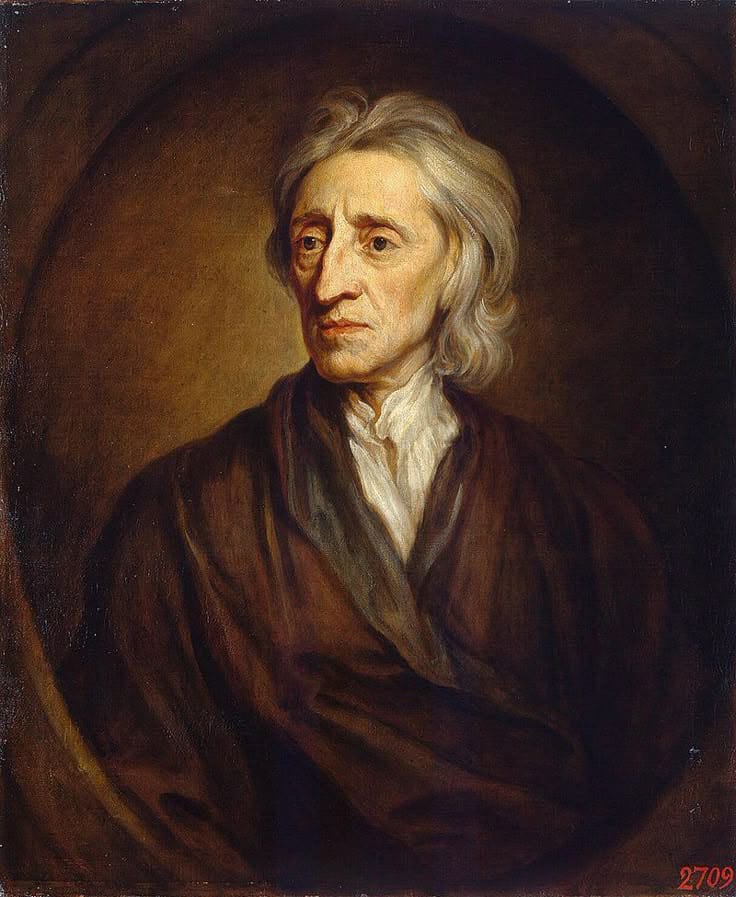
Property rights raise questions about the relationship between
individuals and resources. John Locke famously connected property with
labor and argued for a theory of appropriation subject to certain
qualifications. Robert Nozick later defended strong individual property
rights within a libertarian framework. Egalitarian and socialist
traditions have challenged such accounts by emphasizing social
cooperation, distributive justice, and the collective dimensions of
economic institutions.
Contract law raises another philosophical problem:
Why should promises and agreements create legal obligations?
Possible answers appeal to consent, reliance, fairness, autonomy, mutual
benefit, or social institutions. Not every promise is legally
enforceable, which demonstrates that moral obligation and legal
obligation can overlap without being identical.
Tort law presents questions about responsibility and compensation. When
one person's conduct causes another person harm, when should the law
require compensation? Should liability depend upon fault, risk,
causation, corrective justice, or economic efficiency? These questions
connect legal philosophy with ethics, political philosophy, and theories
of responsibility.
Constitutionalism and the Rule of Law
Constitutionalism concerns the organization and
limitation of political power through fundamental legal principles.
Constitutions commonly establish governmental institutions, distribute
powers, protect rights, and create procedures for exercising public
authority. Philosophy of law asks why constitutional rules should
constrain present political majorities and what makes constitutional
authority legitimate.
The rule of law is another central concept. At a
minimum, it concerns the idea that public power should be exercised
through established legal rules rather than arbitrary personal command.
More demanding conceptions emphasize generality, publicity, stability,
clarity, prospectivity, judicial independence, procedural fairness, and
limits on arbitrary government action.
Judicial review creates a particularly important philosophical problem.
If judges can invalidate legislation enacted by elected representatives,
does this protect constitutional rights or create an unacceptable
concentration of power in courts? The tension between democratic
decision-making and constitutional rights is often described as the
counter-majoritarian difficulty.
Constitutional interpretation therefore combines questions about law,
democracy, institutional authority, and moral principle. Philosophers
disagree about whether constitutional meaning should primarily be
understood through original meaning, historical practice, evolving
interpretation, precedent, structural principles, or moral reasoning.
These disagreements demonstrate why constitutional law is also a major
subject of political philosophy.
Legal Obligation and Political Authority
A legal system typically presents its rules as obligations: citizens are
required to pay taxes, comply with regulations, respect criminal
prohibitions, and follow legally established procedures. But the
existence of a legal requirement raises a deeper question:
Does every legal obligation create a moral obligation to
obey?
Philosophers have offered competing answers, and no single account has
achieved universal agreement.
Some theories appeal to consent. If citizens
voluntarily consent to political institutions, their legal obligations
may be understood as arising from that consent. Social contract
traditions have developed different versions of this idea, although
philosophers have also criticized the assumption that ordinary citizens
have genuinely consented to the legal systems under which they live.
Other theories appeal to fairness, gratitude, natural duties,
associative obligations, or the benefits individuals receive from legal
and political institutions. Still others argue that there may be no
general moral obligation to obey every law, even though particular laws
can impose legitimate obligations under specific circumstances.
The distinction between
legal obligation and moral obligation is therefore
crucial. A person can be legally required to do something without the
requirement being morally justified. Conversely, a person may have a
moral duty that is not legally enforceable. Philosophy of law
investigates these relationships while also considering civil
disobedience, conscientious objection, resistance, and the moral limits
of state authority.
Civil Disobedience and Unjust Laws
Civil disobedience raises the question of whether citizens may be
morally justified in deliberately violating the law. The problem becomes
especially important when a legal system enforces serious injustice. If
legal authority is legitimate, why should individuals ever resist it?
Conversely, if a law is profoundly unjust, can obedience itself become
morally wrong?
Henry David Thoreau famously defended individual resistance to unjust
governmental policies in his essay “Civil Disobedience.” Later thinkers
developed more systematic accounts. John Rawls treated civil
disobedience as a public, nonviolent, conscientious breach of law aimed
at bringing about a change in laws or government policies under certain
conditions within a nearly just constitutional democracy.
Civil disobedience differs from ordinary criminal activity because its
justification is typically connected with public principles,
conscientious protest, and an appeal to the political community.
Philosophers therefore distinguish it from rebellion, revolution,
ordinary lawbreaking, and private acts of evasion. The distinctions
matter because the moral justification of resistance depends partly upon
its purpose, method, proportionality, and relationship to democratic
institutions.
The problem also demonstrates why legal validity and moral legitimacy
cannot simply be treated as identical concepts. A rule may be legally
valid while being seriously unjust, and citizens may therefore face
difficult choices between legal compliance and moral responsibility.
Philosophy of law examines these conflicts without assuming that every
act of disobedience is automatically justified.
Historical Development of Philosophy of Law
Philosophical reflection on law begins in antiquity with questions about
justice, political authority, and the relationship between written law
and higher standards of right. Plato examined justice and political
order in works such as the Republic and Laws, while
Aristotle analyzed justice, law, citizenship, and political
constitutions. Greek philosophy established many of the conceptual
questions that continue to shape jurisprudence.
Roman thinkers contributed significantly to legal thought, while Stoic
philosophy helped develop ideas concerning universal reason and natural
law. Cicero argued for a conception of natural law grounded in reason
and nature, helping transmit classical ideas into later European
political and legal traditions. Roman jurisprudence itself also became
foundational for the development of Western private law.
Medieval philosophy integrated classical legal and political thought
with Christian theology. Augustine reflected on law, justice, political
order, and the problem of earthly government, while Thomas Aquinas
developed a systematic account of eternal, natural, human, and divine
law. Medieval jurisprudence placed legal authority within a broader
moral and theological conception of human flourishing and the common
good.
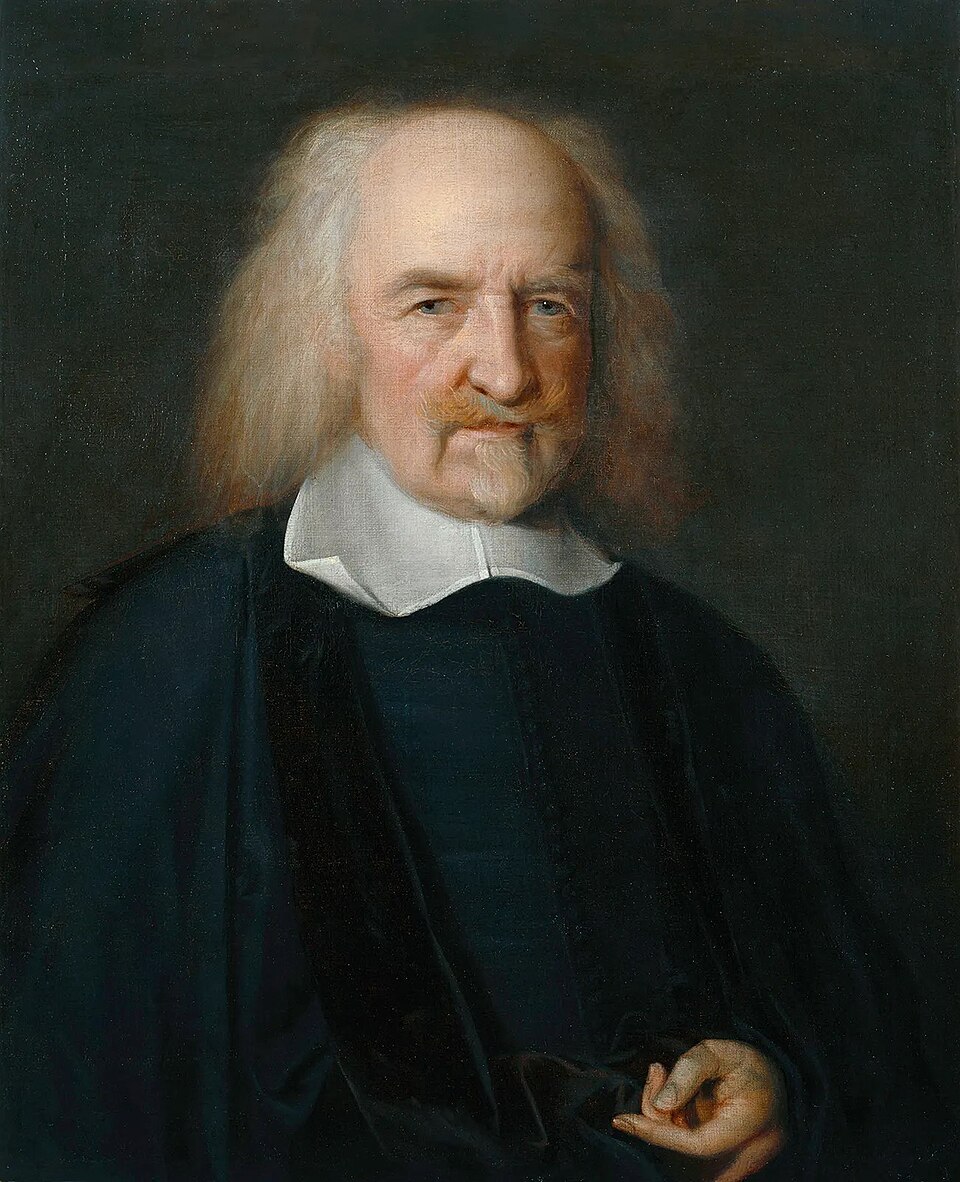
Early modern philosophy transformed debates about sovereignty, rights,
consent, and political authority. Thomas Hobbes defended a powerful
sovereign as a solution to political disorder; John Locke emphasized
natural rights, consent, property, and limited government; and
Jean-Jacques Rousseau developed a theory of popular sovereignty and the
general will. These traditions profoundly influenced modern
constitutional and political thought.
The nineteenth and twentieth centuries saw the emergence of modern
jurisprudence as a more specialized philosophical field. Jeremy Bentham
and John Austin developed utilitarian and positivist approaches; Hans
Kelsen constructed his Pure Theory of Law; H. L. A. Hart refined legal
positivism; and Ronald Dworkin challenged positivism through
interpretivism and rights-based legal reasoning. Contemporary philosophy
of law now encompasses natural law, positivism, interpretivism, critical
legal theory, feminist jurisprudence, economic analysis, legal realism,
and numerous other approaches.
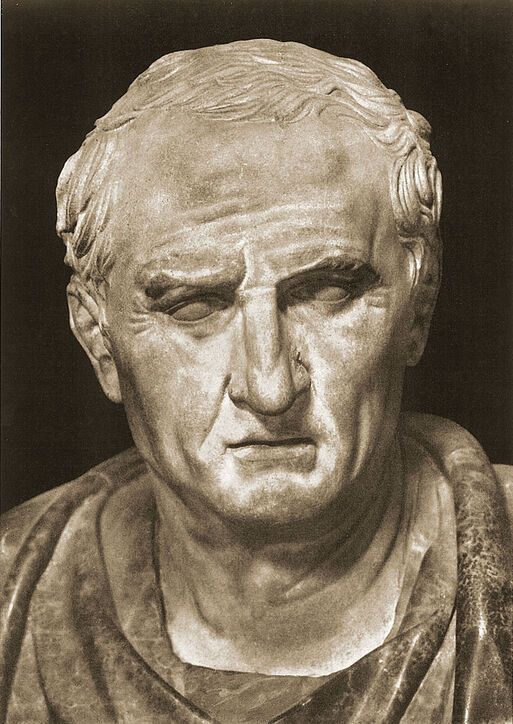
Cicero helped transmit Stoic and Roman ideas of natural law into later
Western political and legal thought. He connected law with reason,
nature, justice, and a universal moral order, arguing that genuine law
cannot be understood merely as whatever a particular political
authority happens to enact. His writings became highly influential in
later debates about natural law, universal justice, political
obligation, citizenship, and the relationship between human
legislation and moral reason.
"True law is right reason in agreement with nature."
Thomas Aquinas
Thomas Aquinas developed one of the most influential classical
accounts of natural law. His theory situated human
law within a broader framework involving eternal law, natural law,
divine law, and human law. For Aquinas, human legislation should be
connected with reason and directed toward the common good rather than
understood simply as an expression of political power. His account
became foundational for later discussions of natural law, legal
obligation, justice, authority, and the moral limits of legislation.
Ronald Dworkin challenged important versions of legal positivism by
arguing that legal reasoning involves not only rules but also
principles. His interpretive theory of law emphasized the role of
political morality, rights, and principled interpretation in
determining what the law requires in difficult cases. Dworkin's work
transformed debates about
legal interpretation, rights, judicial reasoning, and the
relationship between law and morality, making him one of the most influential philosophers of law of the
twentieth century.
"Rights are trumps."
Contemporary Philosophy of Law
Contemporary philosophy of law is characterized by methodological and
theoretical pluralism. Traditional disputes between natural law and
legal positivism remain important, but philosophers now investigate a
much wider range of questions concerning interpretation, rights,
responsibility, punishment, constitutionalism, discrimination, legal
institutions, and the relationship between law and social power.
Legal realism and critical approaches have challenged
the picture of judging as a purely mechanical application of
predetermined rules. Legal realists emphasized the importance of
judicial behavior, institutional context, practical consequences, and
social factors. Later critical legal scholars examined how legal
institutions can reproduce or conceal relations of power and inequality.
Feminist philosophy of law examines how legal
categories and institutions can reflect assumptions about gender,
family, embodiment, work, sexuality, and social power. It has
contributed to debates concerning equality, sexual violence,
reproductive autonomy, discrimination, care, and the relationship
between formal legal neutrality and substantive justice.
Contemporary jurisprudence also examines law through economic,
sociological, linguistic, and philosophical approaches. Law and
economics investigates incentives and efficiency; legal philosophy of
language analyzes interpretation and meaning; social epistemology
examines evidence and institutional knowledge; and political philosophy
examines legitimacy, constitutionalism, rights, and democratic
authority.
Emerging technologies have created additional questions. Artificial
intelligence, algorithmic decision-making, digital privacy, automated
contracts, surveillance, biotechnology, and online platforms challenge
traditional assumptions about responsibility, evidence, agency,
property, and regulation. Philosophy of law therefore continues to
evolve alongside changes in technology and social institutions.
Law, Technology, and Artificial Intelligence
Technological development increasingly creates legal questions that
existing categories were not designed to address. Artificial
intelligence can make or recommend decisions affecting employment,
finance, education, healthcare, policing, and access to services.
Philosophy of law asks what principles should govern such systems and
who should bear responsibility when automated decisions produce serious
harm.
AI also complicates traditional concepts of agency and responsibility.
If an automated system contributes to a harmful decision, responsibility
may be distributed among programmers, organizations, users, data
providers, and institutions. Determining legal responsibility therefore
requires philosophical analysis of causation, intention, foreseeability,
control, and accountability.
Digital technologies also raise questions about privacy, ownership,
freedom of expression, intellectual property, and surveillance. Personal
data can be collected and analyzed at enormous scale, while digital
platforms can influence the visibility and circulation of information.
Legal regulation must therefore balance competing interests involving
individual autonomy, public safety, economic activity, innovation, and
democratic freedom.
These problems demonstrate that philosophy of law is not limited to
traditional questions about statutes and courts. Whenever new
technologies alter relationships between individuals, institutions, and
forms of authority, jurisprudence must reconsider the concepts through
which legal responsibility and rights are understood.
Philosophy of Law and Other Fields
Philosophy of law is deeply connected with
ethics because legal systems regulate conduct that
often has moral significance. Questions about punishment,
responsibility, discrimination, rights, privacy, consent, and the
legitimacy of coercion require ethical reasoning about what people owe
one another.
Its relationship with political philosophy is equally
fundamental. Law is one of the principal instruments through which
political authority is exercised. Questions concerning sovereignty,
constitutionalism, democracy, legitimacy, civil disobedience, rights,
and the limits of state power therefore belong to both jurisprudence and
political philosophy.
Philosophy of law also overlaps with
philosophy of language. Statutes, constitutions,
contracts, judgments, and legal rules are expressed through language,
creating difficult questions about meaning, ambiguity, interpretation,
context, and intention. The philosophical analysis of language can
therefore influence theories of legal interpretation.
Its connection with epistemology and logic concerns
evidence, testimony, inference, proof, uncertainty, and legal reasoning.
Courts must determine facts from incomplete evidence, assess competing
testimony, interpret documents, and construct arguments. These
activities raise important philosophical questions about rational belief
and justified inference.
Philosophy of law also connects with
metaphysics and philosophy of mind through questions
about personal identity, responsibility, agency, intention, causation,
and the status of collective or institutional entities. The legal
system's treatment of persons, corporations, organizations, and
artificial systems raises questions about what kinds of entities can
possess rights and bear obligations.
Famous Problems and Thought Experiments
The unjust law problem asks whether an immoral rule can
genuinely be law. Natural law traditions emphasize the defectiveness of
unjust laws, while legal positivist theories generally maintain that
legal validity can be determined independently of moral merit. The
problem remains central because it forces jurisprudence to distinguish
legal existence from moral legitimacy.
The Hart–Fuller debate provides a famous
twentieth-century examination of the relationship between law and
morality. H. L. A. Hart defended a version of legal positivism, while
Lon L. Fuller argued that law possesses an “internal morality” connected
with principles governing the enterprise of subjecting human conduct to
rules. Their disagreement remains influential in debates about legal
validity and the rule of law.
The problem of judicial discretion asks what judges
should do when existing legal rules and precedents do not appear to
determine an answer. If judges create new law when deciding difficult
cases, this may raise concerns about democratic legitimacy and
retroactive lawmaking. If judges instead discover principles already
embedded in legal practice, the nature of those principles becomes the
central philosophical question.
The problem of punishment asks why a state should
intentionally impose suffering or restrictions upon someone who has
committed an offense. Retributive and consequentialist theories offer
different answers, while restorative approaches emphasize repairing harm
and restoring social relationships. The debate demonstrates how legal
institutions depend upon deeper assumptions about responsibility,
justice, and human agency.
Philosophy of Law FAQ
What is Philosophy of Law?
Philosophy of Law, also called jurisprudence, is the philosophical study
of law, legal systems, legal concepts, legal authority, interpretation,
rights, justice, punishment, and the relationship between law and
morality.
What is the main question in Philosophy of Law?
One of its most fundamental questions is what makes something law. Other
central questions concern legal authority, obligation, justice, rights,
punishment, interpretation, constitutionalism, and the relationship
between legal validity and morality.
What is natural law theory?
Natural law theory holds that law is connected in an essential way with
moral or rational standards. Different natural law theories ground this
connection differently, including in reason, human flourishing, justice,
nature, or theology.
What is legal positivism?
Legal positivism is a family of theories according to which the
existence and content of law depend fundamentally upon social facts and
institutional practices rather than necessarily upon the moral merit of
legal rules.
What is the difference between law and morality?
Law consists of rules recognized and administered by legal institutions,
while morality concerns judgments about right and wrong, duties,
virtues, and values. The philosophy of law investigates how these
systems overlap and whether moral correctness is necessary for legal
validity.
Why should people obey the law?
Philosophers have proposed different answers based on consent, fairness,
social benefits, natural duties, political legitimacy, and other
considerations. There is no universally accepted theory establishing
that every legal rule automatically creates a moral obligation to obey
it.
What is the rule of law?
The rule of law is the principle that political and governmental power
should be exercised through established legal rules rather than
arbitrary personal command. More demanding accounts also emphasize
legality, clarity, stability, procedural fairness, judicial
independence, and limits on arbitrary authority.
What is legal interpretation?
Legal interpretation is the process of determining the meaning and
application of statutes, constitutional provisions, precedents, and
other legal materials. Philosophers debate whether interpretation should
emphasize textual meaning, legislative intent, legal purpose, precedent,
historical practice, or moral and constitutional principles.
What is civil disobedience?
Civil disobedience is a deliberate violation of law undertaken as a form
of principled protest, typically against perceived injustice.
Philosophical accounts often distinguish it from ordinary criminal
conduct by emphasizing conscientiousness, publicity, political purpose,
and an appeal to principles of justice.
Why is Philosophy of Law important?
Philosophy of law helps clarify the foundations of legal authority,
justice, rights, punishment, constitutional government, and legal
interpretation. It also provides tools for evaluating difficult legal
questions involving emerging technologies, human rights, political
power, and social change.
Why Study Philosophy of Law?
Philosophy of law teaches us to look beyond the surface of legal rules
and ask why those rules should exist and what makes them legitimate. A
legal system can tell people what they are permitted or required to do,
but jurisprudence asks deeper questions about authority, justice,
rights, responsibility, and the relationship between legal power and
moral principle. These questions are essential whenever laws produce
serious consequences for human freedom and social life.
The subject is especially valuable for
critical thinking about justice. Legal disputes
frequently involve competing rights, conflicting principles, uncertain
evidence, and disagreements about interpretation. Philosophy of law
provides conceptual tools for distinguishing legal validity from moral
justification and for examining the assumptions behind competing
arguments.
Studying jurisprudence also helps explain the foundations of
constitutional democracy. Concepts such as the rule of law, separation
of powers, judicial review, rights, equality, sovereignty, and political
legitimacy are not merely institutional arrangements; they embody
philosophical commitments about how power should be exercised and how
individuals should be treated by political institutions.
Finally, philosophy of law remains essential as legal systems confront
new challenges. Artificial intelligence, biotechnology, digital privacy,
environmental regulation, algorithmic decision-making, global
governance, and changing conceptions of rights continually create
situations that existing legal categories may not address adequately.
Philosophical analysis helps identify the principles that should guide
legal development when established rules are insufficient.