Philosophy of history examines the nature, meaning, explanation, and
direction of human history. It asks what historical knowledge is, how
historians can understand the past, whether historical events have
causes or patterns, whether history shows progress, and whether human
beings can be understood as agents within larger social and historical
structures. The field therefore investigates both the reality of the
historical past and the ways in which people interpret and represent
it.
What Is Philosophy of History?
Philosophy of History is the branch of philosophy that investigates the
nature of historical reality, historical knowledge, historical
explanation, interpretation, and the meaning or direction of historical
development. It asks questions that cannot be answered simply by
collecting additional historical facts. Historians may establish that an
event occurred, but philosophy of history asks what it means to explain
that event, how historical evidence justifies claims about the past,
whether historical interpretation can be objective, how causes and
consequences should be understood, and whether the course of history has
any larger pattern, direction, purpose, or significance.
Philosophy of history therefore examines both
history as a field of human inquiry and the
philosophical assumptions involved in reconstructing the past. It
considers how historians distinguish reliable evidence from unreliable
testimony, how they identify significant events, how they explain
historical change, and how they interpret the actions of individuals and
groups. It also asks whether historical knowledge can achieve
objectivity when historians necessarily work from incomplete evidence
and particular perspectives. These problems make philosophy of history
closely concerned with explanation, interpretation, causation, evidence,
agency, structure, narrative, and historical understanding.
What is history, and what makes an account genuinely historical?
How do historians know what happened in the past?
What counts as reliable historical evidence?
Can historical knowledge be objective, or is historical interpretation
necessarily shaped by perspective?
What does it mean to explain a historical event or process?
What causes historical change, and how should individual actions be
related to wider social structures?
Does history have a direction, purpose, pattern, or meaning?
How do historical narratives shape our understanding of the past?
The term philosophy of history can refer to two closely
related but distinct approaches.
Speculative or substantive philosophy of history asks
whether history as a whole has a direction, purpose, structure, or
intelligible pattern. Thinkers such as Hegel and Marx developed
influential accounts of historical development, while other philosophers
have questioned whether history can legitimately be understood as a
unified process moving toward a particular end.
Critical or analytical philosophy of history, by
contrast, examines the concepts and methods used in historical inquiry,
including evidence, explanation, causation, interpretation, objectivity,
narrative, agency, and historical understanding.
These two approaches can be distinguished without treating them as
completely unrelated. Questions about the overall meaning or direction
of history depend partly upon assumptions about what historical
explanation can establish, while questions about historical methodology
can themselves raise broader issues about human agency, social change,
progress, and temporality. A philosophical account of history may
therefore move between questions about
how we know the past and questions about
what the historical process itself means.
Philosophy of history should also be distinguished from the
history of philosophy. The history of philosophy
studies how philosophical ideas, arguments, schools, and traditions
developed over time, whereas philosophy of history examines
philosophical questions about history itself. It is also closely related
to, but not identical with, historiography.
Historiography concerns the writing, interpretation, organization, and
representation of history, while philosophy of history asks what makes
historical knowledge possible, what kinds of explanations historians
provide, and what philosophical assumptions underlie historical
representation.
Philosophy of history: examines the philosophical
foundations, concepts, methods, and possible meaning of historical
inquiry.
Speculative philosophy of history: investigates broad
patterns, directions, purposes, or meanings attributed to history as a
whole.
Critical philosophy of history: analyzes historical
explanation, evidence, causation, objectivity, interpretation, and
methodology.
Historiography: studies how history is written,
interpreted, organized, and represented.
History of philosophy: reconstructs the development
of philosophical ideas and arguments through historical periods.
Historical knowledge presents a distinctive epistemological problem
because the past cannot normally be observed directly. Historians work
with surviving documents, inscriptions, artifacts, testimony, records,
photographs, material remains, and other forms of evidence, much of
which may be incomplete or open to interpretation. The historian must
therefore evaluate sources, establish their reliability, determine their
relevance, compare competing accounts, and construct claims that remain
accountable to available evidence. Philosophy of history asks what
justifies these procedures and whether historical conclusions can be
objective despite the fragmentary nature of the evidence.
Historical inquiry is also necessarily selective. The
past contains an enormous number of events, actions, experiences,
institutions, relationships, and processes, yet no historian can
describe all of them. Historians must decide which events matter, which
causes are significant, which individuals or groups deserve attention,
and how separate events should be connected into an intelligible
account. Selectivity does not by itself make historical knowledge
subjective or arbitrary. Rather, it raises the philosophical question of
how interpretation and judgment can operate within constraints imposed
by evidence.
Another central problem concerns
historical causation and explanation. Historical events
may have many interacting causes, including individual decisions,
economic conditions, political institutions, technological developments,
cultural beliefs, geographical circumstances, and long-term social
structures. Philosophers of history have therefore debated whether
historical explanation should resemble explanation in the natural
sciences or whether understanding human intentions and meanings requires
a distinctive interpretive approach. Questions about causation also
connect with counterfactual reasoning: historians may ask whether an
event would probably have occurred if a particular decision,
institution, or preceding condition had been different.
Closely related is the problem of
historical agency and structure. Historical change can
appear to result from decisions made by individuals, yet those decisions
occur within wider structures such as political institutions, economic
systems, social classes, cultural traditions, technologies, and
inherited norms. Philosophy of history asks how individual agency and
structural conditions interact, whether people make history under
circumstances they did not choose, and how responsibility should be
understood when outcomes emerge from complex social processes. This
problem is especially important for explaining revolutions, wars,
economic transformations, institutional change, and movements for social
reform.
Interpretation is equally fundamental because historians are not merely
listing isolated facts. They seek to understand actions, beliefs,
intentions, institutions, texts, and practices within particular
historical contexts. This connects philosophy of history with
hermeneutics, the philosophical study of interpretation
and understanding. Historical interpretation can involve moving between
individual evidence and the larger historical context in which it
becomes intelligible. The resulting relationship between evidence,
interpretation, context, and understanding raises difficult questions
about whether historians can recover past meanings and how competing
interpretations should be evaluated.
Historical narrative introduces another important philosophical problem.
Historians must organize events into accounts that identify beginnings,
developments, turning points, consequences, and relationships between
events. Narrative organization can make complex historical processes
intelligible, but philosophers have questioned how far narrative form
contributes to the construction of historical meaning. Different
accounts can emphasize different causes, actors, periods, or experiences
while remaining responsive to the same body of evidence. Philosophy of
history therefore asks how historical narratives can be both
interpretive and evidence-constrained, and whether different
perspectives can provide complementary rather than mutually exclusive
understandings of the past.
The question of historical progress brings philosophy
of history to its most ambitious level. Some theories interpret history
as a development toward greater freedom, rationality, knowledge,
justice, or human flourishing, while others reject the idea that history
follows any predetermined trajectory. Modern experiences of revolution,
industrialization, colonialism, war, genocide, technological
transformation, and social reform have repeatedly challenged simple
narratives of inevitable progress. Contemporary philosophy of history
therefore treats progress as a philosophical question rather than
assuming that historical change necessarily constitutes improvement.
At its deepest level, Philosophy of History connects epistemology,
metaphysics, philosophy of science, hermeneutics, ethics, political
philosophy, and social philosophy. Epistemology asks how historical
claims are justified; metaphysics concerns the nature of historical
events, processes, persons, and temporal change; philosophy of science
examines explanation and causation; hermeneutics investigates
interpretation and understanding; political philosophy examines power,
institutions, and collective action; and ethics becomes important when
history involves responsibility, memory, injustice, suffering, and the
interpretation of morally significant events. Philosophy of history
ultimately asks not only
what happened, but also
how we can know what happened, how we should explain it, and what—if
anything—the course of history means.
The Core Questions of Philosophy of History
One of the central questions is whether history has a direction or
purpose. Some philosophies of history describe historical development as
a movement toward freedom, rationality, civilization, emancipation, or
some other form of human fulfillment. Other approaches reject the idea
that history possesses an inherent destination and understand historical
development as contingent, plural, open-ended, or shaped by
unpredictable interactions between human actions and circumstances.
Another major question concerns historical explanation. What does it
mean to explain why something happened in history? Historians may
identify political, economic, technological, environmental, cultural,
institutional, or psychological causes. They may also explain an action
by reconstructing the beliefs, intentions, and reasons of historical
agents. Philosophy of history examines how these different forms of
explanation relate to one another.
The problem of objectivity is equally important. Historians work from
evidence, but they also make decisions about which questions to ask,
which sources to prioritize, and how to interpret conflicting evidence.
This creates a tension between the aspiration to objective historical
knowledge and the interpretive character of historical inquiry.
Philosophers debate whether objectivity requires complete neutrality or
whether responsible historical objectivity can exist despite unavoidable
perspectives.
Philosophy of history also asks what role human agency plays in
historical change. Individuals make decisions, pursue goals, resist
institutions, and create political movements, but their actions occur
within social, economic, technological, ecological, and institutional
conditions that they did not choose. The relationship between individual
agency and structural forces is therefore one of the enduring problems
of historical explanation.
Finally, philosophers ask whether history has meaning. Historical events
can be meaningful to communities, nations, families, and individuals,
but that does not necessarily establish that history as a whole has an
objective purpose. The distinction between meaning assigned to
historical events and an inherent meaning of history is therefore
crucial to debates about historical significance.
Historical Knowledge, Evidence, and Objectivity
Historical knowledge depends upon evidence from the past, including
written documents, inscriptions, artifacts, architecture, photographs,
oral testimony, material remains, administrative records, and
increasingly digital sources. These sources do not simply present the
past transparently. Historians must determine their reliability,
provenance, context, intended audience, omissions, and relationships to
other sources.
Evidence becomes historically informative through interpretation. A
document can reveal what its author believed, but it may also reveal
institutional assumptions, political interests, social conventions, or
unintended information. Historical reasoning therefore involves
comparing sources and considering both what they explicitly say and the
conditions under which they were produced.
Historical objectivity does not necessarily require historians to
eliminate every perspective. A more defensible conception of objectivity
emphasizes responsible engagement with evidence, openness to criticism,
awareness of alternative interpretations, and willingness to revise
conclusions when stronger evidence becomes available. Historical claims
can therefore be objective in the sense of being constrained and
justified by evidence even though historians must make interpretive
choices.
The problem becomes particularly difficult when evidence is incomplete
or contradictory. Many historical experiences leave limited records,
while powerful institutions often produce more surviving documentation
than marginalized groups. Philosophy of history therefore asks how
historians should reason from incomplete evidence and whether the
structure of the surviving archive can itself influence historical
representation.
Historical knowledge also involves testimony. Historians frequently
depend upon people reporting what they experienced, remembered, or were
told. Questions concerning memory, credibility, testimony, collective
memory, and the possibility of distorted recollection connect philosophy
of history with epistemology and the philosophy of mind.
Historical Causation and Explanation
Historical events usually have multiple contributing conditions rather
than a single isolated cause. A revolution, war, economic crisis, or
political transformation may involve institutions, individual decisions,
economic pressures, technological developments, cultural beliefs,
environmental conditions, and accidents. Philosophy of history asks how
historians should distinguish causes from background conditions and
significant factors from merely coincidental events.
Carl Hempel famously proposed the covering-law model of historical
explanation, according to which an event could be explained by showing
how it followed from general laws together with particular antecedent
conditions. This model attempted to bring historical explanation closer
to the explanatory structure associated with the natural sciences.
Critics argued that historical understanding often involves unique
events, intentions, meanings, and contextual interpretation that cannot
be captured adequately by general laws alone.
Interpretive approaches emphasize understanding the actions of
historical agents. To explain why a person acted, historians may need to
reconstruct what that person believed, intended, valued, feared, or
understood. Such explanations do not necessarily reject causal analysis.
Instead, they emphasize that human action has an intentional dimension
that requires interpretation.
Counterfactual reasoning is another important tool in thinking about
historical causation. Historians sometimes ask what would probably have
happened if a particular event had not occurred. Such reasoning can help
identify causally significant conditions, although counterfactual
history remains constrained by uncertainty because alternative
historical developments cannot normally be observed directly.
Historical explanation can therefore be pluralistic. Causal, structural,
intentional, interpretive, comparative, and narrative explanations may
illuminate different dimensions of the same historical development.
Philosophy of history examines how these forms of explanation can be
combined without reducing complex historical processes to a single
model.
Historical Agency, Individuals, and Social Structures
The relationship between individual agency and historical structure is
one of the central problems in social and historical philosophy.
Individuals make choices, organize movements, create institutions,
resist authority, and sometimes transform societies. At the same time,
their possibilities are shaped by institutions, economic arrangements,
cultural expectations, political systems, technologies, and inherited
social conditions.
An excessive focus on individuals can make large-scale historical
processes appear to depend entirely upon exceptional leaders. Political
revolutions, economic transformations, and social movements, however,
usually depend upon conditions extending beyond the decisions of
particular individuals. Structural approaches therefore emphasize the
institutional and material environments within which historical action
occurs.
Conversely, explaining history entirely through structures can make
human beings appear passive. Institutions do not act independently of
people who maintain, interpret, challenge, and transform them.
Historical structures are often reproduced through human practices while
simultaneously constraining those practices.
The problem is therefore not necessarily choosing between individuals
and structures. A more sophisticated philosophy of history examines how
agents act within historically inherited conditions and how repeated
actions can reinforce or transform those conditions. This interaction is
central to contemporary debates about agency, social structure,
institutions, and historical change.
Hermeneutics, Interpretation, and Historical Understanding
Hermeneutics is the philosophical study of interpretation and
understanding, particularly in relation to texts, language, actions, and
historically situated human life. It became highly important to
philosophy of history because understanding historical events often
requires interpreting meanings rather than merely identifying physical
sequences of events.
Wilhelm Dilthey distinguished the human sciences from the natural
sciences by emphasizing the importance of understanding human experience
and historical life. Human actions are meaningful because they are
connected with intentions, values, beliefs, institutions, and forms of
life. Historical inquiry therefore cannot always be modeled on the
methods used to explain physical phenomena.
The hermeneutical circle describes the relationship between the whole
and its parts in interpretation. A historical text may be understood
only in relation to its broader historical context, while that context
itself becomes clearer through examination of particular texts, actions,
and institutions. Understanding therefore develops through a reciprocal
movement between particular evidence and broader interpretation.
Later hermeneutic philosophers such as Martin Heidegger and Hans-Georg
Gadamer emphasized that interpretation is never completely free of
historical situatedness. Interpreters approach the past with concepts,
questions, linguistic traditions, and assumptions shaped by their own
historical circumstances. This does not necessarily make understanding
impossible; instead, it makes reflection on one's interpretive position
an important part of responsible historical inquiry.
Historical understanding therefore involves a distinctive relationship
between present and past. Historians seek to understand people who lived
under conditions different from their own while using concepts available
in the present. Philosophy of history asks how historians can avoid both
projecting contemporary assumptions onto the past and treating
historical people as completely inaccessible to modern understanding.
Historical Narrative and Historiography
Historians do not present the past as an unstructured collection of
facts. Historical writing organizes events into narratives that identify
beginnings, developments, turning points, consequences, and
relationships. Philosophy of history therefore examines whether
narrative form merely communicates historical knowledge or also
influences the way historical meaning is constructed.
Narrative can make complex historical processes intelligible by
connecting individual events into larger sequences. At the same time,
every narrative involves selection. Beginning a story at one event
rather than another, emphasizing particular actors, and describing an
event as a turning point can influence how readers understand its
significance.
Twentieth-century narrativist philosophers and theorists, including
Louis Mink and Hayden White, drew attention to the literary and
rhetorical dimensions of historical representation. Their work
encouraged philosophers to examine how narrative structures influence
historical interpretation. This does not necessarily imply that
historical writing is fictional or unconstrained by evidence. It raises
the question of how evidence becomes organized into intelligible
historical accounts.
Different historians can therefore produce accounts that emphasize
different dimensions of the same historical period without every account
being equally valid. A political history, social history, economic
history, intellectual history, and history of everyday life may ask
different questions and select different evidence while remaining
subject to common standards of historical argument and evidence.
Historical Progress and the Meaning of History
The idea of historical progress proposes that human societies can
develop toward improved forms of knowledge, freedom, morality,
rationality, prosperity, or political organization. Enlightenment
thinkers often placed considerable confidence in the possibility of
human progress, although their conceptions differed substantially. The
philosophical problem is whether historical change can genuinely be
called progress or whether such judgments impose contemporary values
upon the past.
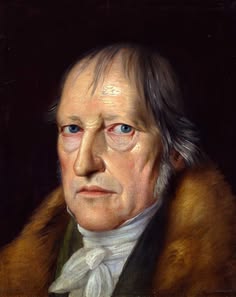
Hegel developed one of the most influential philosophies of historical
development. He interpreted history as a process through which freedom
and self-consciousness develop through contradictions and
transformations in social and political life. His philosophy of history
is strongly teleological because historical development is interpreted
in relation to a broader rational process.
Karl Marx transformed important elements of Hegel's historical
philosophy by emphasizing material production, social relations, class
conflict, and the organization of economic life. Historical development,
in Marx's account, is connected with contradictions within modes of
production and the changing relationships between productive forces and
social relations.
Critics of teleological theories argue that history does not necessarily
move toward a predetermined destination. Wars, ecological disasters,
political reversals, technological disruptions, and cultural changes can
produce outcomes that were neither inevitable nor predictable.
Contemporary philosophy therefore often treats historical progress as a
contested normative concept rather than an established law of history.
The possibility of progress remains philosophically important because
people continue to evaluate historical change. Claims about progress
require standards by which one period is judged better than another.
Philosophy of history therefore connects the concept of progress with
ethics, political philosophy, theories of justice, and competing
conceptions of human flourishing.
Hegel, Marx, and Major Theories of Historical Development
Hegel's philosophy of history presents history as a rational development
in which human freedom becomes increasingly explicit through changing
forms of social and political organization. Historical conflicts are not
merely destructive events in his framework; contradictions can generate
new forms of social and political consciousness. His approach became
enormously influential in nineteenth-century European philosophy.
Marx retained a developmental conception of history while rejecting
Hegel's idealist emphasis. Historical materialism places productive
activity, material conditions, social relations, and class conflict at
the center of historical analysis. Marx's approach profoundly influenced
later debates about capitalism, ideology, social structure, revolution,
and historical change.
Other philosophers challenged grand theories of historical development.
Johann Gottfried Herder emphasized the individuality of historical
cultures and resisted simple universal schemes of civilization.
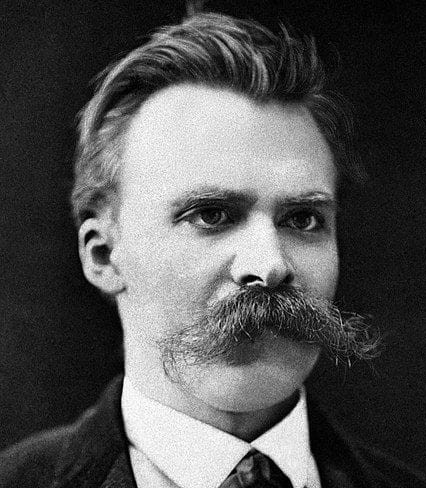
Friedrich Nietzsche questioned whether excessive historical
consciousness could become harmful to human life and argued that
historical knowledge should be considered in relation to the needs of
living.
These disagreements reveal a fundamental tension within philosophy of
history. One approach searches for broad patterns connecting different
historical periods, while another emphasizes historical particularity,
contingency, cultural difference, and the uniqueness of individual
societies. Contemporary philosophy of history continues to debate how
far general historical theories can legitimately go.
Historical Memory, Identity, and Responsibility
Historical memory concerns how individuals and communities remember,
interpret, preserve, and transmit accounts of the past. Memory can be
personal, collective, institutional, national, or cultural.
Philosophical questions arise because communities do not simply remember
the past in a neutral manner; memories can shape identity, political
belonging, moral responsibility, and relationships between generations.
Public monuments, museums, memorials, textbooks, commemorations,
archives, and national holidays all participate in the construction of
public historical memory. Decisions about what is remembered and what is
forgotten can become politically significant. Philosophy of history
therefore intersects with political philosophy and ethics when
historical memory becomes connected with power, recognition, exclusion,
or historical injustice.
Historical responsibility raises questions about what present
generations owe to people who suffered in the past. Individuals may
inherit social, political, institutional, or economic conditions created
by earlier generations without personally causing the original
injustice. Philosophers therefore debate whether responsibility can
extend across generations and what forms of remembrance, acknowledgment,
restitution, or reform may be appropriate.
Historical identity also shapes how individuals and societies understand
themselves. Nations, cultures, religions, political movements, and
communities frequently construct narratives about origins, struggles,
achievements, and collective memory. Philosophy of history asks how such
narratives can contribute to identity while avoiding mythologization,
exclusion, or the suppression of inconvenient historical evidence.
Vico developed an original philosophy of history centered on the idea
that human beings can understand the institutions and social worlds
they themselves have created. His analysis of historical development
emphasized recurring patterns, cultural formation, language, myth, and
human social institutions.
"The nature of institutions is nothing but their coming into being."
Johann Gottfried Herder
Herder emphasized historical particularity and the individuality of
cultures. He resisted the idea that all societies should be measured
against a single model of civilization and stressed the importance of
understanding peoples within their own historical and cultural
contexts.
"Each nation has its center of happiness within itself."
Oakeshott distinguished historical modes of understanding from other
forms of inquiry and criticized attempts to reduce history to
predictive scientific models. His work emphasized the distinctive
character of historical knowledge and interpretation.
"History is the historian's mode of understanding."
Philosophy of History and the Sciences
Philosophy of history has a complicated relationship with the philosophy
of science. Historians use evidence and reasoned argument, but
historical inquiry often deals with unique events and processes rather
than repeatable experiments. This raises the question of whether
historical explanation should resemble explanation in the natural
sciences or whether history requires distinctive methods.
Historical sciences such as geology, evolutionary biology, archaeology,
and cosmology also study processes that cannot simply be repeated under
laboratory conditions. Their methods demonstrate that causal reasoning
can operate even when direct experimental repetition is impossible.
Philosophy of history can therefore distinguish between different forms
of scientific explanation rather than treating experimental science as
the only model of rational inquiry.
Social sciences create another connection. Sociology, economics,
anthropology, political science, and psychology frequently use
historical evidence to explain social institutions and patterns.
Philosophy of history examines how these approaches relate to the more
interpretive and contextual methods used by historians.
Contemporary Philosophy of History
Contemporary philosophy of history no longer centers exclusively on
grand theories claiming to reveal a universal direction of human
development. Many contemporary philosophers instead examine historical
explanation, narrative, objectivity, causation, interpretation, agency,
structure, memory, identity, and the epistemic status of historical
claims.
Analytic philosophy of history continues to investigate questions about
causation, explanation, evidence, rationality, counterfactuals,
historical laws, and objectivity. Continental and hermeneutic traditions
continue to examine interpretation, temporality, historical
consciousness, language, and the relationship between past and present.
Contemporary debates also examine whose histories have been represented
and whose experiences have been excluded from traditional historical
narratives. Feminist philosophy, postcolonial thought, critical theory,
social epistemology, and related approaches have drawn attention to the
relationships between historical knowledge, power, standpoint, identity,
and institutional authority.
Digital history has introduced new philosophical questions about
archives, databases, computational methods, digitization, algorithms,
and access to historical materials. Large digital archives can make
enormous bodies of evidence searchable, but the categories and
algorithms used to organize that evidence can also influence what
researchers discover and how historical patterns are represented.
Climate change and the Anthropocene have further expanded questions
about historical scale. Human history is increasingly studied alongside
geological, ecological, and planetary processes. This challenges
philosophies of history that treat human political events as the only
significant scale of historical development and encourages broader
reflection on humanity's relationship with the natural world.
Famous Problems and Thought Experiments in Philosophy of History
The problem of historical determinism asks whether historical events are
determined by prior conditions or whether genuine alternatives remain
open. If a revolution, war, or political transformation was determined
by earlier conditions, philosophers must ask what this means for human
freedom and responsibility. If history is genuinely open, they must
explain how contingency and unpredictability fit into historical
explanation.
The problem of historical inevitability asks whether certain outcomes
were bound to occur. Historical hindsight can make events appear more
inevitable than they actually were because historians already know the
outcome. This creates a philosophical danger of interpreting the past as
though its participants possessed knowledge of the future.
The problem of the great individual asks how much historical change can
be attributed to exceptional figures. Could a revolution, scientific
transformation, or political reform have occurred without the particular
individual associated with it? Such questions help distinguish personal
influence from wider social and structural conditions.
The problem of alternative histories asks what history would look like
if a major event had unfolded differently. Counterfactual scenarios can
reveal assumptions about causation and contingency, but they also
demonstrate the limits of historical certainty because alternative
futures cannot be directly observed.
The problem of historical perspective asks whether people living in
different periods can genuinely understand one another. If historical
concepts and values differ profoundly across cultures and periods, what
allows historians to understand the past without simply projecting their
own assumptions onto it?
Philosophy of History FAQ
What is philosophy of history?
Philosophy of history is the philosophical study of historical
knowledge, explanation, interpretation, causation, agency, objectivity,
historical development, and the possible meaning or direction of
history.
What are the main questions in philosophy of history?
Major questions concern whether history has a direction, how historical
events should be explained, whether historical knowledge can be
objective, how historians interpret evidence, how individuals interact
with social structures, and whether historical progress is possible.
What is the difference between philosophy of history and
historiography?
Historiography concerns the writing and interpretation of history,
including how historians construct accounts of the past. Philosophy of
history examines the deeper philosophical assumptions involved in
historical knowledge, explanation, interpretation, causation, and
meaning.
Does history have a purpose?
Philosophers disagree. Teleological philosophies such as Hegel's
interpret history as having a broader direction or developmental
structure, while other approaches reject an inherent historical purpose
and emphasize contingency, plurality, and open-ended historical
development.
Can historians be objective?
Historians cannot eliminate every perspective or interpretive choice,
but historical claims can still be constrained by evidence, argument,
criticism, source evaluation, and standards of responsible inquiry.
Objectivity therefore need not mean complete absence of perspective.
What is historical causation?
Historical causation concerns the factors that contribute to historical
events and processes. Philosophers examine whether causes should be
understood through general patterns, individual intentions, social
structures, material conditions, counterfactual dependence, or
combinations of these approaches.
What is historical materialism?
Historical materialism is associated primarily with Karl Marx and
emphasizes material production, social relations, economic organization,
and class conflict in explaining historical development.
What is the philosophy of history according to Hegel?
Hegel interpreted history as a rational developmental process in which
human freedom and self-consciousness become increasingly articulated
through changing social and political forms.
What did Collingwood mean by understanding history?
Collingwood argued that historical understanding involves reconstructing
the thought involved in historical action. To understand an action
historically is therefore to understand the reasons, intentions, and
problems through which an agent acted.
Why is philosophy of history important?
Philosophy of history helps clarify how people know the past, how
historical explanations work, how narratives shape interpretation, how
historical responsibility should be understood, and whether claims about
progress, identity, and historical meaning can be justified.
Why Study Philosophy of History?
Philosophy of history teaches us to distinguish between the past itself
and the interpretations through which people understand it. Historical
events happened independently of later historians, but our knowledge of
those events is mediated through surviving evidence, concepts,
questions, and interpretive frameworks. Understanding this distinction
helps explain both the possibilities and limitations of historical
knowledge.
The field also provides tools for evaluating historical explanations.
Political events rarely have one simple cause, and historical
developments often result from interactions between individuals,
institutions, economic conditions, cultural beliefs, technologies, and
contingencies. Philosophy of history helps us examine how these
different factors can be related without reducing complex historical
processes to simplistic explanations.
Philosophy of history is particularly important for understanding claims
about historical progress and inevitability. Societies frequently
describe themselves as more advanced, civilized, rational, or free than
earlier societies. Philosophical examination forces us to ask what
standards make such judgments possible and whether historical
development genuinely supports them.
Studying historical interpretation also develops intellectual caution.
Historical narratives can influence political identity, collective
memory, public policy, and relationships between communities. Learning
to examine sources, assumptions, narratives, omissions, and competing
interpretations helps prevent the past from being treated as a simple
collection of unquestionable stories.
Ultimately, philosophy of history asks one of the deepest questions
about human existence: what does it mean for human beings to live
historically? People inherit institutions, languages, traditions,
memories, conflicts, technologies, and social structures from the past
while simultaneously making choices that shape the future. Understanding
this relationship between past, present, and future is central to
understanding human freedom, responsibility, identity, and collective
life.