Who Was G. W. F. Hegel?
Georg Wilhelm Friedrich Hegel (1770–1831) was one of the most influential philosophers in the history of Western thought. He was a central figure in German Idealism and developed an ambitious philosophical system dealing with logic, metaphysics, knowledge, history, politics, religion, art, and the development of human freedom. This discussion of hegel’s introduction and philosophical significance is closely connected with German Idealism, dialectical development, logic, history, freedom, religion, art, and politics. This aspect is important because it shows how Hegel connects an abstract philosophical problem with a broader account of human experience. Rather than treating the topic as an isolated doctrine, he places it within a developing network of concepts whose meanings become clearer through their relations with other concepts.
Hegel's philosophy is famous for its emphasis on development, contradiction, and change. Rather than treating philosophical concepts as permanently fixed, Hegel examined how ideas can contain tensions and internal contradictions that push thought toward more developed and comprehensive forms of understanding. This discussion of hegel’s introduction and philosophical significance is closely connected with German Idealism, dialectical development, logic, history, freedom, religion, art, and politics. A careful reading also prevents a common oversimplification. Hegel is not merely saying that everything changes or that every conflict automatically produces progress. His arguments depend on the specific structure of the subject under discussion and on the way its internal limitations become philosophically significant.
His best-known works include Phenomenology of Spirit, Science of Logic, the Encyclopaedia of the Philosophical Sciences, and Elements of the Philosophy of Right. Through these works, Hegel attempted to construct one of the most comprehensive philosophical systems ever developed. This discussion of hegel’s introduction and philosophical significance is closely connected with German Idealism, dialectical development, logic, history, freedom, religion, art, and politics. The idea also has a wider methodological significance. Hegel repeatedly asks what a concept presupposes, what it excludes, and whether it can remain coherent when examined on its own terms. This makes his philosophy concerned not only with conclusions but with the movement by which those conclusions become intelligible.
Hegel's influence extended far beyond nineteenth-century Germany. His ideas influenced Karl Marx, existentialism, phenomenology, political philosophy, theology, critical theory, and many later traditions of Continental philosophy. Understanding Hegel remains important for understanding the development of modern philosophy itself. This discussion of hegel’s introduction and philosophical significance is closely connected with German Idealism, dialectical development, logic, history, freedom, religion, art, and politics. This helps explain why Hegel’s terminology can appear difficult to readers encountering it for the first time. Terms such as mediation, negation, development, Spirit, and actuality acquire specialized meanings within his system. They should therefore be interpreted through the surrounding argument rather than reduced to ordinary dictionary definitions.
Hegel’s importance lies in the way he attempted to bring these subjects into a single philosophical system. His work asks how thought develops, how self-consciousness arises through relations with others, how freedom becomes concrete in institutions, and how historical forms of life can be understood philosophically. This makes Hegel a major reference point for later debates about metaphysics, social philosophy, political theory, and the meaning of historical change.
G. W. F. Hegel: Quick Facts
G. W. F. Hegel was a German philosopher whose work became central to German Idealism and to the development of modern European philosophy. His writings address logic, metaphysics, consciousness, history, politics, religion, and art, making him one of the most systematic thinkers of the nineteenth century.
Hegel’s philosophical career developed across several academic settings, including Jena, Heidelberg, and Berlin. The dates, works, and positions associated with his life help place his ideas within the intellectual transformation of Germany after Kant and during the political changes that reshaped Europe.
His major works are connected rather than isolated. The Phenomenology of Spirit examines the development of consciousness; the Science of Logic develops his speculative logic; the Encyclopaedia presents the architecture of his system; and the Philosophy of Right examines freedom and ethical life in modern institutions.
Several Hegelian terms have entered general philosophical vocabulary, but they often require careful interpretation. Dialectic, recognition, Spirit, Absolute, negation, mediation, and ethical life do not have exactly the same meanings they have in ordinary language. Understanding these terms in context is essential for reading Hegel accurately.
The quick facts below provide a concise reference point before the more detailed discussions that follow. Together they identify the central biographical information, philosophical tradition, major subjects, important works, and concepts associated with Hegel’s place in the history of philosophy.
- Full name — Georg Wilhelm Friedrich Hegel
- Born — 27 August 1770
- Died — 14 November 1831
- Nationality — German
- Philosophical tradition — German Idealism
- Major philosophical movement — Absolute Idealism
- Major subjects — Logic, metaphysics, epistemology, philosophy of history, political philosophy, aesthetics, and philosophy of religion
- Famous work — Phenomenology of Spirit
- Major work on logic — Science of Logic
- Major political work — Elements of the Philosophy of Right
- Famous concept — Dialectical development
- Major influence — Karl Marx and later Continental philosophy
Hegel's Early Life and Education
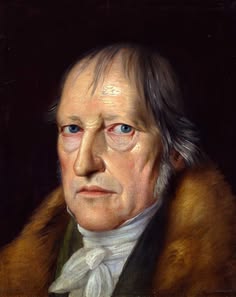
Georg Wilhelm Friedrich Hegel was born in Stuttgart in 1770, in the Duchy of Württemberg. His intellectual life developed during a period of enormous political and cultural transformation in Europe, shaped by the Enlightenment, the French Revolution, and new debates about freedom, citizenship, religion, and the modern state. This discussion of hegel’s early intellectual formation is closely connected with education, theology, classical literature, and the political upheavals of late eighteenth-century Europe. This aspect is important because it shows how Hegel connects an abstract philosophical problem with a broader account of human experience. Rather than treating the topic as an isolated doctrine, he places it within a developing network of concepts whose meanings become clearer through their relations with other concepts.
From 1788 to 1793, Hegel studied at the Tübinger Stift, where he first studied philosophy and later theology. There he formed important friendships with the poet Friedrich Hölderlin and the philosopher Friedrich Wilhelm Joseph Schelling. The intellectual lives of the three young men were closely connected during this period, and these relationships played an important role in Hegel's philosophical development. This discussion of hegel’s early intellectual formation is closely connected with education, theology, classical literature, and the political upheavals of late eighteenth-century Europe. A careful reading also prevents a common oversimplification. Hegel is not merely saying that everything changes or that every conflict automatically produces progress. His arguments depend on the specific structure of the subject under discussion and on the way its internal limitations become philosophically significant.
Although Hegel received a theological education, his interests extended far beyond formal religious study. He became increasingly concerned with philosophy, history, politics, religion, and ancient Greek thought, particularly with questions about human freedom and the relationship between individuals and the social world in which they live. This discussion of hegel’s early intellectual formation is closely connected with education, theology, classical literature, and the political upheavals of late eighteenth-century Europe. The idea also has a wider methodological significance. Hegel repeatedly asks what a concept presupposes, what it excludes, and whether it can remain coherent when examined on its own terms. This makes his philosophy concerned not only with conclusions but with the movement by which those conclusions become intelligible.
Before becoming a celebrated professor, Hegel worked as a private tutor and later held positions outside the university. He eventually taught at Jena, Heidelberg, and Berlin. His appointment to the University of Berlin in 1818 established him as one of the leading philosophers in Europe, and his lectures attracted students interested in philosophy, religion, history, politics, and modern society. This discussion of hegel’s early intellectual formation is closely connected with education, theology, classical literature, and the political upheavals of late eighteenth-century Europe. This helps explain why Hegel’s terminology can appear difficult to readers encountering it for the first time. Terms such as mediation, negation, development, Spirit, and actuality acquire specialized meanings within his system. They should therefore be interpreted through the surrounding argument rather than reduced to ordinary dictionary definitions.
Hegel's early education therefore brought together theology, classical literature, philosophy, and the political questions of his age. His generation witnessed the French Revolution and the upheavals that followed it, making questions about freedom and historical change more than abstract academic problems. These experiences formed an important intellectual background for his later attempt to understand how human freedom develops within institutions, culture, and history. This discussion of hegel’s early intellectual formation is closely connected with education, theology, classical literature, and the political upheavals of late eighteenth-century Europe. Seen in this wider context, the topic contributes to Hegel’s central concern with intelligibility and freedom. His philosophy asks how thought can understand its own development and how human beings can become increasingly capable of understanding and exercising freedom within a world of social, historical, and institutional relationships.
Hegel and German Idealism
Hegel belongs to the philosophical movement known as German Idealism, which developed in the decades following the work of Immanuel Kant. Other major figures associated with this tradition include Johann Gottlieb Fichte and Friedrich Schelling, both of whom attempted to address philosophical problems raised by Kant's critical philosophy. This discussion of german idealism is closely connected with Kant, Fichte, Schelling, the relation between subject and object, and the search for a systematic account of reason. This aspect is important because it shows how Hegel connects an abstract philosophical problem with a broader account of human experience. Rather than treating the topic as an isolated doctrine, he places it within a developing network of concepts whose meanings become clearer through their relations with other concepts.
Kant had argued that human knowledge is shaped by the conditions under which human beings experience and think about the world. His philosophy raised difficult questions about the relationship between mind and reality, freedom and nature, subject and object, and the limits of philosophical knowledge. This discussion of german idealism is closely connected with Kant, Fichte, Schelling, the relation between subject and object, and the search for a systematic account of reason. A careful reading also prevents a common oversimplification. Hegel is not merely saying that everything changes or that every conflict automatically produces progress. His arguments depend on the specific structure of the subject under discussion and on the way its internal limitations become philosophically significant.
Hegel believed that philosophy should not simply accept such divisions as permanently fixed. His philosophical project attempted to show how apparently opposed concepts are related to one another and how they can develop through processes of mediation, negation, and conceptual transformation. This discussion of german idealism is closely connected with Kant, Fichte, Schelling, the relation between subject and object, and the search for a systematic account of reason. The idea also has a wider methodological significance. Hegel repeatedly asks what a concept presupposes, what it excludes, and whether it can remain coherent when examined on its own terms. This makes his philosophy concerned not only with conclusions but with the movement by which those conclusions become intelligible.
In this sense, Hegel's philosophy is both a continuation and a transformation of Kantian philosophy. He accepted the importance of Kant's critical revolution while attempting to overcome what he regarded as unresolved oppositions within the Kantian system and within modern philosophy more broadly. This discussion of german idealism is closely connected with Kant, Fichte, Schelling, the relation between subject and object, and the search for a systematic account of reason. This helps explain why Hegel’s terminology can appear difficult to readers encountering it for the first time. Terms such as mediation, negation, development, Spirit, and actuality acquire specialized meanings within his system. They should therefore be interpreted through the surrounding argument rather than reduced to ordinary dictionary definitions.
Hegel's distinctive contribution was to argue that philosophical oppositions should be understood through their relations and development. Instead of choosing one side of a division and simply rejecting the other, he investigated how each side depends upon concepts that make its own position intelligible. This method became central to his mature account of logic, consciousness, freedom, and Spirit. This discussion of german idealism is closely connected with Kant, Fichte, Schelling, the relation between subject and object, and the search for a systematic account of reason. Seen in this wider context, the topic contributes to Hegel’s central concern with intelligibility and freedom. His philosophy asks how thought can understand its own development and how human beings can become increasingly capable of understanding and exercising freedom within a world of social, historical, and institutional relationships.
What Was Hegel's Philosophy?
Hegel's philosophy was an attempt to understand reality as dynamic, intelligible, and internally interconnected. He rejected the idea that philosophical concepts should simply be treated as isolated definitions whose meaning remains permanently unchanged. This discussion of hegel’s philosophical system is closely connected with development, mediation, conceptual relations, history, and the attempt to understand reality as an intelligible whole. This aspect is important because it shows how Hegel connects an abstract philosophical problem with a broader account of human experience. Rather than treating the topic as an isolated doctrine, he places it within a developing network of concepts whose meanings become clearer through their relations with other concepts.
For Hegel, concepts can reveal limitations when they are examined carefully. A concept may initially appear complete, yet further reflection can expose tensions within it or show that it depends upon concepts that it originally appeared to exclude. This discussion of hegel’s philosophical system is closely connected with development, mediation, conceptual relations, history, and the attempt to understand reality as an intelligible whole. A careful reading also prevents a common oversimplification. Hegel is not merely saying that everything changes or that every conflict automatically produces progress. His arguments depend on the specific structure of the subject under discussion and on the way its internal limitations become philosophically significant.
These tensions do not necessarily bring philosophical thought to an end. They can generate a movement toward a more developed understanding in which earlier categories are transformed and their limitations become more clearly intelligible. This general movement is closely connected with what is commonly called Hegelian dialectics. This discussion of hegel’s philosophical system is closely connected with development, mediation, conceptual relations, history, and the attempt to understand reality as an intelligible whole. The idea also has a wider methodological significance. Hegel repeatedly asks what a concept presupposes, what it excludes, and whether it can remain coherent when examined on its own terms. This makes his philosophy concerned not only with conclusions but with the movement by which those conclusions become intelligible.
Hegel also believed that philosophy must take history seriously. Consciousness, social institutions, political arrangements, and human understandings of freedom develop over time. Philosophy should therefore investigate human life historically rather than treating every form of thought and society as timeless and unchanging. This discussion of hegel’s philosophical system is closely connected with development, mediation, conceptual relations, history, and the attempt to understand reality as an intelligible whole. This helps explain why Hegel’s terminology can appear difficult to readers encountering it for the first time. Terms such as mediation, negation, development, Spirit, and actuality acquire specialized meanings within his system. They should therefore be interpreted through the surrounding argument rather than reduced to ordinary dictionary definitions.
This systematic approach also explains why Hegel connects apparently different areas of philosophy. Logic concerns the structures of thought, nature concerns externalized reality, and Spirit concerns forms of consciousness and social self-understanding. These domains are not presented as unrelated subjects but as interconnected moments within a broader philosophical account of intelligibility and development. This discussion of hegel’s philosophical system is closely connected with development, mediation, conceptual relations, history, and the attempt to understand reality as an intelligible whole. Seen in this wider context, the topic contributes to Hegel’s central concern with intelligibility and freedom. His philosophy asks how thought can understand its own development and how human beings can become increasingly capable of understanding and exercising freedom within a world of social, historical, and institutional relationships.
What Is Hegel's Dialectic?
Hegel's dialectic is one of the most famous and most misunderstood aspects of his philosophy. In general, dialectical thinking examines how concepts, forms of consciousness, and social realities can reveal internal tensions that lead them beyond their original and limited form. This discussion of dialectical development is closely connected with internal tension, determinate negation, mediation, contradiction, and the movement from limited concepts toward richer determinations. This aspect is important because it shows how Hegel connects an abstract philosophical problem with a broader account of human experience. Rather than treating the topic as an isolated doctrine, he places it within a developing network of concepts whose meanings become clearer through their relations with other concepts.
Hegel does not simply advise philosophers to search for contradictions everywhere. Rather, he investigates whether a particular way of thinking can successfully account for itself. When it cannot, its limitations may point toward another category or form of understanding that changes the meaning of the original position. This discussion of dialectical development is closely connected with internal tension, determinate negation, mediation, contradiction, and the movement from limited concepts toward richer determinations. A careful reading also prevents a common oversimplification. Hegel is not merely saying that everything changes or that every conflict automatically produces progress. His arguments depend on the specific structure of the subject under discussion and on the way its internal limitations become philosophically significant.
This development should not be understood as a mechanical formula that can be applied identically to every subject. The form taken by a dialectical movement depends on what is being investigated, whether logical categories, consciousness, social institutions, or historical forms of life. This discussion of dialectical development is closely connected with internal tension, determinate negation, mediation, contradiction, and the movement from limited concepts toward richer determinations. The idea also has a wider methodological significance. Hegel repeatedly asks what a concept presupposes, what it excludes, and whether it can remain coherent when examined on its own terms. This makes his philosophy concerned not only with conclusions but with the movement by which those conclusions become intelligible.
Hegel's dialectical philosophy therefore presents thought and reality as processes of relation and development rather than as collections of permanently isolated things. Something becomes intelligible partly through its limits, its relations to other things, and the processes through which it changes. This discussion of dialectical development is closely connected with internal tension, determinate negation, mediation, contradiction, and the movement from limited concepts toward richer determinations. This helps explain why Hegel’s terminology can appear difficult to readers encountering it for the first time. Terms such as mediation, negation, development, Spirit, and actuality acquire specialized meanings within his system. They should therefore be interpreted through the surrounding argument rather than reduced to ordinary dictionary definitions.
This approach became enormously influential. Later philosophers used dialectical approaches to analyze society, politics, history, economics, and culture, with Karl Marx developing one of the most influential transformations of ideas inherited from Hegel. This discussion of dialectical development is closely connected with internal tension, determinate negation, mediation, contradiction, and the movement from limited concepts toward richer determinations. Seen in this wider context, the topic contributes to Hegel’s central concern with intelligibility and freedom. His philosophy asks how thought can understand its own development and how human beings can become increasingly capable of understanding and exercising freedom within a world of social, historical, and institutional relationships.
Did Hegel Use Thesis, Antithesis, and Synthesis?
The phrase "thesis, antithesis, and synthesis" is commonly associated with Hegel, but it is misleading when presented as the universal formula of his philosophy. Hegel did not repeatedly organize his major works around a fixed three-step method using these terms. This discussion of the thesis-antithesis-synthesis formula is closely connected with the difference between Hegel’s actual dialectical method and the simplified three-step formula often attributed to him. This aspect is important because it shows how Hegel connects an abstract philosophical problem with a broader account of human experience. Rather than treating the topic as an isolated doctrine, he places it within a developing network of concepts whose meanings become clearer through their relations with other concepts.
Hegelian dialectics is more complex than beginning with a thesis, introducing its opposite, and then combining both into a synthesis. His philosophical analyses investigate how particular concepts develop tensions and how those tensions transform the concepts themselves. This discussion of the thesis-antithesis-synthesis formula is closely connected with the difference between Hegel’s actual dialectical method and the simplified three-step formula often attributed to him. A careful reading also prevents a common oversimplification. Hegel is not merely saying that everything changes or that every conflict automatically produces progress. His arguments depend on the specific structure of the subject under discussion and on the way its internal limitations become philosophically significant.
The popular formula is partly connected with the wider tradition of German Idealism and with later attempts to simplify complex philosophical developments. Its association with Hegel became widespread because it offers an easy picture of dialectical movement, even though it does not accurately describe a single universal procedure used throughout his system. This discussion of the thesis-antithesis-synthesis formula is closely connected with the difference between Hegel’s actual dialectical method and the simplified three-step formula often attributed to him. The idea also has a wider methodological significance. Hegel repeatedly asks what a concept presupposes, what it excludes, and whether it can remain coherent when examined on its own terms. This makes his philosophy concerned not only with conclusions but with the movement by which those conclusions become intelligible.
For understanding Hegel's philosophy, it is better to focus on negation, contradiction, mediation, development, and Aufhebung. These ideas provide a more accurate introduction to the complexity of Hegel's dialectical thinking than the familiar slogan of thesis, antithesis, and synthesis. This discussion of the thesis-antithesis-synthesis formula is closely connected with the difference between Hegel’s actual dialectical method and the simplified three-step formula often attributed to him. This helps explain why Hegel’s terminology can appear difficult to readers encountering it for the first time. Terms such as mediation, negation, development, Spirit, and actuality acquire specialized meanings within his system. They should therefore be interpreted through the surrounding argument rather than reduced to ordinary dictionary definitions.
The concept of Aufhebung is especially important here because it captures this more complicated movement. A previous determination can be negated while something essential about it is preserved and incorporated into a new form. Hegel's dialectic is consequently better understood as a process of determinate development than as a simple three-part recipe that produces the same kind of synthesis in every philosophical problem. This discussion of the thesis-antithesis-synthesis formula is closely connected with the difference between Hegel’s actual dialectical method and the simplified three-step formula often attributed to him. Seen in this wider context, the topic contributes to Hegel’s central concern with intelligibility and freedom. His philosophy asks how thought can understand its own development and how human beings can become increasingly capable of understanding and exercising freedom within a world of social, historical, and institutional relationships.
What Is Hegel's Absolute Idealism?
Absolute Idealism is commonly used to describe Hegel's mature philosophical position. The word "idealism" does not simply mean that physical reality is imaginary or that the world exists only inside the mind of an individual person. This discussion of absolute idealism is closely connected with the relation between thought and reality, systematic philosophy, conceptual intelligibility, and Hegel’s account of the Absolute. This aspect is important because it shows how Hegel connects an abstract philosophical problem with a broader account of human experience. Rather than treating the topic as an isolated doctrine, he places it within a developing network of concepts whose meanings become clearer through their relations with other concepts.
Hegel's idealism concerns the relationship between thought and reality and the possibility of understanding apparently opposed domains within a systematic philosophical account. He rejected the idea that mind and world must always remain two completely separate realms that can never be understood in relation to one another. This discussion of absolute idealism is closely connected with the relation between thought and reality, systematic philosophy, conceptual intelligibility, and Hegel’s account of the Absolute. A careful reading also prevents a common oversimplification. Hegel is not merely saying that everything changes or that every conflict automatically produces progress. His arguments depend on the specific structure of the subject under discussion and on the way its internal limitations become philosophically significant.
According to Hegel, reality is intelligible and philosophical thought can investigate the rational structures through which it becomes intelligible. This does not mean that every individual immediately possesses complete knowledge of reality; Hegel's philosophy instead emphasizes the difficult historical and conceptual development of understanding. This discussion of absolute idealism is closely connected with the relation between thought and reality, systematic philosophy, conceptual intelligibility, and Hegel’s account of the Absolute. The idea also has a wider methodological significance. Hegel repeatedly asks what a concept presupposes, what it excludes, and whether it can remain coherent when examined on its own terms. This makes his philosophy concerned not only with conclusions but with the movement by which those conclusions become intelligible.
The word "Absolute" refers to Hegel's attempt to think beyond merely partial and isolated perspectives toward a systematic understanding of the whole. His philosophy connects logic, nature, consciousness, society, history, art, religion, and philosophy within a comprehensive framework. This discussion of absolute idealism is closely connected with the relation between thought and reality, systematic philosophy, conceptual intelligibility, and Hegel’s account of the Absolute. This helps explain why Hegel’s terminology can appear difficult to readers encountering it for the first time. Terms such as mediation, negation, development, Spirit, and actuality acquire specialized meanings within his system. They should therefore be interpreted through the surrounding argument rather than reduced to ordinary dictionary definitions.
Absolute Idealism is therefore one of the most ambitious attempts in modern philosophy to construct a systematic account of reality, knowledge, freedom, and historical development. Its precise interpretation remains debated among scholars, particularly concerning the relationship between Hegel's logic, metaphysics, and theory of knowledge. This discussion of absolute idealism is closely connected with the relation between thought and reality, systematic philosophy, conceptual intelligibility, and Hegel’s account of the Absolute. Seen in this wider context, the topic contributes to Hegel’s central concern with intelligibility and freedom. His philosophy asks how thought can understand its own development and how human beings can become increasingly capable of understanding and exercising freedom within a world of social, historical, and institutional relationships.
Hegel's Phenomenology of Spirit
Phenomenology of Spirit, published in 1807, is one of Hegel's most important and difficult works. The book traces a developmental path through different forms of consciousness and investigates how consciousness transforms its understanding of itself and the world. This discussion of phenomenology of spirit is closely connected with the development of consciousness, self-consciousness, experience, recognition, and the transition between successive shapes of knowing. This aspect is important because it shows how Hegel connects an abstract philosophical problem with a broader account of human experience. Rather than treating the topic as an isolated doctrine, he places it within a developing network of concepts whose meanings become clearer through their relations with other concepts.
The work begins with apparently immediate forms of knowledge and moves through increasingly complex stages. Hegel examines sense-certainty, perception, understanding, self-consciousness, reason, Spirit, religion, and finally what he calls Absolute Knowing. This discussion of phenomenology of spirit is closely connected with the development of consciousness, self-consciousness, experience, recognition, and the transition between successive shapes of knowing. A careful reading also prevents a common oversimplification. Hegel is not merely saying that everything changes or that every conflict automatically produces progress. His arguments depend on the specific structure of the subject under discussion and on the way its internal limitations become philosophically significant.
A central theme is that consciousness cannot fully understand itself by treating the world as something simply external to it. Self-understanding develops through practical and social relationships with other people and through participation in a historical world. This discussion of phenomenology of spirit is closely connected with the development of consciousness, self-consciousness, experience, recognition, and the transition between successive shapes of knowing. The idea also has a wider methodological significance. Hegel repeatedly asks what a concept presupposes, what it excludes, and whether it can remain coherent when examined on its own terms. This makes his philosophy concerned not only with conclusions but with the movement by which those conclusions become intelligible.
The Phenomenology of Spirit is therefore not merely a theory about private mental experience. It is also concerned with recognition, labor, social life, history, culture, religion, and the development of increasingly complex forms of human understanding. This discussion of phenomenology of spirit is closely connected with the development of consciousness, self-consciousness, experience, recognition, and the transition between successive shapes of knowing. This helps explain why Hegel’s terminology can appear difficult to readers encountering it for the first time. Terms such as mediation, negation, development, Spirit, and actuality acquire specialized meanings within his system. They should therefore be interpreted through the surrounding argument rather than reduced to ordinary dictionary definitions.
The book later became enormously influential in phenomenology, existentialism, Marxism, psychoanalysis, and twentieth-century Continental philosophy. Its interpretation remains contested, and philosophers continue to disagree about the precise meaning of its final standpoint of Absolute Knowing. This discussion of phenomenology of spirit is closely connected with the development of consciousness, self-consciousness, experience, recognition, and the transition between successive shapes of knowing. Seen in this wider context, the topic contributes to Hegel’s central concern with intelligibility and freedom. His philosophy asks how thought can understand its own development and how human beings can become increasingly capable of understanding and exercising freedom within a world of social, historical, and institutional relationships.
Hegel's Theory of Consciousness and Self-Consciousness
Hegel's philosophy of consciousness investigates how human beings come to understand both the world and themselves. Consciousness initially appears to be directed toward objects outside the self, but this relationship becomes increasingly complex when consciousness reflects upon its own activity. This discussion of consciousness and self-consciousness is closely connected with experience, subjectivity, objectivity, desire, recognition, and the social conditions through which self-knowledge develops. This aspect is important because it shows how Hegel connects an abstract philosophical problem with a broader account of human experience. Rather than treating the topic as an isolated doctrine, he places it within a developing network of concepts whose meanings become clearer through their relations with other concepts.
Self-consciousness emerges when consciousness becomes aware of itself as a subject. However, Hegel argues that self-consciousness cannot achieve a fully adequate understanding of itself in complete isolation from other self-conscious beings. This discussion of consciousness and self-consciousness is closely connected with experience, subjectivity, objectivity, desire, recognition, and the social conditions through which self-knowledge develops. A careful reading also prevents a common oversimplification. Hegel is not merely saying that everything changes or that every conflict automatically produces progress. His arguments depend on the specific structure of the subject under discussion and on the way its internal limitations become philosophically significant.
This leads to one of Hegel's most influential ideas: self-consciousness is deeply connected with recognition. Individuals seek to be acknowledged not merely as physical objects or living creatures, but as beings capable of freedom, thought, and self-determination. This discussion of consciousness and self-consciousness is closely connected with experience, subjectivity, objectivity, desire, recognition, and the social conditions through which self-knowledge develops. The idea also has a wider methodological significance. Hegel repeatedly asks what a concept presupposes, what it excludes, and whether it can remain coherent when examined on its own terms. This makes his philosophy concerned not only with conclusions but with the movement by which those conclusions become intelligible.
Hegel's discussion of consciousness and self-consciousness therefore had a profound influence on later philosophical discussions of identity, social relations, freedom, and the formation of the human self. This discussion of consciousness and self-consciousness is closely connected with experience, subjectivity, objectivity, desire, recognition, and the social conditions through which self-knowledge develops. This helps explain why Hegel’s terminology can appear difficult to readers encountering it for the first time. Terms such as mediation, negation, development, Spirit, and actuality acquire specialized meanings within his system. They should therefore be interpreted through the surrounding argument rather than reduced to ordinary dictionary definitions.
Recognition consequently has an epistemic as well as a social significance. A self-conscious individual requires another self-conscious being who can acknowledge that individuality as free and independent. Hegel's analysis therefore connects personal identity with reciprocal relations, showing why the development of self-consciousness cannot be reduced to an entirely private psychological process. This discussion of consciousness and self-consciousness is closely connected with experience, subjectivity, objectivity, desire, recognition, and the social conditions through which self-knowledge develops. Seen in this wider context, the topic contributes to Hegel’s central concern with intelligibility and freedom. His philosophy asks how thought can understand its own development and how human beings can become increasingly capable of understanding and exercising freedom within a world of social, historical, and institutional relationships.
What Is Hegel's Master-Slave Dialectic?
The master-slave dialectic, more precisely translated as the lord-bondsman relation, appears in Hegel's Phenomenology of Spirit. It is one of the most widely discussed passages in his philosophy and explores self-consciousness, recognition, domination, dependence, fear, and labor. This discussion of lordship and bondage is closely connected with dependence, recognition, labor, self-consciousness, and the instability of a relationship based on unequal recognition. This aspect is important because it shows how Hegel connects an abstract philosophical problem with a broader account of human experience. Rather than treating the topic as an isolated doctrine, he places it within a developing network of concepts whose meanings become clearer through their relations with other concepts.
Hegel describes a struggle in which self-conscious beings seek recognition from one another. The relationship develops into an unequal structure in which one consciousness occupies the position of lord or master while the other occupies the position of bondsman or servant. This discussion of lordship and bondage is closely connected with dependence, recognition, labor, self-consciousness, and the instability of a relationship based on unequal recognition. A careful reading also prevents a common oversimplification. Hegel is not merely saying that everything changes or that every conflict automatically produces progress. His arguments depend on the specific structure of the subject under discussion and on the way its internal limitations become philosophically significant.
The relationship is paradoxical because the master's apparent independence depends upon the bondsman. Moreover, recognition from someone placed in a subordinate and dependent position cannot straightforwardly provide the fully reciprocal recognition that self-consciousness originally sought. This discussion of lordship and bondage is closely connected with dependence, recognition, labor, self-consciousness, and the instability of a relationship based on unequal recognition. The idea also has a wider methodological significance. Hegel repeatedly asks what a concept presupposes, what it excludes, and whether it can remain coherent when examined on its own terms. This makes his philosophy concerned not only with conclusions but with the movement by which those conclusions become intelligible.
The bondsman, meanwhile, undergoes an important process through fear, discipline, and labor. Through working upon and transforming the material world, the bondsman develops a more mediated relationship with both the world and the self. Labor therefore becomes philosophically significant in the development of consciousness. This discussion of lordship and bondage is closely connected with dependence, recognition, labor, self-consciousness, and the instability of a relationship based on unequal recognition. This helps explain why Hegel’s terminology can appear difficult to readers encountering it for the first time. Terms such as mediation, negation, development, Spirit, and actuality acquire specialized meanings within his system. They should therefore be interpreted through the surrounding argument rather than reduced to ordinary dictionary definitions.
Later thinkers, especially Karl Marx and twentieth-century French philosophers, gave enormous importance to this section. It became a major source for discussions of domination, labor, social conflict, recognition, and the development of human consciousness. This discussion of lordship and bondage is closely connected with dependence, recognition, labor, self-consciousness, and the instability of a relationship based on unequal recognition. Seen in this wider context, the topic contributes to Hegel’s central concern with intelligibility and freedom. His philosophy asks how thought can understand its own development and how human beings can become increasingly capable of understanding and exercising freedom within a world of social, historical, and institutional relationships.
Hegel's Philosophy of Recognition
Recognition is one of the most important themes in Hegel's philosophy. Human beings do not develop their identities entirely alone because self-consciousness is bound up with relationships to other self-conscious individuals. This discussion of recognition is closely connected with reciprocity, social identity, self-consciousness, freedom, rights, and the institutional conditions required for people to acknowledge one another. This aspect is important because it shows how Hegel connects an abstract philosophical problem with a broader account of human experience. Rather than treating the topic as an isolated doctrine, he places it within a developing network of concepts whose meanings become clearer through their relations with other concepts.
To be recognized means, in an important philosophical sense, to be acknowledged as a person possessing freedom and a capacity for self-determination. Recognition therefore connects individual identity with social relationships, mutual obligations, and institutions. This discussion of recognition is closely connected with reciprocity, social identity, self-consciousness, freedom, rights, and the institutional conditions required for people to acknowledge one another. A careful reading also prevents a common oversimplification. Hegel is not merely saying that everything changes or that every conflict automatically produces progress. His arguments depend on the specific structure of the subject under discussion and on the way its internal limitations become philosophically significant.
Hegel's ideas about recognition influenced later discussions of social identity, dignity, political equality, and interpersonal relationships. Modern philosophers continue to develop Hegelian approaches when examining struggles for recognition within social and political life. This discussion of recognition is closely connected with reciprocity, social identity, self-consciousness, freedom, rights, and the institutional conditions required for people to acknowledge one another. The idea also has a wider methodological significance. Hegel repeatedly asks what a concept presupposes, what it excludes, and whether it can remain coherent when examined on its own terms. This makes his philosophy concerned not only with conclusions but with the movement by which those conclusions become intelligible.
Recognition also helps explain why Hegel does not understand freedom as simple isolation from other people. Genuine freedom requires forms of social life in which individuals can recognize one another as free participants in a shared ethical and political world. This discussion of recognition is closely connected with reciprocity, social identity, self-consciousness, freedom, rights, and the institutional conditions required for people to acknowledge one another. This helps explain why Hegel’s terminology can appear difficult to readers encountering it for the first time. Terms such as mediation, negation, development, Spirit, and actuality acquire specialized meanings within his system. They should therefore be interpreted through the surrounding argument rather than reduced to ordinary dictionary definitions.
Recognition also helps Hegel explain the institutional character of freedom. Stable freedom cannot depend only on private intentions because individuals need social practices and institutions in which their rights and responsibilities are mutually acknowledged. Recognition therefore connects the development of the self with family, civil society, law, political membership, and the broader structure of ethical life. This discussion of recognition is closely connected with reciprocity, social identity, self-consciousness, freedom, rights, and the institutional conditions required for people to acknowledge one another. Seen in this wider context, the topic contributes to Hegel’s central concern with intelligibility and freedom. His philosophy asks how thought can understand its own development and how human beings can become increasingly capable of understanding and exercising freedom within a world of social, historical, and institutional relationships.
What Does Hegel Mean by Spirit?
The word Spirit, translated from the German Geist, is central to Hegel's philosophy. The term does not refer only to an individual soul or to a supernatural being; it has a much broader philosophical meaning. This discussion of spirit or geist is closely connected with individual consciousness, social institutions, culture, history, ethical life, and the development of collective self-understanding. This aspect is important because it shows how Hegel connects an abstract philosophical problem with a broader account of human experience. Rather than treating the topic as an isolated doctrine, he places it within a developing network of concepts whose meanings become clearer through their relations with other concepts.
Spirit concerns forms of human mindedness and self-understanding that are expressed not only individually but also socially and historically. Human consciousness is shaped through language, culture, institutions, law, religion, and other forms of collective life. This discussion of spirit or geist is closely connected with individual consciousness, social institutions, culture, history, ethical life, and the development of collective self-understanding. A careful reading also prevents a common oversimplification. Hegel is not merely saying that everything changes or that every conflict automatically produces progress. His arguments depend on the specific structure of the subject under discussion and on the way its internal limitations become philosophically significant.
Hegel's philosophy of Spirit therefore examines the development of individual consciousness alongside the development of shared human life. Social institutions and cultural practices are not merely external surroundings; they participate in the processes through which human beings understand themselves and exercise freedom. This discussion of spirit or geist is closely connected with individual consciousness, social institutions, culture, history, ethical life, and the development of collective self-understanding. The idea also has a wider methodological significance. Hegel repeatedly asks what a concept presupposes, what it excludes, and whether it can remain coherent when examined on its own terms. This makes his philosophy concerned not only with conclusions but with the movement by which those conclusions become intelligible.
This idea helps explain why Hegel believed philosophy could not understand human beings simply as isolated individuals. Consciousness develops within historical communities and social structures, while those structures are themselves created, maintained, and transformed through human activity. This discussion of spirit or geist is closely connected with individual consciousness, social institutions, culture, history, ethical life, and the development of collective self-understanding. This helps explain why Hegel’s terminology can appear difficult to readers encountering it for the first time. Terms such as mediation, negation, development, Spirit, and actuality acquire specialized meanings within his system. They should therefore be interpreted through the surrounding argument rather than reduced to ordinary dictionary definitions.
Hegel distinguishes different dimensions of Spirit as its self-understanding develops. Subjective Spirit concerns individual mindedness, while objective Spirit concerns the social and institutional forms in which freedom becomes concrete. Absolute Spirit concerns art, religion, and philosophy, where Spirit expresses and comprehends itself in increasingly explicit forms of self-understanding. This discussion of spirit or geist is closely connected with individual consciousness, social institutions, culture, history, ethical life, and the development of collective self-understanding. Seen in this wider context, the topic contributes to Hegel’s central concern with intelligibility and freedom. His philosophy asks how thought can understand its own development and how human beings can become increasingly capable of understanding and exercising freedom within a world of social, historical, and institutional relationships.
What Is Hegel's Absolute Spirit?
Absolute Spirit is a central category in Hegel's mature philosophical system. It concerns forms through which Spirit comes to a more comprehensive understanding of itself and of the fundamental structures of reality. This discussion of absolute spirit is closely connected with art, religion, philosophy, representation, conceptual thought, and the ways Spirit comes to understand its own content. This aspect is important because it shows how Hegel connects an abstract philosophical problem with a broader account of human experience. Rather than treating the topic as an isolated doctrine, he places it within a developing network of concepts whose meanings become clearer through their relations with other concepts.
Hegel associates Absolute Spirit particularly with art, religion, and philosophy. These represent different ways in which human beings express and comprehend fundamental questions about reality, meaning, freedom, and human existence. This discussion of absolute spirit is closely connected with art, religion, philosophy, representation, conceptual thought, and the ways Spirit comes to understand its own content. A careful reading also prevents a common oversimplification. Hegel is not merely saying that everything changes or that every conflict automatically produces progress. His arguments depend on the specific structure of the subject under discussion and on the way its internal limitations become philosophically significant.
Art presents meaning through sensuous and imaginative forms. Religion presents truth through representations, images, and religious forms of consciousness. Philosophy, according to Hegel, attempts to comprehend these matters through conceptual thought. This discussion of absolute spirit is closely connected with art, religion, philosophy, representation, conceptual thought, and the ways Spirit comes to understand its own content. The idea also has a wider methodological significance. Hegel repeatedly asks what a concept presupposes, what it excludes, and whether it can remain coherent when examined on its own terms. This makes his philosophy concerned not only with conclusions but with the movement by which those conclusions become intelligible.
Absolute Spirit should therefore not be understood simply as a supernatural entity existing outside history. It belongs to Hegel's broader attempt to explain how human forms of self-understanding can develop toward more comprehensive forms of knowledge and self-comprehension. This discussion of absolute spirit is closely connected with art, religion, philosophy, representation, conceptual thought, and the ways Spirit comes to understand its own content. This helps explain why Hegel’s terminology can appear difficult to readers encountering it for the first time. Terms such as mediation, negation, development, Spirit, and actuality acquire specialized meanings within his system. They should therefore be interpreted through the surrounding argument rather than reduced to ordinary dictionary definitions.
Hegel's sequence of art, religion, and philosophy does not simply rank three unrelated cultural activities. He treats them as different modes through which Spirit gives expression to its own content. Sensuous form, religious representation, and conceptual thought each provide a distinct way of approaching truth, with philosophy seeking the most explicit conceptual comprehension of what the other forms express. This discussion of absolute spirit is closely connected with art, religion, philosophy, representation, conceptual thought, and the ways Spirit comes to understand its own content. Seen in this wider context, the topic contributes to Hegel’s central concern with intelligibility and freedom. His philosophy asks how thought can understand its own development and how human beings can become increasingly capable of understanding and exercising freedom within a world of social, historical, and institutional relationships.
Hegel's Science of Logic
Science of Logic is one of Hegel's most difficult and systematic works. Written and published between 1812 and 1816, it investigates the fundamental categories through which thought and reality become intelligible, attempting to show how categories develop through their own internal relationships. This discussion of the science of logic is closely connected with Being, Essence, Concept, speculative logic, conceptual determination, and Hegel’s attempt to examine the structures of intelligibility themselves. This aspect is important because it shows how Hegel connects an abstract philosophical problem with a broader account of human experience. Rather than treating the topic as an isolated doctrine, he places it within a developing network of concepts whose meanings become clearer through their relations with other concepts.
Hegel's logic is not simply a collection of rules for constructing valid arguments. It is also a philosophical investigation into the categories of Being, Essence, and the Concept, or Begriff, and into the relationship between logical thought and metaphysical questions. This discussion of the science of logic is closely connected with Being, Essence, Concept, speculative logic, conceptual determination, and Hegel’s attempt to examine the structures of intelligibility themselves. A careful reading also prevents a common oversimplification. Hegel is not merely saying that everything changes or that every conflict automatically produces progress. His arguments depend on the specific structure of the subject under discussion and on the way its internal limitations become philosophically significant.
The work is traditionally divided into three major books dealing with Being, Essence, and the Concept. Hegel examines how apparently simple categories become more complex when their limitations, relations, and implications are subjected to philosophical analysis. This discussion of the science of logic is closely connected with Being, Essence, Concept, speculative logic, conceptual determination, and Hegel’s attempt to examine the structures of intelligibility themselves. The idea also has a wider methodological significance. Hegel repeatedly asks what a concept presupposes, what it excludes, and whether it can remain coherent when examined on its own terms. This makes his philosophy concerned not only with conclusions but with the movement by which those conclusions become intelligible.
This explains why Hegel's logic is closely connected with his metaphysics. For Hegel, investigating the movement of fundamental categories is not merely an exercise in formal reasoning but part of a deeper inquiry into the intelligibility of reality itself. This discussion of the science of logic is closely connected with Being, Essence, Concept, speculative logic, conceptual determination, and Hegel’s attempt to examine the structures of intelligibility themselves. This helps explain why Hegel’s terminology can appear difficult to readers encountering it for the first time. Terms such as mediation, negation, development, Spirit, and actuality acquire specialized meanings within his system. They should therefore be interpreted through the surrounding argument rather than reduced to ordinary dictionary definitions.
The Science of Logic remains one of the central works for understanding Hegelian dialectics and Hegel's attempt to construct a comprehensive philosophical system. Its interpretation remains a major subject of disagreement among scholars of Hegel. This discussion of the science of logic is closely connected with Being, Essence, Concept, speculative logic, conceptual determination, and Hegel’s attempt to examine the structures of intelligibility themselves. Seen in this wider context, the topic contributes to Hegel’s central concern with intelligibility and freedom. His philosophy asks how thought can understand its own development and how human beings can become increasingly capable of understanding and exercising freedom within a world of social, historical, and institutional relationships.
Hegel: Being, Nothing, and Becoming
One of the most famous discussions in Hegel's Science of Logic concerns the concepts of Being, Nothing, and Becoming. Hegel begins with the attempt to think pure Being in its most completely indeterminate form. This discussion of being, nothing, and becoming is closely connected with pure indeterminacy, conceptual transition, dialectical movement, and the difference between Hegel’s logical categories and ordinary empirical objects. This aspect is important because it shows how Hegel connects an abstract philosophical problem with a broader account of human experience. Rather than treating the topic as an isolated doctrine, he places it within a developing network of concepts whose meanings become clearer through their relations with other concepts.
Pure Being, however, contains no particular characteristic by which it can be distinguished from anything else. When thought attempts to grasp such completely indeterminate Being, Hegel argues that it proves indistinguishable from equally indeterminate Nothing. This discussion of being, nothing, and becoming is closely connected with pure indeterminacy, conceptual transition, dialectical movement, and the difference between Hegel’s logical categories and ordinary empirical objects. A careful reading also prevents a common oversimplification. Hegel is not merely saying that everything changes or that every conflict automatically produces progress. His arguments depend on the specific structure of the subject under discussion and on the way its internal limitations become philosophically significant.
Rather than treating this result as the destruction of thought, Hegel argues that the movement or transition between Being and Nothing gives rise to the concept of Becoming. Becoming expresses the inseparable movement through which the two cannot be adequately understood as permanently isolated categories. This discussion of being, nothing, and becoming is closely connected with pure indeterminacy, conceptual transition, dialectical movement, and the difference between Hegel’s logical categories and ordinary empirical objects. The idea also has a wider methodological significance. Hegel repeatedly asks what a concept presupposes, what it excludes, and whether it can remain coherent when examined on its own terms. This makes his philosophy concerned not only with conclusions but with the movement by which those conclusions become intelligible.
This example illustrates an important feature of Hegelian dialectical thinking: concepts that initially appear completely opposed can reveal a deeper relationship when their meaning and limitations are examined philosophically. This discussion of being, nothing, and becoming is closely connected with pure indeterminacy, conceptual transition, dialectical movement, and the difference between Hegel’s logical categories and ordinary empirical objects. This helps explain why Hegel’s terminology can appear difficult to readers encountering it for the first time. Terms such as mediation, negation, development, Spirit, and actuality acquire specialized meanings within his system. They should therefore be interpreted through the surrounding argument rather than reduced to ordinary dictionary definitions.
Hegel's point is not that ordinary objects are literally nothing or that existence simply disappears into nonexistence. The argument concerns the most abstract attempt to think pure Being without any determination. Because such Being lacks all distinguishing content, it cannot remain conceptually isolated from pure Nothing, and their unity is expressed in the dynamic category of Becoming. This discussion of being, nothing, and becoming is closely connected with pure indeterminacy, conceptual transition, dialectical movement, and the difference between Hegel’s logical categories and ordinary empirical objects. Seen in this wider context, the topic contributes to Hegel’s central concern with intelligibility and freedom. His philosophy asks how thought can understand its own development and how human beings can become increasingly capable of understanding and exercising freedom within a world of social, historical, and institutional relationships.
Hegel's Philosophy of Negation and Contradiction
Negation plays a central role in Hegel's philosophy. Development often occurs because a particular form of thought encounters its own limitations and is transformed through its relation to what it excludes, opposes, or cannot adequately explain. This discussion of negation and contradiction is closely connected with determinate negation, internal tension, development, sublation or Aufhebung, and the distinction between dialectical contradiction and simple formal denial. This aspect is important because it shows how Hegel connects an abstract philosophical problem with a broader account of human experience. Rather than treating the topic as an isolated doctrine, he places it within a developing network of concepts whose meanings become clearer through their relations with other concepts.
Hegel does not treat negation as merely destructive. A negation can reveal the inadequacy of an earlier position while also preserving aspects of it within a more developed form of understanding. This discussion of negation and contradiction is closely connected with determinate negation, internal tension, development, sublation or Aufhebung, and the distinction between dialectical contradiction and simple formal denial. A careful reading also prevents a common oversimplification. Hegel is not merely saying that everything changes or that every conflict automatically produces progress. His arguments depend on the specific structure of the subject under discussion and on the way its internal limitations become philosophically significant.
This complex process is associated with the German concept Aufhebung, often translated as "sublation." The term carries several connected meanings, including cancelling, preserving, and raising or transforming something into a new context. This discussion of negation and contradiction is closely connected with determinate negation, internal tension, development, sublation or Aufhebung, and the distinction between dialectical contradiction and simple formal denial. The idea also has a wider methodological significance. Hegel repeatedly asks what a concept presupposes, what it excludes, and whether it can remain coherent when examined on its own terms. This makes his philosophy concerned not only with conclusions but with the movement by which those conclusions become intelligible.
Hegelian development is therefore not a simple process in which old ideas disappear completely. Earlier stages can remain present within later and more comprehensive forms, although their meaning and philosophical position have been transformed. This discussion of negation and contradiction is closely connected with determinate negation, internal tension, development, sublation or Aufhebung, and the distinction between dialectical contradiction and simple formal denial. This helps explain why Hegel’s terminology can appear difficult to readers encountering it for the first time. Terms such as mediation, negation, development, Spirit, and actuality acquire specialized meanings within his system. They should therefore be interpreted through the surrounding argument rather than reduced to ordinary dictionary definitions.
This is why Hegel's notion of contradiction should not be confused with the ordinary logical claim that a proposition and its negation are both true in exactly the same respect. His dialectical contradictions concern determinations whose meanings generate tensions within a developing conceptual structure. Negation can consequently be productive when it exposes the limits of a determination and drives thought toward a richer one. This discussion of negation and contradiction is closely connected with determinate negation, internal tension, development, sublation or Aufhebung, and the distinction between dialectical contradiction and simple formal denial. Seen in this wider context, the topic contributes to Hegel’s central concern with intelligibility and freedom. His philosophy asks how thought can understand its own development and how human beings can become increasingly capable of understanding and exercising freedom within a world of social, historical, and institutional relationships.
Hegel's Philosophy of History
Hegel's philosophy of history is among his most influential and controversial ideas. Hegel argued that history is not simply a random sequence of unrelated events but can be philosophically understood as involving the development of human consciousness of freedom. This discussion of hegel’s philosophy of history is closely connected with historical development, freedom, political institutions, contingency, cultural forms, and the philosophical interpretation of long-term changes in human self-understanding. This aspect is important because it shows how Hegel connects an abstract philosophical problem with a broader account of human experience. Rather than treating the topic as an isolated doctrine, he places it within a developing network of concepts whose meanings become clearer through their relations with other concepts.
Different historical societies express different understandings of freedom. Political and social institutions reveal how a particular historical community understands the relationship between the individual, society, authority, and human self-determination. This discussion of hegel’s philosophy of history is closely connected with historical development, freedom, political institutions, contingency, cultural forms, and the philosophical interpretation of long-term changes in human self-understanding. A careful reading also prevents a common oversimplification. Hegel is not merely saying that everything changes or that every conflict automatically produces progress. His arguments depend on the specific structure of the subject under discussion and on the way its internal limitations become philosophically significant.
Hegel is therefore famous for the claim that history has a rational dimension. This does not simply mean that every historical event is morally good or that suffering is automatically justified. Rather, Hegel attempted to understand historical development as intelligible rather than as nothing more than meaningless chaos. This discussion of hegel’s philosophy of history is closely connected with historical development, freedom, political institutions, contingency, cultural forms, and the philosophical interpretation of long-term changes in human self-understanding. The idea also has a wider methodological significance. Hegel repeatedly asks what a concept presupposes, what it excludes, and whether it can remain coherent when examined on its own terms. This makes his philosophy concerned not only with conclusions but with the movement by which those conclusions become intelligible.
His historical philosophy gave enormous importance to conflict, transformation, and the emergence of new social forms. Existing institutions can contain tensions and contradictions that contribute to processes of historical change. This discussion of hegel’s philosophy of history is closely connected with historical development, freedom, political institutions, contingency, cultural forms, and the philosophical interpretation of long-term changes in human self-understanding. This helps explain why Hegel’s terminology can appear difficult to readers encountering it for the first time. Terms such as mediation, negation, development, Spirit, and actuality acquire specialized meanings within his system. They should therefore be interpreted through the surrounding argument rather than reduced to ordinary dictionary definitions.
Hegel's philosophy of history strongly influenced Karl Marx, although Marx rejected crucial features of Hegel's idealism and developed an account of historical development that gave much greater importance to material production, economic relations, and class conflict. This discussion of hegel’s philosophy of history is closely connected with historical development, freedom, political institutions, contingency, cultural forms, and the philosophical interpretation of long-term changes in human self-understanding. Seen in this wider context, the topic contributes to Hegel’s central concern with intelligibility and freedom. His philosophy asks how thought can understand its own development and how human beings can become increasingly capable of understanding and exercising freedom within a world of social, historical, and institutional relationships.
What Was Hegel's Philosophy of Freedom?
Freedom is one of the central concepts of Hegel's entire philosophical system. Hegel did not understand freedom merely as the ability to do whatever one personally desires without interference. This discussion of hegel’s philosophy of freedom is closely connected with self-determination, recognition, rights, ethical life, rational agency, and the social institutions through which freedom becomes concrete. This aspect is important because it shows how Hegel connects an abstract philosophical problem with a broader account of human experience. Rather than treating the topic as an isolated doctrine, he places it within a developing network of concepts whose meanings become clearer through their relations with other concepts.
A person may possess many choices and still remain dependent upon impulses, ignorance, poverty, or social conditions that limit genuine self-determination. For Hegel, freedom involves the development of a will capable of acting rationally and recognizing itself within a social world of freedom. This discussion of hegel’s philosophy of freedom is closely connected with self-determination, recognition, rights, ethical life, rational agency, and the social institutions through which freedom becomes concrete. A careful reading also prevents a common oversimplification. Hegel is not merely saying that everything changes or that every conflict automatically produces progress. His arguments depend on the specific structure of the subject under discussion and on the way its internal limitations become philosophically significant.
Hegel therefore connected freedom with social and political institutions. Law, ethical life, family relationships, civil society, and the state can provide structures within which individuals exercise and recognize freedom. This discussion of hegel’s philosophy of freedom is closely connected with self-determination, recognition, rights, ethical life, rational agency, and the social institutions through which freedom becomes concrete. The idea also has a wider methodological significance. Hegel repeatedly asks what a concept presupposes, what it excludes, and whether it can remain coherent when examined on its own terms. This makes his philosophy concerned not only with conclusions but with the movement by which those conclusions become intelligible.
This makes Hegel's philosophy of freedom fundamentally social. Individual liberty and social institutions are not necessarily opposites; Hegel attempted to explain how properly developed institutions could make freedom concrete rather than leaving it merely abstract. This discussion of hegel’s philosophy of freedom is closely connected with self-determination, recognition, rights, ethical life, rational agency, and the social institutions through which freedom becomes concrete. This helps explain why Hegel’s terminology can appear difficult to readers encountering it for the first time. Terms such as mediation, negation, development, Spirit, and actuality acquire specialized meanings within his system. They should therefore be interpreted through the surrounding argument rather than reduced to ordinary dictionary definitions.
His theory remains important in modern political philosophy because it challenges purely individualistic definitions of freedom and asks what social, legal, and institutional conditions are necessary for individuals to become genuinely self-determining. This discussion of hegel’s philosophy of freedom is closely connected with self-determination, recognition, rights, ethical life, rational agency, and the social institutions through which freedom becomes concrete. Seen in this wider context, the topic contributes to Hegel’s central concern with intelligibility and freedom. His philosophy asks how thought can understand its own development and how human beings can become increasingly capable of understanding and exercising freedom within a world of social, historical, and institutional relationships.
Hegel's Political Philosophy
Hegel's political philosophy is most systematically presented in Elements of the Philosophy of Right, published in 1821. The work examines property, abstract right, morality, ethical life, civil society, and the political state. This discussion of hegel’s political philosophy is closely connected with abstract right, morality, ethical life, civil society, the state, individual freedom, social interdependence, and institutional recognition. This aspect is important because it shows how Hegel connects an abstract philosophical problem with a broader account of human experience. Rather than treating the topic as an isolated doctrine, he places it within a developing network of concepts whose meanings become clearer through their relations with other concepts.
Hegel rejected the idea that society should be understood only as a collection of isolated individuals pursuing private interests. Individuals become who they are through social relationships, institutions, laws, and shared forms of ethical life. This discussion of hegel’s political philosophy is closely connected with abstract right, morality, ethical life, civil society, the state, individual freedom, social interdependence, and institutional recognition. A careful reading also prevents a common oversimplification. Hegel is not merely saying that everything changes or that every conflict automatically produces progress. His arguments depend on the specific structure of the subject under discussion and on the way its internal limitations become philosophically significant.
At the same time, Hegel did not simply argue that individuals should disappear into society. One of his central philosophical problems was how individual freedom and social institutions could be understood together rather than treated as mutually exclusive. This discussion of hegel’s political philosophy is closely connected with abstract right, morality, ethical life, civil society, the state, individual freedom, social interdependence, and institutional recognition. The idea also has a wider methodological significance. Hegel repeatedly asks what a concept presupposes, what it excludes, and whether it can remain coherent when examined on its own terms. This makes his philosophy concerned not only with conclusions but with the movement by which those conclusions become intelligible.
His political thought remains controversial because of debates about his understanding of the state and authority. Some interpreters have presented Hegel as a defender of authoritarian political power, while others emphasize his concern with constitutional institutions, legal freedom, representation, and the social conditions necessary for individual self-realization. This discussion of hegel’s political philosophy is closely connected with abstract right, morality, ethical life, civil society, the state, individual freedom, social interdependence, and institutional recognition. This helps explain why Hegel’s terminology can appear difficult to readers encountering it for the first time. Terms such as mediation, negation, development, Spirit, and actuality acquire specialized meanings within his system. They should therefore be interpreted through the surrounding argument rather than reduced to ordinary dictionary definitions.
Hegel's political philosophy is consequently concerned with reconciling individual rights and collective institutions rather than simply choosing one over the other. His discussion of civil society recognizes economic interdependence and social inequality, while his account of the state examines the institutional conditions under which universal interests and individual freedom can be brought into a more coherent relationship. This discussion of hegel’s political philosophy is closely connected with abstract right, morality, ethical life, civil society, the state, individual freedom, social interdependence, and institutional recognition. Seen in this wider context, the topic contributes to Hegel’s central concern with intelligibility and freedom. His philosophy asks how thought can understand its own development and how human beings can become increasingly capable of understanding and exercising freedom within a world of social, historical, and institutional relationships.
Hegel: Family, Civil Society, and the State
Hegel's concept of ethical life, or Sittlichkeit, describes the way freedom becomes embodied within concrete social institutions and practices. He identifies the family, civil society, and the state as major dimensions of ethical life. This discussion of family, civil society, and the state is closely connected with the different levels of ethical life, social dependence, legal rights, economic relations, civic participation, and the institutional mediation of individual freedom. This aspect is important because it shows how Hegel connects an abstract philosophical problem with a broader account of human experience. Rather than treating the topic as an isolated doctrine, he places it within a developing network of concepts whose meanings become clearer through their relations with other concepts.
The family represents a form of ethical unity grounded in personal relationships, mutual commitment, and care. It provides an early social environment in which individuals experience belonging, responsibility, and forms of shared life. This discussion of family, civil society, and the state is closely connected with the different levels of ethical life, social dependence, legal rights, economic relations, civic participation, and the institutional mediation of individual freedom. A careful reading also prevents a common oversimplification. Hegel is not merely saying that everything changes or that every conflict automatically produces progress. His arguments depend on the specific structure of the subject under discussion and on the way its internal limitations become philosophically significant.
Civil society is the sphere of economic activity, private interests, work, exchange, and social interaction. Hegel recognized that civil society produces wealth and forms of cooperation, but he also recognized that it can generate inequality, poverty, and conflicts between competing interests. This discussion of family, civil society, and the state is closely connected with the different levels of ethical life, social dependence, legal rights, economic relations, civic participation, and the institutional mediation of individual freedom. The idea also has a wider methodological significance. Hegel repeatedly asks what a concept presupposes, what it excludes, and whether it can remain coherent when examined on its own terms. This makes his philosophy concerned not only with conclusions but with the movement by which those conclusions become intelligible.
The state, in Hegel's philosophical system, represents a higher institutional form of ethical and political life. It should not simply be confused with a particular government or ruler; it belongs to Hegel's broader theory of law, institutions, citizenship, political organization, and collective freedom. This discussion of family, civil society, and the state is closely connected with the different levels of ethical life, social dependence, legal rights, economic relations, civic participation, and the institutional mediation of individual freedom. This helps explain why Hegel’s terminology can appear difficult to readers encountering it for the first time. Terms such as mediation, negation, development, Spirit, and actuality acquire specialized meanings within his system. They should therefore be interpreted through the surrounding argument rather than reduced to ordinary dictionary definitions.
These three spheres should not be read as three completely separate organizations. Hegel presents them as interconnected forms through which individual freedom becomes increasingly mediated by social institutions. Ethical life therefore describes a structure in which personal identity, economic activity, legal rights, civic participation, and collective purposes are connected rather than treated as isolated aspects of life. This discussion of family, civil society, and the state is closely connected with the different levels of ethical life, social dependence, legal rights, economic relations, civic participation, and the institutional mediation of individual freedom. Seen in this wider context, the topic contributes to Hegel’s central concern with intelligibility and freedom. His philosophy asks how thought can understand its own development and how human beings can become increasingly capable of understanding and exercising freedom within a world of social, historical, and institutional relationships.
Hegel's Philosophy of Religion
Religion occupied an important place in Hegel's intellectual development. Although he began his formal education in theology, his mature philosophy attempted to understand religion through its relationship with history, consciousness, culture, and philosophical thought. This discussion of hegel’s philosophy of religion is closely connected with religious representation, Christianity, incarnation, reconciliation, Spirit, and the relationship between religious consciousness and philosophical comprehension. This aspect is important because it shows how Hegel connects an abstract philosophical problem with a broader account of human experience. Rather than treating the topic as an isolated doctrine, he places it within a developing network of concepts whose meanings become clearer through their relations with other concepts.
Hegel regarded religion as one of the major ways human beings attempt to comprehend their relationship with ultimate reality. Religious ideas can express profound truths, but they do so through images, narratives, symbols, and what Hegel calls forms of representation. This discussion of hegel’s philosophy of religion is closely connected with religious representation, Christianity, incarnation, reconciliation, Spirit, and the relationship between religious consciousness and philosophical comprehension. A careful reading also prevents a common oversimplification. Hegel is not merely saying that everything changes or that every conflict automatically produces progress. His arguments depend on the specific structure of the subject under discussion and on the way its internal limitations become philosophically significant.
Philosophy, according to Hegel, attempts to comprehend similar fundamental questions through conceptual thought. This does not simply mean that philosophy dismisses religion as meaningless; Hegel instead investigates different forms through which human beings seek and express truth. This discussion of hegel’s philosophy of religion is closely connected with religious representation, Christianity, incarnation, reconciliation, Spirit, and the relationship between religious consciousness and philosophical comprehension. The idea also has a wider methodological significance. Hegel repeatedly asks what a concept presupposes, what it excludes, and whether it can remain coherent when examined on its own terms. This makes his philosophy concerned not only with conclusions but with the movement by which those conclusions become intelligible.
Hegel's lectures on the philosophy of religion, published after his death from lecture materials and notes, became highly influential in modern theology and helped shape later philosophical discussions about Christianity, history, God, faith, and reason. This discussion of hegel’s philosophy of religion is closely connected with religious representation, Christianity, incarnation, reconciliation, Spirit, and the relationship between religious consciousness and philosophical comprehension. This helps explain why Hegel’s terminology can appear difficult to readers encountering it for the first time. Terms such as mediation, negation, development, Spirit, and actuality acquire specialized meanings within his system. They should therefore be interpreted through the surrounding argument rather than reduced to ordinary dictionary definitions.
Christianity received particular philosophical attention in Hegel's mature treatment because he interpreted themes such as incarnation, reconciliation, and the relation between finite and infinite through his account of Spirit. His approach was neither simply traditional theology nor a straightforward rejection of religion. Instead, he sought to interpret religious content philosophically and place it within his broader account of human and divine self-understanding. This discussion of hegel’s philosophy of religion is closely connected with religious representation, Christianity, incarnation, reconciliation, Spirit, and the relationship between religious consciousness and philosophical comprehension. Seen in this wider context, the topic contributes to Hegel’s central concern with intelligibility and freedom. His philosophy asks how thought can understand its own development and how human beings can become increasingly capable of understanding and exercising freedom within a world of social, historical, and institutional relationships.
Hegel's Philosophy of Art and Aesthetics
Hegel developed an important philosophy of art in his lectures on aesthetics. He understood art as a significant way through which human beings express ideas and understand aspects of spiritual, cultural, and historical life. This discussion of hegel’s philosophy of art is closely connected with symbolic, classical, and romantic art, the relation between form and content, historical culture, and the changing role of art in spiritual life. This aspect is important because it shows how Hegel connects an abstract philosophical problem with a broader account of human experience. Rather than treating the topic as an isolated doctrine, he places it within a developing network of concepts whose meanings become clearer through their relations with other concepts.
Art is not merely decoration or entertainment in Hegel's philosophy. It can reveal how a culture understands humanity, nature, religion, freedom, and its place within the world. This discussion of hegel’s philosophy of art is closely connected with symbolic, classical, and romantic art, the relation between form and content, historical culture, and the changing role of art in spiritual life. A careful reading also prevents a common oversimplification. Hegel is not merely saying that everything changes or that every conflict automatically produces progress. His arguments depend on the specific structure of the subject under discussion and on the way its internal limitations become philosophically significant.
Hegel discussed the historical development of artistic forms and distinguished broad forms commonly described as symbolic, classical, and romantic art. These categories formed part of his larger attempt to understand artistic and cultural development historically. This discussion of hegel’s philosophy of art is closely connected with symbolic, classical, and romantic art, the relation between form and content, historical culture, and the changing role of art in spiritual life. The idea also has a wider methodological significance. Hegel repeatedly asks what a concept presupposes, what it excludes, and whether it can remain coherent when examined on its own terms. This makes his philosophy concerned not only with conclusions but with the movement by which those conclusions become intelligible.
His philosophy of art remains influential because it connects aesthetics with history, culture, religion, and the changing forms through which human beings express and comprehend meaning. This discussion of hegel’s philosophy of art is closely connected with symbolic, classical, and romantic art, the relation between form and content, historical culture, and the changing role of art in spiritual life. This helps explain why Hegel’s terminology can appear difficult to readers encountering it for the first time. Terms such as mediation, negation, development, Spirit, and actuality acquire specialized meanings within his system. They should therefore be interpreted through the surrounding argument rather than reduced to ordinary dictionary definitions.
Hegel's famous claim about the historical development of art should not be reduced to the idea that art simply becomes obsolete. His analysis concerns changing relationships between spiritual content and sensuous artistic form. Symbolic, classical, and romantic forms represent different ways in which cultures give shape to ideas, making art an important historical expression of human self-understanding. This discussion of hegel’s philosophy of art is closely connected with symbolic, classical, and romantic art, the relation between form and content, historical culture, and the changing role of art in spiritual life. Seen in this wider context, the topic contributes to Hegel’s central concern with intelligibility and freedom. His philosophy asks how thought can understand its own development and how human beings can become increasingly capable of understanding and exercising freedom within a world of social, historical, and institutional relationships.
Major Works of G. W. F. Hegel
Hegel’s major works form a connected body of philosophical writing rather than a collection of unrelated books. Across them, he develops an account of thought, reality, consciousness, history, politics, religion, and art as interconnected dimensions of a systematic philosophical project.
The Phenomenology of Spirit is especially important for understanding Hegel’s account of the development of consciousness and self-consciousness. The Science of Logic then investigates fundamental categories of thought, while the Encyclopaedia presents a compressed overview of the larger philosophical system.
The Philosophy of Right is central to Hegel’s political and social philosophy. It examines abstract right, morality, and ethical life, including the family, civil society, and the state. The work connects individual freedom with legal and institutional structures rather than treating freedom as mere private choice.
Some of Hegel’s other influential writings survive through lectures, revisions, or posthumous editorial publication. His lectures on philosophy of history, religion, and aesthetics became particularly influential, although readers should distinguish texts Hegel published himself from lecture materials reconstructed after his death.
The list below therefore provides a useful map of Hegel’s principal writings and the philosophical problems associated with them. Reading these works together makes it easier to see how his discussions of logic, consciousness, history, art, religion, and politics belong to a broader systematic conception of philosophy.
- Phenomenology of Spirit — Hegel's major early work tracing the development of consciousness, self-consciousness, reason, Spirit, religion, and Absolute Knowing.
- Science of Logic — A systematic investigation of Being, Essence, the Concept, dialectical development, and the fundamental structures of thought.
- Encyclopaedia of the Philosophical Sciences — A systematic presentation of Hegel's philosophy of Logic, Nature, and Spirit.
- Elements of the Philosophy of Right — A major work on law, morality, ethical life, civil society, the state, and freedom.
- Lectures on the Philosophy of History — Posthumously published lectures that became a major source for understanding Hegel's ideas about historical development and the consciousness of freedom.
- Lectures on Aesthetics — Posthumously published materials based on Hegel's lectures concerning art, beauty, artistic history, and cultural expression.
- Lectures on the Philosophy of Religion — Posthumously published lecture materials examining religion, God, Christianity, and the philosophical understanding of religious consciousness.
Hegel's Main Philosophical Ideas
1. Reality and Thought Must Be Understood Dynamically
Hegel understood philosophical concepts and forms of consciousness as dynamic rather than permanently fixed. Internal tensions can reveal the limitations of an earlier form and contribute to the development of a more comprehensive understanding. This discussion of 1. reality and thought must be understood dynamically is closely connected with Hegel’s main philosophical ideas and their relation to development, recognition, freedom, history, Spirit, and systematic thought. This aspect is important because it shows how Hegel connects an abstract philosophical problem with a broader account of human experience. Rather than treating the topic as an isolated doctrine, he places it within a developing network of concepts whose meanings become clearer through their relations with other concepts.
Hegel understood philosophical concepts and forms of consciousness as dynamic rather than permanently fixed. Internal tensions can reveal the limitations of an earlier form and contribute to the development of a more comprehensive understanding. This discussion of 1. reality and thought must be understood dynamically is closely connected with Hegel’s main philosophical ideas and their relation to development, recognition, freedom, history, Spirit, and systematic thought. This aspect is important because it shows how Hegel connects an abstract philosophical problem with a broader account of human experience. Rather than treating the topic as an isolated doctrine, he places it within a developing network of concepts whose meanings become clearer through their relations with other concepts. This idea also illustrates Hegel’s rejection of isolated philosophical categories. A concept becomes intelligible through its relations, presuppositions, and development, so understanding requires attention to the wider structure in which the concept operates.
Hegel understood philosophical concepts and forms of consciousness as dynamic rather than permanently fixed. Internal tensions can reveal the limitations of an earlier form and contribute to the development of a more comprehensive understanding. This discussion of 1. reality and thought must be understood dynamically is closely connected with Hegel’s main philosophical ideas and their relation to development, recognition, freedom, history, Spirit, and systematic thought. This aspect is important because it shows how Hegel connects an abstract philosophical problem with a broader account of human experience. Rather than treating the topic as an isolated doctrine, he places it within a developing network of concepts whose meanings become clearer through their relations with other concepts. The point should not be reduced to a slogan. Hegel’s argument depends on distinctions between different levels of analysis and on the specific way a limitation becomes visible within a particular form of thought, consciousness, or social life.
Hegel understood philosophical concepts and forms of consciousness as dynamic rather than permanently fixed. Internal tensions can reveal the limitations of an earlier form and contribute to the development of a more comprehensive understanding. This discussion of 1. reality and thought must be understood dynamically is closely connected with Hegel’s main philosophical ideas and their relation to development, recognition, freedom, history, Spirit, and systematic thought. This aspect is important because it shows how Hegel connects an abstract philosophical problem with a broader account of human experience. Rather than treating the topic as an isolated doctrine, he places it within a developing network of concepts whose meanings become clearer through their relations with other concepts. This is also why the idea matters beyond metaphysics. It can illuminate Hegel’s discussions of consciousness, institutions, historical development, and freedom, where individuals and social forms are understood through relationships rather than as completely independent units.
Hegel understood philosophical concepts and forms of consciousness as dynamic rather than permanently fixed. Internal tensions can reveal the limitations of an earlier form and contribute to the development of a more comprehensive understanding. This discussion of 1. reality and thought must be understood dynamically is closely connected with Hegel’s main philosophical ideas and their relation to development, recognition, freedom, history, Spirit, and systematic thought. This aspect is important because it shows how Hegel connects an abstract philosophical problem with a broader account of human experience. Rather than treating the topic as an isolated doctrine, he places it within a developing network of concepts whose meanings become clearer through their relations with other concepts. In the larger system, this principle contributes to Hegel’s attempt to explain how finite forms of thought and life can be preserved while being transformed into more comprehensive forms. It is part of the systematic movement that gives Hegelian philosophy its distinctive character.
2. Recognition Is Central to Self-Consciousness
Human beings develop their understanding of themselves through relationships with other people. Recognition therefore connects individual identity with social life, freedom, and mutual acknowledgement. This discussion of 2. recognition is central to self-consciousness is closely connected with Hegel’s main philosophical ideas and their relation to development, recognition, freedom, history, Spirit, and systematic thought. This aspect is important because it shows how Hegel connects an abstract philosophical problem with a broader account of human experience. Rather than treating the topic as an isolated doctrine, he places it within a developing network of concepts whose meanings become clearer through their relations with other concepts.
Human beings develop their understanding of themselves through relationships with other people. Recognition therefore connects individual identity with social life, freedom, and mutual acknowledgement. This discussion of 2. recognition is central to self-consciousness is closely connected with Hegel’s main philosophical ideas and their relation to development, recognition, freedom, history, Spirit, and systematic thought. This aspect is important because it shows how Hegel connects an abstract philosophical problem with a broader account of human experience. Rather than treating the topic as an isolated doctrine, he places it within a developing network of concepts whose meanings become clearer through their relations with other concepts. This idea also illustrates Hegel’s rejection of isolated philosophical categories. A concept becomes intelligible through its relations, presuppositions, and development, so understanding requires attention to the wider structure in which the concept operates.
Human beings develop their understanding of themselves through relationships with other people. Recognition therefore connects individual identity with social life, freedom, and mutual acknowledgement. This discussion of 2. recognition is central to self-consciousness is closely connected with Hegel’s main philosophical ideas and their relation to development, recognition, freedom, history, Spirit, and systematic thought. This aspect is important because it shows how Hegel connects an abstract philosophical problem with a broader account of human experience. Rather than treating the topic as an isolated doctrine, he places it within a developing network of concepts whose meanings become clearer through their relations with other concepts. The point should not be reduced to a slogan. Hegel’s argument depends on distinctions between different levels of analysis and on the specific way a limitation becomes visible within a particular form of thought, consciousness, or social life.
Human beings develop their understanding of themselves through relationships with other people. Recognition therefore connects individual identity with social life, freedom, and mutual acknowledgement. This discussion of 2. recognition is central to self-consciousness is closely connected with Hegel’s main philosophical ideas and their relation to development, recognition, freedom, history, Spirit, and systematic thought. This aspect is important because it shows how Hegel connects an abstract philosophical problem with a broader account of human experience. Rather than treating the topic as an isolated doctrine, he places it within a developing network of concepts whose meanings become clearer through their relations with other concepts. This is also why the idea matters beyond metaphysics. It can illuminate Hegel’s discussions of consciousness, institutions, historical development, and freedom, where individuals and social forms are understood through relationships rather than as completely independent units.
Human beings develop their understanding of themselves through relationships with other people. Recognition therefore connects individual identity with social life, freedom, and mutual acknowledgement. This discussion of 2. recognition is central to self-consciousness is closely connected with Hegel’s main philosophical ideas and their relation to development, recognition, freedom, history, Spirit, and systematic thought. This aspect is important because it shows how Hegel connects an abstract philosophical problem with a broader account of human experience. Rather than treating the topic as an isolated doctrine, he places it within a developing network of concepts whose meanings become clearer through their relations with other concepts. In the larger system, this principle contributes to Hegel’s attempt to explain how finite forms of thought and life can be preserved while being transformed into more comprehensive forms. It is part of the systematic movement that gives Hegelian philosophy its distinctive character.
3. Freedom Must Become Concrete
Freedom is not merely the absence of restrictions or the ability to satisfy every desire. Hegel believed that genuine freedom requires social, legal, and political conditions in which individuals can act as recognized and self-determining participants. This discussion of 3. freedom must become concrete is closely connected with Hegel’s main philosophical ideas and their relation to development, recognition, freedom, history, Spirit, and systematic thought. This aspect is important because it shows how Hegel connects an abstract philosophical problem with a broader account of human experience. Rather than treating the topic as an isolated doctrine, he places it within a developing network of concepts whose meanings become clearer through their relations with other concepts.
Freedom is not merely the absence of restrictions or the ability to satisfy every desire. Hegel believed that genuine freedom requires social, legal, and political conditions in which individuals can act as recognized and self-determining participants. This discussion of 3. freedom must become concrete is closely connected with Hegel’s main philosophical ideas and their relation to development, recognition, freedom, history, Spirit, and systematic thought. This aspect is important because it shows how Hegel connects an abstract philosophical problem with a broader account of human experience. Rather than treating the topic as an isolated doctrine, he places it within a developing network of concepts whose meanings become clearer through their relations with other concepts. This idea also illustrates Hegel’s rejection of isolated philosophical categories. A concept becomes intelligible through its relations, presuppositions, and development, so understanding requires attention to the wider structure in which the concept operates.
Freedom is not merely the absence of restrictions or the ability to satisfy every desire. Hegel believed that genuine freedom requires social, legal, and political conditions in which individuals can act as recognized and self-determining participants. This discussion of 3. freedom must become concrete is closely connected with Hegel’s main philosophical ideas and their relation to development, recognition, freedom, history, Spirit, and systematic thought. This aspect is important because it shows how Hegel connects an abstract philosophical problem with a broader account of human experience. Rather than treating the topic as an isolated doctrine, he places it within a developing network of concepts whose meanings become clearer through their relations with other concepts. The point should not be reduced to a slogan. Hegel’s argument depends on distinctions between different levels of analysis and on the specific way a limitation becomes visible within a particular form of thought, consciousness, or social life.
Freedom is not merely the absence of restrictions or the ability to satisfy every desire. Hegel believed that genuine freedom requires social, legal, and political conditions in which individuals can act as recognized and self-determining participants. This discussion of 3. freedom must become concrete is closely connected with Hegel’s main philosophical ideas and their relation to development, recognition, freedom, history, Spirit, and systematic thought. This aspect is important because it shows how Hegel connects an abstract philosophical problem with a broader account of human experience. Rather than treating the topic as an isolated doctrine, he places it within a developing network of concepts whose meanings become clearer through their relations with other concepts. This is also why the idea matters beyond metaphysics. It can illuminate Hegel’s discussions of consciousness, institutions, historical development, and freedom, where individuals and social forms are understood through relationships rather than as completely independent units.
Freedom is not merely the absence of restrictions or the ability to satisfy every desire. Hegel believed that genuine freedom requires social, legal, and political conditions in which individuals can act as recognized and self-determining participants. This discussion of 3. freedom must become concrete is closely connected with Hegel’s main philosophical ideas and their relation to development, recognition, freedom, history, Spirit, and systematic thought. This aspect is important because it shows how Hegel connects an abstract philosophical problem with a broader account of human experience. Rather than treating the topic as an isolated doctrine, he places it within a developing network of concepts whose meanings become clearer through their relations with other concepts. In the larger system, this principle contributes to Hegel’s attempt to explain how finite forms of thought and life can be preserved while being transformed into more comprehensive forms. It is part of the systematic movement that gives Hegelian philosophy its distinctive character.
4. History Has an Intelligible Development
Hegel attempted to understand history as involving the development of human consciousness of freedom. Historical conflict and transformation reveal changes in the ways societies understand themselves and organize political and social life. This discussion of 4. history has an intelligible development is closely connected with Hegel’s main philosophical ideas and their relation to development, recognition, freedom, history, Spirit, and systematic thought. This aspect is important because it shows how Hegel connects an abstract philosophical problem with a broader account of human experience. Rather than treating the topic as an isolated doctrine, he places it within a developing network of concepts whose meanings become clearer through their relations with other concepts.
Hegel attempted to understand history as involving the development of human consciousness of freedom. Historical conflict and transformation reveal changes in the ways societies understand themselves and organize political and social life. This discussion of 4. history has an intelligible development is closely connected with Hegel’s main philosophical ideas and their relation to development, recognition, freedom, history, Spirit, and systematic thought. This aspect is important because it shows how Hegel connects an abstract philosophical problem with a broader account of human experience. Rather than treating the topic as an isolated doctrine, he places it within a developing network of concepts whose meanings become clearer through their relations with other concepts. This idea also illustrates Hegel’s rejection of isolated philosophical categories. A concept becomes intelligible through its relations, presuppositions, and development, so understanding requires attention to the wider structure in which the concept operates.
Hegel attempted to understand history as involving the development of human consciousness of freedom. Historical conflict and transformation reveal changes in the ways societies understand themselves and organize political and social life. This discussion of 4. history has an intelligible development is closely connected with Hegel’s main philosophical ideas and their relation to development, recognition, freedom, history, Spirit, and systematic thought. This aspect is important because it shows how Hegel connects an abstract philosophical problem with a broader account of human experience. Rather than treating the topic as an isolated doctrine, he places it within a developing network of concepts whose meanings become clearer through their relations with other concepts. The point should not be reduced to a slogan. Hegel’s argument depends on distinctions between different levels of analysis and on the specific way a limitation becomes visible within a particular form of thought, consciousness, or social life.
Hegel attempted to understand history as involving the development of human consciousness of freedom. Historical conflict and transformation reveal changes in the ways societies understand themselves and organize political and social life. This discussion of 4. history has an intelligible development is closely connected with Hegel’s main philosophical ideas and their relation to development, recognition, freedom, history, Spirit, and systematic thought. This aspect is important because it shows how Hegel connects an abstract philosophical problem with a broader account of human experience. Rather than treating the topic as an isolated doctrine, he places it within a developing network of concepts whose meanings become clearer through their relations with other concepts. This is also why the idea matters beyond metaphysics. It can illuminate Hegel’s discussions of consciousness, institutions, historical development, and freedom, where individuals and social forms are understood through relationships rather than as completely independent units.
Hegel attempted to understand history as involving the development of human consciousness of freedom. Historical conflict and transformation reveal changes in the ways societies understand themselves and organize political and social life. This discussion of 4. history has an intelligible development is closely connected with Hegel’s main philosophical ideas and their relation to development, recognition, freedom, history, Spirit, and systematic thought. This aspect is important because it shows how Hegel connects an abstract philosophical problem with a broader account of human experience. Rather than treating the topic as an isolated doctrine, he places it within a developing network of concepts whose meanings become clearer through their relations with other concepts. In the larger system, this principle contributes to Hegel’s attempt to explain how finite forms of thought and life can be preserved while being transformed into more comprehensive forms. It is part of the systematic movement that gives Hegelian philosophy its distinctive character.
5. The Individual and Society Are Interconnected
Hegel rejected the idea that individuals can be understood entirely apart from their social world. Families, institutions, laws, culture, and political communities all contribute to the development of human identity and freedom. This discussion of 5. the individual and society are interconnected is closely connected with Hegel’s main philosophical ideas and their relation to development, recognition, freedom, history, Spirit, and systematic thought. This aspect is important because it shows how Hegel connects an abstract philosophical problem with a broader account of human experience. Rather than treating the topic as an isolated doctrine, he places it within a developing network of concepts whose meanings become clearer through their relations with other concepts.
Hegel rejected the idea that individuals can be understood entirely apart from their social world. Families, institutions, laws, culture, and political communities all contribute to the development of human identity and freedom. This discussion of 5. the individual and society are interconnected is closely connected with Hegel’s main philosophical ideas and their relation to development, recognition, freedom, history, Spirit, and systematic thought. This aspect is important because it shows how Hegel connects an abstract philosophical problem with a broader account of human experience. Rather than treating the topic as an isolated doctrine, he places it within a developing network of concepts whose meanings become clearer through their relations with other concepts. This idea also illustrates Hegel’s rejection of isolated philosophical categories. A concept becomes intelligible through its relations, presuppositions, and development, so understanding requires attention to the wider structure in which the concept operates.
Hegel rejected the idea that individuals can be understood entirely apart from their social world. Families, institutions, laws, culture, and political communities all contribute to the development of human identity and freedom. This discussion of 5. the individual and society are interconnected is closely connected with Hegel’s main philosophical ideas and their relation to development, recognition, freedom, history, Spirit, and systematic thought. This aspect is important because it shows how Hegel connects an abstract philosophical problem with a broader account of human experience. Rather than treating the topic as an isolated doctrine, he places it within a developing network of concepts whose meanings become clearer through their relations with other concepts. The point should not be reduced to a slogan. Hegel’s argument depends on distinctions between different levels of analysis and on the specific way a limitation becomes visible within a particular form of thought, consciousness, or social life.
Hegel rejected the idea that individuals can be understood entirely apart from their social world. Families, institutions, laws, culture, and political communities all contribute to the development of human identity and freedom. This discussion of 5. the individual and society are interconnected is closely connected with Hegel’s main philosophical ideas and their relation to development, recognition, freedom, history, Spirit, and systematic thought. This aspect is important because it shows how Hegel connects an abstract philosophical problem with a broader account of human experience. Rather than treating the topic as an isolated doctrine, he places it within a developing network of concepts whose meanings become clearer through their relations with other concepts. This is also why the idea matters beyond metaphysics. It can illuminate Hegel’s discussions of consciousness, institutions, historical development, and freedom, where individuals and social forms are understood through relationships rather than as completely independent units.
Hegel rejected the idea that individuals can be understood entirely apart from their social world. Families, institutions, laws, culture, and political communities all contribute to the development of human identity and freedom. This discussion of 5. the individual and society are interconnected is closely connected with Hegel’s main philosophical ideas and their relation to development, recognition, freedom, history, Spirit, and systematic thought. This aspect is important because it shows how Hegel connects an abstract philosophical problem with a broader account of human experience. Rather than treating the topic as an isolated doctrine, he places it within a developing network of concepts whose meanings become clearer through their relations with other concepts. In the larger system, this principle contributes to Hegel’s attempt to explain how finite forms of thought and life can be preserved while being transformed into more comprehensive forms. It is part of the systematic movement that gives Hegelian philosophy its distinctive character.
6. Negation Can Contribute to Development
Negation and contradiction are central to Hegel's account of development. When a concept reveals limitations within itself, this can create the possibility of a transformed and more comprehensive understanding rather than merely producing a meaningless error. This discussion of 6. negation can contribute to development is closely connected with Hegel’s main philosophical ideas and their relation to development, recognition, freedom, history, Spirit, and systematic thought. This aspect is important because it shows how Hegel connects an abstract philosophical problem with a broader account of human experience. Rather than treating the topic as an isolated doctrine, he places it within a developing network of concepts whose meanings become clearer through their relations with other concepts.
Negation and contradiction are central to Hegel's account of development. When a concept reveals limitations within itself, this can create the possibility of a transformed and more comprehensive understanding rather than merely producing a meaningless error. This discussion of 6. negation can contribute to development is closely connected with Hegel’s main philosophical ideas and their relation to development, recognition, freedom, history, Spirit, and systematic thought. This aspect is important because it shows how Hegel connects an abstract philosophical problem with a broader account of human experience. Rather than treating the topic as an isolated doctrine, he places it within a developing network of concepts whose meanings become clearer through their relations with other concepts. This idea also illustrates Hegel’s rejection of isolated philosophical categories. A concept becomes intelligible through its relations, presuppositions, and development, so understanding requires attention to the wider structure in which the concept operates.
Negation and contradiction are central to Hegel's account of development. When a concept reveals limitations within itself, this can create the possibility of a transformed and more comprehensive understanding rather than merely producing a meaningless error. This discussion of 6. negation can contribute to development is closely connected with Hegel’s main philosophical ideas and their relation to development, recognition, freedom, history, Spirit, and systematic thought. This aspect is important because it shows how Hegel connects an abstract philosophical problem with a broader account of human experience. Rather than treating the topic as an isolated doctrine, he places it within a developing network of concepts whose meanings become clearer through their relations with other concepts. The point should not be reduced to a slogan. Hegel’s argument depends on distinctions between different levels of analysis and on the specific way a limitation becomes visible within a particular form of thought, consciousness, or social life.
Negation and contradiction are central to Hegel's account of development. When a concept reveals limitations within itself, this can create the possibility of a transformed and more comprehensive understanding rather than merely producing a meaningless error. This discussion of 6. negation can contribute to development is closely connected with Hegel’s main philosophical ideas and their relation to development, recognition, freedom, history, Spirit, and systematic thought. This aspect is important because it shows how Hegel connects an abstract philosophical problem with a broader account of human experience. Rather than treating the topic as an isolated doctrine, he places it within a developing network of concepts whose meanings become clearer through their relations with other concepts. This is also why the idea matters beyond metaphysics. It can illuminate Hegel’s discussions of consciousness, institutions, historical development, and freedom, where individuals and social forms are understood through relationships rather than as completely independent units.
Negation and contradiction are central to Hegel's account of development. When a concept reveals limitations within itself, this can create the possibility of a transformed and more comprehensive understanding rather than merely producing a meaningless error. This discussion of 6. negation can contribute to development is closely connected with Hegel’s main philosophical ideas and their relation to development, recognition, freedom, history, Spirit, and systematic thought. This aspect is important because it shows how Hegel connects an abstract philosophical problem with a broader account of human experience. Rather than treating the topic as an isolated doctrine, he places it within a developing network of concepts whose meanings become clearer through their relations with other concepts. In the larger system, this principle contributes to Hegel’s attempt to explain how finite forms of thought and life can be preserved while being transformed into more comprehensive forms. It is part of the systematic movement that gives Hegelian philosophy its distinctive character.
Hegel and Kant: What Is the Difference?
Immanuel Kant was one of Hegel's most important philosophical predecessors. Kant transformed modern philosophy by examining the conditions and limits of human knowledge, but Hegel believed that Kant's system left several fundamental divisions insufficiently resolved. This discussion of hegel’s relationship to kant is closely connected with the limits of knowledge, phenomena and things in themselves, subject and object, freedom, reason, and Hegel’s attempt to develop Kant’s critical inheritance. This aspect is important because it shows how Hegel connects an abstract philosophical problem with a broader account of human experience. Rather than treating the topic as an isolated doctrine, he places it within a developing network of concepts whose meanings become clearer through their relations with other concepts.
Hegel was particularly concerned with oppositions involving subject and object, freedom and nature, reason and reality, and phenomena and things in themselves. He attempted to show that philosophy should investigate how such oppositions arise and develop rather than simply accepting them as permanently fixed boundaries. This discussion of hegel’s relationship to kant is closely connected with the limits of knowledge, phenomena and things in themselves, subject and object, freedom, reason, and Hegel’s attempt to develop Kant’s critical inheritance. A careful reading also prevents a common oversimplification. Hegel is not merely saying that everything changes or that every conflict automatically produces progress. His arguments depend on the specific structure of the subject under discussion and on the way its internal limitations become philosophically significant.
Kant emphasized the limits of theoretical knowledge and distinguished sharply between the world as it appears to us and the thing in itself. Hegel attempted to construct a more comprehensive philosophical system capable of understanding the development of knowledge, reality, and history without treating such divisions as final. This discussion of hegel’s relationship to kant is closely connected with the limits of knowledge, phenomena and things in themselves, subject and object, freedom, reason, and Hegel’s attempt to develop Kant’s critical inheritance. The idea also has a wider methodological significance. Hegel repeatedly asks what a concept presupposes, what it excludes, and whether it can remain coherent when examined on its own terms. This makes his philosophy concerned not only with conclusions but with the movement by which those conclusions become intelligible.
Despite these differences, Hegel cannot be understood without Kant. His philosophy belongs to the intellectual movement that emerged from Kant's critical revolution and attempted to answer philosophical problems that revolution had brought into the center of modern thought. This discussion of hegel’s relationship to kant is closely connected with the limits of knowledge, phenomena and things in themselves, subject and object, freedom, reason, and Hegel’s attempt to develop Kant’s critical inheritance. This helps explain why Hegel’s terminology can appear difficult to readers encountering it for the first time. Terms such as mediation, negation, development, Spirit, and actuality acquire specialized meanings within his system. They should therefore be interpreted through the surrounding argument rather than reduced to ordinary dictionary definitions.
Hegel's criticism of Kant should therefore not be interpreted as a simple rejection. Hegel regarded Kant as a decisive starting point for modern philosophy, especially because Kant showed how the activity of thought contributes to the structure of experience. Hegel's disagreement concerns whether Kant's distinctions can remain final or whether philosophy must demonstrate how the opposed terms are internally related and developed. This discussion of hegel’s relationship to kant is closely connected with the limits of knowledge, phenomena and things in themselves, subject and object, freedom, reason, and Hegel’s attempt to develop Kant’s critical inheritance. Seen in this wider context, the topic contributes to Hegel’s central concern with intelligibility and freedom. His philosophy asks how thought can understand its own development and how human beings can become increasingly capable of understanding and exercising freedom within a world of social, historical, and institutional relationships.
Hegel and Karl Marx: Influence and Differences
Karl Marx was deeply influenced by Hegel, especially by Hegel's emphasis on history, contradiction, development, labor, and social relationships. However, Marx also became one of Hegel's most important philosophical critics. This discussion of hegel’s relationship to marx is closely connected with dialectical development, labor, alienation, history, material conditions, capitalism, and Marx’s transformation and criticism of Hegelian idealism. This aspect is important because it shows how Hegel connects an abstract philosophical problem with a broader account of human experience. Rather than treating the topic as an isolated doctrine, he places it within a developing network of concepts whose meanings become clearer through their relations with other concepts.
Hegel's philosophy is generally described as a form of idealism because it gives a central role to thought, concepts, and Spirit. Marx argued that philosophical and historical analysis should instead begin more directly with material conditions, production, and social and economic relationships. This discussion of hegel’s relationship to marx is closely connected with dialectical development, labor, alienation, history, material conditions, capitalism, and Marx’s transformation and criticism of Hegelian idealism. A careful reading also prevents a common oversimplification. Hegel is not merely saying that everything changes or that every conflict automatically produces progress. His arguments depend on the specific structure of the subject under discussion and on the way its internal limitations become philosophically significant.
Marx famously described his own relationship to Hegel as an inversion of Hegel's dialectic. Later Marxist traditions developed the expression dialectical materialism to describe a materialist interpretation of dialectical development, although the precise meaning and historical use of that term should not simply be attributed directly to Hegel or treated as a complete summary of Marx's own philosophy. This discussion of hegel’s relationship to marx is closely connected with dialectical development, labor, alienation, history, material conditions, capitalism, and Marx’s transformation and criticism of Hegelian idealism. The idea also has a wider methodological significance. Hegel repeatedly asks what a concept presupposes, what it excludes, and whether it can remain coherent when examined on its own terms. This makes his philosophy concerned not only with conclusions but with the movement by which those conclusions become intelligible.
The relationship between Hegel and Marx demonstrates Hegel's enormous influence. Even when Marx rejected central features of Hegel's idealism, he continued to develop philosophical problems shaped by Hegelian ideas about contradiction, historical development, social relations, and transformation. This discussion of hegel’s relationship to marx is closely connected with dialectical development, labor, alienation, history, material conditions, capitalism, and Marx’s transformation and criticism of Hegelian idealism. This helps explain why Hegel’s terminology can appear difficult to readers encountering it for the first time. Terms such as mediation, negation, development, Spirit, and actuality acquire specialized meanings within his system. They should therefore be interpreted through the surrounding argument rather than reduced to ordinary dictionary definitions.
Marx's engagement with Hegel was therefore both critical and constructive. He retained the importance of historical development and contradiction while rejecting the priority Hegel gave to ideal or conceptual development. The resulting transformation helped shape Marx's analysis of capitalism, class relations, labor, alienation, and social change, making Hegel an essential background figure for understanding Marxist thought. This discussion of hegel’s relationship to marx is closely connected with dialectical development, labor, alienation, history, material conditions, capitalism, and Marx’s transformation and criticism of Hegelian idealism. Seen in this wider context, the topic contributes to Hegel’s central concern with intelligibility and freedom. His philosophy asks how thought can understand its own development and how human beings can become increasingly capable of understanding and exercising freedom within a world of social, historical, and institutional relationships.
What Is Hegelian Philosophy?
Hegelian philosophy refers broadly to philosophical approaches influenced by Hegel's ideas about dialectics, history, freedom, recognition, logic, Spirit, and the relationship between the individual and society. This discussion of hegelianism is closely connected with the different schools and interpretations that developed after Hegel, including religious, political, Marxist, phenomenological, and critical engagements with his philosophy. This aspect is important because it shows how Hegel connects an abstract philosophical problem with a broader account of human experience. Rather than treating the topic as an isolated doctrine, he places it within a developing network of concepts whose meanings become clearer through their relations with other concepts.
After Hegel's death, his followers and interpreters developed in different directions. The Young Hegelians often used Hegelian ideas to criticize religion and existing political institutions, while other interpreters developed more conservative readings of his philosophy. This discussion of hegelianism is closely connected with the different schools and interpretations that developed after Hegel, including religious, political, Marxist, phenomenological, and critical engagements with his philosophy. A careful reading also prevents a common oversimplification. Hegel is not merely saying that everything changes or that every conflict automatically produces progress. His arguments depend on the specific structure of the subject under discussion and on the way its internal limitations become philosophically significant.
Hegelian ideas later influenced Marxism, phenomenology, existentialism, critical theory, hermeneutics, theology, and contemporary political philosophy, although these traditions often transformed Hegel's ideas in radically different ways. This discussion of hegelianism is closely connected with the different schools and interpretations that developed after Hegel, including religious, political, Marxist, phenomenological, and critical engagements with his philosophy. The idea also has a wider methodological significance. Hegel repeatedly asks what a concept presupposes, what it excludes, and whether it can remain coherent when examined on its own terms. This makes his philosophy concerned not only with conclusions but with the movement by which those conclusions become intelligible.
This diversity shows that Hegel's philosophical system can be interpreted in many different ways. His ideas continue to generate disagreement precisely because they address some of the largest philosophical questions about history, freedom, consciousness, society, and reality. This discussion of hegelianism is closely connected with the different schools and interpretations that developed after Hegel, including religious, political, Marxist, phenomenological, and critical engagements with his philosophy. This helps explain why Hegel’s terminology can appear difficult to readers encountering it for the first time. Terms such as mediation, negation, development, Spirit, and actuality acquire specialized meanings within his system. They should therefore be interpreted through the surrounding argument rather than reduced to ordinary dictionary definitions.
Hegelianism is consequently not one perfectly uniform doctrine. Different thinkers have emphasized different aspects of Hegel's work, including logic, metaphysics, social recognition, history, religion, politics, and dialectical criticism. Some have interpreted Hegel as a defender of systematic rationalism, while others have used his philosophy as a resource for social critique and theories of recognition. This discussion of hegelianism is closely connected with the different schools and interpretations that developed after Hegel, including religious, political, Marxist, phenomenological, and critical engagements with his philosophy. Seen in this wider context, the topic contributes to Hegel’s central concern with intelligibility and freedom. His philosophy asks how thought can understand its own development and how human beings can become increasingly capable of understanding and exercising freedom within a world of social, historical, and institutional relationships.
Hegel's Influence and Legacy
Hegel's influence on the history of philosophy is enormous. During the nineteenth century, his philosophy shaped major debates about politics, religion, history, culture, logic, and the nature of modern society. This discussion of hegel’s legacy is closely connected with his influence on Marx, phenomenology, existentialism, critical theory, political philosophy, social theory, theology, and contemporary debates about recognition and freedom. This aspect is important because it shows how Hegel connects an abstract philosophical problem with a broader account of human experience. Rather than treating the topic as an isolated doctrine, he places it within a developing network of concepts whose meanings become clearer through their relations with other concepts.
Karl Marx transformed ideas inherited from Hegel into a materialist approach to historical development. Later thinkers in phenomenology and existentialism also engaged with Hegel's discussions of consciousness, self-consciousness, recognition, and the historical development of human understanding. This discussion of hegel’s legacy is closely connected with his influence on Marx, phenomenology, existentialism, critical theory, political philosophy, social theory, theology, and contemporary debates about recognition and freedom. A careful reading also prevents a common oversimplification. Hegel is not merely saying that everything changes or that every conflict automatically produces progress. His arguments depend on the specific structure of the subject under discussion and on the way its internal limitations become philosophically significant.
Twentieth-century critical theorists associated with the Frankfurt School drew upon Hegelian themes when examining society, domination, reason, and historical development. Hegel also became increasingly important to modern discussions of recognition and social freedom. This discussion of hegel’s legacy is closely connected with his influence on Marx, phenomenology, existentialism, critical theory, political philosophy, social theory, theology, and contemporary debates about recognition and freedom. The idea also has a wider methodological significance. Hegel repeatedly asks what a concept presupposes, what it excludes, and whether it can remain coherent when examined on its own terms. This makes his philosophy concerned not only with conclusions but with the movement by which those conclusions become intelligible.
Today, Hegel remains one of the central figures of Continental philosophy, modern political philosophy, and the history of metaphysics. His writings continue to influence debates about identity, history, freedom, social institutions, and the relationship between thought and reality. This discussion of hegel’s legacy is closely connected with his influence on Marx, phenomenology, existentialism, critical theory, political philosophy, social theory, theology, and contemporary debates about recognition and freedom. This helps explain why Hegel’s terminology can appear difficult to readers encountering it for the first time. Terms such as mediation, negation, development, Spirit, and actuality acquire specialized meanings within his system. They should therefore be interpreted through the surrounding argument rather than reduced to ordinary dictionary definitions.
Whether philosophers agree with Hegel or strongly reject him, his system remains difficult to ignore. Much of modern and contemporary philosophy developed partly through attempts to continue, transform, reinterpret, or criticize problems first given systematic form within Hegelian thought. This discussion of hegel’s legacy is closely connected with his influence on Marx, phenomenology, existentialism, critical theory, political philosophy, social theory, theology, and contemporary debates about recognition and freedom. Seen in this wider context, the topic contributes to Hegel’s central concern with intelligibility and freedom. His philosophy asks how thought can understand its own development and how human beings can become increasingly capable of understanding and exercising freedom within a world of social, historical, and institutional relationships.
Criticisms of Hegel's Philosophy
Hegel's philosophy has received significant criticism from many philosophical traditions. One common criticism concerns the extraordinary complexity and density of his writing, which can make it difficult to determine precisely how particular arguments should be interpreted. This discussion of criticisms of hegel is closely connected with systematic philosophy, historical teleology, political interpretation, conceptual difficulty, Eurocentrism, and debates about whether Hegel’s categories can adequately account for contingency. This aspect is important because it shows how Hegel connects an abstract philosophical problem with a broader account of human experience. Rather than treating the topic as an isolated doctrine, he places it within a developing network of concepts whose meanings become clearer through their relations with other concepts.
Some philosophers reject Hegel's attempt to construct a comprehensive philosophical system. Critics argue that reality and human experience may be too diverse, contingent, and unpredictable to be captured within a single systematic account. This discussion of criticisms of hegel is closely connected with systematic philosophy, historical teleology, political interpretation, conceptual difficulty, Eurocentrism, and debates about whether Hegel’s categories can adequately account for contingency. A careful reading also prevents a common oversimplification. Hegel is not merely saying that everything changes or that every conflict automatically produces progress. His arguments depend on the specific structure of the subject under discussion and on the way its internal limitations become philosophically significant.
Others have criticized aspects of Hegel's philosophy of history, especially interpretations that present historical development as moving toward a predetermined goal. Such interpretations raise difficult questions about contingency, suffering, historical progress, and whether philosophy can legitimately identify an overall direction within history. This discussion of criticisms of hegel is closely connected with systematic philosophy, historical teleology, political interpretation, conceptual difficulty, Eurocentrism, and debates about whether Hegel’s categories can adequately account for contingency. The idea also has a wider methodological significance. Hegel repeatedly asks what a concept presupposes, what it excludes, and whether it can remain coherent when examined on its own terms. This makes his philosophy concerned not only with conclusions but with the movement by which those conclusions become intelligible.
Hegel has also been criticized for aspects of his political and social thought and for judgments in his writings that reflect the historical assumptions and prejudices of nineteenth-century Europe. These issues remain important subjects of critical scholarship and interpretation. This discussion of criticisms of hegel is closely connected with systematic philosophy, historical teleology, political interpretation, conceptual difficulty, Eurocentrism, and debates about whether Hegel’s categories can adequately account for contingency. This helps explain why Hegel’s terminology can appear difficult to readers encountering it for the first time. Terms such as mediation, negation, development, Spirit, and actuality acquire specialized meanings within his system. They should therefore be interpreted through the surrounding argument rather than reduced to ordinary dictionary definitions.
Nevertheless, Hegel's critics have often remained deeply influenced by him. Marx, Kierkegaard, Nietzsche, and many later philosophers developed their own ideas partly through critical engagement with the philosophical problems Hegel raised. This discussion of criticisms of hegel is closely connected with systematic philosophy, historical teleology, political interpretation, conceptual difficulty, Eurocentrism, and debates about whether Hegel’s categories can adequately account for contingency. Seen in this wider context, the topic contributes to Hegel’s central concern with intelligibility and freedom. His philosophy asks how thought can understand its own development and how human beings can become increasingly capable of understanding and exercising freedom within a world of social, historical, and institutional relationships.
Hegel's Philosophy Explained Simply
Hegel can be approached simply by starting with development. People, ideas, and societies are not completely static; they change through experience, relationships, conflict, reflection, and institutional life. Hegel asks how these changes can be understood rather than merely recorded as a sequence of events.
A second key point is that individuals do not develop their self-understanding entirely alone. Recognition matters because people encounter other self-conscious beings whose responses affect how they understand themselves. This makes social relationships an important part of Hegel’s account of consciousness and identity.
A third point concerns freedom. Hegel does not identify freedom with doing whatever one happens to desire. He argues that meaningful freedom involves rational self-determination, rights, recognition, and institutions through which people can participate in a shared ethical and political life.
A fourth point concerns history. Hegel believed historical development could be interpreted philosophically in terms of changing forms of human self-understanding and freedom. His account is complex and controversial, and it should not be reduced to the claim that every event is automatically good or that history follows a simple predetermined sequence.
Finally, Hegel connects these themes into a system. Dialectic, recognition, Spirit, freedom, history, art, religion, and politics are not isolated topics. They belong to a broader attempt to understand how thought and human life develop through relations, tensions, mediation, and increasingly explicit forms of self-understanding.
- Why do ideas change? Ideas can reveal problems and limitations within themselves, leading thought toward a more developed understanding.
- How do people understand themselves? Self-consciousness develops partly through relationships with other people and through the need for recognition.
- What is freedom? Freedom is more than doing whatever one wants; it requires conditions in which individuals can genuinely understand and exercise self-determination.
- Does history have meaning? Hegel believed history could be philosophically understood as involving changing forms of human consciousness and freedom.
- What is the dialectic? Dialectical thinking examines how tensions and limitations can lead concepts and forms of life toward transformation and development.
- What is Absolute Idealism? It is Hegel's attempt to understand thought, reality, history, and Spirit within an interconnected philosophical system rather than as permanently separate domains.
Why Is Hegel Important in the History of Philosophy?
Hegel is important because he developed one of the most ambitious philosophical systems in modern history. His work attempted to connect logic, metaphysics, consciousness, society, politics, history, art, religion, and philosophy within a single intellectual framework. This discussion of hegel’s historical importance is closely connected with his systematic ambition, dialectical method, theory of recognition, philosophy of freedom, account of history, and continuing influence across modern philosophy. This aspect is important because it shows how Hegel connects an abstract philosophical problem with a broader account of human experience. Rather than treating the topic as an isolated doctrine, he places it within a developing network of concepts whose meanings become clearer through their relations with other concepts.
His dialectical approach changed the way many philosophers understood contradiction and development. Rather than treating reality and thought simply as collections of fixed and isolated objects, Hegel emphasized process, transformation, relation, mediation, and historical movement. This discussion of hegel’s historical importance is closely connected with his systematic ambition, dialectical method, theory of recognition, philosophy of freedom, account of history, and continuing influence across modern philosophy. A careful reading also prevents a common oversimplification. Hegel is not merely saying that everything changes or that every conflict automatically produces progress. His arguments depend on the specific structure of the subject under discussion and on the way its internal limitations become philosophically significant.
Hegel also transformed philosophical discussions of freedom. His theory connected individual liberty with recognition, law, ethical life, social institutions, and political participation, creating an alternative to purely individualistic accounts of human freedom. This discussion of hegel’s historical importance is closely connected with his systematic ambition, dialectical method, theory of recognition, philosophy of freedom, account of history, and continuing influence across modern philosophy. The idea also has a wider methodological significance. Hegel repeatedly asks what a concept presupposes, what it excludes, and whether it can remain coherent when examined on its own terms. This makes his philosophy concerned not only with conclusions but with the movement by which those conclusions become intelligible.
His influence on Karl Marx alone would make him historically significant, but his impact extends far beyond Marxism. Hegel helped shape phenomenology, existentialism, political philosophy, critical theory, theology, hermeneutics, and modern Continental thought. This discussion of hegel’s historical importance is closely connected with his systematic ambition, dialectical method, theory of recognition, philosophy of freedom, account of history, and continuing influence across modern philosophy. This helps explain why Hegel’s terminology can appear difficult to readers encountering it for the first time. Terms such as mediation, negation, development, Spirit, and actuality acquire specialized meanings within his system. They should therefore be interpreted through the surrounding argument rather than reduced to ordinary dictionary definitions.
For these reasons, learning about Hegel provides an important foundation for understanding nineteenth- and twentieth-century philosophy and many philosophical debates that continue to shape discussions of history, freedom, society, consciousness, and reality. This discussion of hegel’s historical importance is closely connected with his systematic ambition, dialectical method, theory of recognition, philosophy of freedom, account of history, and continuing influence across modern philosophy. Seen in this wider context, the topic contributes to Hegel’s central concern with intelligibility and freedom. His philosophy asks how thought can understand its own development and how human beings can become increasingly capable of understanding and exercising freedom within a world of social, historical, and institutional relationships.
Frequently Asked Questions About Hegel
Who was G. W. F. Hegel?
G. W. F. Hegel was a German philosopher who lived from 1770 to 1831. He was a major figure in German Idealism and developed influential theories about dialectics, consciousness, history, freedom, politics, logic, and Absolute Idealism.
What is Hegel famous for?
Hegel is famous for his dialectical philosophy, Absolute Idealism, Phenomenology of Spirit, the master-slave dialectic, his philosophy of history, and his major influence on Karl Marx and later Continental philosophy.
What was Hegel's philosophy?
Hegel's philosophy attempted to understand reality as a dynamic and interconnected process. His system investigates how consciousness, concepts, social institutions, and historical forms develop through relationships, tensions, contradictions, and transformation.
What is Hegel's dialectic?
Hegel's dialectic is a philosophical method that examines how concepts and forms of consciousness can develop through internal tensions and contradictions. The process leads from less adequate forms of understanding toward more developed ones.
Did Hegel use thesis, antithesis, and synthesis?
The phrase is commonly associated with Hegel, but it is an oversimplification of his philosophy. Hegelian dialectics should not be understood as a mechanical formula that is repeatedly applied in exactly the same thesis-antithesis-synthesis pattern.
What is Hegel's Absolute Idealism?
Absolute Idealism is Hegel's attempt to understand thought and reality as fundamentally interconnected. It seeks a comprehensive philosophical understanding of logic, nature, consciousness, society, history, art, religion, and philosophy.
What is the Phenomenology of Spirit?
Phenomenology of Spirit is Hegel's major work on the development of consciousness. It traces different forms of human understanding, including consciousness, self-consciousness, reason, Spirit, religion, and Absolute Knowing.
What is Hegel's master-slave dialectic?
The master-slave dialectic is Hegel's famous discussion of recognition, domination, dependence, and labor. It explores how unequal relationships can transform both the apparently independent master and the dependent bondsman.
What did Hegel mean by recognition?
Recognition refers to the idea that human self-consciousness develops through relationships with other self-conscious individuals. People seek acknowledgement as free and conscious persons rather than developing their identities entirely in isolation.
What was Hegel's philosophy of history?
Hegel believed that history could be understood as involving the development of human consciousness and freedom. Different societies and historical periods express different understandings of political and social freedom.
What did Hegel believe about freedom?
Hegel believed that genuine freedom is more than unrestricted personal choice. Freedom becomes concrete through recognition, law, ethical relationships, social institutions, and political participation.
What is Hegel's Science of Logic?
Science of Logic is Hegel's major work on the development of fundamental philosophical categories. It investigates Being, Essence, the Concept, contradiction, negation, and the dialectical movement of thought.
What did Hegel mean by Being, Nothing, and Becoming?
Hegel argued that completely indeterminate Being cannot be understood as entirely separate from Nothing. Their relationship leads to the concept of Becoming, illustrating how apparently opposed concepts can reveal a deeper philosophical connection.
How did Hegel influence Karl Marx?
Marx was strongly influenced by Hegel's dialectical understanding of history and contradiction. Marx rejected Hegel's idealism and developed a more materialist approach focused on economic structures, production, and class conflict.
What is Hegelian philosophy?
Hegelian philosophy refers to philosophical approaches influenced by Hegel's ideas about dialectics, recognition, history, freedom, logic, and the relationship between individuals and social institutions.
Why is Hegel difficult to understand?
Hegel's writing is difficult because his philosophical system uses specialized terminology and attempts to trace complex processes of conceptual development. His ideas are also frequently simplified in ways that can make the original philosophy harder to understand.
Why is Hegel important today?
Hegel remains important because his ideas continue to influence debates about identity, recognition, social freedom, history, political institutions, inequality, and the relationship between individual consciousness and society.
Related Modern and Enlightenment Philosophers
Explore other major philosophers connected with German Idealism, Enlightenment philosophy, modern metaphysics, existentialism, and the development of modern political and social thought.
Related Areas of Philosophy
Hegel's philosophy connects metaphysics, epistemology, logic, philosophy of mind, political philosophy, philosophy of history, ethics, aesthetics, and the wider tradition of German Idealism.
Why Hegel Still Matters
G. W. F. Hegel remains one of the most important philosophers for understanding modern ideas about history, freedom, consciousness, and society. His philosophy challenged the assumption that human beings, ideas, and institutions can be understood as permanently fixed and isolated realities.
His dialectical approach emphasized development, contradiction, and transformation. His philosophy of recognition demonstrated that human identity is deeply connected with social relationships, while his political philosophy examined how freedom can become concrete through institutions and ethical life.
Hegel's influence can be seen in Karl Marx, phenomenology, existentialism, critical theory, political philosophy, theology, and contemporary discussions of recognition and social freedom. Few philosophers have shaped the development of modern thought so extensively.
Understanding Hegel helps reveal why philosophy cannot always be reduced to simple answers. His work asks us to examine how ideas develop, how contradictions transform understanding, and how human freedom emerges within the changing historical world.
Explore Great Philosophers