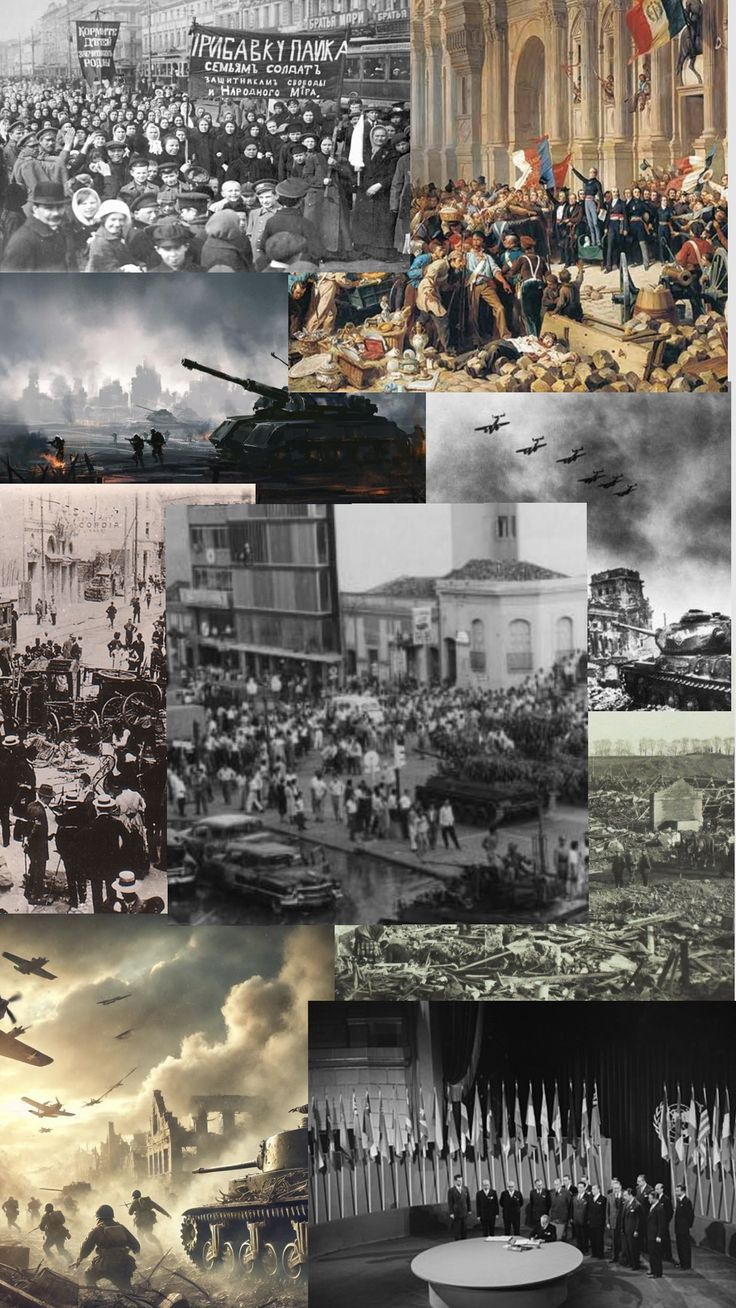
Philosophy since the mid-20th century — questioning grand narratives,
probing the nature of mind and language in an age of computation, and
still, after 2,500 years, asking what it means to live well.
Introduction
Contemporary philosophy generally refers to philosophical developments
from the mid-20th century to the present, although its boundaries remain
deliberately flexible because many movements that became especially
influential after 1945 had begun earlier. It developed in a world
profoundly transformed by two world wars, the Holocaust, nuclear
weapons, decolonization, the Cold War, rapid technological change, and
the growing globalization of intellectual life. These events made
questions about progress, reason, power, identity, language, science,
and human responsibility more urgent than ever, while also challenging
the assumption that philosophy could be organized around a single
universal method or exclusively European intellectual tradition.
Rather than forming one unified school, contemporary philosophy expanded
into a diverse landscape of overlapping traditions. Analytic
philosophers developed increasingly sophisticated work in logic,
language, metaphysics, epistemology, and the philosophy of mind;
Continental thinkers investigated power, history, interpretation,
subjectivity, and social structures; feminist, postcolonial, critical
race, and other traditions challenged the exclusions built into older
philosophical canons. At the same time, developments in computing,
neuroscience, cognitive science, environmental studies, and artificial
intelligence created entirely new philosophical problems that earlier
generations could scarcely have imagined.
This page traces that continuing history across nine broad starting
chapters: the challenge to universal narratives and fixed meanings
associated with post-structuralism and postmodern thought; the growing
importance of mind, language, consciousness, and cognition in an age
shaped by computers and cognitive science; and the renewed development
of ethics and political philosophy in response to inequality,
technology, environmental crisis, global justice, and changing
conceptions of human identity. Unlike earlier periods in the history of
philosophy, contemporary philosophy has no completed historical boundary
— its debates remain active, contested, and still being written.
Timeline at a Glance
1949
Simone de Beauvoir publishes The Second Sex
1962
Thomas Kuhn publishes
The Structure of Scientific Revolutions
1966–1967
Jacques Derrida's early works help establish deconstruction
1971
John Rawls publishes A Theory of Justice
1974
Thomas Nagel publishes "What Is It Like to Be a Bat?"
1990s–present
Philosophy increasingly engages with globalization, neuroscience,
digital technology, climate ethics, and artificial intelligence
🏺 Philosophy After Two World Wars
The devastation of two world wars profoundly challenged older
assumptions about progress, civilization, and the relationship between
reason and human flourishing.
The mid-20th century placed philosophy in a historical situation
profoundly different from that of the nineteenth century. The First and
Second World Wars, the Holocaust, totalitarian regimes, genocide, and
the development of nuclear weapons forced philosophers to confront an
uncomfortable question: how could societies possessing advanced science,
technology, education, and political institutions also produce
destruction on an unprecedented scale? For many thinkers, these events
did not simply disprove the value of reason, but they seriously
challenged the older belief that scientific and intellectual progress
automatically produced moral or political progress. Reason itself
increasingly became an object of philosophical criticism and
investigation rather than an unquestioned instrument of human
liberation.
This historical crisis encouraged new examinations of power, ideology,
bureaucracy, technology, and social conformity. Thinkers associated with
Critical Theory investigated how modern systems of communication,
culture, economics, and administration could shape consciousness and
reproduce forms of domination even within formally democratic societies.
Other philosophers questioned the grand historical narratives that
claimed history moved according to a single rational direction. The
experience of the twentieth century made many philosophers increasingly
suspicious of theories that presented one culture, political system,
conception of reason, or model of human development as universally
authoritative.
At the same time, decolonization across Africa, Asia, the Caribbean, and
other regions transformed the intellectual landscape. Colonialism had
not only involved political and economic domination; it had also shaped
which traditions were recognized as philosophy and whose knowledge was
treated as universal. Postcolonial thinkers therefore challenged
Eurocentric accounts of history, identity, rationality, and
civilization, while feminist philosophers exposed the ways supposedly
universal accounts of humanity had often been constructed around male
experience. Contemporary philosophy consequently became increasingly
concerned with questions of voice, exclusion, identity, race, gender,
culture, and the relationship between knowledge and social power.
Meanwhile, extraordinary developments in formal logic, computing,
linguistics, neuroscience, and cognitive science opened new
philosophical territory. Alan Turing's work on computation helped make
the possibility of machine intelligence a serious philosophical
question, while later research into the brain and cognition renewed
debates about consciousness, personal identity, perception, and free
will. If thought could be understood partly as information processing,
philosophers asked, what distinguished human consciousness from
computation? Could a machine genuinely think, understand, or possess
subjective experience? These questions gradually moved from speculative
possibilities into central debates in philosophy of mind and,
eventually, artificial intelligence ethics.
Contemporary philosophy therefore developed not as a single movement but
as an increasingly plural and interconnected field. Some philosophers
continued the analytic search for conceptual clarity and logical
precision, while others investigated history, interpretation, language,
power, and lived experience. Political and ethical philosophy returned
with renewed urgency to questions of justice, rights, democracy, global
inequality, environmental responsibility, and technological power. It
was against this backdrop — a world questioning inherited narratives,
expanding beyond older philosophical boundaries, and confronting
unprecedented scientific and technological change — that the diverse
traditions of contemporary philosophy took shape.
1️⃣ Philosophy After the 20th Century
A More Plural and Specialized Discipline
Contemporary philosophy emerged from the intellectual transformations of
the 20th century rather than from a single new philosophical movement.
By the late twentieth century, the large systems that had once attempted
to explain reality, history, consciousness, or society as a whole no
longer dominated philosophy in the same way. Instead, the discipline
became increasingly plural and specialized. Philosophers worked within
distinct traditions and subfields, often concentrating on highly
specific problems concerning language, knowledge, consciousness, ethics,
politics, science, technology, and culture.
This development did not mean that the older traditions disappeared.
Existentialism, phenomenology, Marxism, pragmatism, analytic philosophy,
critical theory, feminism, and post-structuralism continued to influence
contemporary debates. What changed was the intellectual landscape in
which they operated. Philosophers increasingly borrowed ideas and
methods across disciplinary boundaries, while the distinction between
philosophical questions and questions investigated by psychology,
linguistics, economics, computer science, biology, and neuroscience
became less sharply defined.
The growing specialization of philosophy also produced a remarkable
expansion of its subject matter. Philosophy of mind investigated
consciousness alongside cognitive science; bioethics addressed questions
created by modern medicine; environmental philosophy examined humanity's
responsibilities toward nature; and political philosophy reconsidered
justice in increasingly diverse and interconnected societies. New
technologies created further questions about privacy, artificial
intelligence, automation, and the power exercised through digital
systems.
Contemporary philosophy also became increasingly aware of the historical
limits of the traditional philosophical canon. For centuries, many
standard histories of philosophy concentrated overwhelmingly on European
thinkers. Late twentieth- and twenty-first-century scholarship
increasingly challenged this narrow framework, bringing
Indian,
Chinese,
African,
Islamic,
Indigenous,
Latin American, and other
intellectual traditions into wider philosophical conversation. This did
not create a single global philosophy, but it significantly changed
debates about whose ideas count as philosophy and how philosophical
history should be written.
As a result, contemporary philosophy is best understood not as one
unified school but as a diverse intellectual field connected by
recurring questions. What can human beings know? What is consciousness?
What makes an action right or wrong? What is justice? How should
societies respond to new technologies and environmental crises? These
questions are ancient, but the conditions under which they are now asked
are profoundly new.
The history of contemporary philosophy is therefore also the history of
a discipline learning to operate without a single dominant method or
worldview. Some philosophers continue to pursue logical precision and
systematic argument, while others emphasize historical interpretation,
lived experience, social critique, or dialogue between cultures. This
diversity can make contemporary philosophy appear fragmented, but it
also reflects the complexity of the modern world it seeks to understand.
2️⃣ Contemporary Analytic Philosophy
Logic, Language, Knowledge, and Reality
Analytic philosophy remained one of the most influential traditions in
English-speaking universities throughout the late twentieth and early
twenty-first centuries. Its earlier development had emphasized formal
logic and the analysis of language, particularly through thinkers such
as Frege, Russell, Moore, and Wittgenstein. Contemporary analytic
philosophy inherited this concern for clarity and rigorous argument but
expanded far beyond its original focus on whether philosophical problems
could be solved through linguistic analysis alone.
One important development was the renewed study of metaphysics. Earlier
twentieth-century philosophers had sometimes regarded metaphysical
questions with suspicion, especially within logical positivism. Later
analytic philosophers returned to questions about existence, identity,
possibility, causation, time, and the nature of reality. Modal logic and
the philosophical analysis of possible worlds became important tools for
investigating what could have been different and what must be true in
every possible situation.
Epistemology also developed in new directions. Philosophers continued to
ask what knowledge is and how beliefs can be justified, but they
increasingly examined problems involving skepticism, testimony,
disagreement, social knowledge, and the reliability of cognitive
processes. The traditional image of a solitary individual trying to
prove the existence of the external world was supplemented by questions
about how knowledge is produced collectively through institutions,
experts, scientific communities, and social practices.
Philosophy of language likewise moved beyond its early concern with
logical form. Contemporary philosophers investigated reference, meaning,
interpretation, metaphor, communication, and the relationship between
language and thought. Thinkers such as Saul Kripke challenged earlier
assumptions about how names and necessity function, helping to reshape
both philosophy of language and metaphysics. These debates demonstrated
that apparently technical questions about words could have major
consequences for understanding reality itself.
Contemporary analytic philosophy is therefore defined less by a fixed
list of doctrines than by a style of philosophical inquiry. Careful
argument, conceptual precision, engagement with logic, and close
examination of objections remain central ideals. At the same time, the
tradition has become increasingly diverse, addressing ethics, politics,
feminism, race, consciousness, science, religion, and technology
alongside its more traditional subjects.
The boundaries between analytic and other philosophical traditions have
also become less absolute than they once appeared. Although important
differences in style and method remain, contemporary philosophers
increasingly engage with problems that cannot be confined to one
intellectual tradition. The result is an analytic philosophy that
remains committed to argumentative rigor while participating in a much
wider philosophical landscape.
3️⃣ Philosophy of Mind & Cognitive Science
Consciousness, the Brain, and the Nature of Mind
The study of the mind became one of the central areas of contemporary
philosophy. Ancient and early modern philosophers had long asked about
the relationship between mind and body, but developments in psychology,
neuroscience, linguistics, and computer science gave these questions a
new scientific context. Philosophers of mind increasingly investigated
consciousness, perception, intentionality, memory, personal identity,
and the relationship between mental states and physical processes in the
brain.
One major debate concerned physicalism: the view that mental phenomena
are, in some fundamental sense, dependent upon the physical world. If
thoughts, emotions, and perceptions arise from brain processes,
philosophers asked, how should consciousness itself be explained? Some
theories attempted to identify mental states directly with physical
brain states, while others argued that the same mental function could
potentially be realized in different physical systems.
Functionalism became particularly influential in this context. According
to functionalist approaches, a mental state may be understood partly
through the role it plays within a system rather than solely through the
material from which that system is made. This idea created important
connections between philosophy of mind and computer science, raising the
possibility that artificial systems might perform functions
traditionally associated with human cognition.
Yet consciousness remains one of philosophy's deepest unresolved
problems. A scientific explanation may describe how the brain processes
information, but philosophers continue to ask why some physical
processes are accompanied by subjective experience at all. What is it
like to see a color, feel pain, or experience the passage of time? This
distinction between describing cognitive functions and explaining
subjective experience continues to shape contemporary debates about the
so-called hard problem of consciousness.
Cognitive science has also transformed philosophical discussions of
human reasoning. Research into perception, language, memory, and
decision-making suggests that human cognition is neither perfectly
rational nor completely transparent to itself. Philosophers now examine
cognitive biases, embodied cognition, extended forms of mind, and the
possibility that thinking depends not only on the brain but also on the
body, social environment, and technological tools with which human
beings interact.
These debates became even more urgent with the development of
increasingly sophisticated artificial intelligence. Can a machine
genuinely understand, think, or become conscious, or can it merely
simulate the outward behavior associated with intelligence? Contemporary
philosophy of mind therefore stands at the intersection of some of the
most important questions of the twenty-first century: what makes a mind
a mind, what consciousness is, and whether intelligence must necessarily
be biological.
4️⃣ Contemporary Political Philosophy
Justice, Equality, Liberty, and the Modern State
Contemporary political philosophy returned with particular force to the
question of justice. The political catastrophes of the twentieth
century, including world wars, totalitarian regimes, colonial violence,
and ideological conflict, raised urgent questions about the legitimate
limits of state power and the moral foundations of political
institutions. Philosophers increasingly asked how free and diverse
societies could distribute rights, opportunities, wealth, and political
authority fairly.
John Rawls became one of the most influential figures in this revival
with his theory of justice as fairness. In
A Theory of Justice (1971), Rawls introduced the thought
experiment of the "original position," in which individuals choose
principles of justice without knowing their own social class, wealth,
abilities, gender, or position in society. The purpose was to identify
principles that could be considered fair because they were not chosen to
benefit a particular group.
Rawls's work generated powerful responses from many directions.
Libertarian philosophers such as Robert Nozick defended stronger rights
of individual ownership and questioned extensive redistributive
policies. Communitarian thinkers argued that liberal theories sometimes
treated individuals too abstractly, neglecting the importance of
communities, traditions, and shared identities. Feminist, postcolonial,
and critical theorists further challenged political philosophy to
consider forms of inequality that older theories had often overlooked.
Contemporary political philosophy also expanded beyond the boundaries of
the nation-state. Globalization raised questions about international
inequality, migration, refugees, war, human rights, and the
responsibilities wealthy societies may have toward people beyond their
borders. Philosophers debated whether principles of justice should apply
primarily within political communities or whether global institutions
should be evaluated according to more universal standards.
Democracy itself became a major subject of philosophical investigation.
Contemporary thinkers ask what genuine political participation requires,
whether citizens can make informed decisions in complex technological
societies, and how democratic institutions should respond to
misinformation, economic inequality, and concentrated power. The rise of
digital communication has added new questions about political
polarization and the influence of algorithms on public debate.
Contemporary political philosophy therefore continues the Enlightenment
concern with freedom and legitimate authority while confronting problems
the eighteenth century could not have anticipated. Its central challenge
is not simply to describe political institutions but to determine how
societies containing deep moral, cultural, and economic differences can
nevertheless create institutions that are free, just, and politically
legitimate.
5️⃣ Applied Ethics & Bioethics
Philosophy Confronts Real-World Decisions
One of the most important developments in contemporary philosophy has
been the rapid growth of applied ethics. Rather than limiting ethical
inquiry to abstract questions about the nature of right and wrong,
applied philosophers examine difficult practical decisions arising in
medicine, business, technology, law, war, environmental policy, and
everyday life. These fields demonstrate that philosophical reasoning
remains deeply relevant whenever societies must decide what they ought
to do.
Bioethics became especially significant as advances in medicine created
possibilities that earlier generations had never faced. Organ
transplantation, life-support technology, genetic testing, reproductive
medicine, and new forms of medical research raised difficult questions
about consent, autonomy, death, suffering, and the limits of
professional authority. Philosophers work alongside doctors, scientists,
lawyers, and policymakers to examine the moral principles involved in
these decisions.
Questions surrounding the beginning and end of human life remain among
the most contested areas of bioethics. Debates concerning abortion,
euthanasia, physician-assisted dying, and reproductive technologies
involve fundamental disagreements about personhood, bodily autonomy,
human dignity, and the value of life. Philosophy does not eliminate
these disagreements, but it attempts to make their underlying
assumptions explicit and subject them to careful argument.
Animal ethics also transformed contemporary moral philosophy.
Traditional ethical theories had often focused almost exclusively on
obligations among human beings, but philosophers increasingly questioned
whether the capacity to suffer, possess interests, or experience life
should have moral significance. These discussions influenced debates
about animal experimentation, industrial farming, diet, conservation,
and the moral boundaries between humans and other animals.
Applied ethics has also challenged the idea that philosophy should
remain detached from public life. Ethical reasoning increasingly appears
in hospitals, government committees, research institutions,
corporations, and international organizations. Philosophers contribute
not by providing automatic answers but by clarifying values, identifying
hidden assumptions, distinguishing competing principles, and examining
whether proposed solutions can be morally justified.
The growth of applied ethics reflects a broader transformation in
contemporary philosophy. Philosophical questions are no longer treated
only as timeless intellectual puzzles; they are also recognized as
practical problems arising from the power human beings now possess to
alter bodies, societies, ecosystems, and technologies. The question
"What should we do?" has become inseparable from many of the defining
challenges of the modern world.
6️⃣ Environmental Philosophy
Humanity and the Moral Status of Nature
Environmental philosophy developed as philosophers increasingly
recognized that traditional ethical theories often treated nature
primarily as a resource for human use. Industrialization, pollution,
species extinction, and climate change forced a reconsideration of
humanity's relationship with the natural world. If human actions can
transform entire ecosystems and affect generations yet unborn,
philosophers asked, what responsibilities do human beings have toward
animals, species, landscapes, and the planet as a whole?
A central debate concerns anthropocentrism — the view that human beings
are the primary or only source of moral value. Environmental
philosophers have challenged this assumption in several ways. Some argue
that individual animals possess moral standing because they can suffer
or flourish. Others defend the value of species, ecosystems, or the
natural world independently of their usefulness to human beings.
Deep ecology and related movements argued for a more radical
transformation of human attitudes toward nature. Rather than seeing
humanity as separate from the environment, these approaches emphasize
ecological interconnectedness and question the assumption that endless
economic growth should automatically take priority over ecological
stability. Such ideas have generated debate about whether environmental
ethics requires entirely new moral concepts or can be developed from
existing ethical traditions.
Climate change has made these philosophical questions increasingly
urgent. The causes and consequences of environmental damage are
distributed across different countries and generations, making
responsibility unusually difficult to assign. Those who contribute least
to climate change may suffer some of its most severe effects, while
future generations will live with decisions made long before they are
able to participate in them.
Environmental justice adds another dimension by examining how
environmental harms are distributed socially. Pollution, resource
extraction, and climate risks often affect poorer and politically
marginalized communities disproportionately. Philosophical discussions
of the environment therefore intersect with questions about economic
inequality, colonial history, political power, and global justice.
Environmental philosophy ultimately challenges one of the deepest
assumptions of modern civilization: that human progress can be
understood independently of the ecological systems that make human life
possible. It asks whether freedom, prosperity, and technological
development must be reconsidered when humanity possesses the power to
alter the conditions of life on a planetary scale.
7️⃣ Philosophy of Technology & Artificial Intelligence
Technology, Power, and the Future of Humanity
Technology has become one of the defining subjects of contemporary
philosophy because modern technologies do far more than provide useful
tools. They shape how people communicate, work, learn, remember, form
relationships, and understand themselves. Philosophers of technology ask
whether technologies are merely neutral instruments controlled by their
users or whether technological systems themselves influence the
possibilities available to human beings.
Digital technology has intensified these questions. Search engines,
social media platforms, recommendation systems, and algorithmic
decision-making increasingly influence what information people encounter
and how institutions classify individuals. This raises philosophical
concerns about privacy, surveillance, autonomy, manipulation,
responsibility, and the concentration of power in technological systems
that may be difficult for ordinary users to understand or challenge.
Artificial intelligence has brought older philosophical questions about
mind and knowledge into direct contact with practical technological
development. Can an artificial system genuinely reason or understand, or
does it merely produce behavior that appears intelligent? If
increasingly autonomous systems make decisions affecting employment,
healthcare, law, or warfare, who is morally responsible when those
decisions cause harm?
AI also raises questions about bias and fairness. Algorithms are
trained, designed, and deployed within human societies that already
contain inequalities and historical prejudices. A system may therefore
reproduce or amplify existing patterns even when it appears
mathematically objective. Philosophers examine not only whether an AI
system functions efficiently, but also what values are built into its
objectives and who has the authority to determine those values.
More speculative debates concern the future relationship between humans
and intelligent machines. Some philosophers investigate whether
artificial consciousness could ever be possible and what moral status a
genuinely conscious machine might possess. Others focus on automation,
human enhancement, biotechnology, and the possibility that technological
change could alter fundamental assumptions about work, identity, and
human nature.
Philosophy of technology therefore asks a question that extends far
beyond individual devices: what kind of world are human beings creating
through their technologies? As technological systems become more
powerful and deeply integrated into everyday life, philosophical
reflection becomes essential for deciding not merely what can be built,
but what should be built and under what ethical and political
conditions.
8️⃣ Postcolonial & Decolonial Philosophy
Questioning Power, Empire, and the Canon
Postcolonial and decolonial philosophy examine the enduring
intellectual, political, and cultural consequences of colonialism.
European empires did not merely control territories and economies; they
also shaped systems of knowledge that frequently presented European
concepts and institutions as universal while treating other cultures as
peripheral, irrational, or less developed. Contemporary philosophers
have therefore asked how colonial power influenced the categories
through which history, identity, reason, and knowledge have been
understood.
Postcolonial thought investigates the relationship between political
domination and cultural representation. Colonial societies were often
described through categories created by those who governed them, and
these descriptions could persist long after formal colonial rule ended.
Philosophical critique therefore examines who has the power to define
cultures, whose voices are considered authoritative, and how systems of
knowledge can exclude or marginalize particular experiences.
Decolonial approaches place particular emphasis on the continuing
structures of colonial power in the modern world. Political independence
did not always remove economic dependency, cultural hierarchy, or
intellectual systems that privileged certain traditions over others.
Decolonial philosophers therefore question whether genuine intellectual
pluralism requires more than simply adding non-European thinkers to an
existing canon; it may also require reconsidering the categories through
which philosophy itself is organized.
These movements have encouraged renewed engagement with philosophical
traditions from Africa, Asia, Latin America, and Indigenous cultures.
Importantly, this project is not simply an attempt to replace one
universal tradition with another. It raises a deeper question about
whether philosophy should assume that every intellectual tradition must
fit the categories developed within modern European thought in order to
count as philosophy.
Postcolonial and decolonial philosophy also intersect with questions
about race, migration, identity, language, gender, and economic
inequality. Historical systems of domination continue to influence
contemporary institutions, and philosophical analysis attempts to
understand how these structures shape both individual experience and
collective political life.
The broader importance of these approaches lies in their challenge to
philosophy's own self-understanding. They ask whether a discipline
devoted to questioning assumptions should also question the historical
boundaries of its canon. In doing so, they have helped make contemporary
philosophy more attentive to the relationship between knowledge and
power, and to the possibility that philosophical dialogue must become
genuinely global rather than merely international in appearance.
9️⃣ Global Philosophy & Cross-Cultural Dialogue
Philosophy Beyond a Single Intellectual Tradition
Contemporary philosophy increasingly recognizes that profound
philosophical traditions developed across the world. Indian philosophy
produced extensive debates about consciousness, knowledge, language,
liberation, and reality; Chinese traditions developed influential
approaches to ethics, political order, harmony, and self-cultivation;
Islamic philosophers preserved, transformed, and developed major
traditions of logic and metaphysics; and African and Indigenous
intellectual traditions contain rich reflections on community,
personhood, knowledge, and humanity's relationship with nature.
Cross-cultural philosophy seeks to place these traditions into serious
dialogue without assuming that one tradition provides the universal
standard by which all others must be judged. This is a difficult task.
Philosophical concepts do not always have exact equivalents across
languages and cultures, and ideas can be distorted when they are forced
into unfamiliar categories. Genuine dialogue therefore requires both
comparison and careful attention to historical and linguistic context.
Comparative philosophy can reveal both similarities and important
differences. Questions about the self, for example, appear in many
traditions, but different philosophers may understand the self as an
independent individual, a changing process, a relational being, or an
expression of a deeper metaphysical reality. Comparing these approaches
can expose assumptions that remain invisible when a thinker studies only
one intellectual tradition.
Global philosophical dialogue has also become increasingly important
because many contemporary problems are themselves global. Climate
change, technological transformation, economic inequality, migration,
and political conflict cannot be adequately understood from a single
national or cultural perspective. Different philosophical traditions may
offer distinct concepts of responsibility, community, nature, and human
flourishing that contribute to wider debates.
At the same time, global philosophy must avoid turning intellectual
traditions into simple collections of interchangeable ideas.
Philosophical traditions emerge from particular histories and cannot be
understood merely by extracting isolated concepts from them. The goal is
therefore not to create an artificial mixture in which all differences
disappear, but to develop forms of dialogue in which traditions can
challenge and enrich one another.
The increasing importance of cross-cultural philosophy represents one of
the most significant transformations of the contemporary discipline. It
suggests that the future history of philosophy may no longer be written
as a story moving primarily from ancient Greece through Europe and North
America. Instead, philosophy is increasingly understood as a global
human activity with multiple histories, methods, languages, and
intellectual centers.
🔮 Philosophy Today and the Future
What Should Philosophy Become?
Philosophy today exists in a world transformed by scientific discovery,
digital technology, globalization, and environmental crisis. The
discipline has become more specialized than at almost any earlier point
in its history, yet many of its oldest questions remain unresolved. What
is knowledge? What is consciousness? What is a good life? What makes
political authority legitimate? The persistence of these questions
suggests that philosophical progress does not always take the form of
permanently solving a problem; it can also involve discovering new
dimensions of the problem itself.
Artificial intelligence and biotechnology may become especially
important philosophical challenges in the coming decades. As humans
develop systems capable of increasingly complex forms of reasoning and
technologies capable of altering bodies and genetic inheritance,
traditional concepts of person, intelligence, autonomy, and
responsibility may require reconsideration. Philosophers will be
required to examine not only the capabilities of these technologies but
the values that should guide their development.
Environmental change presents another challenge that cannot be addressed
by science alone. Scientific research can describe climate systems and
predict possible consequences, but decisions about responsibility,
sacrifice, justice, and obligations to future generations are
fundamentally normative. Philosophy therefore remains essential wherever
facts must be connected to questions about what human beings ought to
value and how they ought to act.
The future of philosophy will also depend on its relationship with other
disciplines. Neuroscience can investigate the brain, but philosophical
questions remain about consciousness and explanation. Economics can
model social behavior, but it cannot by itself determine what
constitutes a just distribution of resources. Artificial intelligence
can process enormous quantities of information, but questions about
meaning, value, and moral responsibility cannot simply be reduced to
computational efficiency.
Some philosophers worry that increasing specialization may fragment the
discipline into technical fields unable to communicate with one another.
Others see specialization as a necessary response to the growing
complexity of human knowledge. The continuing challenge is to preserve
philosophy's ability to connect questions across disciplines while
maintaining the rigor required for serious investigation.
Contemporary philosophy is therefore not the end of philosophical
history but an ongoing experiment in how human beings should think about
themselves and their world. Its future will be shaped by problems that
are already visible and by questions that have not yet emerged. As long
as human beings continue to ask what is true, what is real, what is
just, and what kind of future ought to be created, philosophy will
remain an unfinished and necessary part of human intellectual life.
👤 Major Thinkers
The key figures behind each chapter of this era, in brief.
📖 Grand Narratives — and Postmodern skepticism
toward totalizing historical stories
🏛 Power & Discourse — Foucault's account of how
institutions shape what counts as knowledge
✂️ Deconstruction — exposing the instability of fixed
meaning within texts
🦇 Qualia & the Hard Problem — the subjective,
first-person quality of conscious experience
🎭 The Veil of Ignorance — Rawls's thought experiment
for reasoning about justice fairly
🌍 Global & Applied Ethics — extending moral
philosophy to climate, technology, and global justice
🌍 Where Philosophy Stands Today
Contemporary philosophy remains genuinely divided along many of the same
lines this page has traced — Analytic philosophy's emphasis on
precision, argument, and often close engagement with science continues
to dominate philosophy departments across much of the English-speaking
world, while Continental philosophy's engagement with history, power,
language, and lived experience remains influential in literature,
cultural theory, and philosophy departments elsewhere, particularly in
Europe and Latin America. Rather than one tradition simply winning, both
continue to develop, increasingly aware of and occasionally in direct
conversation with each other.
Perhaps the most significant recent development is philosophy's
deepening engagement with genuinely new problems that no earlier era
could have directly confronted: the ethical and metaphysical questions
raised by artificial intelligence, the moral urgency of climate change
and long-term thinking about future generations, and sustained efforts
to genuinely globalize philosophy by taking African, Indigenous, Latin
American, and other traditions seriously as philosophy in their own
right, rather than treating the Western tradition covered across most of
this site as the sole reference point. In this sense, the questions
first raised by Thales in Miletus and the sages of the Upanishads are
still very much alive — just extended, now, into territory none of them
could have anticipated.
📊 Quick Facts
Time Period: c. 1945 CE – present
Key Region: Global — France, the United States, and
increasingly worldwide
Major Movements: Postmodernism, Philosophy of Mind,
Contemporary Political Philosophy
Central Question: How should philosophy respond to a
world its earlier traditions never anticipated?
Successor Traditions: None yet — this chapter is
still being written
This closes the historical arc traced across all nine eras on this site
— from myth-bound Ancient Greece to a philosophical present that is,
quite literally, still unfolding. The questions raised along the way
haven't stopped being asked; explore how they're organized today across
the branches and schools of philosophy, or meet the individual thinkers,
ancient and modern, who carried this story forward.