Who Is Judith Butler?
Judith Butler (born 1956) is an American philosopher, feminist theorist, and one of the most influential thinkers in contemporary philosophy. Butler's work has transformed philosophical and interdisciplinary discussions of gender, sexuality, identity, power, the body, vulnerability, ethics, and political life. Drawing upon continental philosophy, feminist theory, and critical theory, Butler examines how human beings become socially recognizable and how norms shape the possibilities through which people live their lives.
Butler is especially famous for developing the influential concept of gender performativity. This idea challenges the assumption that gender is simply a fixed inner essence that people naturally possess and then express throughout their lives. Instead, Butler investigates how repeated acts, social conventions, language, bodily practices, and cultural expectations participate in producing the appearance of stable and intelligible gender identities.
In works such as Gender Trouble and Bodies That Matter, Butler examines how social norms, language, institutions, repeated practices, and relations of power participate in the formation of gendered identities. Butler's arguments do not deny the reality of bodies; rather, they ask how bodily differences become socially interpreted, classified, and regulated through historically specific systems of meaning and power.
Butler's philosophy later expanded beyond gender theory into questions concerning violence, mourning, political assembly, vulnerability, precarious life, recognition, interdependence, and nonviolence. This wider body of work investigates whose lives receive protection and public recognition and how collective action can emerge from shared conditions of dependence and exposure. It has made Butler an important figure in feminist philosophy, queer theory, political philosophy, and contemporary critical thought.
Judith Butler: Quick Facts
- Full name — Judith Pamela Butler
- Born — February 24, 1956
- Birthplace — Cleveland, Ohio, United States
- Nationality — American
- Philosophical traditions — Continental philosophy, critical theory, feminist philosophy, and queer theory
- Major fields — Gender theory, political philosophy, ethics, feminist theory, and critical theory
- Major subjects — Gender, sexuality, identity, power, bodies, language, vulnerability, and political action
- Most famous idea — Gender performativity
- Most famous work — Gender Trouble (1990)
- Other major work — Bodies That Matter (1993)
- Important later work — Undoing Gender (2004)
- Major contribution — A foundational influence on contemporary feminist and queer theory
Judith Butler's Early Life and Education
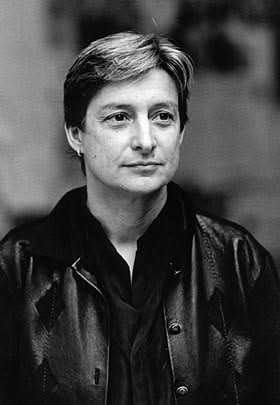
Judith Butler was born in Cleveland, Ohio, in 1956 and developed an early interest in philosophical questions concerning identity, ethics, language, power, and the conditions under which human beings become recognizable as social subjects. These concerns would later become central to Butler's philosophy, particularly the question of how individuals are formed within social norms that both enable and limit the ways a person can appear, speak, and live in the world.
Butler studied at Bennington College before continuing philosophical study at Yale University, where they completed undergraduate and graduate work in philosophy. Butler received a Ph.D. in Philosophy from Yale in 1984, following earlier study that included a Fulbright period at Heidelberg University. Their academic formation involved sustained engagement with German idealism, phenomenology, and critical questions concerning desire, subjectivity, and philosophical history.
Butler's intellectual development drew upon a wide range of thinkers, including G. W. F. Hegel, Friedrich Nietzsche, Simone de Beauvoir, Michel Foucault, Jacques Derrida, Sigmund Freud, and Jacques Lacan. Hegelian questions about recognition and desire remained especially important, while post-structuralist thought contributed to Butler's critique of stable identity and autonomous subjectivity. These diverse influences helped shape the interdisciplinary character of the later philosophical work.
Before joining the University of California, Berkeley, Butler held academic positions at institutions including Wesleyan University, George Washington University, and Johns Hopkins University. Butler joined the Berkeley faculty in 1993 and became closely associated with rhetoric, comparative literature, and critical theory. Berkeley became a major institutional setting for the development of Butler's influential work on gender, power, ethics, political action, and the conditions under which lives become socially recognized.
Why Is Judith Butler Important?
Judith Butler is important because Butler challenged deeply established philosophical assumptions about gender and identity. Rather than treating gender as the simple expression of a stable inner essence, Butler examined the processes through which gender becomes constituted through repeated social and bodily practices. This shift changed the terms of debate by directing attention toward norms, repetition, language, institutions, and the historical conditions that make particular identities appear natural or self-evident.
Butler's work helped transform feminist philosophy and contributed significantly to the development of queer theory. The concept of gender performativity became one of the most widely discussed and debated ideas in contemporary social and political thought. It encouraged philosophers and theorists to reconsider the relationship between identity and action, asking whether repeated practices merely express identity or also participate in producing the identities that those practices appear to reveal.
Butler also demonstrated that philosophical questions about identity cannot be separated completely from questions about power. Social norms influence which identities are recognized as legitimate, intelligible, normal, or valuable within a particular society. At the same time, Butler emphasizes that norms are not simply external rules imposed upon fully formed individuals; they participate in shaping the conditions through which subjects become understandable to themselves and to other people.
Later work expanded Butler's importance beyond gender and sexuality. Questions about vulnerability, violence, mourning, public assembly, interdependence, and nonviolence made Butler an important contributor to contemporary ethics and political philosophy. These works examine how political systems distribute protection and recognition unequally and how collective bodies can act politically in conditions of dependence. Butler's influence therefore extends across philosophy, literary theory, social theory, and political thought.
The Historical Context of Judith Butler's Philosophy
Judith Butler's major philosophical work developed during a period of intense debate about feminism, sexuality, identity, language, and political power. During the late twentieth century, many thinkers questioned whether traditional categories of identity were as stable and universal as they appeared. Post-structuralist philosophy, psychoanalytic theory, and new developments in feminist thought all contributed to an intellectual environment in which the historical formation of subjects and social categories became central questions.
Feminist philosophy had already challenged the historical exclusion of women from political and intellectual life and had demonstrated the importance of gender in social structures of power. However, Butler raised another difficult question: what happens when feminism treats the category "women" itself as a completely fixed and unified identity? Butler argued that political categories can be necessary for collective action while still remaining open to criticism because no single category can completely contain the diversity of human experience.
Butler was also influenced by post-structuralist philosophy. Thinkers such as Michel Foucault and Jacques Derrida had challenged traditional assumptions about stable meaning, the autonomous subject, and the relationship between knowledge and power. Simone de Beauvoir's analysis of becoming a woman also provided an important philosophical point of departure. Butler brought these intellectual traditions into dialogue with feminist theory, psychoanalysis, and questions concerning the social formation of bodies and identities.
This intellectual environment allowed Butler to investigate how identities are historically and socially produced. Butler's philosophy does not simply ask what gender means; it asks how gender categories are created, maintained, regulated, challenged, and transformed. These questions also reveal a political problem: the norms that make social recognition possible can simultaneously exclude people whose lives do not fit established expectations. Butler therefore connects the philosophy of identity directly with questions of power and freedom.
Judith Butler's Main Philosophical Ideas
1. Gender Is Performative
Butler argues that gender should not be understood simply as the expression of a fixed inner identity that exists before social action. Gender is constituted through repeated acts, practices, gestures, speech, social expectations, and forms of bodily presentation that become recognizable over time. Through repetition, these practices can create the appearance of a stable identity, even though the identity is continually sustained within changing social and historical norms.
2. Identity Is Shaped by Social Norms
Individuals do not create themselves entirely outside society. Social norms, language, institutions, and relations of power influence the categories through which people understand themselves and become recognized by others. For Butler, this does not mean that individuals are merely passive products of society. Rather, human agency takes place within conditions that precede the individual and that can sometimes be repeated differently, questioned, contested, or changed.
3. Power Produces as Well as Restricts
Butler follows Michel Foucault in examining the productive dimension of power. Power does not merely prohibit people from doing certain things; it can also help create the categories, identities, and forms of knowledge through which people understand themselves. Social power therefore works not only by saying "no," but also by establishing the norms through which certain kinds of persons become intelligible, recognizable, legitimate, or socially marginalized.
4. The Body Is Socially Interpreted
Butler challenges the assumption that the physical body exists as a completely neutral foundation outside social meaning. Bodies are lived, interpreted, classified, and regulated through cultural and political systems that influence what counts as normal or intelligible. This argument does not deny material reality; instead, it investigates how material bodies become meaningful within scientific, legal, linguistic, and cultural frameworks that establish norms concerning sex, gender, sexuality, and bodily legitimacy.
5. Human Life Is Fundamentally Interdependent
Butler's later philosophy emphasizes vulnerability, dependence, and interdependence. Human beings are not completely self-sufficient individuals; they depend upon social relationships, institutions, care, recognition, and material conditions in order to live and flourish. This dependence has important ethical and political consequences, because societies distribute care, security, and protection unequally. Butler therefore connects vulnerability with broader questions about justice, collective responsibility, political action, and nonviolence.
What Is Gender Performativity?
Gender performativity is Judith Butler's most famous philosophical concept. It challenges the idea that every person first possesses a completely fixed gender identity and then simply expresses that identity through behavior. Butler instead investigates how gender comes to appear stable through repeated acts that are socially recognizable as masculine, feminine, or otherwise connected with established systems of gender classification.
Butler argues that gender is constituted through repeated practices. The ways people dress, speak, move, interact, use language, and follow or resist social expectations can participate in producing the appearance of a stable gender identity. These acts do not occur in a completely free social space; they are shaped by conventions that already exist before any particular individual acts. Gender is therefore both enacted within norms and capable of being contested through them.
Repetition is central to the idea. Certain acts become familiar because they are repeated and recognized within a social framework that gives them meaning. Over time, repetition can create the impression that gender is the natural expression of an inner and permanent essence. Butler's argument directs attention to the process through which this appearance of naturalness is produced rather than simply accepting it as evidence of an identity existing independently behind every action.
However, performativity does not mean that individuals freely choose their gender every morning as if selecting a costume. Butler emphasizes that people act within powerful social norms, expectations, and institutions that make some forms of identity easier to recognize than others. Performativity therefore concerns both constraint and possibility: because norms must be repeatedly enacted, their repetition can also involve variation, failure, reinterpretation, and resistance.
Performativity vs Performance: What Is the Difference?
Judith Butler's concept of performativity is often misunderstood as meaning that gender is simply a theatrical performance chosen by an individual actor. Butler's argument is more complex and does not suggest that people consciously invent every aspect of their identities. The term performativity concerns the social processes through which repeated acts acquire force and produce the appearance of stable identities that are recognized within particular systems of meaning.
A performance usually suggests an actor who already exists before the performance and deliberately chooses to play a particular role. Performativity, by contrast, concerns the repeated processes through which identities themselves are socially constituted. The distinction matters because Butler questions the assumption that there is always a fully formed self behind gendered actions that simply decides which identity to display to the world.
Butler therefore examines how repeated acts become recognizable as expressions of gender within an existing social framework. The repetition does not merely reveal a stable identity behind the action; it participates in producing the social appearance of that identity. Language, bodily gestures, conventions, institutions, and cultural expectations all contribute to this process by establishing the norms through which particular acts become intelligible as gendered.
This distinction is essential for understanding Butler correctly. Performativity does not mean that gender is unreal, artificial, or meaningless in the sense of being merely imaginary. It means that gendered identities are historically and socially produced rather than existing as completely independent inner essences outside social life. The reality of gender's consequences is therefore compatible with the philosophical claim that gender categories are produced and maintained through repeated norms and practices.
Judith Butler's Gender Trouble
Gender Trouble: Feminism and the Subversion of Identity is Judith Butler's most famous work. Published in 1990, the book became one of the most influential and debated texts in contemporary feminist and queer theory. It brought philosophical questions about identity, language, power, desire, and the body into direct conversation with feminist politics and challenged assumptions that had previously structured many discussions of sex and gender.
In Gender Trouble, Butler questions the assumption that feminism should always begin with a stable and universal category called "women." Butler asks whether this category can represent all people equally when experiences of gender differ across cultures, histories, and social conditions. The argument raises a difficult political question: collective identities may be necessary for political action, but they can also exclude people whose experiences do not fit the dominant definition of the group.
The book also challenges the traditional distinction between biological sex and socially constructed gender. Butler investigates whether the category of sex itself can ever be understood completely outside the cultural and linguistic systems through which bodies are classified. This does not amount to the simple claim that bodies are imaginary. Instead, Butler asks how apparently natural bodily categories become meaningful within systems of knowledge, discourse, regulation, and historically changing social norms.
Gender Trouble became controversial partly because it challenged familiar assumptions about identity and feminist politics. Its importance lies in opening new philosophical questions about how gender categories are formed and whether identities can be transformed through the repetition and reworking of social norms. The book's influence extended far beyond philosophy, becoming foundational to major developments in queer theory, gender studies, literary theory, cultural studies, and contemporary debates about identity.
Judith Butler on Sex and Gender
A traditional distinction often describes sex as biological and gender as social or cultural. Butler does not simply reject this distinction, but examines the assumptions that make it appear completely straightforward. The philosophical question is whether the supposedly natural category of sex can be separated entirely from the scientific, linguistic, legal, and social practices through which human bodies are identified, described, and classified.
Butler asks how bodies become classified through social systems of meaning. Scientific, medical, legal, linguistic, and cultural practices all participate in determining how bodies are interpreted and placed within categories. These practices do not merely add secondary meanings to an already complete social reality; they help establish the norms through which certain bodily characteristics become significant and through which particular forms of sexed identity become socially intelligible.
This argument does not mean that Butler believes physical bodies do not exist. Instead, the philosophical question concerns the way bodily reality becomes meaningful within social systems that establish norms about sex, gender, identity, and sexuality. Butler's work therefore distinguishes between denying material existence and critically examining the processes through which material bodies are interpreted, regulated, and incorporated into systems of social classification.
Butler develops these questions further in Bodies That Matter. There, Butler responds to misunderstandings of earlier work and examines more closely the relationship between material bodies, discourse, power, and social intelligibility. The later work investigates how norms of sex and bodily legitimacy operate materially rather than treating discourse as something existing separately from bodies and the conditions of lived physical existence.
Judith Butler's Bodies That Matter
Bodies That Matter, published in 1993, develops and clarifies important questions raised in Gender Trouble. The work addresses debates about the body, materiality, sex, discourse, and the limits of social construction. Butler examines how power operates at the level of what counts as a socially intelligible body and asks how norms participate in the ongoing materialization and regulation of sexed bodies.
Critics had sometimes interpreted Butler's earlier work as claiming that the body was merely an illusion created by language. Butler's later writing makes clear that the argument is more concerned with how bodies become socially meaningful and materially regulated. The philosophical problem is not whether bodies are real, but how social norms establish the conditions through which particular bodily forms are recognized, interpreted, and treated as legitimate or intelligible within a given cultural and political order.
Butler investigates how some bodies become recognized as normal, legitimate, or intelligible while others are marginalized or treated as socially abnormal. Material existence and social power therefore cannot be separated completely. Norms affect institutions, language, legal classifications, medical practices, and everyday forms of recognition, giving social power concrete consequences for the ways people inhabit their bodies and experience the possibilities available to them within a particular society.
The title itself raises an important political question: which bodies are considered to "matter" within a society? Butler's philosophy asks how systems of recognition can distribute value unequally among different groups of people and how some lives become more publicly protected or recognized than others. This concern later became closely connected with Butler's broader work on vulnerability, precarity, mourning, violence, and the political conditions under which lives are regarded as worthy of protection and grief.
Judith Butler's Critique of Gender Essentialism
Gender essentialism is the belief that women and men possess fixed, natural, and universal characteristics that define what they fundamentally are. Butler's philosophy strongly challenges this way of understanding gender by questioning whether such apparently natural characteristics can be separated from historical and social systems of interpretation. Butler investigates how claims about an underlying gender essence may themselves depend upon norms that are repeatedly taught, enforced, recognized, and reproduced.
Butler argues that essentialist theories can create rigid expectations about how people should behave. When a society assumes that a certain way of speaking, dressing, desiring, or living is naturally required by gender, people who do not fit those expectations may be marginalized. Such norms can transform particular historical conventions into apparently universal requirements and can make forms of human life that differ from dominant expectations appear unintelligible or abnormal.
Butler also questions whether a single definition of womanhood can represent all women. Experiences of gender are connected with history, culture, class, sexuality, race, nationality, and many other social conditions. A political category that appears unified may therefore contain significant internal differences. Butler's critique does not simply reject collective political identities, but warns against treating them as permanently complete descriptions of everyone included within a particular social category.
The critique of essentialism does not require the conclusion that identity is meaningless or that political solidarity is impossible. Rather, Butler encourages a more critical examination of how identities are formed and why some definitions are treated as natural while others are considered unacceptable. Political categories can remain useful while also remaining open to revision, allowing those categories to respond to experiences that earlier definitions may have ignored, excluded, or misunderstood.
Judith Butler on Identity
Identity is one of the central concerns of Judith Butler's philosophy. Butler challenges the image of the human subject as a completely independent individual who possesses a fully formed identity before entering society. Instead, Butler investigates the social and linguistic conditions through which people become recognizable to themselves and others. Identity is therefore connected with processes of recognition that make certain forms of personhood intelligible within particular historical and cultural frameworks.
Human beings become understandable to themselves and others through language, relationships, institutions, and social categories. These systems provide possibilities for identity, but they can also impose limits on what forms of life are considered recognizable. The norms through which people receive a social identity can therefore be both enabling and restrictive: they make communication and recognition possible while simultaneously establishing boundaries around what is accepted as normal, legitimate, or intelligible.
This creates a complex philosophical problem. Social categories can provide people with language for political recognition and collective action, yet the same categories can exclude those whose experiences do not fit neatly within established definitions. Butler therefore draws attention to the tension between the political usefulness of identity categories and their inevitable incompleteness. No category can simply capture every experience without leaving some differences outside its dominant boundaries.
Butler therefore treats identity as both necessary and problematic. Political movements often require collective categories, but those categories should remain open to criticism rather than being treated as permanently fixed and universally complete. This openness creates the possibility of democratic revision and allows excluded experiences to challenge established definitions. For Butler, questioning identity categories is therefore not necessarily opposed to politics; it can be part of the continuing struggle to create more inclusive conditions of recognition and collective life.
Judith Butler on Power and Michel Foucault
Michel Foucault was one of the most important influences on Judith Butler's philosophy. Foucault challenged the traditional picture of power as something possessed by rulers or institutions and imposed only from outside upon otherwise independent individuals. His work instead examines power as operating throughout social practices, institutions, systems of knowledge, and norms of everyday life.
Butler develops this insight by emphasizing that power can be productive as well as restrictive. Social power does not merely forbid particular actions or suppress desires; it also helps produce the categories through which people become recognizable as particular kinds of subjects, including gendered and sexual subjects. The very language through which people understand themselves can therefore be historically connected with relations of power.
This means that individuals are not simply controlled by power from a distance. People become subjects within systems of language, norms, institutions, and expectations that simultaneously make identity possible and place limits upon it. Social norms can provide the terms through which a person becomes intelligible, while also determining which forms of life are treated as normal, legitimate, or deviant.
Butler's analysis therefore creates a difficult question about freedom. If people are shaped by social power, how can they resist it? Butler does not imagine resistance as a complete escape from every norm. Instead, the repetition of norms can sometimes be altered, reworked, or resignified in ways that expose their instability and open possibilities for social transformation.
Judith Butler and Queer Theory
Judith Butler is widely regarded as one of the foundational figures in the development of queer theory, although queer theory emerged through the work of many philosophers, literary theorists, historians, and activists. The field examines how categories of gender and sexuality are historically constructed, socially regulated, and connected with wider systems of cultural and political power.
Butler's work questions the assumption that heterosexuality and the gender binary should automatically be treated as completely natural and self-evident structures. Instead, Butler examines the ways these norms are reproduced through institutions, cultural practices, language, and expectations concerning bodies, desire, kinship, and identity.
A major concern is heteronormativity: a network of assumptions that presents heterosexuality and conventional relations between sex, gender, and desire as normal or expected. Butler's analysis asks how such expectations become socially powerful and what happens to people whose lives or identities do not conform to them.
Butler's influence on queer theory lies partly in showing that norms are never reproduced perfectly. Because social identities depend upon repetition, repetition can also contain variation, failure, reinterpretation, resistance, and possibilities for new forms of recognition. The instability of norms does not guarantee liberation, but it means that established social arrangements are not necessarily permanent or beyond transformation.
Judith Butler on Language and the Formation of the Self
Language plays a central role in Butler's philosophy because words do not merely describe a completely independent social reality. Language can participate in shaping relationships, identities, recognition, and political possibilities. The terms through which people are named and addressed can help establish the social conditions under which they become intelligible to themselves and to others.
Butler draws upon theories of performative language associated with philosophers such as J. L. Austin and Jacques Derrida. Certain forms of speech do not simply communicate information about an already existing situation; under particular social conditions, speech can itself perform actions and produce consequences. Butler develops this philosophical problem in relation to identity, power, injury, and social recognition.
Naming is particularly important. The categories used to describe people can provide recognition and political visibility, but they can also impose expectations and limitations. A person may depend upon existing social language in order to be recognized while simultaneously finding that the available categories fail to represent the complexity of lived experience.
Butler also examines the possibility of resignification. Terms and norms that have been used to marginalize people may sometimes be repeated in new contexts and given altered meanings. Such transformation is never completely guaranteed, but it shows how language can become a site of political struggle rather than merely a passive reflection of established power.
The Psychic Life of Power
In The Psychic Life of Power, Butler explores the difficult relationship between power and the formation of the human subject. The work asks how individuals become dependent upon the very social conditions that may restrict them and why subordination cannot always be understood simply as an external force imposed upon an otherwise fully independent self.
Butler examines the idea of subjection, a term with a fundamental double meaning. To become a subject is to become a recognizable and acting person within a social world, but it can also mean becoming subjected to systems of power and norms. The conditions that make a person socially intelligible may therefore also involve forms of dependence and constraint.
This creates a philosophical paradox. Human beings may seek recognition from the same social systems that impose limits upon their identities. The desire to become socially intelligible can involve attachment to norms that were not freely chosen. Butler therefore investigates how power can become connected with desire and with the psychological life of the subject.
Butler draws upon Hegel, Foucault, Freud, and psychoanalytic theory to explore this problem. The result is a complex account of how identity, desire, power, attachment, and dependence become connected in the formation of the self. The work remains important because it moves Butler's analysis beyond external social regulation and into the difficult question of how power becomes involved in subjectivity itself.
Judith Butler's Undoing Gender
Undoing Gender develops Butler's continuing reflections on identity, recognition, gender, sexuality, kinship, and the conditions under which people are allowed to live recognizable lives. The work revisits earlier questions about gender performativity while placing greater emphasis on social survival, vulnerability, and the human need for recognition.
The book examines how social norms can both sustain and damage individuals. To be recognized by others is often necessary for social life, but recognition may depend upon meeting norms that exclude or marginalize certain forms of gender, sexuality, embodiment, or kinship. Butler therefore treats recognition as both necessary and politically problematic.
Butler asks what happens when a person cannot easily fit into established categories of gender or sexuality. The inability to become socially recognizable can have serious consequences because norms do not operate only at the level of abstract ideas; they influence family life, law, medicine, education, employment, and the broader conditions under which people can persist and flourish.
The idea of "undoing" gender is not simply a call to eliminate every gender category. It involves examining how gender norms shape human lives and how those norms can themselves be transformed. Butler also suggests that dominant ideas of personhood may need to be reconsidered when they prevent people from living recognizable and sustainable lives.
Judith Butler on Vulnerability and Precariousness
In later work, Judith Butler increasingly focused on vulnerability. Human beings are embodied and socially dependent upon one another, making complete independence an unrealistic picture of human life. People depend upon relationships, institutions, material resources, care, and political structures in order to survive and flourish.
Butler distinguishes between the general vulnerability associated with embodied life and the unequal political conditions that make some populations more exposed to violence, poverty, displacement, illness, and social insecurity than others. Vulnerability is therefore not only a personal condition; it is also shaped by political and economic arrangements.
This distinction is connected with precariousness and precarity. Human life is precarious in the general sense that bodies can be injured, lost, and dependent upon others. Yet particular political systems can distribute protection and exposure to harm unequally, producing forms of precarity that affect some populations more severely than others.
Butler's philosophy therefore connects ethics with political structures. If human lives depend upon social support, then questions about housing, healthcare, legal recognition, safety, employment, and political protection become philosophical questions about the social conditions that allow lives to remain livable and about whose vulnerability receives public attention.
Precarious Life and the Politics of Mourning
In Precarious Life, Butler investigates violence, mourning, vulnerability, and the political conditions under which some deaths receive greater public recognition than others. The work asks how grief can reveal the depth of human dependence while also exposing inequalities in the ways lives and losses are publicly valued.
Butler asks an important ethical and political question: whose lives are considered publicly valuable enough to be mourned? Societies do not always recognize suffering and death equally, especially during periods of war, political conflict, racism, displacement, and social violence. Public recognition can therefore become unevenly distributed.
Mourning can reveal political inequalities when some lives are treated as naturally worthy of grief while others remain anonymous, invisible, or insufficiently recognized. Butler examines how systems of representation and political discourse can influence the boundaries of public sympathy and determine whose losses become collectively intelligible.
Butler's argument connects vulnerability with ethics and politics. Recognizing that human beings are exposed to loss and dependent upon others challenges political pictures based entirely on individual self-sufficiency or absolute national separation. Grief, on this view, can reveal forms of interdependence that political ideology often attempts to ignore.
Judith Butler's Frames of War
In Frames of War: When Is Life Grievable?, Butler examines how political and media frameworks influence public perceptions of violence, suffering, and whose lives are considered worthy of recognition. The work develops the earlier question of grievability by examining the conditions through which populations become visible or remain politically neglected.
Butler uses the idea of a frame to describe the structures through which events become visible and understandable. Frames do not simply present reality in a neutral form; they help organize what audiences are prepared to notice, interpret, fear, value, or ignore. Political representation can therefore shape moral and emotional responses to violence.
This raises difficult questions about public representation. If particular populations are repeatedly presented as dangerous, anonymous, threatening, or socially insignificant, their suffering may become easier for the public to overlook. The problem is not merely one of inaccurate description but of the political conditions under which certain lives become recognizable as lives that can be lost.
Butler therefore connects ethics with representation and political power. How people are described, photographed, categorized, and discussed can influence whether their lives are publicly understood as valuable and whether violence against them becomes visible as a moral and political problem.
Judith Butler and Political Assembly
Butler's later political philosophy examines the importance of people gathering together in public spaces. Political action is not limited to speeches, laws, elections, or written arguments; bodies appearing together can themselves communicate political demands and demonstrate collective resistance to existing social conditions.
In Notes Toward a Performative Theory of Assembly, Butler develops the idea that collective assembly can be politically performative. The public presence of bodies can express shared vulnerability, resistance, solidarity, grief, and demands for recognition even when those demands are not reducible to a single spoken statement.
Political assembly also reveals dependence upon material conditions. People need spaces, transportation, communication, safety, and other forms of social support in order to gather and participate in public life. The ability to appear politically is therefore connected with broader questions about infrastructure, inequality, and access to public space.
Butler thus expands performativity beyond gender. Collective action can produce political meaning through speech, bodily presence, movement, visibility, and the occupation or creation of public spaces where people challenge existing social arrangements. Political agency is not simply something possessed by isolated individuals; it can also emerge through coordinated forms of collective appearance.
Judith Butler's Ethics
Judith Butler's ethical philosophy is closely connected with vulnerability, relationality, and the limits of self-knowledge. Butler challenges moral theories that imagine human beings as completely independent agents who can define themselves and account fully for their actions without dependence upon other people.
Human life begins and continues through relationships of dependence. People require care, language, recognition, material support, and social institutions. This dependence creates ethical responsibilities because human actions and political decisions affect vulnerable others whose lives are connected with our own.
Butler also questions whether ethics should begin with complete knowledge of another person. Other people cannot always be fully known or reduced to stable categories, and individuals may not even possess complete knowledge of their own histories and motivations. Ethical life may therefore require responsibility in the presence of uncertainty.
This approach develops an ethics of interdependence. Instead of asking only how an isolated individual can preserve personal freedom, Butler also asks what social and political conditions are necessary for different people to live safely, visibly, and with dignity. Ethics is therefore connected with the creation of institutions and relationships capable of sustaining vulnerable lives.
Judith Butler on Nonviolence
Judith Butler's later work gives sustained philosophical attention to nonviolence. Butler does not treat nonviolence simply as passive refusal, avoidance of conflict, or individual moral purity. Instead, nonviolence is examined as an ethical and political practice connected with equality, interdependence, and opposition to social hierarchies that assign unequal value to human lives.
Violence often depends upon unequal recognition. When certain people are treated as less valuable, less human, or less worthy of protection, violence against them can become easier to justify politically and psychologically. Butler therefore examines the social frameworks that make some forms of violence appear acceptable or necessary.
Nonviolence consequently requires more than an individual decision not to cause harm. It also requires challenging the frameworks that divide human beings into lives that matter and lives that do not. Butler links ethical opposition to violence with broader struggles against racism, social inequality, and political systems that differentially distribute protection and exposure to harm.
This position also emphasizes interdependence. Because human lives are fundamentally connected, attempts to secure one community through the complete destruction or exclusion of others create a philosophical and political contradiction. Butler's account therefore seeks forms of collective life in which equality is understood as a necessary condition for a genuinely nonviolent politics.
Judith Butler and Feminism
Judith Butler is one of the most influential philosophers associated with contemporary feminist theory. At the same time, Butler's work challenged feminism to examine its own categories, assumptions, and political strategies. This combination of influence and criticism made Butler a central figure in major debates about the future of feminist philosophy.
Butler questioned whether feminism could assume that all women shared a single universal identity capable of representing every experience of gender. Different people experience gender within different historical, cultural, social, political, racial, economic, and sexual conditions. A political category can therefore be necessary for collective action while still failing to include everyone equally.
This critique generated major debates within feminism. Some feminists worried that questioning stable identity categories could weaken the ability of political movements to organize collectively. Others argued that Butler's critique made feminist politics more inclusive by drawing attention to people whose experiences were excluded by narrow or supposedly universal definitions of womanhood.
Butler's importance to feminism therefore lies partly in creating productive disagreement. The work forced philosophers, theorists, and activists to reconsider who is represented by political categories and how collective movements can remain open to difference without losing the capacity for organized political action.
Philosophers Who Influenced Judith Butler
Simone de Beauvoir
Simone de Beauvoir's philosophy of becoming, embodiment, and social situation was an important influence on Judith Butler's early feminist thought. Beauvoir's famous claim that one is not simply born, but rather becomes, a woman opened philosophical questions about the relationship between bodily existence, social norms, freedom, and the formation of gendered identity. Butler engaged directly with Beauvoir's work while developing an account of gender that rejected the idea of a fixed and universal feminine essence.
Michel Foucault
Michel Foucault strongly influenced Butler's understanding of power, sexuality, and the formation of the subject. Butler develops Foucault's insight that power does not merely restrict individuals from outside but also participates in producing subjects, categories, norms, and forms of knowledge. This influence is especially important to Butler's account of how identities become socially intelligible through historically specific systems of regulation and discourse.
Jacques Derrida
Jacques Derrida's philosophy of language, citation, repetition, and iterability influenced Butler's development of performativity. Repetition allows social norms and linguistic conventions to acquire authority, yet no repetition can reproduce an earlier act in exactly the same way. Butler draws upon this instability to explain how norms may be reiterated differently, opening possibilities for resignification, transformation, and resistance without implying that individuals stand completely outside the norms that constitute them.
G. W. F. Hegel
G. W. F. Hegel was especially important to Butler's early philosophical development and remained significant for later reflections on desire, recognition, dependence, and the formation of the subject. Butler's doctoral research examined the concept of desire in major twentieth-century French interpretations of Hegel, work later developed into Subjects of Desire. Hegelian questions about how subjects become themselves through relations with others continued to inform Butler's philosophical interest in relationality and social recognition.
Major Works of Judith Butler
- Subjects of Desire (1987) — An early philosophical work examining desire, subjectivity, and Hegelian thought in twentieth-century French philosophy, including important interpretations of Hegel by thinkers such as Kojève, Hyppolite, and Sartre.
- Gender Trouble (1990) — Butler's most famous and influential work, challenging stable conceptions of sex, gender, and identity while developing arguments that became central to the theory of gender performativity.
- Bodies That Matter (1993) — A major examination of bodies, materiality, sex, discourse, and the social processes through which certain bodies become intelligible while others are excluded or marginalized.
- The Psychic Life of Power (1997) — An exploration of subjection, desire, psychoanalysis, and the paradoxical ways in which power participates in both constraining and forming the human subject.
- Excitable Speech (1997) — A philosophical investigation of language, injury, censorship, performativity, and political speech, examining how words can wound while also remaining open to repetition and transformation.
- Undoing Gender (2004) — A collection of essays examining gender, recognition, sexuality, identity, kinship, and the social conditions under which people can live recognizable and viable lives.
- Precarious Life (2004) — A work on violence, mourning, vulnerability, and unequal recognition that asks why some lives and deaths receive greater public acknowledgment than others.
- Frames of War (2009) — An examination of political framing, violence, representation, vulnerability, and the conditions that determine which lives become publicly recognizable as lives worthy of protection and grief.
- Notes Toward a Performative Theory of Assembly (2015) — A study of collective political action, public gathering, bodily presence, precarity, and the ways assemblies can produce political meaning and demands for social equality.
- The Force of Nonviolence (2020) — A philosophical argument connecting nonviolence, equality, interdependence, and opposition to social hierarchies that determine whose lives are considered valuable and worthy of protection.
- Who's Afraid of Gender? (2024) — A later work addressing contemporary political conflicts over gender and sexuality, with particular attention to the rise and circulation of anti-gender movements and public discourse.
Judith Butler's Most Important Concepts
Gender Performativity
Gender is constituted through repeated bodily acts, gestures, speech, norms, and social practices rather than simply expressing a completely fixed inner essence that exists independently before those acts. Repetition can create the appearance of a stable identity, although the process remains historically and socially regulated rather than being the result of unlimited individual choice.
Performativity
Performativity describes processes in which repeated actions, speech, conventions, and norms participate in producing social identities and realities rather than merely representing something that already exists. The concept should not be confused with an ordinary theatrical performance because performativity concerns the constitutive processes through which subjects and social meanings become recognizable.
Subjection
Subjection describes the paradoxical process through which individuals become recognizable subjects while simultaneously becoming shaped by systems of power, norms, and social expectations. The same social conditions that make identity and recognition possible can therefore impose limitations, creating a central problem for Butler's account of freedom and resistance.
Heteronormativity
Heteronormativity refers to a system of social assumptions that treats heterosexuality and conventional relations between sex, gender, and desire as natural or expected standards. Such norms are reproduced through institutions, cultural practices, and everyday expectations, often making other forms of gender expression and sexuality less readily intelligible or socially recognized.
Precariousness
Precariousness refers to the fundamental vulnerability of embodied human life and to the dependence of people upon relationships, institutions, care, and material conditions. Butler distinguishes this general condition of vulnerability from the unequal political distribution of insecurity, often described through the related concept of precarity.
Recognition
Recognition is the social process through which people become intelligible and acknowledged by others within particular norms and institutions. Butler examines how recognition can provide the conditions necessary for social existence while also excluding or damaging people whose lives do not conform easily to established categories of identity.
Resignification
Resignification refers to the possibility that words, categories, and norms can be repeated in new contexts and with altered meanings. Because social conventions depend upon repetition, their meanings cannot always remain permanently fixed, creating possibilities for political contestation and transformation even when people cannot simply escape the structures of power that shape them.
Interdependence
Interdependence is the idea that human beings depend upon one another and upon social institutions for care, recognition, safety, and the material conditions necessary for life. This concept challenges images of the completely self-sufficient individual and becomes central to Butler's later ethical and political arguments about vulnerability, equality, social support, and nonviolence.
Judith Butler's Influence and Legacy
Judith Butler has had an extraordinary influence on contemporary philosophy and the humanities. Butler's work transformed academic discussions of gender, sexuality, identity, embodiment, and power, while Gender Trouble and later writings became foundational reference points in major developments within feminist and queer theory.
The concept of gender performativity has influenced philosophy, sociology, literary studies, political theory, cultural studies, anthropology, law, performance studies, and gender studies. Butler's work encouraged scholars in these fields to reconsider whether social identities should be understood as fixed characteristics or as effects of historically changing practices, norms, and relations of power.
Butler's later work expanded this influence beyond debates about gender and sexuality into political philosophy and ethics. Discussions of vulnerability, precarious life, public mourning, political assembly, interdependence, and nonviolence have brought Butler's ideas into broader debates about war, social inequality, political violence, and the conditions necessary for different lives to flourish.
Butler's legacy is also defined by sustained controversy and debate. Supporters regard the work as intellectually transformative and politically important, while critics challenge particular arguments about identity, language, materiality, and political organization. The continuing disagreement surrounding Butler's philosophy is itself evidence of its lasting importance within contemporary intellectual and political thought.
Criticisms of Judith Butler's Philosophy
Judith Butler's philosophy has received significant criticism, particularly because the writing can be theoretically dense and linguistically complex. Some readers argue that Butler's specialized terminology makes ideas about power, gender, and political transformation difficult to access outside academic settings. This criticism has become part of a wider debate about whether complex philosophical language can limit the public reach of politically important ideas.
Another major criticism concerns political identity. Some feminists argue that political movements require relatively stable collective categories in order to identify injustice, organize effectively, and pursue common goals. From this perspective, excessive skepticism about categories such as "women" may risk weakening collective political action, even if the criticism of fixed identity is intended to make political movements more inclusive.
Critics have also debated Butler's treatment of the body, sex, and biology. Some readers believe that theories emphasizing discourse and social construction risk underestimating the material and biological dimensions of human existence. Others question whether Butler's critique of the distinction between sex and gender can adequately explain the relationship between bodily materiality and the social meanings through which bodies are interpreted.
Butler's defenders respond that these criticisms sometimes simplify the philosophical argument. Butler does not claim that bodies are unreal or that individuals possess unlimited freedom to invent themselves at will; the work examines how material bodies become socially interpreted, regulated, and recognized. The continuing disagreements therefore concern not only Butler's conclusions but also deeper philosophical questions about freedom, identity, embodiment, power, and political action.
Judith Butler's Philosophy Explained Simply
- What is Judith Butler famous for? Judith Butler is most famous for the concept of gender performativity and for the influential philosophical work Gender Trouble.
- What does gender performativity mean? It means that gender is constituted through repeated social and bodily practices rather than simply expressing a completely fixed inner identity that exists before those actions.
- Does performativity mean gender is a performance? Not exactly. Butler distinguishes performativity from ordinary theatrical performance because performativity concerns the processes through which identities themselves are socially constituted.
- What did Butler believe about identity? Butler argued that identity is shaped through language, social norms, institutions, relationships, and power rather than being created by a completely independent individual.
- What is heteronormativity? It is a system of assumptions that treats heterosexuality and conventional gender roles as the normal or expected standard.
- What is precariousness? It refers to the fundamental vulnerability of human life and the fact that people depend upon others and social institutions in order to survive and flourish.
- Why is Butler important today? Butler's ideas remain important to debates about gender, identity, recognition, violence, political rights, vulnerability, social inequality, and the conditions necessary for human flourishing.
Why Does Judith Butler Still Matter Today?
Judith Butler remains highly relevant because questions about gender, identity, sexuality, political recognition, and social norms continue to shape contemporary public debate across many societies.
Butler's philosophy encourages people to examine categories that often appear natural and unquestionable. Asking how social norms are created can reveal the historical processes and power relations behind apparently permanent ideas.
The later work on vulnerability and precarious life is equally important today. Economic inequality, war, displacement, public violence, and unequal access to social protection demonstrate that vulnerability is distributed unequally.
Most importantly, Butler remains a philosopher of recognition and human interdependence. The work asks what social conditions allow people to live openly and safely and how political systems determine which identities and lives are treated as fully valuable.
Frequently Asked Questions About Judith Butler
Who is Judith Butler?
Judith Butler is an American philosopher, feminist theorist, and influential thinker in gender studies, queer theory, political philosophy, ethics, and critical theory. Butler is especially famous for developing the concept of gender performativity.
What is Judith Butler's philosophy?
Judith Butler's philosophy examines gender, identity, power, language, bodies, sexuality, vulnerability, political recognition, and nonviolence. Butler investigates how social norms help form human subjects while also creating possibilities for resistance.
What is gender performativity?
Gender performativity is Butler's idea that gender is constituted through repeated practices, acts, gestures, language, and social norms rather than simply expressing a fixed inner gender identity.
Did Judith Butler say that gender is a choice?
No. This is a common misunderstanding. Butler does not argue that individuals freely choose their gender from unlimited possibilities. People live within powerful social norms that influence recognition and place limits on available forms of identity.
What is Gender Trouble about?
Gender Trouble examines the categories of sex, gender, and identity. Butler challenges fixed assumptions about gender and asks how social norms and repeated practices participate in producing the appearance of stable identities.
What is the difference between performativity and performance?
Performance usually suggests a person deliberately acting out a role. Performativity refers more broadly to repeated social processes through which identities and norms are constituted and become recognizable.
What is Judith Butler's view of the body?
Butler does not deny the material existence of bodies. The philosophical question concerns how bodies become socially interpreted, classified, regulated, and recognized within systems of cultural and political power.
What is heteronormativity according to Butler?
Heteronormativity describes the system of assumptions that treats heterosexuality and conventional gender roles as the normal, natural, and expected model for human relationships and identity.
What did Judith Butler mean by vulnerability?
Butler emphasizes that human beings are fundamentally vulnerable and dependent upon one another. However, political and social conditions make some populations much more exposed to violence and insecurity than others.
What is Precarious Life about?
Precarious Life examines violence, mourning, vulnerability, political recognition, and the unequal ways societies determine whose suffering and death receive public attention.
Why is Judith Butler important in queer theory?
Butler's work helped establish important foundations for queer theory by challenging fixed categories of gender and sexuality and examining how norms are socially reproduced, regulated, resisted, and transformed.
What philosophers influenced Judith Butler?
Butler was influenced by thinkers including G. W. F. Hegel, Simone de Beauvoir, Friedrich Nietzsche, Michel Foucault, Jacques Derrida, Sigmund Freud, and Jacques Lacan, among others.
Why is Judith Butler controversial?
Butler's work challenges deeply established beliefs about gender, identity, sexuality, the body, and political categories. These ideas have generated major philosophical, political, feminist, and public debates.
Related Contemporary and Modern Philosophers
Explore other influential philosophers connected with feminism, existentialism, power, identity, critical theory, political philosophy, gender, and the development of contemporary thought.
Related Areas of Philosophy
Judith Butler's philosophy connects ethics, political philosophy, feminist philosophy, philosophy of language, social philosophy, existential thought, critical theory, and the broader study of human identity and power.
Why Judith Butler Still Matters
Judith Butler remains one of the most important philosophers of contemporary thought because the work challenges readers to question assumptions that often appear natural and permanent. Gender, identity, recognition, and social norms become subjects for philosophical investigation rather than unquestioned facts.
The theory of gender performativity transformed discussions of identity by showing how repeated social practices can create the appearance of stable and natural categories. At the same time, Butler's philosophy emphasizes that repetition can also create possibilities for change.
Butler's later work demonstrates that the philosophy extends far beyond gender theory. Questions about vulnerability, violence, mourning, political assembly, interdependence, and nonviolence reveal a broader concern with the conditions that make human life possible and valuable.
Whether readers agree with every argument or not, Judith Butler forces an important philosophical question: who gets to define what is normal, recognizable, valuable, and fully human? The continuing importance of that question ensures that Judith Butler's philosophy remains central to contemporary intellectual debate.
Explore Great Philosophers