Who Was Friedrich Nietzsche?
Friedrich Nietzsche (1844–1900) was a German philosopher, classical philologist, cultural critic, and one of the most influential thinkers of the nineteenth century. His philosophy challenged fundamental assumptions about morality, Christianity, truth, knowledge, culture, and human nature. Rather than constructing a single systematic philosophy, Nietzsche wrote through aphorisms, essays, psychological analysis, genealogy, literary experimentation, and deliberately provocative arguments.
Nietzsche's philosophy is associated with ideas such as the death of God, nihilism, the will to power, the Übermensch, eternal recurrence, perspectivism, ressentiment, and the genealogical critique of morality. These ideas are connected by his larger concern with the origin and value of human beliefs: Nietzsche asks where our moral ideals come from, what psychological needs they express, and whether they strengthen or diminish human life.
A central theme running through Nietzsche's work is life-affirmation. He criticized doctrines and moral ideals that, in his view, encouraged hostility toward earthly existence, the body, creativity, conflict, and human possibility. Yet Nietzsche was not simply interested in destroying inherited values. His critique was also connected with the problem of nihilism: the danger that traditional values might lose their authority without new forms of value being created.
Nietzsche remains difficult to classify because his writings move across ethics, metaphysics, psychology, aesthetics, epistemology, cultural criticism, and philosophy of religion. He is often regarded as an important precursor to existentialism and had a profound influence on twentieth-century continental philosophy, psychology, literary theory, and genealogical approaches to the study of culture and morality. His writings continue to provoke disagreement precisely because they challenge readers not merely to accept new answers, but to question the origins and purposes of their own deepest convictions.
Friedrich Nietzsche: Quick Facts
- Full name — Friedrich Wilhelm Nietzsche
- Born — 15 October 1844
- Born in — Röcken, Prussia
- Died — 25 August 1900
- Nationality — German
- Fields — Philosophy, classical philology, cultural criticism
- Philosophical period — Late nineteenth-century modern philosophy
- Major influences — Schopenhauer, Greek tragedy, classical philosophy, Wagner, contemporary science and psychology
- Major philosophical themes — Nihilism, morality, religion, values, power, truth, selfhood, art, life, and culture
- Famous concepts — Death of God, will to power, Übermensch, eternal recurrence, perspectivism
- Major works — Thus Spoke Zarathustra, Beyond Good and Evil, On the Genealogy of Morality, and The Birth of Tragedy
Nietzsche's Early Life, Education, and Career
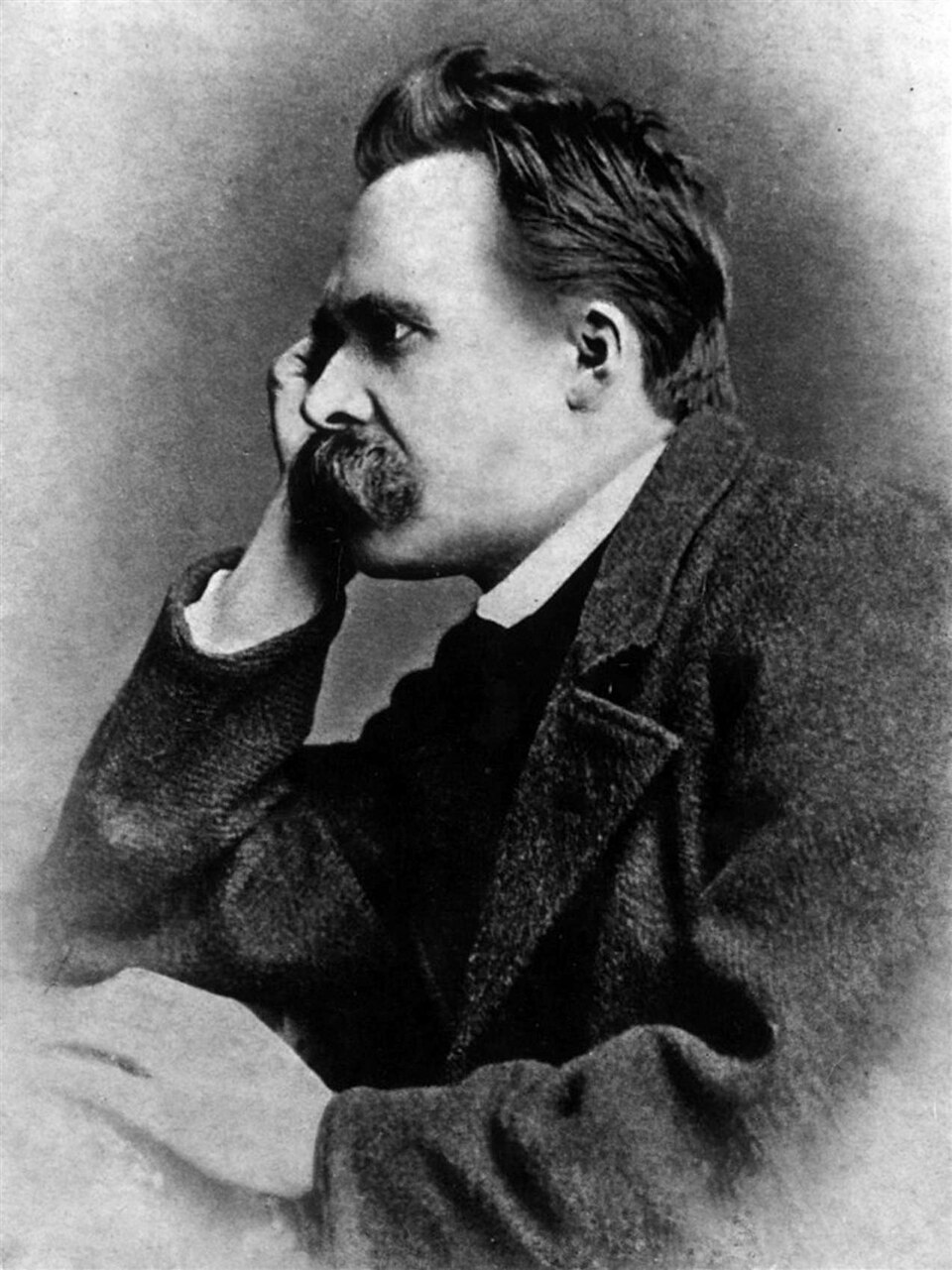
Friedrich Nietzsche was born in 1844 in Röcken, a small village near Leipzig in what was then Prussia. His father, Carl Ludwig Nietzsche, was a Lutheran pastor, and several members of his family were connected with the Protestant clergy. After his father's death in 1849, followed soon afterward by the death of Nietzsche's younger brother, the family moved to Naumburg. Nietzsche grew up largely in a household of women, including his mother, grandmother, aunts, and younger sister Elisabeth, while receiving a rigorous education that developed his interests in classical languages, literature, music, and ancient Greek culture.
Nietzsche attended the prestigious boarding school Schulpforta before studying classical philology at the universities of Bonn and Leipzig. During these years he became deeply interested in the philosophy of Arthur Schopenhauer and encountered the intellectual and musical world associated with Richard Wagner. Nietzsche's remarkable ability as a classical scholar attracted the attention of his teachers, and in 1869, at only twenty-four years old, he was appointed professor of classical philology at the University of Basel, becoming one of the youngest scholars ever called to such a position.
Nietzsche's years at Basel were intellectually important but personally difficult. Alongside his academic work, he developed friendships with Richard Wagner and others in Wagner's circle, while increasingly turning from professional philology toward broader philosophical and cultural questions. His first major book, The Birth of Tragedy, emerged from this period and attempted to combine classical scholarship with a new interpretation of Greek culture, art, music, and tragedy.
Nietzsche's academic career was relatively short. Persistent and often debilitating health problems eventually forced him to resign his professorship in 1879. Freed from regular university teaching, he spent much of the remainder of his productive life travelling through Switzerland, Italy, France, and other parts of Europe while living relatively independently and writing the philosophical works that would later make him famous. Much of Nietzsche's most influential philosophy was therefore written outside the conventional university career that had originally seemed to define his future.
Nietzsche and Modern Philosophy
Nietzsche belongs to the late nineteenth century, but his philosophy is deeply connected with the problems of modernity. He questioned the confidence that modern European culture placed in rational progress, universal morality, religious belief, scientific objectivity, and the assumption that history naturally moves toward improvement. Instead of assuming that modern civilization represented straightforward intellectual and moral advancement, Nietzsche asked what psychological and historical forces had produced its dominant values.
His approach differs considerably from the systematic rationalism of philosophers such as Descartes, Spinoza, and Leibniz. Nietzsche often treats philosophical claims as expressions of deeper psychological needs, instincts, drives, historical conditions, and forms of life. A philosopher's supposedly abstract theory may therefore reveal something about the kind of person who created it and the values that person is attempting to defend.
This approach made Nietzsche particularly important for later developments in genealogy, psychology, cultural criticism, and continental philosophy. He repeatedly challenges the assumption that concepts such as truth, morality, reason, and knowledge can be understood apart from the human beings and historical cultures that produce them. Philosophical ideas, for Nietzsche, have histories, functions, and consequences.
Nietzsche's modern philosophy is therefore not simply a theory about abstract reality. It is also an investigation into the human beings who create philosophies, moral systems, religions, and cultural ideals. His central question repeatedly becomes: what kind of person, culture, or form of life does a particular value encourage? By asking this question, Nietzsche transformed philosophy into a more explicitly psychological and historical examination of the origins and effects of human beliefs.
Nietzsche and Schopenhauer: An Important Philosophical Influence
Arthur Schopenhauer was one of Nietzsche's earliest and most important philosophical influences. Nietzsche encountered Schopenhauer's The World as Will and Representation while still a young scholar and was strongly attracted to its uncompromising critique of optimism, conventional morality, and superficial accounts of human motivation. Schopenhauer's philosophy suggested that beneath conscious rational thought there were deeper and often irrational forces shaping human existence.
Schopenhauer also provided Nietzsche with an example of the philosopher as a cultural critic rather than merely an academic specialist. Nietzsche admired his independence and his willingness to challenge dominant intellectual assumptions. In Nietzsche's early writings, particularly The Birth of Tragedy and the essay Schopenhauer as Educator, Schopenhauer appears as an important model of philosophical seriousness and intellectual courage.
Nietzsche eventually moved away from Schopenhauer's pessimistic philosophy. While Schopenhauer interpreted the fundamental will as a source of endless striving and suffering and regarded the denial or quieting of the will as a possible response, Nietzsche increasingly developed ideas emphasizing life-affirmation, creativity, struggle, self-overcoming, and the productive transformation of suffering.
The relationship between Nietzsche and Schopenhauer is therefore important for understanding Nietzsche's development. Nietzsche did not simply reject his earlier philosophical influence; he transformed several Schopenhauerian problems into new questions about power, value, psychology, artistic creation, and the affirmation of life. His later philosophy can partly be understood as an attempt to overcome pessimism without returning to a simple optimism about human existence.
Nietzsche's The Birth of Tragedy and Greek Philosophy
Nietzsche's first major book, The Birth of Tragedy, was published in 1872. The work combined classical scholarship with philosophy, aesthetics, psychology, and cultural criticism. Rather than presenting ancient Greece as a civilization defined only by calm rationality and harmony, Nietzsche argued that Greek tragedy emerged from a culture capable of confronting suffering, conflict, destruction, and the frightening dimensions of existence without simply attempting to deny them.
One of the book's most famous distinctions is between the Apollonian and Dionysian forces. The Apollonian is associated with form, order, individuality, clarity, measured appearance, and the creation of intelligible images. The Dionysian, by contrast, is associated with ecstasy, intoxication, the weakening of ordinary individuality, music, instinct, and participation in a more overwhelming vitality of life. Nietzsche presents these forces not merely as opposing artistic styles, but as different modes through which human beings experience and give form to existence.
Nietzsche believed Greek tragedy achieved its distinctive power through a creative tension between these forces. Tragic art gave form to experiences that might otherwise appear chaotic or unbearable. Instead of promising that suffering would disappear or that the universe was morally arranged for human happiness, tragedy could transform suffering into artistic experience and make possible a deeper affirmation of existence. In this sense, tragedy becomes philosophically significant because it does not require human beings to escape suffering before they can say yes to life.
The book also contains Nietzsche's early criticism of what he regarded as excessive rationalism in Western culture. He associated Socratic optimism with the belief that knowledge and rational explanation could ultimately solve the problems of existence. Nietzsche later reconsidered and criticized important aspects of his own early work, but The Birth of Tragedy already reveals his lifelong interest in art, culture, suffering, creativity, and the possibility of affirming life without denying its tragic dimensions.
Nietzsche's interpretation of Greek tragedy was also a challenge to conventional classical scholarship of his period. Rather than treating Greek culture primarily as an achievement of rational beauty and intellectual balance, he emphasized the darker psychological and existential forces that could exist beneath its artistic forms. His interpretation was controversial among classical scholars, but it established a pattern that remained important throughout his philosophy: culture should be evaluated not only by its ideas and institutions, but also by the ways in which it responds to suffering, instinct, creativity, and the fundamental conditions of human existence.
What Did Nietzsche Mean by "God Is Dead"?
The phrase "God is dead" is one of the most famous ideas associated with Nietzsche's philosophy. It appears in several forms in his writings, most famously in The Gay Science. Nietzsche does not simply mean that a supernatural being has physically died. The phrase describes a profound cultural transformation in which traditional Christian belief and the authority of Christianity were losing their ability to provide a universally convincing foundation for European values.
Nietzsche's declaration is therefore simultaneously religious, philosophical, and cultural. Christianity had historically influenced European ideas about morality, truth, purpose, suffering, and the meaning of human existence. If belief in God and a divinely ordered universe became increasingly difficult to sustain, then the decline of religious belief created a much larger philosophical problem: what happens to values that were historically connected with that worldview? The collapse of religious certainty could therefore have consequences extending far beyond theology.
The death of God consequently leads directly into Nietzsche's analysis of nihilism. The collapse of an inherited value system does not automatically create a new one. Scientific knowledge or political progress, Nietzsche suggests, cannot simply replace every function once performed by religious belief. The disappearance of old certainties can therefore create a crisis concerning meaning and value. Human beings may discover that they have rejected the foundations of traditional morality without yet understanding what could legitimately replace them.
In this sense, "God is dead" is not a simple slogan celebrating atheism. Nietzsche treats the event as historically immense and potentially frightening. It is a diagnosis of the cultural consequences of the weakening of religious authority and a challenge concerning how humanity should respond to the resulting crisis of meaning. The question is not merely whether people still believe in God, but whether they understand the consequences of losing the worldview in which many of their deepest values developed.
Nietzsche's declaration therefore introduces a demanding philosophical task rather than providing an easy conclusion. If inherited religious foundations can no longer guarantee the authority of moral values, human beings must confront the problem of valuation itself. This challenge helps explain the connection between the death of God, nihilism, revaluation, and Nietzsche's later interest in self-overcoming and the creation of values. His concern is not simply the disappearance of belief, but the possibility of constructing a culture capable of living meaningfully after the collapse of an inherited metaphysical framework.
What Is Nietzsche's Philosophy of Nihilism?
Nihilism is one of the central problems in Nietzsche's philosophy. In its broadest sense, nihilism occurs when previously accepted values lose their authority and human beings can no longer find convincing grounds for the beliefs that once gave their lives meaning. Nietzsche regarded the crisis of European values as one of the defining problems of modern culture.
Nietzsche did not simply advocate nihilism as a final philosophical position. Instead, he examined it as a historical and psychological danger. If inherited values collapse but human beings remain unable to create or affirm alternative values, the result may be despair, passivity, cultural exhaustion, or a retreat into substitute forms of certainty that preserve the structure of the old worldview under a different name. Nihilism can therefore appear both as a loss of meaning and as a temptation to escape the difficult task of creating new orientations toward life.
Nietzsche distinguishes different tendencies within the broader phenomenon of nihilism. A passive response may experience the loss of meaning as exhaustion and resignation, while a more active or transformative response may participate in the destruction and revaluation of inherited values. These distinctions are especially important for understanding why Nietzsche regards nihilism not only as a danger but also as a transitional crisis. The destruction of old certainties can become intellectually productive if it opens space for new forms of valuation rather than ending in resignation.
Nietzsche's response to nihilism involves the possibility of value creation and revaluation. Rather than searching for an unquestionable moral order outside human life, he asks whether stronger forms of human existence can create and affirm values capable of encouraging creativity, intellectual honesty, self-overcoming, and life-affirmation. The overcoming of nihilism therefore requires more than simply returning to older certainties; it demands a transformation in how human beings understand the origin and value of their ideals.
Nihilism is consequently connected with several of Nietzsche's major concepts, including the death of God, the revaluation of values, the will to power, self-overcoming, and eternal recurrence. The challenge is not merely to replace one set of unquestioned beliefs with another, but to develop the capacity to evaluate values themselves. Nietzsche therefore treats nihilism as a profound cultural and existential problem that requires intellectual courage, creative transformation, and a stronger affirmation of life rather than simple pessimism or resignation.
Nietzsche's Critique of Good and Evil
Nietzsche's philosophy of morality begins with suspicion toward the assumption that conventional moral categories are timeless and universally valid. In Beyond Good and Evil, published in 1886, he investigates the psychological, historical, and philosophical assumptions behind judgments that had often been treated as self-evident truths. His method challenges philosophers to examine the origins and functions of their moral assumptions rather than beginning from the belief that conventional values require no further explanation.
Nietzsche does not simply propose that people should behave immorally or abandon every distinction between better and worse ways of living. His point is more radical: philosophers should examine where moral values came from, what psychological needs they express, and what kinds of human beings those values encourage. Moral judgments, in his view, have histories and can therefore be subjected to philosophical criticism rather than accepted automatically as eternal facts.
The phrase "beyond good and evil" does not mean that Nietzsche believes cruelty, dishonesty, or violence become automatically admirable once conventional morality is questioned. Instead, he challenges the inherited framework through which moral oppositions have been constructed and asks whether apparently opposite values may have more complicated relationships than traditional moral philosophy assumes. His criticism is directed toward moral dogmatism and the assumption that inherited categories possess unquestionable authority.
This approach helped transform the study of ethics from a search only for universal moral rules toward questions about genealogy, psychology, culture, power, and value creation. Nietzsche's critique of morality therefore became one of the foundations of his broader philosophical project: the attempt to investigate not merely whether a value is believed, but what that value does to the people and cultures that live according to it.
Nietzsche's critique also extends to philosophers who believe they have discovered morality through purely rational reflection while failing to examine the drives and historical conditions shaping their judgments. He asks whether moral philosophies may themselves express particular forms of life, psychological needs, or struggles for interpretation. This does not eliminate philosophical evaluation; rather, it changes the questions philosophy must ask. Moral concepts become objects of investigation, interpretation, and critical genealogy instead of being treated as unquestionable starting points.
Nietzsche's Master and Slave Morality
Nietzsche's distinction between master morality and slave morality appears most prominently in Beyond Good and Evil and On the Genealogy of Morality. These concepts describe contrasting patterns of valuation rather than two simple and permanently separate moral systems belonging to clearly identifiable groups of people. Nietzsche uses them as interpretive tools for examining different psychological and historical ways in which values can be generated.
Master morality begins from a more affirmative evaluation of oneself. Qualities such as strength, nobility, confidence, courage, achievement, and vitality are experienced as valuable, while what is weak or contemptible may be judged negatively. Nietzsche's account is historical and interpretive, however, and the term "master" should not simply be understood as praise for every person who possesses political or social power. The distinction concerns forms of valuation and self-understanding rather than a straightforward sociological classification.
Slave morality, according to Nietzsche's genealogy, develops through a different process of valuation. Those unable to express hostility directly against people they perceive as powerful may transform their resentment into moral judgment. Qualities previously regarded as noble can then be condemned as evil, while qualities associated with suffering, humility, meekness, and obedience can be elevated as morally good. Nietzsche connects this transformation with a reversal in the meaning assigned to strength and weakness.
This process is closely connected with Nietzsche's concept of ressentiment. His larger concern is not to provide a simple historical classification of superior and inferior societies, but to examine competing forms of valuation and the psychological forces involved in their development. Nietzsche asks whether particular moral systems encourage flourishing, creativity, strength, and self-development or instead cultivate guilt, resentment, self-denial, and hostility toward life.
Nietzsche's account should not be interpreted as a simple command to return to an imagined aristocratic morality. His genealogy is more critical and complicated than that. He is interested in how values emerge, how they become internalized, and how they shape human possibilities. The master-slave distinction therefore forms part of a larger investigation into the psychology of morality, especially the relationship between power, resentment, self-evaluation, and the capacity of individuals and cultures to create or transform values.
What Is Ressentiment in Nietzsche's Philosophy?
Ressentiment is a psychological concept central to Nietzsche's genealogy of morality. The French term describes a persistent, inwardly sustained form of resentment that can arise when individuals or groups feel unable to act directly against those whom they perceive as powerful, threatening, or superior. Nietzsche's use of the concept therefore concerns more than ordinary anger; it refers to a condition in which hostile feelings remain active internally and influence the way the world is interpreted.
Instead of being discharged through direct action, hostile emotion may become internalized and transformed into a system of moral evaluation. Nietzsche uses ressentiment to explain part of what he calls the "slave revolt in morality." The person motivated by ressentiment may seek psychological compensation by reversing existing values and condemning as evil what they are unable to possess or overcome. Moral judgment can thus become a means through which feelings of powerlessness are given meaning and direction.
Qualities associated with strength, confidence, power, and nobility can therefore be reinterpreted as morally evil, while qualities associated with the disadvantaged can be transformed into moral virtues. Nietzsche's argument is deliberately controversial because it challenges the assumption that moral values arise solely through rational reflection or selfless concern for others. He investigates the possibility that emotional and social conditions can influence the formation of moral concepts.
Ressentiment therefore connects Nietzsche's ethics with his psychology. Moral systems are not merely collections of abstract propositions; they can emerge from particular emotional conditions, social relationships, conflicts, and struggles over how human beings interpret themselves and others. This psychological analysis became one of Nietzsche's most influential contributions to later philosophy and cultural criticism.
Nietzsche's concept also illustrates his broader interest in the transformation of psychological forces into values. A feeling that cannot be expressed directly may be redirected inward, transformed into moral judgment, and eventually incorporated into a person's understanding of themselves and the world. Ressentiment therefore demonstrates why Nietzsche treats morality as something requiring psychological interpretation: moral language can conceal histories of conflict, compensation, desire, and struggle rather than simply describing objective moral facts.
Nietzsche's Genealogy of Morality
Nietzsche's genealogical method investigates the historical development of values rather than assuming that moral concepts have always possessed their current meanings. His most important example is On the Genealogy of Morality, published in 1887, which examines concepts such as good and evil, guilt, bad conscience, punishment, and ascetic ideals. Genealogy asks how values were formed and transformed within particular historical and psychological circumstances.
Genealogy does not simply ask, "What is the correct moral rule?" Instead, it asks questions such as: Who created this value? Under what historical circumstances did it emerge? What psychological needs does it satisfy? How has its meaning changed over time? And what kind of person or culture does it produce? These questions transform moral philosophy into an investigation of history, culture, power, and human psychology.
Nietzsche's genealogy is also critical because discovering an origin does not automatically justify a value. A moral ideal may have emerged under circumstances very different from those in which it is later defended. Nietzsche therefore encourages philosophers to distinguish between the historical origin of a value and its present meaning or usefulness. Understanding where an ideal came from does not by itself prove that the ideal is true or false, good or bad.
Nietzsche's genealogical philosophy became particularly influential in twentieth-century thought. Later philosophers and theorists adapted genealogical approaches to investigate institutions, knowledge, morality, punishment, sexuality, identity, and social norms. His method remains important because it challenges us to ask not only whether an idea appears true or morally attractive, but also how that idea came to possess authority in the first place.
Genealogy consequently changes the task of philosophical criticism. Instead of treating concepts such as guilt, punishment, morality, or truth as isolated abstractions, Nietzsche places them within histories of human practices and forms of life. He is interested in the processes through which interpretations become dominant and eventually appear natural or self-evident. This makes genealogy simultaneously a method of historical investigation, psychological analysis, and critique of established values.
What Is Nietzsche's Will to Power?
The will to power is one of Nietzsche's most famous and most debated concepts. Nietzsche uses the language of power in different contexts, and scholars continue to disagree about whether he intended the concept primarily as a psychological theory, a theory about life and agency, a metaphysical doctrine, or a broader interpretation of striving and valuation. The concept therefore cannot be reduced to one simple definition without overlooking important differences across Nietzsche's writings.
The concept should therefore not be reduced to a simple desire to dominate other people. In many interpretations of Nietzsche, power involves growth, expression, overcoming resistance, organization, and the enhancement of one's capacity to act. Artistic creation, intellectual discipline, self-transformation, and the overcoming of obstacles can all be understood in relation to Nietzsche's broader concern with power and human development.
The will to power is closely related to Nietzsche's idea of self-overcoming. Human beings are not simply supposed to preserve an existing identity or remain satisfied with inherited habits and values. They can struggle against their limitations, transform themselves, reinterpret their experiences, and become different from what they previously were. In this sense, Nietzsche often treats growth as involving resistance rather than the simple avoidance of difficulty.
A work titled The Will to Power was published after Nietzsche's death from selections and arrangements made from his unpublished notebooks. It should not be treated as a finished systematic book comparable to his works published during his lifetime. Nietzsche had considered various plans for a larger work, but the surviving notebook material was later organized editorially, and modern scholarship treats the resulting compilation with considerable caution when interpreting Nietzsche's final philosophical intentions.
The will to power is particularly important because it connects Nietzsche's psychology with his broader critique of passive conceptions of human existence. Human beings are portrayed as beings whose drives seek expression, organization, transformation, and greater capacity. This does not mean that every action is secretly motivated by a desire for political domination. Rather, the concept provides a vocabulary for examining how forces within individuals and cultures struggle, organize themselves, overcome resistance, and participate in the creation of values and forms of life.
What Is Nietzsche's Übermensch?
The Übermensch, often translated as "Overman" and sometimes as "Superman," is one of the central figures in Thus Spoke Zarathustra. The concept represents a human ideal associated with self-overcoming, creative value formation, independence from inherited assumptions, and a powerful affirmation of life. Nietzsche presents the figure symbolically rather than as a straightforward description of a superior biological human type.
The Übermensch is not simply a physically superior, biologically superior, or politically dominant individual. Nietzsche presents the idea primarily as a philosophical challenge concerning human development. Human beings should not necessarily regard their present moral and psychological condition as the final stage of what humanity can become. The concept points toward transformation rather than domination over others.
The concept is closely connected with Nietzsche's demand for self-overcoming. To overcome oneself does not mean discovering a permanently perfect identity. It means repeatedly transforming one's habits, values, limitations, and understanding of oneself. The ideal represented by the Übermensch therefore emphasizes becoming rather than the passive preservation of a fixed human essence.
The Übermensch is also connected with Nietzsche's critique of nihilism. After the weakening of traditional sources of meaning, humanity faces the problem of what comes next. The Übermensch symbolizes the possibility of creating and affirming values rather than remaining dependent upon inherited certainties. Nietzsche's deliberately symbolic presentation means that the concept continues to generate different interpretations rather than functioning as a simple political or scientific theory.
The Übermensch should therefore be understood within Nietzsche's broader project of transforming the human relationship to values, suffering, and existence. It represents an ideal of continual self-transformation rather than a final state that can be permanently achieved. Its importance lies partly in Nietzsche's question of whether human beings can become creators of values after the decline of traditional metaphysical foundations. The concept consequently belongs to his larger response to nihilism, self-overcoming, and the challenge of affirming life creatively.
What Is Nietzsche's Eternal Recurrence?
Eternal recurrence is one of Nietzsche's most difficult and enigmatic philosophical ideas. In its famous formulation, a person is asked to imagine that their entire life, including every joy, pain, failure, decision, and apparently insignificant moment, would have to be lived again endlessly in exactly the same sequence. The thought therefore places the whole of an individual's existence under an extreme test of affirmation.
Nietzsche presents this thought as a profound test of one's relationship with life. How would a person respond if every moment of their existence had to return again and again? Would the idea produce despair and rejection, or could one affirm one's life so completely that one would be willing to will its repetition? The emotional force of the thought experiment lies in the fact that nothing can be removed from the proposed repetition, including suffering and regret.
Eternal recurrence is therefore closely connected with Nietzsche's ideal of life-affirmation. The challenge is not to approve only of life's pleasant moments while wishing away suffering, failure, and loss. Nietzsche asks whether a person can develop a relationship with existence capable of affirming the whole of life rather than demanding that reality conform to an imagined perfect world. The idea consequently places radical acceptance at the center of existential self-evaluation.
Scholars continue to debate whether eternal recurrence should be interpreted primarily as a cosmological hypothesis, a thought experiment, an existential challenge, or some combination of these possibilities. Nietzsche's published presentations are often hypothetical, metaphorical, or deliberately enigmatic. Whatever interpretation is preferred, the idea remains central to his attempt to connect meaning, self-overcoming, and affirmation with a radical acceptance of temporal existence.
The thought of eternal recurrence also intensifies Nietzsche's concept of responsibility toward one's own life. If every moment were to return, then ordinary distinctions between important and insignificant experiences would become difficult to maintain. The idea asks whether one can live in such a way that one's existence is not fundamentally rejected when viewed as a whole. It therefore functions as a demanding philosophical test of affirmation, connecting Nietzsche's reflections on time, character, fate, choice, and the possibility of saying yes to existence.
Nietzsche's Philosophy of Life and Life-Affirmation
Life-affirmation is one of the broadest themes connecting Nietzsche's philosophy. Nietzsche criticizes philosophies and moral systems that, in his view, treat suffering, bodily existence, instinct, desire, and earthly life as things that must ultimately be rejected in favour of a higher world, a final redemption, or an existence beyond the conditions of ordinary human life.
Nietzsche does not deny that life contains suffering. In fact, suffering is essential to his philosophical challenge. His question is whether suffering must therefore make existence itself worthless. He explores whether difficulty, struggle, uncertainty, resistance, and limitation can sometimes become conditions for creativity, strength, artistic achievement, knowledge, and self-transformation.
This is why Nietzsche's philosophy should not be confused with simple optimism. Life-affirmation does not mean believing that everything happens for a good reason or pretending that suffering is pleasant. It means confronting the difficult and often tragic dimensions of existence without automatically concluding that life must therefore be rejected or justified by reference to another world.
Nietzsche's ideas of amor fati, or love of fate, self-overcoming, and eternal recurrence are closely related to this broader ideal. They ask whether a person can learn to affirm what has been given while also actively transforming their relationship with the future. The highest form of affirmation, in this interpretation, is not passive resignation but a creative engagement with existence.
Life-affirmation therefore remains one of the reasons Nietzsche continues to influence modern discussions of meaning, suffering, creativity, psychology, and human flourishing. His philosophy challenges people not merely to ask whether life is comfortable or morally secure, but whether they are capable of creating forms of existence that justify themselves through their own intensity, creativity, growth, and affirmative power.
What Is Nietzsche's Perspectivism?
Perspectivism is the name commonly given to Nietzsche's view that knowing and interpreting always take place from particular perspectives. Human beings do not approach the world from a completely neutral, context-free "view from nowhere." Our bodily and cognitive capacities, interests, affects, values, historical conditions, and forms of life influence how the world becomes intelligible to us.
Nietzsche's perspectivism should not simply be understood as the claim that every opinion is equally correct or that truth is impossible. Rather, he criticizes philosophers who fail to recognize the perspective from which they themselves think. A philosophical theory may present itself as purely objective while still expressing particular psychological needs, valuations, or forms of life.
Perspectivism also has a positive dimension. Nietzsche suggests that a richer understanding may require the ability to examine an issue from multiple perspectives rather than becoming imprisoned within a single interpretation. The multiplication and comparison of perspectives can therefore represent an intellectual achievement rather than a descent into simple relativism.
The exact philosophical status of Nietzsche's perspectivism remains debated. It has been interpreted as a theory of knowledge, a doctrine about psychology and interpretation, and, by some scholars, a view extending into his understanding of reality itself. What is clear is that the concept connects Nietzsche's epistemology with his psychology, genealogy, and critique of philosophical dogmatism.
Perspectivism also reflects Nietzsche's broader rejection of the idea that interpretation can be completely separated from the conditions under which interpretation occurs. A perspective can be limited without being useless, and multiple perspectives can reveal aspects of a subject that a single viewpoint cannot capture. This makes perspectivism especially important for understanding Nietzsche's approach to philosophy: knowledge requires intellectual discipline and critical comparison, but it does not require pretending that the knower possesses an entirely detached position outside history, life, and interpretation.
Nietzsche's Philosophy of Truth and Knowledge
Nietzsche's philosophy of truth challenges the assumption that knowledge can always be completely separated from interpretation. He asks how human concepts, languages, interests, and forms of life shape what people recognize and describe as true. He also turns the traditional philosophical question in an unusual direction by asking whether the value of truth itself should be examined.
This does not mean that Nietzsche simply claims that facts do not exist or that every belief is equally valid. His writings contain strong commitments to intellectual honesty and truthfulness, even while criticizing the assumption that human beings possess a perspective-free access to reality. The apparent tension between these positions is one of the central interpretive problems in Nietzsche scholarship.
Nietzsche is particularly interested in the psychological and historical conditions behind the will to truth. Why should truth be valued above illusion, comfort, religious certainty, or moral usefulness? Can the pursuit of truth itself undermine beliefs and values that previously made life appear meaningful? For Nietzsche, the desire for truth is therefore not philosophically innocent.
His analysis connects epistemology with genealogy and psychology. Philosophical claims can be investigated not only by asking whether they are true, but also by asking what drives, interests, historical circumstances, and forms of valuation make particular interpretations attractive. Nietzsche thereby transformed truth itself into an object of philosophical criticism.
Nietzsche's concern with truth therefore does not amount to a simple rejection of knowledge. Instead, he asks philosophers to examine the conditions and values underlying their pursuit of knowledge. This approach places epistemological questions alongside questions about language, interpretation, psychology, and culture. His challenge is particularly significant because it asks whether the unconditional pursuit of truth may itself have consequences for the values and forms of life that human beings depend upon, making truth not only an object to be discovered but also a value whose significance must be examined.
Nietzsche's Philosophy of Psychology and the Self
Nietzsche gave psychology an unusually important place within philosophy. He frequently investigates the hidden motives behind apparently rational beliefs, moral judgments, religious commitments, and philosophical theories. Rather than assuming that consciousness provides transparent knowledge of human motivation, he asks what competing drives, affects, instincts, and desires may operate beneath conscious reasoning.
He also challenges the traditional image of the self as a completely unified and autonomous inner substance. Human beings, in Nietzsche's account, contain multiple and sometimes conflicting drives and impulses. What appears as a single decision or stable identity may emerge from a more complicated organization and struggle among these different forces.
Nietzsche's psychology is therefore closely connected with his philosophy of interpretation. A person's beliefs and values may reveal something about the kind of life they live and the drives that have become dominant within them. Philosophical doctrines can consequently be treated not only as arguments but also as symptoms requiring psychological interpretation.
This dimension of his thought helps explain Nietzsche's influence far beyond academic ethics. His analyses of motivation, self-deception, resentment, guilt, repression, and self-formation anticipated and influenced questions later explored in psychology, psychoanalysis, existentialism, and twentieth-century cultural criticism.
Nietzsche's psychological approach also challenges the assumption that people always understand the true causes of their own beliefs and actions. Conscious reasons may coexist with deeper drives, habits, and affective tendencies that influence interpretation without becoming fully conscious. His philosophy therefore treats self-knowledge as a difficult achievement rather than an automatic feature of introspection. Understanding oneself requires examining the conflicts, desires, values, and forms of self-interpretation that shape one's experience.
Nietzsche on Free Will, Responsibility, and Human Agency
Nietzsche was highly critical of traditional conceptions of free will, especially the idea that human beings are completely independent causes capable of creating themselves through an act of pure choice. He regarded the notion of an absolutely self-originating will as philosophically questionable and closely connected with certain systems of moral praise, blame, guilt, and punishment.
His analysis of human agency emphasizes the complexity of drives, instincts, habits, bodily conditions, social influences, and psychological forces. What people experience as a completely conscious decision may depend upon processes that are not fully visible to consciousness. The traditional image of a simple, unified agent who stands entirely outside these forces is therefore deeply problematic for Nietzsche.
Nietzsche's criticism of free will does not mean that human beings are incapable of development or transformation. His philosophy repeatedly emphasizes the possibility of cultivating, organizing, redirecting, and transforming one's drives. The question is not whether a person possesses absolute freedom from all conditions, but what forms of agency and self-formation are genuinely possible within human life.
His concept of self-overcoming expresses this more complex understanding of agency. Individuals may work upon their habits, interpretations, values, and character without being completely independent of the psychological and historical conditions from which they emerge. Nietzsche therefore rejects both the simple doctrine of absolute free will and the idea that human beings are merely passive objects incapable of transformation.
Nietzsche's criticism of free will is closely related to his critique of moral responsibility as traditionally understood. If people are treated as completely self-caused agents, punishment and blame can be justified through the belief that they could have originated their character independently of every prior condition. Nietzsche questions this picture while still taking human formation seriously. His alternative emphasis falls upon understanding drives, cultivating capacities, transforming habits, and developing forms of agency that emerge from rather than float free of the conditions of human life.
Nietzsche's Critique of Christianity and Religion
Nietzsche's criticism of Christianity is one of the most important and controversial aspects of his philosophy. He believed that Christianity had profoundly shaped European morality and its understanding of guilt, compassion, humility, self-denial, equality, suffering, and transcendence. His critique therefore extends beyond theological disbelief and examines the cultural and psychological consequences of Christian moral values.
Nietzsche was especially concerned with forms of religious morality that, in his interpretation, encouraged hostility toward aspects of earthly and bodily existence. He argued that certain Christian ideals could transform weakness, suffering, and self-denial into moral virtues while treating instinct, pride, ambition, sensuality, and worldly flourishing with suspicion.
His argument should not be reduced to the claim that Christianity is simply false. Nietzsche asks a genealogical question: what historical and psychological conditions produced Christian morality, and what kinds of human beings and forms of life does that morality encourage? His criticism is therefore directed toward systems of valuation as well as religious doctrines.
Nietzsche's attack on Christianity is also connected with the problem created by its declining cultural authority. The death of God does not automatically solve the problem of morality; it threatens to leave European culture without values whose authority it can still justify. Nietzsche's larger concern is therefore what forms of valuation might remain possible after traditional religious foundations lose their power.
Nietzsche's critique of Christianity must also be understood within his broader concern with the relationship between suffering and meaning. He recognizes that Christianity can give suffering an interpretation and provide moral and psychological resources for people confronting hardship, but he questions the type of valuation created when suffering becomes evidence of guilt, sin, or the need to reject earthly life. His criticism therefore concerns not only religious belief itself but the possibility that particular moral interpretations of suffering can encourage self-denial and hostility toward life.
What Was Nietzsche's Philosophy of Ethics?
Nietzsche's ethical philosophy is primarily critical and genealogical rather than a conventional system of universal moral rules. He questions the foundations of inherited morality and asks whether values commonly regarded as self-evidently good genuinely promote human flourishing. Instead of beginning with duties or universal principles, Nietzsche investigates the historical origins, psychological functions, and consequences of moral judgments.
His positive orientation emphasizes values such as intellectual honesty, creativity, individuality, self-overcoming, excellence, and the affirmation of life. Nietzsche does not, however, provide a simple moral formula that every person should follow. His writings are often concerned with the cultivation and transformation of particular forms of human character rather than the construction of a universal moral code.
Nietzsche's ethical questions therefore extend beyond asking, "What action is morally right?" He also asks: Where did this value come from? What psychological need does it express? What kind of person does it cultivate? Does it strengthen or diminish the life it governs? This shift connects ethics with psychology, history, culture, and the analysis of power.
Nietzsche's positive ethical position remains difficult to classify because he deliberately resists the construction of a conventional philosophical system. Scholars have interpreted aspects of his thought through perfectionism, virtue ethics, value pluralism, anti-realism, existential ethics, and radical moral critique. The disagreement reflects both the complexity of his writings and his resistance to providing a final doctrine of morality.
Nietzsche's ethics can therefore be understood as a sustained investigation into the quality and consequences of values rather than as a straightforward replacement for traditional morality. He asks whether values emerge from strength, creativity, and life-affirmation or from resentment, fear, guilt, and the rejection of existence. This makes his ethical philosophy inseparable from his genealogy of morality, psychology of drives, critique of Christianity, and broader concern with the possibility of creating new forms of human excellence after inherited moral foundations have been questioned.
Nietzsche's Idea of Self-Overcoming
Self-overcoming is central to Nietzsche's conception of human development. Instead of treating the self as a finished and unchanging identity, Nietzsche presents human life as a continuing process of formation, conflict, discipline, interpretation, and transformation. A person can examine and reorganize existing drives, habits, values, and limitations rather than simply accepting them as a permanent destiny.
Self-overcoming is not the same as achieving conventional success or becoming socially powerful. Nietzsche is concerned with the transformation of the person who strives. This may involve overcoming intellectual laziness, fear, resentment, inherited beliefs, destructive habits, or dependence upon conventional standards of approval.
The concept also reflects Nietzsche's complex view of the self. Overcoming oneself does not necessarily mean destroying one's nature and replacing it with an entirely new identity. It can involve the difficult work of cultivating, ordering, redirecting, and giving form to competing drives and capacities.
Self-overcoming therefore connects the will to power, the Übermensch, and life-affirmation. Human beings are challenged to become active participants in the formation of their lives and values rather than merely accepting identities inherited from society, religion, or tradition.
Nietzsche's idea of self-overcoming also rejects the notion that personal development has a final and permanently completed endpoint. To overcome oneself is to remain capable of criticism, transformation, discipline, and reinterpretation. The process may involve confronting one's own weaknesses and contradictions rather than simply suppressing them. Self-overcoming consequently expresses Nietzsche's broader conception of human existence as becoming: the individual is not merely something fixed that must be discovered, but something that can be continually formed through struggle, interpretation, and creative activity.
Nietzsche's Philosophy of Art, Music, and Tragedy
Art occupies a central place in Nietzsche's philosophy because he saw artistic creation as a powerful response to the problems of suffering, chaos, and meaning. His early work on Greek tragedy explores how art can confront painful and contradictory aspects of existence without requiring reality to be explained away by a comforting metaphysical system.
In The Birth of Tragedy, Nietzsche famously distinguishes between the Apollonian and the Dionysian. The Apollonian is associated with form, individuality, measure, and intelligible appearance, while the Dionysian is associated with intoxication, music, the dissolution of ordinary individuality, and an overwhelming experience of life's creative and destructive forces.
Nietzsche was deeply interested in music, Greek tragedy, poetry, drama, and literary style. During his early career he greatly admired Richard Wagner and believed Wagnerian art might contribute to a cultural renewal. Their relationship later collapsed, however, and Nietzsche became a severe critic of Wagner's art, nationalism, and cultural influence.
Art remained important throughout Nietzsche's philosophical development, although his understanding of it changed. Artistic creation demonstrates that human beings can give form, style, and interpretation to experience without depending upon an eternal metaphysical order. Art therefore becomes connected with creativity, self-fashioning, value creation, and the affirmation of life.
Nietzsche's philosophy of art also helps explain why aesthetic experience occupies such an important place in his response to nihilism. Art does not necessarily provide a final explanation of existence, but it can demonstrate how human beings transform chaos, suffering, and contradiction into meaningful form. The artist becomes an example of active interpretation and creation rather than passive acceptance. For Nietzsche, artistic activity can therefore reveal a model of life in which meaning is produced through style, discipline, interpretation, and creative engagement with existence.
Nietzsche and the Critique of Ascetic Ideals
Nietzsche's analysis of ascetic ideals is especially important in the third essay of On the Genealogy of Morality. These ideals can encourage self-denial, discipline, sacrifice, and the rejection or suppression of ordinary desires. Nietzsche asks why human beings would embrace ideals that can appear to turn against aspects of their own bodily and earthly existence.
He does not treat asceticism as a simple psychological mistake. Ascetic ideals can provide an interpretation of suffering, organize human behavior, and give individuals a framework through which they understand themselves. For Nietzsche, their extraordinary power partly comes from the fact that suffering may become more bearable when it is given meaning.
Nietzsche's criticism concerns the particular kind of meaning ascetic ideals can create. When suffering is interpreted as punishment, guilt, sin, or evidence of human worthlessness, the individual may turn hostility inward. Nietzsche connects this process with his analysis of bad conscience and with forms of morality that direct aggression against the self.
The ascetic ideal also creates a difficult philosophical problem. Nietzsche argues that the ideal may give life meaning precisely when alternative meanings are unavailable. His critique is therefore not a simple rejection of discipline or sacrifice; it asks whether a form of meaning ultimately affirms life or depends upon treating life itself as something that must be condemned, redeemed, or overcome.
Nietzsche's analysis becomes especially important because he recognizes that ascetic ideals can solve a genuine psychological problem: they can give suffering an intelligible purpose. His criticism therefore asks what price is paid for that meaning. If suffering is interpreted primarily through guilt, sin, self-punishment, or rejection of bodily existence, the resulting ideal may preserve meaning while diminishing life. The philosophical challenge is consequently not simply whether discipline is good or bad, but what kind of human being a particular ideal produces and what relationship it establishes with existence.
Nietzsche's The Gay Science and the Death of God
The Gay Science, first published in 1882 and substantially expanded in 1887, is one of Nietzsche's most important works. Written largely in aphoristic form, it explores knowledge, art, morality, science, intellectual freedom, love, nihilism, and the famous declaration that "God is dead." Its mixture of philosophical argument, literary experimentation, irony, poetry, and short reflections reflects Nietzsche's distinctive approach to philosophical writing.
The book is particularly important because Nietzsche does not treat science as a simple replacement for religion. Scientific inquiry may challenge traditional religious explanations, but Nietzsche asks a deeper question about the values motivating the search for truth. Why should truth be pursued unconditionally, even when it threatens cherished moral or metaphysical beliefs? Scientific progress therefore does not automatically resolve the deeper problem of values.
The Gay Science also develops Nietzsche's ideal of intellectual experimentation. Philosophy becomes a practice of testing assumptions, questioning inherited values, and learning to live without guaranteed metaphysical certainty. The title itself points toward an ideal of knowledge connected with creativity, play, experimentation, and intellectual courage. Nietzsche presents philosophical inquiry as something capable of changing the character of the person who undertakes it.
The work occupies an important position in Nietzsche's development. It contains themes that would later become central to Thus Spoke Zarathustra, including the death of God and the first major presentation of eternal recurrence. It therefore stands at a crucial point between Nietzsche's earlier aphoristic philosophy and his later, more explicitly transformative project.
The Gay Science is also significant because it demonstrates Nietzsche's attempt to develop a philosophical style appropriate to a world in which inherited certainties are becoming unstable. Its aphorisms invite experimentation rather than presenting a single systematic doctrine from beginning to end. The work combines critique with an affirmative spirit, asking whether intellectual freedom, artistic creativity, and courageous experimentation can help human beings respond to the crisis created by the decline of traditional religious and metaphysical foundations.
Nietzsche's Thus Spoke Zarathustra
Thus Spoke Zarathustra, published in four parts between 1883 and 1885, is perhaps Nietzsche's most literary and philosophically distinctive work. Instead of presenting arguments in the style of a conventional academic treatise, Nietzsche uses the fictional figure of Zarathustra to explore themes such as the Übermensch, eternal recurrence, self-overcoming, nihilism, morality, and the transformation of human beings.
The book's literary form is philosophically significant. Zarathustra speaks through parables, speeches, symbols, irony, poetry, songs, and dramatic encounters. Nietzsche does not simply present a list of doctrines for the reader to memorize; the work repeatedly requires interpretation and often challenges readers to recognize irony, ambiguity, and tension within its own language.
One of the book's central ideas is that humanity should not be treated as a final achievement. The Übermensch represents the possibility of self-overcoming and the creation of new forms of valuation, while the thought of eternal recurrence challenges the individual to consider whether life can be affirmed without appeal to another world.
Thus Spoke Zarathustra therefore brings together many of Nietzsche's deepest concerns. It is a response to nihilism, but not a conventional philosophical solution to it. Through Zarathustra, Nietzsche explores the possibility that meaning must be created and affirmed through transformation rather than received from a pre-existing metaphysical order.
Nietzsche's Beyond Good and Evil
Beyond Good and Evil, published in 1886, develops Nietzsche's mature criticism of traditional philosophy and morality. He challenges philosophers who assume that their theories are purely objective and independent of psychological, cultural, and personal commitments. Philosophy itself, Nietzsche suggests, must become an object of philosophical suspicion.
Nietzsche examines truth, morality, religion, philosophers' prejudices, democracy, culture, and different types of human character. He repeatedly asks philosophers to investigate the drives and values that influence their theoretical conclusions rather than imagining that reason alone speaks through their systems.
The title does not simply mean that Nietzsche rejects every distinction between good and evil or recommends ordinary immorality. His deeper challenge is directed at inherited systems of valuation. He asks whether the moral categories philosophers defend are eternal truths or historically developed interpretations serving particular psychological and cultural purposes.
The book is especially important for understanding Nietzsche's perspectivism, his critique of moral universalism, his discussion of noble and slave forms of valuation, and his conception of future philosophers as experimenters and creators. It also prepares the more explicitly genealogical investigation of morality developed in his next major work.
Nietzsche's On the Genealogy of Morality
On the Genealogy of Morality, published in 1887, is Nietzsche's most concentrated examination of the historical and psychological development of moral values. The book consists of three interconnected treatises dealing respectively with good and evil, guilt and bad conscience, and the meaning and power of ascetic ideals.
Nietzsche's genealogical method challenges the assumption that moral concepts have always possessed their present meanings. Instead of asking only whether a value is morally correct, he investigates the historical struggles, social practices, psychological transformations, and relations of power through which concepts such as "good," "evil," "guilt," and "punishment" acquired their significance.
The first treatise develops Nietzsche's controversial account of master and slave forms of valuation and the role of ressentiment. The second examines the development of guilt and bad conscience, while the third investigates the ascetic ideal and its extraordinary ability to give meaning to suffering.
The book is essential for understanding Nietzsche's moral philosophy because it brings together psychology, history, power, resentment, religion, suffering, and value creation. Its influence was especially important for later thinkers who developed genealogical approaches to institutions, knowledge, punishment, sexuality, and social norms.
Major Works of Friedrich Nietzsche
Nietzsche wrote in several distinct styles throughout his career, including classical scholarship, aphoristic philosophy, cultural criticism, literary philosophy, polemic, and autobiographical self-interpretation. His major books reveal a developing philosophical project rather than a single systematic doctrine, and many of his central ideas change in emphasis across different periods.
- The Birth of Tragedy — Nietzsche's early work on Greek tragedy, art, the Apollonian, and the Dionysian.
- Human, All Too Human — A collection of philosophical observations criticizing traditional cultural and moral assumptions.
- The Gay Science — A major work dealing with science, knowledge, morality, intellectual freedom, and the death of God.
- Thus Spoke Zarathustra — Nietzsche's literary-philosophical work introducing major themes including the Übermensch and eternal recurrence.
- Beyond Good and Evil — A critique of traditional philosophy and morality.
- On the Genealogy of Morality — Nietzsche's major study of the origins and psychology of moral values.
- Twilight of the Idols — A concise later critique of philosophical and cultural assumptions.
- The Antichrist — A forceful critique of Christianity and Christian morality.
- Ecce Homo — Nietzsche's highly unusual autobiographical and philosophical self-interpretation.
Nietzsche and Existentialism
Nietzsche is frequently described as an important precursor to existentialism, although he died before the twentieth-century existentialist movement took its recognizable form. His writings on nihilism, meaning, individuality, suffering, self-creation, and the absence of guaranteed metaphysical foundations became important points of reference for later existential thinkers.
Nietzsche's philosophy nevertheless differs significantly from the philosophies later associated with existentialism. He did not describe himself as an existentialist, nor did he construct a systematic theory of existence comparable to those developed by Heidegger or Sartre. His concepts should therefore not be treated as if they map directly onto every later existentialist doctrine.
His influence can be seen most clearly in the challenge he presents: human beings may have to confront a world in which inherited sources of ultimate meaning no longer command unquestioned authority. The response cannot simply be the discovery of a ready-made purpose; it may require interpretation, commitment, creativity, and the difficult work of self-transformation.
Later thinkers responded to this challenge in very different ways. Nietzsche's influence on existentialism therefore lies less in the transmission of a single doctrine than in the philosophical problems he made impossible to ignore, particularly the problems of nihilism, meaning, individuality, freedom, and the affirmation of life.
Nietzsche's Influence on Modern and Contemporary Philosophy
Nietzsche became one of the most influential philosophers of the twentieth century. His writings were taken up by existentialists, phenomenologists, psychoanalytic thinkers, critical theorists, literary critics, social theorists, and philosophers working across the broad tradition now called continental philosophy. Martin Heidegger, Karl Jaspers, Michel Foucault, Gilles Deleuze, and many others developed sustained interpretations of his work.
His genealogical approach became particularly important for thinkers interested in the historical development of values, institutions, and forms of knowledge. Nietzsche demonstrated that philosophical criticism could ask not only whether a claim was true but also what psychological, social, and historical forces had made the claim possible and valuable.
Nietzsche's influence also extends beyond philosophy. Literature, psychology, political theory, cultural criticism, art, religious studies, and intellectual history have all drawn upon his ideas. His distinctive combination of philosophical argument, literary style, psychological analysis, and cultural criticism expanded the range of what philosophical writing could attempt.
His reception has never been uniform. Different thinkers have produced radically different versions of Nietzsche: a philosopher of power, a critic of metaphysics, a theorist of interpretation, an advocate of self-creation, a diagnostician of nihilism, and a genealogist of morality. This diversity of interpretation is itself evidence of the extraordinary complexity and continuing influence of his work.
Nietzsche, Politics, and Common Misinterpretations
Nietzsche's writings contain controversial statements about hierarchy, equality, democracy, nationalism, Christianity, culture, and social life. For this reason, his political significance has been intensely debated. It is important, however, not to reduce his philosophy to a simple modern political ideology or assume that later political movements accurately represented his views.
Nietzsche was a severe critic of German nationalism and repeatedly expressed hostility toward the organized antisemitism of his period. At the same time, his writings contain difficult and controversial discussions of hierarchy, aristocracy, peoples, and Judaism that require careful historical interpretation rather than simple political slogans.
His sister Elisabeth Förster-Nietzsche later played an important role in managing his literary estate and was associated with nationalist and antisemitic political circles. The subsequent editorial history of Nietzsche's letters and notebooks became entangled with the political appropriation of his reputation, although scholars continue to debate the precise extent and character of Elisabeth's responsibility for particular distortions.
In particular, the posthumous collection titled The Will to Power should not be treated as a finished systematic book prepared by Nietzsche himself. It was assembled from notebook material after his collapse and death, and its editorial history is controversial. Modern interpretations therefore give particular importance to Nietzsche's published works and to critical editions of his surviving notebooks and correspondence.
Why Did Nietzsche Want to Rethink Traditional Morality?
Nietzsche believed that European civilization had inherited a powerful moral framework without sufficiently examining its historical origins or psychological consequences. He therefore called for a radical revaluation of values. This did not simply mean replacing every accepted moral judgment with its opposite; it meant questioning the foundations of valuation itself.
His criticism focused particularly on values that, in his view, encouraged guilt, ressentiment, excessive self-denial, hostility toward instinct, and rejection of earthly existence. Nietzsche wanted philosophers to ask whether such values strengthened human beings or instead produced forms of psychological dependence, self-division, and hostility toward life.
Revaluation is therefore inseparable from Nietzsche's genealogical method. Before creating or affirming new values, human beings must understand how existing values came into being and what functions they perform. Moral concepts that appear eternal may turn out to have emerged from particular historical conflicts and psychological conditions.
The revaluation of values is also connected with Nietzsche's response to nihilism. Once traditional foundations are critically examined, human beings face the difficult problem of developing forms of valuation capable of affirming life without merely constructing a new unquestioned dogma in place of the old one.
Nietzsche's Main Philosophical Ideas
1. The Death of God
Nietzsche's declaration that God is dead describes the declining cultural authority of the Christian worldview and the resulting crisis for values, morality, meaning, and purpose in modern European culture.
2. Nihilism
Nihilism emerges when inherited values lose their authority and human beings struggle to find convincing grounds for meaning or to create and affirm new forms of valuation.
3. Will to Power
The will to power describes a tendency toward expansion, expression, overcoming, organization, and the enhancement of power, although its precise philosophical status remains one of the most debated questions in Nietzsche interpretation.
4. The Übermensch
The Übermensch represents an ideal of self-overcoming and creative value formation rather than a merely physically superior or politically dominant human being.
5. Eternal Recurrence
Eternal recurrence presents the thought that one's entire life might have to be lived again endlessly in exactly the same form and thereby functions as a profound challenge to one's capacity for life-affirmation.
6. Perspectivism
Perspectivism emphasizes that knowing and interpreting occur from particular perspectives shaped by human capacities, affects, values, and conditions rather than from a completely perspective-free standpoint.
7. Genealogy
Genealogy investigates the historical and psychological development of values instead of assuming that moral concepts are timeless, self-evident, or independent of the conditions that produced them.
Nietzsche's Philosophy Explained Simply
Nietzsche can be understood as a philosopher who asks what happens when human beings stop accepting inherited answers about morality, religion, truth, and meaning as unquestionable. Rather than simply replacing those answers with another rigid system, he investigates how values were created, what psychological needs they express, and what kinds of lives they encourage.
- What did Nietzsche mean by "God is dead"? It describes the decline of Christianity's traditional cultural authority and the resulting crisis concerning meaning and values.
- What is nihilism? Nihilism is the crisis that occurs when established values lose their authority and previously accepted sources of meaning become uncertain.
- What is the will to power? It refers broadly to tendencies toward expression, expansion, overcoming, organization, and enhancement, although Nietzsche's exact meaning remains debated.
- What is the Übermensch? The Übermensch represents an ideal of self-overcoming and creative value formation rather than a simple image of physical superiority.
- What is eternal recurrence? It is the challenging thought that one's life might have to be lived again endlessly in exactly the same form.
- What is perspectivism? It is the view that human knowledge and interpretation are always connected with particular perspectives rather than a completely neutral standpoint.
Why Is Friedrich Nietzsche Important in the History of Philosophy?
Friedrich Nietzsche is important because he transformed the way philosophers could investigate morality, religion, psychology, truth, and culture. Instead of accepting moral concepts as timeless truths, he examined their historical development and psychological consequences. This genealogical approach became one of his most enduring contributions to modern philosophy.
Nietzsche also gave new urgency to the philosophical problems of nihilism and meaning. His diagnosis of the death of God raised a question that became increasingly important in modern thought: how can human beings orient their lives when traditional metaphysical and religious foundations no longer command universal authority?
His importance also lies in his transformation of philosophical method. Nietzsche combined argument with psychological diagnosis, historical investigation, literary experimentation, and cultural criticism. He encouraged philosophers to examine not only ideas themselves but also the human beings, drives, institutions, and historical circumstances through which ideas emerge.
Nietzsche remains influential because he does not provide an easy solution to the problems he identifies. Instead, he challenges readers to examine their own values, confront uncomfortable psychological possibilities, and ask whether their ways of living genuinely affirm existence. More than a century after his death, those questions continue to shape debates about morality, truth, freedom, culture, and the meaning of human life.
Frequently Asked Questions About Friedrich Nietzsche
Who was Friedrich Nietzsche?
Friedrich Nietzsche was a nineteenth-century German philosopher and classical philologist whose philosophy challenged traditional morality, Christianity, metaphysics, and assumptions about truth, human nature, and culture.
What is Nietzsche famous for?
Nietzsche is famous for concepts including the death of God, nihilism, the will to power, the Übermensch, eternal recurrence, perspectivism, master and slave morality, ressentiment, and the genealogy of morality.
What did Nietzsche mean by "God is dead"?
Nietzsche's phrase describes the decline of traditional Christian authority and the resulting crisis of meaning and values in modern European culture. It is not simply a literal statement about the death of a deity.
Was Nietzsche an atheist?
Nietzsche was a strong critic of Christianity and traditional religious belief. His philosophy is generally understood as atheistic, although his central concern was broader than disbelief: he investigated the cultural and philosophical consequences of the collapse of religious foundations.
What is Nietzsche's philosophy of nihilism?
Nietzsche treats nihilism as a crisis in which inherited values lose their authority and human beings struggle to find meaning. He investigated nihilism as a historical danger and explored value creation and life-affirmation as possible responses.
What is Nietzsche's will to power?
The will to power is a complex Nietzschean concept concerning the expansion, expression, organization, and enhancement of power. It should not be reduced to a simple desire to dominate other people.
What is the Übermensch in Nietzsche's philosophy?
The Übermensch is an ideal presented in Thus Spoke Zarathustra. It represents self-overcoming, creative value formation, and a movement beyond inherited moral limitations rather than merely physical or political superiority.
What is Nietzsche's eternal recurrence?
Eternal recurrence is the thought that a person's entire life could repeat endlessly in exactly the same form. Nietzsche uses this idea as a profound test of one's relationship to life and affirmation.
What is Nietzsche's perspectivism?
Nietzsche's perspectivism holds that human knowledge and interpretation are connected to particular perspectives. It challenges the idea that human beings can simply adopt a completely neutral viewpoint outside all interpretation.
What is master and slave morality?
Nietzsche uses master and slave morality to distinguish between different historical and psychological patterns of valuation. Master morality emphasizes qualities such as nobility and strength, while slave morality develops through a reversal of values associated with resentment and powerlessness.
What is ressentiment in Nietzsche's philosophy?
Ressentiment describes a persistent form of resentment that can become internalized and transformed into moral evaluation. Nietzsche uses it to explain part of the historical development of slave morality.
What was Nietzsche's philosophy of morality?
Nietzsche critically examined traditional morality rather than offering a conventional universal moral system. He investigated the origins and consequences of moral values and emphasized self-overcoming, creativity, excellence, and life-affirmation.
Did Nietzsche believe in free will?
Nietzsche strongly criticized traditional concepts of absolute free will and the idea that human beings are completely independent causes of themselves. His psychology emphasizes the influence of drives, instincts, habits, and unconscious forces.
What books did Nietzsche write?
Nietzsche's major works include The Birth of Tragedy, Human, All Too Human, The Gay Science, Thus Spoke Zarathustra, Beyond Good and Evil, On the Genealogy of Morality, Twilight of the Idols, The Antichrist, and Ecce Homo.
What is Nietzsche's most famous book?
Thus Spoke Zarathustra is arguably Nietzsche's most famous philosophical-literary work. It presents the Übermensch, eternal recurrence, self-overcoming, and several other central themes of his mature philosophy.
Was Nietzsche an existentialist?
Nietzsche lived before existentialism became a twentieth-century philosophical movement, so calling him an existentialist requires qualification. He is widely regarded as an important precursor to existentialism because of his discussions of nihilism, meaning, individual transformation, values, and life.
Did Nietzsche believe that life is meaningless?
Nietzsche diagnosed nihilism as a crisis of meaning but did not simply endorse meaninglessness as the final answer. His philosophy explores whether human beings can create and affirm values after inherited sources of meaning have lost their authority.
Why did Nietzsche criticize Christianity?
Nietzsche criticized Christianity because he believed certain forms of Christian morality encouraged guilt, self-denial, resentment, and hostility toward earthly life. His criticism was part of a larger philosophical investigation into the origins and consequences of moral values.
What did Nietzsche think about suffering?
Nietzsche did not treat suffering as something that automatically makes life worthless. He explored whether struggle and suffering can contribute to creativity, strength, transformation, and self-overcoming.
Why is Nietzsche important to modern philosophy?
Nietzsche influenced existentialism, continental philosophy, psychology, literary theory, cultural criticism, genealogy, and modern discussions of morality, nihilism, truth, and human self-formation.
Related Modern and Contemporary Philosophers
Explore other major thinkers who shaped modern philosophy, German philosophy, existentialism, rationalism, empiricism, ethics, and continental thought.
Related Areas of Philosophy
Nietzsche's philosophy connects with ethics, metaphysics, epistemology, aesthetics, existentialism, philosophy of religion, philosophy of mind, modern philosophy, and the history of moral thought.
Why Friedrich Nietzsche Still Matters
Friedrich Nietzsche remains one of the most influential and controversial philosophers of modernity because he questioned assumptions that many philosophical traditions had treated as foundational. His critique of morality, Christianity, truth, the self, and inherited values forced later thinkers to reconsider how philosophical ideas are connected with psychology, history, culture, and power.
His concepts of nihilism, the death of God, will to power, perspectivism, eternal recurrence, genealogy, and the Übermensch continue to generate debate because they address problems that remain recognizable in modern life: the loss of traditional meaning, the construction of values, the search for identity, and the difficulty of living without unquestionable foundations.
Nietzsche's philosophy ultimately asks readers to confront rather than escape the conditions of human existence. His emphasis on self-overcoming, intellectual honesty, creativity, and life-affirmation makes him a central figure for understanding modern philosophy and the development of twentieth-century thought.
Explore Great Philosophers