Who Was George Berkeley?
George Berkeley (1685–1753), also known as Bishop Berkeley, was an Irish philosopher, Anglican clergyman, and one of the most original thinkers of the early modern period. He is best known for developing a radical form of idealism, often described as immaterialism, according to which sensible objects do not exist as mind-independent material substances. Instead, the objects of ordinary experience are understood through their relationship to ideas and perceiving minds or spirits.
Berkeley was closely associated with the British empiricist tradition alongside John Locke and David Hume. Like other empiricists, he believed that philosophical inquiry must take human experience seriously and examine what is actually given in perception. Yet Berkeley took empiricism in a strikingly different direction. Instead of using sensory experience to support belief in a world of mind-independent material substances, he argued that what we directly experience consists of ideas perceived by active minds.
His philosophy raises one of the most famous questions in modern philosophy: what does it mean for a physical object to exist? Berkeley's answer is closely associated with the Latin expression esse est percipi, usually translated as "to be is to be perceived." This principle does not simply mean that objects vanish whenever an individual stops looking at them. Within Berkeley's philosophical system, the continuing order and stability of the sensible world are ultimately explained through the existence and activity of God.
Berkeley's philosophy therefore brings together epistemology, metaphysics, philosophy of mind, perception, and theology. His arguments challenged the traditional distinction between the mind and an independently existing material world, while also attempting to answer the problem of skepticism about external reality. Through works such as An Essay Towards a New Theory of Vision, A Treatise Concerning the Principles of Human Knowledge, and Three Dialogues between Hylas and Philonous, Berkeley became one of the defining philosophers of eighteenth-century European thought.
George Berkeley: Quick Facts
- Full name — George Berkeley
- Born — 1685
- Died — 1753
- Birthplace — County Kilkenny, Ireland
- Known as — Bishop Berkeley
- Philosophical period — Early modern philosophy
- Tradition — British empiricism and idealism
- Major philosophical position — Immaterialism
- Major subjects — Idealism, perception, epistemology, metaphysics, philosophy of mind, theology, mathematics, and vision
- Famous principle — Esse est percipi
- Major work — A Treatise Concerning the Principles of Human Knowledge
- Other major work — Three Dialogues between Hylas and Philonous
- Important early work — An Essay Towards a New Theory of Vision
George Berkeley's Early Life and Historical Background
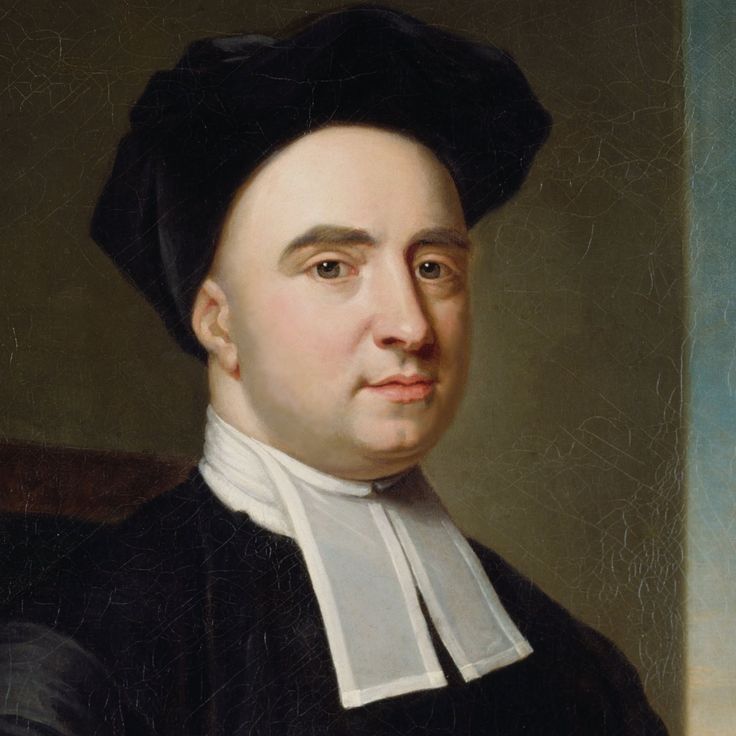
George Berkeley was born in Ireland in 1685 and received his education at Kilkenny College before entering Trinity College Dublin at a young age. His intellectual development took place during a period in which European philosophy and natural science were undergoing major changes. Thinkers such as René Descartes, John Locke, Isaac Newton, and Nicolas Malebranche were transforming discussions about knowledge, perception, science, the nature of the mind, and the structure of reality.
At Trinity College, Berkeley encountered many of the intellectual developments associated with the new philosophy and the scientific revolution. He became familiar with debates concerning ideas, perception, mathematics, motion, and the existence of material substances. His early philosophical notebooks reveal a thinker critically examining the assumptions inherited from several major seventeenth-century philosophers rather than simply accepting an established philosophical system.
Berkeley became particularly interested in the relationship between human perception and the external world. Rather than accepting without question the assumption that perceptions represent an underlying material reality, he investigated what human beings can actually experience and know. This concern first appeared prominently in his work on vision, where he examined how people perceive distance, size, and spatial relationships.
His philosophical project eventually led him toward immaterialism: the view that the material substance traditionally supposed to exist behind sensible qualities is unnecessary and philosophically unintelligible. His philosophy consequently became one of the most distinctive developments in early modern metaphysics, combining an empiricist analysis of experience with a radical rejection of mind-independent matter.
George Berkeley and the Enlightenment
George Berkeley belongs to the intellectual world of the Enlightenment, although his philosophy does not fit neatly into later stereotypes of the Enlightenment as an exclusively secular, materialist, or anti-religious movement. Berkeley was deeply committed to Christianity and regarded philosophical inquiry as compatible with theological belief. For him, reason could expose philosophical confusions while also revealing an orderly world grounded in divine intelligence.
His work nevertheless participated in one of the central Enlightenment concerns: determining the limits and foundations of human knowledge. Berkeley challenged inherited assumptions about matter, perception, causation, and abstract reasoning by asking what experience actually gives us. He believed that philosophical theories should not introduce entities merely because they appear useful within an abstract system.
Berkeley's idealism was therefore part of the broader transformation of early modern philosophy. Like other philosophers of his period, he questioned traditional explanations and attempted to establish clearer foundations for knowledge. Yet he reached an unusual conclusion: an empiricist examination of experience, he argued, does not lead necessarily toward materialism but can instead undermine the concept of mind-independent matter.
His arguments challenged both materialist theories and important aspects of the philosophical "way of ideas" associated with Locke and other early modern thinkers. Berkeley's distinctive solution to the problems of perception and the external world would later become part of the intellectual background for philosophers such as David Hume and Immanuel Kant, even though neither simply accepted Berkeley's system.
George Berkeley and Empiricism
George Berkeley's empiricism begins with the idea that human knowledge is closely connected with experience. Berkeley examines the contents of perception rather than assuming that the mind possesses direct access to an independently existing material substance. In this respect, he belongs to the tradition of British empiricism that also includes John Locke and David Hume.
In ordinary experience, people encounter colors, sounds, textures, tastes, shapes, movements, and other sensible qualities. Berkeley argues that these are ideas presented to the mind. We do not first perceive an invisible material substance and then discover its qualities; rather, sensible qualities themselves constitute what we immediately experience as physical objects.
Berkeley therefore pushes empiricism toward idealism. His question is not simply where knowledge comes from but what the objects of knowledge actually are. If experience presents only sensible ideas, he asks, what justification is there for positing an additional material substance existing completely outside the sphere of perception?
This makes Berkeley an unusual empiricist. His emphasis on experience does not lead him to defend a material universe composed of physical substances. Instead, he argues that a careful examination of experience gives us ideas and perceiving spirits, while the traditional concept of mind-independent matter lacks a clear experiential basis. This is one reason his philosophy is important in the history of both empiricism and idealism.
What Was George Berkeley's Philosophy?
The central claim of Berkeley's philosophy is that sensible objects do not exist as mind-independent material substances. The things people ordinarily call physical objects are collections or combinations of sensible ideas that are perceived by minds. Berkeley therefore does not deny the reality of ordinary objects; he offers a different account of what their reality consists in.
Berkeley distinguishes between ideas and spirits. Ideas are passive: they are perceived and do not themselves exercise will or causal activity. Spirits or minds are active perceivers capable of willing, thinking, and perceiving. A human being therefore encounters the world through ideas while existing as a perceiving and active spirit.
This position is often called subjective idealism, although "immaterialism" is closer to Berkeley's own philosophical terminology. Berkeley's purpose was not simply to deny reality to ordinary objects or to claim that everything is imaginary. Instead, he attempted to explain their reality without appealing to an unknowable material substance existing independently of all perception.
His philosophy consequently connects metaphysics with epistemology. Berkeley asks what exists by first examining what can meaningfully be perceived and known. The result is a system in which sensible objects are collections of ideas, finite minds are active perceivers, and God provides the ultimate explanation for the orderly and involuntary character of sensory experience.
Berkeley's philosophy is therefore best understood as a complete metaphysical system rather than as a single slogan about perception. His discussions of matter, abstract ideas, vision, skepticism, God, science, and the human mind are all connected by his attempt to remove what he considered unnecessary philosophical assumptions and return attention to the actual contents and conditions of experience.
What Is Berkeley's Immaterialism?
Berkeley's immaterialism is the doctrine that physical objects do not consist of an underlying, mind-independent material substance. Berkeley argues that what we call a tree, table, stone, or apple is encountered through a collection of sensible qualities and ideas. These objects are real, but their reality does not require the existence of an additional material substratum behind what is experienced.
Suppose a person looks at an apple. The apple is experienced through color, shape, taste, smell, texture, and other sensible qualities. Berkeley argues that these qualities are ideas. If philosophers remove all the qualities that can be perceived and then claim that something else remains underneath them as a completely unperceived material substance, Berkeley asks what intelligible content can be given to that supposed remainder.
Berkeley therefore rejects the philosophical idea of an unthinking material substratum underlying sensible qualities. His argument is not that tables and trees are imaginary or that people merely invent the world through private thought. Rather, he claims that their existence consists in their being perceived and that the traditional concept of material substance adds an unnecessary and philosophically obscure entity.
Immaterialism is consequently a positive metaphysical theory, not merely a denial of matter. Berkeley replaces material substance with a world consisting of ideas and spirits. Sensible ideas form the objects of ordinary experience, finite spirits perceive them, and God plays a central role in explaining the regularity, continuity, and systematic character of the world people experience.
Berkeley believed that immaterialism could actually defend common sense against skepticism. If philosophers claim that people perceive only internal representations while the real material world remains forever hidden behind them, then a difficult gap appears between experience and reality. Berkeley attempts to remove that gap by identifying ordinary sensible objects with the ideas through which they are directly known.
What Does "Esse Est Percipi" Mean?
The phrase esse est percipi is Latin for "to be is to be perceived." It is closely associated with Berkeley's philosophy because it expresses his claim about the existence of sensible objects. For an ordinary sensible object, such as a tree or an apple, existing means being present as an object of perception to a perceiving mind.
Berkeley's principle should not be interpreted as the claim that something disappears whenever an individual human being stops looking at it. His philosophy distinguishes between finite human perceivers and the divine perceiver. God provides the continuous order of sensible experience, meaning that the existence of the world does not depend on whether one particular human observer is currently attending to an object.
The principle therefore belongs to a larger theory. Berkeley argues that sensible things are ideas and that ideas require a perceiving spirit. At the same time, spirits themselves are not merely passive ideas; they are active beings capable of perception and will. The full structure of Berkeley's ontology is therefore broader than the simple statement that everything is perceived.
This is why "esse est percipi" is more than a slogan. It summarizes Berkeley's attempt to explain the existence of the sensible world without appealing to mind-independent material substance. The related expression aut percipere, "or to perceive," points toward the active existence of spirits as perceivers rather than passive objects of perception.
George Berkeley's Theory of Perception
Berkeley's theory of perception begins with the distinction between ideas and the minds that perceive them. Sensory experience presents us with colors, sounds, tastes, smells, textures, shapes, and other qualities. These immediate contents of experience are ideas rather than representations that must first be compared with an unknowable material substance existing beyond perception.
Berkeley argues that perception is not simply a passive window through which the mind discovers hidden material objects existing behind experience. Instead, the sensible qualities that constitute ordinary objects are directly presented in experience. A tree is therefore encountered through a structured collection of visual, tactile, and other sensible ideas associated together in a stable pattern.
His account also emphasizes the importance of relationships among different kinds of sensory experience. What people identify as a single object is often a regular collection of ideas that occur together. The name of an object, such as "apple," refers to a recognizable combination of qualities including particular colors, tastes, smells, shapes, and tactile experiences.
Berkeley's theory therefore challenges representational accounts according to which ideas inside the mind resemble external material objects. He questions how an idea could meaningfully be compared with or resemble something entirely inaccessible to perception. His criticism of this supposed division between immediately perceived ideas and a hidden material world became one of the most important aspects of his philosophy of perception.
Berkeley does not conclude that perception is chaotic or purely subjective. Sensory ideas occur according to regular patterns that human beings do not freely control. This distinction between involuntary ideas of sense and ideas voluntarily formed through imagination allows Berkeley to preserve an important difference between ordinary perception and private fantasy.
George Berkeley's Idealism
George Berkeley's idealism holds that reality, insofar as sensible objects are concerned, consists of ideas perceived by minds rather than material objects existing independently of perception. This makes Berkeley one of the most important philosophers in the history of idealism and one of the most radical critics of the traditional concept of matter.
Berkeley's idealism is sometimes called subjective idealism because sensible objects depend upon perception. However, Berkeley's system is not simply a claim that reality depends upon each individual's private consciousness. Human minds do not freely create the sensory world, and the regularity of experience is secured within Berkeley's system by the existence and activity of God.
Berkeley therefore rejects the assumption that idealism necessarily means that the world is imaginary or that every person creates a separate private reality. Ordinary objects remain real because they are stable collections of ideas, and these ideas occur according to a consistent order that does not depend upon the arbitrary wishes of individual human beings.
His idealism also differs from later forms of German idealism. Berkeley is primarily concerned with the metaphysical status of sensible objects and the relationship between ideas and perceiving spirits. Later idealists would develop very different theories concerning reason, history, consciousness, and the structure of experience.
Berkeley's idealism nevertheless became an important alternative to both materialism and Cartesian dualism. It remains a major subject in contemporary discussions of metaphysics, philosophy of mind, and perception because it raises a persistent question: what exactly is meant when philosophers claim that the world exists independently of all possible experience?
Berkeley on Primary and Secondary Qualities
One of Berkeley's most important arguments concerns the distinction between primary and secondary qualities. John Locke had argued that primary qualities such as extension, shape, motion, number, and solidity belong to bodies themselves, while secondary qualities such as color, sound, taste, and smell depend more directly upon the relationship between physical objects and perceivers.
Berkeley challenges this distinction. He argues that primary qualities are no more capable of existing independently of perception than secondary qualities. Shape, extension, motion, and number are also experienced through ideas and cannot simply be separated from all conditions of perception in order to establish a secure foundation for a mind-independent material substance.
Berkeley points out that perceived qualities can vary according to circumstances and observers. The same object may appear different in size, shape, color, temperature, or other respects depending on distance, perspective, lighting, sensory conditions, and the situation of the perceiver. Such variations, he argues, make it difficult to identify one class of qualities as completely independent of perception while treating another class as merely subjective.
His criticism is important because it attacks a major attempt to preserve a material world behind subjective experience. If primary qualities are also ideas, Berkeley argues, there is no obvious experiential basis for the supposed material substance that is claimed to possess them independently of every mind.
Berkeley's argument does not merely depend upon saying that perception can sometimes be mistaken. His deeper point concerns the intelligibility of separating qualities completely from the conditions under which they are experienced. The debate therefore became central to later philosophical discussions about objectivity, perception, and the distinction between the world as experienced and the world as it might exist independently of experience.
George Berkeley's Criticism of Matter
Berkeley's criticism of matter is directed against the philosophical idea of matter as an unthinking substance existing independently of perception. He argues that such a substance cannot be directly perceived and that philosophers have great difficulty giving a clear and coherent account of what it is supposed to be apart from the sensible qualities associated with ordinary objects.
Materialist philosophers might argue that the ideas perceived by the senses are representations or copies of external material objects. Berkeley challenges this explanation by asking how an idea can resemble something that is itself completely unlike an idea and inaccessible to perception. His criticism is often associated with the principle that an idea can meaningfully resemble only another idea.
Berkeley also argues that sensible qualities cannot simply be removed from the ideas through which they are perceived while leaving behind a clearly intelligible material substratum. If color, shape, extension, motion, texture, and other qualities are all given in experience as ideas, then removing them appears to leave no positive content corresponding to the invisible substance philosophers claim exists underneath them.
Berkeley therefore concludes that the traditional philosophical concept of material substance is unnecessary. His alternative is not the denial of trees, stones, houses, and other ordinary objects. Rather, he argues that these objects can be understood as real collections of sensible ideas related to the perceiving spirits for whom they exist.
His criticism of matter was intended partly as a criticism of skepticism. Berkeley believed that introducing a hidden material world behind experience created an unnecessary problem: if people know only their ideas, how can they ever determine whether those ideas accurately correspond to material things? His immaterialism attempts to eliminate this gap by rejecting the supposedly unknowable material counterpart.
George Berkeley's Criticism of John Locke
George Berkeley and John Locke are both associated with British empiricism, but Berkeley believed that Locke's theory of knowledge retained problematic assumptions about material substance and abstract ideas. Berkeley's philosophy can in part be understood as an attempt to push certain empiricist principles further than Locke was willing to take them.
Locke distinguished between primary and secondary qualities and proposed that our ideas of primary qualities resemble qualities existing in external bodies. Berkeley argues that this position creates a serious problem because primary qualities such as extension, shape, and motion are themselves encountered as ideas within experience.
Berkeley also challenges Locke's account of abstract ideas. He argues that philosophers sometimes attempt to construct an abstract idea of a thing that possesses a general character while lacking every particular feature. Berkeley considers this impossible for sensible ideas because actual perception and imagination always present determinate qualities rather than completely indeterminate objects.
Berkeley does not reject everything associated with Locke's empiricism. He shares the conviction that philosophical inquiry should pay close attention to experience and the operations of the human mind. His disagreement concerns what follows from that examination, especially whether experience provides any legitimate basis for positing material substances existing independently of all perception.
Berkeley's philosophy can therefore be understood partly as a radical development of problems already present in Locke's empiricism. He accepts the importance of experience while rejecting the material ontology that Locke's account seemed to preserve, thereby producing one of the most influential internal criticisms within the empiricist tradition itself.
Berkeley's Criticism of Abstract Ideas
Berkeley's criticism of abstract ideas is another important part of his epistemology. He argues that many philosophical difficulties arise because thinkers assume that the mind can form completely abstract ideas that cannot actually be perceived or imagined. Berkeley believed that this mistaken theory of abstraction encouraged philosophers to treat empty words as though they necessarily referred to genuine mental objects.
For example, Berkeley questions whether a person can genuinely imagine a triangle that is neither equilateral, isosceles, nor scalene, but somehow represents triangles in general while possessing none of their particular features. His argument is that actual mental images remain particular: an imagined triangle must have some determinate shape even if it can be used in reasoning about triangles more generally.
Berkeley does not deny that words can have general meanings or that human beings can reason about classes of objects. Instead, he distinguishes between the use of a particular idea as a sign for a wider class and the existence of a completely abstract idea inside the mind. A particular image can function generally without becoming an indeterminate object containing no particular characteristics.
This argument is important for Berkeley's larger project because it attacks philosophical concepts that appear meaningful only because language encourages people to treat them as if they correspond to genuine ideas. Berkeley believed that words can mislead philosophers when they assume that every meaningful general term must stand for a distinct abstract entity or mental image.
His criticism of abstraction also supports his attack on material substance. If philosophers describe matter only through highly abstract notions while being unable to connect those notions with anything that can be meaningfully conceived or experienced, Berkeley argues that the supposed concept of matter may be philosophically empty rather than a genuine explanation of reality.
Berkeley's Philosophy of Mind and Spirit
Berkeley's philosophy of mind distinguishes sharply between ideas and spirits. Ideas are passive objects of perception, while spirits are active beings capable of perceiving, thinking, willing, remembering, and acting. This distinction is fundamental to Berkeley's metaphysics because his rejection of matter does not mean that reality consists only of passive sensations.
A mind cannot be reduced to another collection of ideas because a perceiving subject is required to experience ideas. Berkeley therefore treats the self or spirit as fundamentally different from the sensible ideas that it perceives. Although we do not perceive a spirit in the same way that we perceive a color or sound, Berkeley maintains that we have an awareness or notion of ourselves as active beings.
Human minds are finite spirits. They perceive ideas and exercise limited forms of agency, particularly in imagination and voluntary action. God, by contrast, is an infinite spirit and plays a fundamental role in Berkeley's explanation of the regular structure of sensory experience and the ideas that human beings receive independently of their own will.
Berkeley's distinction between ideas and spirits is essential for understanding why his idealism is not simply the claim that everything is a thought inside an individual human mind. His metaphysics contains both passive ideas and active perceiving spirits, and the world of ordinary experience is not under the voluntary control of any single finite observer.
This distinction also creates an important philosophical difficulty. Berkeley's account of ideas is closely connected with perception, but his account of spirits is less easily expressed in sensory terms. The difference illustrates that Berkeley's empiricism does not mean that every kind of knowledge must be reducible to a sensory image; active minds themselves occupy a different metaphysical category from passive ideas.
George Berkeley's Philosophy of God
God occupies a central position in Berkeley's philosophy. Berkeley's idealism requires an explanation for the stability, order, and continuity of sensible experience, and he identifies God as the ultimate source of this order. Theological ideas are therefore deeply connected with his metaphysics rather than being merely added to an otherwise independent philosophical theory.
Human beings perceive only a limited portion of the sensible world and cannot voluntarily determine most of the ideas they receive through the senses. Yet ordinary experience displays remarkable regularity. Berkeley explains this by arguing that sensory ideas must ultimately be produced according to the activity of an infinite spirit rather than by passive ideas or by the arbitrary will of individual human minds.
Human beings also encounter objects as continuing within a stable and predictable world. Berkeley explains this continuity through the divine order of experience. God is not limited by the changing attention of individual observers, and the regular structure of sensible reality therefore does not collapse when a particular person stops perceiving one object.
God also explains why our sensory experiences are not arbitrary inventions of our own minds. The ideas received through sensation occur according to a regular order that human beings do not freely choose. Berkeley therefore distinguishes the vivid and orderly ideas of sense from the weaker and more controllable ideas that human imagination can voluntarily produce.
Theology is therefore not an optional addition to Berkeley's metaphysics. The concept of God helps him explain the objective regularity of experience while avoiding the existence of an unknowable material substance. For Berkeley, the order of nature can itself be understood as evidence of an intelligent and active source underlying the sensory world.
How Does Berkeley Explain the External World?
A common objection to Berkeley's philosophy is that if objects exist only as perceived ideas, then the external world should disappear whenever nobody is looking at it. Berkeley's answer depends on distinguishing individual human perception from the larger divine order within which sensible ideas occur.
When a person leaves a room, the table does not cease to exist in Berkeley's system. The table continues as a stable collection of sensible ideas because the world is continuously ordered by God. Its existence therefore does not depend upon one particular human observer being physically present and consciously attending to it at every moment.
Berkeley's theory preserves ordinary objects while rejecting mind-independent material substance. A table remains a real table, but its reality is explained through its sensible qualities and their relation to perceiving spirits rather than through an invisible material substratum existing outside every possible experience.
The phrase "external world" can therefore be misleading when applied to Berkeley without qualification. He does not deny the world of ordinary objects that people encounter outside their bodies and beyond their immediate voluntary control. What he denies is that the reality of this world requires a second, hidden level of material substance existing independently of all minds.
George Berkeley's Response to Skepticism
Berkeley developed his philosophy partly as a response to skepticism. He believed that the philosophical assumption of mind-independent material objects could actually make skepticism more difficult to avoid rather than solving it. The problem arises when philosophers claim that people directly know only their own ideas while the real material world remains outside immediate experience.
If people directly perceive only ideas inside their minds while material objects exist outside those ideas, then philosophers face the problem of determining whether their ideas accurately resemble external objects. Berkeley argues that this representational model creates a gap between experience and reality, making it possible to doubt whether the supposedly external objects are known as they truly are or even whether they exist in the manner philosophers describe.
His idealism attempts to remove this gap. Instead of saying that perceived ideas represent unknowable material objects, Berkeley identifies sensible objects with collections of ideas and explains their regularity through the activity of God. The things encountered in ordinary experience are therefore not merely deceptive internal copies of a separate hidden reality.
Berkeley therefore presents idealism partly as an anti-skeptical position. He believes that abandoning the concept of material substance can preserve the reality of ordinary experience while eliminating a supposedly unknowable world behind perception. His solution is radical because it responds to skepticism not by proving access to matter but by questioning whether matter, as traditionally conceived, is needed at all.
Whether Berkeley successfully defeats skepticism remains debated. His critics argue that replacing material substance with ideas and divine activity raises other philosophical questions, particularly concerning the independence and objectivity of the world. Nevertheless, his attempt to turn idealism into a defense of common sense remains one of the most distinctive features of his philosophical system.
George Berkeley's Epistemology and Theory of Knowledge
Berkeley's epistemology begins with an examination of what human beings can perceive and know. He distinguishes ideas received through sensation from ideas produced through memory, imagination, and reflection on the operations of the mind. This distinction allows him to analyze different forms of experience without assuming that every idea has the same origin or degree of vividness.
Sensory ideas are particularly important because they form the basis of ordinary experience. A person sees colors, hears sounds, feels textures, tastes food, and encounters different combinations of sensible qualities. These experiences constitute the contents through which the ordinary world is known, and they occur according to patterns that do not depend upon the individual's voluntary imagination.
Berkeley argues that the mind does not perceive a material substance hidden behind these ideas. Instead, ordinary objects are constituted by collections of sensible qualities that are perceived together and recognized through their regular association. The epistemological question concerning what can be known therefore leads directly toward a metaphysical conclusion concerning what exists.
Berkeley also distinguishes ideas from spirits. Ideas can be perceived, while active minds are known differently through reflection on the activities of perceiving and willing. This means that his theory of knowledge is not simply a catalogue of sensory images but includes a distinction between passive objects of awareness and active subjects.
His epistemology consequently leads directly into metaphysics. The question of what human beings can know becomes closely connected with the question of what kinds of things can meaningfully be said to exist. Berkeley's answer challenges the assumption that philosophical knowledge must begin by postulating an unseen material reality behind the world immediately presented in experience.
Berkeley's Philosophy of Vision and Perception
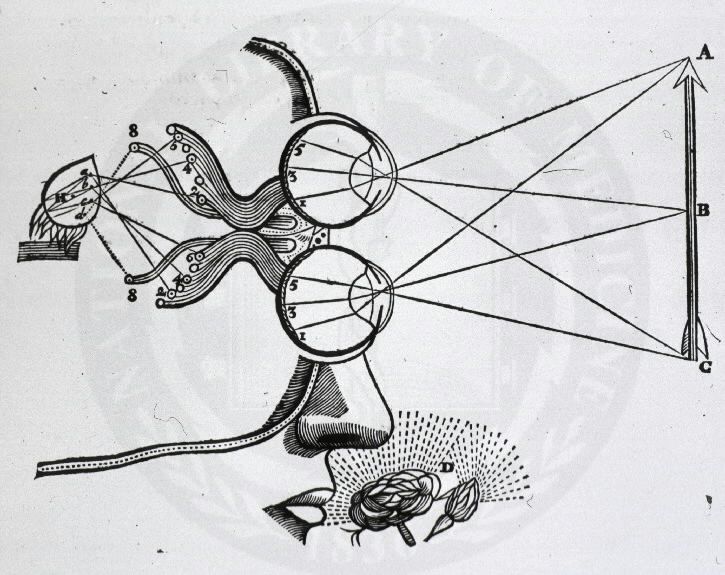
Before developing his mature metaphysics, Berkeley wrote extensively about vision and visual perception. His An Essay Towards a New Theory of Vision, published in 1709, investigates how human beings perceive distance, depth, size, and spatial relationships. The work became an important contribution to the study of perception and influenced later discussions that would now be associated partly with perceptual psychology.
Berkeley argues that visual experience does not simply provide an immediate awareness of geometrical distance. Instead, visual signs become associated with tactile and other experiences through learning and repeated experience. What appears visually as distance can therefore be interpreted through learned relationships between different kinds of sensory information rather than through an innate geometrical awareness.
His theory emphasizes the distinction between what is immediately given to sight and what the mind learns to expect on the basis of experience. Certain visible signs become connected with anticipated experiences of touch and bodily movement. Vision therefore helps individuals predict what kinds of tactile experiences may follow if they move toward or interact with an object.
Berkeley's theory of vision is important because it demonstrates that his interest in perception was not limited to abstract metaphysics. He investigated concrete questions about how sensory experience works and used these investigations to challenge assumptions about what perception directly reveals. His work on vision also provided an important foundation for later elements of his philosophical analysis of ideas and sensible objects.
George Berkeley on Science and Mathematics
Berkeley's philosophical interests extended beyond metaphysics and perception. He also wrote about science, mathematics, physics, and natural philosophy. His discussions of scientific concepts were connected with his broader concern about abstraction, explanation, and the limits of concepts that philosophers and scientists use without always examining their foundations.
In The Analyst, Berkeley criticized aspects of the foundations of infinitesimal calculus. He questioned whether mathematicians could legitimately employ certain concepts and methods while failing to provide a sufficiently clear account of their logical foundations. His criticism became famous partly because it was directed at methods associated with the highly successful mathematics of his period.
Berkeley's criticisms do not mean that he rejected mathematics or science. Rather, they illustrate his insistence that intellectual concepts should be examined carefully and not treated as philosophically transparent merely because they are useful within a theoretical system. He was interested in the difference between the practical success of a method and the philosophical clarity of its foundations.
His work on science also reflects his broader opposition to treating theoretical entities as automatically identical with the ultimate nature of reality. Berkeley was willing to examine scientific theories while questioning the metaphysical assumptions that philosophers sometimes attached to them. In this respect, his philosophy contributed to debates about how scientific explanation should be understood.
A Treatise Concerning the Principles of Human Knowledge
A Treatise Concerning the Principles of Human Knowledge, published in 1710, is one of George Berkeley's most important philosophical works. It presents his arguments concerning perception, ideas, matter, spirits, and the foundations of human knowledge. The work contains the systematic core of the philosophical position later known as Berkeleyan idealism or immaterialism.
Berkeley begins by examining the objects of human knowledge and argues that sensible objects are collections of ideas. He then attacks the notion that these ideas exist merely as representations of mind-independent material substances. His argument attempts to show that philosophers introduce an unnecessary division between the objects immediately known in experience and a hidden material reality that can never itself be perceived.
The work develops his immaterialist metaphysics and explains why spirits must be distinguished from ideas. It also develops Berkeley's arguments concerning primary and secondary qualities, abstract ideas, the supposed existence of matter, and the difference between ideas of sensation and ideas produced through imagination.
Berkeley also uses the work to explain the role of God within his philosophical system. Because sensory ideas are involuntary and display a complex regularity, Berkeley argues that their ultimate source must be an active spirit greater than finite human minds. This theological dimension is essential to his explanation of the stability and order of the sensible world.
The Principles is therefore fundamental for understanding Berkeley's idealism. It contains the core arguments that made him one of the most distinctive philosophers of the early modern period and remains a central text for studying the philosophical problems of perception, representation, matter, and the external world.
Three Dialogues Between Hylas and Philonous
Three Dialogues between Hylas and Philonous, published in 1713, is another major work by Berkeley. Rather than presenting his arguments entirely as a conventional philosophical treatise, Berkeley develops them through a dialogue between two characters whose names and positions help structure the debate over matter and perception.
Hylas represents the materialist position, while Philonous defends Berkeley's immaterialist philosophy. Through their discussion, Berkeley examines questions concerning sensible qualities, matter, perception, reality, and philosophical skepticism. The dialogue repeatedly tests common objections against the claim that sensible objects are dependent upon perception.
The dialogue form allows Berkeley to anticipate objections and develop his arguments conversationally. Instead of merely announcing conclusions, he can allow one character to raise doubts that readers themselves might have and then examine whether those doubts depend upon assumptions that Berkeley believes are philosophically confused.
The work also demonstrates Berkeley's attempt to present immaterialism as compatible with ordinary common sense. Philonous does not deny that people see trees, touch stones, or live in a world containing physical objects. The disagreement concerns the metaphysical interpretation of those objects and whether their reality requires a mind-independent material substance.
Together with the Principles, the Three Dialogues forms the central philosophical foundation for Berkeley's theory of idealism and immaterialism. The two works remain among the clearest and most influential presentations of his arguments against matter and his attempt to explain reality through ideas, spirits, and divine activity.
George Berkeley's Main Philosophical Ideas
1. Esse Est Percipi
Berkeley argues that sensible objects exist as perceived ideas. "To be is to be perceived" summarizes the dependence of sensible objects upon perception, although the principle must be understood alongside his distinction between passive ideas and active perceiving spirits.
2. Immaterialism
Berkeley rejects material substance as an independent, unthinking substratum underlying sensible qualities. Reality, in his metaphysical system, contains ideas and spirits rather than a hidden material substance existing independently of every mind.
3. Idealism
Berkeley's idealism treats sensible objects as collections of ideas rather than mind-independent material substances. This does not mean that ordinary objects are imaginary, but that their reality must be understood through their relation to perception and perceiving minds.
4. Spirits and Minds
Spirits are active perceivers capable of thought and will, while ideas are passive objects of perception. Human beings are finite spirits, and Berkeley treats the distinction between active minds and passive ideas as fundamental to understanding his metaphysics.
5. God and the Order of Experience
God provides the stable and orderly structure of sensory experience, allowing the world to remain consistent even when individual humans are not perceiving particular objects. God also explains why sensory ideas occur involuntarily rather than being freely invented by each individual mind.
6. Criticism of Abstract Ideas
Berkeley argues that many supposed abstract ideas are impossible to form and that philosophical confusion often arises from treating words as though every general term corresponds to a distinct abstract mental idea. He nevertheless allows that particular ideas and words can function as signs representing wider classes.
George Berkeley and John Locke: What Is the Difference?
George Berkeley and John Locke share an empiricist emphasis on experience, but their metaphysical conclusions are very different. Locke accepts the existence of material substances while arguing that human knowledge involves ideas. Berkeley accepts the importance of ideas in experience but questions whether the additional concept of material substance can be meaningfully justified.
Berkeley radicalizes the empiricist position by asking whether there is any meaningful experiential basis for a material substance existing independently of all perception. He concludes that sensible qualities are ideas and that the supposed material substratum is unnecessary. Locke, by contrast, retains a distinction between the ideas perceived by the mind and the material bodies that exist externally.
Their disagreement is particularly clear in the debate over primary and secondary qualities. Locke treats primary qualities as belonging to bodies themselves, while Berkeley argues that primary qualities are also perceived as ideas and cannot be cleanly separated from perception in order to establish the existence of a mind-independent material object.
Berkeley also rejects the theory of abstraction that he associated with Locke. He argues that the mind cannot form completely indeterminate images stripped of all particular characteristics. General thought and language, in Berkeley's view, do not require the existence of such intrinsically abstract ideas.
Berkeley can therefore be understood as both an heir to and a critic of Locke. He accepts empiricism's attention to experience while rejecting the material ontology that Locke retained, demonstrating how philosophers working within the same broad tradition can reach radically different conclusions about the nature of reality.
George Berkeley and David Hume
Berkeley and David Hume are two major figures in British empiricism, but they draw different philosophical conclusions from their analysis of experience. Berkeley develops idealism and maintains a central role for God, while Hume takes empiricism toward a more skeptical examination of causation, substance, personal identity, and the limits of human understanding.
Hume was familiar with philosophical problems associated with Berkeley and developed his own account of human understanding in relation to the broader empiricist tradition. Berkeley's criticism of abstract ideas and material substance therefore forms part of the intellectual background against which later empiricism developed.
The two philosophers share an interest in examining the contents of experience rather than beginning with speculative metaphysical assumptions. Both give major importance to ideas, but Berkeley uses his analysis to defend a metaphysical system involving spirits and God, while Hume is far more cautious about claims extending beyond impressions and the psychological operations through which human beings form beliefs.
The comparison between Berkeley and Hume is especially important for understanding the development of modern epistemology. Berkeley asks how an appeal to perception can avoid material substance and skepticism, while Hume investigates what follows when philosophical knowledge is restricted to impressions and ideas without Berkeley's theological framework.
Major Works of George Berkeley
George Berkeley wrote on metaphysics, epistemology, perception, vision, mathematics, religion, science, morals, and practical subjects. His most influential philosophical works focus on the relationship between ideas, perception, minds, and reality, but the range of his writings shows that his intellectual interests extended well beyond the doctrine for which he is most famous.
- An Essay Towards a New Theory of Vision — Berkeley's early investigation of visual perception, distance, depth, and the relationship between visual and tactile experience.
- A Treatise Concerning the Principles of Human Knowledge — His major systematic presentation of immaterialism, idealism, perception, ideas, spirits, and the criticism of matter.
- Three Dialogues between Hylas and Philonous — A dialogue-based defense of immaterialism and criticism of materialist metaphysics.
- Alciphron, or the Minute Philosopher — A philosophical and religious work addressing skepticism, free-thinking, morality, and religion.
- The Analyst — A critique of aspects of the foundations and reasoning employed in contemporary mathematics and calculus.
- De Motu — A work examining questions concerning motion, force, and natural philosophy.
George Berkeley's Philosophy Explained Simply
Berkeley's philosophy can be understood by beginning with a simple question: when you look at a tree, what exactly do you experience? You experience colors, shapes, textures, sounds, and other sensible qualities. Berkeley calls these immediate contents of experience ideas, and he believes philosophy should begin by examining them carefully.
Berkeley then asks whether it is necessary to suppose that these ideas are copies of an invisible material substance existing behind perception. His answer is no. He argues that the material substance philosophers traditionally describe cannot itself be perceived and cannot be coherently separated from the sensible qualities through which objects are actually experienced.
This does not mean that Berkeley thinks the world is imaginary. You cannot simply imagine away a wall or decide that a stone will disappear because you stop looking at it. Sensory experience is largely involuntary, regular, and shared. Berkeley explains this stable order through the activity of God rather than through an independently existing material substance.
- What exists? Berkeley says that reality includes ideas and perceiving spirits, with God understood as the infinite spirit responsible for the orderly structure of sensory experience.
- What is a physical object? A physical object is a stable collection of sensible ideas associated together in ordinary experience.
- What does esse est percipi mean? For sensible things, to exist is to be perceived, rather than to exist as an unperceived material substance behind experience.
- Does the world disappear when humans stop looking? No. Berkeley's philosophical system explains the continuity and order of the sensible world through God's continuous activity and perception.
- Why reject matter? Berkeley argues that mind-independent material substance is philosophically unnecessary and difficult to describe coherently when separated from all sensible qualities.
Why Is George Berkeley Important in the History of Philosophy?
George Berkeley is important because he radically transformed the philosophical discussion of perception and reality. Rather than accepting the existence of material substance as a basic fact, Berkeley asked whether such a concept could actually be justified by experience and whether philosophers could give a coherent account of what matter was supposed to be apart from everything that can be perceived.
His idealism also demonstrated how an empiricist theory of knowledge could lead to a radically different metaphysics. Berkeley used the empiricist emphasis on experience to challenge materialism rather than to defend it. This reversal made him a uniquely important figure within early modern philosophy and British empiricism.
His arguments influenced later debates about perception, skepticism, idealism, and the nature of the external world. Berkeley's work also became part of the philosophical background for later thinkers who questioned how the mind relates to the world it experiences, even when those thinkers rejected his theological conclusions or his immaterialism.
Berkeley is also important for his work on vision. His analysis of how visual experience becomes associated with tactile and spatial experience anticipated later philosophical and psychological interest in the role of learning and sensory coordination in perception.
Berkeley's lasting importance therefore lies not merely in the unusual claim that "to be is to be perceived," but in the larger philosophical challenge behind it: how should reality be understood when our access to the world is always through perception, experience, and the conceptual structures through which we interpret what we encounter?
George Berkeley's Influence and Legacy
Berkeley's influence extends across the history of modern philosophy. His arguments became particularly important in later discussions of idealism, empiricism, perception, skepticism, and the relationship between consciousness and reality. His work was also part of the intellectual background for philosophers who questioned how the mind relates to the world it experiences.
His influence on David Hume is especially important in the history of British empiricism. Berkeley's arguments against material substance and abstract ideas helped shape philosophical questions that Hume approached through his own analysis of impressions, ideas, belief, causation, and the limits of human reason.
Berkeley also became an important figure in later histories of idealism. His philosophy was discussed in relation to developments leading toward German idealism and later theories of perception, although later philosophers did not simply reproduce his system. His version of idealism remained distinctive because of its strong connection with empiricism and its central theological framework.
Berkeley's work on vision has also had a continuing legacy. His attempt to explain spatial perception through learned relationships among sensory experiences made his early writings relevant to later discussions in psychology, philosophy of perception, and the study of how different senses contribute to the experience of a unified world.
Today, Berkeley remains relevant to philosophy of mind, metaphysics, epistemology, philosophy of perception, and debates about the relationship between consciousness and reality. Even philosophers who reject immaterialism continue to confront questions that Berkeley made especially difficult to ignore: what do we directly perceive, what justifies belief in an external world, and what does it mean for something to exist independently of a mind?
Frequently Asked Questions About George Berkeley
Who was George Berkeley?
George Berkeley was an Irish philosopher who lived from 1685 to 1753. He was a major early modern thinker associated with British empiricism, idealism, and immaterialism.
What was George Berkeley's philosophy?
Berkeley's philosophy argues that sensible objects are collections of ideas perceived by minds rather than mind-independent material substances. His philosophy is commonly associated with idealism and immaterialism.
What is George Berkeley famous for?
George Berkeley is famous for his theory of idealism, his doctrine of immaterialism, his criticism of material substance, his theory of perception, and the principle known as esse est percipi.
What does esse est percipi mean?
Esse est percipi means "to be is to be perceived." Berkeley uses this principle to explain the existence of sensible objects as objects of perception rather than as independently existing material substances.
Was George Berkeley an idealist?
Yes. Berkeley is one of the major philosophers associated with idealism. His position is often called subjective idealism, although immaterialism is also an important term for describing his own philosophical position.
What is Berkeley's immaterialism?
Berkeley's immaterialism is the view that material substance does not exist as an independent, unthinking substratum behind sensible qualities. Instead, sensible objects consist of ideas perceived by spirits or minds.
Did Berkeley believe that physical objects exist?
Berkeley did not deny the reality of ordinary physical objects. He denied that they exist as mind-independent material substances. Objects remain real as stable collections of sensible ideas.
Did Berkeley believe that a tree exists when nobody is looking at it?
Yes, in Berkeley's philosophical system the tree continues to exist because the sensible order of the world is maintained by God. Its existence does not depend upon one particular human observer.
What did Berkeley believe about matter?
Berkeley rejected the philosophical concept of matter as an unthinking substance existing independently of perception. He argued that sensible qualities are ideas and that the supposed material substratum is unnecessary.
What did Berkeley say about primary and secondary qualities?
Berkeley rejected the claim that primary qualities such as extension, shape, and motion exist independently of perception while secondary qualities such as color and taste depend upon the perceiver. He argued that primary qualities are also experienced as ideas.
Was Berkeley an empiricist?
Yes. Berkeley is traditionally regarded as one of the major British empiricists alongside John Locke and David Hume. However, his empiricism led him toward idealism rather than materialism.
How did Berkeley criticize John Locke?
Berkeley criticized Locke's distinction between primary and secondary qualities and rejected the idea that our ideas of primary qualities resemble mind-independent material objects. He also criticized Locke's theory of abstract ideas.
What was Berkeley's theory of perception?
Berkeley argued that perception presents the mind with ideas rather than with an unknowable material substance existing behind those ideas. Sensible objects are collections of ideas that are perceived by spirits.
What did Berkeley believe about God?
God plays a central role in Berkeley's philosophy. God provides the stable and orderly structure of sensible experience and explains why the world continues to exist independently of any particular human observer.
What is Berkeley's philosophy of mind?
Berkeley distinguishes minds or spirits from ideas. Ideas are passive objects of perception, while spirits are active perceivers capable of thinking, willing, and acting.
What are Berkeley's most famous books?
Berkeley's most famous philosophical works include An Essay Towards a New Theory of Vision, A Treatise Concerning the Principles of Human Knowledge, and Three Dialogues between Hylas and Philonous.
What is A Treatise Concerning the Principles of Human Knowledge?
It is Berkeley's major 1710 philosophical work presenting his arguments about ideas, perception, immaterialism, spirits, matter, and the foundations of human knowledge.
What is Three Dialogues Between Hylas and Philonous?
It is Berkeley's 1713 dialogue defending immaterialism through a philosophical conversation between Hylas, who represents the materialist position, and Philonous, who defends Berkeley's idealist position.
How did Berkeley influence modern philosophy?
Berkeley influenced later discussions of empiricism, idealism, perception, skepticism, and the relationship between mind and world. His arguments also contributed to the intellectual background of later British and European philosophy.
What is Berkeley's place in British empiricism?
Berkeley is one of the three major British empiricists traditionally discussed alongside John Locke and David Hume. His distinctive contribution was to develop an idealist metaphysics from an empiricist analysis of experience.
Related Modern and Enlightenment Philosophers
Explore other major thinkers connected with early modern philosophy, British empiricism, rationalism, idealism, and Enlightenment thought.
Related Areas of Philosophy
Berkeley's philosophy connects with metaphysics, epistemology, philosophy of mind, philosophy of perception, empiricism, idealism, philosophy of religion, and modern philosophy.
Why George Berkeley Still Matters
George Berkeley remains one of the most provocative philosophers of the early modern period because he challenged one of philosophy's most familiar assumptions: that the sensible world must be grounded in an independently existing material substance.
His idealism, immaterialism, and theory of perception transformed the philosophical discussion of reality and knowledge. Through the principle esse est percipi, Berkeley argued that sensible objects are inseparable from perception, while his distinction between ideas and spirits provided an account of minds as active perceivers.
Berkeley's philosophy also demonstrates how closely metaphysics, epistemology, philosophy of mind, and theology were connected in early modern thought. His criticism of matter, his response to Locke, his analysis of perception, and his arguments concerning God continue to generate debate in contemporary philosophy.
Explore Great Philosophers