Who Was Baruch Spinoza?
Baruch Spinoza (1632–1677) was a Dutch philosopher of the seventeenth century and one of the most original and influential thinkers in the history of modern philosophy. His work is especially known for its radical account of God, nature, substance, the human mind, freedom, reason, and ethics. Alongside René Descartes and Gottfried Wilhelm Leibniz, he is traditionally regarded as one of the major philosophers of modern rationalism. His philosophy sought to explain reality through a tightly connected system in which metaphysics, epistemology, psychology, ethics, and political thought could be understood together.
Spinoza developed a highly systematic worldview in which reality ultimately consists of one infinite substance, which he identified as God or Nature (Deus sive Natura). Everything that exists follows from the nature of this single reality rather than existing independently of it. From this metaphysical foundation, Spinoza developed distinctive theories of the mind, emotions, knowledge, necessity, morality, religion, and political life. His system therefore presents human beings not as isolated beings outside nature, but as finite expressions within the same necessary order that governs all reality.
His philosophy challenged many conventional assumptions about a personal God, divine providence, miracles, free will, revelation, and humanity's supposedly privileged place in nature. These ideas made Spinoza deeply controversial during his lifetime, but they later exerted enormous influence on Enlightenment thought, biblical criticism, political philosophy, philosophy of religion, and modern debates about freedom and determinism. His willingness to examine religious and philosophical traditions through reason also contributed to his reputation as one of the most radical thinkers of early modern Europe.
Spinoza's philosophy is notable not only for the conclusions he reached but also for the systematic way in which he connected them. His Ethics begins with questions about substance and God and gradually develops an account of the human mind, emotions, desire, bondage, and freedom. In this framework, ethical improvement does not primarily mean obeying externally imposed commands; it involves increasing our understanding of ourselves and of the natural order in which we exist. Knowledge consequently becomes closely connected with human flourishing.
Spinoza's importance extends far beyond the seventeenth century because his ideas continue to raise fundamental questions about God, nature, consciousness, causation, morality, and human freedom. His substance monism, theory of attributes and modes, account of mind and body, analysis of emotions, and conception of freedom through understanding have all remained subjects of extensive philosophical debate. For this reason, Spinoza occupies a distinctive position in the history of rationalism and remains an important figure in metaphysics, ethics, philosophy of mind, political philosophy, and philosophy of religion.
Baruch Spinoza: Quick Facts
Baruch Spinoza was a seventeenth-century Dutch philosopher whose work brought together metaphysics, epistemology, ethics, philosophy of mind, political philosophy, and philosophy of religion into an unusually systematic whole. He is best known for his doctrine that there is one infinite substance, understood as God or Nature, and for his attempt to explain human freedom through understanding rather than through an uncaused faculty of choice. His philosophy represents one of the most radical forms of early modern rationalism.
Spinoza's intellectual career developed during a period of major scientific and philosophical change in Europe. He was deeply engaged with the philosophical problems associated with thinkers such as René Descartes while developing positions that departed significantly from Cartesian dualism. His writings addressed not only abstract metaphysical questions but also practical issues involving emotions, religion, political authority, freedom of thought, and the conditions under which human beings can live rationally.
Among Spinoza's most important concepts are substance, attributes, modes, God or Nature, conatus, determinism, adequate ideas, affects, and intellectual freedom. These concepts are closely related rather than isolated doctrines. His account of human beings follows from his account of nature, while his ethics follows from his understanding of desire, emotion, causation, and knowledge. This systematic structure is one reason his philosophy remains influential in contemporary discussions.
Spinoza's major works include the Ethics and the Tractatus Theologico-Politicus, or Theological-Political Treatise. The first develops his metaphysics, philosophy of mind, psychology, and ethics through a geometrical style of demonstration, while the second examines scripture, religion, political authority, and freedom of philosophical inquiry. He also wrote the Tractatus Politicus and an unfinished Tractatus de Intellectus Emendatione.
Although Spinoza was controversial during his lifetime, his influence expanded substantially after his death. Later philosophers interpreted his work in very different ways, and he has been associated with rationalism, naturalism, pantheism, monism, determinism, and secular political thought. These labels capture aspects of his philosophy but do not always fully represent his own terminology. His continuing importance lies in the demanding and interconnected questions his system asks about reality, God, human nature, reason, emotion, and freedom.
- Full name — Baruch Spinoza
- Latin name — Benedictus de Spinoza
- Born — 1632
- Died — 1677
- Nationality — Dutch
- Philosophical period — Early modern philosophy
- Philosophical tradition — Rationalism
- Major subjects — Metaphysics, ethics, epistemology, philosophy of mind, political philosophy, and philosophy of religion
- Central concept — God or Nature
- Metaphysical position — Substance monism
- Major work — Ethics
- Other major work — Tractatus Theologico-Politicus
Baruch Spinoza's Early Life and Historical Background
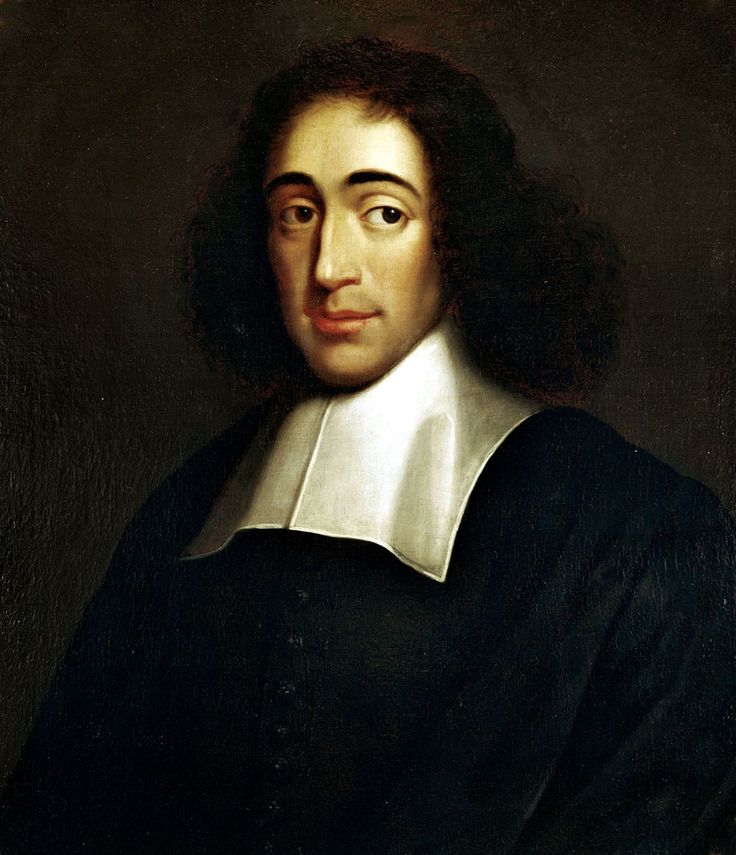
Baruch Spinoza was born in Amsterdam in 1632 into the city's Portuguese Sephardic Jewish community. His family had roots in the Iberian Jewish diaspora, and he received a substantial education in Jewish religious and intellectual traditions during his early years. This background gave him familiarity with biblical interpretation, Jewish philosophy, and religious questions that would later become important subjects in his philosophical and theological writings.
Amsterdam was an important commercial and intellectual center of the Dutch Republic, where religious, scientific, and philosophical debates flourished despite significant limits on complete freedom of expression. Spinoza grew up amid encounters between Jewish traditions, Christianity, new science, and competing philosophical systems. The relatively diverse intellectual environment of the Dutch Republic provided an important historical setting for the development of his independent philosophical outlook.
Seventeenth-century Europe was also undergoing major intellectual transformations. The scientific revolution and the philosophy of thinkers such as Galileo and René Descartes encouraged new attempts to explain nature through mathematics, reason, and universal laws. Traditional philosophical and theological assumptions were increasingly being examined through new methods of inquiry, creating the intellectual environment in which Spinoza developed his own rationalist naturalism.
Spinoza developed his mature philosophy within this changing environment. Combining radical rationalism with an uncompromising naturalism, he produced one of the most systematic and controversial philosophical worldviews of the early modern period. His thought attempted to explain human beings as part of nature rather than as exceptions to its causal order, while also showing how reason and knowledge could transform human emotional life.
His early intellectual development eventually led him away from the established religious framework in which he had been educated and toward an increasingly independent philosophical position. His later writings demonstrate the importance of questions about scripture, religious authority, God, nature, reason, and political freedom. Understanding this historical background helps explain why Spinoza's philosophy was both intellectually innovative and highly controversial within the religious and political circumstances of seventeenth-century Europe.
Why Was Spinoza Excommunicated?
In 1656, Spinoza was formally placed under herem, or excommunication, by the Portuguese Jewish community of Amsterdam. The surviving decree condemns him in exceptionally severe language, but does not clearly identify every belief or action that led to the ban. The historical evidence therefore does not justify reducing the event to one precisely documented philosophical proposition that Spinoza is known to have expressed at that exact time.
Historians therefore continue to debate the precise circumstances. Spinoza's later writings challenged traditional conceptions of divine personality, providence, miracles, revelation, and the special status of human beings within creation, but his mature philosophy should not simply be projected unchanged onto 1656. The excommunication occurred before many of his major philosophical works had reached their mature form, making historical caution especially important when explaining its causes.
The excommunication separated Spinoza from the institutional life of the community in which he had been raised. He subsequently pursued an increasingly independent intellectual life and supported himself in part through the grinding and polishing of optical lenses. His relatively modest way of life became associated with his reputation for intellectual independence, while his correspondence with other intellectuals helped him participate in wider philosophical discussions beyond the immediate community from which he had been separated.
The episode became one of the most famous events in his biography. Yet Spinoza's lasting importance lies not merely in religious controversy, but in the systematic philosophy he later developed concerning reality, knowledge, emotions, ethics, religion, and political freedom. His work transformed the controversy surrounding his personal beliefs into a much broader philosophical challenge concerning how reason should examine inherited religious and metaphysical assumptions.
It is therefore useful to distinguish the historical event of the herem from later interpretations of Spinoza's philosophy. His excommunication became an important part of his intellectual biography, but it does not by itself explain the full range of his philosophical development. The mature Spinoza constructed a comprehensive system in which God, Nature, causation, knowledge, human emotions, freedom, and political organization were treated as interconnected philosophical problems.
Spinoza and Rationalism
Spinoza's philosophy is usually placed within the rationalist tradition of early modern philosophy. Rationalists gave reason a central role in discovering fundamental truths and sought forms of knowledge that could go beyond the uncertainty of ordinary sensory experience. Spinoza's version of rationalism was especially systematic because he attempted to derive conclusions about nature, mind, ethics, and freedom from a unified account of reality.
For Spinoza, genuine understanding requires moving from confused and inadequate ideas toward ideas that explain things through their causes and necessary relations. Philosophical knowledge therefore aims not merely to describe appearances but to understand why things must follow from the nature of reality. This emphasis on necessary explanation distinguishes his philosophical method from approaches that treat immediate experience as the final standard of knowledge.
His admiration for mathematical demonstration also shaped his method. In the Ethics, Spinoza presents definitions, axioms, and propositions in an attempt to demonstrate philosophical conclusions with a rigor comparable to geometrical reasoning. The geometrical structure was intended to display relationships among fundamental concepts and propositions, allowing readers to follow the logical development of his system rather than encountering his conclusions as disconnected observations.
Like Descartes and Leibniz, Spinoza attempted to construct a comprehensive philosophical system. His conclusions, however, were especially radical concerning God, substance, determinism, human individuality, and the relationship between mind and body. Whereas Descartes maintained a distinction between fundamentally different kinds of substance, Spinoza argued for one infinite substance with infinitely many attributes.
Spinoza's rationalism ultimately connects intellectual understanding with the possibility of human freedom. Reason is valuable not simply because it produces abstract knowledge, but because adequate understanding can alter the way human beings respond to emotions and external circumstances. His philosophy therefore treats rational inquiry as both a metaphysical method and part of an ethical transformation through which human beings can become less passive and more capable of acting according to their understanding.
What Was Spinoza's Metaphysics?
Spinoza's metaphysics begins with the concept of substance. He defines substance as that which exists in itself and is conceived through itself, meaning that its existence and intelligibility do not fundamentally depend on another created thing. This definition establishes an important distinction between what exists independently and the finite things whose existence depends on the broader structure of reality.
From this starting point, Spinoza argues that reality ultimately consists of one infinite substance. This substance possesses infinitely many attributes, each expressing an eternal and infinite essence, although human beings know only certain attributes directly. Spinoza identifies this single substance with God or Nature, thereby making his metaphysical account fundamentally monistic rather than pluralistic.
The two attributes most important for human understanding are thought and extension. Under thought, reality can be understood as ideas and minds; under extension, it can be understood as bodies and physical existence. These are not two independently existing substances competing with one another, but two ways in which the one infinite substance is expressed and understood.
Individual things are therefore not independent substances in Spinoza's system. They are finite modes, or particular modifications of the one infinite reality, existing within a necessary and intelligible order. A human being, for example, is not a self-caused substance standing outside nature, but a finite mode whose existence depends upon the wider causal order of Nature.
This metaphysical framework provides the foundation for Spinoza's theories of mind, emotion, knowledge, ethics, and freedom. If there is one necessary reality and finite things are modes within it, then human beings must be understood through the same natural order that explains everything else. His metaphysics consequently becomes the starting point for a broader philosophical account of why people think, desire, suffer, act, and seek freedom.
Spinoza's Philosophy of God and Nature
One of the most famous ideas in Spinoza's philosophy is the identification of God with Nature, expressed by the phrase Deus sive Natura, meaning "God or Nature." This formula does not simply replace God with the physical universe but radically redefines what Spinoza means by God. For him, God is infinite, necessary, and the fundamental reality from which everything else follows.
For Spinoza, God is not a separate personal being standing outside the universe and governing it through changing decisions. God is the one infinite substance whose necessary nature explains everything that exists and occurs. Divine causation is therefore not analogous to a human ruler making arbitrary choices; rather, finite things follow from the nature of God or Nature according to necessary causal relations.
Nature is therefore not fundamentally divided between a supernatural realm and an independently existing material world. Finite things exist within the necessary order of God or Nature and cannot stand outside that order. Spinoza distinguishes between natura naturans, nature understood as the active causal power of God or substance, and natura naturata, the finite things that follow from that nature.
This conception was deeply controversial because it rejected the traditional image of a personal, providential God. Later readers often called Spinoza a pantheist, although philosophers continue to debate whether that label fully captures his position. Spinoza himself presents a more technically structured metaphysical account in which God is not merely a collection of physical objects but the infinite substance possessing infinitely many attributes.
The doctrine of God or Nature also transforms the meaning of philosophical and religious inquiry. Instead of asking what purposes a transcendent deity has assigned to the universe, Spinoza asks how things necessarily follow from the nature of reality. This approach rejects anthropomorphic explanations of nature and encourages an understanding based on causes, necessity, and intelligibility. It is one of the central reasons Spinoza remains important in debates about naturalism, pantheism, metaphysics, and philosophy of religion.
What Is Spinoza's Theory of Substance?
Substance monism lies at the heart of Spinoza's metaphysics. He argues that there is only one substance that exists necessarily and through itself, and he identifies this infinite substance with God or Nature. Unlike theories that posit multiple independently existing substances, Spinoza's monism treats all finite reality as belonging to one fundamental metaphysical order.
Individual things, including human beings, animals, bodies, and particular ideas, are not independent substances. They are modes, or particular ways in which the one infinite substance is expressed under its attributes. A finite object therefore does not possess the kind of complete metaphysical independence that Spinoza reserves for substance itself.
This position differs sharply from philosophical systems that treat mind and matter as fundamentally separate substances. Spinoza instead develops a unified picture in which mental and physical reality belong to one necessary order. Thought and extension are attributes through which human beings understand the one substance, while individual minds and bodies are finite modes within those attributes.
Substance monism also challenges ordinary ideas about human independence. Human beings are genuine individuals, but they are not self-caused beings existing outside nature; they are finite parts of an infinitely interconnected causal reality. Their thoughts, emotions, bodily states, and actions therefore have causes within the broader order of Nature, even when those causes are not immediately understood.
The theory of substance provides the metaphysical foundation for Spinoza's determinism and his distinctive conception of freedom. If there is only one necessary substance, then nothing finite can escape the causal order of that substance. Freedom must therefore be understood differently from absolute independence: it involves greater understanding and activity within Nature. Spinoza's monism thus links questions about what exists with questions about how human beings can live and act.
Spinoza's Theory of Attributes and Modes
Spinoza distinguishes between substance, attributes, and modes. Substance is the fundamental reality that exists through itself, while attributes are what the intellect perceives as expressing the essence of substance. This distinction allows Spinoza to explain how one infinite substance can be understood through different fundamental forms without becoming divided into multiple independent substances.
Spinoza argues that the one infinite substance possesses infinitely many attributes. Human beings, however, know primarily thought and extension, which allow reality to be understood respectively in mental and physical terms. The limitation here belongs to human cognition rather than to the infinite substance, whose attributes are not exhausted by the two through which human beings ordinarily understand reality.
Modes are particular and finite expressions of substance. A body is a finite mode understood under extension, while an idea is a finite mode understood under thought. Individual things therefore depend on the larger order of Nature. They do not exist as completely independent metaphysical units, because their existence and causal relations are embedded within the necessary structure of the one substance.
This framework allows Spinoza to explain diversity without abandoning metaphysical unity. Reality contains countless particular things, yet none of them exists as an entirely independent substance separate from the one infinite reality. The distinction between attributes and modes therefore gives his monism enough conceptual structure to account for the enormous variety found within nature without multiplying ultimate substances.
The theory also plays a crucial role in Spinoza's philosophy of mind. Human minds and bodies are not two substances that must somehow interact across a metaphysical divide. Instead, they are understood as corresponding finite modes under thought and extension. This helps explain why Spinoza can reject Cartesian mind-body dualism while still preserving a meaningful distinction between mental and bodily ways of describing human existence.
Spinoza's Mind-Body Theory
Spinoza's mind-body theory offers a major alternative to the Cartesian view that mind and body are two distinct substances whose interaction creates a difficult philosophical problem. Rather than treating mental and physical reality as fundamentally separate substances, Spinoza places both within his broader theory of one infinite substance and its attributes.
For Spinoza, the human mind and human body are not independently existing substances. The mind is the idea of the body, and mental and bodily reality are understood through the attributes of thought and extension. The human mind therefore cannot be understood as an entirely independent entity detached from embodied existence; its structure is closely connected with the body whose idea it is.
Spinoza therefore rejects the ordinary idea that an immaterial mind directly pushes or controls a physical body. Mental and physical events follow according to corresponding orders rather than through causal interaction between two separate substances. What happens under the attribute of thought has a corresponding place in the order of extension, because both belong to the same underlying reality.
His position is often described as mind-body parallelism. More precisely, the same underlying reality can be conceived under different attributes, allowing mental and bodily descriptions to correspond without reducing one simply to the other. This position is closely connected with Spinoza's broader metaphysical rejection of substance dualism and helps explain his distinctive approach to consciousness and embodiment.
Spinoza's account also has important consequences for understanding human psychology. Mental states should not be treated as mysterious interruptions of natural causation, just as bodily states should not be understood as metaphysically isolated from thought. Both belong to the necessary order of Nature. His mind-body theory therefore forms a bridge between metaphysics and his later analysis of emotions, desire, knowledge, and human freedom.
What Did Spinoza Believe About Determinism?
Spinoza's determinism follows from his conception of God or Nature as an infinite and necessary reality. Everything that exists and occurs follows from the causal order of Nature rather than appearing without explanation. For Spinoza, there is no realm of finite events in which things can simply occur without sufficient causal determination.
Human beings therefore do not occupy a position outside the causal structure of reality. Our bodies, thoughts, emotions, desires, and actions are themselves part of the natural order and must be understood through their causes. The fact that a person experiences a decision consciously does not mean that the decision arose without preceding conditions or causes.
Spinoza also rejects the belief that events happen for the sake of predetermined cosmic purposes. Nature does not arrange everything around human needs, and the universe does not operate according to intentions comparable to human planning. His criticism of teleological thinking is therefore connected with his rejection of the idea that natural events are fundamentally organized around human purposes.
Determinism does not mean that human life becomes meaningless. Understanding necessity is itself part of Spinoza's path toward freedom, because clearer knowledge can reduce our dependence on confused beliefs and passive emotional reactions. A person who understands the causes of an emotion or desire is in a better position to respond actively rather than being completely dominated by it.
Spinoza's determinism consequently changes the meaning of freedom rather than simply eliminating it. Freedom cannot consist in escaping causation, because finite beings are necessarily part of Nature. Instead, greater freedom comes through understanding the causes that determine us and developing the capacity to act from adequate understanding. This is why determinism and ethical liberation are not opposites within Spinoza's philosophical system.
Did Spinoza Believe in Free Will?
Spinoza rejected the traditional idea of free will understood as an absolutely independent power to choose outside the causal order of nature. Human beings are conscious of many desires but are often unaware of the causes that produce them. This gap between awareness of desire and knowledge of its causes can make human beings believe that their choices are more independent than they actually are.
This ignorance can create the illusion of complete independence. We know that we want something, but we may not understand the bodily, psychological, social, and causal conditions through which that desire has arisen. Conscious awareness of wanting therefore does not by itself establish that the desire was freely created by an uncaused faculty of will.
Spinoza nevertheless gives freedom an important place in his ethics. A person becomes freer when they act increasingly through adequate understanding rather than being passively carried along by confused emotions and external influences. Freedom is thus connected with becoming more active in one's own life, not with becoming independent of the natural order.
Freedom therefore does not mean escaping necessity. For Spinoza, it means understanding necessity and acting more fully from one's own rational nature, rather than remaining dominated by causes one does not adequately comprehend. The more adequate one's understanding becomes, the less one is governed blindly by passions whose causes remain obscure.
This conception of freedom is one of Spinoza's most distinctive contributions to the debate over determinism and free will. He does not simply replace freedom with passive resignation; instead, he redefines freedom as a form of rational self-determination within Nature. The goal is to become more capable of understanding and acting according to one's nature, while recognizing that one's nature itself remains part of the necessary causal order.
Spinoza's Philosophy of Knowledge and Epistemology
Spinoza's epistemology distinguishes between more confused and more adequate forms of knowledge. Knowledge is central to his entire philosophy because clearer understanding can transform both our intellectual life and our emotional condition. The movement from inadequate to adequate understanding is therefore not merely an academic improvement but part of the philosophical path toward greater freedom and flourishing.
Human beings frequently experience the world through partial information, imagination, memory, and sensory encounters. Such ideas can be useful in ordinary life, but they often fail to explain things through their necessary causes. Spinoza calls this kind of cognition inadequate when it does not provide a sufficiently complete causal understanding of what is being known.
Reason allows us to understand common properties and necessary relations. By moving beyond isolated impressions, the mind can grasp features of reality that do not depend entirely on a particular individual's limited perspective. Rational knowledge therefore enables a more coherent understanding of nature and of the relations through which finite things are connected.
Spinoza also identifies a higher form of intuitive knowledge through which particular things are understood in relation to the necessary order of reality. Knowledge thus becomes a path toward greater power, freedom, joy, and philosophical wisdom. The highest form of knowing is not merely the accumulation of additional facts but a deeper grasp of how finite things follow from the fundamental structure of Nature.
Spinoza's theory of knowledge therefore connects epistemology directly with ethics. Confused ideas can contribute to emotional passivity because people misunderstand the causes of what happens to them, while adequate ideas can increase their capacity for rational action. The pursuit of knowledge is consequently part of the transformation of human life: to understand reality more adequately is also to become less vulnerable to confusion and more capable of acting through reason.
Spinoza's Three Kinds of Knowledge
Spinoza distinguishes three forms or kinds of cognition that describe different ways human beings can understand reality. They are commonly associated with imagination or opinion, reason, and intuitive knowledge. The distinction is important because Spinoza is not simply ranking different quantities of information; he is examining whether ideas are confused and partial or adequate and grounded in an understanding of necessary relations.
1. Imagination and Opinion
The first kind of knowledge arises through sensory experience, imagination, memory, signs, and hearsay. It is indispensable in ordinary life, but it often produces inadequate ideas because things are encountered without a complete understanding of their causes. Imagination is therefore not necessarily useless or false in every practical context, but it does not by itself provide the systematic causal understanding that Spinoza associates with adequate knowledge.
Because this form of cognition is often shaped by partial experiences, memory, language, and the order in which events affect us, it can produce confused conceptions of reality. A person may know that an event occurred without understanding why it occurred or how it fits within the larger causal structure of Nature. Such knowledge can be adequate for practical recognition while remaining inadequate as philosophical explanation.
Spinoza's criticism of imagination should therefore not be confused with a simple rejection of all sensory experience. Human beings inevitably encounter the world through embodied perception and imagination, and these forms of cognition have practical importance. The philosophical problem arises when partial representations are mistaken for complete explanations or treated as sufficient grounds for understanding the necessary order of reality.
Imagination and opinion can also influence emotional life because people often respond strongly to events whose causes they do not understand. Fear, hope, admiration, hatred, and other affects can be strengthened when circumstances are interpreted through incomplete ideas. Moving toward reason therefore has an ethical significance: better understanding can reduce the passivity produced by confused interpretations.
The first kind of cognition consequently represents the ordinary starting point of human knowledge rather than a stage that can simply be discarded. Spinoza's philosophical project is to move beyond its limitations by developing more adequate forms of understanding. The transition from imagination toward reason and intuition is therefore simultaneously an epistemological development and a transformation in how a person relates to the world.
2. Reason
The second kind of knowledge is reason. Through reason, human beings understand common properties and necessary relationships, moving beyond isolated experiences toward a more coherent knowledge of Nature and the order connecting things. Reason enables the mind to recognize what can be understood universally rather than remaining confined to the accidental sequence in which individual experiences occur.
Rational knowledge is important because it provides a more adequate explanation of things through their causes and relations. Instead of asking only what happened to a particular person at a particular moment, reason seeks principles and structures that can explain why things follow from one another. This makes rational cognition more stable and intellectually reliable than knowledge based solely on isolated impressions.
Spinoza's rationalism also connects reason with the common features shared by finite things. Human beings can develop concepts that are not limited to one individual's private experience, allowing them to grasp aspects of reality that can be understood more generally. Reason therefore helps overcome the fragmentation produced by purely subjective or incomplete perspectives.
The ethical importance of reason follows from its ability to improve understanding of emotions and desires. When people understand the causes of their affects more adequately, they become less dependent on confused interpretations and more capable of responding through active understanding. Reason does not eliminate human emotion, but it can change the way emotions influence action.
For Spinoza, reason therefore occupies an essential place in the movement toward intellectual freedom. It does not yet exhaust the highest form of philosophical cognition, but it provides the conceptual and rational foundation required for deeper understanding. Through reason, the mind begins to understand itself and the world as parts of one necessary order rather than as disconnected events without intelligible causes.
3. Intuitive Knowledge
The third and highest kind is intuitive knowledge. It involves understanding particular things through their necessary relation to God's attributes and the structure of reality, producing the deepest form of intellectual understanding. In Spinoza's system, this kind of cognition provides an especially direct grasp of how finite reality follows from the fundamental nature of God or Nature.
Intuitive knowledge should not be confused with a vague feeling or mystical guess. It represents a form of intellectual understanding in which the mind grasps the necessary relation between what is particular and the universal structure from which it follows. It is therefore more systematic and intellectually demanding than ordinary intuition understood as instinct or immediate personal impression.
This highest form of knowledge is closely related to Spinoza's metaphysics because it allows finite things to be understood in their relation to the infinite substance. Instead of seeing an individual object as an isolated fact, the mind understands it through the necessary order of Nature. Such knowledge represents the culmination of Spinoza's movement from confused experience toward adequate understanding.
Intuitive knowledge also has an ethical dimension. Spinoza connects the deepest intellectual understanding with forms of joy and with a more stable orientation toward reality. When the mind understands itself and the world through the necessary order of Nature, it becomes less dependent on fluctuating external circumstances and less dominated by confused passions.
These three forms of cognition therefore describe a movement in the development of human understanding. Imagination provides the ordinary starting point, reason establishes more adequate knowledge of common properties and necessary relations, and intuitive knowledge represents the highest intellectual grasp of particular things through the structure of reality. Together they show why epistemology is inseparable from Spinoza's ethical conception of intellectual freedom.
These three forms are not simply different amounts of information. They represent different ways of knowing. For Spinoza, the movement toward adequate and intuitive knowledge is also an ethical transformation because understanding can change the power of our emotions over us.
What Was Spinoza's Philosophy of Ethics?
Spinoza's ethics is inseparable from his metaphysics and psychology. Rather than beginning primarily with commandments or universal moral prohibitions, he asks how human beings actually exist, desire, suffer, and increase or diminish their capacity to act. His ethical theory therefore grows directly out of his account of human nature as part of the necessary order of Nature.
Human beings are part of Nature and must be understood through the same causal principles that govern everything else. Ethical reflection therefore requires understanding human desires and emotions rather than imagining that people exist outside the natural order. Spinoza's approach is strongly naturalistic: he seeks to explain human conduct rather than beginning with the assumption that human beings possess a metaphysically separate moral status.
A central principle is conatus, the striving by which each thing endeavors to persevere in its being. Spinoza connects human desire and self-preservation with this fundamental feature of finite existence. Desire is therefore not treated as an accidental disturbance of an otherwise rational human nature; it is part of the basic dynamics through which finite beings persist and act.
The good life involves increasing one's capacity for rational action, developing adequate knowledge, and forming relationships that support human flourishing. Spinoza's ethical ideal is ultimately a form of liberation from excessive dependence on passive emotions. Greater rational understanding enables people to become more active in their own lives and to pursue forms of cooperation that increase their shared capacity to flourish.
Spinoza's ethics therefore does not simply ask which actions deserve praise or blame according to an external moral code. It asks what enables human beings to become more capable of understanding, acting, cooperating, and experiencing stable forms of joy. Virtue is closely connected with power understood as the capacity to act according to one's nature, while freedom consists in becoming less dominated by confused affects and more guided by adequate understanding.
What Is Spinoza's Concept of Conatus?
Conatus is one of the central concepts in Spinoza's philosophy. He argues that each thing, insofar as it can through its own power, strives to persevere in its being. The concept expresses a basic principle of Spinoza's metaphysics and psychology: finite beings are not passive collections of properties but have an inherent tendency to maintain and express their existence within Nature.
This striving should not be understood simply as a conscious wish to survive. Spinoza applies the principle to finite things generally, making conatus a metaphysical principle rather than merely a theory of human intention or biological self-preservation. A thing's striving follows from its nature and its place within the causal order, whether or not the thing possesses consciousness.
In human beings, conatus becomes closely connected with appetite and desire. Spinoza's psychology therefore begins from natural processes and treats human motivation as part of the causal structure of Nature. When human beings become conscious of their appetites and striving, Spinoza uses the language of desire to describe an important dimension of their psychological life.
Conatus helps connect Spinoza's metaphysics with his ethics. To understand what benefits or harms a person, one must understand the conditions that increase or diminish that individual's power to exist and act. What increases a person's capacity for activity can contribute to joy and flourishing, while conditions that diminish that capacity can contribute to sadness and passivity.
The concept also helps explain why Spinoza's ethics is not based on self-denial as an ultimate ideal. Human striving is natural and fundamental, so ethical life involves understanding the conditions under which striving can become more powerful, rational, and socially constructive. Conatus therefore connects Spinoza's account of existence, desire, emotion, virtue, and freedom into a single philosophical framework.
Spinoza's Philosophy of Emotions
Spinoza developed one of the most systematic philosophical analyses of human emotions in early modern philosophy. He treats emotions, or affects, as natural events with understandable causes rather than as mysterious forces outside rational investigation. Human emotional life can therefore be studied as part of nature, using the same general commitment to causal explanation that applies elsewhere in his philosophy.
He distinguishes between passive and active affects. Passive emotions arise when we are influenced by causes that we do not adequately understand, leaving us comparatively dependent on external circumstances. Active affects, by contrast, are connected with adequate understanding and the mind's greater capacity to act from its own nature rather than being primarily determined by confused external influences.
Spinoza gives particular importance to joy, sadness, and desire. Other emotions can be analyzed through combinations and variations of these fundamental affects together with particular ideas about their causes. Joy corresponds to an increase in a person's power of acting, while sadness corresponds to a decrease, making his theory of emotion closely connected with his concepts of conatus and human flourishing.
Understanding emotions does not mean simply suppressing them through willpower. For Spinoza, adequate knowledge can transform our relation to the passions, making us less passive and more capable of rational and active forms of life. To understand why an emotion arises is to gain a different relation to it, because the mind becomes less dominated by an affect whose causes remain obscure.
Spinoza's analysis consequently treats emotional education as part of philosophical liberation. Human beings cannot simply decide to stop being affected by everything they dislike or fear, because affects themselves have natural causes. But through knowledge, reason, and constructive relationships, people can increase their capacity for active affects and more stable forms of joy. His philosophy of emotion thus connects psychology directly with ethics and the pursuit of freedom.
Spinoza on Happiness and the Good Life
For Spinoza, happiness is not simply the possession of wealth, status, pleasure, or temporary success. External things are unstable, and excessive dependence on them can make human beings vulnerable to fear, disappointment, and emotional instability. A life organized entirely around external rewards can therefore leave a person highly dependent on circumstances beyond their control.
The good life is instead associated with greater understanding and an increased capacity to act. A person becomes more powerful in Spinoza's ethical sense when adequate knowledge allows them to respond less passively to changing external circumstances. Rational understanding does not remove the conditions of human existence, but it can change the person's relation to those conditions.
Spinoza does not present reason as the rejection of joy or pleasure. On the contrary, joy plays an important role in his psychology and ethics because increases in a person's power and perfection are closely connected with joyful affects. The problem is not joy itself but forms of attachment that make well-being excessively dependent on unstable external objects or confused expectations.
The good life also has a strongly social dimension. Human beings can increase one another's power through cooperation, friendship, mutual understanding, and institutions that support rational life. Spinoza's ethical ideal is therefore not merely private contemplation or individual withdrawal from society; rational human beings have strong reasons to support conditions in which others can also flourish.
His highest ideal of flourishing involves understanding oneself as part of Nature and achieving the intellectual peace associated with adequate knowledge. Happiness therefore becomes closely connected with freedom, reason, and the transformation of the emotions. In the culminating vision of the Ethics, intellectual understanding of reality is associated with a profound form of joy and with the intellectual love of God, making human flourishing the culmination of Spinoza's metaphysical and ethical system.
What Is Spinoza's Intellectual Love of God?
The intellectual love of God is one of the highest concepts in Spinoza's ethics. It arises from the deepest forms of adequate knowledge and from understanding God or Nature as the necessary reality within which all things exist. This conception represents the culmination of Spinoza's attempt to connect metaphysics, epistemology, emotion, and human flourishing within a single philosophical system.
This love is not primarily a devotional relationship with a personal deity. It is an intellectual and active joy arising from understanding reality and recognizing one's own existence within the necessary order of Nature. Spinoza therefore transforms the traditional language of religious love into a philosophical conception in which deeper understanding of reality produces a distinctive form of joy and intellectual fulfillment.
Spinoza connects this state especially with the third kind of knowledge, intuitive understanding. The more adequately the mind understands things, the more it understands their relation to God or Nature. Intuitive knowledge allows particular things to be grasped in relation to the necessary structure of reality, rather than being experienced merely as isolated events whose causes remain obscure.
The intellectual love of God represents what Spinoza calls blessedness, one of the highest forms of human flourishing. It expresses wisdom, active joy, and a freedom from being completely dominated by changing external circumstances. Blessedness is therefore not simply a reward received after a successful moral life; it is closely connected with the activity of understanding and the transformation of the mind itself.
The concept brings together several of Spinoza's central ideas: adequate knowledge, intuitive understanding, joy, freedom, God or Nature, and the intellectual development of the human mind. The intellectual love of God is consequently not an isolated religious doctrine but the culmination of his ethical project. To understand reality more adequately is, for Spinoza, to participate more fully in the necessary order of Nature and to experience a form of intellectual joy that is less dependent on unstable external circumstances.
Was Spinoza a Pantheist?
Spinoza is frequently described as a pantheist because of his identification of God with Nature. The label is useful in highlighting his rejection of a God who exists separately from the natural world, but it does not settle every question about his system. Spinoza's own metaphysical terminology is more precise, centering on the idea of one infinite substance possessing infinitely many attributes.
Spinoza's God is the one infinite substance consisting of infinitely many attributes. Finite things are modes of this substance rather than independent objects existing alongside God as separate realities. Everything that exists is therefore situated within the necessary order of God or Nature, rather than being created as an independently existing realm outside that order.
For this reason, Spinoza's position is more complex than the simple statement that every individual object is itself identical with God. His philosophy distinguishes between infinite substance and its finite modes while maintaining that nothing exists outside Nature. The distinction is important because Spinoza does not simply equate God with the collection of individual physical objects found in the universe.
Scholars and philosophers have therefore interpreted Spinoza using terms such as pantheism, metaphysical monism, naturalism, and necessitarianism. The continuing debate reflects the unusual structure and lasting philosophical influence of his metaphysics. Each label emphasizes a different aspect of his system, but none should be treated as automatically providing a complete description of his philosophical vocabulary or intentions.
The safest way to understand Spinoza is therefore to begin with his own central claims: there is one infinite substance, God or Nature; finite things are modes of that substance; and everything follows according to the necessary order of Nature. Whether this should be classified strictly as pantheism remains a matter of philosophical interpretation. What is clear is that Spinoza rejects a sharp metaphysical separation between God and the natural order and develops one of the most influential forms of monism in early modern philosophy.
Spinoza's Philosophy of Religion
Spinoza's philosophy of religion challenges traditional assumptions about revelation, prophecy, miracles, and divine intervention. He argues that Nature operates according to a necessary order rather than through arbitrary suspensions of its laws. His approach consequently subjects religious claims about the natural world to philosophical examination rather than accepting them solely on the basis of religious authority.
Spinoza nevertheless does not dismiss religion as entirely useless. He distinguishes philosophical knowledge from the practical and moral purposes of religious teaching, especially its ability to encourage justice, charity, and obedience to ethical principles. Religion and philosophy therefore have different functions within his account: philosophical inquiry seeks truth through adequate understanding, while religious teaching can guide people toward morally constructive conduct.
He also argues that scripture should not automatically be treated as a philosophical textbook. Biblical texts must be interpreted with attention to language, historical circumstances, literary context, and the intentions of their authors. This historical approach shifts the interpretation of scripture away from assuming that every passage directly expresses a philosophical proposition or scientific explanation.
These arguments made Spinoza a major figure in the development of modern biblical criticism. His work encouraged later thinkers to study religious texts historically and critically while separating questions of philosophical truth from religious authority. His approach was especially significant because it treated scripture as something that could be examined through historical and linguistic methods rather than only through inherited theological assumptions.
Spinoza's philosophy of religion is therefore closely connected with his political philosophy and his defense of intellectual freedom. He sought to distinguish genuine philosophical inquiry from attempts to use religious authority to control thought. At the same time, he recognized that religious teachings could have an important practical social function when they encouraged justice and charity. His account thus raises enduring questions about the relationship between faith, reason, scripture, morality, and political authority.
Spinoza's Political Philosophy
Spinoza's political philosophy examines the relationship between individual power, political authority, religion, and social stability. He begins from actual human passions and motivations rather than assuming that political communities are formed entirely by perfectly rational individuals. Political institutions must therefore be designed with an understanding of how people actually behave, desire, fear, cooperate, and compete.
Political institutions must therefore take human nature seriously. Spinoza believes that stable governments cannot simply eliminate people's desires, opinions, and emotions through commands or religious coercion. Political authority is more effective when it recognizes the natural motivations of individuals and creates institutional conditions under which personal interests can be connected with collective stability and security.
He gives particular importance to freedom of thought and philosophizing. People may be compelled to obey laws in certain circumstances, but political authority cannot completely control what individuals genuinely think or believe. Attempts to regulate thought through coercion can therefore create resentment and instability while failing to achieve genuine intellectual conformity.
Spinoza's political philosophy is also concerned with the relationship between individual power and the power of the political community. Individuals become capable of greater security and collective action when they cooperate within a stable political order. The state is therefore not merely an external force imposed upon individuals; it can also provide the conditions under which people are protected from violence and are able to pursue their lives with greater security.
Spinoza's political writings became important for later discussions of religious tolerance, freedom of expression, democracy, and the limits of religious interference in political life. His political theory does not simply reproduce modern liberal democracy in its contemporary form, but it provides important arguments for political arrangements that recognize human passions, protect civic stability, and preserve significant space for freedom of thought and philosophical inquiry.
Spinoza's Tractatus Theologico-Politicus
The Tractatus Theologico-Politicus, or Theological-Political Treatise, was published anonymously in 1670. It became one of Spinoza's most controversial works because of its arguments concerning scripture, religion, political authority, and freedom of philosophizing. The anonymity reflected the sensitivity of its subject matter within the religious and political circumstances of seventeenth-century Europe.
Spinoza develops a historical and critical approach to biblical interpretation. He argues that scripture should be studied through its language, historical setting, authorship, and purpose rather than being treated automatically as a direct source of philosophical demonstration. Understanding what a biblical text means requires attention to the circumstances in which it was produced and the purposes for which it was written.
The work also distinguishes religious obedience from philosophical inquiry. Spinoza argues that religious teaching can promote justice and charity without requiring political authorities to suppress rational investigation and intellectual disagreement. Philosophical reasoning seeks truth through intellectual understanding, whereas religious teaching can operate primarily through practical moral instruction.
Its defense of freedom of thought and criticism of religious interference in political authority made the book an important contribution to the history of modern liberal, secular, and democratic political thought. Spinoza argues that a stable political community has strong reasons to permit philosophical freedom rather than attempting to impose complete uniformity of belief through coercive institutions.
The Tractatus Theologico-Politicus therefore connects several major themes in Spinoza's philosophy: biblical interpretation, religious authority, political stability, freedom of thought, and the relationship between reason and faith. Its importance lies not only in its criticism of traditional interpretations of scripture but also in its broader argument that political institutions should recognize the limits of coercive power over human thought and preserve space for intellectual inquiry.
Spinoza's Ethics: Structure and Main Ideas
Ethics is Spinoza's most famous philosophical work. Its full title, Ethics Demonstrated in Geometrical Order, reflects its distinctive method of presenting definitions, axioms, propositions, demonstrations, corollaries, and explanatory scholia. The work is designed as a connected philosophical system rather than as a collection of independent essays, with later arguments depending upon concepts and propositions established earlier.
The work is divided into five parts dealing with God; the nature and origin of the mind; the origin and nature of the emotions; human bondage; and the power of the intellect or human freedom. These subjects follow a deliberate philosophical progression, moving from the structure of reality toward increasingly specific questions about human psychology, emotional life, ethical limitation, and intellectual liberation.
These parts form a single philosophical progression. Spinoza begins with metaphysics, moves through the nature of mind and emotion, and finally investigates how adequate understanding can liberate human beings from excessive domination by the passions. The structure of the work reflects his conviction that ethics cannot be separated from an understanding of what human beings are and how they exist within the causal order of Nature.
The Ethics was published after Spinoza's death in 1677. Despite its difficult structure, it became one of the most influential philosophical works of modern Europe because it connects metaphysics, psychology, ethics, and human freedom within one system. Its geometrical presentation can make the text demanding for modern readers, but the underlying project is remarkably unified: to explain reality, human nature, emotional bondage, rational activity, and the possibility of blessedness within one philosophical framework.
The significance of the Ethics extends from its theory of substance and God or Nature to its analysis of desire, emotion, knowledge, and freedom. Spinoza ultimately argues that greater understanding can increase human power and reduce passive domination by the passions. The work therefore culminates in an ethical vision in which intellectual understanding, rational activity, joy, and the intellectual love of God are connected with the highest possibilities of human flourishing.
Spinoza's Geometrical Method
Spinoza's geometrical method is one of the most distinctive features of his philosophy. In the Ethics, he attempts to organize philosophical reasoning through definitions, axioms, propositions, demonstrations, and consequences. This structure was modeled in important respects on the demonstrative style associated with Euclidean geometry and was intended to make the logical relationships among philosophical claims explicit.
The method reflects Spinoza's belief that philosophical understanding should reveal necessary connections rather than merely collect opinions. Each proposition is intended to follow from earlier principles through a structured process of demonstration. The geometrical organization therefore reinforces his broader rationalist conviction that reality can be understood through necessary relations and that philosophical claims should be supported by intelligible reasoning rather than unsupported assertion.
The geometrical form does not mean that philosophy can simply be reduced to mathematics. Spinoza uses the method to investigate highly complex subjects, including God, the mind, emotions, ethical bondage, freedom, and human happiness. The mathematical appearance of the Ethics is therefore a philosophical method for organizing argument, not a claim that questions about human life can be solved merely by numerical calculation.
His choice of method also expresses a larger rationalist ambition: human beings can understand reality more adequately when they seek the causal and logical relations through which things necessarily follow from one another. Definitions establish the conceptual framework, while propositions and demonstrations develop consequences from that framework. Readers are consequently invited to follow a chain of reasoning from fundamental metaphysical claims toward conclusions about human psychology and ethical life.
The geometrical method is therefore inseparable from Spinoza's larger philosophical project. It reflects his desire to replace confused opinion with systematic understanding and to show how apparently separate questions about God, nature, mind, emotion, and freedom belong to one interconnected order. Even where readers disagree with his premises or conclusions, the method demonstrates the extraordinary systematic ambition of the Ethics and helps explain its distinctive place in the history of rationalist philosophy.
Spinoza on Miracles and Final Causes
Spinoza rejected the traditional idea that a miracle is an event in which God suspends or violates the laws of Nature. Because God and Nature are understood through one necessary order, a genuine violation of natural law would undermine the intelligibility of that order. For Spinoza, events that appear extraordinary should therefore be examined through their natural causes rather than automatically explained as supernatural interruptions.
He also criticized explanations based on final causes, especially the belief that everything in nature exists for a purpose centered on human needs. Spinoza argued that people often project their own intentions onto Nature. Because human beings commonly act with purposes in mind, they can mistakenly interpret natural events as if they were designed to achieve goals corresponding to human desires.
Human beings act for purposes and therefore tend to imagine that Nature does the same. When they do not understand the causes of an event, they may explain it by claiming that it serves some hidden divine purpose. Spinoza considers this tendency closely connected with anthropocentrism: people judge natural events according to whether those events appear beneficial or harmful to human beings.
Spinoza instead seeks explanations through efficient causes and necessary relations. This rejection of anthropocentric purpose became one of the most radical features of his philosophy and an important challenge to traditional religious worldviews. Nature should not be interpreted according to human expectations about what ought to happen; rather, philosophical inquiry should seek to understand the causes through which events actually follow from the order of reality.
The criticism of miracles and final causes is therefore connected with Spinoza's wider commitment to naturalistic explanation. If God or Nature is infinite and necessary, then the task of philosophy is to understand the order through which finite things arise and interact, not to explain unexpected events by appealing to exceptions from that order. This approach reinforces his rejection of superstition and anthropomorphic interpretations of nature while strengthening the connection between metaphysics, reason, and scientific-style causal explanation.
Major Works of Baruch Spinoza
Spinoza wrote several philosophical works that became important to the development of modern metaphysics, rationalism, philosophy of religion, biblical criticism, political philosophy, epistemology, and ethics. Some of his most important writings were published only after his death. Taken together, these works show that Spinoza was concerned not with a single philosophical problem but with the systematic relationship between knowledge, reality, religion, politics, and human flourishing.
His Ethics provides the most comprehensive expression of his philosophical system, while the Tractatus Theologico-Politicus applies critical philosophical reasoning to scripture, religion, and political authority. His unfinished works reveal additional dimensions of his thought, particularly his investigations of intellectual method, political organization, and human well-being.
Spinoza's writings are closely interconnected even when they address different subjects. Questions about the nature of God influence his account of human beings, while his theory of knowledge affects his conception of freedom and ethical improvement. His political and theological writings likewise develop questions about human nature, reason, authority, and the conditions required for people to live together securely.
The publication history of Spinoza's works is also significant. Several writings circulated anonymously or were published after his death, reflecting the controversial character of some of his philosophical and theological positions. The posthumous publication of the Ethics, Political Treatise, and other materials in 1677 helped establish the textual basis through which later generations encountered his philosophy.
These works collectively explain why Spinoza occupies such an important position in the history of early modern philosophy. They present a sustained investigation of God or Nature, substance, mind, knowledge, emotion, ethics, political authority, and freedom. His writings also demonstrate how philosophical questions that appear separate can be integrated into a single systematic account of reality and human life.
- Ethics — Spinoza's central philosophical system, examining God, substance, mind, emotions, determinism, freedom, and human blessedness.
- Tractatus Theologico-Politicus — A major work on biblical interpretation, religion, political authority, freedom of thought, and the freedom to philosophize.
- Treatise on the Emendation of the Intellect — An unfinished work concerning knowledge, philosophical method, and the search for a more secure form of human understanding.
- Political Treatise — An unfinished analysis of political institutions, sovereignty, democracy, monarchy, aristocracy, and the conditions of stable political life.
- Short Treatise on God, Man, and His Well-Being — An early work presenting important themes concerning God, Nature, human knowledge, emotion, and the good life.
Frequently Asked Questions About Baruch Spinoza
Who was Baruch Spinoza?
Baruch Spinoza was a seventeenth-century Dutch philosopher and one of the major rationalist thinkers of early modern philosophy. He is best known for his theories of God or Nature, substance monism, determinism, ethics, mind and body, and intellectual freedom.
What was Spinoza's philosophy?
Spinoza's philosophy presents reality as one infinite substance, identified as God or Nature. His system connects metaphysics with theories of mind, knowledge, emotions, ethics, religion, politics, and human freedom.
What did Spinoza believe about God?
Spinoza identified God with the infinite substance of reality, expressed through the phrase Deus sive Natura, or God or Nature. His conception of God differs radically from the traditional idea of a personal deity who exists separately from nature.
Was Spinoza an atheist?
Spinoza's religious position has been interpreted in different ways. He did not simply deny the existence of God; instead, he rejected many traditional conceptions of a personal, anthropomorphic, interventionist deity. His identification of God with Nature led critics to accuse him of atheism or pantheism.
What is Spinoza's most famous book?
Spinoza's most famous philosophical work is Ethics, a systematic treatment of God, substance, mind, emotions, human bondage, freedom, and intellectual flourishing.
What is Spinoza's theory of substance?
Spinoza argues that there is only one infinite substance that exists independently and necessarily. He identifies this substance with God or Nature, while individual things are modes of that substance.
Did Spinoza believe in free will?
Spinoza rejected free will understood as an uncaused power of choice. He believed that human thoughts, desires, and actions form part of the necessary causal order of nature. He nevertheless developed a distinctive concept of freedom based on rational understanding.
What is Spinoza's determinism?
Spinoza's determinism holds that everything follows necessarily from the nature of reality and its causal order. Human beings are not exceptions to this necessity, although understanding the causes of our emotions and actions can increase our rational freedom.
What is Spinoza's mind-body theory?
Spinoza argues that the human mind and human body are two expressions of the same underlying reality. The mind is the idea of the body, and mental and physical events correspond under the attributes of thought and extension.
What is conatus in Spinoza's philosophy?
Conatus is Spinoza's term for the striving by which each thing attempts to persevere in its existence. In human beings, conatus is closely connected with desire, appetite, emotion, and self-preserving activity.
What was Spinoza's philosophy of ethics?
Spinoza's ethics focuses on understanding human desires, emotions, reason, and the conditions that allow people to flourish. The ethical life involves moving from passive emotional states toward rational activity and greater intellectual understanding.
Was Spinoza a rationalist?
Yes. Spinoza is traditionally classified as one of the major rationalist philosophers of early modern Europe, alongside René Descartes and Gottfried Wilhelm Leibniz.
What does Deus sive Natura mean?
Deus sive Natura means "God or Nature." It expresses Spinoza's identification of God with the one infinite substance that constitutes reality rather than with a separate supernatural being.
Why was Spinoza important to the Enlightenment?
Spinoza's defense of reason, freedom of thought, religious criticism, natural necessity, and political tolerance made his philosophy important to later Enlightenment debates about religion, politics, science, and intellectual freedom.
Related Modern and Rationalist Philosophers
Explore other major philosophers connected with rationalism, early modern philosophy, Enlightenment thought, metaphysics, epistemology, and political philosophy.
Related Areas of Philosophy
Spinoza's philosophy connects metaphysics, epistemology, ethics, philosophy of mind, political philosophy, philosophy of religion, rationalism, and the history of modern philosophy.
Why Baruch Spinoza Still Matters
Baruch Spinoza remains one of the most challenging and influential philosophers of the early modern period because he attempted to explain reality, God, human nature, emotions, morality, and politics as parts of one coherent philosophical system. His metaphysical monism and identification of God with Nature challenged traditional religious and philosophical assumptions.
His analysis of determinism and freedom also remains remarkably relevant. Spinoza rejected the idea that human beings are completely independent of natural causation, but he argued that understanding the causes of our desires and emotions can transform our relationship with them. In this sense, knowledge becomes a path toward freedom.
From Ethics to the Tractatus Theologico-Politicus, Spinoza's writings helped shape modern debates about rationalism, religion, political liberty, psychology, ethics, and the nature of reality. His philosophy continues to influence contemporary discussions of determinism, naturalism, mind-body theory, and human flourishing.
Explore Great Philosophers