The story of philosophical thought across a vast and diverse continent
— from ancient written traditions and systems of oral reflection to
questions of personhood, community, knowledge, colonialism,
decolonization, and the continuing effort to understand African
philosophy on its own critical and historical terms.
Introduction
African philosophy is not a single doctrine, school, religion, or
intellectual system shared identically across an entire continent.
Africa contains thousands of communities, languages, historical
experiences, and intellectual traditions. Philosophical reflection has
consequently appeared in many different forms: written texts, oral
argument, ethical instruction, proverbs, political debate, systems of
customary law, religious reflection, philosophical dialogue, and the
work of identifiable individual thinkers.
To study the history of African philosophy is therefore not simply to
search for one ancient doctrine called "the African worldview." It is to
investigate how different African peoples and thinkers have reflected on
recurring human questions: What is a person? What makes a life good?
What is justice? How should political authority be exercised? What can
human beings know? How are individuals related to their communities? And
how should inherited traditions be examined when societies themselves
are changing?
This page follows that history from ancient and early written traditions
through systems of oral philosophical reflection, debates about
personhood and communal life, the intellectual consequences of
colonialism, the struggles for independence and decolonization, and the
emergence of African philosophy as a major field of contemporary
academic inquiry. The result is not a single linear story but a map of
interconnected traditions, arguments, disagreements, and continuing
philosophical conversations.
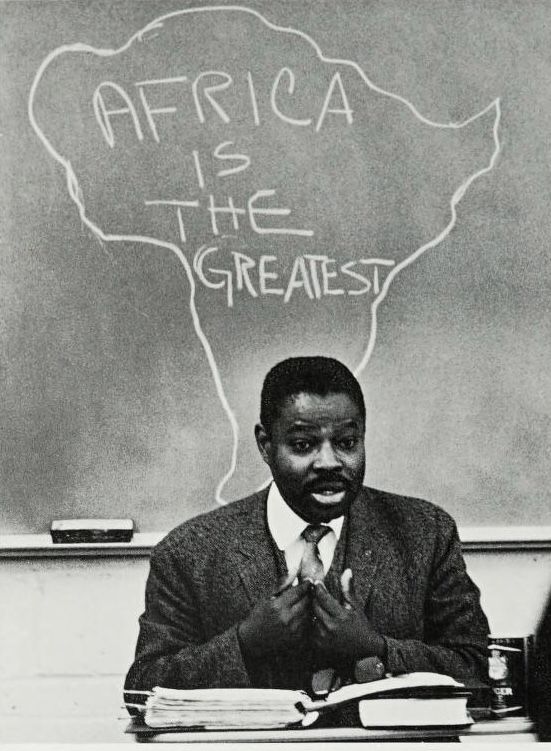
African philosophy also raises an important question about philosophy
itself: who decides what counts as philosophy? For centuries, dominant
philosophical histories often gave little attention to African
intellectual traditions or judged them according to narrow assumptions
about writing, individual authorship, and European institutions. Modern
African philosophers have challenged those exclusions while also
debating critically how oral traditions, collective beliefs, and
individual philosophical arguments should be understood.
Timeline at a Glance
3rd Millennium BCE
Ancient Egyptian wisdom and instructional literature explores moral
conduct, justice, authority, order, and human responsibility
Ancient–Medieval Africa
Diverse intellectual traditions develop through written learning,
oral memory, religious scholarship, political reflection, and
philosophical debate
17th Century
Ethiopian philosophical literature associated with Zär'a Yaʿǝqob and
related traditions becomes an important subject of modern historical
study
18th Century
Anton Wilhelm Amo becomes a prominent philosopher of African origin
working within German universities
1950s–1960s
Independence movements intensify philosophical debates about
freedom, culture, identity, political authority, and African unity
Contemporary Era
African and Africana philosophy develop as major fields of ethical,
political, epistemological, metaphilosophical, and decolonial
inquiry
🌍 Africa Before the Modern Philosophical Canon
Africa's philosophical history developed across many regions and
cultures through written traditions, oral intellectual practices, and
the work of both communities and individual thinkers.
Long before the modern term "African philosophy" existed, African
societies were reflecting on questions that are unmistakably
philosophical. Ideas about justice, moral character, political
legitimacy, personhood, death, destiny, knowledge, and the structure of
reality appeared in many different cultural and historical settings.
These reflections were not always organized into books resembling the
philosophical treatises later associated with Europe, Greece, or modern
universities, but differences of form do not automatically imply an
absence of philosophical inquiry.
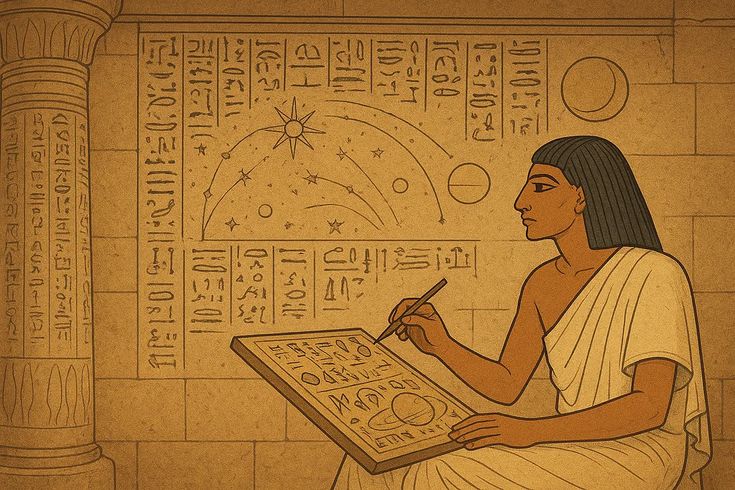
Africa's intellectual history cannot be explained through a single model
of knowledge transmission. Ancient Egypt produced extensive written
literature containing ethical instruction and reflection on political
order and mortality. Other societies developed highly structured oral
systems through which genealogies, laws, moral concepts, historical
memory, and intellectual traditions were preserved and debated. In some
contexts, specialized individuals became important guardians and
interpreters of communal knowledge rather than merely passive repeaters
of inherited tradition.
The history of African philosophy is also inseparable from the history
of how Africa was represented by outsiders. Colonial and racial
ideologies frequently denied or minimized African intellectual
achievements, and some influential European philosophers participated in
intellectual traditions that ranked human populations hierarchically.
Recovering African philosophical history therefore became connected not
only with historical research but with a broader struggle against ideas
that had excluded Africans from the category of rational and
philosophical humanity.
Modern scholarship has consequently had to ask difficult methodological
questions. When is a proverb philosophical? Can a collective worldview
be called a philosophy? Must philosophy be written by an identifiable
individual? Can oral traditions contain arguments capable of critical
examination? These questions do not have one universally accepted
answer, but the debates surrounding them have become an important part
of African philosophy's own intellectual history.
1️⃣ Ancient & Written Traditions
Egypt and the Long History of Written Reflection
Ancient Egyptian wisdom literature explored ethical conduct, justice,
political order, self-restraint, and the responsibilities of human
beings toward one another.
One of the oldest surviving bodies of philosophical and ethical
literature associated with Africa comes from ancient Egypt. Egyptian
texts of instruction, dialogue, narrative, and reflection addressed
moral character, social responsibility, authority, suffering, and
mortality. The Instructions of Ptahhotep, traditionally
associated with an Old Kingdom official, belongs to a long tradition of
wisdom literature concerned with how individuals should speak, act,
judge, and exercise power.
A central concept in Egyptian moral and political thought was
ma'at, a complex idea associated with truth, justice,
rightness, balance, and proper order. Ma'at connected human conduct with
a larger moral and cosmic framework: rulers were expected to preserve
order, individuals were expected to act truthfully and justly, and
disorder was understood as a threat to both social and cosmic stability.
The concept therefore brought together ethical, political, and religious
dimensions without dividing them into modern academic categories.
Other Egyptian works reveal reflection on problems that remain central
to philosophy. Texts concerned with suffering, disappointment, death,
and the instability of human fortune ask how a person should understand
a difficult existence. Such writings should not simply be converted
without qualification into modern philosophical terminology, yet they
demonstrate sustained intellectual engagement with questions about
justice, meaning, responsibility, and the conditions of human life.
The relationship between ancient Egypt and the wider history of
philosophy remains a subject of scholarly debate, particularly when
questions are raised about intellectual exchange between Egypt and the
Greek world. What is historically clear is that Egypt possessed a very
long and sophisticated written intellectual tradition. African
philosophy does not need to depend on the claim that every later
philosophical tradition originated there in order for Egyptian thought
itself to deserve serious historical study.
2️⃣ Knowledge Beyond the Written Book
Orality, Memory, Argument, and Philosophical Method
Across many African societies, intellectual traditions were preserved
through oral memory, dialogue, narrative, public deliberation, and
specialized forms of teaching.
Much of Africa's intellectual heritage developed through oral forms of
transmission. Oral philosophy should not be understood as simply a
collection of unchanging sayings repeated from generation to generation.
Oral traditions can involve interpretation, disagreement, adaptation,
argument, and the application of inherited concepts to new social
problems. A proverb may preserve an insight, but philosophical work can
begin when people ask what the proverb means, whether it is true, and
how it should guide action in a particular situation.
In different African societies, elders, sages, teachers, religious
specialists, judges, poets, historians, and other recognized knowledge
holders could participate in the preservation and interpretation of
intellectual traditions. Systems of memory were sometimes highly
structured, allowing histories, genealogies, political norms, and moral
teachings to be transmitted across generations. Oral transmission was
therefore not necessarily the absence of intellectual institutions; it
could itself involve institutions and recognized methods of learning.
At the same time, modern philosophers have warned against romanticizing
oral tradition. Not every inherited belief is automatically a
philosophical argument, and traditions can contain contradictions,
historical changes, and relations of power that deserve criticism.
African philosophy has therefore increasingly examined oral materials
neither as inferior to written philosophy nor as sacred collections
beyond questioning, but as important intellectual resources requiring
historical, linguistic, and philosophical analysis.
This debate led to an important development known as
sage philosophy. Philosophers such as Henry Odera Oruka
sought to document and critically examine the reflections of individual
indigenous sages whose thought was capable of independent argument
rather than merely representing a collective worldview. The project
helped demonstrate that the choice between anonymous tradition and
formally trained academic philosophy was not the only way to understand
philosophical activity.
3️⃣ Personhood, Community & Moral Life
What Does It Mean to Become a Person?
A recurring area of philosophical interest across several African
traditions concerns the relationship between the individual and the
community. This should not be turned into the simplistic claim that all
African societies reject individuality. Instead, many African
philosophers have explored whether becoming a fully developed person
involves social recognition, moral responsibility, participation in
communal life, and obligations toward others.
Philosophical discussions of personhood in traditions such as Akan
thought have examined the distinction between simply being a human
individual and achieving the moral qualities associated with mature
personhood. This creates questions familiar to moral philosophy
everywhere: Is personhood something possessed automatically, or can it
also be understood as an achievement? What role do character and
responsibility play? Can an individual flourish independently of the
social relationships that make a human life possible?
The concept of ubuntu, associated especially with southern
African linguistic and cultural traditions, has become internationally
influential in discussions of ethics, reconciliation, and political
philosophy. Ubuntu is often interpreted through ideas of human
interdependence and the claim that one's humanity is deeply connected
with the humanity of others. Yet ubuntu should not be presented as the
single philosophy of Africa; it belongs to particular historical and
linguistic contexts and has been interpreted differently by different
thinkers.
These traditions have contributed to contemporary debates about whether
moral philosophy should begin primarily with individual rights,
individual autonomy, social relationships, virtues, duties, or some
combination of these. African philosophers continue to debate these
questions critically, including whether appeals to community can
sometimes conceal conformity or unjust authority. The philosophical
importance of communal ethics lies not in providing easy answers but in
expanding the range of concepts through which human relationships can be
examined.
4️⃣ Reality, Knowledge & Diverse Worldviews
Many Traditions, Many Philosophical Questions
African philosophy cannot be reduced to ethics alone. Philosophers and
scholars studying traditions associated with Akan, Yoruba, Igbo, Oromo,
Dogon, and many other peoples have investigated questions about
metaphysics, epistemology, causation, the nature of the self, destiny,
language, and the relationship between visible and invisible aspects of
reality. The diversity of these traditions makes sweeping statements
about a single continental metaphysics historically unreliable.
Questions about knowledge have been especially important because
knowledge can be understood through different social practices. How does
a community distinguish reliable testimony from falsehood? What role
does experience play? Can wisdom acquired over a lifetime count as a
form of knowledge? How should inherited authority be tested? These
questions connect traditional intellectual practices with modern
epistemology and demonstrate that philosophical problems can arise
within many different cultural settings.
Language has also become a major subject of African philosophical
inquiry. Philosophers such as Kwasi Wiredu argued that philosophical
concepts should not simply be transferred from European languages into
African contexts without examining the assumptions embedded within them.
His project of conceptual decolonization asks
philosophers to investigate how different languages organize experience
and whether inherited conceptual frameworks sometimes distort the
problems they are meant to explain.
The study of indigenous philosophical traditions is therefore not only
an attempt to preserve the past. It can also provide conceptual
resources for contemporary questions about democracy, justice,
environmental responsibility, knowledge, education, language, and
political authority. The most productive approach does not assume that
tradition must either be worshipped or abandoned; it asks what can be
critically learned from it.
5️⃣ Ethiopian & Other Literate Traditions
Individual Thinkers and the Problem of Historical Evidence
Africa's philosophical history includes identifiable authors as well as
collective traditions. Ethiopia, for example, developed a substantial
written intellectual culture preserved through manuscripts and shaped by
local traditions together with interactions involving Christianity and
wider Mediterranean and African intellectual worlds. These writings
demonstrate the importance of looking beyond the assumption that African
philosophical history was exclusively oral.
Zär'a Yaʿǝqob, traditionally associated with the seventeenth-century
work Hatata, has become one of the most widely discussed names
in the history of Ethiopian philosophy. The work is commonly presented
as an inquiry into reason, morality, religion, and the examination of
inherited beliefs. Its place in the history of philosophy has attracted
growing international attention because it presents a striking example
of rational and critical reflection within an African intellectual
context.
The historical study of the Hatata also requires caution.
Questions concerning the manuscript tradition, dating, authorship, and
interpretation have generated scholarly disagreement. Rather than
weakening its importance, this controversy illustrates a broader
principle of intellectual history: traditions should be investigated
through evidence and critical scholarship rather than turned into
unquestioned symbols for modern cultural claims.
The Ethiopian example points toward a larger historical lesson. African
philosophy contains multiple kinds of intellectual evidence:
manuscripts, inscriptions, oral testimony, religious scholarship,
political texts, philosophical essays, and modern academic writing. A
serious history of the field must be capable of studying all of these
without pretending that they belong to one uniform tradition or share
one method.
6️⃣ Colonialism & Intellectual Exclusion
When Africans Were Denied a Place in Philosophy
Modern African philosophy emerged partly through the struggle against
colonial systems that denied or marginalized African intellectual
agency.
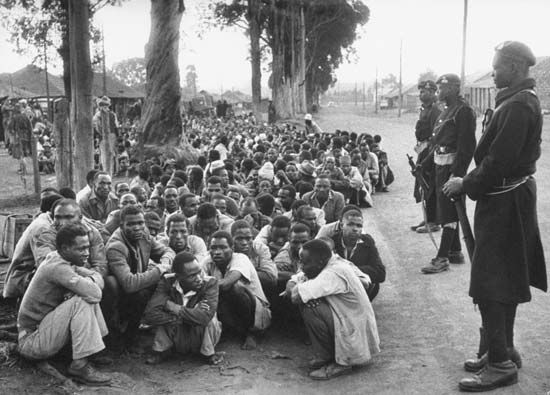
The modern history of African philosophy cannot be separated from
colonialism. European political domination was accompanied by powerful
intellectual systems that frequently portrayed African peoples as
primitive, irrational, or incapable of producing philosophy. Such ideas
were not confined to popular prejudice; racial hierarchies were also
discussed within influential European philosophical and scientific
traditions.
This exclusion created a profound intellectual problem. African thinkers
and scholars were required not only to address ordinary philosophical
questions but, in many cases, to challenge the prior assumption that
Africans were capable of philosophy at all. The struggle for political
independence was therefore connected with struggles over historical
memory, education, culture, language, and the authority to describe
African societies.
Recovering neglected intellectual traditions became an important
anti-colonial project. Yet the process created new dangers. In response
to colonial denigration, there could be a temptation to describe African
traditions as uniformly harmonious, ancient, and philosophically
superior. Critical African philosophy increasingly argued that
liberation from colonial categories should not require replacing them
with new myths that cannot be questioned.
The deepest challenge was therefore double: African philosophy had to
resist the exclusion of African intellectual traditions from the history
of philosophy while preserving the right to criticize African societies,
traditions, and political systems themselves. Decolonization, in this
sense, is not simply celebration of the past; it is also the creation of
intellectual conditions in which critical thought can flourish freely.
7️⃣ What Counts as African Philosophy?
Ethnophilosophy, Criticism, and a Major Debate
One of the defining debates in twentieth-century African philosophy
concerned ethnophilosophy. The term was often used
critically to describe approaches that presented the shared beliefs of
an entire people as though they formed a single anonymous philosophy.
Such approaches frequently drew upon proverbs, myths, religious ideas,
and cultural practices to reconstruct systems described as Bantu, Dogon,
Yoruba, or other philosophies.
Paulin Hountondji became one of the most influential critics of this
approach. He argued that describing philosophy primarily as a collective
and anonymous worldview risked treating African thought differently from
European philosophy, where individual disagreement, argument, and
authorship were considered central. For Hountondji, African philosophy
should be an active and critical practice rather than merely a catalogue
of inherited communal beliefs.
The debate was never as simple as a choice between oral tradition and
modern academic philosophy. Other thinkers argued that the critique of
ethnophilosophy could itself become too narrow if it accepted European
standards of writing and professional institutions as the only valid
measures of philosophical activity. The work of philosophers studying
sage philosophy and critically examining indigenous concepts attempted
to find more complex ways of taking oral intellectual traditions
seriously without treating every collective belief as beyond criticism.
This debate remains important because it asks a universal philosophical
question: Is philosophy defined by its subject matter, its method, its
institutions, its written form, or its commitment to criticism and
argument? African philosophers have not merely answered this question
for Africa. Their disagreements have contributed to wider debates about
the nature and boundaries of philosophy itself.
8️⃣ Independence & Political Philosophy
Freedom, Nationhood, and the Future of Africa
During the twentieth century, anti-colonial movements transformed the
philosophical landscape of Africa. Political independence raised urgent
questions that could not be solved merely by removing colonial rulers.
What should a newly independent state become? How could different
peoples live together within political boundaries often created under
colonial rule? What relationship should exist between inherited
traditions and modern institutions?
Thinkers such as Kwame Nkrumah, Julius Nyerere, Léopold Sédar Senghor,
and others developed influential but differing responses. Their work
addressed African unity, socialism, humanism, culture, political
liberation, economic development, and the search for new social orders.
These thinkers should not be collapsed into one school: their political
philosophies emerged from different historical experiences and often
disagreed about the meaning of tradition and modernity.
Frantz Fanon, working within the wider intellectual world of Africa and
the African diaspora, analyzed colonial domination as a psychological,
political, and existential system. His writings examined violence,
identity, alienation, race, and the dangers facing national liberation
movements after independence. Fanon's influence demonstrates how African
and Africana philosophy frequently crosses simple geographical
boundaries.
Political independence also made philosophical criticism more necessary.
African philosophers increasingly examined authoritarianism, corruption,
inequality, ethnic conflict, democracy, development, and the
relationship between political power and individual freedom. The goal
was not simply to create a philosophy that was "African" in name, but to
develop rigorous intellectual resources capable of confronting real
historical problems.
9️⃣ Contemporary African Philosophy
A Living and Expanding Field
Contemporary African philosophy is a living field rather than a closed
historical tradition. Philosophers working across Africa and throughout
the African diaspora contribute to ethics, political philosophy,
epistemology, philosophy of language, philosophy of race,
metaphilosophy, feminism, environmental philosophy, and the philosophy
of science. The field has grown through universities, journals,
conferences, professional organizations, and increasingly international
networks of research.
Questions of decolonization remain central. Philosophers continue to ask
how educational institutions can recover neglected intellectual
histories without replacing one narrow canon with another. They examine
whether concepts inherited from colonial languages adequately describe
African social realities and how indigenous languages and traditions can
contribute to contemporary philosophical inquiry.
African philosophy also increasingly addresses problems created by the
present: democracy and political legitimacy, technological change,
global inequality, migration, environmental crisis, public health,
gender relations, and the continuing consequences of colonial history.
Traditional concepts may provide resources for these debates, but they
are not simply repeated unchanged. Like every living philosophical
tradition, African philosophy develops by reinterpretation,
disagreement, criticism, and the creation of new ideas.
The wider field of Africana philosophy extends beyond
continental Africa to include philosophical work shaped by the
experiences of peoples of African descent throughout the diaspora.
African philosophy and Africana philosophy therefore overlap without
being identical. Together, they challenge philosophical history to
become more geographically and intellectually inclusive while retaining
the standards of evidence, argument, and critical examination that make
philosophy a continuing conversation rather than a fixed inheritance.
👤 Major Thinkers
A selection of important figures and intellectual traditions within this
long and diverse history.
Ptahhotep
Traditionally c. 3rd millennium BCE
Traditionally associated with one of ancient Egypt's best-known
works of ethical instruction and wisdom literature.
Zär'a Yaʿǝqob
Traditionally 17th century
Associated with the Hatata, a work examining reason,
morality, religion, and the critical examination of inherited
beliefs.
Anton Wilhelm Amo
c. 1703–after 1753
A philosopher of African origin who worked in eighteenth-century
German universities and wrote on mind, knowledge, and law.
Kwame Nkrumah
1909–1972
Ghanaian philosopher and political leader who developed influential
ideas about African unity, anti-colonialism, and political
transformation.
Paulin Hountondji
1942–2024
A major critic of ethnophilosophy who argued for African philosophy
as a rigorous, critical, and intellectually active practice.
Kwasi Wiredu
1931–2022
Ghanaian philosopher known for conceptual decolonization and for
bringing Akan philosophical resources into contemporary debate.
⚖ Ma'at — the connection between truth, justice,
right order, and moral responsibility
🗣 Oral Philosophy — philosophical reflection
preserved and developed through dialogue, argument, memory, narrative,
and proverb
🤝 Ubuntu — philosophical ideas emphasizing human
interdependence and the importance of relationships in moral life
👤 Personhood — reflection on what it means not only
to be human, but to become a morally responsible person
🧭 Conceptual Decolonization — critically examining
inherited concepts and exploring how language shapes philosophical
understanding
❓ Ethnophilosophy — a major debate over whether
collective cultural worldviews should themselves be classified as
philosophy
🗣 Sage Philosophy — the study of critically
reflective individual thinkers working within indigenous traditions
🌍 Decolonization — challenging colonial intellectual
structures while creating new conditions for freedom and critical
thought
🌍 Influence on Philosophy Today
African philosophy has helped transform the way the global history of
philosophy is written. Older narratives often treated philosophy as
beginning in a small number of civilizations and moving outward through
a largely European intellectual canon. Research into African written
traditions, oral intellectual practices, individual thinkers, and modern
philosophical movements has made that historical picture increasingly
difficult to maintain in such a narrow form.
Its influence is not limited to the recovery of neglected history.
African philosophers contribute directly to contemporary discussions of
ethics, democracy, political legitimacy, knowledge, race, language,
culture, development, and environmental responsibility. Concepts such as
ubuntu, personhood, consensus, conceptual decolonization, and
philosophical sagacity have entered wider international debates and are
continually reinterpreted and criticized.
Perhaps African philosophy's most important contribution is
metaphilosophical: it forces philosophy to examine its own boundaries.
If philosophy values rational criticism and the pursuit of truth, can
its history legitimately ignore traditions merely because they were
preserved orally or developed outside particular European institutions?
At the same time, how can inclusion avoid turning cultural traditions
into unquestionable symbols? These questions have implications far
beyond Africa.
African philosophy is therefore both historical and contemporary. It
preserves and investigates intellectual inheritances stretching across
millennia while confronting problems created by colonialism,
independence, globalization, inequality, and technological change. Its
history is not a story of philosophy finally arriving in Africa, but of
increasingly recognizing, documenting, criticizing, and expanding
philosophical activity that has always taken many different forms.
📊 Quick Facts
Time Period: Ancient traditions to the contemporary
era
Key Regions: North Africa, West Africa, Central
Africa, East Africa, Southern Africa, and the wider African continent
Major Forms: Written texts, oral traditions,
philosophical dialogue, ethical instruction, political thought, and
modern academic philosophy
Central Questions: What is a person, what is justice,
how should communities live, what can human beings know, and how
should societies confront domination and injustice?
Major Modern Debates: Ethnophilosophy, sage
philosophy, decolonization, language, identity, political freedom, and
the nature of philosophy itself
While diverse philosophical traditions developed across the African
continent, another vast intellectual world was taking shape across East
Asia. In ancient China, thinkers such as Confucius, Laozi, Mozi, and
Zhuangzi explored ethics, political order, human nature, harmony,
knowledge, and the proper way of living.