The history of philosophical thought within Jewish intellectual
traditions — from biblical wisdom and the culture of interpretation to
Hellenistic encounters with Greek philosophy, medieval rationalism,
Maimonides, Kabbalah, and the major transformations of modern Jewish
thought.
Introduction
Jewish philosophy is one of the world's oldest and most intellectually
diverse traditions of sustained reflection on God, reality, knowledge,
ethics, law, human freedom, suffering, and the meaning of human
existence. Yet the history of Jewish thought cannot be reduced to
philosophy in the modern academic sense. Biblical literature, rabbinic
interpretation, legal reasoning, mystical speculation, poetry, theology,
and philosophical argument developed alongside one another, often
overlapping while retaining their own distinctive purposes and methods.
Some of the earliest foundations of Jewish philosophical reflection
appear in the Hebrew Bible and its wisdom literature. The books of
Proverbs, Job, and Ecclesiastes confront questions concerning justice,
suffering, wisdom, mortality, and the limits of human understanding.
These works do not normally present philosophical systems in the style
of Plato or
Aristotle, but they repeatedly investigate
problems that later became central to philosophy: Why do the righteous
suffer? Can human wisdom understand the order of the world? What makes a
life good? And what remains meaningful in the face of death?
Jewish thought later developed through encounters with other
civilizations and intellectual traditions. During the
Hellenistic period,
Jewish thinkers engaged with Greek language and philosophy. In the
rabbinic world, the Mishnah and Talmud cultivated complex traditions of
interpretation and argument. During the Middle Ages, Jewish philosophers
writing in Arabic, Hebrew, and other languages entered into sustained
dialogue with Aristotelianism, Neoplatonism, and the philosophical
traditions of the Islamic world.
This page follows that long and complex history: from biblical wisdom
and ancient Israelite thought to Philo of Alexandria, rabbinic
interpretation, medieval rationalism, Maimonides, Kabbalah, and the
transformations of modern Jewish philosophy. Together, these traditions
reveal a continuing intellectual conversation about reason and
revelation, the interpretation of sacred texts, the nature of God,
ethical responsibility, human freedom, and the meaning of existence.
Timeline at a Glance
c. 1000–500 BCE
Biblical and Israelite traditions develop reflections on covenant,
justice, wisdom, prophecy, suffering, and human responsibility
c. 300 BCE–100 CE
Hellenistic Judaism develops through encounters between Jewish
traditions and Greek language, culture, and philosophy
c. 200–600 CE
Rabbinic Judaism develops major traditions of legal interpretation,
debate, ethics, and textual reasoning through the Mishnah and Talmud
9th–12th centuries
Medieval Jewish philosophy develops in close contact with the
philosophical and scientific cultures of the Islamic world
12th Century
Moses Maimonides creates one of the most influential syntheses of
Jewish law, philosophy, Aristotelian thought, and rational inquiry
13th–16th centuries
Major Kabbalistic traditions develop influential mystical accounts
of God, creation, divine emanation, and the structure of reality
17th century onward
Modern Jewish philosophy develops through debates about modernity,
secularism, ethics, dialogue, identity, history, and human
responsibility
🏺 Ancient Israel and the World of Biblical Thought
The earliest foundations of Jewish thought developed in the ancient Near
East, a world shared with the civilizations of Mesopotamia, Egypt,
Anatolia, Persia, and the Levant. Ancient Israelite communities
developed their intellectual and religious traditions within this wider
environment of political change, cultural exchange, migration, war, and
imperial power. Their writings reflected not only distinctive religious
commitments but also universal human concerns about justice, suffering,
death, political authority, and the relationship between humanity and
the cosmos.
A central idea within biblical tradition is the covenantal relationship
between God and the people of Israel. This framework connected religious
life with ethics, law, memory, and collective responsibility. Questions
about how human beings ought to live were therefore not treated as
entirely separate from questions about justice, community, and divine
command. The prophets repeatedly criticized political corruption,
exploitation, violence, and empty religious observance, making moral
responsibility a central concern of Israelite intellectual life.
At the same time, biblical literature contains deep tensions and debates
rather than one simple philosophical doctrine. Some texts emphasize the
intelligibility and justice of the world, while others confront
experiences that appear to challenge any simple moral order. The book of
Job asks why a person who appears righteous can suffer catastrophically.
Ecclesiastes questions whether human labor, achievement, and wisdom can
overcome the transience of life.
For this reason, the history of Jewish philosophy cannot be understood
simply as the history of individual philosophers. It emerged from a much
broader culture of reading, interpretation, disagreement, and
intellectual inheritance. Sacred texts became objects of continuous
examination, while later thinkers repeatedly asked how ancient
revelation should be understood in changing historical and intellectual
circumstances.
1️⃣ Wisdom, Covenant & the Problem of Human Life
The Search for Wisdom
Biblical wisdom literature explored knowledge, justice, suffering,
mortality, and the limits of human understanding.
Jewish philosophical reflection begins, in part, with traditions of
wisdom. The Book of Proverbs presents wisdom as practical and ethical
understanding: a person must learn how to speak, act, judge, govern
desires, and live responsibly within a community. Wisdom is therefore
not merely abstract knowledge. It concerns character, judgment,
discipline, and the ability to recognize the consequences of human
action.
The Book of Job introduces a much more difficult problem. Job suffers
despite being presented as a righteous man, challenging the assumption
that prosperity always follows virtue and suffering always follows
wrongdoing. His friends repeatedly attempt to explain his suffering
through conventional moral reasoning, but their explanations prove
inadequate. The work therefore becomes a profound exploration of the
limits of human attempts to explain suffering and divine justice.
Ecclesiastes develops another striking form of reflection. Its author
repeatedly observes the instability and transience of human life.
Wealth, achievement, pleasure, political power, and even wisdom cannot
permanently overcome mortality. The text does not simply reject human
life as meaningless, but it questions whether human beings possess the
knowledge or power required to master existence completely.
Together, these traditions reveal a philosophical tension that would
remain important throughout Jewish thought. Human beings are called to
pursue wisdom and ethical responsibility, yet their knowledge remains
limited. They seek justice but encounter suffering; they build, govern,
love, and learn, yet remain mortal. Jewish philosophical reflection
repeatedly returned to this tension between the human desire for
understanding and the limits placed upon human existence.
2️⃣ Hellenistic Judaism & Greek Philosophy
Jerusalem, Alexandria, and Athens
Hellenistic Jewish thinkers explored how Jewish scripture and Greek
philosophical concepts might be interpreted in relation to one
another.
After the conquests of Alexander the Great, Jewish communities became
part of a much wider Hellenistic world. Greek language, education,
political institutions, and philosophical traditions spread across the
eastern Mediterranean and Near East. Jewish communities responded to
this environment in diverse ways, and intellectual life increasingly
involved questions about how inherited traditions should relate to Greek
culture and philosophy.
Alexandria became one of the most important centers of this encounter.
The city contained a major Jewish community and was also a center of
Hellenistic learning. Jewish thinkers writing in Greek could therefore
address philosophical questions using concepts associated with Plato,
the Stoics, and other Greek traditions while remaining deeply engaged
with the interpretation of Jewish scripture.
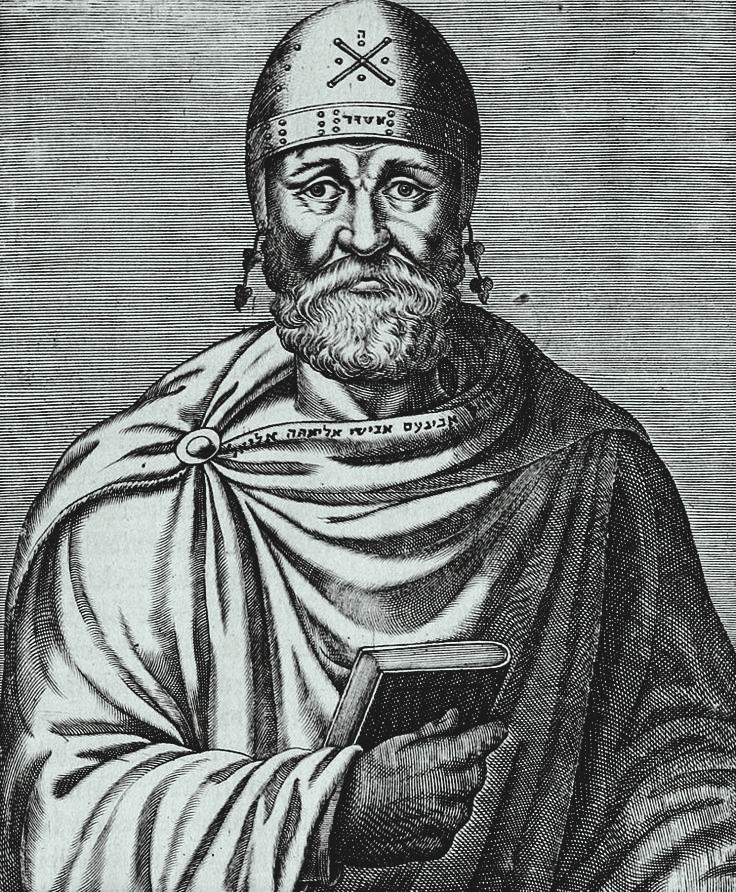
The most famous philosopher associated with this world was Philo of
Alexandria. Philo attempted to interpret the Torah in ways that could
reveal philosophical meaning beneath the literal narrative. Allegorical
interpretation allowed him to connect biblical figures and events with
questions about reason, virtue, the soul, the cosmos, and the nature of
God. His thought cannot be reduced simply to Greek philosophy in Jewish
clothing; it represented a complex attempt to bring different
intellectual languages into conversation.
Philo's use of the concept of the Logos became especially
influential. The Logos could be understood as connected with divine
reason and the intelligible order through which the world becomes
comprehensible. Later religious and philosophical traditions engaged
with similar concepts in different ways, making Philo an important
figure in the history of Jewish, Hellenistic, and early religious
philosophy.
The encounter between Judaism and Greek philosophy established a problem
that would continue for centuries: Can reason and revelation support one
another? Are philosophical truths compatible with sacred tradition? And
when philosophical reasoning appears to conflict with the literal
meaning of scripture, how should the text be interpreted? Medieval
Jewish philosophers would return to these questions with extraordinary
sophistication.
3️⃣ Rabbinic Thought & the Culture of Interpretation
Argument, Law, and the Search for Meaning
Rabbinic traditions developed sophisticated cultures of
interpretation, debate, legal reasoning, and ethical reflection.
After the destruction of the Second Temple in 70 CE, Jewish intellectual
life increasingly developed through rabbinic institutions and traditions
of study. The Mishnah and later the Talmud became central bodies of
literature for the discussion of law, interpretation, ethics, ritual,
and communal life. Their intellectual style differs significantly from
the systematic treatises associated with Greek philosophy, yet they
developed powerful forms of analysis and argument.
Rabbinic reasoning often proceeds through disagreement. Different
interpretations are presented, objections are raised, earlier
authorities are examined, hypothetical cases are considered, and
distinctions are drawn between apparently similar situations. This
method created an intellectual culture in which argument was not
necessarily a sign that inquiry had failed. Disagreement could itself
become a means of clarifying a problem.
The interpretation of texts also became a major philosophical issue.
What does a sacred text mean? Is meaning exhausted by the literal
wording, or can deeper legal, ethical, symbolic, and interpretive
dimensions be discovered? Rabbinic traditions developed elaborate
methods for relating written texts to oral interpretation, precedent,
and changing practical circumstances.
These traditions also addressed philosophical questions about human
responsibility and law. A legal system must determine intention,
consequences, obligations, evidence, and competing duties. Rabbinic
discussions therefore frequently examined problems that modern
philosophy would recognize as questions in ethics, jurisprudence,
epistemology, political philosophy, and the philosophy of language.
Rabbinic thought should not simply be relabeled as Greek-style
philosophy. Its purposes and methods developed within a distinctive
religious and legal culture. Nevertheless, the traditions of argument,
interpretation, conceptual distinction, and critical debate that it
cultivated became essential parts of the wider intellectual environment
from which later Jewish philosophy emerged.
4️⃣ Medieval Jewish Philosophy & the Age of Reason
Reason and Revelation in the Medieval World
Medieval Jewish philosophy flourished within a world of remarkable
intellectual exchange. Jewish thinkers lived in regions shaped by
Islamic civilization and participated in cultures in which Arabic had
become a major language of philosophy, science, medicine, mathematics,
and theology. Greek philosophical works had been translated and
interpreted in Arabic, creating an intellectual environment in which
Jewish thinkers could engage with Aristotle, Plato, Neoplatonism, and
other traditions through new philosophical developments.
One of the earliest major medieval Jewish philosophers was Saadia Gaon,
who attempted to defend and explain Jewish belief through systematic
rational argument. Saadia addressed questions concerning the creation of
the world, the existence and unity of God, human freedom, prophecy, and
the relationship between reason and revelation. His work helped
establish a tradition in which philosophical reasoning could be used to
clarify religious commitments rather than simply oppose them.
Other Jewish philosophers developed very different approaches. Solomon
ibn Gabirol became associated with a philosophical system strongly
influenced by Neoplatonic ideas, while thinkers such as Bahya ibn Paquda
explored the relationship between ethical and spiritual life. Judah
Halevi, by contrast, expressed important criticisms of the claim that
philosophical reason alone could provide the highest form of religious
understanding.
The medieval period therefore did not produce a single Jewish
philosophical doctrine. It produced debates. Some thinkers placed great
confidence in rational demonstration, while others emphasized history,
prophecy, revelation, religious experience, or the limits of abstract
speculation. Jewish philosophy developed precisely through these
disagreements about what reason can accomplish and where its limits
might lie.
The intellectual environment of the Islamic world was crucial to this
development. Jewish philosophers did not merely receive ideas passively;
they translated, interpreted, criticized, and transformed the
philosophical traditions available to them. Medieval Jewish philosophy
was therefore part of a wider Mediterranean and Near Eastern
conversation involving Muslim, Jewish, and later Christian thinkers.
5️⃣ Maimonides & the Great Philosophical Synthesis
The Guide for the Perplexed
Maimonides became one of the most influential Jewish philosophers of
the medieval world through his work on law, reason, theology, and the
limits of human knowledge.
Moses Maimonides, also known as Rambam, was born in Córdoba in 1138 and
became one of the greatest Jewish philosophers and legal thinkers of the
Middle Ages. His life unfolded across the interconnected intellectual
worlds of al-Andalus, North Africa, and Egypt. Maimonides was not only a
philosopher but also a major authority on Jewish law and a physician,
illustrating the broad range of disciplines that could belong to a
medieval intellectual life.
His philosophical masterpiece, The Guide for the Perplexed,
addresses readers struggling with an apparent conflict between
philosophical reasoning and religious tradition. Maimonides argued that
many biblical passages should not always be interpreted in a crude
literal manner. When scripture appears to attribute physical qualities
to God, philosophical reflection can reveal the inadequacy of a purely
anthropomorphic interpretation.
One of Maimonides's most important ideas is often described as negative
theology. Human language is limited when speaking about God. To say
exactly what God is may falsely impose human categories upon an infinite
and fundamentally different reality. Maimonides therefore emphasized the
importance of understanding what cannot properly be said about God,
protecting divine transcendence from overly literal descriptions.
Maimonides also engaged deeply with Aristotle and the philosophical
traditions that had developed around Aristotelian thought in the Islamic
world. Yet he did not simply accept every philosophical conclusion. The
questions of creation, prophecy, providence, law, and the limits of
human knowledge required careful interpretation rather than simple
submission to either philosophy or literalism.
His importance lies partly in the ambition of his synthesis. Jewish law,
ethics, metaphysics, psychology, political order, and intellectual
perfection were treated as connected dimensions of human life.
Maimonides's influence extended far beyond Judaism, shaping later
philosophical discussions and becoming important to medieval Christian
thinkers as well as subsequent Jewish philosophy.
6️⃣ Kabbalah & the Mystical Interpretation of Reality
The Infinite and the Structure of Creation
Kabbalistic traditions developed influential mystical interpretations
of divine reality, creation, symbolism, and humanity's relationship
with the cosmos.
Alongside rationalist philosophy, Jewish intellectual history also
developed powerful mystical traditions. Kabbalah became an increasingly
influential form of Jewish interpretation during the medieval period,
particularly from the late twelfth and thirteenth centuries onward. Its
thinkers and texts explored questions about the hidden structure of
reality, the nature of divine manifestation, creation, language, and
humanity's relationship with the sacred.
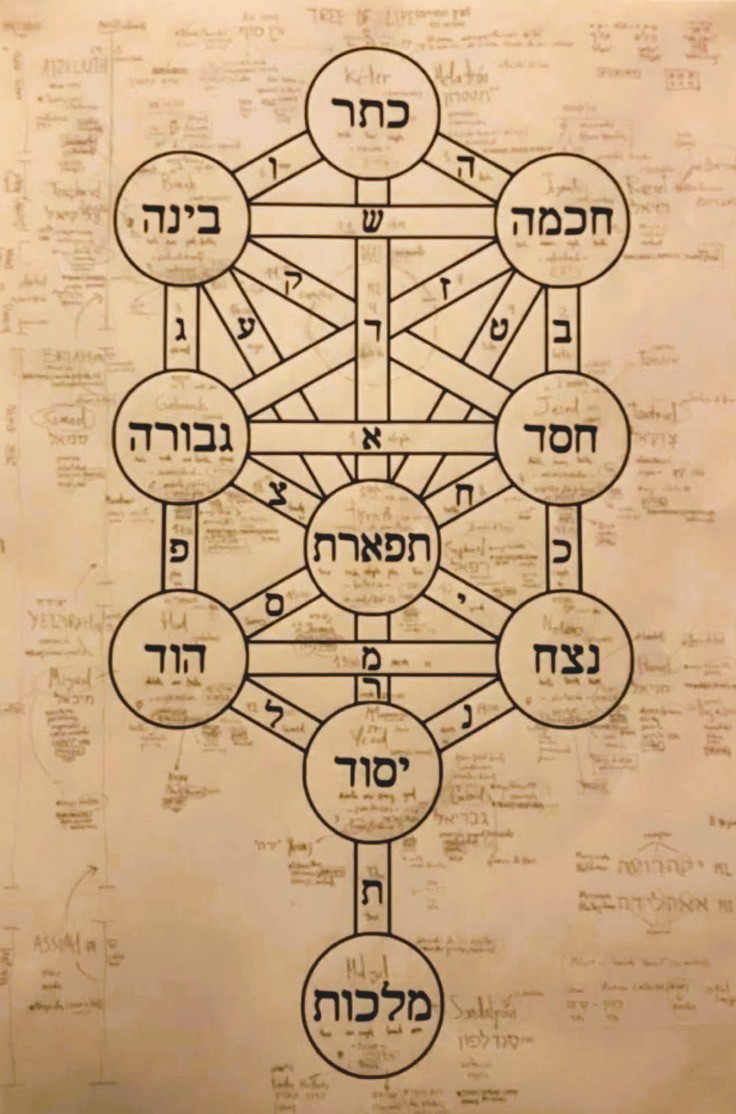
A central Kabbalistic concept is Ein Sof, the infinite and
ultimately unknowable divine reality. Kabbalistic traditions developed
elaborate ways of thinking about how the finite world could exist in
relation to an infinite God. The doctrine of the sefirot
described dimensions or modes through which divine life and creative
activity could be understood symbolically.
The Zohar became one of the most influential works of
Kabbalistic literature. Through symbolic interpretation, narrative, and
mystical speculation, Kabbalistic thinkers explored dimensions of
scripture that rationalist interpretation did not always emphasize.
Language, letters, divine names, and biblical stories could become
symbols through which hidden structures of reality were contemplated.
The relationship between philosophy and Kabbalah was complex. Kabbalists
sometimes criticized forms of philosophical rationalism that appeared to
make abstract intellectual knowledge the highest goal of religious life.
Yet the two traditions also influenced one another. Some mystical
thinkers adopted philosophical vocabulary and problems, while others
developed intellectual systems that attempted to integrate mystical and
rational forms of understanding.
Kabbalah therefore represents an important reminder that the history of
Jewish thought cannot be described solely as a march toward rationalism.
Different intellectual traditions offered different accounts of how
human beings encounter reality. Rational argument, textual
interpretation, legal reasoning, mystical experience, and symbolic
speculation all remained part of the larger and sometimes contested
world of Jewish intellectual history.
7️⃣ Modern Jewish Philosophy & the Question of Modernity
Identity, Dialogue, Ethics, and Human Responsibility
The modern period transformed Jewish philosophy by changing the
historical conditions under which Jewish thinkers worked. The growth of
modern science, political emancipation, secular institutions,
nationalism, and new forms of historical criticism created questions
that could not simply be answered by repeating medieval arguments.
Jewish philosophers increasingly asked how inherited religious
traditions should relate to the intellectual and political conditions of
modern life.
Baruch Spinoza occupies a controversial and unusual position in this
history. Born into a Jewish community in Amsterdam, he developed a
philosophical system that radically challenged traditional conceptions
of God, scripture, freedom, and religious authority. His philosophy of a
single infinite substance became one of the major systems of early
modern philosophy, while his relationship with Judaism remained a
subject of continuing historical and philosophical debate.
Moses Mendelssohn became an important figure in the Jewish
Enlightenment, or Haskalah. He attempted to defend the
compatibility of Jewish life with rational inquiry and participation in
wider European society. His work represented one response to the new
conditions created by modernity, asking whether religious identity and
philosophical reason could coexist without one simply absorbing the
other.
In the twentieth century, Martin Buber developed a philosophy centered
on dialogue and relationship. His distinction between
I–Thou and I–It described two fundamentally different
ways in which human beings can encounter the world. Franz Rosenzweig
likewise developed a major philosophical response to modernity,
exploring the relationships between God, humanity, revelation, history,
and redemption.
Emmanuel Levinas gave ethics an especially radical place in modern
philosophy. Influenced by phenomenology and Jewish intellectual
traditions, he argued that the encounter with another person places an
ethical demand upon the self. His philosophy helped transform
twentieth-century debates about responsibility, otherness, violence, and
the limits of systems that attempt to reduce human beings to abstract
categories.
Modern Jewish philosophy therefore became extraordinarily diverse. It
included religious philosophers, secular thinkers, existentialists,
rationalists, mystics, political theorists, and ethical philosophers.
What connected these different figures was not a single doctrine but an
ongoing engagement with questions that had shaped Jewish thought for
centuries: What does it mean to inherit a tradition? How should ancient
texts be interpreted in a changing world? What are the limits of reason?
And what responsibilities do human beings have toward one another?
👤 Major Thinkers
Major figures associated with the long and diverse history of Jewish
philosophical thought.
Philo of Alexandria
c. 20 BCE–50 CE
Hellenistic Jewish philosopher who used allegorical interpretation
to bring Jewish scripture into conversation with Greek philosophical
concepts.
Saadia Gaon
882–942
Major early medieval Jewish philosopher who used rational argument
to investigate creation, God, revelation, prophecy, and human
freedom.
Solomon ibn Gabirol
c. 1021–1058
Jewish philosopher and poet associated with a major medieval
philosophical system influenced by Neoplatonic ideas.
Judah Halevi
c. 1075–1141
Philosopher and poet who emphasized history, revelation, and
religious experience while critically engaging philosophical
rationalism.
Maimonides
1138–1204
One of the greatest Jewish philosophers of the medieval period,
known for his work on law, reason, negative theology, ethics, and
the limits of human knowledge.
Baruch Spinoza
1632–1677
Early modern philosopher whose radical metaphysics and criticism of
religious authority created a controversial relationship with Jewish
intellectual history.
Moses Mendelssohn
1729–1786
Major philosopher of the Jewish Enlightenment who explored reason,
religious tolerance, and the relationship between Judaism and modern
European society.
Martin Buber
1878–1965
Developed a philosophy of dialogue centered on the distinction
between I–Thou and I–It relationships.
Franz Rosenzweig
1886–1929
Explored revelation, God, humanity, history, and redemption in one
of the most important philosophical systems of modern Jewish
thought.
Emmanuel Levinas
1906–1995
Major twentieth-century philosopher who placed ethical
responsibility toward the Other at the center of philosophical
inquiry.
📜 Reason and Revelation — the question of how
rational inquiry relates to sacred tradition and revealed knowledge
⚖ Justice and Suffering — the problem of why human
beings, including the apparently righteous, experience misfortune
🧠 Wisdom and Human Limits — the search for knowledge
alongside an awareness of the limits of human understanding
📖 Interpretation — the philosophical problem of how
sacred and inherited texts should be understood
🗣 Dialogue and Debate — argument and disagreement as
important methods of intellectual and legal inquiry
🌌 Divine Transcendence — the difficulty of speaking
accurately about an infinite reality beyond ordinary human categories
🧩 Negative Theology — understanding God partly by
recognizing the limits of positive human descriptions
✨ Mysticism and the Infinite — Kabbalistic
explorations of divine reality, creation, symbolism, and the hidden
structure of existence
🤝 I and Thou — the philosophical importance of
genuine encounter and relationship between persons
🧍 Responsibility for the Other — the ethical demand
created by the encounter with another human being
🌍 Influence on Later Philosophy
Jewish philosophy has influenced the wider history of thought through
centuries of intellectual exchange rather than through a single isolated
line of development. Hellenistic Jewish thinkers participated in the
philosophical culture of the Mediterranean, while medieval Jewish
philosophers became part of a wider conversation involving Arabic,
Islamic, Christian, and Jewish intellectual traditions. Ideas crossed
linguistic and religious boundaries through translation, commentary,
criticism, and debate.
Maimonides became especially important beyond Jewish philosophy. His
engagement with Aristotelian thought, negative theology, law, and the
limits of human knowledge influenced later philosophers and theologians.
Medieval Christian thinkers encountered philosophical problems that had
also been explored by Jewish and Islamic philosophers, demonstrating how
the intellectual history of the Middle Ages cannot be divided neatly
into completely separate civilizations.
Kabbalistic traditions also exercised a long influence on Jewish
intellectual and religious life and later attracted the attention of
Christian thinkers during the Renaissance and early modern period.
Mystical concepts concerning divine infinity, symbolism, creation, and
hidden reality continued to generate philosophical interest, even among
thinkers who did not accept Kabbalistic doctrines themselves.
Modern Jewish philosophers contributed directly to major debates in
European and contemporary philosophy. Spinoza became a foundational
figure in metaphysics and political philosophy; Buber influenced
existential and dialogical thought; Rosenzweig reshaped discussions of
revelation and modernity; and Levinas became one of the most influential
ethical philosophers of the twentieth century. Jewish philosophy
therefore remains not merely a historical tradition but an active part
of contemporary philosophical discussion.
📊 Quick Facts
Historical Range: Ancient Israelite and biblical
traditions to contemporary Jewish philosophy
Key Regions: The ancient Levant, Alexandria,
Mesopotamia, North Africa, Iberia, the wider Mediterranean, Europe,
and modern global Jewish communities
Major Figures: Philo of Alexandria, Saadia Gaon,
Solomon ibn Gabirol, Judah Halevi, Maimonides, Spinoza, Moses
Mendelssohn, Martin Buber, Franz Rosenzweig, and Emmanuel Levinas
Central Questions: How do reason and revelation
relate? What can human beings know about God? Why do people suffer?
How should sacred texts be interpreted? What do humans owe to one
another?
Major Traditions: Biblical wisdom, rabbinic thought,
medieval rationalism, Jewish Neoplatonism, Aristotelianism, Kabbalah,
Haskalah, existential philosophy, and modern ethical philosophy
Lasting Influence: Medieval philosophy, theology,
metaphysics, ethics, biblical interpretation, mysticism, political
thought, existentialism, phenomenology, and contemporary philosophy
While Jewish intellectual traditions developed through scripture,
interpretation, law, philosophy, and mysticism, philosophical traditions
in Persia were also undergoing major transformations. Ancient Iranian
religious and ethical thought, followed by later Persian contributions
to Islamic philosophy, explored questions of truth, justice, the nature
of reality, knowledge, and humanity's place within the cosmic order.