Who Is Jürgen Habermas?
Jürgen Habermas (born 1929) is a German philosopher and social theorist widely regarded as one of the most important thinkers in contemporary philosophy. His work has influenced political philosophy, social theory, ethics, sociology, communication studies, law, and democratic theory.
Jürgen Habermas's philosophy is especially concerned with communication and the conditions under which human beings can reach understanding through rational discussion. Rather than viewing reason only as a tool for controlling nature or achieving private goals, Habermas developed the idea of communicative rationality.
Habermas is also closely associated with the Frankfurt School and the tradition of Critical Theory. He attempted to develop this tradition beyond some of its earlier pessimism by defending the possibility that communication, public debate, and democratic institutions can still support rational criticism.
His most famous ideas include communicative action, discourse ethics, the public sphere, deliberative democracy, the distinction between lifeworld and system, and the idea of the colonization of the lifeworld. Together, these concepts form one of the most ambitious philosophical accounts of modern society.
Jürgen Habermas: Quick Facts
- Full name — Jürgen Habermas
- Born — June 18, 1929
- Nationality — German
- Philosophical tradition — Critical Theory, contemporary philosophy, social and political philosophy
- Associated movement — The second generation of the Frankfurt School
- Major fields — Philosophy, sociology, political theory, ethics, communication, and social theory
- Major subjects — Communication, democracy, rationality, ethics, modernity, law, and society
- Famous idea — Communicative action
- Political theory — Deliberative democracy
- Important concept — The public sphere
- Major work — The Theory of Communicative Action
- Major contribution — Development of discourse ethics and modern democratic theory
Jürgen Habermas's Early Life and Education
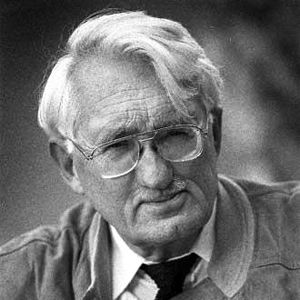
Jürgen Habermas was born in Düsseldorf, Germany, in 1929 and grew up during the final years of the Weimar Republic and the period of Nazi rule. Like many members of his generation, his intellectual and political outlook was profoundly shaped by the collapse of Nazi Germany and by the revelations that followed the Second World War concerning the Holocaust and other atrocities. These experiences helped make questions about authoritarianism, political responsibility, democracy, and public memory central to the historical background of his thought.
After the war, Habermas studied a wide range of subjects, including philosophy, history, psychology, literature, and economics, at several German universities. This broad intellectual formation later became visible in his work, which consistently moves across the boundaries between philosophy and the social sciences. Rather than treating philosophical questions as entirely separate from historical and social realities, Habermas sought to understand how reason, communication, institutions, and forms of social organization develop together.
During the 1950s, Habermas became associated with the Institute for Social Research in Frankfurt and the intellectual tradition later known as the Frankfurt School. Earlier figures such as Max Horkheimer and Theodor W. Adorno had developed Critical Theory as an interdisciplinary attempt to examine capitalism, ideology, culture, technology, and modern forms of domination. Their work raised difficult questions about whether modern rationality itself could become connected with systems of control and oppression.
Habermas eventually developed a philosophical direction that differed in important ways from that of his predecessors. While remaining deeply connected with Critical Theory, he became increasingly interested in language, communication, democratic institutions, and the possibility of rational agreement. These concerns led him toward what is often described as a communicative turn in Critical Theory and became central to Jürgen Habermas's philosophy.
Why Is Jürgen Habermas Important?
Jürgen Habermas is important because he developed one of the most ambitious modern theories of communication and rationality. His philosophy challenges the narrow assumption that reason exists only to help individuals calculate the most efficient means of achieving their private goals or to increase human control over nature. For Habermas, this instrumental use of reason is important, but it does not exhaust the full meaning of human rationality.
Habermas argued that human beings also use reason when they communicate with one another and attempt to reach understanding. This form of rationality, which he called communicative rationality, concerns the capacity of speakers to offer reasons, raise claims, respond to criticism, and coordinate action through communication rather than relying entirely upon force or strategic manipulation. It provides a foundation for his theories of ethics, democracy, law, and social cooperation.
His theory of the public sphere also transformed discussions about democracy and political communication. Habermas examined the importance of social spaces in which citizens can discuss matters of common concern, criticize authority, exchange arguments, and contribute to the formation of public opinion. His work therefore helped establish the public sphere as a major concept in contemporary political theory and media studies.
Habermas remains important because his ideas connect abstract philosophy with practical questions about modern democratic life. His work asks how societies can remain legitimate and open to rational criticism despite deep disagreements, competing interests, powerful economic institutions, bureaucratic systems, mass media, and increasingly complex technologies. His continuing influence extends across philosophy, sociology, political theory, law, communication studies, and democratic theory.
The Historical Context of Jürgen Habermas's Philosophy
Habermas developed his philosophy in postwar Germany, where questions about democracy, responsibility, and authoritarianism had become especially urgent. The experience of fascism and the Holocaust created a profound challenge for European intellectuals who wanted to understand how societies possessing advanced science, technology, and administrative institutions could nevertheless produce extreme forms of violence and political domination.
The earlier Frankfurt School had responded to these problems by developing Critical Theory. Thinkers associated with this tradition examined how economic structures, political power, mass culture, technology, and ideology could shape human consciousness and restrict genuine freedom. They were particularly concerned with forms of reason that became instrumental, treating human beings and the natural world primarily as objects to be calculated, organized, and controlled.
At the same time, twentieth-century philosophy increasingly turned toward language and communication. Philosophers and social theorists recognized that human understanding is deeply connected with linguistic practices, social interaction, interpretation, and the shared rules that make meaningful communication possible. Developments in the philosophy of language, pragmatism, linguistics, and sociology therefore provided important resources for Habermas's philosophical project.
Habermas brought many of these developments together. He combined Critical Theory with ideas from sociology, philosophy of language, pragmatism, linguistics, and democratic theory. His work consequently became an attempt to explain how modern societies could criticize domination and distorted communication while still defending the possibility of rational dialogue, public justification, and democratic participation.
Jürgen Habermas and the Frankfurt School
Jürgen Habermas is commonly described as a member of the second generation of the Frankfurt School. The Frankfurt School was associated primarily with the Institute for Social Research and developed Critical Theory as an interdisciplinary approach to understanding modern society, ideology, culture, capitalism, and forms of domination. Habermas inherited many of its central concerns while eventually transforming the theoretical direction of the tradition.
Earlier Frankfurt School thinkers such as Max Horkheimer and Theodor Adorno were deeply concerned about the destructive possibilities of modern rationality. In their analysis, reason could become instrumental, functioning primarily as a means of calculation, efficiency, technical control, and domination. The growth of scientific and administrative power therefore did not automatically guarantee moral progress or human emancipation.
Habermas accepted much of this criticism but believed that reason should not be understood only in instrumental terms. He argued that human communication reveals another dimension of rationality: people can use language to question claims, ask for reasons, criticize one another, revise their beliefs, and seek mutual understanding. Rational communication therefore offered a resource that Critical Theory could use without simply abandoning the Enlightenment ideal of reason.
This shift became one of Habermas's most important contributions to Critical Theory. Instead of treating reason primarily as a potential instrument of domination, Habermas attempted to reconstruct reason around communication and intersubjective justification. Critical Theory could therefore continue criticizing distorted social conditions while also defending rational dialogue, democratic participation, and the possibility that social norms might be publicly justified rather than imposed through authority alone.
Jürgen Habermas's Main Philosophical Ideas
1. Communicative Action
Communicative action occurs when people interact with an orientation toward reaching understanding rather than simply manipulating or controlling one another for private advantage. Participants coordinate their actions through language by making claims, giving reasons, and responding to possible criticism. Habermas contrasts this orientation with purely strategic forms of action directed primarily toward the successful achievement of individual goals.
2. Communicative Rationality
Habermas argued that rationality is not limited to calculation, technical efficiency, or scientific control. Human beings can also act rationally when they communicate openly, question claims, justify their beliefs, and attempt to reach understanding with others. Rationality is therefore partly expressed through the social practice of exchanging reasons and remaining open to criticism.
3. The Public Sphere
The public sphere refers broadly to the domain of social life in which citizens discuss matters of common concern and form opinions about public issues. Habermas considered such communication essential for democracy because political authority should remain open to criticism, public debate, and processes of justification rather than operating entirely beyond the reach of citizens.
4. Discourse Ethics
Habermas developed an approach to ethics based on rational discussion and the justification of norms. Moral rules should be capable, in principle, of receiving acceptance from those affected through fair processes of communication rather than being treated as legitimate merely because they are imposed by tradition, authority, or the most powerful group.
5. Lifeworld and System
Habermas distinguished between the everyday background of shared meanings, cultural understandings, and social relationships, called the lifeworld, and large organized systems such as markets and bureaucracies. These systems coordinate action through mechanisms such as money and administrative power rather than ordinary communicative understanding. Modern society creates serious tensions when systemic mechanisms increasingly intrude upon areas of life traditionally sustained through communication and shared meaning.
What Is Communicative Action?
Communicative action is one of Jürgen Habermas's most important philosophical concepts. It describes action oriented toward mutual understanding. People engaged in communicative action do not merely attempt to achieve private success through one another; they attempt to coordinate what they do by reaching some degree of shared understanding through communication.
For Habermas, language makes this possible because speakers raise claims that others may question. When someone makes a statement, for example, listeners may ask whether it is factually true, whether the proposed action or norm is appropriate, and whether the speaker is genuinely expressing what they mean. Communication therefore contains built-in possibilities for justification and criticism.
Participants are consequently not required simply to accept every statement made by another person. They can ask for reasons, challenge assumptions, identify contradictions, introduce new evidence, and revise their own views. Mutual understanding does not mean that disagreement disappears; rather, it means that disagreement can become the subject of argument instead of being resolved immediately through coercion, manipulation, or unquestioned authority.
Habermas believed that this capacity for reasoned communication is fundamentally important for understanding human society. Democratic politics, moral discussion, education, law, and ordinary social cooperation all depend, to different degrees, upon the possibility of people making themselves understood and giving reasons for what they claim. Communicative action therefore became the foundation of his broader attempt to construct a theory of rational social cooperation.
Jürgen Habermas and Communicative Rationality
Communicative rationality is Habermas's alternative to a narrow understanding of reason as calculation and efficiency. Modern societies often value rational methods for predicting events, controlling processes, and achieving practical objectives, but Habermas argued that this represents only one dimension of human rationality. People also use reason when they attempt to understand one another and justify their claims in communication.
A person acts communicatively when they are prepared, at least in principle, to explain themselves to others and respond to criticism. Rational discussion therefore differs from interaction based entirely upon force, inherited status, tradition, or strategic manipulation. Claims can be challenged, reasons can be requested, and participants can discover that their original assumptions require revision.
Habermas consequently connected rationality with the possibility of criticism and justification. A person should be able to ask why something is believed, why a social rule should be followed, or why a political decision deserves recognition as legitimate. This does not mean that every disagreement can be solved through argument, but it establishes a critical demand that claims should not be immune from rational examination.
This idea has important political consequences. A democratic society cannot depend only upon elections, legal procedures, and administrative institutions; it also requires opportunities for citizens and public institutions to exchange reasons and debate matters of common concern. Communication becomes part of democratic legitimacy because political decisions should remain connected, however imperfectly, with processes of public justification.
Habermas's Theory of Validity Claims
Habermas argued that ordinary communication contains implicit validity claims. When people communicate seriously, they generally present their utterances as meaningful and potentially defensible rather than as meaningless sounds. Communication therefore involves expectations that what is said can, under appropriate circumstances, be questioned and justified.
One important claim concerns truth. When a person makes a statement about the objective world, others may ask whether the statement is accurate. The claim can therefore become open to evidence, argument, criticism, and correction. Habermas does not assume that speakers are always correct; rather, the possibility of error is precisely one reason why rational criticism is necessary.
Communication can also involve claims concerning rightness or appropriateness. When people defend a moral or social norm, others may ask whether that norm is justified and whether those affected could reasonably accept it. Such questions move communication beyond simple factual description toward problems of how people ought to act and how social relationships should be organized.
Habermas also emphasized sincerity or truthfulness. Communication depends partly upon the expectation that speakers genuinely mean what they say and are not deliberately concealing their intentions. These dimensions of truth, normative rightness, and sincerity help explain why language can become a medium for rational criticism, mutual understanding, and the coordination of social action.
What Is Discourse Ethics?
Discourse ethics is Habermas's approach to moral philosophy based on communication, argumentation, and rational justification. Instead of asking only whether a moral rule produces the best consequences, Habermas examines whether the rule could be justified to those who are affected by it through appropriate processes of practical discussion.
Moral questions often involve conflicts between different individuals, interests, values, and social groups. Habermas argued that legitimate norms should not simply be imposed by the most powerful participants. Those affected should, in principle, have the possibility of participating in processes of discussion and justification in which reasons can be offered and criticized.
This does not mean that every real-world discussion is perfectly fair or free from domination. Habermas was deeply concerned with the ways communication can be distorted by inequality, fear, manipulation, economic pressure, institutional power, and exclusion. His theory therefore provides a critical standard for identifying situations in which apparent agreement may not represent genuinely free and rational acceptance.
Discourse ethics consequently connects morality with the practice of public justification. Ethical legitimacy is related to the possibility of giving reasons that others can critically examine rather than merely demanding obedience. Habermas attempts to preserve the idea of universal moral reasoning while recognizing that moral justification takes place through communication between concrete human beings living within diverse and historically changing societies.
The Ideal Speech Situation
The idea of the ideal speech situation is associated with Habermas's attempt to identify conditions under which communication could take place without unnecessary domination. The concept should not be understood as a simple description of ordinary political discussion, since actual communication is frequently shaped by unequal power, social status, economic pressure, and forms of exclusion.
Instead, the idea functions primarily as a critical and counterfactual standard. Participants should be able to raise questions, challenge claims, introduce arguments, and express relevant concerns without being silenced through coercion or arbitrary authority. The force of the better argument, rather than fear or unequal power, represents the ideal basis upon which agreement should be reached.
Critics have sometimes argued that completely undistorted communication is impossible because social relations are always influenced by history and power. Habermas's broader point, however, is not simply that real societies will someday become perfectly free from inequality. The ideal functions as a standard against which actual practices of communication can be evaluated and criticized.
The concept therefore encourages philosophers and political theorists to ask who is excluded from discussion, whose voices are systematically ignored, and whether apparent agreement has been produced through genuine persuasion or unequal pressure. Communication cannot be treated as fully rational when some participants are prevented from questioning or challenging the claims of others on equal terms.
Jürgen Habermas and the Public Sphere
The public sphere is one of Habermas's most widely discussed ideas. It refers broadly to the domain of social life in which people come together to discuss matters of common concern and form opinions about public and political issues. The concept emphasizes that democratic politics requires spaces between purely private life and the formal institutions of the state.
Habermas examined the historical development of what he called the bourgeois public sphere in Europe. He was interested in the emergence of spaces in which members of society could discuss literature, politics, and social questions outside the direct authority of traditional rulers. His historical analysis connected the development of public discussion with broader transformations in print culture, civil society, commerce, and political institutions.
In the normative ideal associated with democratic public discussion, arguments should matter more than inherited social status or personal wealth. Citizens should be able to criticize governments and powerful institutions, exchange information, and contribute to discussions that influence public opinion. Habermas's account therefore connects political legitimacy with the possibility of open and critical public communication.
Habermas also recognized that modern mass media and commercial institutions can transform public communication in troubling ways. The public sphere can be weakened when discussion becomes dominated by propaganda, manipulation, concentrated ownership, strategic public relations, or purely commercial interests. These concerns remain highly relevant to contemporary debates about digital media, political communication, misinformation, and the concentration of communicative power.
Jürgen Habermas and Deliberative Democracy
Deliberative democracy is a political approach that emphasizes discussion, argument, and public reasoning in democratic life. Habermas argues that democracy should not be understood only as a competition between private interests or as a system in which citizens merely vote at periodic elections. Democratic politics also involves processes through which collective decisions are discussed and publicly justified.
Democratic legitimacy therefore depends partly upon communication among citizens, representatives, institutions, and organizations within civil society. Political decisions should emerge within a wider circulation of public opinion, argument, criticism, and institutional deliberation. Elections and legal procedures remain important, but they do not by themselves explain why political authority deserves legitimacy.
Habermas does not assume that democratic citizens will always reach complete agreement. Modern societies contain different religions, cultures, moral values, and interests. The purpose of deliberation is therefore not necessarily to eliminate disagreement but to make collective decision-making more responsive to reasons that can be publicly examined and challenged.
His theory has become highly influential in political philosophy and democratic theory. It has shaped discussions about parliaments, constitutional law, public participation, citizens' assemblies, civil society, and democratic legitimacy. Habermas's central question is how modern societies can transform disagreement into processes of communication and justification rather than treating political power as nothing more than the victory of stronger interests over weaker ones.
What Is the Lifeworld in Habermas's Philosophy?
The lifeworld refers to the background of shared meanings, cultural understandings, relationships, traditions, and everyday assumptions that make social communication possible. People normally do not question every element of this background during daily interaction. Much of it remains implicit, providing a taken-for-granted context through which individuals interpret situations and understand what others mean.
The lifeworld provides a context within which people can understand one another and coordinate their lives. Families, communities, education, cultural traditions, and ordinary language all contribute to the shared background that makes communication possible. Habermas therefore treats the lifeworld not merely as an individual's private mental world but as an intersubjective horizon sustained through social interaction.
Habermas believed that the lifeworld is reproduced partly through communication. Through interaction, societies transmit cultural meanings, maintain and transform social relationships, and contribute to the formation of personal identities. Communication consequently performs an important role in social integration because people must continually sustain forms of cooperation and shared understanding.
However, the lifeworld can be placed under pressure by large social systems that operate according to different mechanisms of coordination. Markets, for example, are coordinated extensively through money, while bureaucratic institutions operate through forms of administrative and political power. This concern leads to Habermas's famous distinction between the lifeworld and system and to his analysis of the ways systemic mechanisms can increasingly intrude upon areas of everyday social life.
Habermas's Theory of System
Habermas used the concept of system to describe highly differentiated areas of modern society in which social action is coordinated without depending primarily on participants reaching mutual understanding through ordinary communication. The economic system and the administrative state are his most important examples. The concept allows Habermas to explain how large and complex societies can coordinate the activities of millions of people who cannot personally deliberate about every decision that affects them.
Systems coordinate action through specialized steering mechanisms. In the modern economy, money helps organize exchange, production, and distribution, while political and administrative systems operate through forms of legally organized power. These mechanisms can coordinate large numbers of actions indirectly, often without requiring those involved to share the same beliefs, values, or personal relationships.
Habermas did not regard systems as automatically harmful. A complex modern society could not function entirely through face-to-face discussion or unanimous agreement. Markets, administrations, and legal institutions perform important coordinating functions and can reduce the practical burden of having to achieve communicative agreement about every economic or administrative interaction.
The difficulty arises when systemic mechanisms become detached from their proper functions and expand into areas of life that depend fundamentally on communication, trust, cultural meaning, and mutual recognition. Habermas therefore treats system and lifeworld as complementary dimensions of modern society while warning that their relationship can become pathological.
His theory is consequently more complex than a simple opposition between institutions and personal life. Modern societies require both systemic coordination and communicative understanding. Habermas's critical question is whether economic and administrative mechanisms remain sufficiently connected to democratic communication and whether they preserve the social conditions necessary for people to understand, criticize, and collectively shape the institutions governing their lives.
The Colonization of the Lifeworld
Colonization of the lifeworld is one of Habermas's most important diagnoses of the pathologies of modern society. The concept describes a process in which mechanisms associated with economic and administrative systems increasingly enter domains of life that depend upon shared meanings, personal relationships, cultural reproduction, and communicative cooperation.
Habermas's concern is not simply that modern institutions become larger. Systemic coordination can often make complex societies more efficient and manageable. Colonization occurs when mechanisms such as money, bureaucratic power, and strategic calculation displace forms of coordination that cannot adequately be replaced by economic transactions or administrative commands.
This can affect areas such as education, health care, family life, culture, and community. Individuals may increasingly appear as consumers, clients, customers, cases, or administrative units rather than as persons who participate in relationships requiring mutual understanding. Habermas's argument therefore concerns not only economic inequality but also changes in the communicative infrastructure of social life.
Colonization can produce consequences such as alienation, loss of meaning, weakened social solidarity, and difficulties in maintaining shared norms. When people lose opportunities to discuss and shape the conditions of their collective life, institutions may begin to appear as impersonal forces beyond democratic control rather than as arrangements created and sustained by human beings.
The concept remains important in discussions about commercialization, bureaucratization, data-driven governance, surveillance, platform technologies, and the marketization of public services. Habermas does not claim that every technological or administrative development constitutes colonization; his question is whether increasing efficiency is being purchased at the cost of communication, autonomy, and meaningful social relationships.
Knowledge and Human Interests
In Knowledge and Human Interests, Habermas examined the relationship between knowledge and the fundamental orientations that guide human inquiry. He challenged the idea that all legitimate knowledge follows a single universal scientific method and argued instead that different forms of inquiry are connected with different knowledge-constitutive interests.
One form of inquiry is connected with a technical interest in prediction and control. The natural sciences often seek knowledge that enables human beings to understand causal processes and intervene effectively in the natural world. Habermas did not reject this kind of knowledge; his concern was with treating it as the only legitimate model of rational understanding.
A second orientation is connected with the practical interest in mutual understanding. Historical and interpretive forms of inquiry seek to understand meanings, traditions, actions, and social practices from within the contexts in which human beings live. Such knowledge cannot always be reduced to prediction and technical control because understanding human action also involves language, interpretation, and shared cultural meaning.
Habermas also developed the idea of an emancipatory interest. Critical reflection can help individuals and societies recognize ideology, domination, self-deception, and forms of communication distorted by unequal power. Knowledge can therefore contribute not only to technical mastery or interpretation but also to greater freedom from conditions that remain hidden or falsely accepted as inevitable.
The work demonstrates Habermas's connection with Critical Theory. He was interested not merely in accumulating information about society but in examining how knowledge itself is related to human capacities and social conditions. Philosophy and critical inquiry can therefore become self-reflective activities through which people investigate the assumptions, interests, and structures shaping what they take to be knowledge.
Jürgen Habermas and Modernity
Habermas is one of the most important philosophical defenders of the project of modernity. He argues that the ideals associated with Enlightenment criticism, democratic self-government, scientific inquiry, and human emancipation should not simply be abandoned because modern societies have also produced violence, domination, bureaucracy, and destructive forms of technological power.
Habermas famously described modernity as an "unfinished project". This phrase does not mean that history is guaranteed to progress toward perfection. Rather, the failures of modern societies do not by themselves demonstrate that rational criticism, freedom, and democratic equality are meaningless ideals. They may instead reveal that the emancipatory possibilities of modernity have been realized only partially and unevenly.
His defense of modernity is closely connected with his distinction between different forms of rationality. Habermas rejects the identification of reason with domination or technical control alone. Modern rationality also contains the possibility of communicative reason, through which people criticize claims, justify norms, and attempt to reach understanding without relying solely upon force or authority.
This position brought Habermas into major debates with postmodernism and other critics of Enlightenment universalism. He accepted that universal claims can conceal historical exclusions and relations of power, but he resisted the conclusion that all appeals to reason or universality must therefore be abandoned.
For Habermas, the possibility of criticizing domination itself requires some capacity to distinguish better from worse arguments and legitimate from illegitimate forms of power. Modernity must therefore be criticized from within its own unrealized normative possibilities rather than rejected as a single, completely exhausted historical project.
Jürgen Habermas and Postmodernism
Habermas became one of the most prominent critics of philosophical postmodernism. He was concerned that radical skepticism about reason, truth, and universal standards could weaken the intellectual resources needed for moral criticism, democratic deliberation, and the justification of political institutions.
Postmodern thinkers often emphasized the diversity of cultures, perspectives, languages, and systems of power. Habermas accepted that human knowledge is historically and socially situated and that claims to universality must always remain open to criticism. However, he argued that this situated character of human understanding does not eliminate the possibility of rational communication across disagreement.
His disagreements with Michel Foucault and other contemporary thinkers reflect a deeper philosophical problem: can reason be defended while taking seriously the ways power shapes knowledge, institutions, and social life? Habermas believed that a critique reducing reason entirely to power risks undermining the normative standpoint from which power itself is condemned.
Habermas therefore attempted to reconstruct a critical conception of reason rather than defend an unquestioned Enlightenment rationalism. Human beings can challenge assertions, demand evidence, question norms, and expose contradictions. These ordinary capacities of communication provide, in his view, a basis for criticism even when no final or unquestionable foundation for knowledge is available.
His debate with postmodernism thus concerns more than a disagreement between optimism and pessimism about modern society. It concerns whether democratic and moral criticism can retain a meaningful normative force if every claim to truth, validity, or justification is interpreted exclusively as an expression of power.
Jürgen Habermas on Law and Democracy
Habermas developed an influential theory of the relationship between law and democracy. Modern societies require legal institutions because large populations must coordinate their activities without sharing personal relationships or reaching direct agreement about every social decision.
Legal authority, however, cannot be explained adequately by coercion alone. Habermas asks why citizens should regard laws as legitimate rather than simply as commands backed by institutional power. Democratic legitimacy requires a connection between legal decision-making and processes through which citizens can participate in the formation and justification of public norms.
Habermas therefore connects individual rights and popular sovereignty. Citizens need legal protections that enable them to speak, organize, criticize authority, associate with others, and participate in political life. At the same time, democratic procedures provide means through which citizens can exercise collective self-government.
This relationship is central to his major work Between Facts and Norms. Habermas examines the tension between the factual reality of legal and political institutions and the normative demand that those institutions be justifiable to the citizens subject to them. Democratic law must operate effectively in complex societies while remaining connected to processes of public reasoning.
His work has consequently been highly influential in constitutional theory, jurisprudence, and democratic philosophy. Habermas attempts to explain how modern legal systems can protect private autonomy while also creating the institutional conditions through which citizens exercise public autonomy as participants in democratic self-government.
Jürgen Habermas on Religion and the Public Sphere
In his later work, Habermas devoted increasing attention to the continuing significance of religion in modern democratic societies. He rejected the simple assumption that modernization would inevitably remove religion from public life or that religious citizens should be excluded from democratic discussion merely because their deepest convictions are expressed in religious language.
Modern democracies contain both religious and nonreligious citizens with fundamentally different worldviews. Habermas therefore asked how these citizens might participate in a shared political community without requiring everyone to abandon the moral, philosophical, or religious traditions that shape their understanding of human life.
He used the idea of a post-secular society to describe a modern society in which religion remains publicly significant despite older expectations that secularization would lead to its complete disappearance. The term does not mean that society has simply become religious again; it emphasizes the continued coexistence and interaction of religious and secular forms of consciousness.
Habermas also developed an important discussion concerning the translation of religious reasons within democratic institutions. Religious arguments may contribute to public debate, but decisions made through formal state institutions must ultimately be justifiable in terms accessible to citizens regardless of whether they share a particular religious faith.
His approach emphasizes mutual learning rather than the victory of either religious or secular citizens over the other. Secular citizens should not automatically assume that religious traditions contain no rational moral insights, while religious citizens participating in democratic institutions must recognize the need for publicly accessible justification. This has made Habermas important in debates about pluralism, secularism, religious freedom, and democratic coexistence.
The Theory of Communicative Action
The Theory of Communicative Action is widely regarded as Habermas's major contribution to social and political philosophy. Published in two volumes, the work attempts to develop a broad theory of rationality, language, social action, and the historical structure of modern society.
A central distinction separates action oriented toward strategic success from action oriented toward mutual understanding. Strategic actors attempt to achieve particular goals within a social environment, whereas communicative action involves participants attempting to coordinate their actions through language and the exchange of reasons.
The work also develops Habermas's distinction between lifeworld and system. The lifeworld provides the background of cultural meanings and social relationships that makes communicative understanding possible, while systems coordinate complex social processes through specialized mechanisms such as money and administrative power.
Habermas's critical analysis focuses on the possibility that systemic mechanisms can expand beyond their appropriate functions and colonize the lifeworld. His theory therefore attempts to explain both the achievements of modern institutional differentiation and the social pathologies that can arise when economic or bureaucratic imperatives displace communicative forms of social integration.
The importance of the work lies partly in its extraordinary range. Philosophy of language, sociology, ethics, political theory, pragmatism, and Critical Theory all become elements of a larger attempt to explain how rational communication remains possible within highly complex modern societies.
Habermas and Instrumental Reason
A major concern inherited from the Frankfurt School is the problem of instrumental reason. This form of reasoning concentrates on identifying efficient means for achieving a given objective. It asks how something can be accomplished, calculated, controlled, or optimized without necessarily asking whether the objective itself is morally or politically justified.
Instrumental reasoning is indispensable in many areas of modern life. Science, engineering, medicine, administration, and technology all require calculation, planning, and effective control of processes. Habermas did not argue that such forms of rationality should disappear or that modern society could return to a world without complex technical institutions.
The problem arises when instrumental reasoning becomes the exclusive model of rationality. If every relationship is understood only through efficiency, competition, profit, strategic success, or control, then questions concerning justice, mutual understanding, and the legitimacy of social norms can become marginalized.
Habermas's response was not to reject reason but to distinguish different forms of rational action. Communicative rationality becomes essential when people ask whether a statement is true, whether a norm is justified, or whether an institution can be defended to those affected by it.
Human beings are therefore not merely problem-solving individuals who calculate the most efficient path toward private objectives. They are also linguistic and social beings capable of giving reasons, questioning authority, criticizing norms, and attempting to coordinate their actions through mutual understanding.
Jürgen Habermas and Critical Theory
Critical Theory attempts to move beyond the detached description of society. It investigates how economic structures, political institutions, cultural practices, technologies, and systems of knowledge may contribute to domination and restrict human freedom.
Habermas continued this tradition while substantially transforming its philosophical foundation. Earlier Frankfurt School thinkers had developed powerful critiques of instrumental rationality and mass society, but their analysis sometimes appeared deeply skeptical about whether modern reason itself could provide resources for emancipation.
Habermas sought a more constructive account of rational criticism. His theory of communication argues that speakers can question assertions, challenge norms, request justification, and expose contradictions. These capacities provide a basis for criticizing distorted communication and forms of authority that cannot adequately justify themselves.
His distinction between communicative action, lifeworld, and system also gave Critical Theory a new way of analyzing modern domination. Instead of explaining every form of social pathology primarily through class relations, Habermas examined how economic and administrative mechanisms can distort the communicative processes through which societies reproduce shared meanings, social relationships, and personal identities.
Habermas's version of Critical Theory therefore combines diagnosis with a limited but important form of hope. Modern society contains serious inequalities and forms of domination, yet democratic communication and the human capacity for criticism provide resources through which existing institutions can be questioned and transformed.
Jürgen Habermas and Karl Marx
Habermas was deeply influenced by the Marxist and neo-Marxist traditions, but he did not simply repeat Karl Marx's philosophy. Like Marx, he was concerned with capitalism, economic power, ideology, social domination, and the historical conditions that may prevent human beings from exercising genuine freedom.
However, Habermas believed that a theory centered primarily on labor and production could not fully explain the complexity of modern societies. Language, communication, law, political institutions, culture, and democratic participation also play fundamental roles in maintaining or transforming social order.
This led Habermas to distinguish different mechanisms of social integration. Societies are not held together only through economic relationships or relations of production; they are also sustained through communication, shared meanings, legal institutions, and forms of political legitimacy.
Habermas therefore expanded Critical Theory beyond a primarily economic analysis. He retained Marx's concern with domination and emancipation while attempting to develop concepts capable of explaining the differentiated institutions and communication structures of contemporary societies.
His relationship with Marxism illustrates a central feature of his philosophy: he preserves the critical ambition of earlier social theory while revising its conceptual foundations. The struggle for human freedom, in Habermas's view, cannot be understood only through the organization of labor and production; it also concerns the conditions under which people can communicate, participate, criticize power, and collectively shape their social world.
Major Works of Jürgen Habermas
- The Structural Transformation of the Public Sphere — Habermas's influential historical and theoretical study of the development of the bourgeois public sphere and the changing relationship between public discussion, political authority, the media, and democratic society.
- Knowledge and Human Interests — A major work examining the relationship between forms of knowledge and the human interests connected with technical control, practical understanding, and critical emancipation.
- Theory of Communicative Action — Habermas's major two-volume philosophical project on communication, rationality, social action, lifeworld, system, modernization, and the pathologies of modern society.
- The Philosophical Discourse of Modernity — A major examination and defense of modernity that engages influential critics of Enlightenment rationality and debates surrounding Nietzsche, Foucault, Derrida, and postmodern thought.
- Between Facts and Norms — An important work on law, democracy, constitutionalism, discourse, and the relationship between individual rights, popular sovereignty, and democratic legitimacy.
- Communication and the Evolution of Society — A collection exploring communication, social development, the public sphere, legitimation, and theoretical questions that contributed to Habermas's later philosophy of communicative action.
Jürgen Habermas's Most Important Concepts
Communicative Action
Action oriented toward reaching mutual understanding through language. Participants attempt to coordinate their actions by exchanging reasons and responding to claims rather than simply manipulating one another for private advantage.
Communicative Rationality
A form of rationality expressed through giving reasons, questioning claims, responding to criticism, and seeking understanding with others. It expands the meaning of reason beyond calculation, efficiency, and technical control.
The Public Sphere
The sphere of social life in which citizens discuss matters of common concern, exchange information and arguments, criticize authority, and contribute to the formation of public opinion.
Discourse Ethics
An approach to moral philosophy according to which norms require rational justification and should, in principle, be capable of receiving acceptance through fair processes of discussion among those affected by them.
Lifeworld
The background of shared cultural meanings, social relationships, institutional understandings, and everyday assumptions that makes ordinary communication and cooperation possible.
System
Highly organized structures such as the market economy and administrative state that coordinate complex social activity through specialized steering mechanisms, especially money and power, rather than through communicative agreement alone.
Colonization of the Lifeworld
The pathological expansion of economic and administrative mechanisms into areas of life that depend upon communication, shared meanings, social solidarity, and personal relationships.
Deliberative Democracy
A theory of democracy emphasizing public reasoning, discussion, participation, and the justification of political decisions. Democratic legitimacy depends not only upon voting but also upon institutions and processes that allow citizens to exchange reasons and influence collective decision-making.
Jürgen Habermas's Influence and Legacy
Jürgen Habermas has had an enormous influence across philosophy and the social sciences. His work is studied in political theory, sociology, communication studies, law, ethics, education, media studies, democratic theory, religion and politics, and the broader tradition of Critical Theory.
His theory of deliberative democracy has been particularly influential. Philosophers and political theorists continue to debate how public discussion can contribute to democratic legitimacy, how institutions should organize political participation, and how citizens can influence collective decisions within large and complex societies.
Habermas has also influenced debates about the media and public communication. The transformation of communication through television, digital platforms, social media, algorithms, concentrated technological power, misinformation, and commercial incentives has created new questions about whether contemporary societies possess conditions capable of supporting informed and critical public discussion.
His concepts of lifeworld, system, and colonization remain important for analyzing the relationship between economic institutions, bureaucratic power, and everyday life. They provide a vocabulary for asking whether increasingly complex organizations serve human communication or gradually reshape social relationships according to purely economic and administrative imperatives.
Habermas's philosophical legacy lies above all in his defense of rational communication. At a time when many thinkers became deeply skeptical about universal reason, he continued to argue that people can criticize claims, demand justification, expose contradictions, and work toward mutual understanding even within societies marked by profound disagreement and unequal power.
Criticisms of Jürgen Habermas's Philosophy
Jürgen Habermas's philosophy has received extensive criticism from many intellectual traditions. Some critics argue that his model of rational communication is excessively idealized because real political discussions are profoundly influenced by wealth, institutional power, social inequality, prejudice, strategic manipulation, and unequal access to education and media.
Feminist theorists have questioned whether traditional models of the public sphere adequately recognized the exclusion of women and other marginalized groups. Historical public spaces often claimed to represent universal discussion while excluding many people from meaningful political participation. Critics therefore ask whether a single public sphere can adequately represent societies containing multiple unequal social groups.
Postcolonial and multicultural critics have raised related questions about the universality of communicative norms. Standards that appear universally rational may sometimes reflect particular European intellectual traditions or historical institutions. These criticisms challenge Habermasian theory to examine more carefully whose forms of speech, argument, and participation are recognized as legitimate.
Other political theorists question whether consensus should be treated as a central democratic ideal. Societies contain persistent conflicts involving values, interests, identities, and competing conceptions of justice. Some theorists argue that democracy must learn to manage enduring disagreement rather than assume that rational discussion can always produce agreement.
Habermas's distinction between system and lifeworld has also been criticized as potentially too rigid or theoretically difficult to apply. Modern institutions often combine communicative, legal, economic, and administrative forms of coordination, making it difficult to draw a simple boundary between the two dimensions of social life.
Despite these criticisms, Habermas remains highly influential partly because his concepts provide powerful tools for examining the very problems raised by his critics. Questions about exclusion, distorted communication, unequal participation, and unjust power can themselves be investigated through his demand that institutions remain open to criticism and capable of offering reasons to those affected by their decisions.
Jürgen Habermas's Philosophy Explained Simply
- What is Habermas's main idea? Human beings can use communication to reach understanding, question claims, give reasons, and cooperate rather than simply trying to control one another.
- What is communicative action? It is action oriented toward mutual understanding through communication rather than purely toward personal success or strategic advantage.
- What is the public sphere? It is the sphere of social life in which citizens discuss matters of public concern and contribute to the formation of public opinion.
- What is deliberative democracy? It is a theory of democracy emphasizing public discussion, argument, participation, and the rational justification of political decisions.
- What is discourse ethics? It is an approach to ethics based on the idea that moral norms should be open to rational discussion and justification among those affected.
- What is the colonization of the lifeworld? It describes the expansion of economic and bureaucratic systems into areas of life that traditionally depend upon communication, personal relationships, and shared meanings.
Why Does Jürgen Habermas Still Matter Today?
Jürgen Habermas remains highly relevant because modern societies face major problems involving communication and democracy. Citizens have access to more information and communication technologies than ever before, yet misinformation, polarization, propaganda, and manipulation have also become major concerns.
His theory of the public sphere is especially useful for understanding social media and digital platforms. Online spaces can allow more people to participate in public discussion, but they can also reward outrage, misinformation, commercial influence, and algorithmic manipulation.
Habermas's distinction between communicative action and strategic action also remains important. Modern communication is often connected with advertising, political campaigns, corporate interests, and data collection, raising questions about whether communication is genuinely oriented toward understanding.
Most importantly, Habermas continues to defend the idea that democratic societies need communication. Even when people strongly disagree, they must find ways to justify decisions, criticize power, exchange reasons, and live together. This makes Jürgen Habermas's philosophy central to understanding democracy in the modern world.
Frequently Asked Questions About Jürgen Habermas
Who is Jürgen Habermas?
Jürgen Habermas is a German philosopher and social theorist born in 1929. He is one of the most influential contemporary thinkers and is known for his work on communicative action, discourse ethics, the public sphere, Critical Theory, and deliberative democracy.
What is Jürgen Habermas famous for?
Habermas is famous for developing the theory of communicative action, the concept of communicative rationality, discourse ethics, the theory of the public sphere, deliberative democracy, and the distinction between lifeworld and system.
What is communicative action?
Communicative action is action oriented toward reaching mutual understanding through communication. People attempt to coordinate their actions by giving reasons, questioning claims, and responding to one another rather than relying only on strategic control.
What is the public sphere according to Habermas?
The public sphere is broadly the social space in which citizens discuss matters of common concern. Habermas considered public communication and criticism essential to the functioning and legitimacy of democratic societies.
What is deliberative democracy?
Deliberative democracy is a theory that emphasizes public discussion and rational argument. Democratic legitimacy depends not only upon voting but also upon processes through which political decisions can be publicly discussed and justified.
What is discourse ethics?
Discourse ethics is Habermas's approach to moral philosophy based on rational communication. Moral norms should be open to discussion and should be capable, in principle, of receiving acceptance from those affected under fair conditions of communication.
What is the lifeworld?
The lifeworld is the background of shared meanings, cultural understandings, relationships, and everyday knowledge that allows people to communicate and cooperate in ordinary social life.
What does colonization of the lifeworld mean?
Colonization of the lifeworld refers to the process in which economic and bureaucratic systems increasingly influence areas of life that depend upon personal communication, shared values, and social relationships.
Was Jürgen Habermas part of the Frankfurt School?
Yes. Habermas is commonly associated with the second generation of the Frankfurt School and the tradition of Critical Theory, although he developed important ideas that differed from earlier thinkers such as Horkheimer and Adorno.
What is The Theory of Communicative Action about?
The Theory of Communicative Action examines communication, rationality, modern society, lifeworld, and system. It develops Habermas's argument that rational communication provides an important foundation for social cooperation and democratic criticism.
What did Habermas think about modernity?
Habermas defended the idea that modernity is an unfinished project. He believed that the ideals of reason, democratic freedom, and critical discussion should be improved and developed rather than completely abandoned.
Why is Jürgen Habermas important today?
Habermas remains important because modern societies face major questions about democracy, social media, misinformation, polarization, public debate, political legitimacy, and communication. His philosophy provides important concepts for examining these problems.
Related Contemporary and Critical Philosophers
Explore other major philosophers connected with Critical Theory, political philosophy, social theory, democracy, power, modernity, and contemporary philosophical thought.
Related Areas of Philosophy
Jürgen Habermas's philosophy connects political philosophy, ethics, social philosophy, philosophy of language, epistemology, Critical Theory, democratic theory, and the broader study of modern society.
Why Jürgen Habermas Still Matters
Jürgen Habermas remains one of the most important philosophers of contemporary society because he asks how human beings can live democratically in a world shaped by enormous institutions, economic systems, technological change, and deep disagreements.
His philosophy of communicative action provides an alternative to the belief that human interaction is always a struggle for power or private advantage. Habermas argues that communication also contains the possibility of giving reasons, questioning claims, and reaching mutual understanding.
His theories of the public sphere, discourse ethics, lifeworld, and deliberative democracy remain essential for examining modern political and social problems. They encourage people to ask whether public institutions genuinely allow citizens to participate in meaningful communication.
In an age of digital communication, political polarization, global inequality, and rapid technological change, Habermas's central question remains deeply relevant: how can free and equal people use reason and communication to govern their shared world?
Explore Great Philosophers