Who Was Al-Ghazali?
Al-Ghazali (Abū Ḥāmid Muḥammad ibn Muḥammad al-Ghazālī, traditionally dated 1058–1111 CE) was one of the most influential theologians, jurists, philosophers, and mystical thinkers in the history of Islamic philosophy and Sunni intellectual tradition. His writings brought together Islamic law, Ashʿarite theology, logic, ethics, and Sufi spirituality in an intellectual project that profoundly influenced later Muslim thought.
He is especially known for his critique of the Peripatetic philosophical tradition represented by thinkers such as Avicenna and Al-Farabi. In The Incoherence of the Philosophers (Tahāfut al-Falāsifa), Al-Ghazali challenged particular metaphysical doctrines associated with the philosophers rather than rejecting every branch of philosophical inquiry or rational reasoning.
Al-Ghazali was trained in Islamic law and theology and became one of the leading scholars of his generation. In 1091, he was appointed to the prestigious Nizamiyya madrasa in Baghdad, where his scholarly reputation placed him among the most prominent intellectual figures of the Seljuk period.
Despite this success, Al-Ghazali later described undergoing a profound intellectual and spiritual crisis that led him to question the grounds of certainty and to examine critically the different paths through which human beings claim to attain truth. In 1095, he left his influential position in Baghdad and withdrew from his previous public career, devoting himself more deeply to spiritual practice, reflection, and the study of Sufism.
Rather than rejecting reason outright, Al-Ghazali used rigorous philosophical argument to examine and challenge the claims of the philosophers themselves. He accepted the importance of logic and demonstration in appropriate fields while arguing that certain metaphysical and religious questions could not be resolved by philosophical reasoning alone.
His later intellectual development placed increasing importance on Sufi spirituality and the purification of the soul. In his autobiographical reflections, Al-Ghazali presents direct spiritual experience as essential to attaining a form of certainty that purely theoretical investigation could not provide. His work therefore represents one of the most important and influential internal critiques within the history of Arabic and Islamic philosophy.
Al-Ghazali: Quick Facts
- Full name — Abū Ḥāmid Muḥammad ibn Muḥammad al-Ghazālī
- Known as — Al-Ghazali or Algazel
- Born — 1058 CE, Tus, in present-day Iran
- Died — 1111 CE, Tus
- Associated with — Tus, Baghdad, and the Nizamiyya madrasa
- Philosophical tradition — Islamic theology (kalam), critique of Peripatetic philosophy, Sufism
- Major targets of critique — Avicenna and Al-Farabi
- Major philosophical subjects — Epistemology, causation, theology, logic, ethics, and mysticism
- Famous critical work — The Incoherence of the Philosophers
- Famous spiritual work — Deliverance from Error
- Key philosophical position — Occasionalism, the denial of necessary causal connection
Al-Ghazali's Early Life and Historical Background
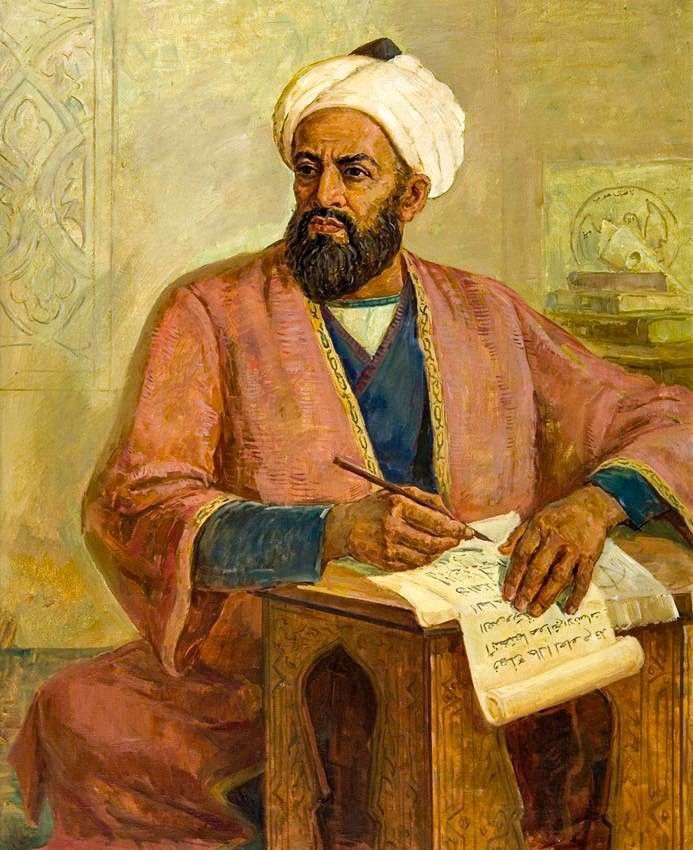
Al-Ghazali was born in Tus, in the Khorasan region of what is now northeastern Iran. His birth is traditionally dated to 1058 CE, although some modern scholarship places it slightly earlier. He grew up during the Seljuk period, when institutions of learning and debates concerning law, theology, philosophy, and religious authority occupied an important place in the intellectual life of the Islamic world.
He studied the Islamic religious sciences in Tus and Jurjan before continuing his education at Nishapur under the influential theologian and jurist Imam al-Haramayn al-Juwayni. His education gave him a sophisticated grounding in Islamic law (fiqh), theology (kalam), dialectical argument, and other disciplines that would later shape his philosophical writings.
Following al-Juwayni's death, Al-Ghazali entered the intellectual circle associated with the Seljuk vizier Nizam al-Mulk. His scholarly reputation grew rapidly, and in 1091 he was appointed to teach at the prestigious Nizamiyya madrasa in Baghdad, where he became one of the most prominent scholars of his generation.
According to his own later account, Al-Ghazali underwent a profound intellectual and spiritual crisis around 1095 CE. He questioned the reliability of the paths through which different groups claimed to attain certainty and eventually abandoned his prestigious position in Baghdad, beginning a period of travel, withdrawal, reflection, and intensive spiritual practice.
He spent time in places including Damascus and Jerusalem and later performed the pilgrimage before eventually returning to his native region. In 1106 he resumed teaching at the Nizamiyya in Nishapur, but his later life remained deeply shaped by the conviction that intellectual learning required ethical and spiritual transformation. He died in Tus in 1111 CE.
Al-Ghazali's Deliverance from Error
Deliverance from Error (al-Munqidh min al-Dalal) is one of Al-Ghazali's most personal and philosophically important works. Written late in his life, it presents an account of his search for certainty and his examination of the principal intellectual and religious movements that claimed to possess the truth.
Al-Ghazali begins by describing his concern with the problem of certain knowledge. He distinguishes genuine certainty from beliefs accepted merely through custom, authority, or inherited tradition and recounts how he subjected both sensory knowledge and rational principles to a radical examination.
The work examines several groups and intellectual approaches, including the theologians of kalam, the philosophers, the Isma'ili advocates of authoritative teaching, and the Sufis. Al-Ghazali does not simply dismiss every contribution of these traditions; instead, he evaluates what he regarded as their particular strengths and limitations in the search for truth.
He ultimately presents Sufism as the path that united intellectual understanding with disciplined practice and direct spiritual experience. For Al-Ghazali, some forms of knowledge cannot be acquired merely by studying arguments; they require the transformation of the person who seeks them.
Deliverance from Error therefore remains important both as a philosophical reflection on skepticism and certainty and as an account of the relationship between intellectual inquiry and spiritual life. Comparisons with later Western thinkers can be illuminating, but Al-Ghazali's argument remains rooted in the distinctive theological, philosophical, and mystical traditions of medieval Islam.
What Is The Incoherence of the Philosophers?
The Incoherence of the Philosophers (Tahafut al-Falasifa) is Al-Ghazali's best-known philosophical critique. In twenty discussions, he examines teachings associated with the falasifa, the Arabic philosophical tradition that had developed through engagement with Aristotle, Neoplatonism, and other strands of Greek philosophy.
The principal philosophical positions discussed in the work are associated especially with Avicenna and his followers, although Al-Farabi also forms part of the intellectual background. Al-Ghazali's aim was not to refute every discipline called philosophy but to challenge particular metaphysical doctrines that he believed the philosophers had failed to establish demonstratively.
His method is especially significant because he engages closely with philosophical argument. He reconstructs and analyzes the reasoning of his opponents, often employing logical and dialectical methods that were themselves shaped by the philosophical tradition he was criticizing.
Among the most important questions are the eternity of the world, divine knowledge, causation, the nature of the soul, and bodily resurrection. Al-Ghazali argues that many philosophical conclusions presented as demonstratively certain are, in fact, open to serious objection and cannot claim the level of proof their defenders demand.
He regarded three doctrines in particular as incompatible with core Islamic teachings: the doctrine of a pre-eternal world, a particular philosophical account of God's knowledge of individual events, and the denial of bodily resurrection. The work became one of the central texts in the history of Islamic philosophy and provoked major responses from later thinkers.
Al-Ghazali and Avicenna: A Philosophical Confrontation
Al-Ghazali's critique of Avicenna forms a major part of the intellectual background of The Incoherence of the Philosophers. Avicenna had developed one of the most systematic philosophical frameworks of the medieval Islamic world, combining Aristotelian concepts with a distinctive metaphysics of necessity, causation, and emanation.
Al-Ghazali challenged the claim that several central Avicennan doctrines had been established by strict demonstration. He questioned arguments for the eternity of the world and objected to philosophical accounts that appeared to restrict divine freedom by making the structure of the universe follow from necessary causal principles.
He also criticized the philosophical treatment of divine knowledge. The debate concerns difficult questions about how an eternal and unchanging God knows particular events that occur within time, and Al-Ghazali believed that the philosophers' explanations failed to preserve doctrines required by Islamic revelation.
The disagreement was therefore not merely a conflict between reason and religion. Both sides employed highly sophisticated rational arguments, but they disagreed about what reason could prove, how metaphysical claims should be demonstrated, and how philosophical conclusions should relate to revelation.
This confrontation became one of the defining debates of medieval Islamic thought. Later philosophers, most famously Averroes (Ibn Rushd), wrote detailed responses to Al-Ghazali and defended the philosophical tradition against many of his objections.
Al-Ghazali's Theory of Causation and Occasionalism

One of Al-Ghazali's most philosophically significant arguments concerns causation. In The Incoherence of the Philosophers, he challenges the claim that the connection between what we call a cause and what we call an effect is logically or metaphysically necessary.
His famous example concerns fire and cotton. When fire touches cotton, burning normally follows, but Al-Ghazali argues that observation shows only the regular conjunction of these events. It does not by itself prove that the fire possesses an independently necessary power that makes burning unavoidable.
This argument is often associated with occasionalism, the view that God is the ultimate cause of events and that created things do not exercise independent causal power in the way many philosophers supposed. Al-Ghazali's position is closely connected with Ash'arite theological concerns about divine omnipotence and the possibility of miracles.
Modern scholarship, however, debates whether Al-Ghazali should be understood as an uncompromising or global occasionalist. Some interpreters argue that his central purpose was more specifically to deny necessary causal connection and defend the possibility of divine action and miracles, while leaving room for more than one account of secondary causation.
Whatever interpretation is adopted, his analysis became one of the most influential medieval discussions of causality. It raises enduring philosophical questions about what observation can establish, whether causal relations are necessary, and how divine action relates to the regularity of the natural world.
Al-Ghazali's Use of Logic
Although Al-Ghazali is often described as a critic of philosophy, he did not reject logic itself. He regarded logical reasoning as an important instrument for examining arguments and distinguishing valid demonstrations from unsupported claims.
Al-Ghazali helped introduce and normalize the use of Aristotelian logical methods within parts of Islamic theological and legal scholarship. He wrote specifically about logical method and argued that disagreement with particular philosophical doctrines did not require rejecting the formal tools used to reason about them.
This makes his critique distinctive. Al-Ghazali often confronted the philosophers through careful analysis of their own arguments rather than through an appeal to authority alone. His objection was frequently directed at the claim that a particular conclusion had been established with absolute philosophical certainty.
His acceptance of logical demonstration also contributed to the later development of intellectual discourse in Islamic theology. The history of his influence therefore complicates the popular image of Al-Ghazali as an opponent of rational inquiry.
Al-Ghazali's disagreement with Avicenna and the falasifa was primarily about the scope, certainty, and proper use of philosophical reasoning, particularly when it addressed metaphysical questions connected with revelation, creation, divine action, and the human destiny.
Al-Ghazali and Sufi Mysticism
Following his intellectual and spiritual crisis, Al-Ghazali devoted increasing attention to Sufism, the diverse traditions of Islamic spirituality concerned with the purification of the soul, knowledge of God, and the transformation of human character.
In Deliverance from Error, he describes the Sufis as combining theoretical knowledge with disciplined practice. Reading about spiritual transformation was not sufficient; the seeker had to engage in ethical discipline, self-examination, worship, and practices aimed at overcoming the obstacles created by the passions and the ego.
Al-Ghazali did not present Sufism as a rejection of Islamic law or intellectual inquiry. Instead, his mature thought sought to integrate law, theology, ethics, and spirituality into a more complete account of religious life.
For him, reason could establish and clarify many truths, but direct spiritual realization involved a different dimension of human experience. He often used the language of the heart, purification, and inner transformation to explain why theoretical knowledge alone does not necessarily make a person virtuous or spiritually awakened.
Al-Ghazali's writings played an important role in bringing forms of Sufi spirituality into closer conversation with mainstream Sunni scholarship. His influence on later Islamic ethics, devotional practice, theology, and mystical thought became immense.
Al-Ghazali's Alchemy of Happiness
The Alchemy of Happiness (Kimiya-yi Sa'adat) is one of Al-Ghazali's important works on ethics and spiritual development. Written in Persian, it presents many of the central concerns of his mature religious thought in a form intended for a broader audience.
The work emphasizes self-knowledge as a necessary starting point for understanding the human condition. A person must recognize the different powers and desires within the soul and learn how they can either assist or obstruct the pursuit of a genuinely good and fulfilled life.
Al-Ghazali connects knowledge of the self with knowledge of God, the temporary nature of worldly life, and the ultimate purpose of human existence. Ethical development is therefore not merely a matter of obeying external rules but involves the gradual reordering and purification of the inner life.
The metaphor of alchemy expresses this idea of transformation. Just as alchemy was traditionally imagined as changing a base substance into something precious, spiritual discipline transforms the human soul through knowledge, virtue, repentance, and the cultivation of proper character.
Together with his larger works on religious ethics, the book demonstrates Al-Ghazali's concern with making philosophical, theological, and spiritual ideas relevant to the practical formation of human beings rather than treating knowledge as an exclusively theoretical achievement.
Al-Ghazali's Epistemology and the Problem of Certainty
Al-Ghazali's epistemology is shaped by a persistent concern with the problem of certainty. He asks what distinguishes genuinely certain knowledge from beliefs that merely appear convincing because they have been inherited, repeatedly observed, or accepted from trusted authorities.
In his autobiographical writings, Al-Ghazali describes questioning the reliability of sense perception. The senses can sometimes mislead us, and what appears certain at one level of experience may later be shown to be mistaken when judged from another perspective.
He also subjected rational knowledge to critical examination, asking whether human reason itself could justify all the principles upon which it depends. His discussion should not be understood as a permanent rejection of reason; rather, it investigates the limits of different forms of human knowing.
Al-Ghazali eventually describes certainty as restored through a form of divine illumination and spiritual transformation rather than by a single philosophical proof alone. This does not make argument useless, but places intellectual reasoning within a broader account of the human capacity to know.
His reflections have often been compared with later philosophical discussions of skepticism and the search for secure foundations of knowledge. Such comparisons can be useful, but Al-Ghazali's epistemology must ultimately be understood within his own Islamic theological and mystical framework.
Major Works of Al-Ghazali
Al-Ghazali was an extremely prolific author whose surviving writings cover theology, law, logic, philosophy, ethics, spirituality, and religious practice. The authorship and authenticity of some works attributed to him have been debated, but several major texts are firmly associated with his intellectual legacy.
- The Incoherence of the Philosophers — Al-Ghazali's major critique of Avicenna and Al-Farabi's philosophical positions.
- Deliverance from Error — Al-Ghazali's spiritual autobiography describing his search for certainty.
- The Alchemy of Happiness — An accessible presentation of his mature ethical and spiritual teaching.
- The Revival of the Religious Sciences — Al-Ghazali's vast work on Islamic law, theology, ethics, and spiritual practice.
- The Niche of Lights — A shorter mystical and philosophical work concerned with divine light and knowledge of God.
- Moderation in Belief — A theological work presenting Al-Ghazali's positions in systematic Islamic theology (kalam).
Al-Ghazali's Main Philosophical Ideas
1. Philosophy's Claims Are Not Certain
Al-Ghazali argued that several central claims of Peripatetic philosophy, particularly concerning metaphysics and the eternity of the world, had not been established with the demonstrative certainty claimed by their defenders.
2. Causation Does Not Require Necessary Connection
Al-Ghazali challenged the claim that observation proves an inherently necessary connection between causes and effects, emphasizing divine power and the possibility that the regular order of nature could be otherwise.
3. Logic Is a Valuable Intellectual Tool
Al-Ghazali accepted the importance of logical reasoning and demonstration, using philosophical methods to examine and criticize philosophical claims rather than rejecting rational inquiry itself.
4. Spiritual Experience Has an Epistemic Role
Al-Ghazali concluded that disciplined spiritual practice could provide a form of realization that theoretical argument alone could not produce, especially in the seeker's relationship with God.
5. Knowledge Requires Ethical Transformation
In his mature works, Al-Ghazali emphasized that genuine knowledge is connected with the cultivation of character, purification of the soul, and practical transformation rather than the accumulation of information alone.
Al-Ghazali's Influence and Legacy
Al-Ghazali's influence on Islamic philosophy, theology, law, ethics, and spirituality was immense. The Incoherence of the Philosophers became one of the most famous critiques of the falasifa and permanently shaped later debates about the relationship between philosophy and revelation.
It is sometimes claimed that Al-Ghazali "destroyed" Islamic philosophy, but this description is historically misleading. Philosophical inquiry continued after him in the Islamic world, and traditions of Avicennan, Illuminationist, Andalusian, and later philosophical thought continued to develop in different regions.
His critique did not go unanswered. Averroes (Ibn Rushd) wrote The Incoherence of the Incoherence (Tahafut al-Tahafut), a major response defending philosophical reasoning and challenging Al-Ghazali's criticisms of the philosophers.
Beyond philosophy, Al-Ghazali's synthesis of law, theology, ethics, and spirituality profoundly influenced later Sunni intellectual life. His great work The Revival of the Religious Sciences became one of the most widely read works concerned with the ethical and spiritual dimensions of Islamic practice.
His ideas also entered wider intellectual debates concerning causation, certainty, miracles, and the limits of human reason. Al-Ghazali therefore remains a major figure not simply because he criticized philosophy, but because he transformed the terms on which philosophical, theological, and spiritual questions were discussed.
Al-Ghazali's Philosophy Explained Simply
Al-Ghazali can be understood as a scholar who asked a fundamental question: How can we know that what we believe is actually true? He used philosophical argument to examine the limits of philosophy and eventually concluded that intellectual knowledge must be joined with ethical and spiritual transformation.
- Did Al-Ghazali reject reason? No. He used logical argument extensively, but denied that philosophical reasoning could demonstrate every metaphysical truth with absolute certainty.
- What did he think about cause and effect? He challenged the idea that causes and effects are necessarily connected and argued that the regularity of nature does not limit God's power to act differently.
- Why did he turn to Sufism? According to his own account, he concluded that spiritual discipline and direct experience were necessary for a kind of realization that theoretical study alone could not provide.
- Was he against Avicenna specifically? Avicenna was the principal philosophical target behind many arguments in The Incoherence of the Philosophers, although Al-Ghazali's critique addressed the wider tradition of the falasifa.
- Did his critique end Islamic philosophy? No. His work profoundly changed later debates, but philosophical traditions continued to develop throughout the Islamic world.
Why Is Al-Ghazali Important in the History of Philosophy?
Al-Ghazali is important because he produced one of the most rigorous and influential critiques of philosophical metaphysics within the Islamic intellectual tradition. He directly challenged claims made by the Avicennan philosophical tradition while demonstrating a deep familiarity with its methods and arguments.
His discussions of causation, certainty, skepticism, logic, divine action, and the limits of philosophical demonstration remain central to the study of Islamic philosophy and have also become important in comparative discussions across the wider history of philosophy.
His importance is also theological and ethical. Al-Ghazali developed a powerful synthesis in which law, theology, intellectual reasoning, and spiritual practice each possessed an important role in the formation of the human being.
For this reason, he should not be understood merely as a philosopher who opposed philosophy. Al-Ghazali was himself a sophisticated participant in philosophical debate who transformed the discussion of what reason can know and where its limits should be recognized.
Frequently Asked Questions About Al-Ghazali
Who was Al-Ghazali?
Al-Ghazali was an eleventh- and early twelfth-century Islamic jurist, theologian, philosopher, and mystical thinker. He is best known for The Incoherence of the Philosophers, his reflections on certainty in Deliverance from Error, and his influential synthesis of Islamic theology, ethics, and Sufi spirituality.
What is Al-Ghazali known for?
Al-Ghazali is known for The Incoherence of the Philosophers, his critique of Avicennan metaphysics, his influential discussion of causation, his spiritual autobiography Deliverance from Error, and his lasting influence on Islamic theology, ethics, law, and Sufism.
Did Al-Ghazali destroy Islamic philosophy?
No. Al-Ghazali's critique profoundly affected the standing of some forms of Peripatetic philosophy, particularly within parts of Sunni intellectual life, but philosophical inquiry continued and developed in many different traditions and regions of the Islamic world.
What is The Incoherence of the Philosophers?
The Incoherence of the Philosophers is Al-Ghazali's major critique of twenty philosophical teachings associated principally with Avicenna and the falasifa. He argues that many of these teachings are not demonstratively proven and condemns three doctrines as incompatible with core Islamic beliefs.
What is Al-Ghazali's philosophy of causation?
Al-Ghazali argued against the claim that causes and effects are necessarily connected in a way that observation can prove. His discussion is often associated with occasionalism and emphasizes God's freedom and the possibility that the regular course of nature can be interrupted.
Why did Al-Ghazali turn to Sufism?
According to his own account in Deliverance from Error, Al-Ghazali underwent an intellectual and spiritual crisis that led him to conclude that disciplined Sufi practice and direct spiritual experience were essential to attaining the kind of certainty and transformation he sought.
What is the difference between Al-Ghazali and Avicenna?
Avicenna developed a systematic philosophical framework drawing upon Aristotelian and Neoplatonic traditions, while Al-Ghazali critically examined several of its central metaphysical claims and questioned whether they could be established by demonstration. Their disagreement concerned causation, creation, divine knowledge, and the proper limits of philosophical reasoning.
Related Islamic and Arabic Philosophers
Explore other major thinkers in the development of Islamic philosophy, Arabic philosophy, Persian philosophy, and medieval intellectual history.
Related Areas of Philosophy
Al-Ghazali's work connects the history of Islamic philosophy with epistemology, metaphysics, ethics, philosophy of religion, and the critique of Peripatetic philosophy.
Why Al-Ghazali Still Matters
Al-Ghazali occupies a pivotal position in the history of Islamic philosophy and theology. His rigorous critique of Avicenna and Al-Farabi in The Incoherence of the Philosophers reshaped the relationship between philosophy and Islamic orthodoxy, while his turn toward Sufism helped bring mystical practice into the mainstream of Sunni religious life.
His arguments concerning causation, certainty, and the limits of philosophical demonstration remain widely discussed, and his direct confrontation with Avicenna's system produced one of the most consequential philosophical debates of the medieval period, continued a century later by Averroes.
Understanding Al-Ghazali also helps explain the intellectual background against which later Islamic philosophy, theology, and Sufi thought continued to develop.
Explore Great Philosophers