Who Was Ibn Arabi?
Ibn Arabi (Muḥyī al-Dīn Muḥammad ibn ʿAlī ibn al-ʿArabī, 1165–1240 CE) was an Andalusian Muslim mystic, theologian, philosopher in the broad sense, and extraordinarily prolific writer. Born in Murcia in al-Andalus, he developed one of the most extensive and influential bodies of thought in the history of Islamic intellectual culture, addressing Sufism, metaphysics, theology, spirituality, knowledge, and the nature of reality.
Ibn Arabi is often known as al-Shaykh al-Akbar, meaning "the Greatest Master," a title given to him in later Islamic tradition. His writings brought together spiritual experience, interpretation of revelation, and rigorous reflection on philosophical and theological questions. His two most famous works, al-Futūḥāt al-Makkiyya (The Meccan Openings) and Fuṣūṣ al-Ḥikam (The Ringstones of Wisdom), became foundational texts for generations of later Sufi thinkers.
His thought explores fundamental questions about God, existence, creation, human consciousness, divine revelation, imagination, and spiritual knowledge. Central concepts in his vocabulary include wujūd (being or existence), tajallī (divine self-disclosure), tawḥīd (divine unity), the Divine Names, and the idea of the Perfect Human, or al-insān al-kāmil.
Ibn Arabi's philosophy is often associated with the expression waḥdat al-wujūd, commonly translated as "the Unity of Being" or "Oneness of Existence." However, this label requires caution: Ibn Arabi himself did not use the expression as the formal name of a philosophical doctrine, and later thinkers interpreted his ideas in different ways. What remains central to his thought is the relationship between the absolute reality of God and the diverse, changing world in which human beings experience divine manifestation.
Ibn Arabi: Quick Facts
- Full name — Muḥyī al-Dīn Muḥammad ibn ʿAlī ibn al-ʿArabī
- Known as — Ibn Arabi, Ibn al-Arabi, al-Shaykh al-Akbar
- Born — 1165 CE
- Born in — Murcia, al-Andalus
- Died — 1240 CE
- Died in — Damascus
- Tradition — Sufism and Islamic intellectual thought
- Major philosophical subjects — Metaphysics, ontology, theology, epistemology, mysticism, imagination, spirituality, and human perfection
- Major concepts — Wujūd, tawḥīd, tajallī, divine names, Perfect Human, and wahdat al-wujūd
- Major work — Fusus al-Hikam
- Major encyclopedic work — Al-Futuhat al-Makkiyya
Ibn Arabi's Early Life and Historical Background
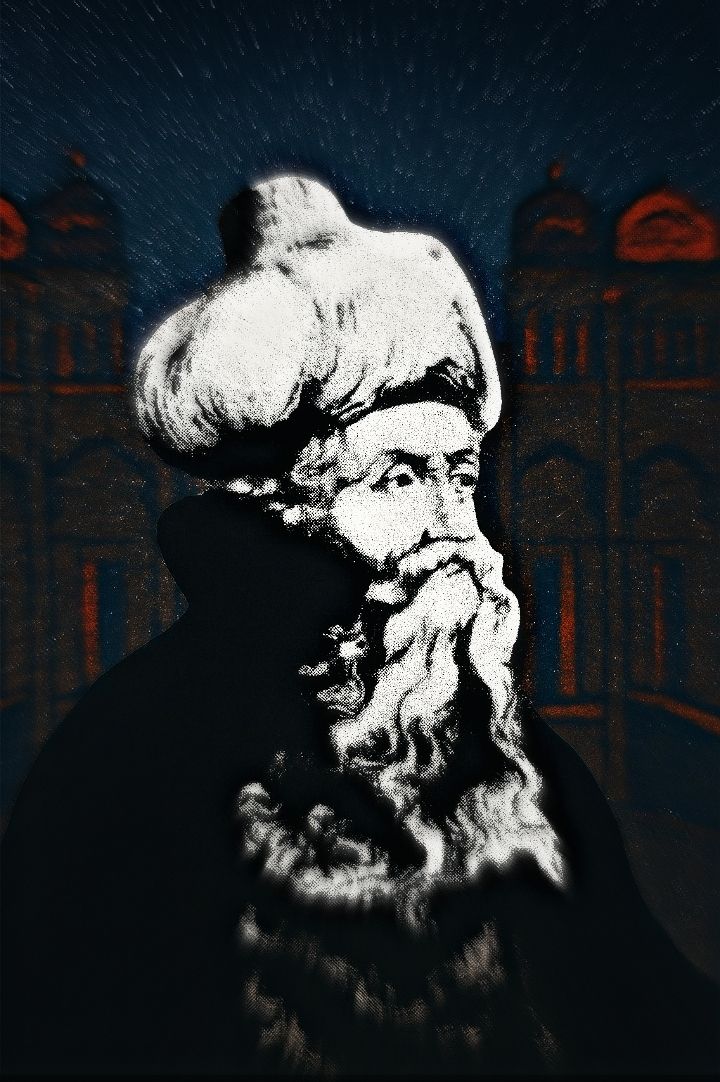
Ibn Arabi was born in Murcia in 1165, in Muslim al-Andalus, and grew up during a period of intense intellectual, religious, and political activity in the western Islamic world. His family later moved to Seville, an important cultural center, where he received a broad education and encountered scholars from several branches of Islamic learning, including law, theology, Qur'anic studies, and Sufism.
During his youth, Ibn Arabi underwent experiences that he later understood as profound spiritual openings. These experiences became central to his understanding of spiritual knowledge, divine revelation, imagination, and the relationship between the human being and God. His writings repeatedly distinguish between knowledge acquired through study and knowledge realized through direct spiritual experience and transformation.
Ibn Arabi eventually left al-Andalus and traveled extensively through North Africa and the eastern Islamic world. His journeys brought him into contact with scholars, Sufi teachers, jurists, theologians, and philosophers, while his pilgrimage to Mecca became especially important for the development of his intellectual and spiritual project.
After many years of travel and writing, Ibn Arabi eventually settled in Damascus, where he continued teaching and composing major works until his death in 1240. His long life across al-Andalus, North Africa, Arabia, and the eastern Islamic world gave his thought an unusually broad intellectual setting and helped shape the vast scope of his writings.
Ibn Arabi and Sufism
Sufism is central to Ibn Arabi's intellectual and spiritual project. His writings investigate the transformation of the human being through spiritual practice, contemplation, ethical discipline, knowledge, and realization. For Ibn Arabi, the purpose of the spiritual path is not simply the accumulation of religious information but a deepening awareness of reality and of humanity's relationship with God.
Ibn Arabi's approach to Sufi thought is unusually comprehensive. He connected mystical experience with Qur'anic interpretation, prophetic tradition, theology, metaphysics, ethics, cosmology, and discussions of human knowledge. His works therefore move constantly between spiritual instruction and complex reflection on the nature of existence, language, consciousness, and divine reality.
His Sufism cannot be reduced simply to private mystical experience or emotional devotion. Ibn Arabi developed a sophisticated account of how human beings perceive reality, how divine self-disclosure occurs, and how spiritual realization can transform a person's understanding of God, the self, and the world.
For this reason, later scholars have often described his intellectual legacy as an important synthesis of Sufism, Islamic theology, philosophy, and spiritual interpretation. His writings show that mystical thought in the Islamic tradition could involve rigorous reflection on metaphysics and knowledge as well as spiritual practice.
What Was Ibn Arabi's Philosophy?
Ibn Arabi's philosophy explores the relationship between God, existence, knowledge, creation, and human consciousness. Although modern readers often call him a philosopher, Sufi, or mystic, his writings do not fit neatly into only one intellectual category. He drew upon several traditions of Islamic learning and integrated them into a distinctive and highly original vision of reality.
His thought combines philosophical terminology with Islamic theology, Qur'anic interpretation, prophetic tradition, mystical experience, and Sufi concepts. The result is a vision centered on the absolute reality of God and the many ways in which divine reality becomes manifest, concealed, interpreted, and known within human experience and the created world.
Important themes in Ibn Arabi's philosophy include existence, divine unity, God's names and attributes, self-disclosure, imagination, spiritual knowledge, human perfection, and the relationship between the One and the Many. These themes are closely connected rather than separate parts of a rigid philosophical system.
Ibn Arabi's thought is therefore best understood as a vast metaphysical and spiritual inquiry into reality itself. He repeatedly asks how the infinite can be known through finite forms, how divine unity relates to the multiplicity of creation, and how human beings can become capable of recognizing deeper dimensions of truth.
Ibn Arabi's Metaphysics and the Nature of Reality
Metaphysics is one of the most important areas of Ibn Arabi's thought. He uses the Arabic term wujūd, commonly translated as existence or being, to investigate the relationship between God and everything that appears in the cosmos. The term also carries associations with finding, awareness, and presence, giving it a wider meaning than a purely abstract philosophical concept.
For Ibn Arabi, God is the ultimate and absolute Reality, often described as al-Haqq, "the Real." Created things do not possess existence independently in the same way as the divine Reality. Their existence is dependent, limited, and conditioned, whereas God alone is absolute and not dependent upon anything beyond Himself.
At the same time, the world is not simply meaningless or disconnected from God. Created forms can function as places in which divine names and attributes become manifest. This does not mean that God can be reduced to created things; rather, Ibn Arabi seeks to explain how divine transcendence and divine manifestation can both be affirmed.
His metaphysics therefore examines how unity and multiplicity can be understood together. God remains incomparable and beyond every finite definition, yet divine reality is disclosed through the endlessly varied forms of creation. This relationship between transcendence, manifestation, unity, and diversity lies at the center of Ibn Arabi's philosophical vision.
What Does Wujud Mean in Ibn Arabi's Philosophy?
The Arabic term wujūd can be translated as "existence," "being," or, depending on context, "finding" and "becoming aware." The term had already become central to Islamic philosophical discussion before Ibn Arabi, particularly through the influence of thinkers such as Avicenna, but Ibn Arabi employed it in ways that also reflected the language of Sufi realization.
Ibn Arabi's use of wujūd therefore combines metaphysical reflection with questions of awareness and direct realization. Existence is not treated merely as an abstract category that can be studied from a distance; it is also connected with presence, perception, consciousness, and the discovery of reality through spiritual experience.
In this framework, God is the ultimate Reality upon which all created existence depends. Everything other than God possesses a limited and dependent mode of being. The distinction between the absolute Reality of God and the contingent forms of the world is essential for understanding Ibn Arabi's discussions of divine unity.
This makes Ibn Arabi's philosophy of existence closely connected with his philosophy of knowledge. To understand reality is not simply to possess information about individual things but to recognize their dependence, limitation, and relationship to the Real. Metaphysical knowledge consequently becomes connected with spiritual realization.
What Is Wahdat al-Wujud in Ibn Arabi's Thought?
Wahdat al-wujud is usually translated as "Unity of Being" or "Oneness of Existence" and is one of the expressions most frequently associated with Ibn Arabi. It has become a widely used label for interpreting aspects of his metaphysics, especially his emphasis on God as the ultimate Reality and source of all dependent existence.
The association, however, requires an important qualification. Ibn Arabi did not use wahdat al-wujud as the name of a formal, systematic doctrine in the way later writers and modern interpreters sometimes suggest. The expression became especially prominent in discussions and controversies surrounding his intellectual legacy.
The broader ideas associated with the term concern the relationship between God's absolute reality and the dependent existence of the cosmos. Ibn Arabi emphasizes divine unity while also accounting for the immense diversity of created forms through which divine names and attributes become manifest.
It is therefore misleading to treat wahdat al-wujud as a simple statement that "everything is God." Ibn Arabi repeatedly maintains distinctions between the absolute Reality and finite, limited creation, while exploring the complex ways in which creation depends upon and discloses the Real.
Ibn Arabi's Philosophy of God and Divine Unity
The concept of divine unity, or tawḥīd, is fundamental to Ibn Arabi's understanding of reality. God is the Real, the ultimate and absolute source upon which everything else depends. No created thing possesses the same independent and unlimited reality that belongs to God.
Ibn Arabi emphasizes both God's incomparability and God's self-disclosure. God cannot be contained within any created form, concept, image, or definition, yet divine names and attributes become manifest throughout creation. Human beings therefore encounter signs of the divine without ever exhausting or comprehending the divine Essence itself.
This tension between transcendence and manifestation is one of the central features of Ibn Arabi's metaphysics. God is both beyond every limited description and known through the countless relationships in which divine names become manifest within the cosmos.
Divine unity does not therefore erase the diversity of the world. Rather, Ibn Arabi investigates how an immense multiplicity of forms can depend upon one ultimate Reality. His philosophy continually moves between the unity of the Real and the diversity through which that reality becomes disclosed to finite beings.
Ibn Arabi and the Divine Names
The divine names are essential to Ibn Arabi's explanation of how God is known through creation. Names such as the Merciful, the Knowing, the Powerful, the Forgiving, and the Just describe different ways in which human beings understand divine qualities and the relationships between divine reality and the created world.
Ibn Arabi does not treat the divine names as merely verbal labels. Each name indicates a particular relationship, quality, or mode of manifestation. The many names therefore help explain how one divine Reality can be encountered through a great diversity of forms, events, relationships, and perspectives.
The multiplicity of divine names also helps Ibn Arabi address the problem of unity and diversity. The world contains countless differences, yet these differences do not imply the existence of multiple independent ultimate realities. Created things remain dependent upon the one Real.
Human knowledge is also shaped by this multiplicity. Every person and every perspective is limited, and no single finite viewpoint can exhaust the richness of divine reality. Spiritual maturity therefore involves recognizing both the truth available within particular forms and the limits of every individual perspective.
What Is Tajalli in Ibn Arabi's Philosophy?
Tajallī, often translated as divine self-disclosure or manifestation, is an important concept in Ibn Arabi's account of reality. It describes the ways in which divine names and attributes become disclosed or manifest without implying that the infinite divine Essence can be completely contained within any finite form.
The world can therefore be understood as a field of diverse manifestations. Every created thing has its own limitations, characteristics, and perspective, yet each remains dependent upon the divine Reality. Different forms can disclose different dimensions of the divine names while simultaneously concealing other dimensions.
Tajallī helps Ibn Arabi explain why reality is both unified and endlessly diverse. The one Real is not encountered through only one form of manifestation; rather, the cosmos displays an immense variety of forms, relationships, and perspectives through which divine names become knowable.
Tajallī therefore connects Ibn Arabi's metaphysics with his spirituality. Knowledge of reality involves learning to recognize divine signs and manifestations without confusing the created form with the unlimited divine Reality that transcends every particular form.
What Is the Perfect Man in Ibn Arabi's Philosophy?
The Perfect Human, or al-insān al-kāmil, is one of the most important ideas associated with Ibn Arabi's thought. The perfected human being represents the fullest realization of human potential and an exceptional capacity to recognize and reflect the diversity of divine names within the limits of human existence.
Human beings occupy a distinctive position because they can potentially bring together different levels and dimensions of reality. The Perfect Human is therefore not merely a morally flawless person. The concept concerns spiritual realization, comprehensive knowledge, and the ability to recognize relationships that remain hidden to a more limited consciousness.
In Ibn Arabi's thought, human perfection is closely connected with knowledge, self-realization, divine revelation, and the relationship between God and creation. The perfected person becomes capable of responding to reality in a more complete and balanced way rather than being confined to one narrow perspective.
The idea also has an important cosmological dimension. The Perfect Human can be understood as a microcosmic figure in whom different dimensions of existence become gathered and reflected, making human perfection central to Ibn Arabi's wider account of creation and the purpose of spiritual realization.
Ibn Arabi's Philosophy of Imagination
Imagination occupies a distinctive position in Ibn Arabi's philosophy. He does not simply treat imagination as fantasy or something unreal. Instead, imagination can function as an intermediate mode or realm through which realities that are not directly accessible to ordinary sense perception become present in forms, images, symbols, and visions.
Ibn Arabi's understanding of imagination is connected with dreams, visions, symbols, revelation, and spiritual perception. It helps explain how realities that are neither simply material nor merely abstract can become intelligible to human consciousness through imaginal forms.
This intermediate character is especially important. Ibn Arabi often explores relationships between the visible and the invisible, the sensible and the intelligible, and form and meaning. Imagination provides a way of understanding how these apparently separate dimensions can become connected without being reduced to one another.
The concept is therefore central to his account of mystical knowledge. The imaginal dimension allows symbolic realities to become accessible to human consciousness, but interpretation remains necessary because a spiritual image cannot always be understood merely according to its literal or outward appearance.
Ibn Arabi's Philosophy of Knowledge and Mystical Experience
Knowledge in Ibn Arabi's thought is not limited to rational information or conceptual argument. He distinguishes different modes of knowing, including knowledge acquired through study and reasoning and deeper forms of realization associated with direct spiritual experience, unveiling, and transformation of the knower.
Rational thought remains important, and Ibn Arabi makes extensive use of intellectual analysis and theological argument. However, he argues that conceptual reasoning alone cannot exhaust the nature of divine reality. The infinite cannot be completely contained within the finite concepts through which human beings ordinarily think.
Spiritual realization therefore requires more than acquiring new information. The person who seeks knowledge must also undergo a transformation of awareness and character. Knowledge becomes closely connected with the condition of the knower and with the capacity to perceive dimensions of reality that remain concealed from an unprepared consciousness.
This makes epistemology closely connected with mysticism in Ibn Arabi's philosophy. To know reality is, in an important sense, also to participate in a process of spiritual transformation through which the human being becomes capable of recognizing deeper relationships between the self, creation, and the Real.
Ibn Arabi's Philosophy of the Heart
The heart, or qalb, is an important symbol and spiritual concept in Ibn Arabi's writings. It represents a mode of human consciousness capable of receiving and responding to different dimensions of knowledge. The heart is not merely treated as a physical organ but as a center of spiritual perception and understanding.
Ibn Arabi connects the heart with the ability to recognize both divine transcendence and divine manifestation. A spiritually developed heart is not confined to one rigid perspective but can become receptive to the diverse ways in which reality is disclosed through different names, forms, and relationships.
This flexibility is part of Ibn Arabi's broader understanding of spiritual knowledge. Human consciousness can become increasingly capable of recognizing complexity without losing sight of divine unity, allowing the knower to move beyond simplistic oppositions between apparently conflicting dimensions of reality.
The philosophy of the heart therefore complements Ibn Arabi's metaphysics and epistemology. Since divine reality cannot be fully captured by one limited concept, spiritual knowledge requires a form of receptivity capable of responding to the richness and multiplicity of divine self-disclosure.
Ibn Arabi and the Philosophy of Divine Love
Divine love is another major theme in Ibn Arabi's writings. Love connects God, human beings, creation, and the desire to know reality. It appears in his metaphysical reflections, spiritual discussions, and poetry, where the language of love often carries symbolic meanings that extend beyond ordinary human emotion.
For Ibn Arabi, love is connected with desire, attraction, beauty, knowledge, and manifestation. Human beings seek what they recognize as beautiful or meaningful, while spiritual longing can direct the person toward a deeper recognition of the Real that lies beyond attachment to merely limited forms.
Love therefore has both mystical and philosophical significance. It is not simply an emotion experienced privately by an individual but can be understood as part of the movement through which the human being seeks knowledge, meaning, and spiritual realization.
Ibn Arabi's writings also emphasize that love takes many forms. Because divine reality cannot be exhausted by one image or object, the experience of love can become a means of reflecting on the relationship between particular forms of beauty and the ultimate source of all being and value.
Ibn Arabi's Philosophy of Religious Diversity
Ibn Arabi's writings contain complex discussions of religious diversity, revelation, interpretation, and the different ways in which human beings encounter the divine. His emphasis on the diversity of divine self-disclosure has made his work especially important in modern discussions of religious pluralism and comparative religion.
His thought allows for the possibility that divine reality may be encountered through different forms, symbols, languages, and perspectives. Human understanding is always limited, while the divine Reality exceeds every finite concept through which people attempt to describe it.
At the same time, Ibn Arabi should not simply be presented as a modern advocate of unrestricted religious pluralism. His writings remain deeply rooted in Islamic theology, Qur'anic interpretation, prophetic tradition, and the conceptual world of medieval Sufism.
The lasting philosophical importance of this aspect of his thought lies in its challenge to narrow conceptions of truth and knowledge. Ibn Arabi asks how one absolute Reality can be encountered through diverse forms without making all perspectives identical or denying the importance of particular religious traditions.
Ibn Arabi, the Qur'an, and Islamic Thought
Ibn Arabi's philosophy cannot be separated from his engagement with the Qur'an and Islamic intellectual tradition. Qur'anic verses, prophetic traditions, theology, jurisprudence, and spiritual interpretation provide the foundation for many of his metaphysical and mystical discussions.
Rather than treating philosophy and religion as completely separate disciplines, Ibn Arabi integrated metaphysical questions with Qur'anic interpretation and spiritual practice. Questions about existence, knowledge, imagination, divine names, and human perfection were therefore explored within a wider religious understanding of revelation and the cosmos.
His method frequently involves moving between the outward and inward dimensions of meaning. A Qur'anic image, narrative, or concept may be examined not only in its immediate meaning but also in relation to broader metaphysical and spiritual realities.
His work consequently represents a distinctive form of Islamic intellectual thought in which philosophy, theology, mysticism, and scriptural interpretation interact continuously. This broad synthesis is one reason why Ibn Arabi remains difficult to classify within a single modern academic category.
Major Works of Ibn Arabi
Ibn Arabi was an exceptionally prolific writer. Hundreds of works and treatises have been attributed to him, although questions of authorship and transmission surround some texts. His writings range from short treatises to vast encyclopedic works and cover subjects including metaphysics, Sufism, theology, Qur'anic interpretation, cosmology, spiritual practice, and poetry.
His two most famous works are Fusus al-Hikam and Al-Futuhat al-Makkiyya. Together they illustrate both the concentrated and encyclopedic dimensions of his intellectual project: the Fusus presents profound reflections through prophetic figures, while the Futuhat explores an extraordinarily broad range of spiritual and intellectual subjects.
- Fusus al-Hikam — Often translated as The Bezels of Wisdom or The Ringstones of Wisdom, this work presents twenty-seven chapters associated with prophetic figures and explores different dimensions of spiritual wisdom.
- Al-Futuhat al-Makkiyya — Often translated as The Meccan Illuminations or The Meccan Revelations, this enormous work brings together discussions of Islamic teachings, mystical experience, metaphysics, cosmology, spiritual practice, and knowledge.
- Tarjuman al-Ashwaq — A famous collection of mystical poetry associated with Ibn Arabi and themes of love, longing, spiritual perception, and symbolic language.
- Kitab al-Isra — A work associated with spiritual journeying and visionary themes within Ibn Arabi's broader mystical writings.
Fusus al-Hikam: The Bezels of Wisdom
Fusus al-Hikam is one of Ibn Arabi's most influential writings and one of the most extensively studied texts in the history of Islamic mysticism. Although relatively concise compared with the enormous Futuhat, the work presents many of the themes that became central to the later interpretation of Ibn Arabi's thought.
The work contains twenty-seven chapters, each associated with a prophetic figure. Through these figures, Ibn Arabi explores different forms of spiritual wisdom and different ways in which divine realities and names become manifest within human history and prophetic experience.
The prophets are therefore not presented merely as historical individuals. Each figure becomes associated with a particular dimension of wisdom, allowing Ibn Arabi to examine the diversity of revelation while maintaining the unity of divine truth.
The text became the subject of numerous commentaries and played a major role in the development of the later Akbarian tradition of Islamic thought. Its dense language and metaphysical complexity have also made it one of the most debated and influential works in the history of Sufi philosophy.
Al-Futuhat al-Makkiyya: The Meccan Illuminations
Al-Futuhat al-Makkiyya, commonly translated as The Meccan Illuminations or The Meccan Revelations, is Ibn Arabi's vast encyclopedic work and one of the most extensive achievements of medieval Islamic intellectual literature.
The work discusses an extraordinary range of subjects, including Qur'anic interpretation, theology, spiritual practice, cosmology, metaphysics, psychology, ethics, ritual, knowledge, and the stages of the mystical path. Its organization reflects the breadth of Ibn Arabi's intellectual interests rather than a simple modern division between separate academic disciplines.
The Futuhat is particularly important because it provides a broad setting for many of Ibn Arabi's most famous concepts. His discussions of divine names, imagination, existence, spiritual realization, human perfection, and cosmology appear within an interconnected vision rather than as isolated philosophical doctrines.
The enormous scope of the work demonstrates why Ibn Arabi's philosophy cannot be reduced to a single idea such as "Unity of Being." His intellectual project brings together many dimensions of Islamic knowledge and repeatedly connects metaphysical understanding with the practical transformation of the human being.
Ibn Arabi's Main Philosophical Ideas
1. God as the Absolute Reality
Ibn Arabi places God, the Real, at the foundation of existence. Everything other than God possesses a dependent and limited mode of being, while divine reality remains absolute, unlimited, and beyond complete comprehension by any finite mind.
2. Unity and Multiplicity
Reality is unified in its ultimate source while appearing as an immense multiplicity of forms, relationships, and manifestations. Ibn Arabi investigates how diversity can be affirmed without treating created things as independent ultimate realities.
3. Divine Self-Disclosure
Through tajallī, divine names and attributes become manifest through the created world. Created forms can disclose aspects of divine reality while remaining finite and incapable of containing the unlimited divine Essence.
4. The Perfect Human
The Perfect Human represents the fullest realization of human spiritual and intellectual potential. This ideal concerns the capacity to recognize diverse dimensions of reality and to reflect divine names in a more complete and balanced form.
5. Imagination and Spiritual Knowledge
Imagination provides an intermediate mode through which symbolic, spiritual, and invisible realities can become accessible to human consciousness. Dreams, visions, and symbolic forms therefore possess an important place within Ibn Arabi's account of knowledge.
6. Divine Love
Love is closely connected with the relationship between God, creation, beauty, and the human search for knowledge and realization. It can function as a movement through which the human being is drawn beyond limited attachments toward a deeper recognition of the Real.
Ibn Arabi and Al-Ghazali: Islamic Mysticism and Philosophy
Ibn Arabi and Al-Ghazali are two major figures in Islamic intellectual history who connected philosophical questions with spirituality and religious thought. Both wrote across a wide range of subjects and resisted a simple separation between theology, ethics, spiritual practice, and the search for knowledge.
Al-Ghazali was especially influential for his criticism of certain philosophical doctrines and for his integration of theology, ethics, and Sufism. Ibn Arabi developed a different and highly original metaphysical vision centered on divine reality, manifestation, spiritual realization, imagination, and the many dimensions of knowledge.
Their approaches should not be treated as identical. Al-Ghazali's intellectual project developed through particular debates involving theology and philosophy, while Ibn Arabi's writings created a vast metaphysical vocabulary that became central to later Sufi thought and the Akbarian tradition.
Both thinkers nevertheless demonstrate that Islamic philosophy and mysticism cannot be understood simply as isolated traditions. Their works reveal complex interactions between theology, philosophical reasoning, spirituality, religious practice, and the transformation of the human being.
Ibn Arabi and Avicenna: Philosophy and Metaphysics
Ibn Arabi and Avicenna belong to different but interconnected stages of Islamic intellectual history. Avicenna developed one of the most systematic philosophical metaphysics in the Islamic world, while Ibn Arabi drew upon a broader synthesis of theology, Sufi spirituality, Qur'anic interpretation, and philosophical vocabulary.
Concepts concerning existence, necessity, possibility, intellect, and the nature of reality formed part of the wider intellectual environment in which Ibn Arabi's thought developed. His writings, however, cannot simply be reduced to Avicennian philosophy because he transformed philosophical terminology through his distinctive metaphysical and spiritual perspective.
Ibn Arabi's use of wujūd is particularly important because the term had already become central to philosophical discourse in the Islamic tradition before his work. Avicenna had given existence a fundamental role in metaphysical analysis, while Ibn Arabi connected wujūd more explicitly with divine presence, manifestation, consciousness, and spiritual realization.
The comparison therefore helps reveal an important development within Islamic intellectual history: philosophical concepts could move beyond the boundaries of formal falsafa and acquire new meanings within theology and Sufi metaphysics.
Ibn Arabi and Averroes: Reason and Mystical Knowledge
Ibn Arabi and Averroes (Ibn Rushd) are connected by the intellectual environment of al-Andalus. Ibn Arabi later recalled meeting Averroes while he was still young, an encounter that has become especially famous because of the contrast often drawn between their approaches to knowledge and reality.
Their intellectual methods should not be reduced to a simple opposition between reason and mysticism. Averroes was a major representative of the Aristotelian philosophical tradition, while Ibn Arabi also employed sophisticated intellectual argument but placed particular emphasis on spiritual realization, revelation, imagination, and forms of knowledge that exceed conceptual reasoning alone.
The famous comparison between the two thinkers raises a fundamental philosophical question: Can rational analysis alone reach the deepest truth about reality, or are there dimensions of knowledge that require transformation of the knower and forms of direct spiritual realization?
The comparison is therefore useful for understanding the diversity of Islamic philosophy and the different methods used by Muslim thinkers to investigate truth. The intellectual world of medieval Islam included rigorous traditions of logic and philosophy alongside equally sophisticated traditions of mystical knowledge.
Ibn Arabi's Influence and Legacy in Islamic Philosophy
Ibn Arabi's influence spread widely throughout the Islamic world after his death. His writings generated an enormous body of commentary and became foundational for later thinkers associated with what is often called the Akbarian tradition, named after his title al-Shaykh al-Akbar, "the Greatest Master."
Later philosophers, theologians, and Sufi scholars engaged deeply with concepts associated with Ibn Arabi, including wahdat al-wujud, divine self-disclosure, the Perfect Human, imagination, divine names, and the relationship between unity and multiplicity. His legacy also generated controversy because later interpreters often disagreed about the meaning of his complex metaphysical language.
His influence extends beyond strictly philosophical discussion. His writings shaped Islamic mysticism, theology, literature, poetry, Qur'anic interpretation, and spiritual practice in many regions of the Islamic world. His ideas also continue to attract attention in modern comparative philosophy and religious studies.
Ibn Arabi therefore occupies a distinctive position in the history of Islamic thought. His work connects mystical experience with metaphysics, theology, philosophy, language, symbolism, and spiritual practice, creating one of the most extensive and influential intellectual visions of the medieval Islamic world.
Ibn Arabi's Philosophy Explained Simply
Ibn Arabi can be understood as a thinker who asked how human beings can know God and reality when God is infinite and cannot be reduced to any created form. His answer brings together metaphysics, spiritual experience, imagination, revelation, and the transformation of human consciousness.
- What is ultimate reality? God, the Real, is the ultimate and absolute reality upon which everything else depends. Created things exist in limited and dependent ways rather than possessing independent ultimate reality.
- What is existence? Existence, or wujūd, is connected not only with being but also with finding, awareness, presence, and spiritual realization.
- What is wahdat al-wujud? It is a later expression associated with interpretations of Ibn Arabi's emphasis on the unity of ultimate reality, although it should not simply be treated as a formal doctrine coined by Ibn Arabi himself.
- How does God appear in the world? Through divine self-disclosure, or tajallī, divine names and attributes become manifest through created forms without the infinite divine Reality being reduced to those forms.
- What is the Perfect Human? The Perfect Human represents the fullest realization of human spiritual and intellectual potential and an exceptional capacity to recognize and reflect different dimensions of divine reality.
- Why is imagination important? Imagination can function as an intermediate mode through which symbolic, spiritual, and otherwise invisible realities become accessible to human consciousness.
Why Is Ibn Arabi Important in the History of Philosophy?
Ibn Arabi is important because he developed one of the most sophisticated and influential systems of mystical and metaphysical thought in the Islamic intellectual tradition. His writings confront questions that remain central to philosophy: What is reality? What is existence? How can human beings know truth? What is the relationship between God, the world, and human consciousness?
His importance also comes from the extraordinary breadth of his work. Ibn Arabi brought together Islamic theology, Sufism, metaphysics, philosophical vocabulary, Qur'anic interpretation, spiritual psychology, poetry, and mystical experience. Rather than separating these fields, he explored the connections between them within a unified vision of reality and spiritual knowledge.
His writings consequently became influential far beyond his own lifetime and generated centuries of commentary, interpretation, and debate. They continue to be studied not only within Islamic mysticism but also in medieval philosophy, comparative religion, metaphysics, theories of consciousness, and the philosophy of knowledge.
Understanding Ibn Arabi therefore provides an important window into Islamic mysticism and the wider history of philosophy. His thought demonstrates that philosophical inquiry can take forms extending beyond abstract argument alone, combining rigorous reflection on existence with questions about experience, interpretation, spiritual transformation, and the limits of human knowledge.
Frequently Asked Questions About Ibn Arabi
Who was Ibn Arabi?
Ibn Arabi was a twelfth- and thirteenth-century Andalusian Muslim mystic, thinker, theologian, writer, and major figure in Islamic intellectual history. He was born in Murcia in 1165 and died in Damascus in 1240.
What was Ibn Arabi's philosophy?
Ibn Arabi's philosophy explores God, existence, divine unity, creation, knowledge, imagination, spiritual realization, and human perfection. His thought combines philosophical terminology with Sufism, Islamic theology, and mystical experience.
What is Ibn Arabi famous for?
Ibn Arabi is famous for his writings on Sufism, Islamic mysticism, metaphysics, divine unity, spiritual knowledge, the Perfect Human, divine names, imagination, and works such as Fusus al-Hikam and Al-Futuhat al-Makkiyya.
Was Ibn Arabi a philosopher?
Ibn Arabi is often studied as a philosopher because of the sophisticated metaphysical and epistemological questions in his writings. However, most scholarship and much of the Islamic tradition also classify him primarily as a Sufi mystic. His work crosses the boundaries between philosophy, theology, mysticism, and other Islamic sciences.
What is wahdat al-wujud?
Wahdat al-wujud is commonly translated as "Unity of Being" or "Oneness of Existence." It became strongly associated with Ibn Arabi's thought, although he did not use the expression as the name of a formal philosophical doctrine. The concept is connected with his emphasis on the unique reality of God and the dependent existence of everything else.
Did Ibn Arabi believe God and the world were the same?
Ibn Arabi's position should not be reduced simply to the claim that God and the world are identical. His thought emphasizes both God's transcendence and the divine self-disclosure manifested through creation. The relationship between unity and multiplicity is more complex than a simple identification of God with the universe.
What is Ibn Arabi's concept of the Perfect Man?
The Perfect Human, or al-insan al-kamil, represents the fullest realization of human spiritual and intellectual potential. The Perfect Human can reflect the divine names and recognize different dimensions of reality.
What did Ibn Arabi believe about God?
Ibn Arabi understood God as the Real and ultimate source of existence. His philosophy emphasizes divine unity, God's incomparability, and the manifestation of divine names and attributes throughout creation.
What is Ibn Arabi's philosophy of imagination?
Ibn Arabi's philosophy of imagination treats the imaginal realm as an important intermediary dimension between different levels of reality. Imagination is connected with dreams, symbols, visions, spiritual perception, and the human ability to perceive realities beyond ordinary sensory experience.
What are Ibn Arabi's major works?
Ibn Arabi's two most famous works are Fusus al-Hikam, often translated as The Bezels of Wisdom, and Al-Futuhat al-Makkiyya, commonly translated as The Meccan Illuminations or The Meccan Revelations.
What is Fusus al-Hikam?
Fusus al-Hikam is one of Ibn Arabi's most influential writings. It contains twenty-seven chapters associated with prophetic figures and explores different forms of spiritual wisdom, divine manifestation, and human realization.
What is Al-Futuhat al-Makkiyya?
Al-Futuhat al-Makkiyya, or The Meccan Illuminations, is Ibn Arabi's enormous encyclopedic work. It discusses subjects including Islamic teachings, spirituality, metaphysics, cosmology, theology, Qur'anic interpretation, and mystical practice.
What does wujud mean in Ibn Arabi's philosophy?
Wujud means existence or being and is one of the most important technical terms in Ibn Arabi's thought. He connects existence with the divine Reality as well as with awareness, perception, and spiritual realization.
What is tajalli in Ibn Arabi's philosophy?
Tajalli refers to divine self-disclosure or manifestation. It describes how divine names and attributes become manifest through the created world while God remains beyond any single created form.
Did Ibn Arabi believe in religious diversity?
Ibn Arabi's writings contain sophisticated discussions of different forms of religious knowledge and divine self-disclosure. His approach has therefore attracted modern interest in religious pluralism, although his ideas must be understood within their Islamic theological and mystical context.
How did Ibn Arabi influence Islamic philosophy?
Ibn Arabi influenced later Islamic thought through his writings on metaphysics, divine unity, mystical knowledge, imagination, divine names, and the Perfect Human. His works generated extensive commentary and shaped later Sufi, theological, philosophical, and literary traditions.
Was Ibn Arabi influenced by Avicenna?
Ibn Arabi developed his thought within an Islamic intellectual world in which Avicennan philosophical terminology and metaphysical questions were already highly influential. Ibn Arabi's use of concepts such as wujud therefore exists within a broader philosophical tradition, although his own system differs substantially from Avicenna's.
What is Ibn Arabi's connection with Sufism?
Sufism is central to Ibn Arabi's intellectual project. His writings connect spiritual realization and mystical experience with metaphysics, theology, Qur'anic interpretation, knowledge, and the nature of reality.
Why is Ibn Arabi called the Greatest Master?
Ibn Arabi became known in the Islamic tradition as al-Shaykh al-Akbar, meaning "the Greatest Master." The title reflects the extraordinary influence and intellectual breadth later generations associated with his writings.
Related Islamic and Arabic Philosophers
Explore other major thinkers in the development of Islamic philosophy, Arabic philosophy, Sufism, Persian philosophy, and medieval intellectual history.
Related Areas of Philosophy
Ibn Arabi's work connects Islamic philosophy with metaphysics, epistemology, philosophy of religion, ethics, philosophy of mind, mysticism, theology, and the history of medieval philosophy.
Why Ibn Arabi Still Matters
Ibn Arabi occupies a remarkable position in the history of Islamic philosophy and mysticism. His writings investigate the deepest questions concerning God, existence, knowledge, human consciousness, spiritual realization, and the relationship between unity and multiplicity.
His thought brought together Islamic theology, Sufism, metaphysics, Qur'anic interpretation, philosophy, and mystical experience. Ideas concerning wujūd, divine self-disclosure, the divine names, the Perfect Human, imagination, and spiritual knowledge became important parts of the intellectual traditions that developed around his work.
Understanding Ibn Arabi therefore provides an important way to study Islamic mysticism, medieval metaphysics, Sufi philosophy, and the broader history of Islamic thought.
Explore Great Philosophers