Who Was Fakhr al-Din al-Razi?
Fakhr al-Din al-Razi (Abū ʿAbdillāh Muḥammad ibn ʿUmar al-Rāzī, 1149–1210 CE) was one of the most influential and intellectually innovative theologians, philosophers, and scholars of the medieval Islamic world. He is especially known for his rigorous and often critical engagement with Avicenna's philosophy, his major role in the later development of Ash'ari theology (kalam), and his monumental Quranic commentary, Mafatih al-Ghayb, commonly known as the Tafsir al-Kabir.
Al-Razi was trained from an early age in Islamic theology and law and became deeply familiar with the philosophical tradition associated with Avicenna (Ibn Sina). Rather than simply accepting or rejecting Avicennian philosophy, he examined its arguments critically and contributed to debates concerning metaphysics, logic, physics, the human soul, knowledge, ethics, and the relationship between essence and existence. His philosophical writings helped shape what later scholars describe as the post-classical development of Islamic thought.
Much of Al-Razi's intellectual importance lies in his willingness to bring different traditions into sustained debate. He used philosophical methods in theological argument while also subjecting philosophical claims to rigorous criticism. This approach helped transform kalam during the centuries after Al-Ghazali and contributed to the increasingly close interaction between philosophy, logic, and theology in the eastern Islamic world.
Al-Razi was also an extraordinarily prolific author whose interests extended beyond theology and philosophy. His surviving works address Quranic interpretation, Islamic law, logic, natural philosophy, medicine, astronomy, and other fields. His writings were widely studied and debated, and his influence continued through later traditions of Islamic theology and philosophy long after his death in Herat in 1210 CE.
Note: Fakhr al-Din al-Razi should not be confused with the earlier physician and philosopher Abu Bakr al-Razi, known in Latin as Rhazes, who died in the early tenth century. The two were distinct thinkers from different historical periods, although both were associated through their names with the Persian city of Rayy.
Fakhr al-Din al-Razi: Quick Facts
- Full name — Abū ʿAbdillāh Muḥammad ibn ʿUmar al-Rāzī
- Known as — Fakhr al-Din al-Razi, or Ibn al-Khatib
- Born — 1149 CE, Rayy, in present-day Iran
- Died — 1210 CE, Herat, in present-day Afghanistan
- Associated with — Rayy, Khwarazm, Transoxiana, and Herat
- Philosophical tradition — Ash'ari theology (kalam), critical engagement with Avicennan Peripatetic philosophy
- Legal school — Shafi'i jurisprudence
- Major philosophical subjects — Theology, metaphysics, logic, epistemology, atomism, and Quranic exegesis
- Famous exegetical work — Tafsir al-Kabir (Mafatih al-Ghayb)
- Famous critical work — Commentary on Avicenna's Remarks and Admonitions
- Not to be confused with — Abu Bakr al-Razi (Rhazes), an earlier physician-philosopher
Al-Razi's Early Life and Historical Background
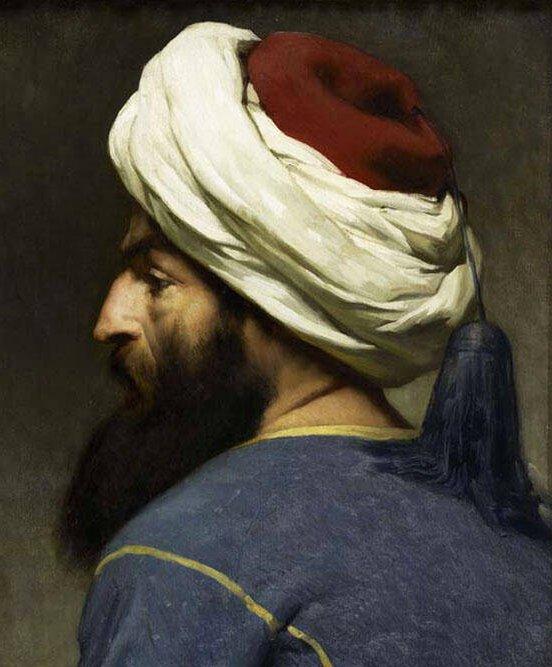
Fakhr al-Din al-Razi was born in 1149 CE in Rayy, the important Persian city near modern Tehran from which his name al-Razi was derived. He was born into a family deeply involved in religious scholarship. His father, Diya al-Din Umar, was associated with Ash'ari theology and Shafi'i jurisprudence, and Al-Razi therefore received an early education in Islamic law, rational theology, Arabic, and the methods of religious argument.
His education later expanded beyond his family's scholarly tradition. Al-Razi studied at Nishapur, where he encountered the philosophical works of thinkers such as Al-Farabi and Avicenna (Ibn Sina), whose philosophy would become the central object of his critical engagement. He also studied with Majd al-Din al-Jili at Maragha, entering an intellectual environment in which philosophy and theology were increasingly studied alongside one another.
Al-Razi subsequently traveled widely through Persia and Central Asia in search of education, patronage, and intellectual opponents. His career was shaped by the political rivalry between the Khwarazm-Shahs and the Ghurids, and he gained a reputation as an exceptionally formidable teacher and debater. These travels brought him into contact with different theological, philosophical, and political communities across the eastern Islamic world.
During his mature career, Al-Razi enjoyed important patronage and eventually became associated with the Ghurid court. Despite his political and intellectual travels, he produced an extraordinarily large body of writing covering philosophy, theology, logic, Islamic law, Quranic interpretation, natural philosophy, medicine, and subjects such as astrology. He died in Herat in 1210 CE, leaving behind one of the most extensive intellectual legacies of the post-classical Islamic world.
Al-Razi and Ash'ari Theology (Kalam)
Al-Razi is one of the major figures in the history of Ash'ari theology, the influential tradition of Sunni rational theology known as kalam. He inherited an Ash'ari intellectual background through his father and through the scholarly tradition associated with the earlier theologian Imam al-Juwayni. Yet his own theological writings developed in an age when Ash'ari scholars were engaging increasingly closely with the philosophical tradition of Avicenna.
Al-Razi did not treat theology and philosophy as completely isolated disciplines. He incorporated philosophical distinctions, logical methods, and technical forms of argument into theological discussion, while also challenging philosophical conclusions that he regarded as insufficiently demonstrated. This helped produce a more philosophically sophisticated form of kalam, often associated by modern scholars with the development of later kalam.
His theological works examine questions concerning God's existence and attributes, creation, causation, prophecy, the human soul, knowledge, and the physical structure of the world. Al-Razi frequently presented multiple competing arguments before examining their strengths and weaknesses, which means that his writings cannot always be reduced to a single simple doctrinal position.
The long-term importance of Al-Razi lies partly in this transformation of theological method. After him, later Islamic theologians increasingly worked with philosophical vocabulary and argumentative techniques that had previously been associated primarily with falsafa. His writings therefore became a major meeting point between Ash'ari theology and the philosophical traditions inherited from Aristotle and Avicenna.
Al-Razi's Critique of Avicenna
One of Al-Razi's most important philosophical activities was his sustained engagement with the thought of Avicenna. He wrote an influential commentary on Avicenna's Remarks and Admonitions (al-Isharat wa al-Tanbihat), one of the great philosophical texts of the Islamic intellectual tradition. His engagement with Avicenna was unusually detailed and helped make Avicennan philosophy the subject of a new generation of critical philosophical debate.
Al-Razi did not simply reject Avicenna from the standpoint of theology. Instead, he often examined Avicennan arguments on their own philosophical terms. His writings raise objections concerning metaphysics, the possibility of real definitions, the distinction between essence and existence, the principles of natural philosophy, the nature and unity of the human soul, and other central elements of the Avicennan system.
This critical method is one reason why Al-Razi occupies such an important place in the history of post-classical Islamic philosophy. He treated Avicenna as an intellectual opponent whose arguments required serious and technical answers rather than rhetorical dismissal. At the same time, his enormous corpus contains substantial engagement with Avicennan concepts, and his own positions sometimes developed over the course of his career.
Al-Razi's relationship to Avicenna should therefore not be described simply as rejection or acceptance. His philosophical career helped transform the Avicennan tradition by forcing later thinkers to confront objections that were formulated from within the highly technical language of philosophy itself. Later commentators, including Nasir al-Din al-Tusi, would continue this debate and respond directly to Al-Razi's criticisms.
Al-Razi's Arguments for the Existence of God
Al-Razi devoted extensive attention to arguments concerning the existence of God. He inherited both the philosophical tradition of Avicenna and the theological arguments developed within kalam, and his writings frequently compare different methods rather than presenting only one unquestioned proof as sufficient for every philosophical purpose.
A central philosophical argument available to Al-Razi was Avicenna's analysis of necessary and contingent existence. According to this general framework, contingent beings do not contain within themselves the complete explanation of their existence and therefore depend ultimately upon a being whose existence is necessary rather than contingent. Al-Razi examined this tradition closely while raising objections to aspects of Avicennan metaphysics.
He also considered arguments associated with kalam, particularly arguments based on the dependence or created character of the world and the need for an explanatory cause beyond contingent physical reality. Discussions of infinite causal regress, temporal beginning, motion, and the composition of bodies all formed part of the broader medieval debate about how philosophical reasoning could establish the existence of a Creator.
Al-Razi's importance in this field lies less in the invention of a single universally named proof than in his comparative and critical treatment of several competing arguments. His discussions became an important resource for later theologians and philosophers seeking to determine which forms of reasoning could provide the strongest demonstration of God's existence.

Al-Razi's Philosophy of Atomism
Atomism was an important subject within medieval kalam. Many theologians defended the view that physical bodies are ultimately composed of indivisible units or atoms together with changing properties often described as accidents. This account differed sharply from the Aristotelian and Avicennan understanding of bodies in terms of matter, form, continuity, and potentially infinite divisibility.
Al-Razi examined these competing theories in considerable technical detail. He engaged with Avicenna's criticisms of kalam atomism and considered questions concerning magnitude, divisibility, motion, continuity, and the actual structure of physical bodies. His work therefore belongs to a major medieval debate about whether mathematical continuity accurately represents the structure of reality.
His position also appears to have developed across his writings. Modern scholarship has emphasized that Al-Razi's views cannot always be represented by a single unchanging doctrine, and his later works show stronger engagement with physical atomism and arguments concerning limits to divisibility. This makes his treatment more complex than a simple repetition of earlier Ash'ari positions.
Al-Razi's discussions of atomism are historically important because they helped transmit and transform debates between kalam and falsafa. They show him working at the boundary between theological conceptions of creation and sophisticated philosophical questions concerning mathematics, physical extension, and the nature of material reality.
Al-Razi's Tafsir al-Kabir (Mafatih al-Ghayb)
Al-Razi's most famous work is his monumental Quranic commentary, Mafatih al-Ghayb, usually translated as Keys to the Unseen. It later became widely known as the Tafsir al-Kabir, or The Great Commentary. Its extraordinary size and intellectual range made it one of the most important works of Quranic interpretation in the Islamic tradition.
The commentary is remarkable for the range of questions it incorporates into the interpretation of Quranic passages. Al-Razi discusses theology, metaphysics, logic, natural philosophy, cosmology, ethics, language, and legal questions alongside more conventional forms of Quranic exegesis. Individual verses often become starting points for extended philosophical and theological investigations.
This does not mean that Al-Razi abandoned the traditional concerns of exegesis. Linguistic interpretation, theological tradition, and the relationship between verses remain important throughout the work. What makes his commentary distinctive is the way these concerns are combined with the intellectual debates of his own age, producing an encyclopedic form of scriptural interpretation.
Mafatih al-Ghayb became enormously influential and was studied by later scholars across different regions of the Islamic world. It remains essential for understanding how philosophy and rational theology could be incorporated into Quranic commentary and demonstrates the unusually broad intellectual range of Al-Razi's scholarship.
Al-Razi's Logic and Epistemology
Logic played a central role in Al-Razi's intellectual method. Like many post-Avicennan thinkers, he treated logical analysis as an essential tool for testing arguments in philosophy and theology. Yet he was not satisfied simply to repeat the inherited Aristotelian and Avicennan tradition, and his writings contain important criticisms concerning definition, conceptual knowledge, and the conditions required for genuine demonstration.
One of his significant philosophical concerns was the problem of real definitions. Al-Razi questioned whether human beings can always grasp the essential nature of things through the kinds of definitions demanded by traditional Aristotelian logic. This criticism raised wider epistemological questions about the limits of conceptual analysis and the relationship between words, concepts, and reality.
His epistemological discussions also reflect a broader intellectual habit: he frequently presents several possible arguments, objections, and replies before reaching a conclusion—or, in some cases, leaving the question open. This method can make his writings demanding, but it also reveals his commitment to examining the strength of an argument rather than merely defending inherited authority.
Al-Razi's influence on later logic and epistemology was therefore closely connected with his critical method. He helped establish an intellectual environment in which Avicennan logical concepts continued to dominate scholarly debate while also becoming subjects of increasingly sophisticated criticism and revision.
Al-Razi's Philosophy of Ethics and Human Nature
Al-Razi did not construct a single ethical system comparable in form to Aristotle's Nicomachean Ethics or Miskawayh's Tahdhib al-Akhlaq. Nevertheless, ethical questions appear throughout his philosophical, theological, and exegetical writings, particularly in his discussions of human action, moral responsibility, happiness, suffering, divine justice, and the foundations of ethical norms.
One of the major questions connected with his ethical thought concerns the source of moral value. Medieval Islamic theologians and philosophers debated whether reason could independently know that actions were good or bad, or whether moral obligation depended fundamentally upon divine command. Al-Razi engaged with these debates while also examining philosophical arguments concerning human nature and rational judgment.
Questions concerning human freedom were equally important. As an Ash'ari theologian, Al-Razi worked within a tradition strongly concerned with the relationship between divine omnipotence and human responsibility. His discussions explore how human actions can be attributed to individuals while remaining within a world understood as dependent upon divine power and causation.
Al-Razi's ethical thought is therefore best understood as distributed throughout a larger intellectual project rather than confined to one independent ethical treatise. His writings connect morality with metaphysics, theology, psychology, and Quranic interpretation, reflecting the integrated character of medieval Islamic philosophy and theology.
Major Works of Fakhr al-Din al-Razi
Al-Razi was an exceptionally prolific author. His works range across theology, philosophy, logic, Islamic law, Quranic interpretation, natural philosophy, and other disciplines, although the enormous size of his corpus and the history of manuscript transmission make the precise classification and chronology of some works a subject of scholarly research.
- Mafatih al-Ghayb (Tafsir al-Kabir) — Al-Razi's monumental Quranic commentary, integrating exegesis with theology, philosophy, natural inquiry, language, and other intellectual disciplines.
- Commentary on Avicenna's Remarks and Admonitions (Sharh al-Isharat wa al-Tanbihat) — A major and highly influential critical engagement with Avicenna's philosophical arguments.
- al-Mabahith al-Mashriqiyya ("Eastern Investigations") — An extensive philosophical work addressing questions in metaphysics and natural philosophy.
- al-Muhassal — A systematic work surveying important theological and philosophical positions and arguments.
- al-Mahsul — A major contribution to the principles and methodology of Islamic jurisprudence (usul al-fiqh).
- al-Arba'in fi Usul al-Din ("Forty Issues in Theology") — A substantial theological work examining central questions concerning God, theology, and religious doctrine.
- Asas al-Taqdis — An important theological work associated with debates concerning the divine attributes and the interpretation of anthropomorphic language.
Fakhr al-Din al-Razi's Main Philosophical Ideas
1. Rigorous Testing of Philosophical Claims
Al-Razi subjected even highly authoritative philosophical arguments, especially those associated with Avicenna, to detailed critical examination. His method frequently involved presenting an argument, raising objections, considering possible replies, and testing whether the conclusion genuinely followed from its premises.
2. The Meeting of Kalam and Falsafa
Al-Razi helped bring rational theology and philosophical argument into increasingly close contact. He used philosophical concepts within kalam while also challenging philosophical doctrines through theological and logical criticism, helping shape the intellectual style of later Islamic thought.
3. The Limits of Definition and Conceptual Knowledge
A distinctive part of Al-Razi's philosophical criticism concerns the possibility of defining things by their essential nature. His doubts about traditional theories of definition raised broader questions about how far conceptual analysis can provide certain knowledge of reality.
4. Competing Arguments for God's Existence
Al-Razi compared philosophical and theological approaches to demonstrating God's existence. Rather than relying exclusively on one method, he examined arguments based on contingency, causation, creation, the structure of the world, and the dependence of contingent beings.
5. Critical Engagement with Atomism and Physics
Al-Razi investigated competing accounts of physical reality, including atomism and Aristotelian theories of matter and form. His discussions of divisibility and continuity illustrate his willingness to connect theological questions with technical problems in mathematics and natural philosophy.
6. Philosophy Within Quranic Interpretation
Through Mafatih al-Ghayb, Al-Razi demonstrated how philosophical and theological debate could become part of Quranic exegesis. His commentary treats scripture not only as a religious text to be explained, but also as a starting point for broad intellectual investigation.
Al-Razi's Late-Life Doubt and Intellectual Humility
Al-Razi is traditionally associated with passages expressing deep intellectual frustration about the limits of speculative reasoning. Later readers have often connected these statements with the idea that, near the end of his life, he became increasingly aware of the difficulty of reaching complete certainty through philosophical and theological argument alone.
One famous sentiment attributed to him expresses disappointment with the results of extensive intellectual investigation and is often translated in ways suggesting that the efforts of great thinkers had led largely to perplexity or uncertainty. Such passages became important in later discussions of Al-Razi's intellectual development and his attitude toward philosophical speculation.
These statements should, however, be interpreted cautiously. Medieval biographical reports and later quotations do not automatically provide a simple account of a final conversion away from philosophy or a complete rejection of rational inquiry. Al-Razi continued to be remembered precisely as one of the most technically sophisticated philosophical theologians of his age.
The most defensible interpretation is therefore one of intellectual humility rather than a simple abandonment of philosophy. Throughout his writings, Al-Razi repeatedly exposes weaknesses in arguments that others considered decisive, and his awareness of the limits of human certainty forms part of the same critical intellectual temperament that made his work so influential.
Al-Razi and Al-Ghazali: Two Approaches to Critiquing Philosophy
Al-Razi and Al-Ghazali were both major Sunni theologians who engaged critically with philosophical traditions, especially the philosophical legacy associated with Avicenna. Both questioned whether particular metaphysical claims had been successfully demonstrated and both considered the relationship between philosophical reasoning and religious doctrine to be a central intellectual problem.
Their methods, however, should not be reduced to a simple opposition between rejection and acceptance. Al-Ghazali's Incoherence of the Philosophers is a sustained philosophical critique that often uses the conceptual tools of the philosophers against their own conclusions. Al-Razi inherited a later intellectual environment in which Avicennan philosophy had become even more deeply integrated into scholarly debate.
Al-Razi therefore engaged with Avicenna at an exceptionally technical level, particularly through detailed commentaries and philosophical summae. He examined individual arguments concerning metaphysics, psychology, physics, logic, and epistemology rather than limiting his attention to a small number of famous theological controversies.
The difference between the two thinkers is consequently best understood as partly historical and methodological. Al-Ghazali was crucial in reshaping the debate over philosophy, while Al-Razi became one of the major figures who developed the intensely philosophical form of kalam characteristic of later medieval Islamic intellectual life.
Al-Razi's Influence and Legacy
Al-Razi's influence on later Islamic theology and philosophy was immense. His writings became major reference points for scholars working in the intellectual traditions that developed after the classical age of Avicenna. His combination of philosophical sophistication, theological argument, and critical analysis helped define important features of post-classical Islamic thought.
His engagement with Avicenna was especially consequential. Later thinkers did not simply inherit Avicennan philosophy unchanged; they also inherited the objections raised by Al-Razi. Philosophers such as Nasir al-Din al-Tusi responded to his criticisms, ensuring that the debate between Avicennan philosophy and its critics continued across later centuries.
The influence of Mafatih al-Ghayb was equally extensive. Its integration of theology, philosophy, natural inquiry, language, and Quranic interpretation made it one of the great encyclopedic works of the Islamic exegetical tradition and ensured Al-Razi's continuing importance beyond specialist philosophical circles.
Al-Razi's legacy therefore cannot be confined to one discipline. He was simultaneously a theologian, philosopher, logician, jurist, commentator, and participant in debates about the natural world. His work represents a crucial stage in the increasingly close interaction between kalam, falsafa, logic, and Quranic scholarship.
Fakhr al-Din al-Razi's Philosophy Explained Simply
Al-Razi can be understood as a thinker who refused to accept an argument simply because it came from a famous philosopher or an established theological tradition. He studied both philosophy and theology at the highest technical level and repeatedly asked whether their arguments genuinely proved what they claimed to prove.
- Was he a philosopher or a theologian? Both. He was a major Ash'ari theologian who also became one of the most important philosophical critics and interpreters of the Avicennan tradition.
- What did he think of Avicenna? He took Avicenna extremely seriously but criticized many of his arguments in detail. His relationship to Avicennan philosophy was one of sustained engagement rather than simple acceptance or rejection.
- What is he most famous for? His enormous Quranic commentary, Mafatih al-Ghayb, also known as the Tafsir al-Kabir, and his influential philosophical and theological writings.
- Did he discuss atomism? Yes. He examined major debates about atoms, continuity, divisibility, and the physical structure of the world, especially in relation to criticisms of kalam atomism.
- Why was his method important? Because he compared arguments from different intellectual traditions and exposed their weaknesses with unusual technical rigor, helping reshape later Islamic philosophy and theology.
- Was he completely certain about everything? No simple answer is possible. Some passages associated with his later life express deep awareness of the limits of human certainty, but they should not automatically be interpreted as a complete rejection of philosophy.
Why Is Fakhr al-Din al-Razi Important in the History of Philosophy?
Al-Razi is important because he was one of the most innovative thinkers of the post-classical Islamic world. He subjected Avicennan philosophy to sustained technical criticism while also transforming the methods of Ash'ari theology through increasingly sophisticated engagement with logic and philosophical argument.
His importance extends beyond criticism. Al-Razi developed distinctive positions on questions concerning definition, essence and existence, the principles of physics, the human soul, and the foundations of ethical norms. His writings demonstrate that medieval Islamic philosophy continued to develop creatively after Avicenna rather than merely repeating earlier systems.
His work in Quranic exegesis was equally significant. Through Mafatih al-Ghayb, he brought theology, philosophy, logic, and natural inquiry into sustained conversation with scripture, creating one of the most ambitious intellectual works in the history of Quranic interpretation.
Fakhr al-Din al-Razi is therefore important both historically and philosophically. He stands at a crucial point in the development of Islamic intellectual history, where the boundaries between kalam and falsafa became increasingly permeable and where philosophical reasoning was not merely preserved, but critically examined, transformed, and carried into new theological and intellectual contexts.
Frequently Asked Questions About Fakhr al-Din al-Razi
Who was Fakhr al-Din al-Razi?
Fakhr al-Din al-Razi was a twelfth-century Islamic theologian, philosopher, and Quranic exegete known for his critical engagement with Avicenna's philosophy and for his monumental Quranic commentary, the Tafsir al-Kabir.
Is Fakhr al-Din al-Razi the same person as Rhazes (Abu Bakr al-Razi)?
No. Fakhr al-Din al-Razi, the Ash'ari theologian-philosopher, is a different person from Abu Bakr Muhammad ibn Zakariya al-Razi, known in Latin as Rhazes, an earlier physician-philosopher. The two are frequently confused because they share the name al-Razi but lived roughly three centuries apart and held very different philosophical positions.
What is the Tafsir al-Kabir?
The Tafsir al-Kabir, also known as Mafatih al-Ghayb, is Fakhr al-Din al-Razi's massive commentary on the Quran, notable for incorporating extensive philosophical, theological, and scientific discussion alongside traditional exegesis.
How did al-Razi critique Avicenna?
Al-Razi wrote a detailed critical commentary on Avicenna's Remarks and Admonitions, questioning specific arguments in Avicenna's metaphysics and psychology, including aspects of his proof for the Necessary Existent, while still engaging seriously with Avicennan philosophical method.
What is al-Razi's philosophy of atomism?
Al-Razi worked within the Ash'ari theological tradition of atomism, which holds that the physical world is composed of indivisible atoms and momentary accidents continuously recreated by God, an alternative to the Aristotelian hylomorphic account of matter and form defended by philosophers such as Avicenna.
Did al-Razi express doubt about his own beliefs?
Yes. Toward the end of his life, al-Razi is widely reported to have expressed philosophical and theological uncertainty, most famously in verses lamenting that a lifetime of study in theology and philosophy had not produced full and final certainty.
Related Islamic and Arabic Philosophers
Explore other major thinkers in the development of Islamic philosophy, Arabic philosophy, Persian philosophy, and medieval intellectual history.
Related Areas of Philosophy
Al-Razi's work connects the history of Islamic philosophy with theology, metaphysics, epistemology, logic, ethics, and the interpretation of scripture.
Why Fakhr al-Din al-Razi Still Matters
Fakhr al-Din al-Razi occupies a central place in the history of Islamic theology and philosophy as the thinker who most thoroughly fused the methods of Ash'ari kalam with the philosophical rigor of the Avicennan tradition, testing both against each other with extraordinary technical precision.
His detailed critique of Avicenna, his careful treatment of atomism and the proofs for God's existence, and his monumental Tafsir al-Kabir together represent one of the most comprehensive intellectual projects of the medieval Islamic world.
Understanding al-Razi also helps explain how later Islamic theology absorbed and transformed the philosophical legacy of Avicenna, Al-Ghazali, and the broader Peripatetic tradition into a distinct and highly technical theological method.
Explore Great Philosophers