Who Was Han Feizi?
Han Feizi, also known as Han Fei, was a Chinese philosopher and political thinker who lived during the late Warring States period, traditionally dated to around 280–233 BCE. He was a member of the ruling family of the state of Han and became one of the most important thinkers associated with the intellectual tradition commonly known as Legalism.
Han Feizi developed his political thought during an age of intense competition among rival Chinese states. His philosophy focused on the practical problems of government, political authority, administration, military strength, and the preservation of the state. Rather than beginning with an ideal picture of how morally virtuous people ought to behave, he paid close attention to how political institutions could function effectively under conditions of rivalry, ambition, and conflicting interests.
Han Feizi is best known for arguing that a stable state could not depend primarily on the personal goodness or exceptional wisdom of rulers and subjects. Effective government required clear and consistently applied standards, reliable systems of administration, and institutions capable of regulating the behavior of both ordinary people and government officials. His thought therefore placed great importance on fa, often translated as law, standards, or models for government.
His political philosophy also brought together ideas associated with earlier thinkers in the Legalist tradition. Han Feizi is particularly known for combining discussions of law and standards with administrative techniques and the authority attached to the ruler's political position. His surviving collection of writings, the Han Feizi, is consequently regarded as one of the most important and comprehensive texts of ancient Chinese political thought.
Han Feizi's ideas were shaped by the realities of the Warring States period, when states competed intensely for territory, security, and political survival. His philosophy therefore focused heavily on the creation of a strong and orderly government rather than on the cultivation of moral virtue alone. Although later generations often criticized Legalism for its harsh political implications, Han Feizi remains a major figure in the history of Chinese philosophy and the development of political theory.
Han Feizi: Quick Facts
- Name — Han Feizi
- Period — Late Warring States period
- Region — Ancient China
- Philosophical tradition — Chinese Legalism
- Known for — Political philosophy, law, administration, authority, and statecraft
- Major work — The Han Feizi
- Important concepts — Fa, shu, and shi
- Associated thinkers — Shang Yang, Shen Buhai, Shen Dao, and Xunzi
- Historical importance — One of the most influential theorists of Legalist political thought in ancient China
Han Feizi and the Warring States Period
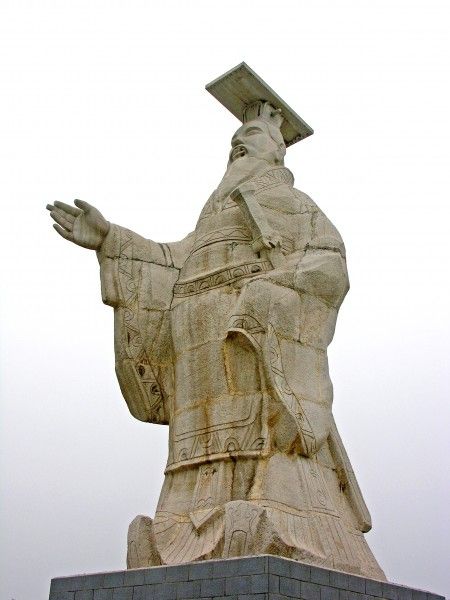
Han Feizi lived during one of the most politically unstable and intellectually creative periods in ancient Chinese history. The Warring States period was characterized by intense competition among powerful states seeking military strength, economic resources, territorial expansion, and political survival.
These conditions made questions of government especially urgent. Rulers and their advisers were concerned with taxation, agriculture, military organization, the control of officials, and the ability of a state to survive against powerful rivals.
Earlier Chinese thinkers had proposed different approaches to political and social order. Confucian traditions emphasized moral cultivation and ethical government, while other intellectual currents developed different accounts of human behavior, nature, authority, and political organization.
Thinkers later grouped under the label Legalism focused particularly on institutions, standards, administrative techniques, and political authority. Han Feizi's philosophy should therefore be understood within a world in which political ideas were closely connected with the practical problem of creating a strong and stable state.
His concern was not philosophy as an abstract exercise alone. Han Feizi repeatedly examined how rulers could maintain control, prevent ministers from accumulating excessive power, and establish systems that would continue to function without depending entirely on the exceptional virtue of individual people.
Why Is Han Feizi Important?
Han Feizi is important because he provided one of the most systematic and sophisticated expressions of Legalist political philosophy in ancient China. His writings brought together discussions of law, political authority, administration, rewards, punishments, and the relationship between rulers and officials.
His political theory challenged the assumption that a stable government could be created simply by placing morally virtuous people in positions of power. Instead, he emphasized institutions and mechanisms capable of regulating behavior even when individuals acted according to their own interests.
Han Feizi is also important as a synthesizer of earlier currents of political thought. His writings engage with ideas associated with thinkers such as Shang Yang, Shen Buhai, and Shen Dao, while bringing questions of standards, administrative technique, and political power into a broader theory of government.
His ideas became historically significant during the political transformation that led to the unification of China under Qin rule. Han Feizi did not personally create the institutions of the Qin state, many of which had developed through earlier reforms, but his writings became an important source for understanding the political theories associated with centralized state power.
For this reason, Han Feizi remains central to the history of Chinese political philosophy. His work raises enduring questions about whether political stability depends primarily on moral character, institutional design, effective administration, or some combination of these different elements.
What Did Han Feizi Believe?
Han Feizi believed that effective government required more than the personal morality of rulers. He argued that political institutions should be designed to encourage desirable behavior and discourage actions that could weaken the state or undermine political order.
His political thought placed particular importance on clear laws and standards, administrative techniques, and the authority attached to the position of the ruler. Government needed publicly recognizable standards rather than relying entirely on unpredictable personal judgment.
Han Feizi was deeply concerned with the problem of political administration. Ministers and officials possessed knowledge and power that rulers could not personally replace, yet those same officials might pursue private interests. A ruler therefore needed methods for supervising and evaluating them.
His philosophy also presents a relatively skeptical view of human motivation. Political institutions should not assume that everyone will consistently act from moral virtue, loyalty, or concern for the common good.
Instead, a well-designed political system should take self-interest into account and connect individual incentives with the objectives of the state. In this respect, Han Feizi's thought is strongly concerned with the practical relationship between human motivation and institutional design.
Han Feizi and Legalism
Legalism is the English name commonly used for an important current of ancient Chinese political thought concerned with standards, institutions, administrative control, and state power. Han Feizi became its most famous and philosophically influential representative.
The term can be misleading if it suggests that all thinkers described as Legalists belonged to a single organized school or agreed on every question. Modern scholarship often treats the tradition more cautiously as a group of related intellectual approaches centered on fa, or standards and laws.
Earlier thinkers associated with this current included Shang Yang, Shen Buhai, and Shen Dao. Shang Yang became associated with political and legal reform, Shen Buhai with administrative techniques, and Shen Dao with ideas concerning the power attached to political position.
Han Feizi incorporated and critically developed ideas associated with these earlier traditions. His contribution was not simply to repeat their theories but to examine how different methods of government could operate together within a coherent political system.
His philosophy therefore connects law and public standards, administrative methods, and political authority. These interconnected concerns are often summarized through the concepts of fa, shu, and shi.
What Does Fa Mean in Han Feizi's Philosophy?
Fa is commonly translated as "law," although the concept can also refer more broadly to publicly established standards, rules, models, or norms. In Han Feizi's political thought, clear and consistently applied standards were essential for governing a state.
Public standards could help determine what behavior was rewarded and what behavior was punished. Officials and subjects should be able to understand the expectations placed upon them rather than being governed entirely by changing personal preferences.
Han Feizi therefore placed considerable importance on making political rules understandable and predictable. Standards could provide a basis for evaluating conduct and could reduce the extent to which government depended on the private judgment or personal favoritism of individual officials.
The emphasis on fa was also connected with the problem of political impartiality. In principle, publicly established standards could apply across different social relationships rather than allowing every political decision to be determined by personal connections.
Han Feizi's idea of fa should nevertheless not be understood as identical with every modern concept of the rule of law. It belonged to a theory of statecraft in which standards served the broader objective of maintaining order, strengthening the state, and preserving the ruler's authority.
What Is Shu in Han Feizi's Philosophy?
Shu is commonly translated as "techniques" or "administrative methods." In Han Feizi's political philosophy, it concerns the methods by which a ruler can manage officials and ensure that government responsibilities are properly carried out.
Han Feizi was particularly concerned about the relationship between official claims and actual performance. Government officials could make promises, claim particular abilities, or acquire impressive reputations, but the ruler needed methods for determining whether they genuinely fulfilled their assigned responsibilities.
This concern is connected with the idea that offices should have clearly defined functions. An official's words, promises, and responsibilities could then be compared with the results of that official's actual actions.
Shu therefore represents the administrative dimension of Han Feizi's political thought. Effective government required more than issuing laws; it also required methods for supervising the people who administered those laws and carried out the work of the state.
Han Feizi's emphasis on administrative technique reflects his broader concern with the vulnerability of rulers. A ruler who depended entirely on the personal loyalty or honesty of powerful ministers could lose control, whereas systematic methods of evaluation could help preserve political authority.
What Is Shi in Han Feizi's Philosophy?
Shi is commonly understood as the power, strategic advantage, or authority associated with a political position. Han Feizi argued that effective government should not depend entirely on the extraordinary personal qualities of an individual ruler.
The institutional position of the ruler gives political authority much of its effectiveness. In this sense, shi concerns the power that comes from occupying and controlling a particular position within an organized political structure.
This idea helped Han Feizi distinguish between personal virtue and political authority. A ruler did not necessarily need to possess the exceptional moral qualities associated with the ideal sage-ruler of some earlier philosophical traditions.
What mattered was the ability to preserve the authority of the ruling position and prevent others from appropriating its power. Ministers might possess greater knowledge or practical ability than the ruler, but they should not be allowed to control the fundamental instruments of political authority.
Shi therefore forms an important part of Han Feizi's institutional approach to government. Political effectiveness should arise from a properly organized structure of authority rather than depending entirely on the unpredictable character of exceptional individuals.
Han Feizi's View of Human Nature
Han Feizi's political philosophy is often associated with a skeptical view of human motivation. He did not believe that a ruler could safely build a political system on the assumption that officials and subjects would always act from moral virtue or selfless loyalty.
People have their own interests, ambitions, fears, and competing objectives. A political system must therefore take account of the possibility that individuals will seek personal advantage even while publicly presenting themselves as loyal servants of the state.
This does not necessarily mean that Han Feizi offered a systematic philosophical theory of human nature in the same form as thinkers who explicitly debated whether human nature was good or evil. His primary concern was political: how should a government operate given the ways people are likely to pursue their interests?
Political institutions therefore need mechanisms that align individual behavior with the interests of the state. Rewards could encourage actions regarded as useful, while punishments and regulations could discourage conduct considered harmful or disruptive.
This is one reason Han Feizi placed so much importance on standards, incentives, sanctions, and administrative oversight. His approach attempted to make political order less dependent on the hope that rulers, officials, and subjects would consistently behave virtuously.
Han Feizi on Law, Rewards, and Punishment
Han Feizi regarded predictable rewards and punishments as important instruments of government. Officials and subjects should understand the standards expected of them and the consequences of fulfilling or violating those standards.
This approach was intended to make government more predictable and controllable. Instead of relying primarily on personal persuasion or moral education, the ruler could establish institutional incentives that influenced behavior in ways considered beneficial to the state.
Rewards and punishments were therefore connected to Han Feizi's wider theory of administration. A political system needed clear expectations and reliable consequences if rulers were to evaluate performance and direct the activities of officials.
His emphasis on punishment should not be separated from this larger institutional framework. Han Feizi was concerned with the relationship between law, authority, incentives, responsibility, and the practical ability of a government to enforce its decisions.
Modern readers may strongly criticize the severity associated with some Legalist political practices, and Han Feizi's theory raises difficult questions about the relationship between political order and coercion. Nevertheless, reducing his philosophy simply to the idea of "harsh punishment" overlooks its broader concern with institutional organization and administrative effectiveness.
Han Feizi's Philosophy of the Ruler
The ruler occupies a central position in Han Feizi's political theory. The ruler must maintain authority over officials and prevent powerful ministers from gaining independent control over the institutions of the state.
Han Feizi was particularly concerned about the danger posed by officials who might pursue their own interests while appearing to serve the ruler. Political language and declarations of loyalty could not always be accepted as evidence of genuine performance.
He therefore emphasized methods for monitoring officials and evaluating whether their actions corresponded to the responsibilities they had claimed or been assigned. Administration required systematic comparison between official duties and actual results.
The ruler's power should operate through institutions and political techniques rather than through personal relationships alone. Excessive dependence on personal favorites could make government vulnerable to manipulation and weaken the authority of the ruler.
This does not mean that Han Feizi imagined a ruler personally performing every task of government. On the contrary, his philosophy recognizes the necessity of officials while attempting to solve the political problem of how a ruler can delegate responsibilities without surrendering ultimate authority.
Han Feizi and Confucianism
Han Feizi's political philosophy differs significantly from classical Confucian approaches to government. Confucian thinkers such as Confucius and Mencius placed great importance on moral cultivation, virtue, ritual, and the ethical example provided by political leaders.
Han Feizi was much more skeptical about relying on personal virtue as the principal foundation of political order. Even if virtuous rulers and officials occasionally existed, a stable political system could not safely assume that such exceptional character would always be available.
He therefore emphasized institutions, standards, administrative methods, and political authority. Government should be designed to function through relatively impersonal mechanisms rather than depending entirely on the moral transformation of those who participated in it.
The contrast between these approaches represents an important debate in the history of Chinese political philosophy. One tradition placed greater confidence in moral cultivation and exemplary leadership, while Han Feizi focused more strongly on the realities of power, incentives, and institutional control.
Later Chinese governments did not simply choose one approach and permanently reject the other. Political institutions often combined strong administrative structures with Confucian moral, educational, and ideological traditions, producing a more complex relationship between the two intellectual currents.
Han Feizi and Daoism
Han Feizi's philosophy also has an important and complex relationship with Daoist thought. The Han Feizi contains discussions influenced by ideas associated with the Laozi tradition, showing that his political philosophy developed through engagement with more than one intellectual current.
Two chapters of the received Han Feizi are especially important because they comment on sayings associated with the Laozi. These discussions are among the earliest surviving commentarial engagements with that classic.
Han Feizi sometimes emphasized the importance of rulers avoiding unnecessary or disruptive intervention. A ruler could preserve authority by allowing institutions and officials to operate according to established responsibilities while retaining control over the larger political system.
Ideas associated with nonaction or restraint therefore appear within his political thought, but they are interpreted in a distinctive context. Han Feizi uses such ideas in relation to rulership, administrative control, and the preservation of political authority.
The relationship between Legalist and Daoist thought is consequently more complicated than a simple opposition. Han Feizi cannot simply be described as a Daoist philosopher, but his writings demonstrate how different intellectual traditions interacted during the rich philosophical environment of ancient China.
What Is the Han Feizi?
The Han Feizi is the major text traditionally associated with Han Feizi. It contains essays and discussions concerning government, political authority, law, leadership, administration, human behavior, and statecraft.
The received work consists of fifty-five chapters and is one of the most important surviving sources for understanding the intellectual current conventionally called Legalism. It preserves discussions that bring together several different approaches to political government.
The work is particularly important because Han Feizi engages with and develops ideas associated with earlier thinkers. Discussions of standards, administrative methods, political power, and the relationship between rulers and ministers appear throughout the text.
Like many ancient works, however, the composition and transmission of the Han Feizi involve difficult historical questions. Scholars do not simply assume that every passage was written personally by Han Feizi without later editorial activity or textual development.
Differences in style and argument among some chapters have encouraged continuing scholarly debate about authorship and composition. Nevertheless, the text presents a sufficiently coherent political outlook to remain the central source for studying the philosophy traditionally associated with Han Feizi.
Han Feizi's Main Philosophical Ideas
Han Feizi's political philosophy can be understood through several interconnected ideas concerning law, authority, administration, and human behavior. These ideas form parts of a larger attempt to explain how a ruler could create a strong and stable political system.
Law and Public Standards
Han Feizi emphasized clear standards that could be publicly known and used to evaluate behavior. Government should not depend entirely on unpredictable personal judgment or the private preferences of individual officials.
Political Authority
He regarded the authority attached to the ruler's political position as essential for maintaining order. Effective government should not depend solely on the ruler possessing extraordinary personal virtue or exceptional individual abilities.
Administrative Techniques
Government officials should be evaluated according to their actual performance rather than merely their claims or reputations. Han Feizi's concern with administrative technique reflects his fear that ministers might use information and political influence for private advantage.
Rewards and Punishments
Han Feizi considered incentives and sanctions important instruments for regulating political behavior. Clear consequences could connect individual interests with the objectives defined by the political system.
Control of Officials
A ruler must prevent ministers and officials from accumulating independent power that could threaten the state. Delegation was necessary, but delegation without supervision could weaken the authority of the ruler.
Institutional Government
Political stability should depend on effective institutions rather than on the assumption that every individual will behave virtuously. Han Feizi's central insight is that political systems must be designed with realistic assumptions about power, ambition, and self-interest.
Han Feizi and the Qin Dynasty
Han Feizi's political ideas became historically significant because they were associated with the political world of the Qin, the state that eventually unified China under Qin Shi Huang.
The Qin state had already undergone major reforms before Han Feizi's lifetime, particularly those traditionally associated with Shang Yang. These reforms contributed greatly to Qin's rise as one of the strongest states of the Warring States period.
Han Feizi therefore should not be described as the sole creator of Qin political institutions or as the direct architect of the Qin Empire. His importance lies primarily in the systematic development and articulation of political ideas associated with the broader fa tradition.
His writings nevertheless attracted attention in the Qin political world. The historical relationship between Han Feizi's thought and Qin statecraft illustrates the close connection between philosophical debate and practical politics during the final stages of the Warring States period.
The later Qin Empire was short-lived, but the problems addressed by Han Feizi did not disappear. Questions concerning centralized authority, bureaucratic administration, law, and the control of officials continued to shape the political history of imperial China.
How Did Han Feizi Die?
Han Feizi eventually became involved in the politics of the Qin court. Traditional historical accounts state that he traveled to Qin, where he was imprisoned and later died in custody.
Ancient accounts connect his death with political intrigue involving rival ministers, particularly the complex political circumstances surrounding his arrival at the Qin court. These narratives form an important part of the traditional biography of Han Feizi.
The precise details of his death, however, should be treated with historical caution. Ancient biographical sources can combine valuable historical information with literary shaping and retrospective interpretation.
What is historically significant is that Han Feizi died before the final unification of China by Qin. His political writings survived, however, and became far more enduring than the brief and tragic circumstances traditionally associated with the end of his life.
Han Feizi's Influence on Chinese Political Thought
Han Feizi became one of the most important figures in the history of Chinese political philosophy. His writings contributed to the intellectual development of ideas concerning centralized authority, administrative institutions, standards, and political control.
The political unification achieved by Qin demonstrated the historical importance of strong administrative institutions, although the Qin dynasty itself was short-lived. The relationship between Han Feizi's philosophy and actual Qin government should nevertheless not be reduced to the claim that the empire simply followed his ideas.
After the Qin period, administrative practices associated with the broader fa tradition continued to influence Chinese political institutions. At the same time, later governments gave increasing importance to Confucian moral education and political ideals.
Chinese political history therefore cannot be understood as a simple choice between Confucianism and Legalism. Governments frequently combined moral language and educational ideals with highly developed bureaucratic institutions, laws, regulations, and systems of administration.
Han Feizi remains important because his philosophy forces political thought to confront the practical realities of institutions, power, incentives, and administrative control. His work continues to be studied as one of the most challenging examinations of political authority in the history of Chinese philosophy.
Han Feizi Philosophy Explained Simply
Han Feizi argued that a state should not depend entirely on the personal goodness of rulers, officials, or citizens. Political order requires institutions that can regulate behavior and maintain authority.
His philosophy emphasized clear standards, effective administration, political authority, and mechanisms of reward and punishment. He was especially concerned with the problem of preventing powerful officials from using government for their own interests.
In simple terms, Han Feizi asked a practical political question: How can a state remain stable when people cannot always be expected to act virtuously? His answer focused primarily on institutions, standards, incentives, and effective control.
- Main tradition: Legalism
- Main concern: Effective government and political order
- Important concept: Fa, or law and public standards
- Administrative concept: Shu, or governing techniques
- Political concept: Shi, or the authority associated with political position
- View of human behavior: Political systems should account for self-interest rather than relying entirely on virtue
Frequently Asked Questions About Han Feizi
Who was Han Feizi?
Han Feizi was an ancient Chinese philosopher and political thinker associated with Legalism. He lived during the late Warring States period and wrote extensively about government, law, authority, and political administration.
What is Han Feizi famous for?
Han Feizi is famous for developing and systematizing important ideas in Legalist political philosophy, particularly concerning law, political authority, administration, rewards, punishments, and government.
What did Han Feizi believe?
Han Feizi believed that effective government should rely on strong institutions, clear standards, administrative techniques, and political authority rather than depending entirely on individual virtue.
What is Han Feizi's philosophy?
Han Feizi's philosophy is primarily a form of Legalist political thought concerned with how rulers can maintain order, control officials, strengthen the state, and establish effective government.
What is Legalism according to Han Feizi?
Legalism, as represented by Han Feizi, emphasizes publicly established standards, effective administration, political authority, rewards and punishments, and institutions capable of maintaining order.
What are fa, shu, and shi?
Fa refers broadly to laws or publicly established standards, shu refers to administrative techniques, and shi refers to the power or authority associated with political position.
What did Han Feizi think about human nature?
Han Feizi was skeptical about relying on people's moral virtue as the foundation of political order. His political theory instead emphasizes institutions and incentives that can regulate behavior.
Did Han Feizi influence the Qin Dynasty?
Han Feizi's Legalist political ideas became associated with the intellectual environment of the Qin state. However, Legalist reforms in Qin had begun before Han Feizi, particularly under Shang Yang.
What is the Han Feizi book?
The Han Feizi is the text traditionally associated with Han Feizi. It contains discussions of political philosophy, government, leadership, law, administration, and statecraft.
Why is Han Feizi important in Chinese philosophy?
Han Feizi is important because he provides one of the most influential formulations of Legalist political thought and helped shape later discussions of law, political authority, administration, and centralized government in China.
Related Chinese Philosophers and Thinkers
Han Feizi belongs to a rich tradition of Chinese philosophy involving debates about morality, government, human nature, society, and the proper way to organize political life.
Philosophy Branches Connected to Han Feizi
Han Feizi's work connects most strongly with political philosophy, ethics, social philosophy, and the philosophical study of law and government. His ideas also provide an important perspective for comparing Legalism with Confucianism and Daoism.
Why Han Feizi Still Matters
Han Feizi remains one of the most important figures for understanding Legalism and ancient Chinese political philosophy. His central concern was practical: how can a state maintain order when rulers, officials, and subjects may pursue competing interests?
His answer emphasized institutions, public standards, administrative techniques, political authority, and carefully structured incentives. These ideas offer a striking contrast to political theories that place primary emphasis on moral virtue or personal character.
Studying Han Feizi therefore provides an important perspective on ancient Chinese debates about law, government, human behavior, and political power. His work remains relevant to the history of political philosophy because it asks enduring questions about the relationship between institutions, authority, and human conduct.
Explore Great Philosophers