Who Was Xunzi? The Chinese Confucian Philosopher
Xunzi (荀子), also known as Xun Kuang, was an influential Chinese philosopher who lived during the Warring States period, traditionally dated to the third century BCE. He regarded himself as a follower of Confucius and became one of the most important early thinkers in the development of Confucian philosophy. Although details of his life remain uncertain, tradition associates him with the state of Zhao and with the intellectually active world of late Warring States China.
Xunzi is especially famous for his distinctive theory of human nature. In his influential discussion commonly translated as Human Nature Is Bad or Human Nature Is Evil, he argued that people's inborn desires and spontaneous tendencies, if followed without discipline, can lead to competition, conflict, and social disorder. His claim did not mean that human beings are incapable of goodness; rather, moral excellence must be deliberately cultivated through learning and transformation.
Xunzi's philosophy therefore places enormous importance on education, ritual, moral cultivation, deliberate effort, and social institutions. He believed that the teachings of sages, the practice of li or ritual propriety, and sustained education provide the means through which human desires can be guided into an orderly and ethical form of life. Unlike a simple pessimistic view of humanity, Xunzi's philosophy presents moral development as an achievement made possible through disciplined learning, conscious effort, and social practice.
Xunzi also developed influential views on government, language, knowledge, ritual, and humanity's relationship with Heaven (Tian). In several of these areas, he offered interpretations that differed significantly from other Confucian thinkers, especially Mencius, whose more optimistic account of human nature became one of Xunzi's principal philosophical rivals. His thought therefore represents one of the most systematic and intellectually ambitious developments within early Confucian philosophy.
Xunzi: Quick Facts
- Name — Xunzi (荀子), also known as Xun Kuang
- Period — Warring States period
- Date — Traditionally placed in the third century BCE
- Philosophical tradition — Confucianism
- Known for — Human nature, ritual, morality, education, political philosophy, language, and the Way
- Famous philosophical claim — Human nature is naturally inclined toward desires that require conscious moral cultivation
- Major concept — Li, or ritual and ritual propriety
- Major debate — Xunzi's disagreement with Mencius over human nature
- Major work — The text traditionally known as the Xunzi
Xunzi and the Warring States Period
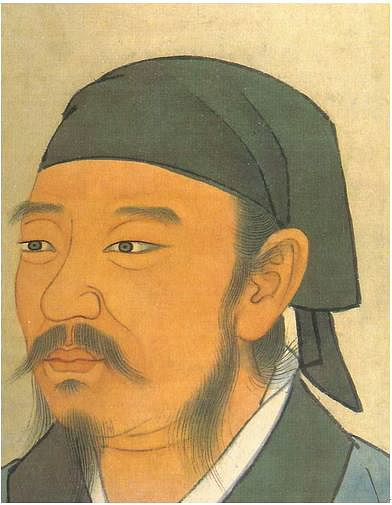
Xunzi lived during the Warring States period, an era of intense political competition among powerful states and remarkable intellectual creativity. Confucians, Mohists, Daoists, and thinkers associated with other traditions offered competing accounts of morality, government, language, knowledge, and social order. Xunzi's precise dates remain uncertain, but he belongs to the third century BCE and lived during the final centuries before China's political unification under the Qin dynasty.
This environment helps explain why questions of social order and political stability became central to Xunzi's philosophy. He was concerned not only with how individuals should behave but also with how education, ritual, institutions, and capable government could transform human conduct and create an orderly society. For Xunzi, philosophical reflection therefore had practical consequences for the organization and survival of political life.
Xunzi developed a form of Confucianism that placed particularly strong emphasis on deliberate human activity. Rather than assuming that moral behavior naturally emerges from spontaneous human impulses, he argued that people require learning, guidance, models, and disciplined practice. The standards of civilization are achievements that must be learned and maintained rather than automatic expressions of an individual's original condition.
The intellectual world of the Warring States period also exposed Xunzi to arguments outside the Confucian tradition. His writings engage with problems raised by rival schools and show an unusual interest in language, classification, reasoning, political institutions, and the regular patterns of the natural world. His philosophy is therefore one of the most systematic attempts to defend and develop Confucian thought during the final stages of the Warring States era.
What Did Xunzi Believe?
Xunzi believed that human beings possess natural desires and spontaneous tendencies, but these tendencies do not automatically produce moral behavior. If people simply follow desires for profit, pleasure, possessions, or advantage without appropriate limits, competition and conflict can result. The problem for Xunzi is therefore not that human beings possess desires, but that desires alone cannot provide a sufficient standard for living well with others.
For Xunzi, morality is closely connected with conscious effort and learning. Human beings must cultivate themselves through teachers, education, ritual practice, reflection, and the deliberate development of appropriate conduct. Moral excellence is not simply discovered by looking inward; it depends heavily on standards, models, and practices developed within the broader human and social world.
Xunzi's philosophy therefore combines a distinctive account of human nature with a strong theory of moral cultivation. His central question is not merely whether people are naturally good or bad, but how human beings can become morally cultivated and how societies can establish stable standards of conduct. This makes his philosophy simultaneously an account of ethics, education, political order, and human development.
He also believed that human beings possess distinctive capacities for learning, making distinctions, using language, and consciously shaping their conduct. These capacities make transformation possible. Xunzi's philosophy is therefore better understood as a theory of moral transformation than as a simple pessimistic judgment about humanity: what is good in human life must be achieved through sustained cultivation rather than assumed to be present in a completed form from birth.
Xunzi on Human Nature: Is Human Nature Evil?
Xunzi is most famous for his claim that human nature is bad, often translated as "human nature is evil." This claim appears in the chapter commonly known as Xing'e, or Human Nature Is Bad. The traditional English word "evil," however, can be misleading because it may suggest deliberate wickedness, whereas Xunzi's argument concerns the character and consequences of what arises spontaneously from human nature.
Xunzi uses xing to refer broadly to what human beings possess by birth or what arises naturally without deliberate cultivation. This includes desires, sensory responses, and other spontaneous tendencies. He argues that if people simply follow such impulses without guidance, competition over desirable things and conflicts of interest can emerge, producing disorder rather than the harmony required for ethical and political life.
Xunzi does not mean that human beings are permanently incapable of goodness. On the contrary, he argues that people can become good through deliberate effort, education, ritual, moral standards, and conscious cultivation. He describes this transformation through the contrast between what is natural or spontaneous and what is developed through conscious human activity, often represented by the term wei.
This distinction is essential for understanding Xunzi. His position is not that people are doomed to immoral behavior, but that moral goodness is something that must be cultivated rather than simply expected to emerge from untrained natural impulses. Human nature provides the material from which moral character develops, while education and deliberate practice provide the means through which that material can be transformed into an ethical form of life.
Xunzi vs Mencius: Human Nature and Morality
One of the most important debates in early Confucian philosophy is the disagreement between Xunzi and Mencius concerning human nature. Their disagreement later became especially influential because both thinkers defended moral cultivation while offering very different explanations of where moral development begins and how ethical character should be understood.
Mencius argued that human beings possess tendencies or "beginnings" oriented toward moral goodness, famously associating them with compassion, shame, respect, and moral judgment. Xunzi took a different approach and emphasized spontaneous desires and tendencies that, when followed without discipline, can produce conflict. He therefore placed greater importance on external models, teachers, ritual, and conscious transformation.
The difference between them is not simply a disagreement over whether human beings can become good. Both thinkers believed that human beings are capable of moral development and that serious cultivation is necessary. Their deeper disagreement concerns how xing, or human nature, should be understood and whether the fundamental source of moral guidance is primarily an innate tendency or a cultivated achievement.
Xunzi's answer places particular emphasis on teachers, education, ritual, standards, and conscious transformation as the means by which human beings develop moral character. The comparison with Mencius therefore reveals an important feature of early Confucianism: it was not a single, philosophically uniform doctrine, but a tradition containing serious disagreements about human nature, moral psychology, and the path to ethical excellence.
Xunzi's Philosophy of Ritual and Moral Education
Ritual, usually represented by the Chinese term li, occupies a central position in Xunzi's philosophy. Ritual was not merely a collection of religious ceremonies or formal traditions. It provided standards for appropriate behavior and helped shape relationships, emotions, responsibilities, social distinctions, and political order. Through ritual, human life acquires forms that coordinate individual desires with the requirements of communal life.
Xunzi argued that human desires can become a source of conflict when there are no boundaries governing their expression. Ritual provides distinctions and standards that help people regulate their desires and distribute social roles appropriately. In this sense, ritual does not simply suppress human life; it gives desires and emotions forms through which they can be expressed without destroying the relationships on which social life depends.
Ritual also has an educational function. By repeatedly practicing appropriate forms of conduct, individuals gradually develop habits, judgment, and moral understanding. Xunzi therefore treats ritual as a form of moral education rather than as empty ceremonial behavior. Ethical character is shaped through repeated action, participation in established practices, and attention to the distinctions appropriate to different human relationships.
Xunzi also connected ritual with the work of the ancient sages, who established standards capable of bringing order to conditions that would otherwise generate competition and disorder. The rituals are therefore both inherited traditions and instruments of human cultivation. Their importance lies in their ability to guide human conduct toward a form of life that is orderly, cooperative, and recognizably human.
Xunzi on Education, Learning, and Self-Cultivation
Education is one of the most important themes in Xunzi's philosophy. Because natural human tendencies do not automatically produce moral behavior, people need instruction, models, and sustained practice. Learning enables an individual to move beyond immediate impulses and acquire the standards required for sound judgment, appropriate action, and participation in an ordered social world.
Xunzi places particular importance on teachers and learning. A person becomes morally cultivated by studying established standards, learning from teachers, practicing ritual, and consciously correcting inappropriate behavior. The teacher is important because moral knowledge is not treated simply as something that spontaneously unfolds from an individual's untrained desires; it must be transmitted, studied, and practiced.
This makes Xunzi's philosophy strongly connected with the Confucian ideal of self-cultivation. Moral development is not simply a matter of possessing good intentions or admiring ethical ideals. It requires sustained learning and disciplined action over time, through which a person's habits, judgments, and responses are gradually reshaped.
Education also has a social dimension in Xunzi's thought. Individuals learn within traditions of teaching, ritual, language, and political practice that preserve accumulated standards of human achievement. Personal cultivation and civilization are therefore closely connected: a morally developed individual depends upon a world of learning, while that world itself must be continually maintained through education and responsible human action.
Xunzi and Deliberate Effort: How People Become Good
A key concept in Xunzi's philosophy is deliberate human activity, often discussed through the term wei. The term refers to what is consciously developed or produced through human effort, in contrast with what arises naturally or spontaneously. This distinction provides the philosophical foundation for Xunzi's explanation of how moral transformation is possible.
For Xunzi, moral goodness belongs fundamentally to the realm of cultivated human achievement. People become capable of refined conduct through education, practice, reflection, social institutions, and the standards associated with sages. Goodness is therefore not simply an inherited psychological possession; it is something produced through the active transformation of one's tendencies and habits.
This idea explains why Xunzi does not consider his view of human nature hopelessly pessimistic. Natural tendencies may create difficulties, but human beings possess the capacity to learn, make distinctions, deliberate, and reshape their conduct. The same human beings whose unregulated desires can produce conflict are capable of participating in the practices that transform those desires into an ordered ethical life.
Xunzi therefore understands moral cultivation as both personal and cultural. Individuals must exert themselves, but they do so by using resources created and transmitted by earlier human beings. Ritual, moral standards, education, and political institutions are products of conscious human achievement that make further moral achievement possible. Civilization, in this sense, is not opposed to human nature but works upon it and gives it a cultivated form.
Xunzi on Heaven, Nature, and the Way
Xunzi developed an important philosophy of Heaven, usually represented by the Chinese term tian. He emphasized the regularity and constancy of natural processes rather than interpreting Heaven primarily as a supernatural agent that changes the weather or directly rewards and punishes human beings according to their moral conduct.
For Xunzi, human beings should observe how the natural world operates and respond intelligently to its regular patterns rather than blaming Heaven for every success or failure. Natural events occur according to processes beyond ordinary human wishes, while many political disasters result from failures of human judgment and government. This distinction places substantial responsibility for social order upon human beings themselves.
Xunzi's discussion also distinguishes between understanding the regular patterns available to human observation and claiming to know the ultimate workings of Heaven itself. What matters practically is learning how natural processes operate and applying that understanding intelligently to human life. His approach therefore rejects the idea that unusual natural phenomena should automatically be interpreted as moral messages directed at human society.
This leads to an important relationship between Heaven and the Way, or dao. Human beings cannot simply control the natural world, but they can learn how to act effectively within its conditions. Xunzi's philosophy thus combines respect for the regularity of nature with a strong emphasis on human responsibility: Heaven provides conditions, while human beings must establish the practices and institutions required for an orderly world.
Xunzi's Political Philosophy: Ritual, Order, and Government
Xunzi's political philosophy is closely connected with his theory of human nature. If unchecked desires can generate competition and conflict, then a stable society requires institutions and standards capable of directing human behavior. Political order cannot depend solely on the spontaneous goodness of individuals; it must be actively maintained through education, ritual, clear distinctions, and responsible government.
Xunzi therefore emphasized the importance of ritual, moral standards, education, and capable rulers in maintaining political order. Government should not simply rely on force or punishment. It should cultivate appropriate social practices and distinctions that allow people to fulfill their roles while coordinating individual interests with the needs of the larger community.
Xunzi also criticized rulers who pursued power and wealth without proper moral guidance. For him, political strength depends not only on military power or material resources but also on the quality of governance and the cultivation of those who govern. A powerful state can nevertheless be unstable if its rulers fail to establish standards capable of securing long-term social cooperation and public order.
His political philosophy therefore remains distinctly Confucian even where it places great importance on institutions and order. Xunzi did not reduce good government to coercive control. The strongest political system, in his view, combines effective administration with moral education and ritual practices that shape the conduct of both rulers and ordinary people.
Xunzi on Language and the Rectification of Names
Xunzi made important contributions to Chinese philosophy of language and names. His discussion of zhengming, commonly translated as rectification of names, examines the relationship between words, distinctions, knowledge, and social order. For Xunzi, human beings need shared and stable ways of identifying things if they are to communicate, reason together, and coordinate their actions.
Correct distinctions matter because language is used to classify and communicate about the world. Xunzi was interested in how names become established and how they enable people to distinguish one thing from another. When important distinctions are confused or words are used in ways that undermine shared understanding, disagreement can spread from theoretical discussion into practical and political life.
Xunzi's concern with language therefore connects with his broader interest in standards and disciplined judgment. Clear naming does not mean that every word possesses a mysterious natural connection with its object. Rather, established conventions make communication possible, and those conventions must be used consistently if people are to reason and act together within a common social world.
This aspect of Xunzi's philosophy shows that his thought extends far beyond ethics in the narrow sense. Questions about language involve perception, classification, knowledge, disagreement, and political authority. His analysis of names is consequently an important part of his larger attempt to explain how human beings create and preserve order through shared distinctions and deliberate practices.
Xunzi on Music, Emotion, and Social Harmony
Xunzi also discussed music as an important part of moral and social cultivation. Music, like ritual, can provide an appropriate form through which human emotions are expressed. His defense of music is especially significant because other thinkers, including the Mohists, had criticized elaborate musical practices as socially wasteful or politically unnecessary.
Xunzi did not regard emotions as something that must simply be eliminated. Instead, he was concerned with how emotions could be expressed, educated, and organized in ways that support human flourishing and social harmony. Properly ordered musical practices can give collective expression to feeling without allowing emotion to become destructive or socially disorganizing.
Ritual and music therefore work together as forms of human cultivation. Ritual regulates distinctions and appropriate conduct, while music contributes to the harmonious expression of human emotion. Both are part of the cultural practices through which spontaneous tendencies are given refined and socially intelligible forms.
Xunzi's discussion of music also illustrates a broader feature of his philosophy: ethical cultivation is not achieved only through abstract rules. Human beings are emotional, social, and embodied creatures, and moral development must therefore involve practices that shape feeling, habit, perception, and conduct. A cultivated society requires more than prohibitions; it requires forms of life capable of educating the whole person.
Xunzi's Main Philosophical Ideas
Xunzi's philosophy covers ethics, political thought, education, language, human nature, music, and the relationship between human beings and nature. Several ideas are especially important for understanding his work and the distinctive form of Confucianism that he developed during the Warring States period.
Human Nature and Natural Desires
Xunzi argues that spontaneous human desires and tendencies can lead to conflict when they are followed without restraint or cultivation. Human nature, in this sense, is not identical with a finished moral character and requires transformation through conscious effort.
Goodness Through Deliberate Effort
Moral goodness is achieved through conscious activity, education, practice, and self-cultivation rather than simply inherited as a completed moral character. Xunzi's concept of wei emphasizes the creative and transformative role of deliberate human effort.
Ritual and Moral Standards
Ritual provides standards that help regulate desires, establish distinctions, shape behavior, and maintain social order. For Xunzi, ritual is not empty ceremony but a practical and educational system through which human relationships and emotions acquire appropriate forms.
Education and Teachers
Teachers and learning are essential because people must acquire the knowledge and practices necessary for moral development. Cultivation requires sustained effort and engagement with models and standards developed through the accumulated achievements of human civilization.
Political and Social Order
A stable society requires appropriate institutions, standards, education, ritual, and responsible leadership. Xunzi's political philosophy emphasizes order, but he does not reduce successful government to force alone; moral cultivation and effective institutions must work together.
Language and Correct Naming
Correct distinctions and the appropriate use of names are important for clear judgment and orderly social life. Shared linguistic conventions enable people to communicate and coordinate their actions, making Xunzi's philosophy of language an important part of his wider account of knowledge and political order.
Xunzi and Confucianism
Xunzi considered himself a follower of Confucius, and his philosophy is one of the most important developments within early Confucian thought. Like other Confucians, he emphasized education, ritual, moral cultivation, social roles, and responsible government as essential elements of a flourishing human and political life.
He nevertheless developed these commitments in distinctive ways. His account of human nature and his emphasis on deliberate cultivation distinguish him sharply from Mencius, while his detailed discussions of language, classification, political institutions, and Heaven show a broader philosophical range than the simplified image of Xunzi as only a theorist of "evil human nature."
Xunzi is particularly important because he demonstrates that early Confucianism was not a single uniform philosophical system. Different Confucian thinkers could disagree deeply about human nature and moral psychology while continuing to defend the importance of education, ritual, ethical cultivation, and social order.
His version of Confucianism is especially concerned with the human construction and preservation of civilization. The practices that make ethical life possible are not simply natural facts but achievements requiring learning and deliberate maintenance. This emphasis gives Xunzi a distinctive position within the Confucian tradition and helps explain his continuing importance in modern interpretations of Chinese philosophy.
The Xunzi: What Did Xunzi Write?
Xunzi's philosophical writings are preserved in a collection known as the Xunzi. The text contains extensive discussions of human nature, ritual, education, politics, language, Heaven, music, moral cultivation, and other philosophical questions. It is one of the most substantial surviving works associated with a major thinker of the classical Chinese philosophical tradition.
The surviving collection is an essential source for understanding Xunzi's philosophy, although questions concerning the composition, authorship, arrangement, and transmission of individual chapters have been studied extensively by scholars. The text should therefore not always be treated as a perfectly simple record written and arranged by Xunzi alone without any later editorial history.
Several chapters became especially influential in later discussions of his thought, including those concerning human nature, ritual, music, Heaven, and the rectification of names. Together, these writings reveal a philosopher concerned with both the moral transformation of individuals and the intellectual and institutional foundations of civilization.
Unlike thinkers known only through brief fragments or reports written by much later authors, Xunzi can be studied through a substantial body of philosophical material associated with his name. This allows modern readers to examine the development of his arguments in considerable detail, while also requiring attention to the complex textual history through which the collection itself has been transmitted.
Xunzi and the Sage Kings
Xunzi frequently appeals to the wisdom of the ancient sage kings. He viewed the practices and institutions associated with these exemplary figures as important sources of the rituals and standards needed to cultivate human beings and establish social order. The sages represent the highest achievements of deliberate human cultivation rather than merely fortunate individuals who were born with complete moral perfection.
The sage is not simply someone who possesses abstract knowledge. Xunzi's sage represents a model of disciplined human achievement, capable of understanding human circumstances and establishing practices that contribute to moral and political order. The sages recognize the problems created by unregulated competition and create forms of ritual and distinction capable of guiding society toward greater harmony.
This emphasis reinforces Xunzi's broader argument that civilization and morality are products of sustained human cultivation rather than automatic consequences of natural impulses. The institutions inherited from the sages provide later generations with models that they can study and practice, allowing moral development to become a cumulative cultural achievement rather than a process each individual must begin entirely alone.
Xunzi's appeal to ancient models should therefore not be understood as mere nostalgia for the past. The sage kings are philosophically important because they represent the possibility of human beings consciously creating practices that respond intelligently to the conditions of social life. Their legacy demonstrates the creative power of deliberate effort and provides standards against which contemporary conduct and government can be evaluated.
Was Xunzi a Legalist? Xunzi and Chinese Political Thought
Xunzi is sometimes discussed in connection with Legalism because important figures associated with later Legalist political thought, particularly Li Si and Han Fei, are traditionally described as having studied under him. This connection has made Xunzi an important figure for understanding the complex intellectual relationships among different schools of late Warring States China.
However, Xunzi himself was a Confucian philosopher. His political philosophy places strong emphasis on ritual, moral cultivation, education, and the traditions associated with the sage kings. Although he shared with some other political thinkers a serious concern for institutions, standards, and effective government, these similarities do not justify simply identifying his philosophy with Legalism.
The relationship between Xunzi and later Legalist thinkers is therefore historically important but philosophically complicated. Intellectual influence does not mean complete agreement, and the political philosophies associated with Han Fei and other Legalist thinkers developed distinctive positions concerning law, political authority, administrative technique, and the nature of government.
Xunzi's position is best understood as evidence that the boundaries between Warring States intellectual traditions were not always completely isolated. Thinkers could study with the same teachers and engage similar political problems while reaching different conclusions. Xunzi remains fundamentally a major Confucian thinker, even though his emphasis on institutions and his connections with later political traditions make him important to the broader history of Chinese political philosophy.
Xunzi's Influence on Chinese Philosophy
Xunzi became an important figure in the history of Chinese philosophy, although his reputation changed considerably over time. Later Confucian traditions often favored Mencius over Xunzi, partly because of their differing accounts of human nature and the enormous influence Mencius eventually acquired within orthodox Confucian education.
Nevertheless, Xunzi's writings preserved a sophisticated philosophical account of morality, education, political institutions, language, ritual, music, and human psychology. Modern scholarship has increasingly recognized him as one of the major thinkers of early Chinese philosophy and has challenged older interpretations that treated him simply as an unsuccessful or marginal Confucian dissenter.
His influence is also historically important because of the thinkers and political traditions connected with the late Warring States world. His emphasis on deliberate cultivation, clear standards, and effective institutions continued to make his thought relevant even where later philosophers rejected or substantially transformed particular parts of his system.
Xunzi's philosophy remains especially relevant to discussions about human nature, moral education, social institutions, and the relationship between natural tendencies and deliberate cultural development. His work raises a question that remains philosophically significant: to what extent does ethical character arise naturally, and to what extent is it formed through education, discipline, institutions, and the practices of the society in which a person lives?
Xunzi Philosophy Explained Simply
Xunzi was a Confucian philosopher who believed that human beings are born with desires and spontaneous tendencies that can produce conflict if they are followed without appropriate guidance. He did not believe that people were incapable of becoming good; instead, he argued that moral goodness is an achievement that requires cultivation.
He therefore argued that people need education, teachers, ritual, moral standards, and deliberate practice to become morally cultivated. Human beings possess the capacity to learn and transform themselves, but this transformation does not happen automatically. Ethical development requires sustained effort within a world of shared practices and social institutions.
- Question: How can human beings become morally good?
- Xunzi's answer: Through deliberate effort, education, ritual, and moral cultivation.
- Human nature: Natural desires can lead to conflict when they are followed without discipline.
- Ritual: Provides standards for regulating behavior and maintaining social order.
- Education: Helps transform natural tendencies into cultivated moral conduct through learning and practice.
- Tradition: The teachings and practices associated with the sage kings provide important models for moral and political order.
Frequently Asked Questions About Xunzi
Who was Xunzi?
Xunzi was an influential Chinese Confucian philosopher of the Warring States period. He is especially known for his philosophy of human nature, ritual, education, morality, and political order.
What is Xunzi famous for?
Xunzi is best known for his argument that human nature contains spontaneous desires that can lead to disorder and therefore require moral cultivation through education, ritual, and deliberate effort.
Did Xunzi believe human nature is evil?
Xunzi is traditionally associated with the claim that human nature is "bad" or "evil." The claim refers to spontaneous human tendencies and desires that, if followed without cultivation, can produce conflict. He nevertheless believed people could become good through education, deliberate effort, ritual, and moral practice.
What did Xunzi believe about human nature?
Xunzi believed that people possess natural desires and tendencies that do not automatically produce moral behavior. Moral goodness requires conscious cultivation and the guidance of education, teachers, ritual, and established standards.
What is Xunzi's philosophy?
Xunzi's philosophy is a form of Confucian thought focused on human nature, moral cultivation, ritual, education, political order, language, and the relationship between human action and the natural world.
What did Xunzi think about ritual?
Xunzi regarded ritual as a central means of regulating desires, establishing social distinctions, educating individuals, and maintaining social harmony and political order.
What is Xunzi's view of education?
Xunzi believed education was essential for moral development. Through teachers, learning, practice, and ritual, people can transform their natural tendencies and develop appropriate moral conduct.
How did Xunzi differ from Mencius?
Xunzi and Mencius differed especially in their accounts of human nature. Mencius emphasized innate tendencies toward moral goodness, while Xunzi emphasized spontaneous desires and the need for deliberate moral cultivation.
Was Xunzi a Confucian philosopher?
Yes. Xunzi regarded himself as a follower of Confucius and is an important figure in the development of early Confucian philosophy.
Did Xunzi influence Legalism?
Xunzi is historically connected with later Legalist thought because Li Si and Han Fei are traditionally associated with him as students. However, Xunzi himself was a Confucian philosopher whose political thought emphasized ritual, morality, education, and the traditions of the sage kings.
What book did Xunzi write?
Xunzi's philosophical writings are preserved in the collection known as the Xunzi, which discusses topics including human nature, ritual, education, politics, language, Heaven, and moral cultivation.
Why is Xunzi important in Chinese philosophy?
Xunzi is important because he developed a sophisticated Confucian philosophy of human nature, moral education, ritual, social order, political authority, and deliberate human cultivation.
Related Chinese Philosophers and Thinkers
Xunzi belongs to the wider history of Chinese philosophy. Explore other major thinkers who developed different approaches to morality, human nature, government, knowledge, and the Way.
Philosophy Branches Connected to Xunzi
Xunzi's work connects strongly with ethics, political philosophy, epistemology, philosophy of language, and the philosophical study of human nature. His emphasis on moral cultivation also raises broader questions about how education and social institutions shape human character.
Why Xunzi Still Matters
Xunzi remains one of the most important philosophers for understanding the diversity of early Confucian thought. His account of human nature challenges the assumption that morality naturally develops without education or discipline.
His philosophy instead emphasizes the transformative power of learning, ritual, deliberate effort, moral standards, and social institutions. For Xunzi, becoming a good person is a process of cultivation rather than merely the expression of an untouched natural disposition.
His questions remain relevant to philosophy today: Are human beings naturally good? How much of morality is learned? Can education transform human behavior? What institutions are necessary for social order? And how should human desires be shaped rather than simply suppressed?
Explore Great Philosophers