Who Was Zhuangzi?
Zhuangzi was an ancient Chinese philosopher traditionally associated with the fourth century BCE. He is one of the most influential thinkers connected with the philosophical tradition of Daoism, also spelled Taoism in older English transliterations. Although historical information about his life is limited, the philosophical tradition associated with his name became enormously important in Chinese intellectual history.
Zhuangzi is especially known for his reflections on freedom, spontaneity, language, knowledge, perspective, and transformation. His philosophy repeatedly questions the rigid distinctions through which human beings organize their experience, including distinctions between right and wrong, useful and useless, self and world, and even life and death.
The ideas associated with Zhuangzi are preserved primarily in the text known as the Zhuangzi. This remarkable work combines philosophical arguments with stories, dialogues, parables, humor, paradoxes, and imaginative transformations. Modern scholarship also recognizes that the text was compiled over time and contains material produced by more than one author, making it necessary to distinguish carefully between Zhuangzi himself and the broader textual tradition.
Zhuangzi's philosophy does not simply teach people to withdraw from life or reject all human activity. Instead, it explores how human beings might live with greater freedom by becoming less rigid in their judgments, attachments, and fixed assumptions. His thought encourages responsiveness to the changing character of reality rather than an attempt to force every experience into permanent and inflexible categories.
Zhuangzi: Quick Facts
- Name — Zhuangzi (莊子), traditionally associated with the name Zhuang Zhou
- Period — Traditionally dated to the fourth century BCE
- Region — Ancient China
- Philosophical tradition — Daoism
- Known for — Daoist philosophy, spontaneity, freedom, skepticism, perspective, language, and transformation
- Major text — The Zhuangzi
- Famous story — The Butterfly Dream
- Associated thinker — Laozi
- Historical period — Warring States period
- Importance — One of the central figures in the development of classical Daoist philosophy
Zhuangzi and Ancient Chinese Philosophy
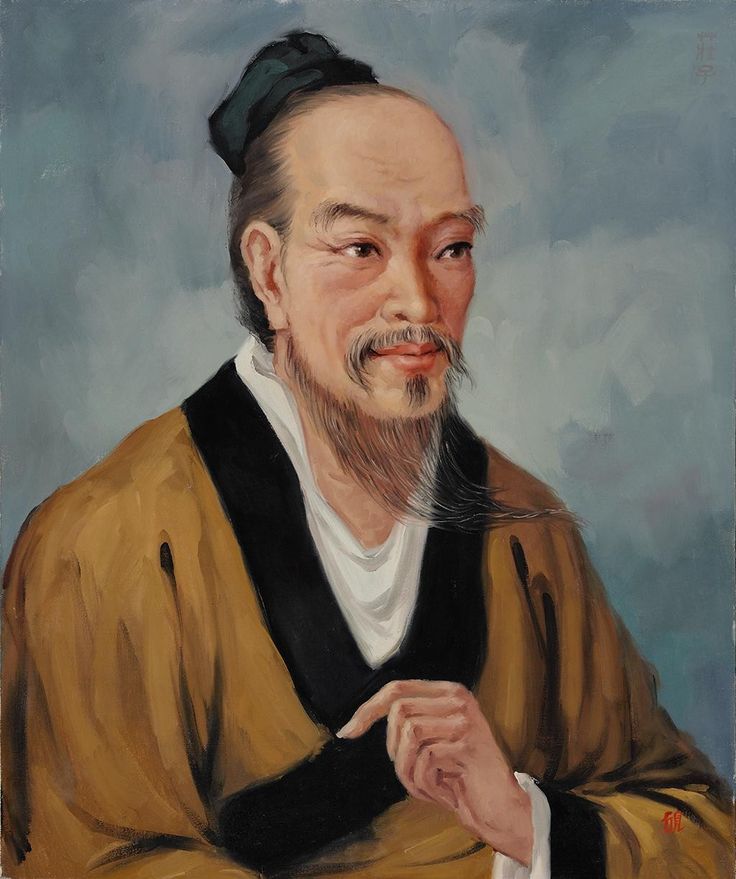
Zhuangzi lived during the Warring States period, an era of political division, military conflict, and extraordinary intellectual activity in ancient China. Although the precise details of his life remain uncertain, he is traditionally placed in the fourth century BCE, when philosophers from different traditions were debating some of the most fundamental questions about human life, knowledge, morality, government, and the nature of reality.
This intellectual environment produced several major traditions, including Confucianism, Mohism, Legalism, and the currents of thought later described as Daoist. Thinkers offered competing answers to questions such as how society should be governed, whether moral distinctions have an objective foundation, how human beings should cultivate themselves, and whether conventional institutions genuinely reflect the deeper nature of reality.
Zhuangzi's philosophy developed within this rich intellectual environment but often approached such questions from a radically different direction. Rather than beginning with a fixed program for reforming society, his writings repeatedly question whether rigid human categories are sufficient for understanding the world. They explore how attachment to fixed standards and perspectives can prevent people from responding freely and intelligently to the constant transformations of life.
The result is a philosophy that is difficult to reduce to a simple set of doctrines. The Zhuangzi uses stories, paradoxes, conversations, and striking images to challenge readers rather than merely supplying them with conclusions. This distinctive style is itself part of the philosophical project, because Zhuangzi frequently questions whether ordinary language and conventional argument can completely capture the complexity of reality.
Why Is Zhuangzi Important in Chinese Philosophy?
Zhuangzi is important because the philosophy associated with his name developed one of the most sophisticated and distinctive approaches within classical Daoist thought. His writings explore how human beings become confined by limited perspectives and how a deeper form of freedom might become possible when people loosen their attachment to rigid judgments and conventional assumptions.
Rather than presenting philosophy simply as a collection of doctrines or rules, the Zhuangzi frequently uses stories, paradoxes, humor, and imaginative transformations to unsettle familiar ways of thinking. Readers are often encouraged to experience a shift in perspective rather than merely accept a proposition as true. This literary method has made the work one of the most distinctive achievements of classical Chinese philosophical writing.
Zhuangzi's thought has had a lasting influence on Chinese intellectual and literary history. It has also attracted modern philosophical attention in discussions concerning skepticism, relativism, language, perspective, personal identity, freedom, psychology, ecology, and comparative philosophy. However, modern interpretations should be distinguished from the historical context of the ancient text rather than simply projecting contemporary ideas directly onto Zhuangzi.
His continuing importance also comes from the questions his philosophy raises about certainty itself. How much can any individual perspective genuinely know? When are social distinctions useful, and when do they become restrictive? What would it mean to live skillfully without constantly forcing the world to conform to our expectations? These questions continue to make Zhuangzi relevant to philosophical reflection today.
What Did Zhuangzi Believe?
Zhuangzi's philosophy emphasizes living in accordance with the Dao, or "Way," while recognizing that ordinary human perspectives are limited, situated, and subject to change. The Dao cannot simply be treated as one object among other objects in the world. Instead, it provides a way of thinking about the larger processes and transformations within which human beings themselves exist.
Zhuangzi repeatedly questions the tendency to treat one particular human perspective as absolutely correct. What appears useful from one point of view may appear useless from another, and what seems correct in one situation may become inappropriate when circumstances change. His concern is therefore not merely with disagreement but with the deeper limitations built into the ways human beings classify and judge experience.
Zhuangzi consequently encourages a flexible and responsive approach to life. His philosophy values spontaneity, openness, and the ability to move beyond rigid distinctions when those distinctions no longer help us understand a situation. This does not necessarily mean that every belief is equally true or that nothing can be known; rather, it means that claims to complete and final certainty deserve philosophical caution.
At its deepest level, the philosophy associated with Zhuangzi asks how a person can live without becoming psychologically trapped by fear, ambition, social status, fixed identities, or narrow judgments. Freedom, in this context, is not simply the ability to choose whatever one wants. It involves becoming capable of responding to the world with greater flexibility and less unnecessary resistance.
What Is the Dao in Zhuangzi's Philosophy?
The Dao is one of the central concepts in classical Daoist philosophy. The Chinese word dao can mean a way, path, course, or method, but in philosophical contexts it can also refer to the larger way in which reality unfolds. The term therefore has a broader meaning than a simple physical road or a fixed set of moral instructions.
Zhuangzi does not treat the Dao as a simple object that can be completely captured by an ordinary definition. Human beings use names and concepts to divide experience into categories, but the world is constantly changing and may not fit neatly within the boundaries created by language. A concept can be useful without exhausting the reality it attempts to describe.
Understanding the Dao therefore involves more than memorizing a philosophical formula. It involves developing a way of responding to changing circumstances without attempting to force every experience into rigid conceptual patterns. Zhuangzi's stories frequently show people becoming wiser when they cease to insist that reality must conform completely to their preferred expectations.
This is also why the Dao is closely connected with transformation in the Zhuangzi. Human beings, animals, natural processes, life, and death all exist within a world of change. The philosophical challenge is not to escape change entirely but to understand how one might participate in it without becoming dominated by rigid attachments and unnecessary resistance.
Zhuangzi on Spontaneity and Living Naturally

A major theme in Zhuangzi's philosophy is spontaneity. Human beings can become constrained by artificial expectations, rigid rules, social status, ambition, and fixed judgments about how life is supposed to unfold. When these expectations become absolute, they may prevent a person from recognizing what a particular situation actually requires.
Zhuangzi presents an alternative in which a person becomes highly responsive to circumstances rather than constantly attempting to impose a predetermined plan upon them. This responsiveness does not mean passively accepting everything that happens. Instead, it suggests a form of practical flexibility in which action emerges from careful attunement to the concrete situation.
This does not mean acting carelessly, impulsively, or randomly. Zhuangzi's ideal of spontaneous action is closer to skilled responsiveness: the ability to move naturally with circumstances without unnecessary internal conflict or artificial forcing. The person who has developed such responsiveness may appear effortless precisely because understanding and action have become deeply integrated.
Spontaneity is therefore connected with freedom. A person dominated by rigid habits of thought may technically possess many choices while still being psychologically trapped by fear or convention. Zhuangzi's philosophical ideal involves becoming less constrained by these fixed patterns and more capable of responding creatively to the transformations of life.
Zhuangzi and Wu Wei: Effortless Action
Zhuangzi's thought is closely connected with the Daoist idea of wu wei, often translated as "non-action," "effortless action," or "action without forcing." Each translation can be misleading if understood too literally, because the concept does not normally describe a simple refusal to act or a demand for complete inactivity.
Wu wei is better understood as action that does not involve unnecessary force or resistance against the natural development of a situation. A person may act with considerable skill and effectiveness while avoiding the kind of strained interference that comes from attempting to control everything according to a rigid preconceived plan.
Zhuangzi illustrates this kind of skilled responsiveness through stories of people whose extraordinary abilities appear almost effortless. Their skill does not result from magical passivity. Instead, long familiarity and deep attentiveness allow them to respond to the actual structure of their activity rather than repeatedly forcing themselves against it.
In this sense, wu wei connects practical skill with a broader philosophical ideal. The most effective action may sometimes occur when a person stops struggling to impose unnecessary distinctions between themselves and the situation before them. Action becomes more fluid when the agent is capable of responding directly and appropriately to changing circumstances.
Zhuangzi's Butterfly Dream Explained

The Butterfly Dream is perhaps the most famous story associated with Zhuangzi. In the story, Zhuang Zhou dreams that he is a butterfly, moving freely and experiencing life as a butterfly without being aware that he is Zhuang Zhou. The passage is brief, but its philosophical implications have generated centuries of interpretation.
When he wakes, he wonders whether he is Zhuang Zhou who dreamed of being a butterfly, or a butterfly now dreaming of being Zhuang Zhou. The question does not simply provide a puzzle about sleep. It unsettles the apparent certainty with which human beings normally distinguish between different states of consciousness and different ways of identifying themselves.
The story raises questions about the reliability of ordinary distinctions between dream and waking, self and other, and one state of existence and another. It also introduces the broader theme of transformation: identities that appear stable from within one perspective may look different when viewed from another point of experience.
The Butterfly Dream should not necessarily be reduced to the claim that "nothing is real." Its deeper philosophical force comes from questioning whether human beings can always be as certain about their categories, identities, and perspectives as they assume. The story invites philosophical humility by showing how easily an apparently secure standpoint can itself become open to question.
Zhuangzi on Knowledge, Perspective, and Truth
Zhuangzi frequently examines the limitations of human knowledge. People naturally assume that their own perspective provides a sufficiently complete picture of reality, yet different beings, environments, experiences, and circumstances can reveal different aspects of the world. What appears obvious from one position may look entirely different from another.
His famous discussions of perspective show that judgments about knowledge often depend upon where the observer stands. Human beings may regard their own standards as natural or universal without recognizing the conditions that have shaped those standards. Zhuangzi therefore uses contrasts between different creatures and different viewpoints to expose the limitations of treating one local perspective as the measure of all reality.
Zhuangzi's approach is consequently sometimes described as philosophical skepticism, although this description can be too simple if it suggests that he merely believed knowledge to be impossible. His writings do not simply advocate intellectual paralysis. Instead, they challenge overconfidence and encourage a more flexible awareness of the limits and conditions of human judgment.
This philosophical caution has an ethical dimension as well. Recognizing that one's perspective is limited can make a person less dogmatic and more capable of responding to unfamiliar situations. In Zhuangzi's thought, a wiser relationship to knowledge may therefore involve not only acquiring information but also learning when one's concepts and judgments need to be reconsidered.
Zhuangzi on Language and the Limits of Words
Zhuangzi was deeply interested in the relationship between language and reality. Human beings use words to divide experience into categories such as right and wrong, this and that, useful and useless. These distinctions are essential to ordinary communication, but Zhuangzi repeatedly asks whether the categories created by language should be mistaken for the complete and permanent structure of reality itself.
These distinctions can be useful, but Zhuangzi warns that they can also become rigid. When people become completely attached to particular names or classifications, they may forget that alternative perspectives and changing circumstances can alter how a situation appears. Language can guide thought, but it can also encourage the illusion that reality is permanently divided according to the boundaries established by human concepts.
This is one reason why the Zhuangzi often communicates through stories, paradoxes, humor, and imaginative transformations rather than through a single systematic philosophical vocabulary. The literary form repeatedly prevents readers from settling too comfortably into one final interpretation and instead encourages movement between different points of view.
Zhuangzi's concern is therefore not simply that words are useless. Without language, philosophical discussion would be impossible. The deeper problem arises when people forget the limitations of their linguistic tools and assume that the words they use provide an absolute and complete map of a reality that is far more complex and constantly changing.
Zhuangzi's "Equality of Things" and Different Perspectives
One of the best-known philosophical discussions in the Zhuangzi is often translated as the "Equality of Things" or "Discussion on Making All Things Equal." The passage is central to modern discussions of Zhuangzi because it examines how human beings establish distinctions and then often treat those distinctions as unquestionable features of reality.
The discussion examines the ways human beings create judgments between things. People naturally classify some things as desirable, beautiful, useful, correct, or superior, while rejecting others as undesirable, ugly, useless, mistaken, or inferior. Zhuangzi asks readers to consider whether these judgments always possess the absolute certainty that people commonly attribute to them.
Zhuangzi's point is not simply that all differences disappear or that every possible distinction is meaningless. Rather, he investigates how human judgments depend upon perspective and how different beings can encounter the world differently. The philosophical challenge is to recognize both the practical usefulness of distinctions and the danger of becoming completely imprisoned by them.
This perspective helps explain why Zhuangzi remains important in discussions of language, relativism, knowledge, and judgment. His philosophy does not offer an easy formula according to which every opinion is equally valid. Instead, it repeatedly exposes the difficulty of claiming that one narrow human standpoint has achieved a final and universal understanding of the whole.
Zhuangzi on the Useful and the Useless
Zhuangzi frequently challenges ordinary assumptions about usefulness. Societies tend to value people and things according to practical functions, social status, economic productivity, political importance, or conventional standards of success. The Zhuangzi repeatedly asks whether these familiar measures provide an adequate account of what is genuinely valuable.
Several stories in the Zhuangzi explore the unexpected value of what appears useless. Something that seems undesirable according to one standard may possess a different kind of value from another perspective. A tree that is unsuitable for ordinary practical purposes, for example, may survive precisely because no one considers it useful enough to cut down.
These stories encourage readers to question whether conventional measures of success and usefulness are as universal as they initially appear. The value of a person or thing may not be exhausted by its immediate usefulness to those who wish to control, employ, classify, or profit from it.
The theme also connects with Zhuangzi's broader understanding of freedom. A person whose worth is defined entirely by external standards may become trapped by the constant need for recognition and usefulness. By questioning these standards, Zhuangzi opens philosophical space for forms of existence whose value cannot easily be measured by ordinary social expectations.
Zhuangzi's Philosophy of Freedom and the Free Person
Freedom is a central theme in Zhuangzi's philosophy. He is concerned with the ways people become psychologically constrained by social expectations, rigid judgments, desires, fears, ambition, and fixed ideas about who they are supposed to be. These forms of attachment can limit a person even when no obvious external force is physically preventing action.
The ideal person in Zhuangzi's philosophy is not simply someone who ignores society or withdraws completely from every relationship. Instead, the ideal involves a deeper flexibility: the ability to adapt to changing circumstances without becoming permanently trapped by narrow judgments or conventional categories of success and failure.
This freedom is closely connected with spontaneity and with the ability to move beyond rigid attachment to one particular perspective. The freer person is capable of responding to transformation without demanding that life remain permanently stable. Such freedom therefore involves a transformation in how one understands oneself and one's relationship to the changing world.
Zhuangzi's idea of freedom is consequently more complex than simple individual independence. A person may reject external authority yet remain dominated by fear, desire, or pride. The deeper philosophical problem is how to become less internally constrained by the fixed patterns of judgment that prevent flexible and appropriate engagement with reality.
Zhuangzi on Death, Change, and Transformation
Zhuangzi's philosophy contains striking reflections on death and transformation. Rather than treating death only as an absolute opposite of life, the Zhuangzi often considers life and death as interconnected transformations within a larger and continually changing process. Human resistance to death is therefore examined alongside the broader tendency to cling to particular forms of existence as permanent.
One famous story describes Zhuangzi responding to the death of his wife in a way that appears surprising to conventional expectations of grief. The story reflects on her earlier nonexistence, the transformations through which life emerged, and the further transformation represented by death. Its point is not simply that grief should be mechanically eliminated but that death may be reconsidered within a larger process of change.
Zhuangzi does not provide a simple doctrinal promise about exactly what happens after death. Instead, his stories encourage readers to reconsider the human tendency to treat one particular state of existence as permanent and absolute. Life itself is already characterized by continual change, development, loss, and transformation.
This perspective can be understood as an attempt to loosen the rigid opposition between categories that human beings commonly treat as completely separate. Just as waking and dreaming, useful and useless, or self and other can become philosophically complicated in the Zhuangzi, life and death are also examined within a wider world of transformation.
Zhuangzi and Nature
Zhuangzi's philosophy repeatedly emphasizes the changing processes of the natural world. Human beings are not completely separate from these processes; they are themselves participants in a constantly transforming reality. Animals, plants, landscapes, bodies, and human societies all appear in the Zhuangzi as part of a world that exceeds narrow human classifications.
This perspective encourages humility. Instead of assuming that human categories completely explain nature, Zhuangzi asks readers to become more attentive to the diversity, complexity, and unpredictability of existence. The world does not necessarily organize itself according to human ambitions, political systems, or conventional judgments about value.
His philosophy therefore has an important place in modern discussions of humanity's relationship with the natural world. Readers have found in the Zhuangzi resources for criticizing excessive human control and for emphasizing interdependence and responsiveness. However, modern environmental interpretations should not simply be projected back onto the ancient text as if Zhuangzi had developed a modern theory of ecology.
What can be said more securely is that the Zhuangzi consistently challenges an excessively human-centered confidence in fixed standards. Encounters with animals, natural processes, and unfamiliar forms of life often reveal the limits of ordinary human assumptions and invite readers to reconsider their own place within the wider processes of transformation.
Zhuangzi and the Skill of Living Naturally
Some of the most memorable stories in the Zhuangzi describe people who develop extraordinary practical skills. Their actions seem effortless because they no longer rely on conscious force and mechanical calculation at every moment. Through long experience, attention, and practice, they become deeply responsive to the particular structure of what they are doing.
The famous story of Cook Ding is a particularly clear example. Cook Ding cuts up an ox with remarkable ease because his movements have become responsive to the natural spaces and structure involved in the task. Rather than forcing his knife through resistance, he follows the patterns already present in the activity.
The story provides a powerful image for Zhuangzi's broader philosophy: genuine mastery can involve becoming so attuned to circumstances that action becomes fluid rather than forced. This does not mean that skill requires no effort to develop. On the contrary, apparent effortlessness may be the result of long cultivation that has transformed how a person perceives and acts.
Skilled action therefore becomes a philosophical metaphor as well as a practical example. The ideal way of living may involve learning to recognize the patterns and possibilities within a situation rather than approaching every problem through unnecessary force. Wisdom is expressed not only in abstract knowledge but also in the capacity to act appropriately.
Zhuangzi's Main Philosophical Ideas
Although the Zhuangzi is not a conventional philosophical textbook organized around a single systematic doctrine, several recurring themes are central to understanding the philosophy associated with Zhuangzi. These themes are closely connected and should not be treated as completely independent theories.
Living According to the Dao
Zhuangzi emphasizes responding to the changing world rather than constantly trying to force reality to conform to rigid human expectations. Living in accordance with the Dao involves a form of attunement to larger processes of transformation and a recognition of the limits of narrow human control.
Spontaneity
The ideal of spontaneous action involves flexibility and responsiveness rather than careless or random behavior. A spontaneous person is capable of acting appropriately without becoming trapped in unnecessary calculation, artificial self-consciousness, or rigid attachment to predetermined rules.
Freedom from Rigid Judgments
Zhuangzi challenges fixed judgments about what is right, wrong, useful, useless, beautiful, ugly, successful, or unsuccessful. His aim is not necessarily to abolish every practical distinction but to reveal how easily human beings mistake their own limited classifications for absolute truths.
Limits of Human Knowledge
Human beings possess limited perspectives, and Zhuangzi repeatedly questions the assumption that one perspective gives complete access to reality. Philosophical wisdom therefore includes awareness of the conditions and limitations that shape one's own judgments.
Transformation
Life is characterized by constant change and transformation. Zhuangzi encourages readers to understand themselves not as permanently fixed and isolated entities but as participants in processes that continually alter bodies, identities, relationships, and the world around them.
What Is the Zhuangzi Book?
The Zhuangzi is the major text associated with Zhuangzi and is one of the foundational works of classical Daoist philosophy. It is also one of the great literary works of the classical Chinese tradition, combining philosophical argument with stories, dialogues, fictional encounters, paradoxes, humor, and imaginative accounts of transformation.
The received version of the text contains 33 chapters and is traditionally divided into three groups: the Inner Chapters, the Outer Chapters, and the Miscellaneous Chapters. The form in which the complete text survives is closely associated with the later editor and commentator Guo Xiang, whose recension became the basis of the received tradition.
The seven Inner Chapters are traditionally regarded as the section most closely connected with Zhuangzi himself, although questions about authorship, dating, and textual development remain important areas of scholarly discussion. Many scholars continue to treat them as especially important for reconstructing the thought of the historical Zhuangzi, while recognizing that absolute certainty about authorship is difficult.
The complete text contains material from different periods and philosophical perspectives. It is therefore more accurate to understand the Zhuangzi as a developing textual tradition rather than assuming that every surviving passage was personally written by one historical author. The complexity of the text is itself one of the reasons why Zhuangzi scholarship continues to involve substantial debates about authorship and interpretation.
The Inner Chapters of the Zhuangzi
The Inner Chapters consist of the first seven chapters of the received Zhuangzi. They have traditionally been regarded as the part of the text most closely associated with the historical Zhuangzi and remain central to attempts to understand the earliest layers of the philosophical tradition bearing his name.
Important themes include spontaneity, transformation, perspective, language, freedom, self-cultivation, and the limitations of rigid human judgment. The chapters often approach these subjects indirectly through memorable stories rather than presenting them as parts of a formally organized philosophical system.
The Inner Chapters include famous passages associated with the Butterfly Dream, the discussion commonly translated as the Equality of Things, and the story of Cook Ding. These narratives have become some of the best-known examples of classical Chinese philosophical writing because they combine literary imagination with difficult questions about knowledge and human life.
Nevertheless, the traditional identification of the Inner Chapters with a single historical author should be treated with scholarly caution. The textual history of the Zhuangzi is complex, and modern researchers continue to debate how its different layers developed. The traditional attribution remains influential, but it should not be presented as an unquestionable historical certainty.
Zhuangzi and Laozi: What Is the Difference?
Zhuangzi and Laozi are the two figures most commonly associated with classical philosophical Daoism. Laozi is traditionally associated with the Daodejing, while Zhuangzi is associated with the Zhuangzi. Together, these texts became central sources for later understandings of Daoist philosophy, although their historical formation and authorship are themselves subjects of scholarly debate.
Both traditions emphasize the Dao, naturalness, and the limitations of excessive human interference. However, their literary styles and philosophical emphases are different. The Daodejing often expresses its ideas through concise and highly compressed passages, while the Zhuangzi develops philosophical questions through elaborate stories, dialogues, humor, paradox, and imaginative transformations.
The Daodejing is famous for its concise poetic language, whereas the Zhuangzi frequently invites readers into changing perspectives through narrative. Zhuangzi's philosophical method is therefore often more playful and expansive, using apparently strange situations to reveal the limitations of ordinary assumptions about knowledge, morality, identity, and practical success.
It is also important to distinguish historical evidence from later philosophical tradition. The precise historical identities, dates, and relationships associated with Laozi and Zhuangzi remain subjects of scholarly discussion. It is therefore safer to compare the philosophical texts and traditions associated with their names than to assume a simple historical relationship between two fully documented individuals.
Zhuangzi and Confucius
Zhuangzi developed in an intellectual environment in which Confucianism was one of the major philosophical traditions. Confucian thinkers emphasized moral cultivation, human relationships, ritual, education, and responsible participation in social life. The Zhuangzi frequently engages with this intellectual world, sometimes through direct criticism and sometimes through more complex literary reinterpretations.
The Zhuangzi sometimes presents Confucius and his disciples as characters in its stories. These appearances can be humorous, critical, or surprisingly sympathetic, and they should not be interpreted as simple historical records of what Confucius actually said. The literary Confucius of the Zhuangzi often serves philosophical purposes specific to the argument or story in which he appears.
The contrast is nevertheless philosophically important. Confucian philosophy places substantial emphasis on ethical cultivation, social relationships, ritual, and responsible conduct, while Zhuangzi frequently questions rigid social conventions and fixed moral distinctions. His writings ask whether conventional standards always reflect a deeper understanding of human life.
The relationship should therefore not be reduced to a simple opposition between two completely isolated systems. The traditions developed within the same broader intellectual world and engaged many overlapping questions. Their disagreements about cultivation, knowledge, social norms, and the proper relationship between human beings and the larger order of reality helped shape the development of Chinese philosophy.
Zhuangzi's Influence on Chinese Philosophy
Zhuangzi became one of the most influential figures in the history of Chinese thought. The text associated with his name influenced later developments of Daoism and contributed to wider discussions concerning language, knowledge, selfhood, nature, freedom, transformation, and spiritual cultivation.
His influence became especially significant as later Chinese thinkers reconsidered the relationship between classical philosophical traditions. Daoist, Confucian, and Buddhist thinkers encountered and interpreted the Zhuangzi in different historical contexts, often developing new readings of its stories and philosophical themes.
The distinctive literary style of the Zhuangzi also helped preserve its philosophical influence. Its stories and paradoxes can be approached repeatedly from different perspectives, and later readers have continued to find new questions within passages that resist a single final interpretation.
Beyond philosophy in the narrow academic sense, the Zhuangzi influenced Chinese literature, artistic culture, religious thought, and ideals of personal cultivation. Its combination of philosophical depth and imaginative writing ensured that the work remained important not merely as a historical document but as a living source of interpretation across many centuries.
What Do We Actually Know About Zhuangzi?
As with many ancient philosophers, separating historical information from later tradition requires caution. The historical evidence concerning Zhuangzi is limited compared with the evidence available for many modern thinkers, and biographical traditions should therefore be distinguished from conclusions that can be established with greater confidence.
Relatively Well Established
- Zhuangzi is traditionally associated with the name Zhuang Zhou.
- He is generally placed in the intellectual world of the Warring States period.
- He became one of the central figures associated with philosophical Daoism.
- A major philosophical text known as the Zhuangzi bears his name and preserves ideas associated with him.
Traditionally Attributed
- Specific biographical details about his life and career.
- The claim that he personally composed every passage in the received Zhuangzi.
- Some stories describing conversations between Zhuangzi and other historical figures.
Important Scholarly Caution
The received Zhuangzi is a composite text that developed over time. The seven Inner Chapters have traditionally been treated as the material most closely associated with Zhuangzi, while the remaining chapters contain material connected with other authors and later intellectual traditions. Modern scholarship, however, continues to debate the precise dating and authorship of different parts of the text.
Zhuangzi Philosophy Explained Simply
Zhuangzi was an ancient Chinese philosopher associated with Daoism who questioned rigid assumptions about reality, knowledge, morality, and human life. His philosophy encourages people to recognize that their ordinary categories and judgments may reflect only one limited perspective rather than the complete structure of reality.
He explored how people can become trapped by fixed identities, social expectations, fears, and narrow judgments. By becoming more flexible, spontaneous, and responsive to change, a person may achieve a deeper form of freedom. This does not mean abandoning all thought or acting without care; it means learning not to force every experience into rigid expectations.
- Tradition: Classical Daoism
- Main text: The Zhuangzi
- Major theme: Freedom through flexibility and responsiveness
- Famous story: The Butterfly Dream
- Important concepts: Dao, spontaneity, wu wei, perspective, transformation, and the limits of language
- Historical importance: One of the most influential philosophers in classical Chinese Daoist thought
A Famous Passage Associated with Zhuangzi
"Once upon a time, I dreamed I was a butterfly."
Frequently Asked Questions About Zhuangzi
Who was Zhuangzi?
Zhuangzi was an ancient Chinese philosopher traditionally associated with the fourth century BCE and with the Daoist philosophical tradition. He is best known for the ideas and stories preserved in the Zhuangzi.
What is Zhuangzi famous for?
Zhuangzi is famous for his Daoist philosophy, his reflections on freedom, spontaneity, knowledge, language, transformation, and perspective, and especially for the famous Butterfly Dream.
What did Zhuangzi believe?
Zhuangzi emphasized living in accordance with the Dao, responding flexibly to change, and avoiding rigid attachment to limited human perspectives and judgments.
What is Zhuangzi's philosophy?
Zhuangzi's philosophy is a major form of classical Daoist thought concerned with naturalness, spontaneity, freedom, transformation, perspective, language, and the limits of human knowledge.
What is the Butterfly Dream of Zhuangzi?
The Butterfly Dream is a famous story in which Zhuang Zhou dreams that he is a butterfly and, after waking, questions whether he is Zhuang Zhou who dreamed of being a butterfly or a butterfly dreaming of being Zhuang Zhou.
What does Zhuangzi say about reality?
Zhuangzi challenges the assumption that human beings always possess a complete or fixed understanding of reality. His discussions emphasize changing perspectives, transformation, and the limitations of language and judgment.
What does Zhuangzi mean by Dao?
Dao means "Way" or "path" and is a central concept in Daoist philosophy. In Zhuangzi's thought, it is associated with the processes through which things unfold and change rather than being merely a fixed object that can be completely defined.
What is wu wei according to Zhuangzi?
Wu wei is commonly translated as "non-action" or "effortless action." In Zhuangzi's philosophy, it is better understood as action that does not unnecessarily force or resist the natural development of a situation.
Was Zhuangzi a Daoist?
Zhuangzi is traditionally regarded as one of the major philosophers of classical Daoism. The term "Daoist" is useful for describing the philosophical tradition associated with him, although modern categories should be used carefully when discussing ancient Chinese thought.
What is the Zhuangzi book?
The Zhuangzi is a major classical Chinese philosophical text associated with Zhuangzi. The received version contains 33 chapters and includes philosophical stories, dialogues, arguments, and imaginative passages.
Did Zhuangzi write the entire Zhuangzi?
Not according to the dominant scholarly understanding of the received text. The Zhuangzi is a composite work that developed over time. The seven Inner Chapters are generally regarded as most closely associated with Zhuangzi.
What is Zhuangzi's relationship with Laozi?
Zhuangzi and Laozi are the two figures most strongly associated with classical philosophical Daoism. Zhuangzi's philosophy shares important themes with the tradition associated with the Daodejing, but the two texts have different styles and philosophical emphases.
Why is Zhuangzi important today?
Zhuangzi remains important because his questions about perspective, freedom, language, knowledge, identity, and change continue to be relevant to philosophical discussions about how human beings understand themselves and the world.
Related Chinese Philosophers and Thinkers
Zhuangzi belongs to a rich tradition of ancient Chinese philosophy. Explore other major thinkers who developed different approaches to ethics, government, human nature, knowledge, and the Dao.
Philosophy Branches Connected to Zhuangzi
Zhuangzi's philosophy connects with several major areas of philosophical inquiry, particularly questions about knowledge, reality, language, human existence, and the relationship between people and the natural world.
Why Zhuangzi Still Matters
Zhuangzi remains one of the most distinctive voices in the history of Chinese philosophy. His writings challenge readers to reconsider assumptions about knowledge, identity, language, morality, freedom, and reality.
Rather than providing a rigid philosophical system, Zhuangzi uses stories, paradoxes, humor, and imaginative transformations to encourage a more flexible way of thinking. His philosophy asks us to recognize the limits of our own perspective and to respond more naturally to change.
From the Butterfly Dream to the stories of skilled action and transformation, Zhuangzi's philosophy continues to raise questions that remain relevant: How certain are we about what we know? How much of our reality is shaped by our perspective? And how can a person live freely within a constantly changing world?
Explore Great Philosophers