Who Was Confucius?
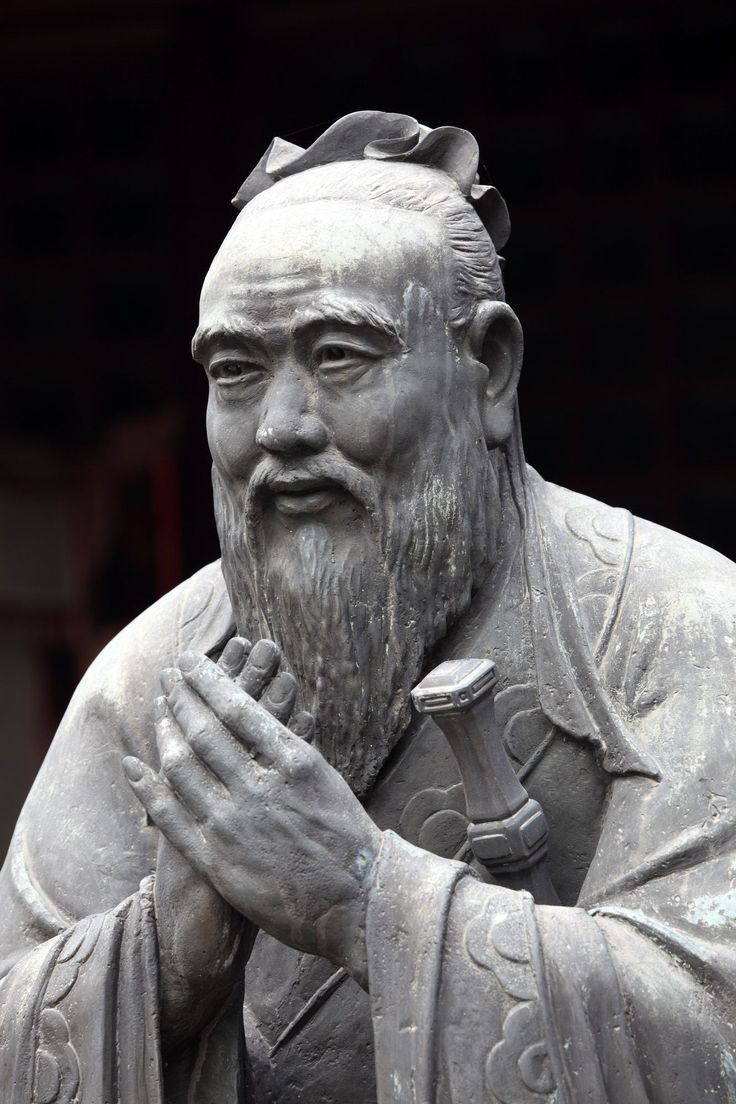
Confucius (traditionally dated 551–479 BCE) was an ancient Chinese philosopher, teacher, and political thinker whose ideas became enormously influential in Chinese and East Asian intellectual history. He lived during the later Zhou period, when the authority of the Zhou kings had declined and a number of regional states exercised increasing political independence amid rivalry and social change.
Known in Chinese as Kong Qiu and respectfully as Kongzi, or “Master Kong,” Confucius became especially renowned as a teacher. He was concerned with the practical question of how human beings could become better people and how moral individuals might contribute to the creation of stable families, communities, and governments. Education and self-cultivation therefore occupy a central place in the philosophical tradition associated with his name.
Confucius is especially associated with questions about character, human relationships, ritual practice, and political responsibility. His thought emphasizes the gradual cultivation of virtue through learning and disciplined conduct rather than the mere possession of knowledge. Important concepts associated with his teaching include ren, often translated as humaneness or benevolence, and li, referring broadly to ritual propriety and appropriate forms of conduct.
His political thought was closely connected to this concern with moral development. Confucius did not treat good government simply as a matter of laws and punishments; he also emphasized the moral example of those who governed. A well-ordered society, in this view, depended partly upon people fulfilling their responsibilities within the relationships and institutions that structured social life.
The teachings associated with Confucius were preserved primarily through later texts and traditions, especially the Analects, a collection of sayings, conversations, and episodes associated with him. Confucius did not leave behind a philosophical treatise written by himself, and the textual history of the Analects is complex. For this reason, scholars distinguish between the historical Confucius and the many later interpretations and traditions that developed around his name.
Confucius: Life, Philosophy, and Quick Facts
- Name — Confucius, traditionally known in Chinese as Kongzi or Kong Fuzi
- Traditional dates — 551–479 BCE
- From — The state of Lu in ancient China
- Tradition — Ru thought, later associated with Confucianism
- Known for — Ethics, education, ritual, moral cultivation, social relationships, and political philosophy
- Major text associated with his teachings — The Analects
- Important concepts — Ren, li, yi, filial piety, learning, virtue, and moral cultivation
- Historical importance — One of the most influential thinkers in Chinese and East Asian intellectual history
Confucius and Ancient China: Historical Context
Confucius lived during the Spring and Autumn period, traditionally dated 771–476 BCE, when the political authority of the Zhou royal house had weakened and powerful regional states exercised increasing independence. Although the Zhou king remained an important symbolic figure, effective political power was often concentrated in the hands of regional rulers and aristocratic families competing for influence.
This was a period of significant political and social change. The older institutions and rituals associated with the early Zhou order remained culturally important, yet the political world in which they had originally developed had changed considerably. Questions about legitimate authority, good government, social responsibility, and the conduct of rulers therefore acquired particular philosophical and practical importance.
Confucius looked to earlier Zhou traditions as an important source of moral and social guidance. He presented himself not simply as the inventor of an entirely new philosophy but as someone who studied, interpreted, and transmitted valuable practices from the past. The traditions associated with the ancient Zhou provided him with models for thinking about ritual, education, political authority, and the cultivation of moral character.
His appeal to the past, however, should not be understood as a simple desire to reproduce an earlier society exactly as it had existed. Confucius used inherited cultural materials to address the problems of his own age. His teaching asked how individuals could cultivate themselves and how rulers and communities might create a more stable and humane social order.
His philosophy therefore cannot be separated completely from the historical world in which he lived. Questions of family obligation, political authority, ritual, education, and social responsibility were connected to the wider problem of how order could be maintained when political institutions appeared unstable and established values were being challenged by changing social conditions.
What Did Confucius Teach?
Confucius' teachings focused heavily on how people should develop themselves and behave toward others. Rather than reducing his philosophy to a single rule, the teachings associated with him form an interconnected approach to moral cultivation involving virtue, education, ritual, relationships, responsibility, and political life.
A central feature of Confucian thought is the belief that human beings can cultivate their character through sustained learning and practice. Confucius therefore emphasized study, reflection, self-discipline, and the repeated performance of appropriate conduct. Moral excellence was not simply something a person possessed naturally but something that had to be developed throughout one's life.
His teaching also gave considerable importance to human relationships. People do not live in isolation but occupy positions as children, parents, teachers, students, friends, rulers, and subjects. Confucius was interested in how a person could fulfill responsibilities within such relationships while also developing virtues such as humaneness, trustworthiness, and a sense of what is appropriate.
Ritual practice was closely connected with this process of moral cultivation. For Confucius, learning appropriate forms of conduct could shape habits and emotions and help people interact with others in ways suited to particular circumstances. Ritual was therefore not merely ceremonial but formed part of the broader education of character.
His philosophy also connects personal morality with political life. A ruler who behaves virtuously can provide a moral example to others, whereas government based primarily on coercion may secure outward compliance without developing genuine moral understanding. The cultivation of individuals and the character of political leadership were therefore closely connected in Confucian thought.
What Is Ren in Confucius' Philosophy?
Ren is one of the most important concepts associated with Confucius. It is translated in different ways, including benevolence, humaneness, human-heartedness, and sometimes goodness. No single English word captures every use of the term in the Analects, where its meaning can vary according to the context in which it appears.
Ren does not simply describe being pleasant or kind in a superficial sense. It concerns a profound form of moral concern for other human beings and is closely connected with the way a cultivated person responds to others. In some passages, ren appears as a comprehensive form of moral excellence, while in others it is discussed alongside other virtues.
One important way of understanding ren is through the Confucian emphasis on reciprocity and consideration for others. A person should not impose upon others what he would himself find unacceptable. This does not reduce ren to a single formula, but it illustrates the importance Confucius placed on empathy, self-restraint, and awareness of the effects one's conduct has upon other people.
Ren is therefore closely connected with moral cultivation. A person develops the ability to respond appropriately to others through learning, reflection, practice, and the gradual formation of stable moral character. The fully cultivated person does not merely follow external instructions but develops the judgment needed to act well within the changing circumstances of human life.
Ren also cannot be understood entirely apart from other Confucian concepts, especially li and the ideal of the junzi. Humaneness requires appropriate expression within relationships, while ritual and education help cultivate the habits through which moral concern becomes part of a person's character. These concepts therefore form an interconnected ethical framework.
What Is Li in Confucius' Philosophy?
Li is commonly translated as ritual propriety, ritual, or appropriate conduct. The concept refers broadly to patterns of behavior that structure ceremonial, social, and interpersonal life. Its meaning can therefore include formal rituals as well as the standards of conduct appropriate to particular relationships and situations.
For Confucius, ritual was not merely a collection of empty ceremonies. Proper ritual practice could help shape emotions, habits, relationships, and moral character. Learning how to behave appropriately toward parents, guests, teachers, rulers, and others was part of the broader process through which a person became morally cultivated.
The importance of li also reflects the Confucian belief that morality is expressed through concrete forms of life. Good intentions must become visible in speech, conduct, gestures, and relationships. Appropriate forms of behavior can therefore provide a discipline through which people learn respect, restraint, attentiveness, and consideration for others.
At the same time, ritual performance was not valuable merely because it followed an external pattern. Conduct performed without the appropriate moral attitude could become mechanical or insincere. Confucian ethics therefore emphasizes the relationship between outward propriety and inward moral cultivation rather than treating them as entirely separate matters.
Li thus works together with other Confucian virtues. Proper conduct without genuine moral concern can become empty formalism, while moral concern without an understanding of how to act appropriately may fail to sustain good relationships and social order. Ritual, education, and moral character are consequently closely connected throughout the Confucian tradition.
Confucius and Filial Piety: Respect for Parents and Family
Filial piety, commonly translated from the Chinese concept xiao, is an important part of Confucian social philosophy. It concerns the responsibilities and attitudes people should have toward their parents and elders, including respect, care, and an awareness of the obligations created by family relationships.
For Confucius, filial conduct involved more than outward obedience or the performance of formal duties. The Analects repeatedly connects moral conduct toward parents with attitudes such as respect and reverence. Simply providing material support, without the appropriate disposition, was not regarded as sufficient to express the full meaning of filial responsibility.
Confucius also connected family relationships with wider patterns of social responsibility. Learning to behave responsibly within close relationships was understood as part of developing the character needed to participate properly in society. The family could therefore serve as an important setting for the cultivation of moral habits.
Filial piety should nevertheless not be understood simply as blind obedience. Early Confucian discussions recognize the importance of moral judgment and appropriate conduct within relationships, and later Confucian traditions developed more detailed debates concerning the duties that family members owed to one another.
In the broader Confucian framework, family relationships involve reciprocal responsibilities as well as respect and hierarchy. The ethical significance of the family lies partly in the way it provides a concrete setting in which people learn care, responsibility, restraint, and the difficult task of responding appropriately to the particular people with whom they share their lives.
Confucius on Education and Learning
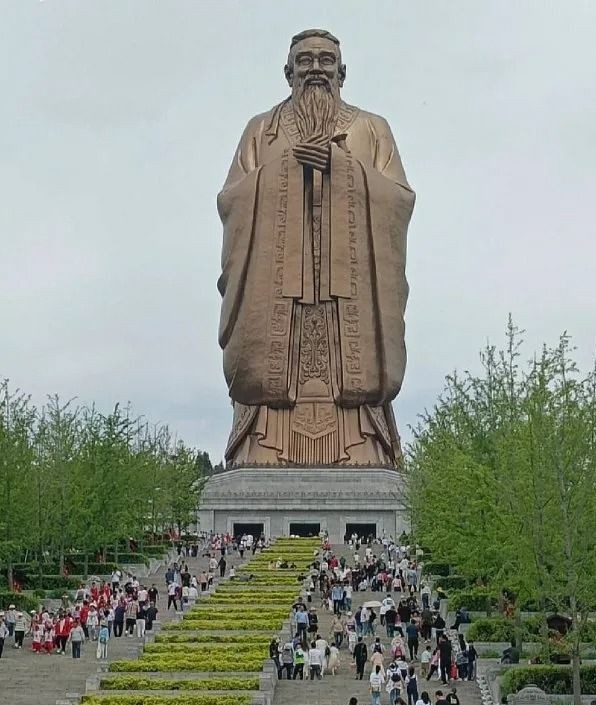
Education is one of the most important themes in Confucius' philosophy. He regarded learning as an essential part of moral development rather than merely a method of acquiring information. Study could help a person understand the accumulated experience of the past while developing the judgment and character needed to act responsibly in the present.
Confucian education involved studying inherited traditions, learning from teachers, reflecting upon what had been learned, and putting knowledge into practice. Confucius did not regard memorization alone as sufficient. Learning had to be connected with thought, reflection, and the gradual transformation of one's conduct and character.
The goal was therefore not simply to become knowledgeable but to become a better person. Education was closely connected with the cultivation of the junzi, the morally exemplary individual. A genuinely educated person should be capable of integrity, appropriate conduct, sound judgment, and responsible participation in social and political life.
Confucius is also traditionally remembered for teaching students from different social backgrounds. The historical details of his teaching career must be treated with some caution because the sources are complex, but the tradition strongly associates him with an emphasis on the value of learning for those willing to undertake serious study and moral cultivation.
His image as a teacher became enormously influential in later East Asian intellectual history. Subsequent Confucian traditions placed great importance on education, textual study, self-cultivation, and the relationship between learning and moral development, even though these traditions interpreted Confucius' legacy in different ways.
Why Is Education Important to Confucius?
Education allows people to develop judgment, discipline, knowledge, and moral character. For Confucius, learning and reflection should work together. Knowledge without thoughtful reflection can remain superficial, while reflection without adequate learning can lead a person into error because serious judgment requires both study and careful consideration.
What Are the Main Virtues in Confucius' Philosophy?
Confucius discussed several qualities that contribute to the development of a morally cultivated person. Different later Confucian traditions organized these virtues in more systematic ways, so it is important not to assume that every familiar list of Confucian virtues represents a formal classification created by Confucius himself.
Nevertheless, concepts such as ren, yi, li, wisdom, and trustworthiness became central to the vocabulary through which Confucian moral thought was discussed. Together they illustrate the broad concern of the tradition with character, moral judgment, appropriate conduct, and responsibility toward other people.
Ren — Benevolence and Humaneness
Ren concerns humaneness and moral concern for other people and is one of the central ethical ideas associated with Confucius. Depending on the context, it can refer either to a particular moral quality or to a more comprehensive form of ethical excellence embodied by the fully cultivated person.
Yi — Righteousness
Yi concerns moral appropriateness and the ability to do what is right rather than simply pursuing personal advantage. It is closely connected with the capacity to recognize what a situation requires and to act from moral considerations rather than immediate self-interest.
Li — Ritual Propriety
Li refers to appropriate ritual and social conduct. It provides forms through which moral attitudes can be expressed and cultivated, shaping habits, relationships, and patterns of interaction. For this reason, ritual propriety occupies an important place in the Confucian understanding of ethical and social life.
Zhi — Wisdom
Zhi, often translated as wisdom, concerns moral and practical understanding. It involves more than the possession of information; a wise person must also be capable of recognizing people and situations accurately and exercising appropriate judgment in the complex circumstances of human life.
Xin — Trustworthiness
Xin concerns reliability, sincerity, and trustworthiness. Human relationships depend partly upon confidence that people will speak and act in ways worthy of trust. The cultivation of such reliability therefore contributes to the stability of personal, social, and political relationships.
What Is the Junzi in Confucian Philosophy?
The term junzi is often translated as gentleman, exemplary person, or noble person. The term originally had associations with aristocratic or political status, but in the Analects it increasingly functions as an ethical ideal defined by cultivated character rather than birth alone.
The junzi develops character through learning, self-discipline, reflection, appropriate conduct, and concern for others. Moral cultivation is therefore an ongoing process rather than a privilege automatically guaranteed by social position. The exemplary person is distinguished primarily by the quality of his conduct and judgment.
Confucius frequently contrasts the junzi with the xiaoren, often translated as the petty or small person. This contrast is primarily moral rather than simply social: the exemplary person is guided by what is right and appropriate, whereas the small person is portrayed as being more concerned with immediate personal advantage.
The ideal of the junzi is important because Confucius connects the quality of society with the character of those who participate in it. Personal moral development therefore has social and political consequences. People capable of self-restraint and responsible judgment can contribute more effectively to stable relationships and good government.
The concept also demonstrates that Confucian philosophy is concerned with the formation of persons rather than merely the regulation of isolated actions. The central question is not only what a person should do in a particular moment, but what kind of character that person is gradually developing through learning, habits, and repeated participation in social life.
Confucius' Ethics: How Should a Person Live?
Confucian ethics focuses on the cultivation of character and the responsibilities that arise within human relationships. Rather than presenting morality only as a list of abstract and universal rules, the teachings associated with Confucius frequently examine how a morally cultivated person should respond appropriately to particular people, roles, and circumstances.
Confucius is also associated with a principle of reciprocity often compared with versions of the Golden Rule. A person should not impose upon others what he would himself find unacceptable. This principle expresses the broader Confucian concern with empathy, self-restraint, and the recognition that one's conduct affects the lives of others.
Reciprocity alone, however, does not exhaust Confucian ethics. Appropriate action requires moral judgment because human situations differ and relationships involve different responsibilities. A person must therefore cultivate the ability to recognize what a particular circumstance demands rather than applying a moral formula without reflection.
Confucian ethics is consequently often discussed in relation to virtue ethics. The focus is not merely on whether an isolated action follows a rule but also on what kind of person someone is becoming through repeated actions, education, relationships, habits, and efforts at self-cultivation.
The ethical life, in this perspective, is deeply social. Moral character develops through interaction with parents, children, teachers, friends, political authorities, and other members of the community. Learning to live well therefore involves both improving oneself and learning how to respond responsibly to the people with whom one's life is connected.
Confucius' Political Philosophy: What Makes a Good Ruler?
Confucius believed that political order depends significantly upon the moral character of rulers and officials. Government should not rely solely on punishment and coercion. A ruler should instead cultivate virtue and provide a moral example capable of encouraging people to develop an internal sense of appropriate conduct.
This emphasis reflects a distinction found in the Analects between securing outward compliance through laws and punishments and guiding people through virtue and ritual propriety. Coercion may discourage certain actions, but Confucius was concerned with a deeper form of moral transformation involving shame, self-restraint, and the voluntary cultivation of appropriate conduct.
A ruler who behaves with integrity can therefore influence society through example. Political leadership is not merely the exercise of administrative power but also a form of moral leadership. Those who hold authority should cultivate themselves because their conduct can shape the wider political and social environment.
This does not mean that Confucius offered a simple political program in which institutions became unnecessary. His political thought is concerned with the character of those who exercise authority, the proper performance of social and political roles, and the moral culture through which a community is held together.
Confucius also regarded political order as connected with the proper use of language and the clarification of social roles. If people do not understand what responsibilities belong to their positions, the ability of institutions to function coherently can be weakened. Political order therefore requires both appropriate structures and people capable of fulfilling their responsibilities.
Why Did Confucius Emphasize Moral Leadership?
Confucius regarded social order as something that cannot be maintained indefinitely through fear alone. People who are educated and morally cultivated are better able to regulate their own conduct, fulfill responsibilities, and maintain stable relationships. Moral leadership was therefore intended to encourage a form of order rooted partly in character rather than dependence upon constant coercion.
Confucius on Family, Society, and Government
Confucian philosophy connects the family with wider social and political relationships. The habits people develop within families can influence how they behave toward teachers, friends, neighbors, officials, rulers, and other members of society. Family life is thus treated as an important setting for learning responsibility and appropriate forms of conduct.
Confucius did not simply treat the family and government as identical institutions. Instead, the teachings associated with him draw connections between different forms of human relationship and ask how moral responsibilities can contribute to order in both private and public life. The obligations of each relationship nevertheless have their own particular character.
An important feature of this framework is the idea of reciprocal responsibility. Hierarchical relationships do not consist solely of duties owed by those in subordinate positions. Rulers, parents, and other people who hold authority also have moral responsibilities concerning the way they exercise their positions and treat others.
The resulting philosophy emphasizes appropriate conduct, moral example, and the responsible fulfillment of social roles. A stable society cannot depend only upon formal institutions if the people within those institutions lack the character and judgment needed to exercise their responsibilities properly.
This connection between self-cultivation, family life, and political order became one of the most influential features of the wider Confucian tradition. Later thinkers developed these ideas in different directions, but the relationship between personal character and the wider moral life of society remained a central concern of Confucian philosophy.
What Is the Rectification of Names in Confucius?
The idea commonly called the rectification of names, or zhengming, is associated with Confucius' concern for the relationship between language, social roles, and conduct. The idea appears in the Analects in discussions of government and the importance of ensuring that words and social realities are properly connected.
The basic idea is that people occupying particular social roles should actually behave according to the responsibilities associated with those roles. A ruler should act as a ruler should, a minister as a minister should, a parent as a parent should, and a child as a child should. A title or name alone does not guarantee that a person genuinely fulfills the role it identifies.
Confucius therefore connects the proper use of names with political and social order. When important terms lose their connection with appropriate conduct, confusion can spread through institutions and relationships. People may claim authority or responsibility without actually performing the duties that give those positions their ethical significance.
The rectification of names should not be understood merely as an abstract theory about dictionaries or linguistic definitions. In its Confucian context, the problem concerns the relationship between what people are called, what society expects from those positions, and how they actually behave in practice.
This idea reflects a wider Confucian concern with restoring order through appropriate conduct. Social titles alone do not create good government or good relationships; the people who occupy particular roles must act responsibly. Later Chinese thinkers, including Xunzi, developed more elaborate discussions of names and language, but their theories should not simply be identified with Confucius' own approach.
The Analects of Confucius: His Most Important Teachings
The Analects, known in Chinese as the Lunyu, is the text most closely associated with the teachings of Confucius. It consists largely of sayings, conversations, and anecdotes involving Confucius and his disciples, as well as material reflecting the concerns of people who understood themselves as inheritors of his intellectual legacy.
The Analects is not a systematic philosophical treatise in the style of a modern textbook. Its discussions move between ethics, education, ritual, political leadership, relationships, learning, and personal conduct. Important ideas are often expressed through brief exchanges rather than developed through long, continuous arguments.
This form makes the Analects both philosophically rich and historically complex. Different passages may emphasize different concerns, and the text does not always present its ideas in a single systematic order. Readers must therefore interpret individual sayings in relation to their context and to the wider collection.
The history of the Analects is also complex. Much, and perhaps all, of the text was composed and transmitted after Confucius' death, and scholars continue to debate the dates and development of its different materials. It should therefore not be treated as a simple verbatim record of everything Confucius personally said.
Nevertheless, the Analects remains the most important surviving source for understanding the philosophical figure of Confucius and the early tradition associated with his name. Its influence on later Chinese and East Asian intellectual history was immense, particularly through the interpretations developed by later Confucian thinkers and schools.
Did Confucius Write the Analects?
The Analects is traditionally associated with Confucius, but it was not written by Confucius as a single systematic philosophical book. The text preserves sayings, conversations, and episodes associated with him and with his intellectual legacy, and its materials were transmitted and shaped over time by later generations.
Traditional accounts often connect the compilation of the Analects with Confucius' disciples and their successors. Modern scholarship, however, treats the formation of the text as a more complicated historical process. Its chapters contain materials that may have originated in different periods and intellectual communities.
This distinction is important when studying Confucius historically. The Analects is a major source for reconstructing teachings associated with him, but the relationship between the historical Confucius and the final transmitted text is not straightforward. Scholars must therefore consider questions of authorship, transmission, dating, and interpretation.
Confucius is also traditionally associated with the transmission and interpretation of earlier Chinese cultural texts and traditions. Claims about his precise role in editing particular classical works, however, are historically difficult and remain matters requiring careful distinction between later tradition and secure historical evidence.
Later interpreters developed very different understandings of Confucius' teachings. As a result, there is not one completely uncontested interpretation of what Confucius originally believed. The Confucius known through later Confucian traditions is partly the result of centuries of interpretation as well as the early materials preserved in texts such as the Analects.
What Is Confucianism?
Confucianism is the name commonly used for a broad intellectual, ethical, educational, social, and political tradition that developed from teachings associated with Confucius and later thinkers. The tradition has changed significantly over more than two thousand years and cannot be reduced to the ideas of a single person or historical period.
Confucius himself did not necessarily think of himself as founding a philosophical system called "Confucianism." He often presented himself as transmitting and interpreting valuable traditions from the past. The tradition associated with his name developed gradually as later thinkers interpreted, expanded, criticized, and transformed the ideas found in early Confucian texts.
Important early Confucian thinkers include Mencius and Xunzi, who developed substantially different philosophical accounts of morality, human nature, education, ritual, and political order. Their disagreements demonstrate that the Confucian tradition was never completely philosophically uniform.
Much later, thinkers such as Zhu Xi and Wang Yangming developed influential forms of what is often called Neo-Confucianism. These philosophers introduced highly developed metaphysical and epistemological frameworks that cannot simply be projected backward onto the historical Confucius.
Confucian traditions became deeply influential in the intellectual and cultural histories of China, Korea, Japan, Vietnam, and other parts of East Asia. Across these different societies and periods, Confucianism took diverse forms while continuing to engage with questions of moral cultivation, education, ritual, relationships, and political order.
What Did Confucius Believe About Human Nature?
Confucius did not develop a single systematic theory of human nature comparable to those later formulated by Mencius and Xunzi. The teachings associated with him are more directly concerned with how people can cultivate themselves through learning, practice, relationships, ritual, and sustained moral development.
The Analects does contain reflections relevant to human differences and moral development. Confucius is traditionally represented as observing that people may be similar in some respects by nature while becoming different through practice. Such passages, however, do not amount to a fully developed theory explaining whether human nature is fundamentally good, bad, or morally neutral.
His emphasis on education suggests that human beings can develop their character through sustained effort. People are not simply defined by their initial condition; learning, reflection, ritual practice, and moral discipline can transform how they think, feel, and behave over the course of a lifetime.
Later Confucian philosophers developed much more explicit theories of human nature. Mencius, for example, became famous for arguing that human beings possess morally valuable tendencies that can be cultivated and developed, although people may fail to preserve and extend those tendencies.
Xunzi developed a sharply different account. He argued that the inborn tendencies and desires he called human nature would, if followed without cultivation, lead to harmful conflict and disorder. Yet Xunzi also believed that human beings can become good through conscious effort, education, ritual, and moral transformation.
The debate between Mencius and Xunzi became one of the most important discussions in the history of Confucian philosophy. It also shows why Confucius himself should not simply be assigned one of their later theories: the early teachings associated with him leave important questions about the precise nature of human beings less systematically defined.
Confucius and the Concept of Heaven
Tian, often translated as Heaven, is an important concept in early Chinese thought and appears in discussions associated with Confucius. The term had significant cultural and political importance before Confucius and was connected with broader questions about cosmic order, moral authority, and the legitimacy of political rule.
In the earlier Zhou tradition, Heaven was associated with the Mandate of Heaven, the idea that political rule possessed a form of higher legitimacy that could be lost through serious moral failure. The meaning of Tian was therefore connected with both the larger order of the world and questions concerning the proper conduct of rulers.
In the Analects, Confucius sometimes speaks of Heaven in ways that suggest reverence for an authority or order greater than individual human preference. At the same time, the surviving discussions do not provide a single systematic theological doctrine explaining exactly what Tian is or how it operates.
Confucius' philosophy should therefore not be reduced either to a simple belief in a personal deity or to a completely secular theory. The meanings associated with Heaven in early Chinese thought are historically complex, and the role of Tian varies across different texts and later philosophical interpretations.
Later Confucian thinkers developed their own interpretations of the relationship between Heaven, human beings, nature, and moral order. These later metaphysical theories should be distinguished from the more varied and less systematically defined references to Heaven found in the early materials associated with Confucius.
Confucius' Philosophy of Education and Self-Cultivation
Confucius regarded learning as a lifelong process. Education was not merely preparation for employment or political office; it was a means of transforming the character of the learner. To learn properly was to engage repeatedly with knowledge and practice in ways that could gradually shape one's judgment and conduct.
Study, imitation of worthy examples, reflection, and practice all contribute to moral development. A person becomes better not simply by memorizing information but by incorporating what has been learned into conduct. Learning must therefore move beyond the possession of facts and become part of the formation of character.
Self-cultivation also requires active effort. The learner must examine personal conduct, recognize shortcomings, and continue developing through practice. Moral improvement is not presented as an automatic result of receiving instruction but as a process requiring sustained participation by the individual.
This makes education central to Confucian philosophy. Knowledge, morality, social responsibility, and personal development are closely interconnected rather than being entirely separate areas of life. A person's education affects not only what that person knows but also how he or she participates in relationships and the wider community.
The Confucian ideal of education consequently had a lasting influence on later East Asian intellectual traditions. Subsequent thinkers developed different methods and philosophical explanations for self-cultivation, but the close relationship between learning and the formation of character remained one of the most enduring features of the tradition associated with Confucius.
Confucius' Main Philosophical Ideas
Confucius' philosophy is best understood through several interconnected themes rather than through one isolated doctrine. These ideas concern the cultivation of character, the responsibilities of human relationships, the importance of learning, and the connection between personal morality and the wider order of society.
1. Moral Cultivation
People should continuously develop their character through learning, reflection, discipline, and proper conduct. Moral excellence is not simply a matter of possessing abstract knowledge but requires the gradual formation of habits, judgment, and a stable disposition to respond well to the circumstances of human life.
2. Ren and Humaneness
Moral life requires genuine concern for other people and the ability to respond appropriately to their needs and circumstances. Ren is one of the central concepts associated with this ideal, although its meaning varies across the Analects and cannot be reduced completely to a single English translation.
3. Ritual Propriety
Proper conduct and ritual practice help shape relationships, emotions, habits, and moral character. Li provides forms through which respect, restraint, and consideration can be expressed, while also reminding individuals that moral life is lived through concrete relationships and social practices.
4. Education
Learning is essential to personal development and the formation of responsible members of society. Education involves study and reflection, but it must also influence conduct. The ultimate purpose of learning is therefore connected with self-cultivation rather than the accumulation of information alone.
5. Filial Piety
Family relationships provide an important context for developing responsibility, respect, care, and moral character. Filial piety concerns more than simple obedience; it belongs to a wider framework in which people learn how to respond appropriately to the particular responsibilities created by close human relationships.
6. Moral Government
Political leaders should govern through moral example as well as institutions and laws. Confucius was especially concerned with the character of those who exercise authority because political conduct can influence the wider moral culture and stability of society.
7. Responsible Relationships
People should understand their responsibilities within the social relationships in which they participate. Confucian ethics therefore emphasizes that moral life is not lived in isolation: parents, children, teachers, friends, rulers, and others all participate in relationships that involve particular responsibilities and reciprocal expectations.
Why Is Confucius Important in Chinese Philosophy?
Confucius became one of the most influential figures in the history of Chinese thought. The philosophical tradition associated with his name shaped discussions of education, morality, government, family relationships, ritual, and personal development for centuries, while later thinkers continually reinterpreted his teachings in new historical circumstances.
His importance lies partly in the extraordinary influence of the tradition that developed around the early Confucian texts. Thinkers such as Mencius and Xunzi transformed debates associated with Confucius, while later Song and Ming philosophers developed major metaphysical and epistemological systems that reshaped the meaning of the Confucian intellectual inheritance.
Confucian learning also became closely connected with systems of education and political culture in different periods of Chinese history. The influence of Confucian texts and interpretations changed considerably over time, and Confucian traditions were sometimes promoted, criticized, reformed, or challenged by competing intellectual and religious movements.
His influence extended far beyond China. Confucian traditions became important in Korea, Japan, Vietnam, and other parts of East Asia, although each society interpreted and developed Confucian thought in distinctive ways. Confucius therefore became a shared point of reference across a wide and historically diverse intellectual world.
Confucius' historical influence is consequently not limited to one philosophical doctrine. His ideas and the traditions associated with his name became part of wider educational, political, social, and cultural institutions. Few philosophers have had such a long-lasting influence on both intellectual history and the practical organization of social life.
Mencius, Xunzi, and the Development of Confucian Philosophy
Later thinkers developed significantly different interpretations of the philosophical tradition associated with Confucius. Among the most important early Confucian philosophers were Mencius and Xunzi, whose disagreements demonstrate that Confucian philosophy developed through sustained debate rather than remaining a single, unchanging doctrine.
Mencius
Mencius became one of the most important early interpreters of Confucian thought. He is especially famous for arguing that human beings possess inborn morally valuable tendencies, often described through the image of moral "sprouts," which can develop into fuller virtues when they are properly cultivated and preserved.
Mencius also developed a stronger account of humane and legitimate government. Political authority, in his philosophy, was closely connected with the welfare of the people and the moral conduct of the ruler. A ruler who engaged in extreme wrongdoing could, in Mencius' view, lose the moral standing associated with genuine rulership.
Xunzi
Xunzi offered a contrasting account of human nature. He argued that the inborn desires and tendencies he identified as human nature would lead to conflict and disorder if followed without restraint. The famous claim that human nature is "bad" or "evil," however, should not be understood as identical to later Western theological ideas about sin.
Xunzi believed that people require education, ritual, and deliberate cultivation to develop proper moral behavior. He emphasized conscious effort and the transformative role of teachers and social institutions, arguing that human beings can achieve moral goodness even though such goodness does not arise automatically from their inborn tendencies.
Their disagreement demonstrates that the Confucian tradition was not philosophically uniform. Mencius and Xunzi debated fundamental questions about human nature, morality, education, ritual, and social order while both remaining deeply engaged with the intellectual legacy associated with Confucius. Their contrasting philosophies helped shape later Confucian debates for centuries.
Confucius and Neo-Confucian Philosophy
Centuries after Confucius, Chinese philosophers developed what is commonly called Neo-Confucianism, a broad revival and transformation of the Confucian tradition that became especially influential from the Song dynasty onward. These thinkers returned to classical Confucian texts while also developing more systematic accounts of morality, human nature, self-cultivation, and the structure of reality.
Thinkers such as Zhu Xi and Wang Yangming developed sophisticated philosophical systems that engaged with Buddhism, Daoism, and earlier Confucian thought. Neo-Confucian philosophers did not simply repeat the words of Confucius; they addressed intellectual questions that had developed over many centuries and produced new metaphysical, epistemological, and ethical interpretations of the Confucian tradition.
Zhu Xi, who lived from 1130 to 1200, became one of the most influential figures in this development. He synthesized important ideas from earlier Song thinkers and developed a comprehensive philosophical framework involving concepts such as li, often translated as principle or pattern, and qi, the material or vital force through which concrete things exist and develop.
Zhu Xi also gave the Analects a particularly important place within the curriculum of the Four Books. This collection included the Analects, Mencius, The Great Learning, and The Doctrine of the Mean. Zhu Xi's commentaries and interpretations helped establish this framework as one of the most influential foundations of later Confucian education.
Wang Yangming, who lived during the Ming dynasty, developed a different approach to questions of moral knowledge and self-cultivation. His philosophy placed particular emphasis on the mind and on the relationship between genuine moral understanding and action, producing an influential alternative to important aspects of Zhu Xi's approach.
These later developments should not be confused with the original teachings of the historical Confucius. Neo-Confucianism represents centuries of interpretation and philosophical development within the broader Confucian tradition. At the same time, its thinkers continued to regard Confucius and the early Confucian classics as fundamental sources for understanding moral cultivation and the Confucian Way.
What Do We Actually Know About Confucius?
Confucius is one of the best-known figures in ancient Chinese philosophy, but reconstructing his historical life and exact teachings is difficult. Much of the surviving material associated with him was transmitted, compiled, or written down after his lifetime, meaning that historians must distinguish carefully between relatively early evidence, later biography, philosophical interpretation, and traditions that developed around his name.
This does not mean that nothing reliable can be known about Confucius. There is substantial historical evidence for his importance as a teacher and intellectual figure associated with the state of Lu, and the early textual tradition preserves a rich body of material connected with his teachings. The difficulty lies in determining the precise historical status of every individual story, saying, and interpretation attributed to him.
Relatively Well Established
- Confucius is traditionally dated to 551–479 BCE.
- He was associated with the state of Lu.
- He became famous as a teacher and thinker.
- His teachings became foundational to later Confucian traditions.
- The Analects became the most important text associated with his teachings.
These points provide an important historical foundation, but even relatively well-established information should be interpreted with awareness of the nature of ancient sources. The image of Confucius known today has been shaped not only by his historical life but also by the work of disciples, later philosophers, historians, educators, and political traditions that interpreted his significance over many centuries.
Historically Complex
- The precise details of his biography are difficult to establish.
- The exact development and compilation of the Analects remain subjects of scholarly discussion.
- Later traditions attributed many sayings and stories to Confucius.
- The precise boundaries of his original philosophical teachings cannot always be established with certainty.
The best approach is therefore neither to accept every traditional story uncritically nor to dismiss the entire tradition as historically worthless. Confucius can be studied through the surviving evidence, especially early texts such as the Analects, while recognizing that the historical Confucius and the later figure constructed through centuries of Confucian interpretation are not always identical.
This distinction is particularly important for understanding his philosophical legacy. Ideas associated with Confucius were developed in very different directions by thinkers such as Mencius, Xunzi, Zhu Xi, and Wang Yangming. Studying the historical evidence alongside these later interpretations allows us to see both the probable foundations of Confucius' thought and the extraordinary intellectual tradition that subsequently developed from it.
Famous Teachings Associated with Confucius
"He who learns but does not think is lost; he who thinks but does not learn is in great danger."
Frequently Asked Questions About Confucius
Who was Confucius?
Confucius was an ancient Chinese philosopher and teacher traditionally dated to 551–479 BCE. He became one of the most influential thinkers in Chinese and East Asian intellectual history.
What is Confucius famous for?
Confucius is famous for his teachings about ethics, education, ritual, family relationships, moral cultivation, social responsibility, and good government.
What did Confucius teach?
Confucius taught the importance of moral character, learning, appropriate conduct, responsibility within relationships, education, and ethical leadership.
What is Confucius' philosophy?
Confucius' philosophy centers on moral self-cultivation, education, virtue, proper relationships, ritual, family responsibility, and ethical government.
What is Confucianism?
Confucianism is the broad philosophical, ethical, educational, social, and political tradition that developed from teachings associated with Confucius and later thinkers.
What is the Analects?
The Analects is a collection of sayings, conversations, and anecdotes associated with Confucius and his disciples. It is the most important text traditionally associated with his teachings.
What is ren in Confucianism?
Ren is one of the central concepts in Confucian thought and is commonly translated as benevolence, humaneness, or human-heartedness. It concerns morally appropriate concern for other people.
What is li according to Confucius?
Li refers to ritual propriety, appropriate conduct, and established forms of social and ceremonial behavior. Confucius connected proper conduct with moral development and social harmony.
What did Confucius say about education?
Confucius regarded learning as essential to personal and moral development. Education involved studying, reflecting, learning from worthy examples, and putting knowledge into practice.
What did Confucius believe about government?
Confucius emphasized moral leadership and argued that rulers should provide good examples to the people. Political order depends not only on punishment and coercion but also on virtue and proper conduct.
Did Confucius believe in filial piety?
Yes. Filial piety, or respect and responsibility toward parents and elders, is an important theme in Confucian thought and is connected to broader ideas about social responsibility.
Was Confucius a religious figure?
Confucius is primarily studied as a philosopher, teacher, and ethical and political thinker. His teachings also engage with traditional Chinese ideas concerning ritual, ancestors, Heaven, and moral order. The later Confucian tradition developed both philosophical and religious dimensions.
Who were the major followers of Confucius?
Mencius and Xunzi became two of the most important later thinkers in the Confucian tradition. Their interpretations differed significantly, especially concerning human nature and moral cultivation.
Why is Confucius important today?
Confucius remains important because his philosophy raises enduring questions about education, character, family relationships, ethical leadership, social responsibility, and how people should live together.
Related Chinese Philosophers and Thinkers
Confucius belongs to a rich tradition of Chinese philosophy that includes competing approaches to ethics, human nature, politics, knowledge, and the nature of reality.
Philosophy Branches Connected to Confucius
Confucius' philosophy connects strongly with ethics, political philosophy, social philosophy, philosophy of education, and questions about human nature. His emphasis on moral character and responsible conduct makes his thought especially relevant to the study of ethics.
Why Confucius Still Matters
Confucius remains one of the most influential philosophers in world history because his questions are not limited to the political world of ancient China. His philosophy asks how people become good, educated, responsible, and capable of living well with others.
His emphasis on learning, moral cultivation, family responsibility, ritual, virtue, and ethical leadership created a philosophical tradition that continued to develop long after his death. Later thinkers repeatedly reinterpreted his teachings in response to new philosophical and social problems.
Whether one agrees with Confucius or not, his philosophy provides an enduring framework for thinking about a fundamental question: How can individuals cultivate themselves so that their relationships, communities, and societies become better?
Explore Great Philosophers