Who Was Leucippus?
Leucippus was an ancient Greek philosopher traditionally placed in the fifth century BCE and widely regarded as one of the founders of Greek atomism. Very little is known with certainty about his life, and even his birthplace, teachers, and exact dates remain uncertain. Ancient sources frequently discuss his philosophy alongside that of his associate and successor, Democritus.
Leucippus is especially important for the development of the theory that reality consists of indivisible bodies, or atoms, moving through empty space, or the void. This theory attempted to explain how motion, change, and the apparent diversity of the world are possible without requiring anything to arise from absolute nothing or pass completely into non-being.
According to the atomist approach traditionally associated with Leucippus, the fundamental constituents of reality are not created or destroyed. Instead, visible changes occur through the movement, combination, and separation of these basic bodies. Different objects and qualities can therefore emerge from different arrangements and interactions of the same underlying material elements.
This philosophy was particularly significant because it responded to earlier Greek debates about being, non-being, motion, and change, especially those associated with Eleatic philosophy. By proposing both atoms and the void, Leucippus offered a new way of explaining how genuine motion and transformation could occur within an intelligible account of reality.
Because the evidence about Leucippus is fragmentary, historians must be careful when separating his own ideas from the more fully developed atomism associated with Democritus. Nevertheless, the ancient tradition consistently connects Leucippus with the earliest formulation of atomism, making him an important figure in the history of metaphysics, natural philosophy, and early scientific thought.
Leucippus: Quick Facts
- Name — Leucippus
- Period — Fifth century BCE
- Philosophical tradition — Pre-Socratic philosophy and ancient Greek atomism
- Known for — The theory of atoms and void
- Associated thinker — Democritus
- Major philosophical concern — Explaining change, motion, plurality, and the nature of reality
- Surviving writings — Only fragments and reports attributed to him survive
- Historical importance — Traditionally regarded as the founder of Greek atomism
Leucippus and the Rise of Ancient Greek Atomism
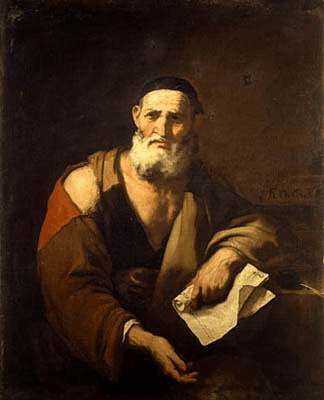
Leucippus belongs to the generation of Greek philosophers who confronted difficult questions about change, plurality, and reality raised by earlier thinkers, particularly Parmenides and the wider Eleatic tradition. These debates forced philosophers to ask how the changing world experienced by human beings could be reconciled with arguments claiming that genuine reality could not simply come into being or pass away.
Parmenidean arguments were understood to create a serious philosophical problem: if coming into being from what does not exist is impossible, how can the changing world we experience exist at all? Ordinary experience appears to show things being formed, altered, divided, and destroyed, while Eleatic reasoning challenged whether such processes could describe ultimate reality in a straightforward way.
Leucippus' atomism offered one influential response. Instead of treating the visible world as composed of substances that literally come into and pass out of existence, the atomists proposed permanent, indivisible bodies whose combinations, separations, and movements produce the changing appearances of the world. Change could therefore occur without the fundamental constituents of reality being created or destroyed.
This approach introduced a distinction between the enduring elements of reality and the temporary objects formed from their arrangements. What appears to human beings as generation and destruction can be understood, in atomist terms, as the coming together and breaking apart of more fundamental bodies. The theory would become one of the most important attempts in early Greek philosophy to explain both permanence and change.
What Did Leucippus Believe About Atoms and Void?
The central idea associated with Leucippus is that reality consists fundamentally of atoms and void. Atoms are indivisible, solid bodies, while the void provides the empty space through which atoms can move. Together, these two principles allowed the atomists to explain a world containing both permanent material constituents and genuine motion.
According to the atomist theory, atoms themselves do not undergo the kinds of generation, destruction, and qualitative transformation experienced by ordinary objects. Instead, visible things arise from different arrangements, positions, combinations, and movements of atoms. The diversity of the experienced world can therefore be explained without assuming that entirely new fundamental substances must constantly come into existence.
The void was equally important to the theory. Without empty space, the atomists argued, it would be difficult to explain how distinct bodies could move, separate, or change their relative positions. The recognition of void therefore represented a direct and important response to philosophical arguments about whether what is called "non-being" could have any role in an explanation of reality.
This distinction allowed the atomists to explain apparent change without requiring the fundamental constituents of reality themselves to be generated or destroyed. Atoms remain permanent, while the temporary compounds formed from them continually change. In this way, atomism joined permanence and transformation within a single account of the natural world.
How Did Leucippus Explain Motion and Change?
Leucippus' theory was designed to make sense of motion and change in a world ultimately composed of permanent constituents. The fundamental elements do not need to be created or destroyed for visible objects to appear, disappear, grow, decay, or transform. Instead, these changes result from the movements and changing relationships of atoms.
Atoms move through the void and can combine into different configurations. When their arrangements change, the larger objects formed from them also change. A compound may come into existence when atoms join together and cease to exist as that particular compound when its constituent atoms separate and enter new arrangements.
In this way, the atomists could distinguish between fundamental reality and ordinary appearance. The atoms remain, while their arrangements change. What human beings describe as birth or destruction therefore does not necessarily mean the absolute beginning or annihilation of matter, but a transformation in the organization of its permanent constituents.
Motion was consequently essential rather than accidental to atomist philosophy. Without movement through the void, atoms could not encounter, combine, separate, or form the complex structures of the visible world. Leucippus' theory thus provided a naturalistic explanation of change based on matter, motion, and spatial relationships rather than on the continuous creation of entirely new substances.
Why Did Leucippus Develop Atomism?
Ancient sources and modern scholarship commonly connect the rise of atomism with the philosophical problems posed by Parmenides and Zeno. Earlier debates had raised profound questions about whether plurality, motion, and change could be coherently explained if genuine reality had to be completely unified, permanent, and free from generation and destruction.
If reality is completely indivisible and unchanging, as some ancient interpretations of Parmenides suggested, then motion and plurality become difficult to explain. Leucippus attempted to preserve the insight that fundamental reality should not arise from absolute non-being while also accounting for the undeniable appearance of movement, diversity, and transformation in the world.
His solution was to propose many indivisible atoms together with the void. The atoms remain unchanged in their fundamental nature, while their movement and rearrangement produce the changing world. Plurality becomes possible because reality contains many atoms, and motion becomes possible because there is void through which those atoms can move.
Atomism can therefore be understood as a philosophical attempt to solve the problem of permanence and change. Rather than choosing between an entirely unchanging reality and a world in which everything fundamentally comes into existence and disappears, Leucippus' theory proposed permanent elements whose changing combinations account for the diversity of ordinary experience.
Leucippus' Theory of the Universe
Ancient reports attribute to Leucippus a cosmology in which worlds can form through the movements and combinations of atoms. The universe was not explained primarily through the deliberate construction of a divine artisan; instead, cosmological structures could emerge from the interactions of material bodies moving according to their own nature.
According to reports preserved by later writers, atoms moving in the void could form a vortex-like motion. Through such movements, groups of atoms could separate, collide, and combine into increasingly complex structures. This atomist account attempted to explain the formation of the cosmos through natural processes involving matter and motion.
The wider atomist tradition associated with Leucippus and Democritus also allowed for the possibility of multiple worlds. Different configurations of atoms could produce different cosmic structures, extending the basic principles of atoms and void beyond individual objects to the explanation of the universe itself.
These cosmological reports are considerably less secure than the basic association between Leucippus and atomism. Because his own writings have not survived in complete form, many details are known only through later testimony and are difficult to separate from the more developed philosophy of Democritus. They should therefore be understood as ancient evidence about the atomist tradition rather than as a complete surviving cosmological text written directly by Leucippus.
Leucippus, Necessity, and Natural Explanation
Leucippus is associated with a strongly naturalistic explanation of the world. Events were understood through the movements, collisions, and interactions of atoms rather than through divine intervention directing every individual natural event. This approach sought to explain the order of nature by referring to the properties and behavior of the material constituents within nature itself.
One surviving statement attributed to Leucippus says that nothing happens in vain but everything occurs according to reason and necessity. The precise interpretation of this fragment remains a matter of philosophical discussion, particularly because the original context in which the statement appeared has not survived.
The idea of necessity suggests that natural events are not simply arbitrary occurrences. Within the atomist framework, what happens results from the conditions, movements, and interactions of material bodies. This provided an important alternative to explanations that interpreted every feature of the natural world primarily through the intentions or purposes of divine agents.
The broader atomist approach therefore attempted to explain the apparent order of nature through the behavior of material constituents rather than through a purpose imposed from outside the natural world. Although the exact scope of Leucippus' own doctrine remains uncertain, the association between early atomism and explanations based on necessity became an important development in the history of natural philosophy.
Leucippus and Democritus
Leucippus is closely connected with Democritus, who is generally regarded as the philosopher who developed and systematized the atomist theory in greater detail. The two names became so closely associated in ancient discussions that later writers frequently presented atomism as a shared philosophical tradition rather than clearly separating every doctrine between its two principal figures.
The historical evidence makes it difficult to determine exactly which ideas belong specifically to Leucippus and which belong to Democritus. Democritus' philosophical legacy is considerably better documented, while Leucippus' own writings and biographical details survive only in a highly fragmentary form. As a result, modern reconstructions must avoid confidently assigning every feature of classical atomism to Leucippus alone.
Ancient tradition nevertheless presents Leucippus as an important predecessor and associate of Democritus in the development of atomism. The fundamental theory of permanent atoms moving through the void is strongly associated with both thinkers, even where the precise contribution of each philosopher cannot be established with complete certainty.
Leucippus is therefore important not only as an individual thinker but also as the earliest figure traditionally associated with the Greek atomist system that Democritus later developed. Their relationship illustrates one of the central difficulties of Presocratic scholarship: influential philosophical traditions sometimes survive more clearly through later representatives than through the writings of their original founders.
Did Leucippus Write Any Books?
Very little of Leucippus' written work survives. Ancient sources sometimes attribute works to him, including a work known as the Great World-System, but the evidence surrounding his writings is limited and questions of authorship remain difficult to resolve. No complete work that can be securely studied as Leucippus' own writing survives today.
One quotation is also attributed to a work concerning the mind. Because the surviving evidence is fragmentary, however, it is difficult to reconstruct a complete philosophical system directly from Leucippus' own writings. Individual reports may preserve genuine aspects of his thought while still leaving the original argument and context unknown.
Much of what we know about his philosophy therefore comes from later ancient authors who reported, interpreted, or criticized early atomist ideas. Aristotle and other ancient writers are particularly important witnesses to the atomist tradition, although their accounts were written from perspectives shaped by their own philosophical interests and arguments.
This dependence on later testimony makes Leucippus one of the more difficult figures to study in early Greek philosophy. Historians must distinguish, where possible, between direct fragments, ancient reports, and doctrines that may belong more specifically to Democritus or to the later development of atomism.
What Do We Actually Know About Leucippus?
Leucippus is an important example of the difficulty of studying Presocratic philosophy. His historical importance is widely recognized, but the surviving evidence about his life and individual doctrines is extremely limited. For this reason, a distinction must be maintained between what is strongly supported by ancient testimony and what remains uncertain or disputed.
Relatively Well-Attested
- Leucippus is traditionally regarded as an early Greek atomist and a foundational figure in the atomist tradition.
- He is strongly associated with the theory that reality involves atoms and void.
- He is closely connected with Democritus and the development of ancient Greek atomism.
- Ancient philosophical sources preserve reports connecting atomism with explanations of motion, plurality, and natural change.
Uncertain or Disputed
- The exact details of his life, dates, and place of birth.
- The precise nature and extent of his influence on Democritus.
- Which specific doctrines attributed to the atomists originated with Leucippus himself.
- The exact content, authorship, and historical status of works attributed to him.
- How much of the detailed atomist cosmology preserved by later authors can be confidently assigned to Leucippus rather than to Democritus or the broader atomist tradition.
Why Is Leucippus Important in Philosophy?
Leucippus is important because the atomist theory associated with him offered one of the earliest systematic attempts to explain the physical world in terms of indivisible material constituents and empty space. The theory proposed that the immense diversity of visible reality could arise from the movement and arrangement of a limited set of fundamental elements.
His philosophy addressed fundamental metaphysical questions about being, change, motion, plurality, and the structure of reality. By proposing permanent atoms together with the void, atomism attempted to explain how genuine change could occur without requiring the ultimate constituents of the world to come into existence or disappear into absolute nothingness.
The atomist tradition continued through Democritus and later became important to Epicurean philosophy and the Roman poet-philosopher Lucretius. Although these later thinkers modified and developed atomist ideas in their own ways, they helped preserve and extend the broader tradition with which Leucippus was associated.
Leucippus' historical importance also lies in the long-term influence of the questions raised by atomism. The attempt to explain complex phenomena through the movement and arrangement of fundamental material constituents became a major theme in later natural philosophy. While ancient atoms should not be simply equated with atoms in modern physics, the philosophical importance of ancient atomism remains substantial.
Leucippus Explained Simply
Leucippus was an ancient Greek philosopher who tried to explain how a changing world could exist if reality had permanent foundations. His answer, as preserved in the atomist tradition, was that the visible world is made from countless tiny, indivisible bodies moving through empty space.
The basic idea is that things do not need to be created from nothing in order for change to occur. Atoms can move, join together, separate, and form new arrangements. A visible object changes when the atoms associated with it change their arrangement, while the fundamental atoms themselves remain.
- Basic reality: Atoms and void.
- Atoms: Indivisible and permanent material bodies.
- Void: Empty space through which atoms move.
- Change: Produced by changes in the arrangements, combinations, and movements of atoms.
- Natural explanation: Events are explained through the interactions and movements of material bodies.
- Historical importance: Traditionally regarded as a foundational figure in Greek atomism.
Frequently Asked Questions About Leucippus
Who was Leucippus?
Leucippus was an ancient Greek philosopher active during the fifth century BCE who is traditionally regarded as the founder or earliest major figure of Greek atomism. Very little is known with certainty about his life, and many ancient sources discuss his ideas together with those of Democritus, making it difficult to reconstruct his individual biography and philosophical contribution in detail.
What is Leucippus famous for?
Leucippus is famous primarily for his association with the theory that reality consists fundamentally of atoms and void. This atomist approach attempted to explain how motion, change, and the diversity of visible objects are possible while maintaining that the basic constituents of reality remain permanent and indivisible.
What did Leucippus believe?
Leucippus is traditionally associated with the belief that indivisible atoms move through the void and combine into different arrangements that produce the changing world of ordinary experience. According to the atomist approach, objects are generated and destroyed not because atoms themselves come into or pass out of existence, but because atoms separate, combine, and form new configurations.
What are atoms and void in Leucippus' philosophy?
Atoms are understood as indivisible, solid, and permanent constituents of reality, while the void provides the empty space necessary for their movement. The distinction between atoms and void was philosophically important because it allowed the atomists to explain both the permanence of fundamental reality and the observable existence of motion, plurality, and change.
Was Leucippus the first atomist?
Leucippus is generally regarded as the earliest well-attested figure associated with atomism in the Greek philosophical tradition and is traditionally described as its founder. However, because the surviving evidence is extremely limited, historians must be cautious about determining exactly which features of the later atomist system originated with Leucippus himself.
What is the connection between Leucippus and Democritus?
Leucippus is traditionally regarded as the founder of the atomist theory, while Democritus developed and systematized the theory in much greater detail. Ancient writers frequently treat the two philosophers together, and the exact relationship between their ideas remains uncertain, making it difficult to separate Leucippus' original contributions from the more extensive philosophical system associated with Democritus.
Did Leucippus write books?
Ancient sources attribute writings to Leucippus, including works traditionally associated with cosmology and the nature of the world, but very little of his work survives directly. Most knowledge of his philosophy therefore comes from later ancient authors who reported, interpreted, or criticized the ideas of the early Greek atomists, rather than from complete texts written by Leucippus himself.
Related Pre-Socratic Philosophers
Leucippus belongs to the wider tradition of Pre-Socratic philosophy. Explore thinkers who developed different explanations of nature, reality, change, and the structure of the cosmos.
Philosophy Branches Connected to Leucippus
Leucippus' atomism is especially important for metaphysics and the philosophical study of nature. His theory raises questions about the ultimate structure of reality, matter, change, space, and motion.
Why Leucippus Still Matters
Leucippus occupies an important place in the history of philosophy because he is traditionally associated with one of the earliest Greek theories explaining the physical world through atoms and void.
Although the evidence about his individual ideas is limited, the atomist tradition that bears his name became one of the most important materialist approaches in ancient philosophy.
His ideas helped establish a philosophical problem that continued long after antiquity: what is reality ultimately made of, and how can change arise from its fundamental constituents?
Explore Great Philosophers