Who Was Democritus?
Democritus was an ancient Greek philosopher from Abdera, a city on the northern Aegean coast, who lived during the fifth and early fourth centuries BCE. Ancient reports generally place his birth around 460 BCE, although precise details about his life are uncertain. He belongs to the group of thinkers now commonly called the Pre-Socratic philosophers and became one of the most important figures in the history of ancient Greek natural philosophy.
Democritus is closely associated with Leucippus, who is traditionally regarded as the originator of ancient Greek atomism. The exact relationship between the two philosophers is difficult to reconstruct because very little reliable information about Leucippus survives. Ancient and modern accounts nevertheless generally regard Democritus as having developed and systematized atomist theory into a broad philosophical explanation of the natural world.
According to ancient atomism, reality consists fundamentally of atoms and void. Atoms are indivisible, solid, and unchanging bodies that exist in an infinite number, while the void is the empty space through which they move. Atoms differ in features such as shape, size, and arrangement, and the changing objects experienced in the visible world result from their movement, combination, and separation rather than from changes occurring within the atoms themselves.
This theory offered an influential attempt to explain change without assuming that something could come into existence from nothing or disappear completely into nothing. Individual objects, including living things, are temporary combinations of atoms, whereas the atoms themselves are regarded as ungenerated and indestructible. Democritus therefore proposed a strongly material account of nature in which complex phenomena could be explained through the movements and arrangements of fundamental physical bodies.
Democritus also addressed questions concerning perception, knowledge, the soul, living things, mathematics, ethics, and human society. He appears to have been credited in antiquity with writings on an exceptionally wide range of subjects, but none of his works survives intact. Much of the evidence for his philosophy comes from fragments, quotations, and reports preserved by later ancient authors, especially Aristotle, making the reconstruction of some aspects of his thought a continuing subject of scholarly interpretation.
Democritus: Quick Facts
- Name — Democritus
- Era — Fifth century BCE
- Born — Traditionally around 460 BCE
- From — Abdera, in northern Greece
- Philosophical tradition — Presocratic philosophy and ancient Greek atomism
- Associated thinker — Leucippus
- Known for — Atomism, natural philosophy, theories of knowledge, and ethical thought
- Fundamental realities — Atoms and void
- Works — No complete works survive
- Historical importance — One of the principal figures in the development of ancient Greek atomist philosophy
Historical Context: Democritus and Presocratic Philosophy
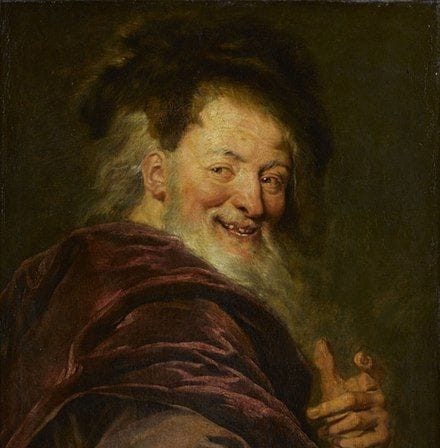
Democritus belonged to the period commonly described as Presocratic philosophy. The term is a modern classification used broadly for early Greek thinkers whose work developed before or around the time of Socrates. It does not indicate that all of these philosophers belonged to one school or shared a single doctrine, but it helps identify an important period in which Greek thinkers developed competing explanations of nature, reality, knowledge, and the structure of the cosmos.
Earlier Greek philosophers had proposed very different accounts of the basic structure of reality. Thales was traditionally associated with water as a fundamental principle, while Anaximander proposed the apeiron, or the indefinite or boundless. Other thinkers, including Heraclitus, Parmenides, Empedocles, and Anaxagoras, developed competing accounts of change, permanence, plurality, and the nature of the physical world.
One of the major philosophical problems confronting these thinkers was how genuine change could be explained. The philosophy associated with Parmenides was particularly influential because it raised difficult questions about generation, destruction, plurality, motion, and the possibility of speaking meaningfully about what is not. Later Presocratic philosophers developed different pluralist theories in an effort to explain the changing world while preserving the permanence of its most fundamental constituents.
Atomism emerged as one important response to these philosophical problems. Leucippus and Democritus proposed that the natural world consists fundamentally of atoms and void. The atoms are unchanging and indivisible bodies, whereas the void provides the space necessary for their movement. Visible objects can therefore come into being and pass away through the combination and separation of atoms without requiring the fundamental constituents of reality themselves to be created or destroyed.
Ancient atomism was consequently a highly systematic attempt to explain plurality and change through a small number of fundamental principles. The theory held that differences among the objects of experience could arise from differences in the shapes, positions, and arrangements of atoms and from the void separating them. In this way, complex natural phenomena were explained through the movement and organization of material bodies rather than by assuming that every visible change required a change in the basic nature of matter.
Democritus' atomism became one of the most influential materialist accounts of nature in ancient Greek philosophy. It was discussed and criticized by later philosophers, particularly Aristotle, whose writings preserve important evidence about the atomists' theories. The tradition also influenced Epicurus and later Epicurean philosophy, although Epicurus modified important aspects of earlier atomism. Ancient atomism should therefore be understood as a major philosophical tradition rather than as an isolated theory proposed by one thinker.
Why Is Democritus Important in Philosophy?
Democritus is important because he is associated with one of antiquity's most influential attempts to explain the natural world through a fundamentally material account of reality. Ancient atomism sought to explain complex objects and natural processes by referring to the properties and movements of atoms in the void. This provided a powerful alternative to philosophical explanations that gave primary importance to a cosmic designer, an intelligent directing principle, or purposes operating throughout every natural process.
His atomism proposed that visible objects are temporary combinations of more fundamental material bodies. The atoms themselves were regarded as ungenerated, indestructible, and unchangeable, while the objects composed from them could be formed, altered, and dissolved. Change in the visible world could therefore be understood as the result of atoms moving, colliding, separating, and entering into different arrangements rather than as the creation or destruction of matter from nothing.
This provided a philosophical model for explaining change, plurality, motion, and the structure of matter. The atomists accepted that the world of experience contains many different and changing things while arguing that these phenomena could ultimately be explained through a more limited set of permanent constituents. Their theory was therefore an important contribution to ancient debates about how stable reality and observable change could exist together.
Democritus' importance also extends beyond his physical theory. Ancient evidence associates him with investigations of perception, knowledge, the soul, living organisms, mathematics, ethics, and human society. Although the surviving evidence is fragmentary and the authenticity of some material attributed to him remains uncertain, the breadth of these reports suggests that atomism formed part of a wider attempt to account for both the natural world and human experience.
Democritus therefore occupies an important place in the history of metaphysics and natural philosophy. His atomism established a distinction between the fundamental constituents of reality and the larger objects encountered in ordinary experience. This general philosophical strategy—explaining observable phenomena through underlying structures—has remained influential in later intellectual history, even though the specific details of ancient atomism differ profoundly from modern scientific theories.
It is especially important not to confuse Democritus' atoms with the experimentally investigated atoms of modern chemistry and physics. Ancient Greek atomism was a philosophical theory developed without modern experimental methods or knowledge of subatomic structure. Nevertheless, its attempt to explain the visible world through fundamental material constituents ensured that Democritus remained an important figure in later discussions of materialism, mechanism, and the nature of physical reality.
What Did Democritus Believe?
Democritus is primarily associated with the view that the natural world can be explained through the interaction of atoms and void. In this account, atoms and empty space are the fundamental constituents of reality. Everything encountered in ordinary experience—including physical objects and living things—is ultimately composed of atoms arranged in different ways and moving through the void.
Atoms were understood as extremely small, solid, indivisible bodies. They were not created or destroyed and were regarded as fundamentally unchangeable, except with respect to their location and movement. Ancient reports describe atoms as differing in characteristics such as shape, size, position, and arrangement. These differences made it possible for combinations of the same fundamental material bodies to produce the immense variety found in the visible world.
The atoms moved through the void and could interact through collision and combination. Larger objects were therefore understood as temporary compounds rather than as independently existing substances with permanent forms of their own. When the arrangements holding atoms together changed or broke apart, the visible object composed from them could change or cease to exist, while the atoms themselves continued to exist and move.
The existence of the void was essential to this theory. Democritus and the atomists argued that movement would be impossible if there were no empty space through which bodies could move. The acceptance of the void was philosophically significant because it directly addressed earlier Greek arguments about whether "what is not" could in any sense exist. Atomism treated the void as real in the sense necessary to explain separation and motion.
Democritus' philosophy extended beyond physical theory. Ancient reports also associate him with questions about perception, knowledge, the soul, living organisms, mathematics, human communities, and the good life. His views on these subjects are often more difficult to reconstruct because his original works have not survived intact and because later authors sometimes disagree about the interpretation of doctrines attributed to him.
Some surviving evidence also suggests that Democritus distinguished between the way things appear to human senses and the underlying reality proposed by philosophical reasoning. Sensory qualities such as sweetness, bitterness, heat, cold, and colour were treated differently from atoms and void, which were presented as fundamental realities. This created an important philosophical problem about how reliable sense perception can be if the world revealed by philosophical theory differs from the world as it immediately appears to us.
What Is Democritus' Atomic Theory?
Democritus' atomic theory was a philosophical theory of the basic structure of nature. Together with Leucippus, he is associated with the ancient Greek doctrine known as atomism. The theory attempted to explain the enormous variety and constant change of the visible world by reducing complex objects to combinations of a small number of fundamental principles: indivisible bodies and the empty space in which they move.
The Greek word atomos means something like "uncuttable" or "indivisible." In the ancient atomist account, atoms are the smallest indivisible material bodies and cannot be divided into smaller physical parts. They are infinite in number and differ from one another in features such as shape and arrangement. These differences allow combinations of atoms to produce different kinds of objects and physical characteristics.
The other fundamental principle is the void, or empty space. The atomists held that atoms move through an infinite void and that the existence of empty space is necessary for motion and separation. Without void, atoms would have no space through which to move or in which to become arranged into different compounds. The theory therefore treats both bodies and empty space as indispensable elements in explaining the natural world.
The visible objects of everyday experience are not fundamental realities in themselves. They are compounds formed from atoms, and their characteristics depend upon the atoms involved and the ways in which those atoms are arranged. When atoms combine, they can form larger structures; when they separate or their arrangement changes, the compounds they form can be altered, transformed, or destroyed. The atoms themselves, however, continue to exist.
This means that change does not require fundamental matter itself to appear from nothing or disappear into nothing. Instead, permanent atoms undergo changes of position and arrangement, producing the changing world experienced by human beings. Ancient atomism therefore combines permanence at the fundamental level with continual change at the level of visible objects, offering one influential solution to a central problem of Presocratic philosophy.
Democritus' theory should not be interpreted as an early version of modern atomic science in any straightforward sense. Modern atoms are divisible into subatomic particles and are understood through experimental physics and chemistry, whereas Democritus' atoms were philosophical indivisibles proposed to solve problems about reality, change, and motion. The historical importance of atomism lies in both its specific ancient theory and its enduring attempt to explain complex phenomena through underlying material structures.
What Are Atoms and the Void in Democritus' Philosophy?
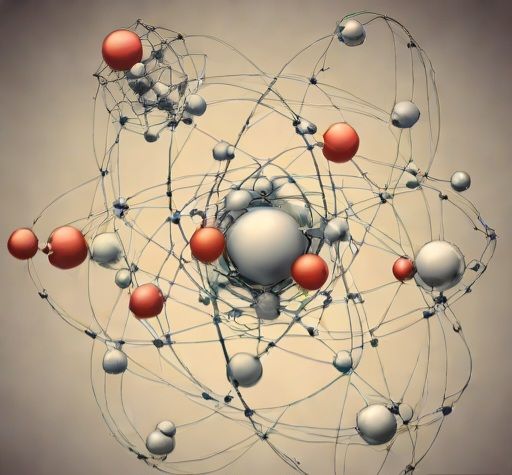
For Democritus, atoms and void were the fundamental components required to explain the natural world. Ancient atomism held that everything encountered in the visible world could ultimately be understood through these two basic principles. Atoms constituted the solid material element of reality, while the void provided the empty space necessary for their separation and movement.
Atoms were described as solid, indivisible, and fundamentally unchanging. They were infinite in number and were said to differ in characteristics such as shape and size, while ancient reports also discuss differences of position and arrangement. Unlike the visible objects formed from them, atoms were regarded as ungenerated and indestructible, changing only with respect to their location and relations with other atoms.
These differences among atoms were essential to the atomist explanation of the variety found in nature. Complex objects could differ from one another because the atoms composing them had different shapes or were arranged differently. Aristotle famously compares this general idea to the letters of an alphabet, where a limited set of elements can produce different results through changes in their form, order, and position.
The void was equally necessary within the atomist system because atoms had to be able to move and become differently arranged. The atomists argued that if there were no empty space, bodies would have nowhere into which they could move. Their acceptance of the void was therefore a direct response to earlier philosophical arguments that denied the possibility of empty space and, consequently, raised doubts about the possibility of motion itself.
The atomists thus treated solid bodies and empty space as two fundamentally different but equally necessary aspects of their account of nature. Atoms could collide, repel one another, and form larger clusters, while the void did not resist their movement in the way that solid bodies did. The interaction between moving atoms and the spaces separating them provided the basic framework through which atomism attempted to explain physical change.
The world that people perceive was therefore understood as a result of atoms moving and forming temporary combinations within the void. A visible object is not a fundamental reality separate from its material constituents but a particular grouping of atoms. Such groupings can be formed, altered, and dissolved, whereas the atoms themselves remain permanent, providing continuity beneath the continual changes of the world of ordinary experience.
How Did Democritus Explain Change and Motion?
One of the major philosophical problems addressed by ancient atomism was how change could occur without requiring something to come from absolute nothing. Earlier Greek debates had raised serious questions about generation, destruction, and motion, particularly the problem of how something could genuinely come into being if nothing can arise from what does not exist. Atomism was one of several Presocratic attempts to provide a systematic answer to this difficulty.
Democritus' solution was to distinguish between permanent atoms and the temporary objects formed from them. Atoms themselves do not undergo generation and destruction: they are ungenerated, indestructible, and fundamentally unchanging. Instead, they move through the void and enter into different relations and arrangements, producing changes at the level of the larger objects that human beings observe.
Motion was therefore central to the atomist account of nature. Ancient reports describe atoms as moving through the void and interacting with one another through collision and resistance. These interactions could alter the positions and arrangements of atoms and lead to the formation of increasingly complex clusters. The precise details of Democritus' theory of the origin and nature of atomic motion remain subjects of scholarly reconstruction and debate.
A tree, stone, animal, or other visible object can therefore come into being as a particular arrangement of atoms and later cease to exist when that arrangement breaks apart. What appears in ordinary language as creation or destruction does not involve the creation or annihilation of the fundamental material constituents. Rather, atoms are added, removed, separated, or rearranged, producing different visible structures over time.
In this account, what appears to be generation and destruction at the visible level can be understood as the rearrangement of permanent material constituents. Atomism thus combines permanence and change within a single framework: the fundamental elements remain while the compounds formed from them continually change. This was one of the theory's most important philosophical responses to the Presocratic problem of explaining a changing world without assuming that being can emerge from nothing.
The atomist explanation also applies to growth and qualitative change. When a compound changes, the change can result from alterations in the arrangement of its constituent atoms or from the addition and removal of atoms. Aristotle later described the atomists as reducing changes in visible objects ultimately to changes of position. Although later philosophers strongly criticized this approach, it offered an unusually unified material explanation for a wide variety of natural phenomena.
What Did Democritus Say About Color, Taste, and Other Qualities?
Democritus' atomism also raised a difficult question about the qualities people experience through the senses. Human beings encounter a world that appears to contain colors, tastes, sounds, temperatures, and other perceptible characteristics. Yet the fundamental constituents proposed by atomism are atoms and void, and the atoms themselves were not thought to possess all of these sensible qualities in the same way that they appear in ordinary experience.
Ancient reports associate Democritus with a distinction between the underlying reality of atoms and void and sensible qualities such as colors, tastes, heat, and cold. A famous fragment attributed to him contrasts such perceptible qualities with atoms and void as the underlying reality. The fragment became one of the most important pieces of evidence for understanding Democritus' distinction between the world as perceived and the fundamental structure proposed by his atomist theory.
Some ancient testimony describes sensible qualities as existing "by convention," while atoms and void belong to the underlying reality. The terminology should be interpreted carefully because "by convention" does not necessarily mean that colors or tastes are arbitrary or imaginary. Modern scholars debate exactly what Democritus intended by this distinction and whether the contrast is best understood in terms of intrinsic and relational properties.
The general atomist explanation was that differences in the characteristics of objects could arise from differences in the shapes, arrangements, and combinations of atoms. Ancient sources even preserve attempts to connect particular kinds of atomic configurations with different tastes and other perceptible effects. These accounts should not be confused with modern scientific theories of sensation, but they show how Democritus attempted to connect sensory experience with his broader material theory of nature.
The important philosophical problem is clear: if our senses reveal qualities that are not fundamental properties of atoms themselves, how can human beings gain reliable knowledge of the underlying structure of reality? Democritus' theory therefore creates a gap between appearance and reality. What is immediately perceived may provide information about the world, yet philosophical reasoning is required to explain the underlying causes that cannot themselves be directly observed.
This distinction later became historically important because it raised questions about the relationship between subjective experience and the physical properties of the external world. Democritus did not possess a modern theory of perception, but his atomism offered an early attempt to explain why the world of sensory appearance might differ from the fundamental material structure of reality. The surviving evidence, however, remains fragmentary, and several aspects of his precise view continue to be debated by scholars.
What Did Democritus Think About Knowledge?
Democritus' theory of knowledge is closely connected with his philosophy of nature. If the ultimate constituents of reality are atoms and void, human beings cannot simply rely on the appearance of everyday objects to understand their underlying structure. Atoms are not directly perceptible, and many of the qualities revealed by the senses were not regarded as fundamental properties belonging to atoms themselves.
Ancient sources distinguish between forms of knowing associated with the senses and a deeper form of understanding associated with reason or understanding. One famous report attributes to Democritus a distinction between "bastard" and "genuine" knowledge, with sight, hearing, smell, taste, and touch belonging to the former. The interpretation of this terminology is complicated, however, because the original context survives only through later sources.
This does not necessarily mean that Democritus believed the senses were completely useless. His philosophy depends upon the fact that human beings encounter the world through sensory experience, even though sensory appearances do not directly reveal atoms and void. Some surviving fragments suggest a tension between reason and the senses, including the recognition that the mind itself depends upon the senses for access to information about the external world.
Democritus was therefore aware of a serious epistemological problem: reason depends in some way on experience, yet reason may also have to move beyond appearances in order to understand the underlying structure of nature. The senses provide evidence about a world whose ultimate constituents cannot themselves be directly perceived. This creates the possibility of error and raises questions about how far human knowledge can penetrate beneath the level of ordinary appearance.
Ancient evidence also associates Democritus with theories explaining perception through physical processes involving images or emanations from external objects. Thought and sensation were themselves understood within his materialist framework rather than as activities of a wholly separate immaterial substance. Because the evidence comes largely from later reports, however, the exact details and coherence of his complete theory of perception remain difficult to reconstruct with certainty.
Democritus' philosophy therefore contains an important early discussion of the relationship between perception, reason, and knowledge of reality. He did not develop modern epistemology, but his atomism forced him to confront a problem that remains philosophically significant: how can human beings know what reality is like when the structure proposed by scientific or philosophical explanation differs from the world immediately presented through ordinary sensory experience?
What Did Democritus Believe About the Soul?
Democritus' account of the soul was consistent with his broader materialist approach to nature. Ancient reports associate the soul with a particular kind of atom, often described by Aristotle as fire-like and spherical atoms. Their exceptional mobility was thought to help explain the soul's connection with life and movement, extending the general principles of atomism to the activities of living beings.
On this account, the soul was not treated as a completely separate immaterial substance existing independently of the physical world. Instead, the capacities associated with living things were explained through material processes and the movements of particular atoms. Democritus therefore attempted to understand life, sensation, and thought within the same natural framework used to explain other phenomena in the physical universe.
Ancient sources connect the soul with heat and motion, which helps explain why Democritus associated it with particularly mobile atoms. Aristotle reports that Democritus regarded the soul as responsible for movement and that thought itself was connected with physical movements of atoms. This reflects the strongly material character of atomist philosophy, in which psychological processes were not placed outside the natural world.
This was an important feature of ancient atomism because it extended material explanation to living things and human beings. Perception, thought, and the activities of the soul were not explained by appealing to a fundamentally immaterial entity entirely independent of the body. Instead, they formed part of a wider attempt to account for all natural phenomena through the properties and movements of material constituents.
Democritus' theory also faced difficult questions about the organization and functional complexity of living organisms. Explaining how simple atoms and their movements could produce organisms capable of nutrition, reproduction, perception, and coordinated activity was a significant challenge for any purely material theory of life. The surviving evidence suggests that Democritus developed views on reproduction and biological development, although the details are incomplete.
The surviving evidence is incomplete, so specific details of Democritus' theory of the soul should not be presented as though we possessed a complete original text from him. Later authors provide much of the available information, and some reports are difficult to reconcile. Nevertheless, the evidence strongly supports the general conclusion that Democritus understood the soul and mental activity within a fundamentally material and naturalistic account of reality.
Democritus and the Philosophy of Nature
Democritus developed a broad natural philosophy intended to explain the world through a small number of fundamental principles. His atomism proposed that the immense variety of visible phenomena could ultimately be traced to atoms, void, and the movements and arrangements of material bodies. This gave his philosophy a remarkable degree of explanatory unity, even though the surviving evidence does not preserve a complete account of all the natural questions he investigated.
Instead of explaining natural events primarily through purposes or divine intentions, atomism attempted to explain them through the movement, collision, combination, and separation of material bodies. Ancient atomism is therefore often described as a non-teleological account of nature. This does not mean that Democritus denied every form of order in the world, but that the apparent organization of natural phenomena did not require a final purpose directing each process.
Ancient reports associate Democritus with explanations of cosmological, biological, mathematical, and other natural phenomena. His approach sought to show how complex structures could emerge from the interactions of simpler constituents. In some accounts, atoms of similar kinds tend to gather together, and processes resembling sorting or separation can produce ordered arrangements without the need to introduce a conscious designer or goal-directed force.
This approach allowed the atomists to give natural explanations for many different phenomena while maintaining a consistent underlying account of reality. The same fundamental constituents that explain ordinary physical objects were also used to explain living things, perception, and aspects of human existence. Such explanatory ambition made atomism one of the broadest and most systematic philosophical accounts of nature developed in the Presocratic period.
Democritus also appears to have emphasized necessity in explaining natural processes, although ancient reports sometimes use terminology that can be translated as chance. Scholars caution that "chance" in this context may often mean the absence of purpose rather than the denial that natural events follow determinate conditions. The exact relationship between necessity, chance, and atomic motion in Democritus' philosophy remains an important subject of interpretation.
Ancient atomism therefore represents one of the most systematic attempts in Greek philosophy to explain the natural world through material causes and physical interactions. It should not simply be identified with modern mechanical science, since the ancient atomists worked with very different assumptions and methods. Nevertheless, their attempt to explain natural complexity through underlying material structures made Democritus a major figure in the long history of philosophical naturalism.
What Was Democritus' View of the Universe?
Democritus' atomism presented the universe as containing an enormous, indeed infinite, number of atoms moving through an infinite void. Because atoms and void were not limited to the boundaries of a single visible world, ancient atomism allowed for a cosmological picture much larger than the particular world inhabited by human beings. The surviving evidence suggests that the atomists regarded the fundamental constituents of reality as eternal, even though individual worlds were not.
Different worlds, or kosmoi, could arise from the movements and combinations of atoms. Ancient reports describe a process in which moving atoms could become caught in a circular or whirling motion, gathering together and forming increasingly organized clusters. Through such processes, a world could develop without requiring a divine craftsman to impose its structure upon otherwise passive matter.
These worlds were not necessarily permanent. The same natural processes that produce organized structures could eventually lead to their dissolution. Ancient atomism therefore presented a cosmos in which formation and destruction occur repeatedly at the level of worlds and compounds, while the underlying atoms remain. Our own world, on this account, belongs to a larger natural process rather than representing the only or eternally fixed form of cosmic existence.
The atomist explanation did not require the universe to be arranged according to a predetermined final purpose. Natural structures arose from the motions, collisions, separations, and combinations of atoms. Apparent order could therefore emerge from physical processes without requiring every feature of the cosmos to be explained by reference to an intended end or goal.
This cosmology was significant because it offered an alternative to forms of ancient thought that explained cosmic order through divine craftsmanship or strongly teleological principles. Democritus attempted to show how a world containing organized structures could arise through the interactions of material bodies themselves. The resulting picture was profoundly naturalistic, although it should not be confused with a modern scientific cosmology based on observation, experimentation, and contemporary physics.
The exact details of Democritus' cosmology are difficult to establish because his original works have not survived intact and ancient reports sometimes combine the views of Democritus and Leucippus. Nevertheless, the surviving evidence clearly indicates that ancient atomism accepted atoms and void as infinite in extent and allowed for the formation and destruction of multiple kosmoi. This made Democritus' vision of the universe one of the most expansive cosmological theories of ancient Greek philosophy.
Did Democritus Believe in Multiple Worlds?
Ancient reports associate Democritus and the atomist tradition with the existence of many worlds, or kosmoi. This idea followed naturally from the atomist picture of an infinite reality containing innumerable atoms moving through an unlimited void. There was no reason, within this framework, to assume that only one organized world could ever come into existence.
According to surviving accounts, worlds could arise when moving atoms became gathered into large-scale formations through a vortex or whirl-like motion. Different arrangements of atoms could therefore produce different cosmic structures. The atomist universe was not understood as a single permanently fixed cosmos surrounded by nothing, but as a much larger reality in which many worlds could form.
These worlds were not necessarily alike. Ancient testimony suggests that atomist thinkers allowed for considerable variation among them, and later reports describe worlds at different stages of formation and destruction. Some worlds could be developing while others were already declining, because the compounds from which they were formed were not themselves eternal.
The worlds produced by atomic combinations were therefore temporary, even though the fundamental atoms and void were regarded as eternal. A cosmos could arise through the organization of moving matter and eventually disappear when its structures broke apart. The same basic principles of motion, combination, and separation applied both to ordinary objects and to large-scale cosmic formations.
Democritus' idea of many worlds should not be confused with the modern scientific concept of a multiverse. Ancient atomism was a philosophical theory developed without modern astronomy, physics, or observational cosmology. Its importance lies in showing how Greek philosophers used the concepts of infinite matter and space to imagine a universe far larger and more diverse than a single cosmos.
What Was Democritus' Philosophy of Happiness?
Although Democritus is most famous for atomism, ancient sources and surviving fragments also associate him with important ethical ideas. His reflections on the good life frequently concern the condition of the mind, the regulation of desire, moderation, and independence from excessive dependence on external fortune. However, his ethical views must be reconstructed cautiously because their original context is often lost.
A central term associated with Democritean ethics is euthymia, a Greek word that can refer to a cheerful, settled, or well-balanced state of mind. Ancient testimony presents this condition as connected with a stable form of contentment rather than with the constant pursuit of intense pleasure, wealth, or public recognition.
Several fragments attributed to Democritus suggest that happiness depends significantly on the way a person orders his or her desires. Someone whose ambitions are unlimited may remain dissatisfied even when possessing considerable external advantages. By contrast, moderation can reduce dependence on circumstances that lie outside a person's control.
Democritus' ethical thought also appears to connect well-being with judgment and understanding. Ancient accounts portray him as concerned not merely with bodily pleasure but with the state of the soul or mind. This makes his ethics an important reminder that ancient atomism was not only a theory about physical matter but also attempted to address questions about how human beings should live.
At the same time, scholars must be careful not to reconstruct a complete and perfectly systematic ethical doctrine from the surviving evidence. Many sayings attributed to Democritus survive as isolated fragments, and questions remain about their authenticity and intended meaning. It is therefore more accurate to speak of recurring ethical themes associated with Democritus than of a fully preserved system comparable to the surviving ethical works of Aristotle.
Why Is Moderation Important in Democritus' Ethics?
Moderation appears repeatedly among the ethical themes associated with Democritus. The surviving material suggests a concern with avoiding excessive desires that can disturb the mind and make happiness depend entirely on wealth, reputation, pleasure, or changing external circumstances. A more measured way of living was associated with greater stability and inner balance.
The ideal often connected with Democritus is euthymia, commonly translated in contexts such as cheerfulness, good spirits, or tranquility of mind. This should not necessarily be understood as constant excitement or pleasure. Rather, the idea points toward a settled and well-ordered psychological condition in which a person is not continually disturbed by extremes of desire, fear, or dissatisfaction.
Moderation was important because unlimited desire can make satisfaction difficult to achieve. If happiness depends upon continually acquiring more possessions or greater honors, external circumstances can exert enormous power over a person's state of mind. Ethical restraint, by contrast, was associated with limiting unnecessary desires and developing a more stable relation to fortune.
Some fragments attributed to Democritus also emphasize proportion and appropriateness in human conduct. The good life was not simply a matter of possessing the greatest possible quantity of pleasures or material goods. The condition of the mind and the intelligent ordering of one's life were presented as more important than uncontrolled accumulation.
Because Democritus' ethical writings have survived only fragmentarily, these ideas should be described with appropriate caution. We possess evidence for themes of moderation, cheerfulness, and self-regulation, but not a complete ethical treatise explaining every part of his theory. The fragmentary nature of the evidence is itself an important fact about how Democritus' philosophy is studied.
Did Democritus Influence Epicurus?
Democritus was an important predecessor of Epicurus and the later Epicurean atomist tradition. Epicurus developed his philosophy during the Hellenistic period and adopted the fundamental atomist commitment to explaining nature through matter and void rather than through divine design or pervasive teleological purpose.
The historical connection, however, was not simply one of direct and unchanged inheritance. Ancient evidence suggests that Epicurus learned atomist doctrine through Nausiphanes, who was associated with the Democritean tradition. Epicurus nevertheless developed a distinctive philosophical system and made significant modifications to earlier atomist theories.
One important difference concerns the explanation of atomic motion. Epicurean atomism introduced ideas that are not clearly part of Democritus' original theory, including the famous doctrine of the atomic swerve as later presented in Epicurean sources. Epicurus also differed from Democritus on several questions concerning perception, properties, and the interpretation of sensory experience.
Ethics also occupied a more explicitly central position in Epicurean philosophy. Epicurus argued that understanding the nature of the world could help human beings overcome destructive fears, especially fear of the gods and fear of death. Atomism therefore became directly connected with the Epicurean ideal of achieving a tranquil and pleasurable life.
Democritus should consequently be understood as a major intellectual predecessor rather than as someone whose philosophy was identical to Epicureanism. The two traditions share fundamental atomist principles, but Epicurus reformulated the earlier theory in important ways. Their relationship illustrates how philosophical ideas can be inherited, criticized, and transformed across different historical periods.
What Did Democritus Contribute to Mathematics?
Ancient sources attribute a substantial interest in mathematics and geometry to Democritus, although none of his mathematical writings survives intact. Later catalogues associate him with works on geometrical subjects and magnitudes, but the precise content of these works is difficult to reconstruct. His reputation therefore shows that mathematics formed part of his remarkably broad intellectual interests.
Democritus' mathematical concerns were also connected with fundamental philosophical problems about magnitude and divisibility. Greek thinkers faced difficult questions about whether a physical object could be divided endlessly or whether there had to be some ultimate limit to division. These debates were especially important after the paradoxes associated with Zeno of Elea.
Ancient atomism offered one possible response by proposing indivisible material bodies. The atomists maintained that the fundamental physical constituents of reality could not be divided further. However, scholars continue to debate exactly how physical indivisibility was related to mathematical or conceptual divisibility in the atomist theory.
It would therefore be misleading to describe Democritus as simply anticipating modern mathematical theories of infinitesimals or modern atomic physics. His ideas emerged within ancient Greek debates about extension, magnitude, motion, and the possibility of infinite divisibility. Their significance lies in the philosophical attempt to establish a coherent limit to the division of physical matter.
Atomism and the Problem of Divisibility
The problem of divisibility was closely connected with the atomists' broader explanation of reality. If every material object could be divided without limit, philosophers had to explain how extended bodies were composed and how motion through space was possible. Atomism answered by positing fundamental bodies that were physically indivisible, solid, and separated from one another by void.
This solution did not eliminate every philosophical difficulty. Ancient and modern interpreters have continued to ask whether atoms that possess different shapes and sizes can also be understood as having parts in some conceptual sense. The debate demonstrates that Democritean atomism was not merely an early scientific guess but part of a sophisticated philosophical engagement with mathematics and the nature of physical magnitude.
Democritus' Main Philosophical Ideas
Much of what is known about Democritus comes through fragments, quotations, and reports preserved by later writers. Nevertheless, several major themes appear consistently enough to form the core of the traditional reconstruction of his philosophy. Together, these ideas constitute one of the most influential materialist systems of the ancient Greek world.
Atoms and Void
Democritus is most closely associated with the claim that reality is fundamentally composed of atoms and void. Atoms are the solid material constituents of things, while the void provides the empty space necessary for their movement. Both were treated as fundamental realities within the atomist account of nature.
Indivisible Matter
Atoms were conceived as physically indivisible, solid, ungenerated, and indestructible bodies. They differed from one another in features such as size and shape, while the differences among visible objects resulted from the ways atoms were arranged and combined. The permanent atoms therefore contrasted with the temporary compounds they formed.
Motion and Rearrangement
Democritean atomism explains visible change primarily through motion and rearrangement. Objects can come into existence when atoms combine into particular structures and disappear when those structures break apart. Fundamental matter itself is not created from nothing or destroyed into nothing but persists through changing combinations.
Material Explanation
Democritus and the atomists attempted to explain natural phenomena through the properties and interactions of material bodies. Their philosophy is especially important for its rejection of the idea that every natural event must be explained primarily by a final purpose or divine design. Natural structures could instead arise from motion, collision, combination, and separation.
Perception and Reality
Atomism created a difficult distinction between the world as it appears to the senses and the underlying reality of atoms and void. Ancient testimony associates Democritus with the famous contrast between conventional sensible qualities and fundamental physical reality. His philosophy therefore raised lasting questions about whether perception reveals reality exactly as it is.
Moderation and Happiness
Ethical fragments attributed to Democritus emphasize themes of moderation, cheerfulness, and the regulation of desire. The ideal of euthymia is commonly associated with a stable and balanced condition of mind rather than dependence on unlimited possessions or external success. Because the evidence is fragmentary, the precise structure of Democritus' ethical philosophy remains uncertain.
Did Democritus Write Any Books?
Ancient sources portray Democritus as an exceptionally prolific writer whose works covered a remarkably broad range of subjects. Diogenes Laertius preserves a catalogue attributing writings to him on physics, cosmology, mathematics, ethics, music, language, and other fields. The precise number and authenticity of all these works remain difficult to establish, but the ancient tradition clearly regarded Democritus as a philosopher with unusually wide intellectual interests.
Despite this reputation, no complete work by Democritus survives. What remains consists of fragments, short quotations, titles, and reports preserved by later authors. This creates a major difference between studying Democritus and studying philosophers such as Plato or Aristotle, whose substantial bodies of writing have survived directly and can be examined as continuous philosophical texts.
Some works listed in the ancient tradition raise difficult questions of authorship. For example, the Great World System and the Little World System were associated with the atomist tradition, but ancient testimony does not always agree about whether particular works should be attributed to Democritus or to Leucippus. Such uncertainty is especially important because the philosophical contributions of the two atomists are often difficult to separate.
The ethical material attributed to Democritus presents another problem. Collections of sayings concerning happiness, moderation, cheerfulness, and human conduct were transmitted under his name, but scholars continue to debate the authenticity and original context of some of these fragments. A surviving saying attributed to a famous philosopher is not necessarily a complete statement of that philosopher's carefully developed theory.
Aristotle is particularly important for the study of Democritus because he discussed atomist philosophy extensively and treated Democritus as an important rival in natural philosophy. Aristotle even wrote a separate work on Democritus, although that work itself survives only in fragments quoted by later writers. His discussions therefore preserve some of the most valuable ancient evidence for reconstructing Democritus' physical theories.
Modern readers consequently encounter evidence about Democritus rather than a complete philosophical book written in his own words. Historians must compare quotations, reports, and critical discussions from different ancient sources in order to reconstruct his ideas. The result is a historically significant but necessarily incomplete picture of one of the most influential philosophers of the ancient Greek world.
How Do We Know About Democritus?
Our knowledge of Democritus is based largely on indirect ancient evidence. The works attributed to him have not survived as complete texts, so his philosophy must be reconstructed from quotations, summaries, criticisms, and reports written by later authors. These sources are invaluable, but they do not always agree with one another and sometimes preserve only brief statements without their original argumentative context.
This makes the study of Democritus a form of historical reconstruction. Scholars must ask not only what an ancient source says about him, but also when that source was written, what philosophical purpose the author had, and whether the report concerns Democritus specifically or the broader atomist tradition associated with both Democritus and Leucippus.
Aristotle
Aristotle is one of the most important ancient sources for the study of Democritus. His works discuss atomist theories in considerable detail and compare them with competing accounts of nature, change, motion, perception, and causation. Although Aristotle was often a critic rather than a neutral reporter, he engaged seriously with Democritus' arguments and regarded him as a significant philosophical opponent in the investigation of the natural world.
Aristotle's evidence is particularly valuable because he lived closer to Democritus' own period than most later commentators and had access to philosophical materials that are now lost. Nevertheless, his presentation must still be interpreted carefully, since he sometimes explains earlier philosophers through his own conceptual framework and organizes their views around problems that were important to his own philosophy.
Later Ancient Writers
Later Greek and Roman authors also preserved important fragments and reports concerning Democritus' physical, ethical, mathematical, and cosmological ideas. Writers such as Theophrastus, Diogenes Laertius, Sextus Empiricus, and the compiler Stobaeus form part of the long chain through which information about early Greek philosophy reached the modern world.
Some later sources preserve direct quotations or sayings attributed to Democritus, while others provide summaries of doctrines that may have been transmitted through earlier philosophical traditions. Their evidence is therefore not all of the same historical value. A direct quotation, a hostile criticism, and a much later summary may each provide useful information, but they require different levels of caution when reconstructing the philosopher's original views.
Fragmentary Evidence
Because the evidence is fragmentary, historians and philosophers must distinguish between ideas that are strongly supported by multiple ancient testimonies and claims whose attribution remains uncertain. The central doctrine of atoms and void is firmly associated with the atomist tradition, whereas the exact details of particular ethical, mathematical, or psychological theories are often much more difficult to establish with confidence.
Fragmentary evidence also makes it difficult to reconstruct the original arguments behind some conclusions. We may know that Democritus was reported to hold a particular view without possessing the complete reasoning by which he defended it. For this reason, responsible accounts of his philosophy should distinguish clearly between what ancient evidence strongly supports and what remains a plausible but disputed scholarly reconstruction.
What Do We Actually Know About Democritus?
Democritus is a particularly clear example of the difficulty involved in reconstructing ancient philosophy. His influence on the history of atomism is substantial, yet the direct evidence from his own writings is limited to fragments and material preserved by other authors. As a result, some central features of his philosophy are relatively secure, while many details about his life and the exact development of his thought remain uncertain.
Historical certainty is therefore a matter of degree rather than a simple division between truth and falsehood. Some claims are supported by several independent ancient sources, while others depend upon a single late report or anecdote. Modern scholarship attempts to reconstruct the strongest possible account from this evidence without treating attractive traditions or famous stories as established historical facts.
Relatively Well-Attested
- Democritus was associated with the city of Abdera.
- He lived during the fifth century BCE.
- He is strongly associated with ancient Greek atomism.
- Leucippus and Democritus are closely associated with the development of Greek atomist philosophy.
- Ancient reports associate atomism with atoms and void as fundamental realities.
- No complete philosophical work by Democritus survives.
These points form the relatively secure foundation for understanding Democritus. Ancient evidence consistently connects him with Abdera and with the development of atomist philosophy, while Aristotle and other writers provide substantial testimony concerning the doctrines of atoms and void. His surviving intellectual legacy is therefore historically real even though it reaches modern readers primarily through indirect transmission.
Traditionally Attributed
- A large body of ethical sayings concerning happiness and cheerfulness.
- Various mathematical investigations.
- Detailed theories concerning the soul and living organisms.
- Accounts concerning the origins of human communities and culture.
These subjects are genuinely associated with Democritus in the ancient tradition, but the surviving evidence varies considerably in strength. Some ethical sayings are preserved under his name, and ancient catalogues attribute works on many subjects to him, yet scholars do not always agree about which individual fragments are authentic or how confidently they can be connected with a complete philosophical doctrine developed by Democritus himself.
Uncertain or Disputed
- The precise relationship between Democritus' physical theory and his ethical views.
- The authenticity of some ethical sayings attributed to him.
- The exact details of some mathematical and cosmological claims.
- The historical accuracy of some anecdotes about his life and travels.
The uncertainty surrounding these questions should not be interpreted as evidence that nothing can be known about Democritus. Instead, it shows why different levels of confidence are necessary when discussing ancient thinkers. The strongest historical approach is to preserve the distinction between well-supported atomist doctrines, traditional attributions, and claims that remain genuinely disputed among modern interpreters.
What Was the Relationship Between Democritus and Leucippus?
Democritus is closely connected with Leucippus, the philosopher traditionally credited by Aristotle and other ancient sources with originating the atomist theory in ancient Greek philosophy. The historical relationship between the two thinkers is difficult to reconstruct because very little reliable information about Leucippus has survived and their doctrines were frequently discussed together by later writers.
Ancient testimony commonly presents Leucippus as the earlier figure and Democritus as the philosopher who developed the atomist approach into a broader and more systematic account of nature. Democritus' surviving reputation eventually became so great that later generations often associated the entire atomist system primarily with his name, making it even harder to determine which ideas originated with each philosopher individually.
Very little is known with certainty about Leucippus' life, writings, or exact philosophical contribution. Even in antiquity his historical identity was sometimes questioned, although Aristotle provides important evidence for treating him as a genuine figure in the development of atomism. The scarcity of surviving material means that modern historians must avoid making overly confident claims about his individual doctrines.
Democritus is generally understood to have elaborated and systematized the atomist theory associated with Leucippus. The developed system addressed not only the existence of indivisible bodies and void, but also questions about cosmology, perception, knowledge, the soul, living organisms, and other aspects of the natural world. This broader development helps explain why Democritus became the better-known representative of ancient atomism.
The surviving evidence nevertheless does not allow scholars to draw a perfectly sharp boundary between the contributions of the two men. Many ancient reports simply refer to the atomists, while others attribute the same general doctrine to both Leucippus and Democritus. A philosophical theory can therefore be securely associated with the atomist tradition even when its precise individual origin cannot be established.
It is consequently more accurate to describe ancient Greek atomism as a philosophical tradition associated with Leucippus and Democritus rather than claiming that Democritus alone invented atomism. Democritus remains the central figure for the surviving developed account of the theory, but the historical evidence strongly supports recognizing Leucippus as an important figure in its origins.
Was Democritus a Materialist?
Democritus is commonly described as a major figure in ancient Greek materialism because his philosophy attempted to explain the natural world through material bodies and their movements. In the atomist account, the fundamental constituents of reality are atoms and void rather than immaterial Forms, divine craftsmanship, or a universal purpose directing every natural process.
The atomist theory holds that visible objects arise through the combination, separation, and rearrangement of atoms. Different physical structures result from differences in the shapes, arrangements, positions, and movements of these fundamental bodies. The changing world of ordinary experience can therefore be explained without assuming that fundamental matter itself is continually created from nothing or destroyed into nothing.
The importance of the void should also be remembered when describing Democritus as a materialist. Atomism did not simply claim that everything consists of solid matter in a completely filled universe. Void, or empty space, was treated as necessary for motion and therefore as an essential feature of the atomist account of reality, even though it was distinguished from the solid bodies called atoms.
Democritus extended this naturalistic approach beyond inanimate objects. Ancient reports connect his atomism with accounts of perception, thought, the soul, and living organisms. In these areas, too, his explanations attempted to understand human and natural phenomena through the properties and movements of physical constituents rather than by appealing primarily to separate immaterial substances.
His philosophy is especially significant because it offered one of antiquity's most influential accounts of nature that did not rely fundamentally on teleology, or the explanation of natural events through purposes and ends. Atomist explanations emphasized the motions, collisions, combinations, and necessary interactions of material bodies, although the exact interpretation of necessity and chance within Democritus' system remains a subject of scholarly discussion.
This does not mean that Democritus possessed the modern scientific concept of matter or that ancient atoms were discoveries made through experimental physics. His materialism was a philosophical theory developed in response to problems concerning change, plurality, motion, and the fundamental structure of reality. Ancient atomism and modern atomic science use a similar word but belong to very different intellectual and historical contexts.
The distinction is important for understanding Democritus accurately. His theory anticipated later philosophical interest in explaining complex phenomena through more fundamental constituents, but modern scientific atoms are divisible and possess structures unknown to ancient Greek philosophy. Democritus' lasting importance therefore lies not in having discovered modern physics, but in developing one of the most powerful and systematic materialist accounts of nature in ancient philosophy.
Was Democritus the First Atomist?
Democritus was one of the principal philosophers associated with ancient Greek atomism, but describing him as the sole founder of the theory would be historically misleading. Atomism emerged within a broader philosophical attempt to explain how reality could contain both permanent fundamental principles and the constant change visible throughout the natural world.
Leucippus is usually credited by historians of ancient philosophy with originating atomism in the Greek tradition. Democritus is generally understood to have developed, expanded, and systematized the theory into a much broader philosophical account of matter, motion, perception, knowledge, the soul, and the cosmos.
The surviving evidence is complicated because very little reliable information about Leucippus survives, and ancient authors frequently discuss Leucippus and Democritus together as representatives of the atomist tradition. As a result, it is sometimes difficult for modern scholars to determine precisely which ideas originated with Leucippus and which were developed more fully by Democritus.
Democritus nevertheless became the most extensively documented and influential representative of ancient Greek atomism. Later writers, including Aristotle, engaged directly with ideas associated with him, ensuring that Democritus occupied a central place in the long philosophical history of debates about matter, change, motion, and the fundamental structure of reality.
What Did Aristotle Think About Democritus?
Aristotle regarded Democritus and the atomists as important philosophical opponents in debates about the nature of the physical world. Although Aristotle rejected many atomist conclusions, his repeated engagement with their theories shows that he considered them serious attempts to explain some of the most fundamental problems in natural philosophy.
Aristotle's works contain significant discussions of atomist theories, including their explanations of matter, change, motion, and the natural world. He examined the claim that all visible objects could ultimately be understood as combinations of indivisible bodies moving through empty space and developed alternative explanations of these phenomena.
The disagreement between Aristotle and the atomists concerned fundamental questions about what exists and how natural phenomena should be explained. Atomism emphasized the movement and arrangement of material bodies, whereas Aristotle developed a more complex framework involving substance, form, matter, potentiality, actuality, and different kinds of causation.
Aristotle rejected key elements of atomism, particularly the idea that physical reality could ultimately be reduced to indivisible bodies moving through void. His criticisms of empty space, indivisible magnitude, and purely mechanical explanations later became an important part of the philosophical history of debates about matter, change, causation, and the structure of the natural world.
Democritus Explained Simply
Democritus was an ancient Greek philosopher who wanted to explain how the natural world could contain so many different objects while also undergoing constant change. He asked what everything is ultimately made of and how things can come into existence and disappear without requiring reality itself to arise from absolute nothing.
His answer was atomism: the idea that reality is fundamentally made of extremely small, indivisible material bodies called atoms, moving through the void. Atoms themselves are permanent, while the larger objects people see and experience are temporary combinations formed through their movement and arrangement.
Different things exist because atoms combine in different ways. A change in the arrangement, position, or movement of atoms can produce a different object or cause an existing object to break apart. In this way, Democritus attempted to explain the diversity and constant change of the visible world through a small number of fundamental principles.
- Question: What is reality fundamentally made of?
- Answer: Atoms and void are the fundamental principles of the atomist account.
- Atoms: Indivisible, solid, and permanent material bodies that differ in characteristics such as shape and arrangement.
- Void: Empty space through which atoms can move, combine, separate, and form different structures.
- Change: The movement and rearrangement of atoms rather than the creation or destruction of fundamental matter.
- Tradition: Ancient Greek atomism and Presocratic philosophy, developed in close association with Leucippus.
- Historical importance: One of antiquity's most systematic materialist attempts to explain nature through matter, motion, and physical interactions.
A Famous Saying Associated with Democritus
“The good things in life come from moderation.”
Frequently Asked Questions About Democritus
Who was Democritus?
Democritus was an ancient Greek philosopher from Abdera who lived in the fifth century BCE. He is one of the principal figures associated with ancient Greek atomism.
What is Democritus famous for?
Democritus is most famous for his association with atomism, the philosophical theory that reality is fundamentally composed of indivisible atoms moving through the void.
What did Democritus believe?
Democritus is traditionally associated with the belief that atoms and void are the fundamental realities of nature and that visible objects arise from combinations and movements of atoms.
What is Democritus' atomic theory?
Democritus' atomic theory holds that nature is composed of indivisible, solid atoms moving through empty space, or void. Atoms differ in characteristics such as shape and arrangement and form larger objects through their combinations.
Did Democritus invent the atom?
Democritus did not discover the modern scientific atom. He was a philosopher who developed an ancient theory of indivisible material bodies. The Greek atomist tradition is associated with Leucippus and Democritus.
What are atoms and void according to Democritus?
Atoms are indivisible material bodies, while the void is the empty space in which atoms move. Together they form the basic framework of Democritus' explanation of nature.
Was Democritus a materialist?
Democritus is commonly regarded as an ancient materialist because his philosophy explains the natural world through material bodies and their movements rather than through immaterial principles.
What did Democritus believe about happiness?
Ethical fragments attributed to Democritus emphasize moderation, cheerfulness, and control of excessive desires. However, his ethical philosophy is difficult to reconstruct because many of the surviving sayings are preserved without their original context.
Did Democritus write any books?
Ancient sources attribute numerous works to Democritus, but no complete work by him survives. His philosophy is therefore known mainly through fragments and reports by later authors.
Who was Leucippus to Democritus?
Leucippus is traditionally regarded as the originator of atomism in the Greek philosophical tradition. Democritus is generally understood to have developed and systematized the atomist theory associated with Leucippus.
Did Aristotle disagree with Democritus?
Yes. Aristotle criticized important aspects of atomist philosophy and rejected the atomist account of reality as consisting fundamentally of indivisible bodies and void.
Why is Democritus important today?
Democritus remains important because his atomism represents one of the earliest systematic philosophical attempts to explain matter, change, motion, and the structure of nature through fundamental material constituents.
Related Ancient Greek Philosophers
Democritus belongs to the wider tradition of ancient Greek philosophy. Explore thinkers who developed different theories about nature, reality, knowledge, ethics, and the human condition.
Philosophical Traditions Connected to Democritus
Democritus is most strongly connected with ancient Greek atomism and Presocratic natural philosophy. His materialist account of nature also connects with later philosophical discussions about matter, reality, knowledge, and the nature of the physical world.
Philosophy Branches Connected to Democritus
Democritus' philosophy connects particularly strongly with metaphysics and epistemology. His theory of atoms and void concerns the fundamental structure of reality, while his distinction between perception and underlying reality raises important questions about knowledge.
Why Democritus Still Matters
Democritus occupies an important position in the history of philosophy because he developed a remarkably comprehensive account of nature from a small number of fundamental principles.
His theory of atoms and void attempted to explain the diversity and change of the visible world through the movement and rearrangement of permanent material constituents.
Although ancient atomism was not modern atomic science, the philosophical problems Democritus addressed remain significant: What is reality ultimately made of? How is change possible? How do appearances relate to reality? And how can human beings gain reliable knowledge of the world?
These questions helped make Democritus one of the most important representatives of ancient Greek natural philosophy and one of the central figures in the history of atomist thought.
Explore Great Philosophers