Who Was Socrates?
Socrates was an ancient Greek philosopher who lived in Athens during the fifth century BCE. Traditionally dated to approximately 469–399 BCE, he became one of the most influential figures in the history of Western philosophy. Although he developed no surviving philosophical school through written treatises of his own, his conversations, methods, trial, and death profoundly shaped the philosophical tradition that followed him.
Unlike philosophers whose ideas can be studied directly through their own surviving books, Socrates left no known philosophical writings of his own. Our knowledge of him comes primarily from accounts written by others, especially Plato and Xenophon, as well as the comic playwright Aristophanes. These authors present strikingly different portraits, making it difficult to determine exactly which beliefs and arguments belonged to the historical Socrates himself.
This difficulty is known as the Socratic problem. Plato presents Socrates as the central figure in many philosophical dialogues, but scholars debate how far Plato's Socrates represents the historical man and how far he expresses Plato's own developing philosophy. Xenophon offers a more practical portrait, while Aristophanes famously satirizes Socrates in his comedy Clouds. Studying Socrates therefore requires both philosophy and careful attention to the nature of the ancient sources.
Socrates became famous for engaging people in conversations about questions such as justice, courage, virtue, knowledge, piety, and the good life. Rather than presenting philosophy simply as a collection of doctrines to be memorized, he made questioning central to philosophical inquiry. He repeatedly asked people to explain concepts they believed they understood, examining their answers and exposing contradictions, assumptions, and uncertainties within them.
His philosophical influence is enormous. Later thinkers, especially Plato, developed traditions deeply shaped by Socrates and his example, while other followers created different forms of Socratic philosophy. His trial and execution in 399 BCE also became enduring symbols of the examined life, intellectual integrity, and the willingness to pursue philosophical questions even when doing so brought him into conflict with the society in which he lived.
Socrates: Quick Facts
- Name — Socrates
- Born — Traditionally dated to 469 BCE
- Died — 399 BCE
- From — Athens, ancient Greece
- Philosophical period — Classical Greek philosophy
- Known for — Ethical inquiry, philosophical questioning, and the examined life
- Associated method — Socratic questioning and elenchus
- Writings — No surviving writings by Socrates
- Major ancient sources — Plato, Xenophon, and Aristophanes
- Major philosophical interests — Knowledge, virtue, justice, courage, piety, wisdom, and the good life
- Famous historical event — Trial and execution in Athens in 399 BCE
Socrates and Ancient Athens
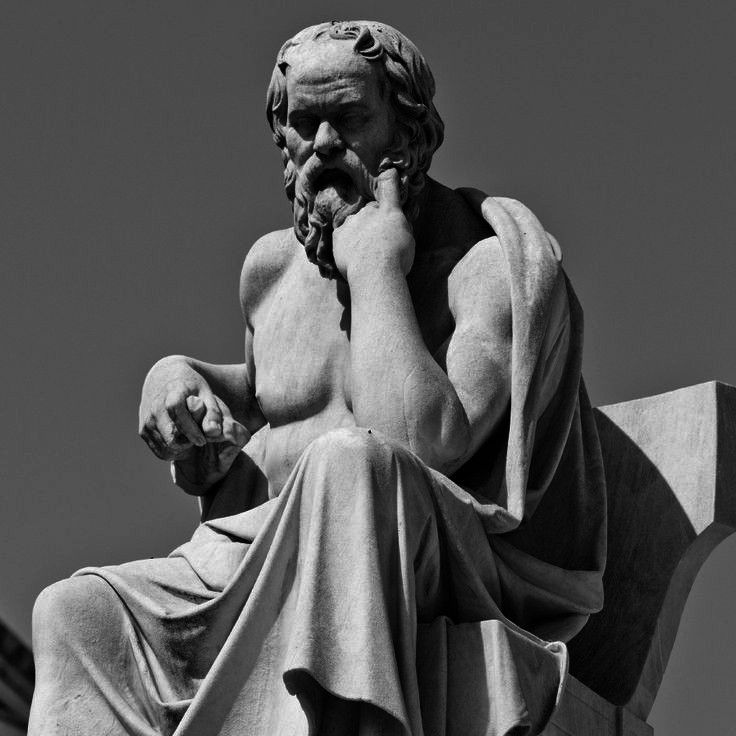
Socrates lived during the fifth century BCE, a period in which Athens became one of the most important political and cultural centers of the Greek world. The city was associated with democratic institutions, public debate, dramatic festivals, historical writing, rhetoric, and intellectual inquiry. Athenian citizens participated directly in assemblies and courts, while public speaking and the ability to defend one's views played an important role in political and social life.
Yet Socrates' lifetime was also marked by profound conflict and instability. Much of his adult life coincided with the Peloponnesian War between Athens and Sparta, which lasted from 431 to 404 BCE and eventually ended in Athens' defeat. Socrates himself served as a hoplite in several military campaigns, and he lived through plague, political crisis, the temporary rule of the Thirty Tyrants, and the eventual restoration of democracy.
Socrates' philosophical activity took place within this environment of intense public discussion. Ancient sources portray him engaging people in conversation in different parts of Athenian life and questioning their claims to knowledge, expertise, and virtue. Athens was also home to influential teachers and intellectuals, including rhetoricians and Sophists, making the nature of education, persuasion, wisdom, and political responsibility subjects of serious public concern.
Socrates is especially associated with questions about human life. Later tradition often contrasts his concerns with those of earlier thinkers who investigated the basic structure of the cosmos, although this contrast can be overstated. What clearly distinguishes the Socratic conversations preserved by Plato and Xenophon is their sustained attention to questions such as how human beings should live, what justice and courage are, what virtue requires, and whether a person truly understands the values by which they live.
It is important, however, to remember that our picture of Socrates is reconstructed from other authors rather than from a biography or philosophical work written by Socrates himself. Plato, Xenophon, and Aristophanes present significantly different portraits, each shaped by a different literary purpose. Understanding Socrates therefore requires us to place him within the history of Athens while also recognizing the uncertainty involved in reconstructing the historical individual behind the ancient sources.
What Is Socrates Famous For?
Socrates is famous for making the examination of human beliefs, values, and ways of life central to philosophical inquiry. His conversations repeatedly focused on questions such as what justice is, what courage is, what piety is, and what it means to live well. Rather than assuming that familiar moral concepts were already understood simply because people used them confidently, Socrates asked his companions to define them and explain what made them what they were.
He is also famous for the style of questioning associated with him, commonly called the Socratic method. Through a series of questions, Socrates examined an answer, explored its implications, and tested whether it remained consistent with other beliefs held by the speaker. The process often revealed contradictions or difficulties and could end in aporia—a state of puzzlement in which no satisfactory answer had yet been reached.
This method was significant because its purpose was not merely to defeat another person in argument. At its best, Socratic questioning challenged the false confidence that can arise when people believe they possess knowledge they have never carefully examined. Recognizing one's ignorance could therefore become the beginning of a more serious search for wisdom rather than simply a negative conclusion.
Socrates is further remembered for his trial and execution in Athens in 399 BCE. He was prosecuted on charges connected with impiety and the corruption of the young, convicted by an Athenian jury, and sentenced to death. The trial is known primarily through later accounts, especially Plato and Xenophon, and its political and historical meaning continues to be debated.
His influence is particularly significant because philosophers throughout later history repeatedly returned to questions associated with his life and example: What is wisdom? What does it mean to know oneself? How should a person live? Can virtue be understood through reason? And should the pursuit of truth require us to challenge beliefs that are socially accepted but insufficiently examined? Socrates became enduring not because he supplied simple answers to these questions, but because he made their examination itself a philosophical necessity.
What Did Socrates Believe?
Answering this question requires unusual caution because Socrates did not leave philosophical writings of his own. The Socrates presented in Plato's dialogues is not automatically identical with the historical person, and Xenophon and Aristophanes provide portraits that differ in important ways. The difficulty of determining which ideas genuinely belonged to Socrates is known by modern scholars as the Socratic problem.
Nevertheless, several themes are strongly associated with Socrates across the ancient tradition. He is repeatedly connected with the examination of ethical concepts, the pursuit of wisdom, and the importance of living according to what one has carefully examined and judged to be good. In Plato's Apology, Socrates presents the care of the soul as more important than the pursuit of wealth, reputation, or external advantages.
Socrates is also closely associated with intellectual humility. In Plato's portrayal, he repeatedly challenges people who claim to possess knowledge and exposes the difference between confidently believing something and being able to give a coherent account of why it is true. His famous association with wisdom therefore does not mean that he claimed to possess complete knowledge; instead, the recognition of ignorance becomes an important starting point for genuine inquiry.
Socratic philosophy is therefore strongly connected with the idea that a person should not simply accept beliefs because they are customary, popular, inherited, or confidently asserted by others. Beliefs about justice, virtue, knowledge, and the good life should be examined through questioning and reasoned discussion. For Socrates, how one lives cannot be separated from the question of whether one has seriously reflected on the principles guiding that life.
Many further doctrines are associated with Socrates in Plato's dialogues, including claims about virtue, knowledge, the nature of the soul, and whether anyone knowingly does wrong. Some of these may preserve historical Socratic ideas, while others may reflect Plato's own philosophical development. A careful account must therefore distinguish between ideas attributed to the historical Socrates and ideas expressed by Plato's Socrates, especially in the later dialogues.
What Is the Socratic Method?
The Socratic method is a form of philosophical inquiry associated with Socrates in which questioning becomes the main instrument of investigation. Instead of beginning by delivering a finished doctrine, Socrates asks questions that require another person to explain, clarify, and defend what they believe. The method is especially concerned with beliefs about important concepts such as justice, courage, knowledge, virtue, and the good life.
A conversation may begin with a seemingly simple question, such as "What is justice?" The respondent proposes a definition, often with considerable confidence. Socrates then examines that answer by asking further questions and considering what follows from it. If the proposed definition produces consequences the respondent rejects, or conflicts with other beliefs they accept, the original claim must be reconsidered.
The distinctive force of this process lies in its demand for consistency. It is not enough simply to give examples of just actions or courageous people; Socrates often seeks an account of what makes all genuinely just or courageous things what they are. The conversation therefore moves from familiar examples toward the more difficult philosophical task of identifying the nature of the concept itself.
The purpose is not merely to win an argument or embarrass another person. Socratic questioning can reveal that an apparently obvious belief has never been carefully examined. Discovering a weakness in one's understanding may be uncomfortable, but it can also be the beginning of philosophical inquiry, replacing false certainty with a more serious desire to understand.
In scholarship on Plato's shorter ethical dialogues, this questioning process is often discussed using the Greek term elenchus, commonly translated as examination, testing, or refutation. The exact form of Socratic examination varies from dialogue to dialogue, and "the Socratic method" is partly a modern generalization. Nevertheless, sustained questioning and the testing of beliefs are among the most characteristic features of the philosophical figure presented in the early Socratic tradition.
How Does Socratic Questioning Work?
- Begin with a question — Identify a concept that requires clarification.
- Ask for a definition — The person explains what they think the concept means.
- Examine the claim — Consider what follows from the proposed definition.
- Test consistency — Look for contradictions or consequences that conflict with other accepted beliefs.
- Continue the inquiry — Revise the original position or acknowledge that the question remains unresolved.
Why Did Socrates Ask So Many Questions?
Socrates' questioning was part of his broader philosophical practice. He was interested not merely in what people believed, but in whether they genuinely understood the beliefs they claimed to possess. A confident answer could be the beginning of inquiry rather than its end, because confidence alone did not demonstrate that a belief was true, coherent, or supported by good reasons.
A person might confidently claim to know what justice or courage is, for example, but further questioning could reveal that they could not provide a definition capable of explaining all the cases they accepted as just or courageous. Socrates repeatedly exposed the gap between possessing examples of something and understanding what makes those examples instances of the same thing.
This process could produce what philosophers call aporia, a state of puzzlement, difficulty, or impasse in which a person recognizes that an apparently straightforward question is more difficult than first believed. Many Platonic dialogues end without a final definition, leaving both the participants and the reader with an unresolved philosophical problem.
Such an outcome should not necessarily be understood as a failure. For Socrates, at least as he is portrayed in Plato's dialogues, recognizing one's ignorance can be philosophically valuable because it removes the illusion of knowledge. A person who understands that they do not yet know has a reason to continue investigating rather than pretending that a difficult question has already been answered.
Socratic questioning therefore combines criticism with intellectual aspiration. It challenges weak beliefs, but its deeper purpose is to direct the mind toward clearer understanding. The question is not simply whether someone can defend an opinion in public, but whether they have examined the reasons, assumptions, and consequences that make that opinion worthy of acceptance.
What Did Socrates Believe About Knowledge?
Socrates is strongly associated with the distinction between genuine knowledge and the mere appearance of knowledge. One of the recurring problems in the Socratic dialogues is that people may possess social authority, professional expertise, or strong confidence while still lacking a satisfactory understanding of the most important questions about justice, virtue, wisdom, and the good life.
In Plato's Apology, Socrates explains his philosophical mission through an investigation of people regarded as wise. He questions politicians, poets, and craftsmen, discovering that practical competence in one area does not necessarily produce wisdom about all matters. The dialogue presents him as concluding that many people who appear wise believe themselves to know more than they actually do.
This leads to one of the central themes associated with Socrates: recognizing the limits of one's own knowledge. Intellectual humility is not presented as passive uncertainty about everything. Rather, it is a refusal to claim knowledge without adequate understanding and a willingness to continue examining questions whose answers remain difficult or unresolved.
The famous idea commonly summarized as "I know that I know nothing" should be treated carefully. The exact popular wording does not appear as a simple declaration in Plato's Apology. The underlying theme is more precise: Socrates claims an advantage over those who believe they know what they do not know, because he does not mistake his own lack of knowledge for wisdom.
Socratic inquiry therefore changes the meaning of wisdom itself. Wisdom is not merely the possession of many facts or the ability to speak persuasively. It requires awareness of what one knows, what one does not know, and what reasons justify one's beliefs. This demand for self-examination remains one of Socrates' most enduring contributions to philosophical thought.
Socrates and the Search for Wisdom
Wisdom is one of the central themes in the philosophical portrait of Socrates. His life is repeatedly presented as a search for understanding rather than the display of completed knowledge. Socrates questions others not simply because he believes they are ignorant, but because the most important human questions—how to live, what is good, and what virtue requires—demand a kind of understanding that cannot be assumed merely because someone holds an important social position.
Socrates does not present himself as someone who possesses complete wisdom. Instead, his philosophical activity involves investigating claims to knowledge and exposing the difference between genuine understanding and intellectual confidence. This gives his philosophy a distinctive character: inquiry begins with the recognition that the searcher may be mistaken and that even deeply held beliefs require examination.
In Plato's Apology, Socrates' search for wisdom is connected with the story of the Delphic oracle. According to Plato's account, Socrates' friend Chaerephon asked the oracle whether anyone was wiser than Socrates, and the response was that no one was wiser. Socrates, puzzled by this claim, investigated people considered wise in an attempt to understand what the oracle could mean.
His investigations led him to a paradoxical conclusion. Those with recognized reputations for wisdom often appeared unaware of the limits of their understanding, while Socrates did not claim to possess the knowledge he lacked. His supposed wisdom therefore consisted not in knowing everything, but in refusing to confuse ignorance with knowledge.
This story became one of the most important parts of the philosophical image of Socrates, although it comes to us through Plato's account rather than through a writing by Socrates himself. Whether interpreted historically or as part of Plato's philosophical portrait, the story expresses a lasting Socratic ideal: wisdom begins when the desire to understand becomes stronger than the desire to appear knowledgeable.
Socrates on Virtue and Moral Knowledge
Virtue, or arete, is a major subject in the Socratic dialogues attributed to Plato. The Greek term has a broader meaning than the modern word "virtue" sometimes suggests, referring to excellence or the quality that enables something to perform its proper function well. In the case of human beings, Socratic inquiry asks what kind of excellence makes a person genuinely good.
Socrates repeatedly asks what virtues such as courage, justice, moderation, and piety actually are. He is not satisfied merely with a list of admirable actions or examples of virtuous people. The deeper question is what these examples have in common and what knowledge would allow a person to distinguish genuinely virtuous action from something that only appears virtuous.
A recurring theme is the relationship between virtue and knowledge. Several Platonic dialogues explore the idea that people who genuinely understand what is good will be guided toward acting well. Wrongdoing, on this view, may arise from ignorance or a mistaken understanding of what is truly beneficial rather than from a deliberate choice of evil simply because it is evil.
This is sometimes summarized as the Socratic claim that virtue is knowledge. However, the exact meaning and historical status of this doctrine are matters of interpretation. Different dialogues develop the relationship between knowledge and virtue in different ways, and scholars must distinguish carefully between doctrines attributed to the historical Socrates and the broader philosophical development of Plato.
The Socratic approach nevertheless places moral understanding at the center of philosophy. Instead of treating ethics simply as obedience to external rules, social convention, or personal preference, Socratic inquiry asks people to examine why their actions are good, just, courageous, or otherwise virtuous. The quality of a person's life depends, in this tradition, on the condition and understanding of the person who lives it.
What Was Socrates' Philosophy of Ethics?
Socrates is one of the most important figures in the development of ancient Greek ethical philosophy. Later tradition often associates him with a shift toward questions about how human beings should live, although he should not be understood as the first person to reflect on morality. His distinctive importance lies in the intensity with which the Socratic tradition examined concepts such as virtue, justice, courage, piety, and the nature of the good life.
Questions about justice, virtue, courage, piety, self-control, and the good life appear repeatedly in the philosophical literature surrounding Socrates. These questions are connected because Socratic inquiry treats a person's actions as expressions of deeper beliefs about what is genuinely good. To ask whether an action is just therefore leads to further questions about knowledge, character, motivation, and the kind of person one ought to become.
In Plato's portrayal, Socrates argues that the condition of the soul matters more than external possessions. Wealth, reputation, political power, and physical advantages cannot by themselves make a person morally good. A person may possess great success while still living badly if their desires, judgments, and actions have not been directed toward what is genuinely just and good.
Ethical life therefore requires examination. A person should ask whether their actions are just and whether their desires and choices contribute to living well. This is closely connected with the famous Socratic ideal of the examined life: human life should not simply be guided by habit, public opinion, or the pursuit of advantage, but should be subjected to continual reflection and moral scrutiny.
Socratic ethics is ultimately concerned with the question of what is worth caring about most. The answer presented in the Socratic tradition places wisdom and the moral condition of the soul above external success. This does not provide a simple list of rules for every situation; instead, it makes ethical inquiry a continuing task in which a person must examine their beliefs, actions, and understanding of what it truly means to live well.
What Did Socrates Mean by the Examined Life?
One of the most famous ideas associated with Socrates is the importance of examining one's life. In Plato's Apology, the phrase commonly translated as "the unexamined life is not worth living" expresses the conviction that a genuinely human life requires reflection on the beliefs, values, and purposes that guide it.
In Plato's Apology, Socrates presents philosophical examination as central to his life's work. People should not simply pursue wealth, status, pleasure, political success, or public admiration without asking whether these things genuinely make their lives good. External success may be valuable, but Socratic inquiry asks whether it has been pursued at the expense of wisdom, justice, and the condition of the soul.
The examined life therefore means more than simply thinking about oneself or repeatedly analyzing one's personal feelings. It involves critically examining one's beliefs, values, choices, assumptions, and reasons for acting. Socrates asks people to consider not only what they believe, but whether they can give a coherent account of why they believe it.
Examination is also connected with the recognition of ignorance. A person who assumes that their beliefs are already correct may never investigate them seriously. By contrast, discovering uncertainty or contradiction can create the possibility of intellectual and moral improvement. The examined life is therefore not a condition of having all the answers, but a continuing willingness to question oneself and remain open to correction.
This principle became one of the most enduring ideas associated with Socrates and remains central to many conceptions of philosophy as critical reflection. Its importance extends beyond academic philosophy: it raises the broader question of whether a person can live well without examining the assumptions, ambitions, and values that shape their decisions. In this sense, Socratic examination makes the search for wisdom inseparable from the task of living.
Socrates and the Sophists
Socrates lived during a period when intellectual teachers commonly called sophists played an important role in Greek cultural and political life. Many sophists travelled between Greek cities and offered instruction in subjects such as rhetoric, argumentation, language, politics, and other forms of education that could help ambitious young men succeed in public life.
Sophists often taught for payment, and several Platonic dialogues present Socrates in conversation or conflict with figures identified as sophists, including Protagoras and Gorgias. These encounters helped shape the later philosophical contrast between Socratic inquiry and sophistic education, particularly concerning questions about rhetoric, persuasion, truth, virtue, and whether wisdom can be taught.
The distinction between Socrates and the sophists should not be exaggerated into a simple opposition between philosophers who sought truth and teachers who merely deceived people. The term sophist had a complex history, and the individuals grouped under it held significantly different views. Much of the strongly negative image of the sophists also comes through Plato's philosophical portrayals, which have their own argumentative and literary purposes.
Nevertheless, Socrates distinguished himself in important ways from the professional teachers of his time. According to the Platonic tradition, he refused to charge fees for philosophical conversation and repeatedly denied possessing the kind of wisdom that he could simply transfer to students. His practice was based on shared inquiry, in which claims were tested through questions rather than accepted because they came from a recognized authority.
The contrast between Socrates and the sophists therefore reflects a deeper philosophical question about education itself. Is learning the acquisition of techniques that produce success and persuasion, or does genuine education require an examination of what is true, good, and just? Socrates' refusal to present himself as a professional teacher of wisdom became an important part of his philosophical identity and of the tradition that developed around his name.
Did Socrates Write Any Books?
No surviving writings by Socrates are known. Unlike Plato, Aristotle, and many later philosophers, Socrates left no surviving dialogues, treatises, or philosophical works through which we can directly study his ideas in his own words.
This is one of the most important facts to understand when studying his philosophy. We cannot open a surviving book written by Socrates and compare his arguments across a body of texts known to be his own. Instead, every account of his life, personality, conversations, and philosophical views depends upon evidence preserved by other people.
The three most important surviving sources are Plato, Xenophon, and Aristophanes. Their works differ in genre, purpose, and perspective: Plato wrote philosophical dialogues, Xenophon produced Socratic works alongside his historical and other writings, and Aristophanes presented Socrates as a comic character. Their portraits must therefore be interpreted rather than treated as simple transcripts of historical events.
Plato portrays Socrates as the central speaker in many philosophical dialogues. Xenophon also presents Socrates in works including the Memorabilia, Apology, and Symposium, offering a portrait that often differs in tone and emphasis from Plato's. Aristophanes presents a highly comic version of Socrates, particularly in Clouds, where he is associated with intellectual pursuits and argumentative practices that cannot simply be identified with the historical philosopher.
Because these sources differ, historians and philosophers cannot simply assume that every statement made by Plato's Socrates was historically spoken by Socrates himself. The absence of Socratic writings makes the interpretation of the sources an essential part of studying his philosophy. In a very real sense, the question "What did Socrates believe?" cannot be separated from the question "How do we know?"
How Do We Know About Socrates?
Our knowledge of Socrates comes mainly from ancient authors who portrayed him in significantly different ways. No single source gives us an unquestionable historical record, and each surviving account was shaped by its author's literary, philosophical, or comic purposes. Comparing these sources is therefore essential for understanding both the historical Socrates and the philosophical figure who later became one of history's most influential thinkers.
Plato
Plato was closely associated with the Socratic circle and made Socrates the central figure in most of his philosophical dialogues. Works such as the Apology, Crito, Euthyphro, and Phaedo are particularly important for the traditional philosophical portrait of Socrates. At the same time, Plato was himself a major philosopher, so scholars continue to debate where the historical Socrates ends and Plato's own philosophical development begins.
Xenophon
Xenophon also wrote extensively about Socrates and provides another important perspective on his character, conversations, and ethical concerns. His Memorabilia is especially valuable because it explicitly presents itself as a defense and recollection of Socrates. Xenophon's Socrates often appears more practical and concerned with everyday moral guidance than the philosopher found in many of Plato's dialogues, although Xenophon's works also have their own literary and interpretative character.
Aristophanes
The comic playwright Aristophanes portrayed Socrates in Clouds, first produced in 423 BCE, during Socrates' lifetime. The portrayal is not a philosophical biography and contains deliberate comic exaggeration, satire, and the combination of characteristics associated with different intellectual movements. Nevertheless, it is historically important as the earliest surviving portrayal of Socrates and provides evidence of how intellectual figures like him could be represented and perceived within Athenian public culture.
What Is the Socratic Problem?
The Socratic problem is the historical and philosophical difficulty of determining what the real Socrates actually said, believed, and taught. Because Socrates left no writings of his own, the historical philosopher can only be reconstructed through accounts produced by other authors, each of whom presents a distinctive version of his personality and philosophical activity.
Plato, Xenophon, and Aristophanes present different versions of Socrates, and their portrayals do not always agree. Aristophanes creates a comic and satirical Socrates; Xenophon presents a philosopher strongly concerned with practical and ethical guidance; and Plato places Socrates at the center of philosophical dialogues that explore increasingly complex questions. These differences make it impossible simply to combine every source into one straightforward biography.
Plato's dialogues create a particularly difficult problem because they are philosophical and literary works rather than straightforward transcripts of conversations. Socrates is the principal speaker in many of them, but Plato himself developed major philosophical theories. Scholars therefore debate which arguments may plausibly reflect the historical Socrates and which express Plato's own philosophical development through the character of Socrates.
The problem cannot be solved simply by declaring one ancient source completely reliable and the others unreliable. Each source provides evidence, but each must be interpreted according to its genre, historical context, and purpose. Modern scholarship has proposed many methods for distinguishing different layers of the Socratic tradition, yet there is no universal agreement on a final reconstruction of the historical Socrates.
For this reason, a responsible account of Socrates should distinguish between claims about the historical Socrates and philosophical doctrines found in particular portrayals of Socrates. This uncertainty is not merely a technical problem for historians: it directly affects how we understand his philosophy. The Socratic problem reminds us that studying Socrates involves both examining his ideas and critically examining the sources through which those ideas have reached us.
Why Was Socrates Put on Trial?
Socrates was prosecuted in Athens in 399 BCE. The formal charges traditionally associated with his trial were impiety, or asebeia, toward the religious practices of the city and corrupting the young. Ancient accounts connect the charge of impiety with allegations that Socrates did not properly recognize the gods acknowledged by Athens and that he introduced new divine beings.
Plato's Apology presents Socrates defending himself against these formal accusations while also responding to an older and broader reputation that had developed around him. He says that many Athenians already associated him with speculative investigations into the heavens and the natural world and with the ability to make weak arguments appear strong. The comic portrayal of Socrates in Aristophanes' Clouds forms part of the background to this older public image.
Socrates argued that his philosophical activity was not intended to corrupt young people. In Plato's account, he maintained that his questioning exposed false claims to wisdom and encouraged Athenians to care less exclusively about wealth, reputation, and political success than about virtue and the condition of their souls. He presented this activity as a service to the city rather than a threat to it.
The historical circumstances surrounding the trial were complex. Athens had recently emerged from defeat in the Peloponnesian War and from severe political conflict, including the brief rule of the Thirty Tyrants in 404–403 BCE. Socrates had known individuals who later became associated with sharply opposed political factions, including figures whose actions made their names deeply controversial in Athens. These connections are important background, but they do not by themselves provide a simple or universally accepted explanation for his prosecution.
Modern interpretations of the trial therefore remain contested. The formal religious and moral charges must be taken seriously, while the wider political, social, and intellectual tensions of late fifth-century Athens also help explain why Socrates had become such a controversial figure. His trial can be understood neither as a purely philosophical event nor as something reducible to a single political conspiracy; it emerged from a particular Athenian legal and cultural context.
How Did Socrates Die?
After being convicted at his trial, Socrates was sentenced to death. According to the ancient tradition, he remained in prison for a period before the sentence was carried out because of a religious observance connected with Athens' sacred mission to Delos, during which executions were not performed in the city.
Plato's Phaedo provides the most famous account of Socrates' final hours. In the dialogue, he spends his last day in conversation with his friends, discussing philosophical questions concerning the soul and death. When the time for the execution arrives, he drinks a poisonous preparation traditionally identified as hemlock.
Plato's Crito, which is set during Socrates' imprisonment, presents him refusing an opportunity to escape before his execution. The dialogue explores his reasons for remaining in Athens and his conviction that a person should not answer an injustice by committing another injustice. His decision therefore became closely connected with later interpretations of his moral and philosophical integrity.
The death of Socrates became one of the most famous episodes in the history of philosophy. For later generations, his willingness to continue defending the importance of philosophical inquiry and to face the consequences of his conviction made him a powerful symbol of intellectual independence, moral commitment, and the philosophical life.
The precise details of his final hours, however, must be interpreted with attention to their sources. Our fullest surviving account comes from Plato's Phaedo, a philosophical dialogue rather than a modern historical report, and Plato explicitly indicates within the dialogue that he was not personally present at the execution. The basic fact of Socrates' execution is historically secure, while the literary and philosophical presentation of his final moments belongs primarily to the ancient tradition through which his death has been remembered.
Why Did Socrates Refuse to Escape From Prison?
In Plato's Crito, Socrates is presented as having an opportunity to escape from prison before his execution. His old friend Crito urges him to flee Athens, and the possibility of escape is treated seriously within the dialogue rather than as something physically impossible.
Crito argues that Socrates should escape because remaining in prison would allow his enemies to succeed and would leave his friends with a damaged reputation. He also appeals to Socrates' responsibilities toward his family and suggests that abandoning the opportunity to live would be difficult to justify when friends were prepared to help him reach safety.
Socrates rejects these arguments by returning to principles that he believes should guide moral action. A central claim of the dialogue is that one should not commit injustice simply because one has suffered injustice. The wrongness of an action, on this view, cannot be erased merely because the person performing it has first been treated unjustly.
Plato develops this argument further through the famous personification of the Laws of Athens. Socrates imagines what the laws might say if he escaped: by remaining in the city and accepting its legal order throughout his life, he has entered into a relationship that makes deliberate unlawful escape morally problematic. The exact interpretation of this argument remains debated, particularly on the question of whether Socrates is defending unconditional obedience to law or making a more specific argument about his own circumstances.
The episode is especially important because it connects Socrates' philosophical discussions with his own conduct. The question is no longer merely theoretical: Socrates must decide whether the principles he has defended throughout his life should continue to guide him when obedience carries the ultimate personal cost. For this reason, the Crito became a foundational text for later philosophical discussions of justice, political obligation, civil disobedience, and the relationship between individual conscience and law.
Socrates and the Examined Life
Socrates' philosophy is closely associated with the idea that human beings should examine the way they live. For him, philosophical inquiry was not primarily the accumulation of information or the mastery of abstract theories; it was deeply connected with the question of how a person ought to live.
Philosophical examination, in this view, concerns the quality of one's character, beliefs, decisions, relationships, and understanding of what is genuinely valuable. A person may possess wealth, political influence, public admiration, or practical skill while still failing to understand whether the life they are living is good or just.
Socrates' conversations therefore repeatedly return to questions about justice, virtue, courage, wisdom, moderation, piety, and the care of the soul. His questioning challenges people to move beyond familiar words and socially accepted opinions by asking whether they can actually explain and defend what they believe.
This examination also requires intellectual humility. Discovering that one does not know something is not simply a failure; within the Socratic tradition, it can become the beginning of genuine inquiry. The person who recognizes a limitation in their understanding is at least able to continue searching, whereas false confidence can prevent further reflection.
The examined life remains one of the most influential concepts associated with Socrates because it presents philosophy as a practice of critical self-reflection rather than merely a subject to be studied. It asks each person to consider whether their beliefs and actions have been consciously examined and whether they can give a reasoned account of the values by which they choose to live.
Why Is "Know Thyself" Associated With Socrates?
The phrase "Know thyself" was an ancient Greek maxim associated with the sanctuary of Apollo at Delphi and did not originate as a securely documented saying invented by Socrates. Its broader cultural significance existed independently of him, but it became closely connected with the Socratic tradition because self-knowledge and the examination of one's beliefs are central themes in the philosophical literature surrounding Socrates.
Socrates' philosophical practice repeatedly encourages people to examine whether they genuinely understand themselves, their values, and the things they claim to know. His questioning often reveals a gap between what people confidently believe about concepts such as justice or virtue and their ability to give a clear and consistent account of those beliefs.
In this Socratic sense, knowing oneself involves more than knowing personal preferences or biographical facts. It includes recognizing the limits of one's knowledge, examining one's moral character, and asking whether one's desires and ambitions are directed toward what is genuinely good. Self-knowledge therefore becomes inseparable from intellectual humility and ethical inquiry.
The association with Delphi is also significant because Plato's Apology connects Socrates' philosophical mission with the Delphic oracle. In that account, the oracle's declaration concerning Socrates leads him to investigate the nature of human wisdom and to question those widely regarded as knowledgeable.
However, "Know thyself" should not be presented as a securely documented quotation written or spoken by Socrates himself. Its association with him is better understood as part of a broader ancient tradition of self-examination that Socratic philosophy helped develop into a sustained philosophical practice.
Socrates' Main Philosophical Ideas
Because Socrates wrote nothing, these ideas should be understood as major themes associated with the ancient sources that portray him, especially the Socratic works of Plato and Xenophon, rather than as a complete philosophical system set down by Socrates himself. The historical status of particular doctrines remains part of the broader Socratic problem.
Examination of Beliefs
Socrates is associated with testing beliefs through questioning and rational discussion rather than accepting them merely because they are traditional, popular, or confidently asserted. His conversations ask people to give reasons for their claims and to consider whether those claims remain consistent when examined closely.
Recognition of Ignorance
Socratic inquiry emphasizes recognizing the limits of one's own knowledge and avoiding false intellectual confidence. The awareness that one does not yet understand something can become the starting point for genuine inquiry, while the belief that one already possesses wisdom may prevent a person from questioning their assumptions.
Search for Definitions
Socrates frequently asks what concepts such as justice, courage, virtue, moderation, or piety actually mean. Rather than being satisfied with examples or familiar opinions, he often seeks a more general account that explains what makes all genuinely just, courageous, or virtuous actions what they are.
Importance of Virtue
Ethical character stands at the center of the Socratic philosophical tradition. Living well requires more than wealth, status, political success, or physical advantage; it requires serious concern for justice and virtue. Socratic inquiry therefore treats moral understanding as one of the most important subjects a human being can investigate.
Care of the Soul
In Plato's portrayal, Socrates repeatedly emphasizes the importance of caring for the soul and developing moral character. The condition of a person's soul is presented as more important than external success because injustice and moral corruption can damage the person who commits them, regardless of whether that person gains wealth or power.
The Examined Life
Socrates presents philosophical examination as an essential part of living responsibly and thoughtfully. To examine one's life is to question one's beliefs, values, ambitions, and actions rather than allowing them to remain untested. This idea unites many of the themes associated with Socrates and explains why his philosophy continues to be understood not only as a set of arguments, but as a distinctive way of approaching human life itself.
Socrates and Plato
Plato was one of the most important members of the Socratic tradition and the author responsible for the most influential philosophical portrayal of Socrates. In the decades following Socrates' death, Plato made him the central figure of most of his dialogues, ensuring that the name and philosophical example of Socrates would remain at the center of Western philosophical history.
In many of Plato's dialogues, Socrates is the central speaker who questions other characters about philosophical and ethical problems. Through these conversations, readers encounter discussions of justice, virtue, courage, piety, knowledge, love, politics, and the nature of the good life. The dramatic character of Socrates is therefore inseparable from Plato's method of presenting philosophy through dialogue.
Some of Plato's earlier dialogues are often called Socratic dialogues because they concentrate heavily on ethical questions, definitional inquiry, and the examination of beliefs. These works are frequently interpreted as preserving aspects of the historical Socrates more closely than Plato's later dialogues. However, this should remain a scholarly hypothesis rather than a certainty, since none of Plato's dialogues can simply be treated as a verbatim historical transcript.
As Plato's philosophical work developed, the Socrates who appears in the dialogues increasingly participates in discussions involving broader metaphysical, epistemological, and political theories. This creates one of the central difficulties of the Socratic problem: determining whether a particular idea should be attributed to the historical Socrates, to Plato, or to the complex literary relationship between the two.
This distinction is essential because Socrates and Plato should not simply be treated as the same philosopher. Socrates left no surviving writings and is known only through the accounts of others, whereas Plato developed one of the most extensive and influential bodies of philosophical literature in antiquity. Plato's dialogues are our richest source for Socrates, but they are also philosophical works in their own right and must be read with both Socrates and Plato in mind.
Socrates and Xenophon
Xenophon was another important ancient author who wrote about Socrates. A soldier, historian, and writer as well as a member of the wider Socratic circle, Xenophon provides a portrait that differs in significant ways from the one found in Plato's dialogues. His writings are therefore essential for any attempt to understand how Socrates was remembered by those associated with him.
Xenophon's Memorabilia presents Socrates in conversations concerning ethics, practical conduct, education, friendship, and virtue. Xenophon's Socrates often appears as a practical moral adviser who is concerned with helping his companions improve their conduct and make sensible decisions in everyday life.
Xenophon's Apology also presents an account of Socrates' defense and his attitude toward death, while works such as the Symposium provide further portraits of Socratic conversation and character. These texts show that Plato was not the only writer who believed Socrates' life and conversations deserved philosophical and literary preservation.
The differences between Xenophon's and Plato's Socrates have long been important to the Socratic problem. Xenophon's portrait often seems less concerned with the highly abstract philosophical arguments found in Plato and more focused on practical ethical guidance. Scholars disagree about whether this difference reveals distinct aspects of the historical Socrates or reflects the differing interests and literary purposes of the two authors.
Xenophon's writings are therefore valuable evidence, but they must also be interpreted critically. His Socratic works are literary compositions rather than recordings of conversations made at the moment they occurred, and historical accuracy cannot simply be assumed from Xenophon's reputation as a historian in other genres. Together with Plato and Aristophanes, Xenophon provides one of the three major surviving ancient perspectives through which the historical Socrates must be reconstructed.
Socrates in Aristophanes' Clouds
Aristophanes' comedy Clouds presents Socrates in a strikingly different way from Plato and Xenophon. The play is especially important because it was first produced in 423 BCE, during Socrates' lifetime, making Aristophanes the earliest surviving source to portray him.
In the play, the character called Socrates is associated with a comic intellectual school in which unusual investigations of nature and controversial forms of argument are pursued. He is portrayed as a figure concerned with matters ranging from the heavens to clever argumentative techniques, and the comedy connects him with broader Athenian anxieties about new forms of education and intellectual life.
Aristophanes' portrayal should not be treated as a literal biography. Clouds is a work of comedy and satire, and the character of Socrates appears to combine features associated with different kinds of intellectuals, including natural philosophers and teachers of rhetoric. The purpose of the play is not to provide modern readers with a neutral historical description of what Socrates actually believed or taught.
Nevertheless, the portrayal is historically significant. It demonstrates that Socrates had already become a recognizable public intellectual figure in Athens and that some members of the public associated him with controversial forms of inquiry and education. Plato's Apology itself presents Socrates as responding to older prejudices that resemble the image created in Aristophanic comedy.
Clouds therefore occupies a complex position in the evidence for Socrates. It cannot simply tell us what the historical philosopher was like, but neither can it be ignored. The play provides important evidence about the intellectual and cultural environment in which Socrates became a controversial figure, while also reminding us that every surviving portrait of him is shaped by a particular literary purpose and perspective.
Which Platonic Dialogues Feature Socrates?
Socrates appears as a major character in most of Plato's dialogues, although the role he plays and the philosophical subjects discussed vary considerably from one work to another. Several dialogues most closely associated with the traditional Socratic portrait focus on ethical questions, the examination of beliefs, and the search for clearer definitions of important concepts.
The dialogues below are particularly important for understanding the philosophical figure of Socrates. They should not all be treated as equally reliable historical records, but together they form the most influential surviving body of literature associated with Socratic philosophy and its development within Plato's work.
- Apology — Socrates' defense during his trial.
- Crito — Justice, law, obligation, and Socrates' refusal to escape prison.
- Euthyphro — Questions concerning piety and the nature of religious duty.
- Meno — Virtue, knowledge, and whether virtue can be taught.
- Protagoras — Virtue, knowledge, and the nature of moral expertise.
- Gorgias — Rhetoric, justice, power, and the good life.
- Phaedo — Socrates' final hours and philosophical discussion before his execution.
What Do We Actually Know About Socrates?
Socrates is one of the clearest examples of the difficulties involved in studying ancient philosophy. His historical influence is enormous, yet he left no writings of his own, and the surviving evidence consists of portraits created by authors with different purposes and perspectives. As a result, some facts about his life are relatively secure, while the precise content of his philosophy remains much more difficult to establish.
Relatively Well Established
- Socrates was an Athenian philosopher who lived during the fifth century BCE.
- He was associated with philosophical conversations and ethical inquiry in Athens.
- He did not leave surviving philosophical writings.
- He was tried and executed in Athens in 399 BCE.
- Plato, Xenophon, and Aristophanes provide important ancient evidence about him.
These points are supported by multiple strands of ancient evidence, although even apparently straightforward facts about Socrates must be understood within the limitations of surviving sources. The broad outline of his life and death is considerably more secure than the exact wording of his conversations or the detailed development of his philosophical views.
Traditionally Attributed to Socrates
- The Socratic method of philosophical questioning.
- A strong emphasis on ethical inquiry and virtue.
- The importance of recognizing the limits of one's knowledge.
- The philosophical ideal of examining one's life.
These themes are deeply embedded in the ancient Socratic tradition, particularly in the works of Plato and Xenophon. They provide a meaningful picture of the kind of philosophical activity associated with Socrates, but individual doctrines must still be treated with caution because the surviving authors may interpret, develop, or reshape his ideas through their own literary and philosophical perspectives.
Historically Uncertain
- The exact content of Socrates' philosophical doctrines.
- Which statements in Plato's dialogues accurately reproduce the historical Socrates.
- The exact wording of conversations reported by Plato and Xenophon.
- The precise relationship between the historical Socrates and the philosophical Socrates portrayed by Plato.
This uncertainty is known more broadly as the Socratic problem. Modern scholarship has developed many methods for attempting to distinguish the historical philosopher from the literary and philosophical portraits created by others, but no reconstruction commands universal agreement. The most responsible approach is therefore neither to dismiss the ancient sources nor to accept every statement attributed to Socrates without qualification, but to remain attentive to both the evidence and its limitations.
Was Socrates the First Philosopher?
No. Socrates was not the first philosopher in the history of Greek thought. By the time he began his philosophical activity in Athens, several generations of Greek thinkers had already investigated fundamental questions about nature, reality, change, knowledge, and the structure of the cosmos.
Earlier or roughly contemporary figures traditionally grouped among the Pre-Socratics include Thales, Anaximander, Anaximenes, Pythagoras, Heraclitus, and Parmenides. Their ideas differed greatly, but they had already established important philosophical traditions long before Socrates became the central figure of later Greek philosophy.
Socrates' distinctive importance lies in the kind of philosophical inquiry with which he became especially associated. His conversations focused intensely on questions about virtue, justice, wisdom, knowledge, piety, and how a human being should live. This did not mean that ethical questions began with Socrates, but his example gave them an extraordinary prominence in the subsequent philosophical tradition.
The term Pre-Socratic is therefore useful but should be used carefully. It does not simply mean "every philosopher who lived before Socrates," since some thinkers placed in this category were his contemporaries, and many early Greek philosophers also discussed questions about human life and ethics.
Socrates nevertheless became such a decisive reference point for later philosophy that ancient Greek thought is often discussed in relation to him. His influence on Plato, the Socratic schools, and the wider history of ethics helped make him one of the central figures through whom the development of Western philosophy is understood.
Socrates' Influence on Western Philosophy
Socrates became one of the most influential figures in the history of Western philosophy, even though he left no philosophical writings of his own. His influence was transmitted largely through the people who knew him, wrote about him, and developed different interpretations of his philosophical example.
Plato, Socrates' most influential philosophical successor, made him the central speaker in many dialogues and used the Socratic figure to investigate questions about knowledge, virtue, justice, politics, reality, and the human soul. Through Plato's works, Socrates became inseparable from the development of the Platonic philosophical tradition.
Socrates also influenced several other traditions associated with his followers and companions. Ancient philosophical schools such as the Cynics, Cyrenaics, and Megarians were later connected, in different ways, with the wider Socratic circle. These traditions developed very different philosophical positions, demonstrating how differently Socrates' life and example could be interpreted.
His influence also extended through the questions and methods associated with him. Philosophers repeatedly returned to the practice of examining beliefs, demanding clearer definitions, testing claims for consistency, and asking whether intellectual confidence amounts to genuine knowledge.
Socrates' influence therefore cannot be reduced to a single doctrine. His lasting importance lies equally in a conception of philosophy as a way of living: an ongoing practice of questioning oneself and others about what is true, what is good, and how human beings ought to live.
Why Is Socrates Important in Philosophy?
Socrates is important because he helped establish an enduring image of philosophy as an active practice of questioning, examination, argument, and ethical reflection. Rather than asking people simply to accept a doctrine, the Socratic tradition challenges them to explain what they believe and examine whether their beliefs can withstand rational scrutiny.
His philosophical practice also gives intellectual ignorance an unexpected importance. Recognizing that a belief is confused, unsupported, or poorly understood is not necessarily a failure of inquiry; it can be the beginning of genuine philosophical investigation. This idea remains central to the tradition of critical thinking associated with Socrates.
Socrates also placed fundamental ethical questions at the center of philosophical discussion. What is justice? What is courage? Can virtue be taught? What does it mean to live well? These questions concern not only abstract theories but the character and conduct of the person asking them.
His importance is further connected with the relationship between philosophy and life. Ancient accounts portray Socrates continuing his philosophical activity despite hostility, prosecution, imprisonment, and the prospect of death. His trial and execution consequently became a powerful symbol of the risks that can accompany intellectual independence and public criticism.
For these reasons, Socrates remains important not merely as an ancient thinker but as one of the most enduring models of the philosophical life: a life committed to examining beliefs, caring about moral character, and continuing to question apparent certainties.
Socrates Explained Simply
Socrates was an ancient Greek philosopher who believed that people should not simply assume they understand the most important things in life. He questioned people about their beliefs and asked them to think carefully about what they meant by ideas such as justice, courage, virtue, wisdom, and knowledge.
He is especially remembered for using conversation and questioning to examine beliefs. Rather than beginning with a ready-made answer, Socrates often asked people to explain their views and then explored whether those views were consistent. When a confident answer produced difficulties or contradictions, the inquiry had to begin again.
Socrates' philosophy was therefore closely connected with how human beings should live. In the ancient sources that portray him, wealth, reputation, and success are less important than developing virtue, understanding what is genuinely good, and caring for the condition of one's soul.
We must also remember that Socrates wrote nothing that survives. Much of what is associated with him comes from Plato, Xenophon, and other ancient authors, which means that historians cannot always determine with certainty where the historical Socrates ends and later philosophical interpretations begin.
- Main concern: How should a human being live?
- Method: Philosophical questioning and dialogue.
- Important theme: Recognizing the limits of one's knowledge.
- Ethical focus: Virtue, justice, wisdom, and the care of the soul.
- Central practice: Examining beliefs rather than accepting them without reflection.
- Writings: No surviving works written by Socrates.
- Historical legacy: One of the most influential figures in the history of Western philosophy.
A Famous Socratic Saying
“The unexamined life is not worth living.”
Frequently Asked Questions About Socrates
Who was Socrates?
Socrates was an ancient Greek philosopher from Athens who lived approximately from 469 to 399 BCE. He is especially associated with philosophical questioning, ethical inquiry, and the examined life.
What is Socrates famous for?
Socrates is famous for his philosophical questioning, ethical investigations, the Socratic method, and his influence on Plato and later Western philosophy.
What did Socrates believe?
Socrates is associated with the pursuit of wisdom, examination of beliefs, ethical inquiry, virtue, and the importance of caring for the soul. Because he wrote nothing, the exact content of his historical philosophy remains disputed.
What is the Socratic method?
The Socratic method is a form of philosophical questioning in which claims are examined through dialogue, questions, definitions, reasoning, and the testing of assumptions.
Why did Socrates ask questions?
Socrates is portrayed as questioning people to examine whether they genuinely understood the concepts and beliefs they claimed to know. His questioning could expose contradictions and encourage deeper philosophical reflection.
What did Socrates believe about knowledge?
Socrates is strongly associated with recognizing the limits of human knowledge. In Plato's Apology, his philosophical mission is connected with discovering that people who appear wise may not actually understand what they claim to know.
What did Socrates believe about virtue?
The Platonic Socrates frequently connects virtue with knowledge and examines whether virtues such as justice and courage can be understood or taught. The precise status of these doctrines as the views of the historical Socrates is debated.
What did Socrates mean by the examined life?
The examined life refers to critically reflecting on one's beliefs, values, choices, and way of living rather than simply accepting them without question.
Did Socrates write any books?
No surviving philosophical writings by Socrates are known. Our knowledge of him comes primarily from authors such as Plato, Xenophon, and Aristophanes.
Who wrote about Socrates?
Plato, Xenophon, and Aristophanes are the three most important surviving ancient sources for Socrates. They portray him in different ways, which creates the historical problem of determining what the real Socrates was like.
Why was Socrates put on trial?
Socrates was prosecuted in Athens in 399 BCE on charges traditionally described as impiety and corrupting the young. Plato's Apology provides the most famous philosophical account of his defense.
Why was Socrates sentenced to death?
Socrates was convicted by an Athenian jury and sentenced to death after his trial in 399 BCE. The historical and political background of the trial was complex, and the surviving sources provide different perspectives on his reputation and prosecution.
How did Socrates die?
According to Plato's Phaedo, Socrates died in prison after drinking a preparation of hemlock following his conviction and death sentence.
Why did Socrates refuse to escape?
In Plato's Crito, Socrates rejects the proposal to escape because he argues that one should not respond to injustice by committing another injustice or deliberately violating the laws.
Was Socrates a Sophist?
Socrates was not generally classified as a sophist in the ancient philosophical tradition. He is often contrasted with professional sophists, particularly because he did not present himself as a paid teacher of wisdom.
Was Socrates the first philosopher?
No. Philosophers such as Thales, Anaximander, Anaximenes, Pythagoras, Heraclitus, and Parmenides lived before Socrates. His importance lies particularly in his focus on ethical and human questions and his method of philosophical examination.
Why is Socrates important today?
Socrates remains important because his approach encourages people to question assumptions, examine arguments, recognize the limits of their knowledge, and reflect carefully on how they should live.
Philosophers Related to Socrates
Socrates belongs to a central tradition in Classical Greek philosophy. Explore the thinkers who influenced, followed, or developed philosophical ideas connected with his legacy.
Philosophy Branches Connected to Socrates
Socrates' philosophical concerns are especially important for ethics, epistemology, and logic. His examination of virtue and the good life connects with ethics, while his investigation of knowledge and questioning of assumptions connects with epistemology and reasoning.
Why Socrates Still Matters
Socrates remains one of the most influential figures in the history of philosophy. His importance does not depend on a surviving book or a complete philosophical system written in his own hand.
Instead, his legacy is found in a distinctive conception of philosophy: the willingness to question what appears obvious, to recognize the limits of one's knowledge, and to examine whether one's life is genuinely just and worthwhile.
Through Plato, Xenophon, Aristophanes, and the many philosophers who followed them, Socrates became a permanent figure in philosophical thought. His questions about knowledge, virtue, justice, and the good life continue to shape how philosophy understands its own purpose.
Socrates' enduring challenge is simple but demanding: do not merely live according to assumptions. Examine them.
Explore Great Philosophers