Who Was Parmenides of Elea?
Parmenides of Elea was a Presocratic Greek philosopher who lived in the early fifth century BCE. He came from Elea, a Greek settlement in southern Italy, and became one of the most influential thinkers in the history of ancient Greek philosophy. Although relatively little is known with certainty about his life, his philosophical poem survived in substantial fragments and became a decisive source for later discussions of reality, knowledge, and the nature of existence.
Parmenides is especially famous for his investigation of being, reality, truth, and change. His surviving philosophical fragments present a difficult argument about what can genuinely be thought and said. At the center of his philosophy is the question of what it means for something to be. Parmenides argues that genuine thought must concern what is, while what is not cannot be coherently known or described as though it possessed reality.
This argument led Parmenides toward a radical challenge to ordinary experience. If what genuinely is cannot arise from what is not or pass into non-being, then coming into existence and destruction become philosophically difficult to explain. His reasoning therefore raised fundamental questions about whether change and motion reveal reality as it truly is or merely describe the changing appearances encountered by human beings.
Parmenides' philosophy had a profound effect on later Greek thinkers. His arguments forced philosophers to reconsider apparently obvious ideas about coming into existence, destruction, movement, plurality, and change. Thinkers such as Empedocles, Anaxagoras, and the ancient atomists developed their theories partly in response to the problems raised by Eleatic philosophy, while his influence continued through Plato, Aristotle, and the later development of metaphysical inquiry.
Parmenides of Elea: Quick Facts
- Name — Parmenides of Elea
- Period — Early fifth century BCE
- From — Elea, in southern Italy
- Philosophical tradition — Presocratic and Eleatic philosophy
- Known for — Philosophy of being, reality, truth, change, and philosophical reasoning
- Major work — A philosophical poem traditionally known as On Nature
- Surviving writings — Only fragments and quotations preserved by later authors
- Major concepts — Being, non-being, truth, opinion, necessity, and change
- Associated tradition — Eleatic philosophy
- Major influence — Greek metaphysics and later philosophical debates about reality and change
Parmenides and Ancient Greek Philosophy
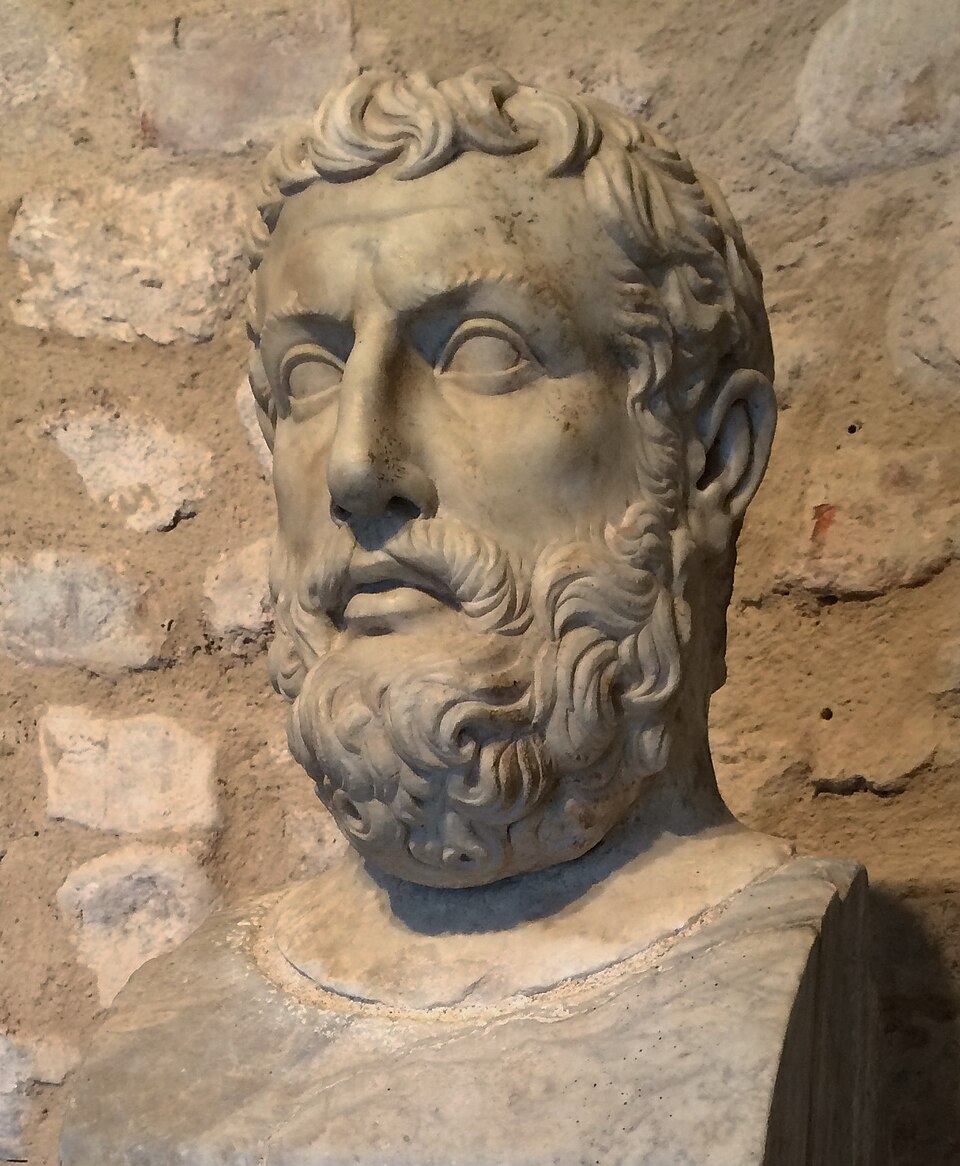
Parmenides belongs to the generation of Presocratic philosophers who investigated the nature of reality before and alongside the development of classical Greek philosophy. He lived in the Greek-speaking world of southern Italy, where philosophical communities developed alongside those of mainland Greece and Ionia. His association with the city of Elea gave rise to the name Eleatic philosophy, a tradition that later became closely associated with rigorous arguments concerning being, unity, and the problems created by change and plurality.
Earlier thinkers such as Thales, Anaximander, and Anaximenes had searched for fundamental principles that could explain the natural world. Parmenides approached the problem differently. Instead of beginning simply by asking what physical substance everything comes from, he examined what must be true about anything that can genuinely be thought or said to exist. This shift made the logical conditions of existence themselves into a central philosophical problem.
Parmenides' arguments challenged ordinary assumptions about the world revealed by the senses. Human experience appears to show things coming into existence, changing, moving, and passing away, but he asked whether such descriptions can be made philosophically coherent if genuine reality must be understood through reason. The tension between reason and sensory experience became one of the most important features of later interpretations of his philosophy.
His philosophical method therefore shifted attention toward questions about being itself. Rather than treating existence as an obvious background assumption, Parmenides asked what follows from the claim that something genuinely is and what it means to deny being altogether. This helped make questions about existence, reality, and the fundamental structure of the world central to the later development of metaphysics.
What Is Parmenides Famous For?
Parmenides is most famous for his philosophical argument about being and non-being. He argues that genuine inquiry must follow what can be thought and expressed consistently, while the supposed path of what-is-not cannot provide a legitimate object of knowledge. This argument is expressed in difficult and highly compressed language, and its exact interpretation remains one of the major subjects of debate in the study of Presocratic philosophy.
His arguments lead to striking conclusions about what is. In the surviving central portion of his poem, what-is is described as ungenerated, imperishable, whole, continuous, and unchanging. These descriptions appear to follow from the idea that what genuinely is cannot arise from non-being or disappear into non-being without introducing contradictions into philosophical thought.
Parmenides is therefore frequently associated with the philosophical problem of change. If something comes into existence, where did it come from? If it passes away, does it become what is not? Parmenides' reasoning challenges the assumption that coming-to-be and passing-away can be straightforwardly explained. His philosophy thus forced later thinkers to distinguish more carefully between changes in appearance and changes in the fundamental constituents of reality.
His arguments became one of the major turning points in Presocratic philosophy because later thinkers had to respond to the problems his reasoning raised. Philosophers such as Empedocles, Anaxagoras, and the ancient atomists developed theories in which permanent underlying elements or particles could combine and separate without being generated from nothing or completely destroyed.
What Was Parmenides' Philosophy?
The central concern of Parmenides' philosophy is the relationship between being, thought, and truth. His surviving poem presents a philosophical investigation into the possible paths of inquiry and asks what can genuinely be known. Rather than beginning from ordinary observations alone, Parmenides examines the logical conditions required for something to be an intelligible object of thought and speech.
Parmenides distinguishes between what can be established through reason and what belongs to ordinary human opinion. The philosophical path requires careful attention to what it means for something to be, while the world as it appears through the senses presents a changing and diverse picture that creates serious philosophical difficulties. This distinction between truth and opinion is a major structural feature of the surviving poem.
His reasoning is difficult to interpret, and scholars disagree about several major aspects of his philosophy. In particular, there is continuing debate about whether Parmenides should be understood as a strict monist who denied genuine plurality and change, or whether his arguments should be interpreted in a more qualified way. The precise relationship between his account of truth and his discussion of the changing world also remains disputed.
What is clear is that Parmenides made the question of being central to philosophical investigation and forced later thinkers to confront the logical consequences of claims about existence and change. His philosophy transformed the direction of Greek thought by making it necessary to explain not only what the world is made of, but also how concepts such as existence, non-being, unity, plurality, motion, and transformation can be thought coherently.
Parmenides' Theory of Being
The concept of being is at the heart of Parmenides' philosophy. His argument begins from the question of what it means to say that something is. Rather than treating existence as an obvious fact requiring no further examination, Parmenides investigates the logical conditions that make thought and speech about reality possible in the first place.
Parmenides presents the path of what-is as the path of inquiry that can be followed, while the path of what-is-not is treated as impossible to know or express coherently. The exact relationship between thought, language, and being in his argument remains debated, but the basic point is that philosophical inquiry cannot coherently take absolute non-being as though it were an existing object available for thought.
From this starting point, Parmenides develops a series of arguments concerning the nature of what-is. If what-is could come into being, then there would have to be some prior state from which it came. But if that prior state were what-is-not, Parmenides argues that it could not serve as a genuine source of being. If it already existed in some form, then the claim that it genuinely came into being would require further explanation.
Similar reasoning is applied to destruction. If what-is were to cease being, it would have to pass into what-is-not. Parmenides rejects this possibility within the logic of his argument and therefore describes genuine being as neither generated nor destroyed. These conclusions created one of the most radical challenges in ancient philosophy: how can the changing world of ordinary experience be reconciled with the logical demands placed upon what genuinely is?
Parmenides on Being and Non-Being
One of the most important aspects of Parmenides' philosophy is his distinction between being and non-being. This distinction provides the foundation for his investigation into what can genuinely be known and what can consistently be said about reality without introducing contradiction into philosophical reasoning.
For Parmenides, what-is can be thought and spoken of, whereas what-is-not cannot provide a genuine object of thought or knowledge. This creates a fundamental restriction on philosophical inquiry: thought must concern what can be. The argument is therefore closely connected with the possibility of meaningful thought itself, rather than being merely a claim about which physical objects happen to exist.
The argument is not simply the ordinary statement that something exists and something else does not exist. Parmenides is examining the deeper logical conditions involved when philosophers speak about existence and non-existence. His reasoning asks whether absolute non-being can be referred to, known, or used as an explanation for how something begins or ceases to exist.
This is one reason his philosophy became so important for later discussions of ontology and metaphysics. Later philosophers had to confront the problem he raised when explaining change, generation, destruction, and plurality: how can something become different without requiring being to emerge from, or disappear into, what is not?
What Is the Way of Truth in Parmenides?

The Way of Truth, traditionally called Aletheia, is the central philosophical portion of Parmenides' surviving poem. In this part, the goddess who guides the philosophical journey directs the inquirer away from unreliable assumptions and toward a rigorous examination of what can genuinely be affirmed about being.
In this section, Parmenides develops arguments about what-is and what cannot be. The reasoning leads to a description of being as ungenerated, imperishable, whole, continuous, and unchanging. These characteristics are not presented simply as observations about an ordinary physical object but as consequences that appear to follow from the fundamental conditions governing genuine being.
The Way of Truth is therefore concerned not merely with collecting information about the physical world. It asks what must be true of reality if philosophical thought is to remain coherent. Parmenides' method gives a central role to reasoned argument, challenging the assumption that sensory experience alone can provide a complete account of what is ultimately real.
The arguments of the Way of Truth became enormously influential because they challenged earlier explanations of nature and created problems that later Presocratic philosophers attempted to solve. Empedocles, Anaxagoras, and the atomists each developed accounts of permanent underlying realities whose combinations and separations could explain the changing appearances of the world without requiring genuine being itself to come into existence or pass away.
What Is the Way of Opinion in Parmenides?
The second major part of Parmenides' poem is traditionally known as the Way of Opinion, or Doxa. Here the poem turns toward an account of the world as understood through the distinctions and explanations employed by ordinary human beings, in contrast with the strict philosophical investigation developed in the Way of Truth.
This part of the poem presents a cosmological account involving principles traditionally associated with light and night. The surviving fragments indicate that Parmenides' cosmology addressed subjects including the heavens, the Earth, the Sun, Moon, stars, and other aspects of the natural world. These passages show that his surviving work was concerned not only with abstract questions about being but also with explaining the structure and phenomena of the cosmos.
The relationship between the Way of Truth and the Way of Opinion is one of the most debated questions in Parmenidean scholarship. Philosophers and historians continue to ask why a thinker who develops such radical arguments concerning being would also present an extended account of the changing world and its cosmological structure.
It is therefore safer to avoid the oversimplified claim that Parmenides simply wrote one section saying reality is real and another saying the entire physical world is an illusion. The exact philosophical status of the cosmology remains a matter of scholarly interpretation, and the surviving fragments do not allow every aspect of the relationship between Aletheia and Doxa to be reconstructed with complete certainty.
Parmenides and the Problem of Change
One of Parmenides' most important philosophical problems concerns change. His arguments ask whether coming into being, passing away, motion, and alteration can be understood consistently once we examine what it means for something genuinely to exist. This question became a major challenge for later Presocratic philosophers, many of whom developed their own theories partly in response to the problems Parmenides raised about being and becoming.
Ordinary experience seems to show that things come into existence, disappear, move, and change their properties. Parmenides' arguments, however, question whether such processes are ultimately compatible with the requirements of genuine being. The Way of Truth describes what-is in terms that exclude generation and destruction, forcing a distinction between the way reality appears to ordinary experience and what philosophical reasoning can establish about what-is.
If something comes into being, it appears necessary to explain where it came from. If it came from what-is-not, Parmenides' reasoning rules this out because what-is-not cannot serve as a genuine source or object of thought. But if it came from what-is, then it was already there in some sense rather than coming into existence absolutely. His argument therefore places severe restrictions on genuine coming-to-be.
Similar reasoning applies to destruction. If what-is genuinely ceased to be, it would seem to pass into what-is-not, yet Parmenides rejects this transition within the logic of his argument. The surviving fragments consequently describe what-is as imperishable as well as ungenerated. What appears to human beings as generation and destruction therefore becomes philosophically problematic rather than simply accepted as an obvious feature of ultimate reality.
These arguments do not merely say that change is difficult to observe. They challenge the underlying assumptions about existence that make change possible in the first place. For this reason, Parmenides' philosophy became a decisive problem for later thinkers such as Empedocles, Anaxagoras, and the atomists, who sought to explain the changing world while preserving permanent underlying realities.
Did Parmenides Believe That Change Is Impossible?
Parmenides is traditionally interpreted as arguing that genuine being cannot change. In the Way of Truth, what-is is described as ungenerated, imperishable, whole, continuous, and unmoving. On the traditional reading, these characteristics follow from the rejection of non-being as a possible source, destination, or condition of what genuinely is.
However, the broader claim that Parmenides simply believed that everything humans experience is an illusion requires caution. His surviving poem is difficult to interpret, and scholars disagree about how literally its arguments should be understood. The relationship between the reality described in the Way of Truth and the world encountered in ordinary human experience remains a major problem in Parmenidean scholarship.
His poem also contains a substantial cosmological section dealing with the world of ordinary appearances, traditionally called the Way of Opinion. This section discusses phenomena associated with the natural world even though the Way of Truth appears to deny genuine coming-to-be and change. Scholars therefore disagree about whether this cosmology is merely an account of mistaken mortal belief or has a more complex philosophical role within the poem.
The most reliable description is therefore that Parmenides' philosophical arguments create a serious challenge for ordinary conceptions of coming-to-be, destruction, motion, plurality, and change. A traditional interpretation concludes that genuine reality is completely unchanging, but modern interpretations differ over the exact scope of this conclusion and over what Parmenides intended his arguments about what-is to establish.
Was Parmenides a Monist?
Parmenides is often described as a metaphysical monist, meaning that reality is interpreted as fundamentally unified rather than ultimately composed of independent changing things. This interpretation is encouraged by his descriptions of what-is as whole, continuous, and complete. However, the word "monism" covers several different philosophical positions, and scholars continue to debate which, if any, best describes Parmenides' own view.
Traditional interpretations emphasize Parmenides' descriptions of being as whole, continuous, and indivisible. On a strict monist reading, these arguments lead to the conclusion that there is only one genuine reality and that plurality and change cannot belong to what truly is. This interpretation became highly influential in accounts of Presocratic philosophy and in explanations of Parmenides' impact on later philosophers.
However, modern scholarship does not treat the precise meaning of Parmenidean monism as completely settled. Some interpreters question whether his arguments actually establish that only one thing exists, rather than establishing conditions that anything genuinely existing must satisfy. The surviving fragments are sufficiently difficult that different interpretations can reconstruct the scope of his argument in significantly different ways.
Some interpretations therefore understand Parmenides as defending a strict monism, while others describe his position in more qualified terms. On such readings, his primary concern may be the nature or intelligibility of genuine being rather than the simple assertion that there is numerically only one physical object. It is consequently safest to recognize monism as an influential interpretation of Parmenides rather than an entirely undisputed description of his view.
Parmenides' Main Arguments About Reality
Parmenides' central arguments can be summarized through several connected claims concerning what-is and the impossibility of treating what-is-not as a genuine object of thought or explanation. These arguments are presented poetically and are difficult to reconstruct with complete certainty, but they lead to a striking description of genuine being as ungenerated, imperishable, continuous, and free from the kinds of change found in ordinary experience.
Being Cannot Come From Non-Being
If something genuinely comes into existence, it would seem to come either from being or from non-being. Parmenides argues that non-being cannot be the source of being because what-is-not cannot provide a genuine object of thought or explanation. If something came from what already is, moreover, it was already present in some relevant sense. The argument therefore challenges ordinary ideas about absolute coming-to-be and generation.
Being Cannot Pass Into Non-Being
If something genuinely ceases to be, it would seem to pass into non-being. Parmenides rejects this possibility because what-is-not cannot serve as a genuine destination or condition of being. The argument consequently treats destruction as no less problematic than generation. In the Way of Truth, the rejection of both possibilities supports the description of what-is as imperishable and incapable of genuine passing away.
Being Is Ungenerated
Because being cannot come from what-is-not, Parmenides argues that it cannot have come into existence in the ordinary sense. The surviving poem asks when and from where what-is could have arisen, challenging any attempt to identify a moment at which genuine being first began. On the traditional interpretation, this reasoning means that what-is is ungenerated and not subject to an origin in the way ordinary changing things appear to be.
Being Is Imperishable
Because being cannot become what-is-not, Parmenides argues that it cannot genuinely perish. The same fundamental restriction that prevents generation also prevents complete destruction: what-is cannot simply pass into a condition of non-being. The Way of Truth therefore characterizes genuine being as imperishable. This conclusion forms an essential part of the challenge Parmenides presents to ordinary ideas about things beginning, ending, and passing away.
Being Is Continuous
If what-is is genuinely being, Parmenides' reasoning leaves no room for a genuine gap of non-being separating one part from another. His fragments accordingly describe what-is as continuous and undivided. Traditional interpretations connect this claim with his broader account of being as whole and complete. Exactly how this continuity should be understood remains connected with the larger scholarly debate over whether Parmenides defended a form of strict monism.
Being Does Not Undergo Genuine Change
Change would appear to require being to become something that it previously was not, or to lose some characteristic that it previously possessed. Parmenides' arguments therefore place severe restrictions on the possibility of genuine change in what-is. The traditional interpretation concludes that ultimate reality is unchanging, although scholars continue to debate precisely what Parmenides intended this conclusion to apply to and how it relates to his cosmological account.
Parmenides on Truth and Human Opinion
Parmenides distinguishes philosophical truth from the opinions through which human beings ordinarily interpret the world. This distinction structures the surviving portions of his poem and reflects his concern with the proper paths of inquiry. Human beings can be misled when they rely uncritically on ordinary appearances, whereas philosophical inquiry must examine what can be thought and stated consistently about what genuinely is.
The Way of Truth follows what can be established through rigorous reasoning about being. The Way of Opinion presents an account associated with the beliefs and explanations of mortals and includes a substantial cosmological discussion. The relationship between these two parts is controversial, and scholars disagree about whether the cosmology is wholly rejected or serves a more complex function within the poem.
This distinction is important because Parmenides is not merely offering a physical theory of the universe. He is also examining the conditions under which human beings can claim to know something and what objects philosophical thought can genuinely concern. His arguments therefore connect metaphysical questions about being with epistemic questions about reasoning, knowledge, and the reliability of ordinary human understanding.
The contrast between truth and opinion became an important theme in later Greek philosophy, particularly in discussions concerning knowledge, appearance, reason, and reality. At the same time, the exact meaning of Parmenides' own distinction should not be reduced to a simple opposition between an entirely real world and an entirely unreal one. The structure and purpose of the Way of Opinion remain among the central interpretative questions surrounding his poem.
Parmenides' On Nature: What Did He Write?
Parmenides is traditionally said to have written a philosophical poem known as On Nature, composed in the epic medium of dactylic hexameter verse. However, the title is probably not securely established as the original title of his work, since generic titles of this kind were often assigned to Presocratic writings by later traditions. It is therefore more accurate to describe On Nature as the conventional modern and ancient title under which Parmenides' surviving poem has been transmitted.
No complete manuscript of Parmenides' poem survives. Instead, scholars reconstruct portions of the work from direct quotations and testimonia preserved by later ancient authors, whose own philosophical interests sometimes influenced the way Parmenides' ideas were transmitted. The surviving material is therefore incomplete, and the reconstruction of its original wording and arrangement remains dependent upon fragmentary evidence.
The surviving material is usually organized into a Proem, the Way of Truth, and the Way of Opinion. The poem begins with a symbolic journey to a goddess, proceeds to an investigation of the possible paths of inquiry and the nature of what-is, and later presents a cosmological account associated with the beliefs and explanations of mortals.
Because the original poem is incomplete, interpretations of Parmenides must take into account the fragmentary condition of the evidence. Although important portions of his central argument survive, the later cosmological material is much less completely preserved, and scholars continue to disagree about the exact relationship between the poem's arguments about truth and its account of the changing natural world.
What Is Parmenides' Philosophical Poem About?

Parmenides' poem begins with a dramatic journey in which the speaker travels toward a goddess who reveals the different paths of inquiry. The Proem describes a chariot journey guided by divine figures and leads the narrator beyond the ordinary paths followed by human beings. This symbolic setting introduces the philosophical distinction between reliable inquiry and the beliefs through which mortals ordinarily attempt to understand reality.
The poetic framework is important because Parmenides did not present his philosophy as a modern academic treatise. His arguments are expressed through epic-style poetry, traditional religious imagery, symbolism, and the dramatic voice of a divine revelation. Yet the poem's mythic and poetic form contains arguments that became central to the development of philosophical reflection on being and reality.
The central philosophical material then turns toward questions about being, thought, truth, and the ways in which mortals understand the world. The goddess distinguishes paths of inquiry and directs attention toward what can genuinely be thought and spoken of, before the poem develops its famous account of the characteristics of what-is.
The later portion of the poem presents a cosmological account of the world of appearances. Because this material survives in a more fragmentary condition than the central argument, its precise purpose remains disputed. The poem as a whole therefore combines metaphysical reasoning, epistemological questions, and cosmological explanation within a distinctive poetic structure.
Parmenides and the Eleatic School of Philosophy
Parmenides is traditionally regarded as one of the central figures associated with Eleatic philosophy, a philosophical tradition connected with Elea in southern Italy. The name "Eleatic" is used by later historians to group thinkers whose arguments became associated with questions about being, unity, plurality, motion, and the possibility of genuine change.
Zeno of Elea is especially associated with defending Parmenidean positions through arguments concerning motion, plurality, and change. Melissus of Samos is another important figure traditionally connected with the Eleatic tradition. Although their philosophies were not identical, both became important for the development and defense of arguments about the unity and nature of reality.
The exact boundaries of the Eleatic school are debated, and not every thinker historically associated with it necessarily shared an identical philosophical position. The category can therefore be useful for describing an intellectual tradition, but it should not suggest that all Eleatic thinkers belonged to a formally organized school or simply repeated Parmenides' arguments without modification.
Nevertheless, the Eleatic tradition is important because it made questions about being, unity, plurality, and change central to Presocratic philosophy. The arguments associated with Parmenides and his successors forced later philosophers to explain how a world of many changing things could be understood without abandoning logical consistency about what genuinely is.
Parmenides and Heraclitus: Being vs. Change
Parmenides and Heraclitus are often presented as philosophical opposites because their surviving traditions are strongly associated with different approaches to change. Heraclitus is commonly connected with transformation and the interaction of opposites, while Parmenides' arguments became famous for placing severe restrictions on coming-to-be, passing-away, and alteration.
Heraclitus is famous for emphasizing change, conflict, and the ordered structure of becoming. Parmenides, by contrast, develops arguments that place strict limits on genuine change and coming-to-be, describing what-is in terms that exclude generation and destruction. Their philosophies therefore became important reference points for later debates about permanence and transformation.
The familiar textbook contrast between “Heraclitus says everything changes” and “Parmenides says nothing changes” is useful as an introduction, but it oversimplifies both philosophers. Heraclitus' surviving fragments also emphasize order and continuity, while Parmenides' poem contains a substantial cosmological account dealing with the world as it appears to human beings.
Their philosophies are therefore more complicated than a simple opposition between change and absolute stability. There is no need to reduce Parmenides' arguments to a simple rejection of everything perceived by the senses, just as Heraclitus should not be reduced to the isolated slogan that everything is always changing in a purely chaotic or disordered way.
Parmenides and Zeno of Elea
Zeno of Elea is traditionally described as a defender of Parmenides' philosophy. Ancient reports present him as developing arguments intended to support positions associated with Parmenides by showing that apparently ordinary assumptions about plurality and motion can lead to serious logical difficulties when examined carefully.
Zeno became famous for arguments and paradoxes concerning motion and plurality. His reasoning challenges apparently straightforward assumptions about movement, division, and the composition of extended objects. By drawing out paradoxical consequences from commonly accepted beliefs, Zeno became one of the most influential figures in the ancient study of philosophical argument.
The relationship between Parmenides and Zeno is important because Zeno's arguments demonstrate how the problems raised by Parmenides could be developed through increasingly sophisticated reasoning. Rather than merely repeating Parmenides' conclusions, Zeno examined the consequences of accepting plurality and motion and exposed difficulties that later philosophers attempted to resolve.
Later philosophers continued to debate the logical and mathematical issues raised by the Eleatic arguments. Questions about infinity, divisibility, continuity, and motion remained philosophically important long after the Presocratic period, demonstrating the lasting influence of the problems associated with Parmenides and Zeno.
Parmenides' Influence on Plato
Parmenides had a major influence on later Greek philosophy, including the philosophy of Plato. Plato inherited a philosophical tradition in which the Eleatic challenge had made it necessary to explain the relationship between stable intelligible reality and the changing world encountered through ordinary experience.
Plato takes the Eleatic challenge seriously in several dialogues, especially the Parmenides, where the character Parmenides examines difficult problems concerning unity, plurality, and the theory of Forms. These problems reflect broader questions about how things can be both one and many and how stable objects of knowledge can be related to changing appearances.
The historical Parmenides and Plato's literary character should not be treated as identical. Plato's dialogue uses Parmenides as part of a sophisticated philosophical examination rather than providing a straightforward biography or an exact record of the historical philosopher's doctrines. Literary representation and historical reconstruction must therefore be carefully distinguished.
Parmenidean questions about being and intelligibility nevertheless became deeply important to the development of Platonic metaphysics. Plato repeatedly investigates the difference between what is stable and intelligible and what is subject to becoming and change, thereby continuing philosophical problems that Parmenides had helped make central to Greek thought.
Why Is Parmenides Important to Metaphysics?
Parmenides is frequently described as one of the founders of metaphysical inquiry because he made the nature of being itself a central philosophical problem. Rather than treating reality only as a collection of changing physical objects, he asked what conditions must be satisfied for something genuinely to be.
Instead of asking only what physical substance makes up the world, Parmenides asks what must be true of anything that genuinely is. This shift directs philosophical attention toward questions concerning existence, necessity, intelligibility, and the logical conditions of coherent thought rather than solely toward the identification of a fundamental material principle.
This shift toward questions about existence, identity, unity, plurality, and change became fundamental to later metaphysics. Parmenides' arguments compelled subsequent philosophers to consider whether genuine reality must possess stable characteristics and how the changing world of experience could be explained without appealing to an incoherent transition from non-being to being.
Later philosophers repeatedly returned to problems that Parmenides had helped formulate: What does it mean for something to exist? Can something come from nothing? Can being change? How are thought and reality related? Different philosophers answered these questions in radically different ways, but the questions themselves remained among the central problems of metaphysical inquiry.
Parmenides and the Philosophy of Existence
Modern philosophers often describe the study of being and existence as ontology. Although the term itself belongs to a much later philosophical vocabulary, Parmenides' investigation is closely connected with questions that later became central to ontology. His arguments examine what can consistently be said and thought about what is and what follows from the fact that something genuinely exists.
His central concern is not simply whether particular objects exist. He investigates the meaning and logical consequences of being itself, asking what characteristics belong to what-is when philosophical inquiry follows a path that excludes non-being as an intelligible object. This makes his thought fundamentally different from a merely descriptive account of individual things.
This is why Parmenides remains important in discussions about existence, identity, necessity, possibility, and the structure of reality. Modern interpretations disagree about precisely how his concept of being should be understood, but they generally recognize that his poem introduced unusually powerful questions about the conditions under which anything can count as genuinely real.
Parmenides on Reason, Thought, and Knowledge
Parmenides' philosophy is also concerned with the relationship between thought and reality. His poem does not simply offer a theory about physical objects; it also asks which paths of inquiry can genuinely lead to understanding and which forms of thought fail because they attempt to treat what-is-not as an intelligible object.
His poem presents philosophical reasoning as a means of distinguishing what can genuinely be known from the confused opinions of mortals. The path associated with truth requires attention to the logical requirements governing claims about what is, whereas ordinary human understanding is presented as vulnerable to assumptions shaped by the changing and diverse world of experience.
This does not mean that Parmenides developed a modern scientific theory of knowledge. Instead, his arguments establish a profound connection between the possibility of thinking something and the possibility of what is being thought. The exact meaning of this relationship remains one of the difficult and disputed features of interpreting his surviving fragments.
The resulting problems became extremely influential for later philosophers concerned with the relationship between thought, language, and reality. Parmenides helped establish the idea that philosophical inquiry must examine not only what people believe about the world but also whether the concepts used in those beliefs can be thought and expressed coherently.
Parmenides' Main Philosophical Ideas
Although the surviving evidence is fragmentary, several themes are consistently central to discussions of Parmenides. These ideas emerge from the poem's investigation of possible paths of inquiry and from its arguments concerning the characteristics of what-is. Their exact interpretation remains debated, but they provide the essential framework for understanding Parmenides' historical importance.
Being Is the Central Object of Inquiry
Parmenides makes the question of what it means to be central to philosophical investigation. Rather than beginning only with the changing physical world, he asks what can genuinely be said of what-is and what follows when inquiry takes being itself as its fundamental subject.
Non-Being Cannot Be a Genuine Object of Thought
His argument rejects the path of what-is-not as an intelligible route to knowledge. The precise interpretation of this claim is debated, but it establishes a fundamental restriction on inquiry by denying that non-being can simply function as something that can be known, described, or used as a source for explaining reality.
Being Is Ungenerated
Being cannot genuinely come into existence from non-being within Parmenides' argument. If what-is were generated, an explanation would be required for its origin, yet the transition from what-is-not to what-is is precisely the kind of possibility his philosophical path refuses to accept.
Being Is Imperishable
Being cannot genuinely pass into non-being. Just as Parmenides' reasoning challenges the idea that what-is can arise from what-is-not, it also challenges the idea that genuine being can disappear into non-being and thereby cease to be in the fundamental sense.
Being Is Continuous
Genuine being cannot contain gaps of non-being that divide it. Parmenides' description of what-is emphasizes wholeness and continuity, and traditional interpretations connect this claim with his rejection of genuine divisions that would require non-being to separate one part of being from another.
Change Creates a Philosophical Problem
Parmenides' reasoning challenges ordinary assumptions about coming to be, passing away, and alteration. If genuine change requires something to become what it previously was not, then change appears to involve precisely the relationship between being and non-being that his argument treats as philosophically problematic.
Reason Must Guide Philosophical Inquiry
Parmenides emphasizes a rational path of inquiry rather than relying solely on ordinary appearances. His philosophical importance lies partly in the demand that beliefs about reality must satisfy rigorous requirements of intelligibility and cannot simply be accepted because they correspond to the immediate impressions of everyday experience.
What Do We Actually Know About Parmenides?
Studying Parmenides requires particular care because his original philosophical poem has not survived in complete form. Much of what is known comes from quotations preserved by later writers and from testimonia describing his ideas. The surviving evidence is sufficient to establish his enormous philosophical importance, but many details concerning the exact structure and interpretation of his thought remain subjects of scholarly debate.
Relatively Well-Attested
- Parmenides was associated with the city of Elea.
- He was an important Presocratic Greek philosopher.
- His philosophy centered on being, truth, and the nature of reality.
- A philosophical poem traditionally known as On Nature is attributed to him.
- Important fragments of the poem survive through quotations and reports by later authors.
- His arguments had a major influence on later Greek philosophy.
Traditionally Attributed or Reconstructed
- The exact organization and wording of the original poem.
- The precise relationship between the Way of Truth and the Way of Opinion.
- The exact meaning of Parmenides' cosmological account.
Still Debated by Scholars
- Whether Parmenides should be interpreted as a strict metaphysical monist.
- Whether he regarded the everyday world as completely unreal.
- How exactly his arguments about being should be reconstructed.
- How his cosmology relates to his arguments in the Way of Truth.
Was Parmenides the Father of Metaphysics?
Parmenides is sometimes called the father of metaphysics because of the importance he gave to questions about being and reality. The title reflects the enormous historical influence of his investigation into what it means for something genuinely to be and the consequences that follow from treating being as a central object of philosophical inquiry.
This title should be understood as a historical description rather than an ancient title that Parmenides himself used. Different histories of philosophy identify different thinkers as foundational figures in metaphysics, and there is no need to treat the expression as an exact or universally accepted designation from the ancient world.
His philosophical investigation is nevertheless extraordinarily important for metaphysics because it asks what must be true of reality independently of ordinary assumptions about physical change. His arguments force inquiry beyond the simple observation that things seem to change and toward questions about whether the concepts used to explain change are logically coherent.
Later philosophers developed radically different answers to these problems, but Parmenides helped establish the questions themselves as central philosophical problems. His influence can be seen in the continuing examination of existence, identity, unity, necessity, and the relationship between the changing world and what can genuinely be known through philosophical reasoning.
Parmenides' Influence on Greek Philosophy
Parmenides' influence extended far beyond the Eleatic tradition. His arguments created problems that later Presocratic philosophers had to address when developing their own accounts of nature. Any theory that attempted to explain generation, destruction, plurality, and motion now faced the challenge of showing how change could occur without requiring something to arise from absolute non-being.
Thinkers such as Empedocles, Anaxagoras, and the Atomists developed theories that attempted, in different ways, to explain change while avoiding the problem of something simply coming from absolute nothing. Their systems typically appealed to permanent underlying constituents whose mixtures, separations, or movements could account for the changing world.
Parmenides therefore played an important role in transforming Presocratic philosophy. Later theories of nature increasingly had to account for the logical difficulties surrounding coming-to-be, destruction, plurality, and change. In this sense, even philosophers who rejected his conclusions were often responding to problems that his arguments had made impossible to ignore.
Parmenides of Elea Explained Simply
Parmenides was an ancient Greek philosopher who asked a very basic but extremely difficult question: What does it really mean for something to be? Instead of beginning only with the things we see changing around us, he examined the logical conditions that must be satisfied if something can genuinely be said to exist.
His argument begins with the idea that what-is-not cannot be a genuine object of thought or explanation. From this, he develops a powerful argument that genuine being cannot simply come into existence or disappear into non-being. The consequences of this reasoning led him to describe what-is as ungenerated, imperishable, whole, and not subject to ordinary processes of change.
This creates a major problem for ordinary ideas about change. Things appear to be born, die, move, and transform, yet Parmenides' reasoning suggests that genuine being cannot undergo these processes in the straightforward way we normally imagine. His philosophy therefore forced later thinkers to develop more sophisticated explanations of how change and plurality could be possible.
- Main question: What does it mean for something to be?
- Central concept: Being.
- Important contrast: Being and non-being.
- Major problem: How can genuine change and coming-to-be be possible?
- Major text: A philosophical poem traditionally called On Nature.
- Tradition: Presocratic and Eleatic philosophy.
- Historical importance: Parmenides helped make questions about being and reality central to Greek metaphysics.
A Famous Idea Associated with Parmenides
“It is necessary to say and to think that Being is.”
Frequently Asked Questions About Parmenides
Who was Parmenides of Elea?
Parmenides of Elea was a Presocratic Greek philosopher from Elea in southern Italy. He is especially known for his arguments concerning being, reality, truth, and change.
What is Parmenides famous for?
Parmenides is famous for his philosophy of being and his arguments about what can genuinely be thought and said to exist. His philosophy also presents a major challenge to ordinary ideas about change and coming-to-be.
What did Parmenides believe?
Parmenides argued that genuine being cannot come from non-being or pass into non-being. His surviving arguments describe what-is as ungenerated, imperishable, whole, continuous, and unchanging.
What is Parmenides' theory of being?
Parmenides' theory of being centers on the claim that what-is must be thought as being rather than as non-being. His arguments then derive several characteristics of genuine being, including its ungeneratedness, imperishability, continuity, and lack of genuine change.
Did Parmenides believe nothing changes?
Parmenides' arguments strongly challenge genuine change, coming-to-be, and destruction. However, the exact interpretation of his position is debated, particularly concerning how his Way of Truth relates to the cosmology presented in the Way of Opinion.
What is the Way of Truth in Parmenides?
The Way of Truth is the central philosophical section of Parmenides' poem. It develops arguments concerning being, non-being, truth, and the conditions of genuine philosophical inquiry.
What is the Way of Opinion in Parmenides?
The Way of Opinion presents a cosmological account traditionally associated with light and night. The surviving fragments indicate that it discusses the heavens, Earth, Sun, Moon, stars, and other aspects of the cosmos.
Was Parmenides a monist?
Parmenides is traditionally interpreted as a metaphysical monist, but the exact meaning of his position remains debated. Scholars disagree about whether he should be understood as asserting strict numerical unity or making a more fundamental argument about being and intelligibility.
What did Parmenides write?
Parmenides is traditionally associated with a philosophical poem called On Nature. The original work does not survive in full; only fragments and quotations preserved by later authors remain.
Did Parmenides write a book called On Nature?
The work traditionally called On Nature is attributed to Parmenides, but the title itself is probably not securely established as the original title of his poem.
Who was influenced by Parmenides?
Parmenides influenced the Eleatic tradition, especially Zeno of Elea, and had a major impact on later Presocratic philosophers and Plato. His arguments also became important for the development of Greek metaphysics.
What is the Eleatic school?
The Eleatic tradition is associated with philosophers connected to Elea and is especially known for arguments concerning being, unity, plurality, and change. Parmenides and Zeno are its most famous representatives.
How did Parmenides influence Plato?
Parmenidean questions about being, unity, plurality, and intelligible reality became important for Plato. Plato also used a character named Parmenides in his dialogue Parmenides to examine difficult philosophical problems.
Why is Parmenides important in philosophy?
Parmenides is important because he made being and the conditions of genuine thought central philosophical problems. His arguments forced later thinkers to reconsider their explanations of change, plurality, and reality.
Related Ancient Greek Philosophers
Parmenides belongs to the wider tradition of Presocratic and Ancient Greek philosophy. Explore thinkers who developed different answers to questions about nature, being, change, knowledge, and reality.
Philosophy Branches Connected to Parmenides
Parmenides' investigation into being, existence, reality, and the possibility of knowledge connects especially strongly with metaphysics and epistemology. His emphasis on reasoning also raises important questions for logic.
Why Parmenides Still Matters
Parmenides remains one of the most important philosophers of ancient Greece because he transformed a seemingly simple question into a profound philosophical problem: what does it mean for something to be?
His arguments about being and non-being challenged ordinary assumptions about coming-to-be, destruction, motion, plurality, and change. Later philosophers could not simply ignore these problems; they had to develop new accounts of reality capable of responding to the challenge.
From Presocratic natural philosophy to Plato and the later development of metaphysics, Parmenides' questions continued to influence the history of philosophy. His surviving fragments remain difficult, but precisely because of their difficulty, they continue to generate philosophical debate about being, truth, reason, and reality.
Explore Great Philosophers