Who Was Pyrrho of Elis?
Pyrrho of Elis was an ancient Greek philosopher who lived approximately from the late fourth to the early third century BCE. He is traditionally regarded as an important early figure in the history of ancient Greek skepticism and as the philosophical figure after whom the later tradition of Pyrrhonism was named.
Pyrrho is especially associated with questioning whether human beings can establish the true nature of things with certainty. Instead of confidently affirming philosophical doctrines, the tradition associated with him emphasizes the difficulty of determining how things ultimately are.
However, it is important to distinguish the historical Pyrrho from the later philosophical movement called Pyrrhonism. Pyrrho left no surviving writings, and much of the evidence about his philosophy comes from later authors, especially reports preserved through his follower Timon of Phlius.
Because of this limited evidence, historians do not simply equate every doctrine of later Pyrrhonian skepticism with Pyrrho himself. His importance lies in his role as an early source of skeptical philosophical inquiry and as the figure who inspired a later tradition of ancient skepticism.
Pyrrho of Elis: Quick Facts
- Name — Pyrrho of Elis
- Period — Approximately 4th–3rd century BCE
- From — Elis, in the western Peloponnese of Greece
- Philosophical period — Hellenistic philosophy
- Associated with — Ancient Greek skepticism
- Later tradition — Pyrrhonism
- Known for — Skeptical inquiry, suspension of judgment, and the pursuit of tranquility
- Surviving writings — No writings by Pyrrho survive
- Important follower — Timon of Phlius
- Historical importance — An important early figure in the development of ancient skepticism
Pyrrho of Elis and the Rise of Hellenistic Philosophy
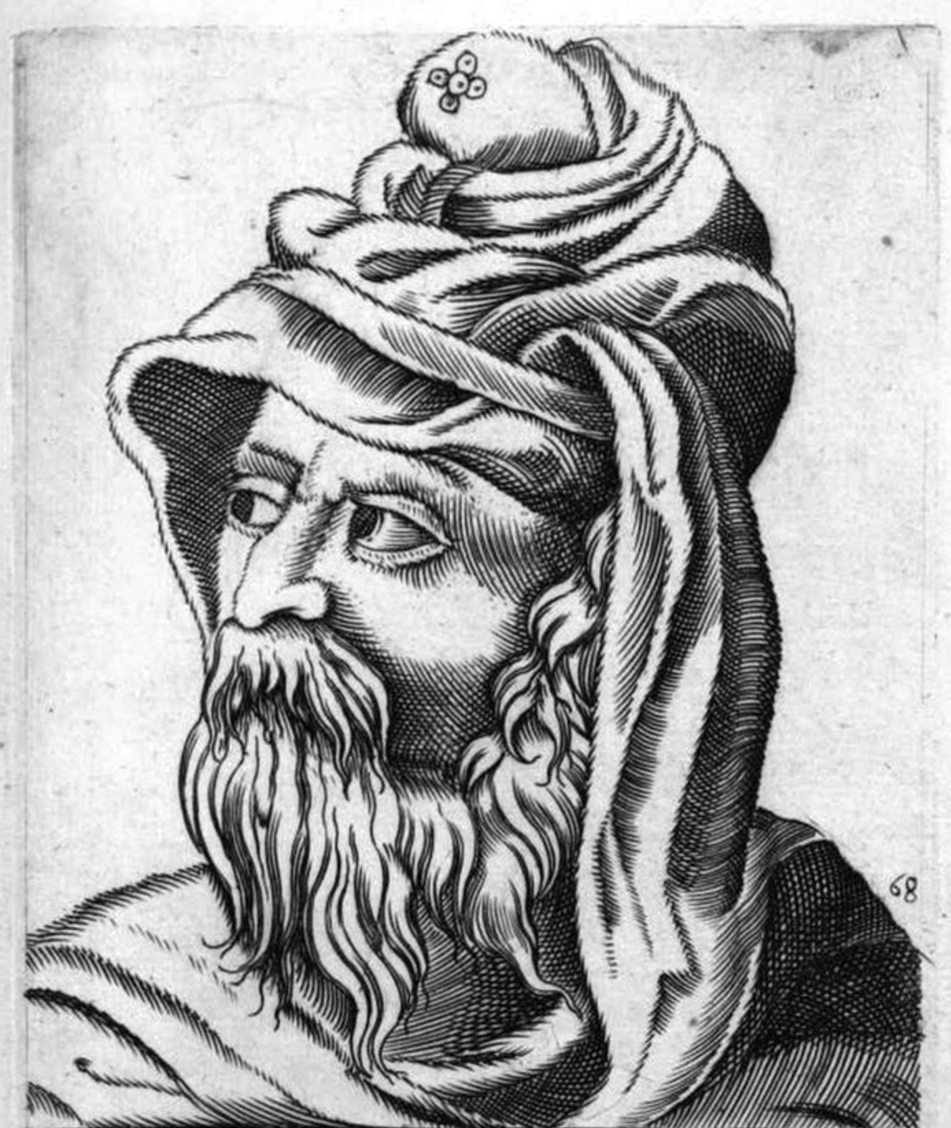
Pyrrho lived during a period of major transformation in Greek philosophy, spanning the late Classical and early Hellenistic worlds. His lifetime overlapped with the campaigns and aftermath of Alexander the Great, developments that transformed the political and cultural landscape of the Greek-speaking world. Pyrrho was also roughly contemporary with the generations from which other major Hellenistic philosophical traditions emerged, including Epicureanism and Stoicism, associated with Epicurus and Zeno of Citium.
Hellenistic philosophers were deeply concerned with questions about how human beings should live and how philosophical inquiry could help people achieve a stable and flourishing life. Different schools offered strikingly different answers: Epicureans emphasized the cultivation of pleasure understood in a disciplined way, Stoics focused on virtue and living in accordance with nature, while skeptical traditions questioned whether the certainty claimed by competing philosophical systems could actually be attained.
In the skeptical tradition associated with Pyrrho, philosophical inquiry focused strongly on the difficulty of establishing definitive claims about reality. The goal was not simply to collect abstract doubts or deny every proposition. Instead, skepticism encouraged the examination of competing arguments and raised the question of whether human beings possessed sufficient grounds for confidently settling disputed philosophical questions.
Pyrrho's historical position requires some caution, however. The later movement known as Pyrrhonism developed several centuries after his lifetime and became a more systematic tradition of skeptical inquiry. Pyrrho is therefore best understood as a crucial starting point and inspiration for later Pyrrhonism rather than as a philosopher whose complete views can simply be identified with every doctrine found in later Pyrrhonian texts.
Who Was Pyrrho and What Did He Do?
Relatively little is known with certainty about Pyrrho's life. He appears to have lived from approximately 365–360 BCE until around 275–270 BCE, but much of the surviving biographical material consists of later reports and anecdotes. Ancient traditions contain numerous stories about his unusual behavior and extraordinary calmness, many of which appear designed to illustrate his philosophical attitude and should therefore be treated cautiously as historical evidence.
Pyrrho is traditionally associated with Elis, a city in the western Peloponnese. The most significant and comparatively reliable reports concerning his philosophical connections associate him with Anaxarchus of Abdera. Ancient sources describe Pyrrho as accompanying Anaxarchus during Alexander the Great's eastern expedition, an experience that later biographical traditions regarded as important to his intellectual development.
Some ancient reports state that Pyrrho encountered Indian gymnosophists, or "naked wise men," during the expedition. Later writers sometimes suggested that these encounters influenced his philosophy, but the evidence for determining their precise significance is limited. Claims about direct borrowing from Indian philosophical or religious traditions therefore remain matters of scholarly debate rather than securely established facts about Pyrrho's thought.
After returning to Greece, Pyrrho appears to have attracted followers, the most important of whom was Timon of Phlius. What can be established more securely is Pyrrho's importance as a philosophical figure whose example and reported views became a major source of inspiration for later skepticism. His historical influence is therefore clearer than the precise details of his biography or the full content of his philosophical teaching.
What Did Pyrrho Believe?
Reconstructing Pyrrho's philosophy is difficult because he left no surviving philosophical writings. The evidence consists largely of reports preserved by later authors, often transmitted through several stages and sometimes separated from Pyrrho by centuries. As a result, historians must distinguish carefully between evidence that may reflect Pyrrho's own views, interpretations developed by his follower Timon, and the more systematic skepticism associated with later Pyrrhonists.
One of the most important pieces of evidence comes from a report associated with Timon of Phlius and preserved through the later Peripatetic philosopher Aristocles. According to this testimony, the person seeking happiness should consider questions about what things are like by nature, what attitude human beings should adopt toward them, and what result follows from adopting that attitude. This passage is central to modern attempts to interpret Pyrrho.
The report presents three connected questions: what things are like by nature, how we should be disposed toward them, and what follows from adopting that disposition. The interpretation of the answers is highly controversial. Scholars disagree over whether Pyrrho should be understood primarily as making a claim about the indeterminate nature of reality or as emphasizing the limits of human capacities to know things as they really are.
According to the transmitted testimony, a particular attitude toward disputed claims is associated with being without firm opinion or commitment, followed ultimately by freedom from disturbance or ataraxia. This connection helps explain why later Pyrrhonists regarded Pyrrho as an important predecessor, even though the exact meaning and philosophical basis of the reported position remain matters of significant scholarly disagreement.
Pyrrho's philosophy should therefore not be reconstructed as a simple list of unquestioned doctrines. The surviving evidence is sparse, its transmission is complex, and even its most important passages admit competing interpretations. What is clear is that Pyrrho became closely associated with an unusual philosophical attitude toward certainty, opinion, disturbance, and the human attempt to determine the nature of things.
What Is Pyrrho's Skepticism?
Ancient Greek skepticism is a philosophical approach concerned with inquiry into whether human beings can attain secure knowledge about disputed matters. The Greek term skepsis is connected with investigation or examination, an important point because ancient skepticism is not simply an attitude of permanent disbelief. The skeptic investigates claims and arguments rather than automatically accepting or rejecting them.
Pyrrho became the central historical figure associated with the later skeptical tradition called Pyrrhonism. Later Pyrrhonists developed systematic methods for examining competing arguments and emphasized situations in which opposing considerations appeared equally persuasive. When no decisive basis for choosing between competing claims could be established, the skeptic aimed to avoid premature assent.
It is therefore more accurate to say that Pyrrho stands at the beginning of a tradition that later developed into Pyrrhonism than to claim that every detailed doctrine found in later Pyrrhonian texts was explicitly formulated by Pyrrho himself. The later tradition was revived and developed by figures such as Aenesidemus and is known most extensively through the surviving writings of Sextus Empiricus.
The distinction matters because the historical Pyrrho is a shadowy figure known through fragmentary evidence, whereas later Pyrrhonism became a recognizable philosophical movement with developed arguments, terminology, and methods. Pyrrho's importance lies partly in the fact that later skeptics found in his reported attitude toward certainty and tranquility a powerful model for their own continuing practice of philosophical inquiry.
What Is Suspension of Judgment in Pyrrhonian Philosophy?
Suspension of judgment, commonly associated with the Greek term epoché, became a central concept in the later development of Pyrrhonian skepticism. It describes the skeptic's refusal to give definitive assent to a disputed claim when inquiry has failed to reveal sufficient grounds for confidently preferring one side of the question over another.
To suspend judgment is therefore to refrain from affirming or denying a philosophical claim when the available arguments do not justify a decisive conclusion. This is different from ignorance in the ordinary sense, because the suspension of judgment may follow careful inquiry and the examination of sophisticated arguments. The skeptic does not simply fail to think about the question but remains unwilling to claim more certainty than the evidence permits.
The skeptical position is also different from simply declaring that a claim is false. A skeptic may investigate a proposition, consider arguments for and against it, and then withhold assent rather than confidently accepting either side. Later Pyrrhonists emphasized this contrast because the assertion that nothing can be known may itself appear to be a positive philosophical claim requiring justification.
This distinction is important because skepticism is not necessarily the claim that everything is false or that nothing exists. Its characteristic practice is the critical investigation of claims and, where opposing considerations cannot be decisively resolved, the withholding of assent. The detailed role of epoché belongs most clearly to the later systematic Pyrrhonian tradition and should not automatically be attributed in its fully developed form to Pyrrho himself.
Pyrrho and Ataraxia: Philosophy and Tranquility
Ataraxia is a Greek term commonly translated as tranquility, freedom from disturbance, or untroubledness. It became an important philosophical ideal in several Hellenistic traditions, although the schools understood its causes and significance in different ways. The search for a stable state of mind was closely connected with the broader Hellenistic concern with how philosophy might contribute to a good and flourishing human life.
In the skeptical tradition associated with Pyrrho, freedom from disturbance is connected with the avoidance of firm commitment to disputed claims. If a person no longer feels compelled to settle every difficult philosophical question with certainty, the conflict generated by defending one dogmatic position against another may lose some of its power to disturb the mind.
Ancient testimony associated with Pyrrho describes a connection between freedom from firm opinion and tranquility. Timon portrays Pyrrho as a figure of remarkable calm, while the important testimony transmitted through Aristocles links a particular philosophical disposition with freedom from disturbance. Exactly how literally these reports describe Pyrrho's own philosophical theory remains open to interpretation.
Later Pyrrhonian skepticism developed the connection between skeptical inquiry, suspension of judgment, and ataraxia into a more systematic account. Tranquility was presented as arising when the struggle to establish certainty about non-evident matters was relaxed after the discovery that competing arguments could not be decisively resolved. This later formulation should again be distinguished from what can be established with certainty about the historical Pyrrho.
Pyrrho, Truth, and the Limits of Human Knowledge
A major concern associated with Pyrrho is the question of whether human beings can determine the true nature of things. The surviving testimony encourages skepticism about the reliability of ordinary opinions and impressions, but scholars disagree about the precise philosophical explanation Pyrrho offered. This uncertainty makes Pyrrho himself an important example of the difficulty involved in reconstructing ancient philosophy from fragmentary evidence.
The skeptical approach does not simply replace one philosophical theory with another. Instead, it examines the reasons offered for competing positions and asks whether any of them can establish a conclusion beyond reasonable dispute. The practice of comparing opposing arguments became especially characteristic of later Pyrrhonian skepticism, which sought to resist the premature transformation of plausible opinions into supposedly secure knowledge.
This makes ancient skepticism particularly important for the history of epistemology, the branch of philosophy concerned with knowledge, justification, belief, and the limits of human understanding. Skeptical inquiry forces philosophers to ask what evidence would actually justify certainty and whether the standards used to defend one claim can themselves be defended without circularity or unsupported assumptions.
Later Pyrrhonian philosophers developed sophisticated arguments against dogmatic claims to knowledge and created systematic strategies for revealing disagreement and uncertainty. These later arguments should not automatically be attributed word-for-word to the historical Pyrrho. Nevertheless, they demonstrate the lasting importance of the philosophical problem associated with his name: how far can human beings genuinely move from appearance and opinion to secure knowledge?
Did Pyrrho of Elis Write Any Books?
No surviving philosophical writings by Pyrrho of Elis are known. Ancient evidence indicates that Pyrrho himself left nothing in writing that survived, creating a major difficulty for anyone attempting to reconstruct his philosophy. Unlike Plato or Aristotle, whose extensive writings allow direct examination of their arguments, Pyrrho must be understood almost entirely through the testimony of other people.
Much of the most important evidence about Pyrrho is connected with his follower Timon of Phlius. Timon wrote poems and prose works, but these too have survived only in fragments and reports preserved by later authors. One especially important account of Pyrrho's general philosophical outlook is transmitted through Aristocles and preserved within the later work of Eusebius.
Later authors also discussed Pyrrho and the skeptical tradition that came to be associated with him. Diogenes Laertius provides many of the surviving biographical anecdotes, while later Pyrrhonists such as Sextus Empiricus preserved a more systematic skeptical tradition that looked back to Pyrrho as an important inspiration. These sources must be distinguished carefully from direct evidence about Pyrrho himself.
This is why historians are cautious when making claims about exactly what Pyrrho taught. The surviving evidence permits several important conclusions about his influence, his association with Timon, and the philosophical attitudes attributed to him, but it does not provide a complete record of his thought. The uncertainty surrounding Pyrrho is therefore itself central to any historically responsible account of his philosophy.
Pyrrho and Timon of Phlius
Timon of Phlius was the most important known follower of Pyrrho and one of the principal figures through whom Pyrrho's philosophical legacy was preserved. Because Pyrrho left no surviving writings, Timon's testimony occupies a uniquely important position for historians attempting to understand his teacher's philosophical outlook. Timon was closer to Pyrrho than any later source that provides substantial information about him.
Timon's writings do not survive in complete form, but fragments and reports preserved by later authors provide important evidence for understanding the early skeptical tradition. Much of his surviving material comes from the Silloi, satirical poems containing sketches and criticisms of other philosophers. This literary form means that even Timon's evidence does not provide a complete and neutral exposition of Pyrrho's philosophy.
The most important testimony associated with Timon describes Pyrrho as asking what things are like by nature, how human beings should respond to them, and what follows from adopting that response. This three-part structure has become central to modern scholarship because it provides the fullest surviving account of a general philosophical outlook explicitly connected with Pyrrho.
Modern scholars nevertheless continue to debate how literally the later evidence should be interpreted and how much of the surviving account represents Pyrrho himself rather than Timon's interpretation or development. Timon's importance lies precisely in this tension: he is the most valuable source for Pyrrho's thought, yet he was also a devoted follower whose surviving testimony reaches us only in fragmentary and indirectly transmitted form.
What Is the Difference Between Pyrrho and Pyrrhonism?
Pyrrho of Elis was a historical philosopher who lived approximately from the fourth into the third century BCE. Pyrrhonism, by contrast, refers to a later skeptical philosophical tradition that regarded Pyrrho as an important source of inspiration. The distinction is essential because the evidence for Pyrrho's own philosophy is fragmentary, whereas later Pyrrhonism developed recognizable methods and terminology over a much longer historical period.
There is no good evidence for an uninterrupted Pyrrhonist movement continuing from Pyrrho's immediate followers through the centuries after his death. The name Pyrrhonism became associated with an ongoing skeptical tradition in the first century BCE, particularly through the revival associated with Aenesidemus. Later figures further developed skeptical techniques for setting competing arguments against one another and avoiding premature assent.
The distinction matters because calling Pyrrho a "Pyrrhonian skeptic" can suggest that he explicitly taught the complete system described in later skeptical texts. The surviving evidence does not justify such a straightforward identification. Even the central testimony associated with Timon is interpreted differently by scholars, and there remains disagreement about whether Pyrrho's own philosophy should be understood in precisely the same terms as later Pyrrhonian skepticism.
Pyrrho is therefore best understood as the historical figure whose philosophy and personal example became an important source for the later tradition of Pyrrhonian skepticism. The later Pyrrhonists did not merely preserve a complete system handed down unchanged from Pyrrho; they developed a philosophical movement that interpreted his legacy in new historical circumstances while continuing to associate skepticism, inquiry, suspension of judgment, and tranquility with his name.
How Does Pyrrhonian Skepticism Work?
The mature Pyrrhonian method involves examining opposing arguments concerning a philosophical question rather than beginning with a fixed doctrine about what must be true. The skeptic compares appearances, arguments, and competing explanations. When the opposing considerations appear to have comparable force and no decisive basis for preferring one position can be found, the skeptic refrains from making a definitive judgment and continues the practice of inquiry.
This practice is sometimes described through the idea of equipollence, from the Greek isostheneia, meaning roughly equality of strength or balance between opposing considerations. In Sextus Empiricus' account, the skeptic develops the ability to place conflicting appearances or arguments in opposition. When neither side appears more convincing than the other, suspension of judgment follows instead of a confident philosophical conclusion.
The later Pyrrhonian skeptic therefore does not begin with the dogmatic claim that a particular philosophical conclusion is false or impossible. Nor does the skeptic simply assert that knowledge can never be attained, since that too could appear to be a philosophical claim requiring justification. The Pyrrhonist investigates the issue and suspends judgment when the inquiry has not yet established one side over the other.
Later Pyrrhonists developed a number of argumentative strategies, commonly called modes or tropes, for revealing disagreement, regress, relativity, and other difficulties in claims to certainty. These methods became particularly associated with figures such as Aenesidemus and Agrippa. They should therefore be understood as developments within the later skeptical tradition rather than as a complete philosophical method that can be directly attributed to the historical Pyrrho.
This skeptical practice became one of the most influential forms of ancient philosophical criticism and contributed to enduring discussions about knowledge, certainty, rational justification, and the standards by which beliefs should be accepted. Its distinctive feature is not the possession of a skeptical doctrine about reality but a continuing willingness to investigate competing claims without prematurely converting an apparently persuasive argument into an established truth.
Did Pyrrhonian Skeptics Reject Everyday Experience?
Ancient skepticism should not simply be understood as a refusal to act or as the claim that ordinary experiences are completely meaningless. Later Pyrrhonian philosophers recognized that human beings inevitably experience appearances, feelings, sensations, and practical situations. The skeptical problem concerned whether such experiences justified stronger claims about the hidden or ultimate nature of reality.
Later Pyrrhonian philosophers therefore distinguished between how something appears and the stronger claim that they know how that thing really is in its ultimate nature. A skeptic might report that honey appears sweet, for example, without making a further dogmatic claim about what sweetness objectively is or whether honey has exactly the same properties independently of every possible observer and circumstance.
This distinction allowed the skeptic to acknowledge experiences without transforming every appearance into a theory about reality. If a person feels cold, the experience itself is not denied. What remains open to investigation is the stronger theoretical claim that would attempt to explain the ultimate nature or objective cause of that experience. Pyrrhonian skepticism thus directed its suspension primarily toward disputed and non-evident philosophical matters.
Sextus Empiricus also explains how the skeptic can live according to appearances and ordinary practical circumstances. His account refers to guidance by nature, the necessities of bodily feeling, customs and laws, and the learning of practical skills. The skeptic can therefore eat when hungry, follow ordinary conventions, and practice an art or profession without claiming to possess certain knowledge of the hidden nature of things.
This distinction between appearances and dogmatic claims was crucial to answering the ancient objection that skepticism would make action impossible. The Pyrrhonist did not attempt to escape ordinary life; rather, the skeptical way of life aimed to proceed through the experiences and practical circumstances that presented themselves while avoiding unnecessary theoretical commitment about matters that remained genuinely uncertain.
Did Pyrrho Travel to India?
Ancient sources associate Pyrrho with the expedition of Alexander the Great and report that he traveled east with Anaxarchus. Diogenes Laertius is among the ancient sources connecting Pyrrho with Alexander's campaigns and reporting that he encountered eastern thinkers. These reports make it historically plausible that Pyrrho traveled far beyond the Greek world, although the precise route and details of his experiences cannot be reconstructed with complete certainty.
The ancient evidence reports encounters with people described as gymnosophists, often translated as "naked wise men," but it does not provide enough information to identify these thinkers securely with a particular Indian philosophical or religious school. The identity of the people Pyrrho encountered, what they actually taught, and how much philosophical discussion took place remain uncertain.
Later interpretations have suggested that Pyrrho may have encountered Indian ascetic or philosophical traditions during this journey. Some modern scholars have explored possible similarities between aspects of Pyrrhonian thought and Indian philosophy, while others have proposed possible connections with Buddhist thought. Similarities alone, however, do not establish direct historical influence, especially when the surviving evidence concerning Pyrrho's own philosophy is itself fragmentary.
The historical evidence therefore does not allow us to confidently identify a specific Indian teaching as the source of Pyrrho's philosophy. Claims that Pyrrhonism was directly derived from Buddhism, Jainism, or another particular Indian school go beyond what the surviving ancient evidence securely establishes. Such proposals may be investigated as historical hypotheses, but they should not be presented as settled facts.
The safest historical conclusion is that reports connect Pyrrho with Anaxarchus and Alexander's eastern expedition and indicate encounters with unnamed Indian thinkers. The exact philosophical impact of these encounters remains uncertain. Pyrrho's connection with Anaxarchus is supported by comparatively important ancient testimony, while broader claims about the direct origins of his skepticism require considerably greater caution.
Pyrrho and Ancient Greek Skepticism
Ancient skepticism became one of the major intellectual traditions of Hellenistic and later Greco-Roman philosophy. Two major skeptical movements are usually distinguished: the tradition associated with Pyrrho, which later developed into Pyrrhonian skepticism, and the skeptical phase of Plato's Academy, commonly called Academic Skepticism. Both challenged dogmatic claims, but they developed different philosophical histories and approaches.
Academic Skepticism emerged within Plato's Academy, particularly after Arcesilaus became its head in the third century BCE. Later Academic skeptics, including Carneades, developed powerful criticisms of claims to certainty and explored questions about probability and practical judgment. The Academy's skeptical development was therefore historically distinct from the later movement that explicitly identified itself with Pyrrho.
The Pyrrhonian tradition placed particular emphasis on continued inquiry, the opposition of competing arguments, suspension of judgment, and the pursuit of tranquility. Its later representatives developed increasingly sophisticated methods for challenging claims to secure knowledge. Unlike a philosopher who asserts that truth is impossible to discover, the mature Pyrrhonist characteristically continued to search and investigate without claiming to have reached a final conclusion.
The history of ancient skepticism therefore extends well beyond Pyrrho himself. Aenesidemus, active in the first century BCE, played a crucial role in the revival and development of a tradition explicitly associated with Pyrrho, while Sextus Empiricus later provided the fullest surviving systematic account of mature Pyrrhonian skepticism. Much of what modern readers know about Pyrrhonian method comes from these later figures.
Understanding ancient skepticism requires preserving these historical distinctions. Pyrrho was an early and highly influential figure whose own philosophy is known only indirectly; Academic Skepticism developed within Plato's institutional tradition; and later Pyrrhonism became a systematic philosophical practice with its own vocabulary and argumentative techniques. Together, these movements made skepticism a major force in ancient debates about knowledge and rational belief.
Pyrrho's Influence on Later Skeptical Philosophy
Pyrrho's name became attached to a skeptical tradition that developed long after his death. The historical continuity between Pyrrho's immediate followers and the later systematic movement cannot be reconstructed in complete detail, but later skeptics regarded him as an important predecessor and model. His name eventually became inseparable from a philosophical tradition devoted to inquiry, the examination of opposing arguments, and resistance to dogmatic certainty.
Sextus Empiricus, who probably lived in the second or early third century CE, is the most important surviving source for the mature Pyrrhonian tradition. His Outlines of Pyrrhonism presents the fullest surviving systematic account of skeptical inquiry, the opposition of arguments, suspension of judgment, skeptical modes, practical life according to appearances, and the relationship between skepticism and tranquility.
Sextus is especially important because much of the earlier literature of Pyrrhonian skepticism has been lost. His writings preserve arguments directed against philosophers, scientists, grammarians, mathematicians, and other specialists, demonstrating how widely the skeptical method could be applied. His works therefore became a major source for later understanding of ancient skepticism.
Sextus' works should nevertheless not be mistaken for writings by Pyrrho himself. Several centuries separated the two figures, and the mature philosophical system described by Sextus reflects the historical development of Pyrrhonian skepticism. Sextus is therefore indispensable for understanding the later tradition associated with Pyrrho, while the historical Pyrrho himself must still be reconstructed from much earlier but fragmentary and indirect evidence.
Through the survival and later rediscovery of skeptical writings, Pyrrhonian arguments continued to influence philosophical discussions far beyond antiquity. Questions about certainty, evidence, appearances, and the justification of belief reappeared in different forms during the Renaissance and early modern philosophy, demonstrating the lasting power of the skeptical problems associated with Pyrrho's name.
Pyrrho of Elis: Main Philosophical Ideas
Because the evidence for Pyrrho is indirect, his philosophical ideas must be presented with appropriate historical caution. Some ideas are strongly associated with the later Pyrrhonian tradition rather than securely attributable in their mature form to Pyrrho himself. The following themes therefore distinguish, where necessary, between the historical philosopher and the skeptical movement that developed under his name.
Skeptical Inquiry
Pyrrho is associated with a philosophical approach that questions whether human beings can securely determine the nature of things. Later Pyrrhonists made inquiry itself central to their identity: the skeptic continues investigating rather than claiming either to have discovered the truth or to have proved that truth is permanently beyond human reach.
Suspension of Judgment
The later Pyrrhonian tradition made suspension of judgment central to skeptical practice, particularly when opposing arguments appear equally persuasive. The mature concept of epoché should be associated primarily with this later systematic tradition, although ancient testimony concerning Pyrrho connects his philosophical attitude with freedom from firm opinion and eventual tranquility.
Questioning Dogmatic Beliefs
Ancient skepticism challenged the assumption that philosophical claims could simply be accepted as established without sufficient justification. The Pyrrhonist examines the reasons offered for competing positions and resists the tendency to treat a persuasive argument, inherited custom, or powerful intellectual tradition as automatically providing certain knowledge.
Tranquility
Pyrrhonian skepticism connects the suspension of judgment with ataraxia, or freedom from disturbance. In the mature tradition described by Sextus Empiricus, tranquility follows the suspension of judgment when the skeptic ceases struggling to establish certainty about disputed non-evident matters. The exact form of this relationship in Pyrrho's own thought remains debated.
Awareness of the Limits of Knowledge
The skeptical tradition encourages philosophers to recognize the limits of human certainty rather than treating uncertain conclusions as established facts. Its lasting importance lies in the questions it raises: What counts as sufficient evidence? How can competing claims be rationally evaluated? And when should intellectual honesty require continued inquiry instead of a premature declaration of certainty?
What Do We Actually Know About Pyrrho?
Pyrrho is a particularly clear example of the difficulties involved in studying ancient philosophers whose own writings have not survived. Our knowledge depends on later testimony, fragments, biographies, and the interpretation of a small number of important passages. It is therefore possible to establish some broad facts about Pyrrho and his influence while remaining uncertain about many details of his life and the exact content of his philosophical views.
Relatively Well-Attested
- Pyrrho was associated with Elis in ancient Greece.
- He lived approximately during the fourth and third centuries BCE.
- He became an important figure in the history of ancient skepticism.
- He is associated with the later tradition known as Pyrrhonism.
- Ancient testimony about him was preserved through later authors, including material connected with Timon.
Traditionally Reported
- His association with Anaxarchus.
- His participation in Alexander the Great's eastern expedition.
- His encounters with ascetic thinkers during the eastern expedition.
- Various stories portraying his unusually detached way of life.
Uncertain or Disputed
- The exact philosophical doctrines held by Pyrrho himself.
- The precise relationship between Pyrrho's philosophy and later Pyrrhonism.
- The extent to which encounters in India influenced his philosophy.
- Whether all anecdotes about his life accurately describe historical events.
Pyrrho Compared with Epicureanism and Stoicism
Pyrrho lived during the same broad Hellenistic period as Epicurus and Zeno of Citium, but their philosophical approaches were significantly different. All three became associated with traditions concerned with how human beings might live well and attain a stable condition of mind, yet they disagreed profoundly about knowledge, nature, reason, and the kind of philosophical teaching required to achieve such a life.
Epicurean philosophy developed a systematic account of nature, pleasure, human psychology, and the good life. Drawing partly on atomist ideas, Epicurus offered positive explanations of the physical world and argued that understanding nature could help free human beings from unnecessary fears, especially fear of the gods and death. The Epicurean pursuit of ataraxia therefore rested upon a definite philosophical account of reality rather than the suspension of judgment characteristic of later Pyrrhonian skepticism.
Stoicism likewise developed a comprehensive philosophical system concerning logic, physics, and ethics. The Stoics believed that the universe possessed an intelligible rational order and that human beings could make progress toward wisdom by understanding nature and living in accordance with reason. Stoic philosophy therefore involved strong positive commitments about reality, knowledge, virtue, and the nature of the good, commitments that skeptical philosophers subjected to sustained criticism.
The skeptical tradition associated with Pyrrho took a markedly different direction. Rather than constructing a comprehensive system explaining the ultimate nature of reality, later Pyrrhonian skeptics examined competing philosophical claims and sought to avoid assent when no decisive argument established one position over another. Their characteristic philosophical activity was therefore inquiry and the testing of dogmatic claims rather than the construction of a complete theoretical system.
This difference illustrates the diversity of Hellenistic philosophy. Epicureans and Stoics developed systematic accounts of nature and the good life, while skeptics emphasized the difficulty of establishing such accounts with certainty. The contrast should not, however, obscure their shared concerns: all of these traditions addressed anxiety, happiness, human conduct, and the possibility of achieving a stable condition of mind through philosophical reflection and disciplined living.
Why Is Pyrrho of Elis Important in Philosophy?
Pyrrho is important because he became the starting point and symbolic inspiration for one of the major traditions in the history of philosophical skepticism. Although the precise relationship between Pyrrho's own philosophy and the later movement called Pyrrhonism remains debated, his name became permanently attached to a philosophical tradition devoted to questioning dogmatic claims and examining the grounds on which beliefs are accepted.
His philosophical legacy raises a fundamental epistemological question: How can we know that our beliefs about reality are actually justified? This question directs attention toward evidence, disagreement, perception, reasoning, and the standards by which a belief can properly be regarded as knowledge rather than merely an opinion that appears convincing to the person who holds it.
Ancient skepticism also demonstrated that philosophical criticism could itself become a systematic intellectual practice. Later Pyrrhonists developed methods for opposing arguments, investigating appearances, and exposing difficulties in claims to certainty. Their work forced other philosophical schools to clarify how knowledge was possible and what criterion could distinguish truth from error or merely persuasive belief.
These questions remained important throughout the history of philosophy. Later philosophers continued to investigate certainty, evidence, perception, reason, and the limits of human knowledge, often confronting skeptical challenges in new forms. The influence of ancient skepticism eventually extended beyond the ancient world through the preservation and later rediscovery of skeptical texts, particularly those associated with Sextus Empiricus.
Pyrrho's importance therefore does not depend on proving every anecdote about his life or attributing every later skeptical argument directly to him. His historical significance comes from his position at the beginning of a tradition that made the examination of certainty, belief, and philosophical justification a central intellectual activity. The uncertainty surrounding his own views is itself a reminder of why historians must distinguish carefully between a philosopher's historical legacy and the later traditions developed in that philosopher's name.
Pyrrho of Elis Explained Simply
Pyrrho of Elis was an ancient Greek philosopher associated with the beginnings of the skeptical tradition later called Pyrrhonism. He wrote no surviving philosophical works, and much of what is known about his thought comes indirectly through his follower Timon of Phlius and later ancient authors. For this reason, historians must distinguish carefully between the historical Pyrrho and the more systematic skeptical movement that later adopted his name.
Instead of confidently claiming that philosophical questions had definite answers, the skeptical tradition associated with Pyrrho emphasized investigating competing arguments and recognizing how difficult it can be to establish certainty about the ultimate nature of things. The mature Pyrrhonian skeptic does not simply declare that knowledge is impossible; rather, the skeptic continues to investigate while withholding judgment when no argument appears decisively stronger than its rival.
Later Pyrrhonian philosophers connected this approach with suspension of judgment, commonly called epoché, and with ataraxia, or tranquility. The basic idea was that the struggle to establish certainty about every disputed philosophical question can itself become a source of disturbance. Suspending judgment, according to the later tradition, could therefore lead to a calmer and less dogmatically committed state of mind.
Put simply, Pyrrho's historical legacy encourages a philosophical attitude of caution: examine the evidence, compare opposing arguments, and do not mistake confidence for certainty. This does not mean that every claim is false or that ordinary life must stop. Rather, the Pyrrhonian tradition asks whether we have genuinely sufficient reasons to make strong claims about matters that remain open to serious philosophical disagreement.
- Philosopher: Pyrrho of Elis
- Period: Fourth–third century BCE
- Tradition: Ancient Greek skepticism
- Later movement: Pyrrhonism
- Central concern: The limits of human certainty
- Associated practice: Suspension of judgment
- Associated goal: Ataraxia, or tranquility
- Important follower: Timon of Phlius
A Famous Principle Associated with Pyrrhonism
“No more this than that.”
Frequently Asked Questions About Pyrrho of Elis
Who was Pyrrho of Elis?
Pyrrho of Elis was an ancient Greek philosopher who lived around the fourth and third centuries BCE. He became an important figure in the history of ancient Greek skepticism and inspired the later tradition known as Pyrrhonism.
What is Pyrrho famous for?
Pyrrho is famous for his association with ancient skepticism and for inspiring the later Pyrrhonian tradition, which emphasized skeptical inquiry and suspension of judgment.
What did Pyrrho believe?
The exact philosophy of Pyrrho is difficult to reconstruct because he left no surviving writings. Later testimony associates him with the view that things are difficult or impossible to determine in their ultimate nature and with an attitude of withholding assent.
What is Pyrrhonism?
Pyrrhonism is a later tradition of ancient Greek skepticism named after Pyrrho of Elis. It developed methods for examining opposing arguments and suspending judgment when no decisive conclusion could be established.
What is Pyrrhonian skepticism?
Pyrrhonian skepticism is a form of ancient skepticism that emphasizes philosophical inquiry, opposing arguments, suspension of judgment, and the pursuit of tranquility.
What is suspension of judgment?
Suspension of judgment means refraining from affirming or denying a disputed claim when the evidence or arguments do not provide a sufficient basis for a definitive conclusion.
What is epoché in philosophy?
Epoché is a Greek term commonly used in discussions of skeptical suspension of judgment. In the later Pyrrhonian tradition, it refers to withholding assent rather than affirming a definitive philosophical conclusion.
What is ataraxia according to Pyrrhonian skepticism?
Ataraxia means tranquility or freedom from disturbance. In the skeptical tradition, suspension of judgment is connected with ataraxia because abandoning the need to settle every disputed philosophical question can reduce disturbance.
Did Pyrrho write any books?
No surviving writings by Pyrrho are known. Much of what is known about his philosophy comes from later sources, including testimony associated with his follower Timon of Phlius.
Did Pyrrho travel to India?
Ancient sources associate Pyrrho with Alexander the Great's eastern expedition. Later traditions and modern scholarship have discussed possible encounters with Indian ascetic thinkers, but the precise philosophical influence of such encounters remains uncertain.
Was Pyrrho the founder of skepticism?
Pyrrho is traditionally regarded as the central figure associated with the Pyrrhonian skeptical tradition. However, ancient skeptical tendencies existed before him, and the systematic form of Pyrrhonian skepticism developed considerably after his lifetime.
Who was Timon of Phlius?
Timon of Phlius was an important follower of Pyrrho. His surviving fragments and the reports about his writings are significant sources for reconstructing aspects of Pyrrho's philosophical legacy.
How is Pyrrho different from Sextus Empiricus?
Pyrrho was an earlier Greek philosopher whose own writings do not survive. Sextus Empiricus lived several centuries later and produced the most extensive surviving presentation of Pyrrhonian skepticism. Sextus therefore provides evidence for the later tradition rather than direct writings by Pyrrho.
Why is Pyrrho important today?
Pyrrho remains important because the skeptical questions associated with his philosophical legacy continue to influence debates about knowledge, certainty, justification, perception, and the limits of human understanding.
Related Ancient Greek Philosophers
Pyrrho belongs to the wider tradition of ancient Greek and Hellenistic philosophy. Explore philosophers who developed different approaches to knowledge, reality, ethics, and the good life.
Philosophy Branches Connected to Pyrrho
Pyrrho's philosophical legacy is particularly important for epistemology, where philosophers investigate knowledge, justification, certainty, and the limits of human understanding. His connection with the Hellenistic search for tranquility also relates to philosophical questions concerning how human beings should live.
Why Pyrrho of Elis Still Matters
Pyrrho did not leave behind a philosophical system comparable to the surviving works of Plato or Aristotle. Much of his philosophical legacy has instead reached us through later testimony and through the skeptical tradition that developed around his name.
Yet the questions associated with Pyrrho remain fundamental to philosophy: How can we know that our beliefs are justified? Can competing arguments ever establish certainty? What should we do when evidence does not decisively support one position over another?
The later Pyrrhonian tradition transformed these questions into a sustained method of philosophical inquiry. Its emphasis on examining arguments, suspending judgment, and seeking freedom from disturbance made skepticism one of the enduring traditions of ancient philosophy.
Explore Great Philosophers