Who Was Epicurus?
Epicurus (341–270 BCE) was an ancient Greek philosopher and the founder of Epicureanism, a philosophical school concerned with the nature of reality, the good life, happiness, pleasure, and freedom from unnecessary fear. Born on Samos and later active in Athens, Epicurus established a philosophical community known as the Garden, where philosophy was intended to provide practical guidance for achieving a secure and peaceful life rather than serving only as an abstract intellectual pursuit.
Epicurus developed a comprehensive philosophical system that included ethics, physics, and a theory of knowledge. He argued that understanding nature could help human beings overcome fears that interfere with happiness, especially fear of the gods and fear of death. His natural philosophy drew upon the atomist tradition, holding that the world could be understood through natural causes rather than being interpreted primarily as the product of arbitrary divine intervention.
For Epicurus, philosophy was valuable because false beliefs could produce unnecessary anxiety. People often feared divine punishment, imagined death as a state of suffering, or pursued wealth and status without limit because they misunderstood what was actually necessary for happiness. Philosophical inquiry could therefore have a therapeutic purpose: by understanding nature and examining desire rationally, a person could free themselves from many forms of mental disturbance.
Epicurus is particularly famous for his philosophy of pleasure and happiness. However, Epicurean pleasure did not simply mean luxury, excessive eating, or constant sensual enjoyment. Epicurus associated the happiest life with freedom from bodily pain and mental disturbance, together with prudence, friendship, moderation, and the careful management of desires. A simple life could often provide greater and more reliable satisfaction than the endless pursuit of expensive or socially admired pleasures.
The ultimate aim of Epicurean philosophy was a condition of secure well-being in which unnecessary fear and restless desire no longer dominate the individual. This ideal made Epicurus one of the most influential ethical thinkers of the Hellenistic world. Although his philosophy is often reduced to the pursuit of pleasure, his surviving teachings present a more demanding question: which pleasures genuinely contribute to a peaceful life, and which desires ultimately create greater pain and anxiety?
Epicurus: Quick Facts
- Name — Epicurus
- Lived — 341–270 BCE
- Tradition — Epicureanism
- Philosophical period — Hellenistic philosophy
- Known for — Happiness, pleasure, ethics, atomism, friendship, and arguments concerning death and the gods
- School — The Garden
- Major ethical goal — A tranquil and happy life characterized by freedom from pain and mental disturbance
- View of nature — Atomistic materialism
- Important surviving works — Letters preserved by Diogenes Laertius, including the Letter to Menoeceus
Epicurus and Hellenistic Philosophy

Epicurus was born in 341 BCE on the island of Samos, where Athenian settlers had established a community, and later established philosophical communities in several places before settling in Athens. He taught at Mytilene and Lampsacus before returning to Athens around 306 BCE. There he acquired a property that became known as the Garden, the name by which his philosophical school became known and a lasting symbol of the Epicurean tradition.
The Garden was more than a place for formal instruction. Epicurean philosophy was closely connected with a way of life and with a community of friends who attempted to put its ethical principles into practice. Friendship occupied an especially important place in the Epicurean conception of happiness, while philosophy itself was intended to help human beings overcome anxiety and achieve a more secure and peaceful form of well-being.
Epicureanism developed during the Hellenistic period, an era in which philosophers increasingly focused on questions about how human beings should live in a changing world. Alongside other major schools, including Stoicism and Skepticism, Epicureanism offered guidance concerning happiness, knowledge, fear, and the proper relationship between the individual and the uncertain circumstances of human life.
Epicurus' philosophy offered a systematic account of how knowledge of nature could contribute to a stable and satisfying human life. He did not treat ethics as entirely separate from questions about reality, knowledge, and the physical universe. False beliefs about the gods, death, and natural phenomena could produce unnecessary anxiety, so an understanding of nature became an important part of the philosophical search for happiness.
His philosophy was therefore not limited to ethics. Epicurus believed that understanding the physical structure of the universe was important because mistaken beliefs about nature could generate fear and anxiety. His physics, which developed within the ancient atomist tradition, supported his ethical project by explaining the world through natural processes and helping to remove fears that he regarded as obstacles to tranquility.
What Did Epicurus Believe?
Epicurus believed that the goal of human life is happiness. He understood happiness in terms of pleasure, but he gave the concept a more restrained and philosophical meaning than the modern use of the word might suggest. Pleasure was the highest good, yet the pleasant life required rational reflection about desires, consequences, and the conditions that make happiness stable rather than temporary.
For Epicurus, a good life involves freedom from bodily pain and mental disturbance. The Epicurean tradition later commonly expressed these ideals through the terms aponia, freedom from bodily pain, and ataraxia, tranquility or freedom from mental disturbance. A person becomes happier by understanding which desires are genuinely necessary, limiting unnecessary desires, cultivating friendship, and overcoming fears based on false beliefs.
Epicurus argued that not all desires deserve equal pursuit. He distinguished natural desires from empty or groundless ones and further distinguished necessary desires from those that are natural but not necessary. This analysis was intended to show that many basic needs are comparatively easy to satisfy, whereas desires for limitless wealth, fame, or status can become difficult to satisfy and generate continuing anxiety.
Epicurus also held that the universe consists of atoms and empty space. Human beings are part of the natural world, and the soul, like the body, was understood within his materialist account of nature rather than as an immaterial entity destined to survive bodily death. This physical view of reality played an important role in his arguments against fear of death and punishment after death.
His philosophy was thus a connected system rather than simply a theory about pleasure. Knowledge of nature could weaken irrational fear, rational reflection could help evaluate desires, and a prudent way of life could produce greater tranquility. Epicurus believed that philosophy should ultimately help human beings live more securely by replacing disturbing beliefs and restless desires with clearer understanding and attainable forms of satisfaction.
What Is Epicureanism?
Epicureanism is the philosophical tradition founded by Epicurus. It combines a naturalistic account of the universe with an ethical theory focused on happiness, pleasure, tranquility, and freedom from unnecessary fear. Its different areas of philosophy were closely connected because knowledge about nature and human experience was intended to support the practical goal of living pleasantly.
Epicurean philosophy teaches that human beings should use reason to examine their desires and beliefs. Instead of constantly seeking more possessions, status, or intense experiences, a person should learn which things are genuinely necessary for a good life. This does not mean that every pleasant experience must be rejected, but that desires should be judged according to their consequences and their contribution to long-term well-being.
Epicureanism therefore places considerable importance on prudence. Rational judgment helps a person determine which pleasures are worth choosing and which apparent pleasures may produce greater suffering later. Similarly, some painful experiences may reasonably be accepted when enduring them leads to a greater pleasure or prevents a more serious harm. The goal is not immediate gratification but intelligent calculation about the overall course of one's life.
Friendship also occupies a central place within Epicurean life. Human beings cannot achieve secure happiness simply by accumulating private pleasures in isolation. Trust, companionship, and mutual security contribute to a stable and satisfying existence, which helps explain why Epicurus established a philosophical community rather than merely presenting his ideas as a set of individual theories.
Epicureanism is sometimes described as a form of hedonism because Epicurus treats pleasure as the highest good. However, his conception of pleasure is closely connected with tranquility, moderation, prudent choice, and freedom from pain rather than with continuous luxury or sensual excess. To understand Epicureanism simply as an invitation to indulgence is therefore to miss the disciplined and reflective character of its ethical philosophy.
What Was Epicurus' Philosophy of Happiness?
Epicurus believed that philosophy should have a practical purpose: it should help people live better lives. Happiness, for Epicurus, requires more than temporary enjoyment. It requires a stable condition in which the body is not overwhelmed by pain and the mind is not disturbed by unnecessary fears. The philosophical search for happiness therefore involved examining the causes of anxiety as carefully as the sources of pleasure.
Epicurus therefore emphasized tranquility of mind and freedom from bodily suffering. A person who continually desires wealth, fame, power, or luxury may remain dissatisfied because each achievement can create new desires and new anxieties. Epicurus regarded the endless expansion of desire as a serious obstacle to happiness because a person may possess much while still feeling that nothing is sufficient.
By learning to distinguish necessary desires from unnecessary ones, a person can reduce dependence on things that are difficult to obtain. Epicurus considered simple necessities comparatively easy to satisfy, while many artificial or empty desires can expand without limit. Understanding this difference could make happiness more secure because it directed attention toward needs that were both natural and more realistically attainable.
Happiness also required freedom from unnecessary fear. Epicurus was especially concerned with fear of divine punishment and fear of death, both of which he believed could disturb the mind throughout life. Understanding the natural world and the mortal character of human existence was therefore not merely a theoretical exercise; it was part of a philosophical effort to remove sources of persistent anxiety.
This is why Epicurean happiness is often associated with simplicity, moderation, friendship, prudence, and tranquility. These qualities work together to produce a life in which pleasure is more stable and less dependent on unpredictable fortune. Epicurus' ideal was not a life without all difficulty, but a life in which human beings had learned to manage desire and fear wisely enough to achieve lasting peace of mind.
What Did Epicurus Mean by Pleasure?

Pleasure is central to Epicurus' ethical philosophy. He regarded pleasure as a natural good and as the goal toward which human choices and actions are directed. Yet this claim requires careful interpretation because Epicurus did not identify the highest form of happiness simply with intense or constantly changing sensations. His ethical theory was concerned above all with achieving a secure condition of well-being.
However, Epicurus did not argue that every pleasurable experience should automatically be chosen. Some pleasures can lead to greater pain later, while some difficult experiences can be accepted because they contribute to a greater long-term good. Choice and avoidance therefore require comparison and calculation rather than the immediate pursuit of whatever happens to feel pleasant at a particular moment.
In the Letter to Menoeceus, Epicurus explains pleasure in terms that emphasize freedom from pain in the body and disturbance in the mind. He explicitly distinguishes this conception from a life of continuous luxury or sensual indulgence and instead emphasizes sober reasoning in the evaluation of choices and desires. Pleasure, in this sense, is closely connected with a stable condition in which nothing necessary for well-being is painfully lacking.
Epicurean discussions of pleasure also distinguish between pleasures associated with processes of satisfying a desire and a more stable condition of well-being free from pain and disturbance. The precise interpretation of these distinctions remains a subject of scholarly debate, but they help explain why Epicurus could treat the absence of pain and mental agitation as a positive and complete form of pleasure.
The Epicurean approach is therefore better understood as a form of rational hedonism: pleasure is the highest good, but practical wisdom determines which pleasures should actually be pursued. Epicurus connects the pleasant life with prudence, justice, and honorable conduct because reckless indulgence often produces the very anxiety and suffering that his philosophy seeks to overcome.
What Did Epicurus Say About Death?
Epicurus is particularly famous for his argument that death is nothing to us. His reasoning begins with the idea that good and evil require conscious experience. Something can benefit or harm us only insofar as it can be experienced by a living subject, and Epicurus therefore asks what exactly remains to be feared once sensation and awareness have completely ceased.
If death is the end of sensation and awareness, then there is no conscious subject who experiences being dead. Epicurus therefore argued that we should not treat death as an experienced harm that must be feared. The argument is commonly summarized through the thought that while we exist, death is not present, and when death is present, we no longer exist as conscious beings capable of experiencing it.
This argument is closely connected with Epicurus' physical theory. If the human soul is material and does not survive the dissolution of the body, then death does not involve an eternal conscious punishment or suffering. Epicurus' atomistic account of human nature was therefore important to his ethical project because it challenged beliefs about an afterlife that he regarded as major sources of anxiety.
Epicurus' argument was not that death itself is pleasant. His point was that the state of being dead is not an experience of pain or suffering for the person who has died. He therefore considered fear of death one of the major obstacles to tranquility, especially when that fear disturbed the whole course of life rather than merely reflecting a natural concern about the process of dying.
The argument has nevertheless remained philosophically controversial. Later philosophers have questioned whether death can harm a person even if it is never consciously experienced, for example by depriving them of goods they might otherwise have enjoyed. Epicurus' position remains important because it forces a distinction between the possible harms of dying and the question of whether the condition of being dead can itself be experienced as a harm.
What Did Epicurus Believe About the Gods?
Epicurus did not simply deny the existence of gods. Ancient sources and surviving Epicurean texts indicate that he accepted the existence of divine beings while rejecting the idea that the gods interfere with human affairs in the way traditional religious beliefs often imagined. His position was therefore directed primarily against fear of divine anger, punishment, and supernatural intervention rather than against the very concept of divinity.
Epicurus conceived of the gods as beings who are blessed and immortal. Because perfect beings would have no need to intervene in human affairs, become angry with human beings, or distribute rewards and punishments according to ordinary human expectations, Epicurus argued that people should not live in fear of divine punishment. Such disturbances would be incompatible with the blessed and tranquil nature attributed to the gods.
This idea was important to Epicurean ethics. Fear of supernatural punishment could disturb the mind throughout life and encourage people to interpret natural events as signs of divine hostility or favor. Understanding the gods correctly was therefore part of the wider Epicurean effort to remove false beliefs that produced unnecessary anxiety and prevented tranquility.
Epicurus' philosophy therefore challenged common assumptions about divine intervention while still allowing a place for gods within his philosophical system. This position distinguishes Epicurean theology from both straightforward atheism and from religious conceptions in which gods continually supervise human conduct, answer prayers, or directly control the events of the natural world.
The practical consequence of this teaching was ethical rather than merely theological. Epicurus wanted human beings to admire the ideal qualities traditionally associated with divinity without becoming enslaved by superstition. A correct understanding of the gods could therefore contribute to the same freedom from fear that Epicurean philosophy sought through its explanation of nature and death.
Epicurus and Atomism: What Did He Believe the Universe Was Made Of?
Epicurus adopted and developed an atomistic theory of nature. According to Epicurean physics, reality consists fundamentally of atoms and empty space. Atoms are the basic material constituents of things, while the void provides the space in which movement can occur. This materialist framework was intended to explain the natural world without appealing to immaterial Forms or constant supernatural intervention.
Atoms are indivisible material bodies that move through the void. The objects we experience are composed of combinations of these atoms. Changes in the visible world can therefore be explained through changes in the arrangements and movements of material bodies. Epicurus extended this naturalistic approach to human beings as well, treating the body and soul as parts of the material world.
Epicurean atomism provided a naturalistic alternative to explanations that depended upon constant supernatural intervention. Epicurus believed that understanding nature could reduce fear by showing that natural events need not always be interpreted as divine punishments or supernatural signs. For this reason, physics had an ethical purpose: knowledge of how nature works could help free the mind from superstition and anxiety.
Epicurus' physics was influenced by earlier atomist thought, particularly that associated with Leucippus and Democritus, although Epicurean philosophy developed its own account of nature, human agency, and the good life. Epicurus did not simply repeat earlier atomism but adapted it within a broader philosophical system that connected physics with epistemology and the practical pursuit of happiness.
The importance of atomism for Epicurus therefore extends beyond an ancient scientific theory about matter. It supported his larger claim that human beings inhabit a natural world governed by physical processes rather than one in which every event must be explained by divine intention. Understanding this natural order, he believed, could remove some of the deepest fears that prevented people from living peacefully.
Did Epicurus Believe in Free Will?
Epicurus' atomistic physics raised an important philosophical problem: if everything in nature consists of atoms moving according to physical processes, how can human actions be genuinely our own? Epicurus rejected the idea that human beings should simply regard themselves as powerless instruments of an unavoidable fate, and his surviving ethical writings clearly allow an important role for actions that are attributed to our own agency.
Epicurean thought is therefore associated with an attempt to preserve human agency within a materialistic account of nature. Ancient discussions connect Epicurus with the idea of an unpredictable deviation or swerve in atomic motion. This departure from a completely rigid sequence of atomic movements became especially important in later accounts of Epicurean physics, including the presentation found in the Roman poet Lucretius.
The idea of the swerve is often understood as an attempt to prevent atomism from becoming a system of strict determinism in which every event follows inevitably from prior causes. If atomic motion includes some element that is not fixed in advance by an unbroken causal chain, then the natural world may contain room for contingency and for a form of agency that strict determinism would appear to exclude.
The precise interpretation and philosophical role of the swerve remain subjects of scholarly debate. Much of the detailed evidence for the doctrine comes from later sources, and it is not entirely clear how a random atomic deviation would itself explain responsible human choice. It is therefore safer to describe Epicurus as seeking a way to account for human agency within his naturalistic physics rather than reducing his position to a modern theory of free will.
Epicurus' wider ethical position nevertheless makes clear why the issue mattered. His philosophy of happiness depends upon deliberation, choice, avoidance, prudence, and the possibility of changing one's way of life. Human beings must examine their beliefs and desires rather than surrendering completely to fate, which makes agency a significant practical concern even where the precise metaphysical explanation remains difficult to reconstruct.
What Did Epicurus Say About Desires?
Epicurus believed that understanding human desires is essential for achieving happiness. Not every desire has the same origin or value, and treating every desire as something that must be satisfied can lead to anxiety and dissatisfaction. His classification of desires provides a practical method for deciding what should be pursued, what may be enjoyed without being necessary, and what can safely be limited or abandoned.
Natural and Necessary Desires
Some desires are natural and necessary for life or for freedom from bodily discomfort. Epicurus further connected necessary desires with happiness, physical well-being, and life itself. Basic needs such as food and shelter belong broadly within this practical concern because satisfying genuine necessities removes painful deficiencies and helps establish the stable conditions required for a tranquil life.
Natural but Not Necessary Desires
Other desires may arise naturally but are not essential. A person may enjoy particular foods or comforts without needing them to maintain a good life. Such pleasures are not automatically condemned by Epicurus; the important question is whether dependence upon them creates anxiety or whether their absence can be accepted without serious disturbance.
Empty or Groundless Desires
Epicurus also warned against desires that are not grounded in genuine natural needs, such as unlimited desires for wealth, status, or fame. Because these desires can have no obvious stopping point, they can become sources of continuing dissatisfaction. A person who believes that security requires limitless wealth or universal admiration may never reach a point at which the desire can finally be satisfied.
Learning to distinguish these categories allows a person to pursue happiness without becoming dependent upon an endless accumulation of external goods. Epicurus did not recommend rejecting all pleasure; he recommended understanding the consequences of desires and recognizing that many of the conditions required for a pleasant life are simpler and more attainable than restless ambition often suggests.
Why Was Friendship Important to Epicurus?
Friendship was an important part of Epicurean life. Epicurus did not imagine happiness as complete isolation from other people. A stable community of friends could provide security, companionship, mutual assistance, and opportunities for philosophical discussion. Epicurean teaching gave friendship an exceptionally high value among the things that wisdom can provide for a happy life.
Friendship was especially valuable because human beings are vulnerable to fear and uncertainty. Trusting relationships can contribute to the sense of safety required for a tranquil life, while reliable friends can provide practical and emotional support when circumstances become difficult. Friendship therefore helped create the security that Epicurean ethics regarded as essential to stable happiness.
Epicurean discussions of friendship also raise an important philosophical question about the relationship between utility and genuine affection. Friendship may originate partly in human needs and mutual advantage, yet surviving Epicurean material also presents it as something deeply valued in its own right. The precise interpretation of this relationship has remained a subject of scholarly discussion.
The importance Epicurus placed on friendship also helps correct the popular image of Epicureanism as a philosophy concerned only with individual pleasure. The Epicurean community was an important part of the philosophical life that Epicurus advocated, and friendship could itself become one of the greatest sources of joy and security in a life directed toward tranquility.
Friendship therefore reveals the social dimension of Epicurean philosophy. Although Epicurus advised caution about many forms of public ambition, he did not advocate a life of complete withdrawal from human relationships. The peaceful life he imagined was often sustained through trusted companions and communities in which philosophical ideals could be discussed and practiced together.
What Was the Garden of Epicurus?
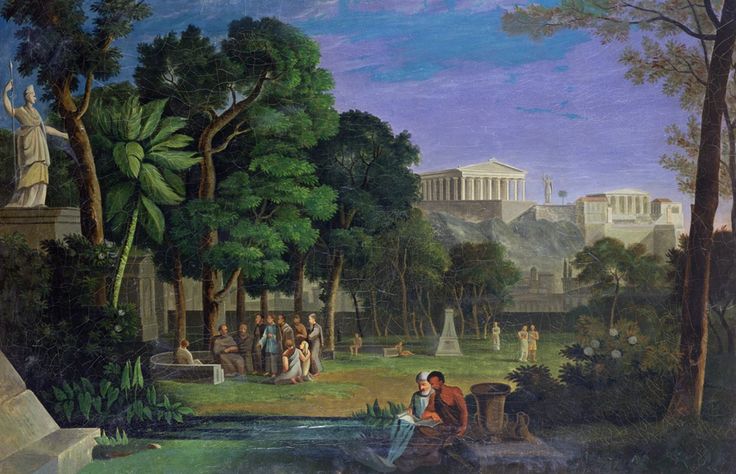
The Garden of Epicurus was the philosophical community established by Epicurus in Athens after his return to the city in 307/306 BCE. He acquired a property that became known as the Garden, and the name later became closely associated not only with the physical location but with the Epicurean school itself.
The Garden provided a setting in which Epicurus and his followers could study philosophy and live according to Epicurean principles. Philosophy was understood as a practical activity directed toward happiness, and friendship and philosophical discussion were important features of the community. The school helped preserve and transmit a shared way of life as well as a body of philosophical doctrines.
The Garden also distinguished Epicurean philosophy from the image of philosophy as an activity concerned only with formal public debate. Epicurus taught within a community whose members were connected by friendship and by the common pursuit of tranquility. This communal dimension reflected the Epicurean belief that secure happiness could be strengthened through trusted relationships rather than achieved entirely through solitary self-sufficiency.
The Garden became one of the major philosophical schools of the Hellenistic world and continued after Epicurus' death through later Epicurean communities and teachers. Epicureanism survived for centuries in the Greek and Roman worlds, with later thinkers and writers helping to preserve, develop, and communicate aspects of the philosophical tradition founded by Epicurus.
The name of the Garden has consequently become a lasting symbol of Epicurean philosophy. It represents a tradition in which the study of nature, the examination of desires, the cultivation of friendship, and the search for freedom from fear were understood as interconnected parts of a philosophical way of life rather than as separate academic subjects.
What Is Epicurus' Ethical Philosophy?
Epicurean ethics asks how human beings can achieve a happy and stable life. Epicurus identifies pleasure as the natural good and the ultimate goal of human life, but he gives pleasure a carefully defined meaning rather than simply recommending immediate indulgence. Rational judgment is necessary for choosing pleasures wisely and avoiding choices that may ultimately produce greater pain or mental disturbance.
A good life therefore requires prudence, justice, moderation, friendship, and freedom from unnecessary fear. These qualities are not separate from happiness; they help make a tranquil life possible. Epicurus argues that a pleasant life cannot be separated from living prudently, honorably, and justly, because a life dominated by reckless choices, insecurity, or fear cannot achieve lasting peace of mind.
Epicurus also rejected the idea that unlimited wealth, fame, or power are necessary for happiness. A person who can be satisfied with relatively simple necessities becomes less vulnerable to fortune and external circumstances. By contrast, desires for limitless status or possessions can continually expand, leaving a person dependent upon things that are difficult to obtain and never completely secure.
This ethical outlook requires the careful examination of desire. Epicurus distinguishes between desires that are natural and necessary, those that are natural but not necessary, and those associated with empty or groundless opinion. Learning these distinctions allows a person to recognize that many of the conditions required for a pleasant life are easier to obtain than restless ambition often makes them appear.
Epicurean ethics is therefore practical. Philosophy is valuable because it changes the way a person understands desires, fears, pleasure, pain, friendship, and mortality. Its ultimate purpose is not merely to construct an abstract moral theory but to help human beings achieve a more secure form of happiness through clearer judgment and freedom from unnecessary disturbance.
Why Did Epicurus Consider Prudence Important?
Epicurus regarded prudence, or practical wisdom, as essential to living pleasantly. In the Letter to Menoeceus, prudence is described as especially important because it guides the other virtues and teaches people how to evaluate their choices. A person cannot simply choose every pleasure immediately available because some pleasures may produce greater pain later.
Rational calculation allows a person to compare consequences. A temporary discomfort may sometimes be worth enduring if it prevents a greater future suffering, while an attractive pleasure may reasonably be rejected if it creates serious long-term problems. Epicurean decision-making therefore involves choice and avoidance rather than the automatic pursuit of whatever is pleasant at a particular moment.
Prudence also helps a person understand the difference between what is genuinely necessary and what is merely desired through habit, social expectation, or empty ambition. This understanding can reduce anxiety because it directs attention toward needs that are comparatively attainable instead of toward desires with no natural limit.
Epicurus therefore did not regard wisdom as opposed to pleasure. Practical wisdom is valuable precisely because it helps make the pleasant life possible. His ethical theory connects prudent judgment, honorable conduct, justice, and pleasure rather than treating virtue and happiness as competing goals.
This makes Epicurean ethics more disciplined than the popular stereotype of a philosophy based on constant indulgence. Pleasure remains the ultimate good in Epicurus' theory, but achieving a stable and tranquil form of pleasure requires reflection, self-control, and the ability to judge the long-term consequences of one's actions.
What Did Epicurus Say About Justice?
Epicurean discussions of justice connect justice with human agreements about avoiding harm. Justice is not presented as an abstract universal rule existing independently of all circumstances; its practical value is connected with the security and mutual benefit of human communities. Epicurus describes natural justice in terms of arrangements through which people agree neither to harm others nor to suffer harm themselves.
This account gives Epicurean justice a practical and social character. Rules and agreements are valuable when they help human beings live together securely and peacefully. Because circumstances can differ, Epicurean discussions also recognize that particular laws or practices may vary according to whether they actually serve the mutual advantage and security that justice is intended to protect.
A person who behaves unjustly risks fear, exposure, punishment, and insecurity. These consequences conflict with the tranquil life that Epicurus regarded as the goal of ethical practice. Even someone who has escaped detection cannot be completely certain of remaining undiscovered, and the continuing anxiety associated with wrongdoing can itself disturb peace of mind.
Epicurus therefore connects justice with happiness without claiming that justice is valuable merely as an abstract command detached from human life. Just conduct contributes to the security and confidence required for tranquility, while injustice creates the fear and social instability that make a peaceful life more difficult to achieve.
Epicurean views of justice therefore fit into the broader project of explaining how human beings can live securely and peacefully with one another. The theory is especially significant in the history of ethics because it develops an ancient account of justice grounded in mutual advantage, social agreement, and the practical conditions of human well-being.
What Is Epicurus' Letter to Menoeceus About?
The Letter to Menoeceus is one of the most important surviving sources for understanding Epicurean ethics. It presents a concise account of Epicurus' ideas about happiness, the gods, death, pleasure, desires, prudence, and the good life. Although relatively brief, the letter brings together many of the central principles of Epicurean philosophy in a practical and accessible form.
The letter argues that philosophy should be practiced throughout life because philosophical understanding contributes to happiness. Epicurus presents philosophy not as an activity appropriate only for the young or for professional thinkers, but as something relevant to anyone seeking the health and tranquility of the soul. The pursuit of wisdom is therefore directly connected with the pursuit of a good life.
The Letter to Menoeceus addresses the fear of death, explains Epicurus' conception of pleasure, and discusses the importance of rationally evaluating desires. It also argues that prudence is central to ethical life and connects pleasure with living prudently, honorably, and justly. These themes demonstrate the systematic relationship between desire, knowledge, virtue, and tranquility in Epicurean ethics.
The letter also explains why Epicurus believed human beings should not fear divine punishment. His philosophical account of the gods presents them as blessed and immortal rather than as beings continually intervening in human affairs. Together with his argument about death, this teaching was intended to remove some of the deepest forms of fear that he believed disturbed human happiness.
The letter survives through its preservation by Diogenes Laertius in Book X of Lives of Eminent Philosophers, one of the major surviving sources for Epicurean doctrine. Diogenes Laertius also preserves other important Epicurean material, making his work indispensable for reconstructing the philosophical system of Epicurus.
What Are the Main Ideas of Epicurus' Philosophy?
Epicurus developed a connected philosophical system rather than a collection of isolated opinions. His ethics, theory of knowledge, and natural philosophy were connected by the belief that understanding reality correctly could help human beings overcome unnecessary fear and live more happily. Several ideas are particularly important for understanding Epicureanism as a complete philosophical way of life.
Happiness as the Goal of Life
Epicurus regarded happiness as the ultimate goal of human life and connected it with pleasure understood as freedom from bodily pain and mental disturbance. Happiness was not simply a succession of intense enjoyments but a stable condition in which unnecessary desires and fears no longer dominate the individual.
Pleasure and Tranquility
Pleasure is central to Epicurean ethics, but Epicurus emphasized stable satisfaction and tranquility rather than unlimited sensual indulgence. The pleasant life requires the absence of serious bodily pain and disturbance of the mind, together with prudent judgment about which pleasures should be chosen and which should be avoided.
Freedom from Fear
Epicurus believed that false beliefs about death and divine punishment could create unnecessary anxiety. Philosophy should help remove these fears by examining what death means and by understanding the natural world without automatically interpreting its events as signs of divine anger or supernatural punishment.
Atomistic Nature
Epicurus held that atoms and empty space are fundamental components of the natural world. His natural philosophy provided a materialistic account of reality in which natural processes could be investigated without constant appeal to supernatural intervention. This physical theory also supported his ethical arguments concerning death and fear.
Practical Wisdom
Prudence allows people to distinguish beneficial pleasures from pleasures that may produce greater suffering. It also helps determine when a temporary pain should be accepted for the sake of a greater future good, making rational judgment essential to the Epicurean pursuit of happiness.
Friendship
Friendship was an important component of the secure and tranquil life Epicurus recommended. Trusted relationships provide companionship, mutual assistance, and a greater sense of security, demonstrating that Epicurean happiness was not simply an individual pursuit detached from community and human relationships.
Why Did Epicurus Think People Should Not Fear Death?
Epicurus considered fear of death one of the major causes of human anxiety. His response was not simply to tell people that death should be ignored, but to examine philosophically what death actually means. He believed that many fears about death arise from imagining it as a state in which the person continues consciously to experience pain, punishment, or deprivation.
If death involves the end of sensation and consciousness, then the person who has died cannot experience the condition as a painful experience. While we are alive, death has not occurred; once death has occurred, the person who died no longer exists as a conscious subject. Epicurus therefore argues that death itself cannot be experienced as a harm in the same way that bodily or mental suffering can be.
This argument depends upon Epicurus' materialist understanding of the human soul. If the soul does not survive the dissolution of the body, then death does not introduce an eternal state of conscious suffering. His account of death was consequently connected with his wider atomistic explanation of nature and his rejection of unnecessary supernatural fear.
Epicurus therefore argued that rational reflection can weaken the fear of death. The purpose of the argument is not to make death desirable or to deny the sadness associated with losing other people, but to prevent anticipation of death from destroying the enjoyment and tranquility of life while it is still being lived.
The argument remains philosophically important because it distinguishes between the process of dying, which may involve pain or distress, and the state of being dead. Later philosophers have challenged Epicurus by asking whether death can harm a person through the loss of future goods, even if the dead person never consciously experiences that loss.
Why Did Epicurus Think Philosophy Could Make Life Better?
Epicurus treated philosophy as a practical activity rather than merely an academic subject. Philosophical reasoning could change the beliefs responsible for fear, anxiety, and unnecessary desire. In this sense, philosophy had a therapeutic purpose: it was intended to identify the mistaken judgments that disturb human life and replace them with a clearer understanding of nature and human needs.
Understanding nature could reduce fear of supernatural explanations. Understanding death could reduce anxiety about mortality. Understanding desire could reduce dependence on wealth and status. Understanding pleasure could help a person recognize the value of simple and stable satisfactions. These areas of philosophical inquiry were therefore connected within Epicurus' larger project of achieving tranquility.
Epicurus believed that theoretical knowledge alone was not enough. Philosophy had to influence the way a person actually lived, including how they evaluated pleasures, responded to pain, formed friendships, and confronted the uncertainty of human existence. Philosophical understanding was valuable because it could transform habits of thought that otherwise produced continuing disturbance.
This practical conception helps explain why Epicurean philosophy placed such importance on repeated reflection and on belonging to a community of friends who shared philosophical ideals. The goal was not simply to acquire information about the universe but to develop a more stable disposition toward desire, fear, pleasure, and the events of life.
In this sense, Epicurean philosophy was intended to contribute directly to the health and tranquility of the mind. Philosophy becomes a form of practical wisdom through which human beings can free themselves, as far as possible, from unnecessary disturbance and learn to appreciate the attainable pleasures of a simpler and more secure life.
Epicurus and Stoicism: What Is the Difference?
Epicureanism and Stoicism were two influential philosophical traditions of the Hellenistic period. Both were deeply concerned with how human beings should live and both regarded philosophy as relevant to the practical pursuit of happiness. However, they developed different ethical frameworks and disagreed about the fundamental nature of the good.
Epicurus placed pleasure, understood as freedom from pain and mental disturbance, at the center of his ethical theory. Stoic philosophers, by contrast, identified virtue as the fundamental good and argued that virtue alone is sufficient for happiness. For the Stoics, things such as wealth, health, pleasure, and reputation do not possess the same status as genuine moral good.
The two schools also developed different views of nature and the universe. Epicureanism explained reality through atoms and empty space and rejected the idea that the universe should be understood primarily through divine providence. Stoicism, by contrast, developed a teleological account of nature in which the cosmos was understood as a rational and ordered whole.
Both traditions valued rational self-control and sought freedom from destructive emotional disturbances, but they justified their ethical positions through different conceptions of the good life. Epicurus sought tranquility by managing desire and minimizing unnecessary pain and fear, while Stoic ethics emphasized the cultivation of virtue and the rational acceptance of circumstances beyond one's control.
Comparing Epicureanism and Stoicism is therefore useful for understanding two of the most important competing approaches to ethics in Hellenistic philosophy. Both traditions asked how a person could achieve happiness in an uncertain world, but their answers reveal two fundamentally different ways of understanding pleasure, virtue, nature, and the conditions of a genuinely good human life.
What Books Did Epicurus Write?
Epicurus was a prolific writer, but only a small portion of his writings survives directly. Ancient testimony attributes an extensive body of work to him, while most of the original texts have been lost. As a result, modern knowledge of Epicurus depends heavily on surviving letters, collections of doctrines, fragments, and the writings of later Epicureans who preserved and developed aspects of his philosophy.
Diogenes Laertius preserves three important letters attributed to Epicurus. These letters are especially valuable because each presents a concise summary of a major part of the Epicurean system, allowing readers to see how Epicurus himself connected the study of nature, celestial phenomena, ethics, and the practical pursuit of tranquility.
- Letter to Herodotus — a concise account of Epicurean physical theory.
- Letter to Menoeceus — a summary of Epicurean ethics and the good life.
- Letter to Pythocles — a discussion of celestial and meteorological phenomena.
Other Epicurean sayings and doctrinal summaries were also preserved in ancient sources, including the Principal Doctrines, a collection of forty concise statements associated with central Epicurean teachings. The later collection known as the Vatican Sayings also preserves additional maxims, although not every saying in that collection can be attributed to Epicurus alone.
Epicurus' major work on natural philosophy was On Nature (Peri physeōs), traditionally described as extending across thirty-seven books or papyrus rolls. Portions of this work survive only in damaged and fragmentary papyri recovered from the library at Herculaneum, providing rare direct evidence for aspects of Epicurus' larger philosophical writings beyond the better-known letters.
How Do We Know About Epicurus' Philosophy?
Our knowledge of Epicurus comes from several types of evidence, including surviving letters, fragments, ancient reports, and writings by later Epicureans. Because much of Epicurus' original work has been lost, reconstructing his philosophy requires comparing these different sources while recognizing that later authors may emphasize particular aspects of the Epicurean tradition rather than reproducing every detail of the founder's original teaching.
Diogenes Laertius
Diogenes Laertius is one of the most important sources because Book X of Lives of Eminent Philosophers preserves several works and doctrinal summaries associated with Epicurus. Most importantly, it contains the Letter to Herodotus, the Letter to Pythocles, and the Letter to Menoeceus, together with the collection known as the Principal Doctrines.
Lucretius
The Roman poet and philosopher Lucretius later presented Epicurean natural philosophy and ethics in his Latin poem De Rerum Natura, commonly translated as On the Nature of Things. Written in six books, the poem is one of the most important surviving presentations of Epicurean thought, particularly concerning atoms, the soul, sensation, mortality, the natural world, and freedom from fear.
Other Epicurean Sources
Additional evidence comes from later Epicurean writers, inscriptions, fragments, and archaeological discoveries. The carbonized papyri from Herculaneum preserve important Epicurean texts, including works associated with the philosopher Philodemus, while the monumental inscription of Diogenes of Oenoanda preserves a later public presentation of central Epicurean teachings.
These sources help reconstruct how Epicurean philosophy developed after Epicurus himself. They must, however, be used with appropriate historical caution: Lucretius, Philodemus, and other later Epicureans were interpreters and transmitters of a continuing philosophical tradition, and their surviving works do not automatically preserve every aspect of Epicurus' own thought in precisely the same form.
What Do We Actually Know About Epicurus?
Epicurus is better documented than some earlier Greek philosophers, because several important summaries and letters survived. His life and philosophy can also be studied through substantial ancient evidence, including Diogenes Laertius, Lucretius, later Epicurean writings, and archaeological discoveries. However, much of his much larger body of original writing has been lost, making some questions dependent upon fragmentary or indirect evidence.
Well-Attested
- Epicurus lived approximately from 341 to 270 BCE.
- He founded the philosophical school known as the Garden in Athens.
- His philosophy included ethics, natural philosophy, and a theory of knowledge.
- He defended an atomistic account of nature.
- He identified pleasure with the good life while giving pleasure a restrained and philosophical interpretation.
- He argued that fear of death should not prevent human happiness.
Important Interpretive Questions
- The precise interpretation of some aspects of Epicurean physics remains debated.
- The exact relationship between Epicurus' atomism and earlier atomists is a subject of scholarly discussion.
- The interpretation of the atomic “swerve” and its relationship to human freedom remains contested.
- Much of Epicurus' original written work has been lost, requiring scholars to reconstruct his philosophy from surviving evidence.
What Was Epicurus' Influence on Philosophy?
Epicureanism became one of the major philosophical schools of the Hellenistic world and continued to influence thinkers for centuries. The school remained active throughout much of antiquity and developed a substantial following beyond Greece, particularly in the Roman world. Although Epicureanism later faced strong criticism from philosophical and religious opponents, its central ideas continued to be preserved, debated, and periodically rediscovered.
The Roman philosopher and poet Lucretius played an especially important role in transmitting Epicurean philosophy through De Rerum Natura. The poem presents Epicurean ideas about atoms, nature, the soul, mortality, fear, and happiness, and became one of the most important surviving vehicles through which later generations encountered Epicurean natural philosophy.
Epicurean thought experienced renewed attention after the recovery and wider circulation of ancient texts during the Renaissance and early modern period. Its atomistic account of nature became particularly important to debates about materialism, natural explanation, and the development of mechanical approaches to the physical world.
Epicurean arguments about pleasure, desire, death, naturalism, and human happiness continued to attract philosophical attention long after antiquity. Modern discussions of hedonism, the nature of well-being, mortality, materialism, and the relationship between scientific understanding and human flourishing still engage with questions that Epicurus helped formulate in enduring philosophical terms.
Epicurus' influence is therefore not limited to the survival of a single ancient school. His philosophy became part of a much longer history of debates about how human beings should understand nature, whether happiness depends upon external possessions, and how rational reflection can change the way people respond to fear, desire, and death.
Epicurus' Philosophy Explained Simply
Epicurus wanted to understand what makes human beings genuinely happy. His answer was not unlimited wealth, fame, or luxury. Instead, he argued that people should learn to satisfy natural needs, limit unnecessary desires, cultivate friendship, and remove fears that have no rational basis. The result he sought was a stable and peaceful life rather than an endless pursuit of increasingly intense pleasures.
- Goal: A happy and tranquil life.
- Good: Pleasure, especially freedom from bodily pain and mental disturbance.
- Method: Reason, prudence, and philosophical understanding.
- Nature: The universe consists fundamentally of atoms and empty space.
- Death: Death should not be feared because it is not a conscious experience for the person who has died.
- Friendship: An important part of a secure and tranquil life.
- School: The Garden in Athens.
The central idea behind this philosophy is that human unhappiness is often intensified by desires and fears that can be examined and changed. Epicurus did not promise that life could become completely free from pain or misfortune, but he believed that philosophical understanding could prevent many unnecessary forms of mental disturbance from dominating human life.
Epicureanism therefore combines a view of nature with a practical view of how to live. Understanding the natural world helps remove fear of supernatural punishment and death, while understanding desire helps people recognize that many of the basic conditions of happiness are simpler and more attainable than wealth, fame, and social ambition often suggest.
In its simplest form, Epicurus' advice is to seek a life of stable pleasure rather than endless excess. Choose pleasures wisely, accept some temporary difficulties when they prevent greater suffering, value trusted friends, question unnecessary fears, and avoid becoming dependent upon desires that can never finally be satisfied.
This is why the popular meaning of the word “Epicurean” can be misleading. Epicurus did not make luxury the ideal of life. His philosophical ideal was a simple, prudent, secure, and tranquil existence in which pleasure is understood through freedom from unnecessary pain, fear, and mental disturbance.
A Famous Idea from Epicurus
“Death is nothing to us.”
Frequently Asked Questions About Epicurus
Who was Epicurus?
Epicurus was an ancient Greek philosopher who lived from 341 to 270 BCE and founded Epicureanism. His philosophy examined happiness, pleasure, ethics, nature, death, the gods, and human desires.
What is Epicurus famous for?
Epicurus is famous for his philosophy of pleasure and happiness, his arguments about death, his atomistic view of nature, his emphasis on friendship and moderation, and the philosophical school known as Epicureanism.
What is Epicureanism?
Epicureanism is the philosophical tradition founded by Epicurus. It teaches that happiness involves pleasure understood through freedom from bodily pain and mental disturbance, rational management of desires, friendship, and freedom from unnecessary fear.
What did Epicurus believe about happiness?
Epicurus believed that happiness is closely connected with pleasure, but he understood pleasure primarily in terms of a stable condition free from bodily pain and mental disturbance. He emphasized prudence, moderation, friendship, and simple needs.
What did Epicurus say about pleasure?
Epicurus regarded pleasure as a natural good and the goal of human action, but he did not recommend pursuing every pleasure. Rational judgment is necessary because some pleasures can lead to greater pain, while some pains may produce greater long-term benefits.
What did Epicurus say about death?
Epicurus argued that death is nothing to us because death involves the absence of sensation. While we are alive, death has not occurred, and when death occurs, we no longer exist as conscious subjects.
Did Epicurus believe in God?
Epicurus did not simply reject the existence of gods. He is reported to have believed in blessed and immortal divine beings who do not interfere in human affairs. His view was intended in part to remove fear of divine punishment.
What did Epicurus believe the universe was made of?
Epicurus adopted an atomistic view according to which reality consists fundamentally of atoms and empty space. His natural philosophy was materialistic and sought natural explanations for the world.
What was the Garden of Epicurus?
The Garden was the philosophical community founded by Epicurus in Athens. It became the traditional name associated with the Epicurean school and provided a setting for philosophical study and community.
What is Epicurus' philosophy of life?
Epicurus' philosophy of life emphasizes happiness, tranquility, pleasure, friendship, prudent choices, simple needs, and freedom from unnecessary fear.
What is the Letter to Menoeceus?
The Letter to Menoeceus is an important surviving summary of Epicurean ethics. It discusses happiness, pleasure, desires, the gods, death, prudence, and the good life.
Was Epicurus a hedonist?
Epicurus is commonly described as a hedonist because he regarded pleasure as the highest good. However, Epicurean hedonism is very different from the modern stereotype of constant indulgence. Epicurus emphasized tranquility, freedom from pain, prudence, moderation, and simple pleasures.
How is Epicureanism different from Stoicism?
Epicureanism identifies pleasure, understood through tranquility and freedom from pain, as central to the good life. Stoicism instead identifies virtue as the fundamental good and emphasizes living according to reason and nature.
Related Ancient Greek Philosophers
Epicurus belongs to a larger tradition of ancient Greek philosophy. Explore philosophers who developed different theories of nature, reality, ethics, happiness, knowledge, and human life.
Philosophical Schools Connected to Epicurus
Epicurus founded Epicureanism, one of the major philosophical schools of the Hellenistic period. His ideas can also be compared with Stoicism, ancient atomism, and later traditions concerned with happiness and ethics.
Philosophy Branches Connected to Epicurus
Epicurus' philosophy connects strongly with ethics through his theory of happiness and pleasure, with metaphysics through his account of reality and atoms, and with the philosophical study of nature through his materialistic physics.
Why Epicurus Still Matters
Epicurus remains important because his philosophy asks a question that is still familiar today: What do human beings actually need to live a happy life?
His answer challenges the assumption that happiness requires unlimited wealth, status, luxury, or constant stimulation. Epicurus instead emphasizes the rational examination of desires, friendship, simple satisfactions, and freedom from fears that have no rational foundation.
His arguments about pleasure, death, desire, friendship, and the nature of reality have continued to influence philosophical discussions for more than two millennia. Epicureanism therefore remains an important part of the history of ancient Greek philosophy and the philosophical study of the good life.
Explore Great Philosophers