Who Was Ibn Tufayl?
Ibn Tufayl (Abū Bakr Muḥammad ibn ʿAbd al-Malik ibn Muḥammad ibn Ṭufayl, c. 1110–1185) was an Andalusian philosopher, physician, and writer of the twelfth-century Islamic world. He is one of the major figures of Andalusian philosophy and belonged to the wider intellectual tradition of medieval Islamic philosophy, known in Arabic as falsafa.
Active during the Almohad period, Ibn Tufayl served as a physician and courtier and was closely connected with the intellectual life of the Almohad court. He is also traditionally associated with the rise of Ibn Rushd (Averroes), whom he introduced to the caliph Abū Yaʿqūb Yūsuf and encouraged to undertake his famous work on Aristotle.
Ibn Tufayl is best known for his philosophical narrative Hayy ibn Yaqzan, his only major philosophical work to survive in full. The story explores how a human being, isolated from society, might gradually develop knowledge of nature, the self, and ultimately God through observation, reasoning, and intellectual reflection. It later became widely known in Europe through the Latin title Philosophus Autodidactus, or The Self-Taught Philosopher.
Through the story of Hayy, Ibn Tufayl examines some of the central questions of philosophy: How does human knowledge begin? How far can reason advance without formal education or inherited social conventions? Can the investigation of nature lead the human mind toward knowledge of God? And how should philosophical understanding relate to religious revelation and the needs of society?
These questions make Ibn Tufayl important not only in the history of Islamic philosophy but also in the wider history of ideas. His work brings together philosophical reasoning, natural investigation, and spiritual reflection in an unusual narrative form, creating one of the most influential and enduring works of classical Arabic literature.
Ibn Tufayl: Quick Facts
- Full name — Abū Bakr Muḥammad ibn Ṭufayl
- Also known as — Ibn Tufayl, Ibn Tufail, Abubacer, and Abentofail
- Born — c. 1105
- Died — 1185 CE
- Region — al-Andalus and the western Islamic world
- Philosophical tradition — Andalusian philosophy and Islamic philosophy
- Major work — Hayy ibn Yaqzan
- Latin title — Philosophus Autodidactus
- Major philosophical subjects — Epistemology, metaphysics, philosophy of nature, psychology, ethics, religion, and human knowledge
- Associated thinkers — Avicenna, Ibn Bajja, and Averroes
Ibn Tufayl's Early Life and Historical Background
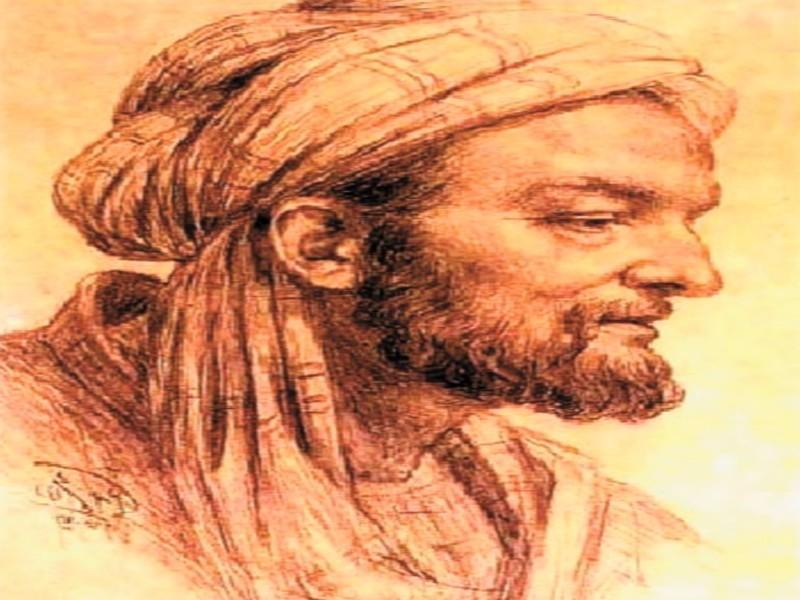
Relatively little is known with certainty about the early life and education of Ibn Tufayl. He was born in the region of Guadix, northeast of Granada, probably early in the twelfth century. He received an education that included medicine and philosophical learning and later became active as a physician, administrator, and intellectual within the expanding Almohad world.
Ibn Tufayl lived during an important period in the history of al-Andalus. Under the Almohad dynasty, major political and intellectual connections linked Muslim Spain with North Africa. Courts and cities provided settings in which philosophy, medicine, astronomy, religious scholarship, literature, and other fields of learning could interact.
He eventually became closely associated with the Almohad caliph Abu Ya'qub Yusuf, serving as a physician at his court. The caliph was known for his interest in learning and philosophy, and Ibn Tufayl occupied an important position within this intellectual environment.
Ibn Tufayl belonged to the philosophical world shaped by the legacy of Ibn Bajja (Avempace) and was a senior contemporary of Ibn Rushd (Averroes). Historical sources associate him with introducing Ibn Rushd to the Almohad court, although Ibn Rushd should not simply be described as Ibn Tufayl's disciple. Their relationship instead forms part of the wider development of Andalusian falsafa.
Ibn Tufayl and Andalusian Philosophy
Andalusian philosophy developed within the intellectually rich civilization of al-Andalus, where philosophy, medicine, science, theology, literature, and religious scholarship interacted with one another. Philosophers writing in Arabic inherited and transformed ideas that had entered Islamic intellectual life through the traditions associated with Aristotle, Plato, and later Greek commentators.
Ibn Tufayl belongs to the tradition of Islamic falsafa, which sought rational understanding of nature, the human soul, the cosmos, and ultimate reality. His thought reflects the broadly Aristotelian and Platonic framework characteristic of many earlier Islamic philosophers while also engaging with thinkers such as al-Farabi, Ibn Sina, and Ibn Bajja.
His distinctive achievement was to present philosophical problems in a narrative form rather than through a conventional systematic treatise. In Hayy ibn Yaqzan, philosophical ideas are explored through the life of a single individual whose intellectual powers gradually develop in isolation from ordinary human society.
This method allows Ibn Tufayl to unite several dimensions of philosophy within one work. Questions about perception, scientific investigation, metaphysics, the soul, contemplation, revelation, and political life are connected through Hayy's intellectual journey. Hayy ibn Yaqzan is therefore both a philosophical narrative and an unusually wide-ranging introduction to major themes of classical Arabic philosophy.
What Is Hayy ibn Yaqzan?
Hayy ibn Yaqzan is Ibn Tufayl's most important surviving philosophical work and the principal direct source for understanding his philosophy. It is presented as a philosophical narrative about a human being who grows up without ordinary human society and gradually discovers the nature of the world through observation, reflection, and intellectual inquiry.
The story follows Hayy from infancy through the successive stages of his intellectual and spiritual development. Without conventional schooling, books, or philosophical teachers, he observes animals, plants, his own body, and the surrounding natural world. These experiences gradually become the starting point for more systematic investigation.
Hayy's development does not remain limited to practical knowledge. He begins asking increasingly general questions about life, matter, movement, causation, the structure of the cosmos, and the principles that explain the world. The narrative thus moves from sensory experience toward scientific and philosophical reflection.
The philosophical importance of Hayy ibn Yaqzan lies in this gradual movement through different forms of understanding. Ibn Tufayl uses Hayy's life to explore epistemology, philosophy of nature, psychology, metaphysics, ethics, and the relationship between philosophy and religion.
The work eventually introduces a second major problem: what happens when the independently developed philosopher encounters human society? Hayy's later meeting with Absal and his contact with a religious community transform the narrative from an experiment in individual knowledge into an investigation of truth, revelation, language, and the limits of philosophical communication.
Why Is Ibn Tufayl Called the Self-Taught Philosopher?
Ibn Tufayl's Hayy is often described as the self-taught philosopher because he develops knowledge without the normal institutions of education, social traditions, or philosophical teachers. His isolation allows Ibn Tufayl to ask a radical philosophical question: how much can a human mind discover when it begins with its own experience of the world?
Hayy's education comes primarily from direct experience. He observes nature, investigates physical processes, studies living organisms, reflects upon his own existence, and uses reason to move from particular observations toward broader explanations. His development therefore combines perception, practical investigation, abstraction, and philosophical contemplation.
The expression Philosophus Autodidactus, meaning "The Self-Taught Philosopher," became especially associated with the work after its influential Latin translation in the seventeenth century. The title emphasizes one of the work's central themes rather than merely describing Hayy's unusual childhood.
Ibn Tufayl is not simply arguing that formal education is unnecessary for everyone. The narrative instead explores the extraordinary possibilities of human intellectual development when observation and reason are pursued to their furthest limits. Hayy represents a philosophical experiment concerning the powers and potential of the human mind.
Ibn Tufayl's Philosophy of Knowledge
Knowledge is one of the central themes of Ibn Tufayl's philosophy. Through Hayy's intellectual development, Ibn Tufayl examines how human beings move from sensory experience toward rational understanding and, ultimately, toward forms of metaphysical and contemplative knowledge.
Hayy's inquiry begins with the physical world. He observes differences between living and non-living things, investigates bodily processes, studies change and movement, and attempts to discover the causes underlying what he sees. Knowledge initially grows through repeated engagement with particular objects and events.
His investigation gradually becomes more theoretical. Instead of merely observing individual things, Hayy begins asking what different things have in common and what general principles might explain them. The intellect therefore moves beyond isolated sensory impressions toward concepts and explanations of a more universal kind.
Ibn Tufayl also presents knowledge as having a contemplative dimension. The highest forms of understanding cannot be reduced simply to the accumulation of information about physical objects. Philosophical inquiry ultimately prepares Hayy for reflection upon existence, ultimate causation, and the relation between the human intellect and the highest reality.
Ibn Tufayl's Epistemology and the Development of Reason
Epistemology in Ibn Tufayl's philosophy concerns the origin, development, and possibilities of human knowledge. Hayy ibn Yaqzan presents an extended philosophical experiment in which a human being develops intellectually without ordinary social education, inherited beliefs, or formal instruction.
Hayy's development begins with observation and sense perception. He encounters a world already filled with differences, patterns, changes, and living forms. Experience provides the material from which further inquiry becomes possible, but Ibn Tufayl does not treat perception as the final stage of knowledge.
Through reflection, comparison, and investigation, Hayy moves from particular experiences toward more general explanations. He seeks causes rather than merely recording appearances and attempts to understand the principles underlying the changing things he observes. Reason thus transforms experience into philosophical inquiry.
Ibn Tufayl ultimately presents the human intellect as capable of moving beyond immediate sensory information toward increasingly universal truths about nature, causation, existence, and the order of the cosmos. The work therefore gives reason a remarkably ambitious role while still portraying intellectual development as gradual.
Ibn Tufayl's Philosophy of Nature
Nature plays a fundamental role in Ibn Tufayl's philosophy. Hayy's philosophical education begins not with books or teachers but with direct examination of the natural world. Nature is therefore the first field in which his curiosity becomes systematic intellectual investigation.
Hayy studies animals, plants, bodily processes, growth, decay, and movement. A particularly important stage of his development follows his attempt to understand the death of the gazelle that had cared for him. His investigation of the body leads him to ask what distinguishes a living being from a body that no longer possesses life.
His attention gradually expands from individual living things to the larger structure of the physical world. He observes regularity and order and begins asking whether natural processes can be understood through general causes and principles rather than through isolated descriptions.
Nature therefore becomes more than a collection of physical objects. It becomes a path toward philosophical knowledge. By studying the natural world carefully, Hayy gradually moves from questions about particular things toward questions about causation, cosmic order, and the ultimate explanation of reality.
How Does Ibn Tufayl's Philosophy Explain God?
One of the most important questions in Hayy ibn Yaqzan is how human inquiry can arrive at knowledge of God. Ibn Tufayl presents Hayy's investigation of nature and the cosmos as a path that gradually leads beyond the study of individual physical objects.
As Hayy studies the world, he becomes increasingly concerned with change, dependence, causation, and the existence of the cosmos as a whole. Physical things appear within an ordered world, yet they do not provide a complete explanation of themselves. This leads him to seek an ultimate principle capable of explaining reality more fundamentally.
His philosophical development therefore connects the order of nature with metaphysical reflection. Hayy seeks a source of existence that is not merely one changing object among others but stands in a more fundamental relation to the existence and order of the cosmos.
Ibn Tufayl's treatment is also connected with philosophical contemplation. Knowledge of God is not presented simply as the result of constructing an abstract argument. At the highest stages of Hayy's development, intellectual understanding is joined to contemplation and a transformation of the way he lives.
What Was Ibn Tufayl's Philosophy of Metaphysics?
Metaphysics becomes a higher stage of Hayy's intellectual development. After investigating the physical world, he begins asking questions about existence, causation, the structure of the cosmos, and the ultimate source of reality.
Ibn Tufayl's metaphysical thought reflects the wider intellectual traditions of Islamic falsafa, particularly the interaction of Aristotelian and Platonic ideas. The physical world is understood as an ordered reality whose investigation can lead the intellect beyond immediate appearances toward more universal principles.
An important question in the philosophical background of the work concerns the origin and eternity of the world. Ibn Tufayl presents arguments connected with different possible explanations of the cosmos, making the relationship between the eternal and the created world a significant philosophical problem rather than a simple matter resolved by one elementary formula.
The movement from physics to metaphysics is essential to Ibn Tufayl's philosophy. The study of nature does not end philosophical inquiry; instead, it prepares the intellect for questions about realities that cannot be understood through ordinary sensory experience alone.
How Does Hayy Develop His Intellect?
Hayy's intellectual development is the central narrative device of Ibn Tufayl's philosophy. He begins as a human infant and gradually develops the abilities required to understand himself, living beings, the natural world, and eventually questions that extend beyond physical experience.
At first, Hayy responds to immediate physical needs and learns through imitation and practical adaptation. Later he becomes a more deliberate observer of nature. His curiosity develops into systematic investigation, and repeated experience becomes the foundation for increasingly abstract forms of reflection.
He gradually moves from studying particular objects toward searching for general causes and principles. Questions about life lead to questions about the soul, while questions about physical change lead toward reflection on the wider order of the cosmos.
Eventually, Hayy's intellect turns toward metaphysical and contemplative questions. He considers existence, causation, the structure of reality, and the ultimate source beyond the changing physical world. Intellectual development thus becomes inseparable from spiritual and ethical transformation.
Ibn Tufayl's Philosophy of the Soul
The human soul is an important subject in Ibn Tufayl's philosophy. Hayy's investigation of living beings leads him to ask what distinguishes a living body from one that has lost the principle of life. His reflections therefore connect biological observation with philosophical questions about the nature of life.
Hayy gradually distinguishes between the physical body and the higher principles associated with life, perception, and intellectual activity. Understanding a human being, in this philosophical framework, requires more than describing bodily structure alone.
Reflection upon his own existence also leads Hayy toward questions about perception, consciousness, and intellect. The human being possesses capacities that make it possible not only to experience the world but also to understand general truths and reflect upon the nature of existence itself.
Ibn Tufayl's treatment of the soul therefore connects psychology, epistemology, philosophy of mind, and metaphysics. The development of the soul and intellect is ultimately directed toward forms of knowledge that transcend ordinary sensory experience.
Ibn Tufayl on Reason and Human Understanding
Reason is one of the most powerful instruments in Ibn Tufayl's philosophy. Hayy's story demonstrates how rational inquiry can develop from ordinary experience into increasingly sophisticated forms of philosophical understanding.
Ibn Tufayl does not portray reason as a merely practical tool. Reason allows Hayy to compare experiences, investigate causes, recognize patterns, form more general concepts, and ask questions that cannot be answered simply by observing one individual object.
At the same time, the narrative gives reason a developmental history. Hayy is not born possessing complete philosophical knowledge. Intellectual understanding emerges gradually through experience, reflection, investigation, and the disciplined exercise of his cognitive capacities.
This emphasis on reason is particularly important in the history of Islamic philosophy. Ibn Tufayl explores how far human intellectual ability can progress independently and how philosophical knowledge may ultimately relate to truths communicated through religious revelation.
Ibn Tufayl's Philosophy of Religion
Ibn Tufayl's philosophy is deeply concerned with the relationship between philosophy and religion. The later part of Hayy ibn Yaqzan asks whether truths reached through philosophical investigation can also be communicated through religious revelation.
When Hayy eventually encounters a human religious community through his meeting with Absal, he discovers important similarities between truths he has reached through independent inquiry and teachings communicated within the religious tradition.
Ibn Tufayl therefore distinguishes between different ways in which truth may be understood and communicated. Philosophical reasoning may lead intellectually capable individuals toward demonstrative and contemplative understanding, while religious teaching can communicate fundamental truths through language, symbols, practices, and forms accessible to a wider community.
This does not mean that every individual is expected to become a philosopher. One of the important problems raised by the narrative is precisely the diversity of human intellectual capacities. The work therefore examines both the power of philosophical reason and the social importance of religious forms of teaching.
How Does Ibn Tufayl Reconcile Philosophy and Religion?
One of the central questions in Ibn Tufayl's philosophy is whether philosophical truth and religious truth are fundamentally opposed. His treatment in Hayy ibn Yaqzan suggests that they can concern the same ultimate realities while being approached and communicated through different methods.
Hayy reaches important conclusions through observation, rational investigation, and philosophical contemplation. When he encounters Absal and learns about revealed religion, he recognizes significant correspondences between its fundamental teachings and truths he had approached through his own intellectual development.
The difference is therefore not simply between belief on one side and reason on the other. Ibn Tufayl is also concerned with the difference between philosophical demonstration, symbolic language, religious practice, and contemplative experience.
The final part of the narrative introduces an important limitation: philosophical insight may not be equally communicable to every person or appropriate for every social situation. Reconciliation between philosophy and religion is thus connected not only with abstract truth but also with education, language, psychology, and political life.
Hayy ibn Yaqzan and Absal
A major turning point in Ibn Tufayl's story occurs when Hayy encounters Absal, a religiously devoted man who has withdrawn from society in search of a more contemplative life. Absal travels to Hayy's island seeking solitude, where the two figures eventually meet.
Their meeting allows Ibn Tufayl to compare independently acquired philosophical understanding with knowledge formed within a religious tradition. Absal teaches Hayy language, while Hayy's extraordinary intellectual development allows him to explain insights that Absal recognizes as corresponding in important ways to religious truth.
Their relationship demonstrates one of the work's central ideas: philosophical inquiry and revelation need not necessarily lead to incompatible conclusions. Yet the two men have arrived at their understanding through radically different paths—Hayy through isolated investigation and contemplation, Absal through religious learning and spiritual practice.
The meeting also prepares the final philosophical problem of the narrative. Together, Hayy and Absal must confront the question of whether the highest form of philosophical understanding can be successfully communicated within ordinary human society.
Ibn Tufayl's Philosophy of Society
Ibn Tufayl also uses Hayy ibn Yaqzan to examine the relationship between the individual philosopher and society. Hayy's isolated intellectual development differs radically from the ordinary way human beings acquire beliefs through language, education, customs, institutions, and religious traditions.
When Hayy enters society with Absal, he discovers that philosophical truths cannot simply be communicated to everyone in the same form. People differ in their intellectual abilities, habits, attachments, and willingness to abandon familiar ways of understanding the world.
Hayy's attempt to communicate his highest insights therefore encounters resistance and misunderstanding. The narrative suggests that symbolic religious teaching and established social practices may serve purposes that abstract philosophical explanation cannot easily replace.
Ibn Tufayl's treatment of society consequently connects political philosophy, religious philosophy, education, and epistemology. The philosopher's relationship with society becomes a central problem because the discovery of truth does not automatically guarantee that truth can be effectively communicated.
The conclusion of the narrative is especially significant. After recognizing the difficulty of reforming the community through direct philosophical teaching, Hayy and Absal return to the island to pursue the contemplative life. The ending leaves the reader with a difficult question about the relationship between intellectual perfection and participation in ordinary social life.
What Was Ibn Tufayl's Philosophy of Ethics?
Ibn Tufayl's ethical philosophy is closely connected with his account of intellectual and spiritual perfection. Hayy's goal is not simply to accumulate information. As his understanding develops, philosophical knowledge increasingly transforms the way he relates to himself, other living beings, the natural world, and ultimate reality.
Hayy's later development involves discipline and the control of unnecessary attachments. He seeks to live in a way consistent with the order he discovers in nature and the cosmos, cultivating moderation, reflection, and practices that direct his attention away from merely bodily concerns.
Ethical development is therefore inseparable from intellectual development. A person who seeks the highest form of knowledge must also shape habits and desires in ways that allow the intellect to pursue contemplation without being dominated by immediate appetites.
Ibn Tufayl consequently presents the good life as involving the cultivation of the whole human being. Philosophical knowledge, ethical discipline, and contemplation become connected dimensions of a movement toward human perfection and the highest form of understanding available to the individual.
Ibn Tufayl, Contemplation, and Human Perfection
Contemplation is central to the highest stages of Hayy's philosophical development. After investigating nature and reflecting upon the structure of reality, Hayy's attention turns increasingly toward a more direct and sustained form of intellectual contemplation.
For Ibn Tufayl, the highest form of knowledge is not simply the accumulation of facts about the external world. Philosophical understanding transforms the knower as well as increasing what he knows. Hayy's development therefore involves a gradual reorientation away from immediate bodily concerns toward intellectual and spiritual perfection.
This aspect of the narrative reflects the wider philosophical and spiritual environment of medieval Islamic thought. Ibn Tufayl's work combines ideas associated with the tradition of falsafa with forms of contemplative language that have often been discussed in relation to mystical currents, although the precise nature of these influences remains a matter of scholarly interpretation.
Ibn Tufayl consequently presents philosophy as more than an academic exercise. The human being gradually develops through observation, reasoning, ethical discipline, and contemplation, seeking the highest form of understanding available to the intellect.
Why Is Hayy ibn Yaqzan a Philosophical Allegory?
Hayy ibn Yaqzan is more than a fictional adventure. It is a philosophical narrative and allegorical work designed to investigate how a human being might acquire knowledge and move gradually from practical experience toward metaphysical and contemplative understanding.
Hayy's life functions as a model of intellectual development. His observations of animals, nature, his own body, and the cosmos represent successive stages in the philosophical investigation of reality. The unusual situation of his isolation allows Ibn Tufayl to explore what the human mind might achieve without ordinary society.
The narrative also allows philosophical questions to be presented through events rather than through abstract argument alone. Hayy's investigation of the death of the gazelle, for example, becomes an occasion for reflection on life, the body, and the principle that distinguishes a living being from a dead one.
By presenting philosophy through a story, Ibn Tufayl brings questions about epistemology, metaphysics, religion, human nature, and society into a single narrative. The literary form is therefore essential to the work's philosophical method rather than merely an attractive way of presenting ideas.
Ibn Tufayl's Main Philosophical Ideas
1. Human Reason Can Develop Knowledge
Ibn Tufayl presents Hayy as an extraordinary example of a human being who develops substantial knowledge through observation, experience, investigation, and rational reflection without conventional formal education.
2. Nature Can Lead the Mind Toward Metaphysics
Hayy's study of the natural world does not end with knowledge of physical objects. It leads him toward questions about causation, order, existence, and the ultimate explanation of the cosmos.
3. Human Beings Can Seek Knowledge of Ultimate Reality
Hayy's philosophical investigation eventually leads beyond changing physical things toward reflection on a transcendent and ultimate source of reality, which Ibn Tufayl identifies with knowledge of God.
4. Philosophy and Religion Can Communicate Related Truths
Ibn Tufayl explores the possibility that philosophical reasoning and religious revelation can concern the same fundamental realities while communicating them through different intellectual and social forms.
5. Intellectual Perfection Requires Contemplation
The highest stage of Hayy's development involves contemplation and ethical discipline rather than merely practical or theoretical knowledge of the physical world.
Ibn Tufayl's Major Work: Hayy ibn Yaqzan
Ibn Tufayl's philosophical reputation rests primarily on Risālat Ḥayy ibn Yaqẓān fī Asrār al-Ḥikma al-Mashriqiyya, commonly known as Hayy ibn Yaqzan. It is the sole extant direct document of his philosophical thought and remains the principal source for understanding his philosophy.
The work has been translated under titles such as The Story of Hayy ibn Yaqzan and The Self-Taught Philosopher. Its combination of philosophical argument, imaginative narrative, and spiritual reflection makes it unusual within the surviving literature of medieval Islamic philosophy.
- Hayy ibn Yaqzan — Ibn Tufayl's principal surviving philosophical work, exploring human knowledge, nature, reason, the soul, God, religion, society, and intellectual perfection.
- Philosophus Autodidactus — The title of the influential Latin translation published in 1671, through which the work became widely known in early modern Europe.
- Other surviving writings — Some verse compositions, including political and medical poetry, are attributed to Ibn Tufayl, but Hayy ibn Yaqzan remains the central surviving source for his philosophical thought.
Ibn Tufayl and Avicenna: What Is the Connection?
Avicenna (Ibn Sina) was one of the most important philosophical predecessors in the wider intellectual background of Ibn Tufayl. Ibn Sina's discussions of the soul, intellect, knowledge, metaphysics, and human self-awareness formed part of the philosophical tradition with which Ibn Tufayl engaged.
The connection is especially visible in the title Hayy ibn Yaqzan. Ibn Sina had written an earlier and much shorter philosophical recital bearing the same title, and Ibn Tufayl explicitly drew upon the names and literary framework associated with Avicenna's philosophical narratives.
The two works are nevertheless fundamentally different. In Ibn Sina's narrative, Hayy is a symbolic and guiding figure encountered by the soul, whereas Ibn Tufayl places the intellectual development of an isolated human being at the center of his story.
Ibn Tufayl therefore did not simply repeat Avicenna's work. He transformed an existing philosophical and literary framework into a much more extensive investigation of how a human being might develop knowledge through experience, rational inquiry, contemplation, and eventual contact with religious society.
Ibn Tufayl and Ibn Bajja
Ibn Bajja (Avempace) was an earlier representative of Andalusian philosophy whose work forms an important part of the intellectual background of Ibn Tufayl. Both thinkers belong to the wider tradition of falsafa that developed in the western Islamic world.
A particularly important point of comparison is Ibn Bajja's treatment of the solitary or isolated philosopher. His philosophical writings consider how an intellectually developed individual might pursue perfection in circumstances where society does not fully support the philosophical life.
Ibn Tufayl develops a related problem in a strikingly different way. Instead of describing a philosopher living within an imperfect society, he imagines Hayy developing almost entirely outside human society. The contrast allows Hayy ibn Yaqzan to explore human intellectual development from its earliest stages.
Some older sources describe Ibn Bajja as Ibn Tufayl's teacher, but this relationship cannot be established with certainty. It is more accurate to regard Ibn Bajja as an important predecessor whose ideas formed part of the philosophical environment in which Ibn Tufayl developed his own distinctive work.
Ibn Tufayl and Averroes: What Is the Connection?
Ibn Tufayl and Averroes (Ibn Rushd) were major philosophers associated with twelfth-century al-Andalus and the Almohad intellectual world. Ibn Tufayl was the older figure and is historically associated with bringing Ibn Rushd to the attention of the Almohad caliph Abu Ya'qub Yusuf.
According to the famous account preserved by Ibn Rushd, Ibn Tufayl helped create the circumstances in which Ibn Rushd became involved in the project of explaining Aristotle's difficult works. Ibn Rushd later became the most famous commentator on Aristotle in the Islamic world and medieval Latin Europe.
Their connection is therefore important for understanding the intellectual continuity of Andalusian falsafa. Ibn Tufayl's philosophical narrative and Ibn Rushd's extensive commentaries represent different literary and philosophical approaches within the same broad intellectual tradition.
Ibn Rushd should not, however, simply be described as Ibn Tufayl's disciple. The historical evidence establishes their connection and Ibn Tufayl's role at court, but not a straightforward teacher-student relationship between the two philosophers.
Ibn Tufayl's Influence on Western Philosophy
The influence of Hayy ibn Yaqzan extended far beyond the medieval Islamic world. The work was translated into Hebrew in the medieval period and later circulated in Latin and several European vernacular languages, allowing new philosophical and literary audiences to encounter Ibn Tufayl's unusual thought experiment.
A particularly important moment came in 1671, when Edward Pococke the Younger published a Latin translation directly from the Arabic under the title Philosophus Autodidactus. The work became widely known in early modern European intellectual culture and was subsequently translated into other languages.
European readers were especially interested in the central experiment of the narrative: what might a human being discover when developing without conventional education or inherited intellectual traditions? The work consequently became relevant to debates about experience, reason, education, natural religion, and the development of the human mind.
Hayy ibn Yaqzan has often been discussed in connection with thinkers such as John Locke and with Daniel Defoe's Robinson Crusoe. These comparisons are historically important, but the precise extent of direct influence remains debated in several cases and should not be presented as certain without qualification.
What Does Philosophus Autodidactus Mean?
Philosophus Autodidactus is the Latin title given to Edward Pococke the Younger's 1671 translation of Ibn Tufayl's Hayy ibn Yaqzan. The phrase is commonly translated as "The Self-Taught Philosopher."
The title captures the central philosophical experiment of the story: a human being develops knowledge without conventional teachers, inherited social traditions, or formal philosophical education. Hayy's intellectual life begins instead with direct experience of the natural world.
The Latin translation played a major role in bringing Ibn Tufayl's work into early modern European intellectual culture. Through translation, the story became part of wider debates concerning reason, experience, education, natural knowledge, and the capacities of the human mind.
Hayy ibn Yaqzan Summary: The Philosophy of the Story
Hayy ibn Yaqzan follows the development of Hayy from infancy to philosophical maturity on an isolated island. He learns first through sensation, imitation, and practical experience and gradually becomes a systematic investigator of nature.
Hayy's observations lead him to investigate life, death, bodily processes, causation, the natural world, and the structure of the cosmos. His intellectual development gradually moves from particular physical questions toward more general metaphysical problems.
Through continued reflection and contemplation, Hayy seeks knowledge of ultimate reality and transforms his way of life accordingly. The narrative therefore connects intellectual development with ethical and spiritual perfection.
Later, Hayy encounters Absal and eventually comes into contact with a human religious community. This allows Ibn Tufayl to explore the relationship between independent philosophical reason and revealed religion.
The story ultimately investigates both the possibilities and the limitations of human knowledge. Hayy can discover remarkable truths in isolation, but his later encounter with society raises the further question of whether the highest forms of philosophical understanding can be communicated equally to everyone.
Can Human Beings Discover Truth Through Reason Alone?
Ibn Tufayl uses Hayy's life to investigate whether a human being can reach significant philosophical knowledge without formal education or inherited intellectual traditions. The question is deliberately radical because Hayy begins without teachers, books, or even ordinary human language.
Hayy does not begin with pure abstract reasoning detached from the world. His development begins with experience. He observes physical things, investigates natural processes, and gradually constructs explanations for what he encounters. His intellectual development therefore combines empirical observation and rational inquiry.
Reason then allows Hayy to move beyond particular observations toward questions about general causes, the nature of existence, and the structure of the cosmos. The narrative thus gives experience an essential role while also presenting the intellect as capable of reaching beyond immediate sensory information.
Ibn Tufayl's answer is not that every human being will automatically achieve the same level of philosophical understanding. Hayy is an idealized philosophical figure whose life explores the remarkable possibilities of human reason when sustained investigation, intellectual discipline, and contemplation are pursued to their highest level.
Ibn Tufayl, Science, Nature, and Philosophy
Ibn Tufayl's philosophy gives an important role to the investigation of the natural world. Hayy's intellectual development follows a broad movement from observation and practical inquiry toward increasingly theoretical and philosophical forms of understanding.
Hayy investigates living organisms, bodily processes, physical change, movement, and the larger structure of the cosmos. These investigations reflect the close relationship between natural philosophy, medicine, and metaphysics within medieval Islamic intellectual culture.
It is important not to describe Hayy as a modern scientist in the contemporary sense. His investigations belong to the philosophical and scientific traditions of the twelfth century, in which questions about nature were closely connected with broader questions about causation, cosmology, and metaphysics.
For Ibn Tufayl, the study of nature can therefore become a route toward metaphysics. The order and intelligibility of the natural world raise questions about its causes and ultimate explanation, allowing inquiry to move from physical phenomena toward philosophical reflection on reality as a whole.
Five Central Ideas in Ibn Tufayl's Philosophy
1. Knowledge Begins With Experience
Human knowledge develops through contact with the world. Observation, perception, and practical investigation provide the starting point from which more advanced intellectual understanding can gradually emerge.
2. Reason Can Move Beyond Immediate Experience
Rational reflection allows the human mind to move from particular observations toward more general questions about causes, principles, existence, and the structure of reality.
3. Nature Can Lead Toward Metaphysics
The investigation of nature raises questions that cannot be answered merely by describing physical objects. It leads Hayy toward reflection on causation, cosmic order, existence, and ultimate reality.
4. Philosophy and Religion Can Point Toward Related Truths
Ibn Tufayl explores the possibility that philosophical reasoning and religious revelation can concern the same fundamental realities while communicating them through different intellectual, symbolic, and social forms.
5. Human Perfection Involves Contemplation
The highest development of the human being involves intellectual and contemplative transformation rather than the simple accumulation of practical information or theoretical facts.
Why Is Ibn Tufayl Important in the History of Philosophy?
Ibn Tufayl is important because he created one of the most distinctive philosophical narratives in the history of Islamic philosophy. Through Hayy ibn Yaqzan, he transformed complex philosophical questions into the story of the gradual development of a human intellect.
His work is especially significant for the history of epistemology. Hayy's development functions as a philosophical thought experiment concerning what human beings might know through perception, experience, rational inquiry, and contemplation without conventional education.
Ibn Tufayl is also important for the history of Andalusian philosophy. His work belongs to the remarkable intellectual tradition associated with figures such as Ibn Bajja and Ibn Rushd, while his literary approach remains distinctive within that tradition.
Finally, the later translation and circulation of Hayy ibn Yaqzan gave Ibn Tufayl an important place in the history of intellectual exchange between the Arabic-speaking world and Europe. The work continued to attract philosophical and literary interest long after the period in which it was written.
Ibn Tufayl's Philosophy Explained Simply
Ibn Tufayl's philosophy can be understood through one central question: What could a human being discover about reality through experience, reason, and contemplation without conventional education?
- How does knowledge begin? Through perception, observation, experience, and investigation of the natural world.
- Can reason discover deeper truths? Hayy's development suggests that rational reflection can move beyond particular physical observations toward general and metaphysical questions.
- Can nature lead to knowledge of God? Ibn Tufayl presents Hayy's investigation of nature and the cosmos as a path toward metaphysical reflection on ultimate reality and God.
- What is philosophy? Philosophy is presented as a disciplined search for understanding through observation, rational inquiry, ethical development, and contemplation.
- What is the relationship between philosophy and religion? Ibn Tufayl explores how philosophical reasoning and religious revelation can communicate related truths through different methods and forms of understanding.
Frequently Asked Questions About Ibn Tufayl
Who was Ibn Tufayl?
Ibn Tufayl was a twelfth-century Andalusian philosopher, physician, and intellectual associated with Islamic philosophy. He is best known for his philosophical work Hayy ibn Yaqzan.
What is Ibn Tufayl famous for?
Ibn Tufayl is famous primarily for Hayy ibn Yaqzan, a philosophical narrative about a self-taught human being who discovers knowledge of nature, himself, and God through experience and reason.
What was Ibn Tufayl's philosophy?
Ibn Tufayl's philosophy explores knowledge, reason, nature, metaphysics, God, the soul, human perfection, religion, and society. His ideas are presented primarily through the philosophical narrative Hayy ibn Yaqzan.
What is Hayy ibn Yaqzan?
Hayy ibn Yaqzan is Ibn Tufayl's major surviving philosophical work. It tells the story of a human being raised in isolation who develops knowledge through observation, experience, rational inquiry, and contemplation.
What does Hayy ibn Yaqzan mean?
The Arabic name Hayy ibn Yaqzan can be understood roughly as "Living Son of the Vigilant" or "Alive, Son of the Awake." The title reflects the philosophical character of the work and its concern with intellectual awakening.
What is The Self-Taught Philosopher?
The Self-Taught Philosopher is a common English description of Ibn Tufayl's Hayy ibn Yaqzan. Its Latin title, Philosophus Autodidactus, emphasizes the story's central theme of independent intellectual development.
What does Philosophus Autodidactus mean?
Philosophus Autodidactus is Latin for "The Self-Taught Philosopher." It became the well-known Latin title of Ibn Tufayl's Hayy ibn Yaqzan.
What is Ibn Tufayl's philosophy of knowledge?
Ibn Tufayl presents knowledge as developing from experience and observation toward rational and metaphysical understanding. Hayy's intellectual development demonstrates how human reason can investigate increasingly abstract questions.
What did Ibn Tufayl believe about reason?
Ibn Tufayl gives human reason a powerful role in the discovery of truth. Through Hayy, he explores how observation and rational inquiry can lead from knowledge of nature toward metaphysical understanding.
How does Ibn Tufayl explain God?
Ibn Tufayl presents Hayy's investigation of nature as a path toward recognition of a higher and necessary source of the order found in the cosmos. Knowledge of nature therefore becomes connected with metaphysical knowledge of God.
What is Ibn Tufayl's view of nature?
Nature is a major source of philosophical knowledge in Ibn Tufayl's thought. Hayy studies the natural world through observation and gradually moves from physical investigation toward metaphysical questions.
Did Ibn Tufayl believe reason and religion were compatible?
Ibn Tufayl explores the possibility that reason and religious revelation can lead toward the same ultimate truths, although they may communicate those truths through different methods and forms.
Who is Absal in Hayy ibn Yaqzan?
Absal is a religious man whom Hayy encounters after developing his philosophical understanding in isolation. Their meeting allows Ibn Tufayl to explore the relationship between philosophical knowledge and religious belief.
Was Ibn Tufayl influenced by Avicenna?
Ibn Tufayl's philosophical environment reflects the influence of earlier Islamic philosophers including Avicenna. His Hayy ibn Yaqzan also shares its title with an earlier work associated with Avicenna, although the two works are distinct.
What is the connection between Ibn Tufayl and Averroes?
Ibn Tufayl and Averroes were major philosophers of twelfth-century al-Andalus. Ibn Tufayl is traditionally associated with introducing Ibn Rushd to the Almohad ruler Abu Ya'qub Yusuf.
Did Ibn Tufayl influence Western philosophy?
Ibn Tufayl's Hayy ibn Yaqzan became known in Europe through Hebrew and Latin translations. Its Latin form, Philosophus Autodidactus, attracted significant attention in early modern European intellectual culture.
Did Ibn Tufayl influence Robinson Crusoe?
Scholars have frequently compared Hayy ibn Yaqzan with Daniel Defoe's Robinson Crusoe because both involve an individual developing knowledge while isolated from ordinary society. The precise historical extent of Ibn Tufayl's influence on Defoe remains a matter of scholarly discussion.
Why is Ibn Tufayl important in Islamic philosophy?
Ibn Tufayl is important because he developed an original account of human intellectual development and explored the relationship between reason, nature, metaphysics, and religious truth within the tradition of Islamic philosophy.
Why is Hayy ibn Yaqzan important?
Hayy ibn Yaqzan is important because it combines philosophy and literature to investigate fundamental questions about human knowledge, reason, nature, God, religion, society, and intellectual perfection.
Related Islamic and Andalusian Philosophers
Explore other major thinkers in the development of Islamic philosophy, Arabic philosophy, Persian philosophy, Andalusian philosophy, and medieval intellectual history.
Related Areas of Philosophy
Ibn Tufayl's philosophy connects Islamic philosophy with epistemology, metaphysics, philosophy of mind, ethics, philosophy of nature, religion, and the history of Andalusian philosophy.
Why Ibn Tufayl Still Matters
Ibn Tufayl occupies a distinctive position in the history of Islamic philosophy because he presented difficult philosophical questions through the story of a human being who discovers the world through experience and reason.
Through Hayy ibn Yaqzan, Ibn Tufayl examines knowledge, nature, the intellect, God, metaphysics, religion, society, and human perfection. His philosophical narrative asks how far human reason can progress without conventional education and how philosophical knowledge relates to revealed religion.
His work also represents the intellectual richness of Andalusian philosophy and provides an important connection between earlier Islamic philosophers such as Avicenna and Ibn Bajja and later thinkers such as Averroes.
The later translation of Hayy ibn Yaqzan into Hebrew and Latin ensured that Ibn Tufayl's philosophical experiment continued to influence discussions of reason, knowledge, education, religion, and human nature far beyond medieval al-Andalus.
Explore Great Philosophers