Who Was Epictetus?
Epictetus was a Greek Stoic philosopher who lived from approximately 50 to 135 CE. He is remembered as one of the most influential and practically oriented teachers within the entire Stoic philosophical tradition, whose teachings, preserved not by his own hand but through the careful notes of his student Arrian, produced two of the most widely read works of ancient practical philosophy: the Discourses and the concise Enchiridion, or Handbook.
Epictetus is especially associated with the foundational Stoic principle now commonly called the dichotomy of control, the insistence that human beings should direct their entire effort toward what genuinely lies within their own power, namely their own judgments and choices, while accepting with equanimity everything that lies outside their control, including external events, the actions of others, and their own reputation or physical circumstances.
Born into slavery in Asia Minor and only later granted his freedom, Epictetus brought a distinctively hard-won and personally tested perspective to Stoic philosophy, teaching that genuine freedom is fundamentally a matter of inner disposition rather than external social or political circumstance, a conviction shaped directly by his own experience of legal bondage followed by philosophical liberation.
Because Epictetus himself wrote nothing, relying entirely on the oral teaching method characteristic of ancient philosophical schools, everything known of his philosophy survives through Arrian's careful transcription of his lectures and conversations. His importance nonetheless remains immense, since his practical, demanding, and remarkably clear articulation of Stoic ethics directly shaped later Stoic thinkers, including the Roman emperor Marcus Aurelius, and continues to influence contemporary psychology and popular philosophy today.
Epictetus: Quick Facts
- Name — Epictetus
- Period — c. 50–135 CE
- Born in — Hierapolis, Phrygia (present-day Turkey)
- Died in — Nicopolis, Epirus (present-day Greece)
- Associated with — Stoicism and the philosophy of inner freedom
- Known for — The dichotomy of control and the Enchiridion
- Major works — The Discourses and the Enchiridion, both recorded by his student Arrian
- Early life — Born into slavery, later freed
- Notable student — Arrian, who preserved his teachings
- Historical importance — Major influence on Marcus Aurelius and modern Stoicism
Epictetus and Roman Stoicism
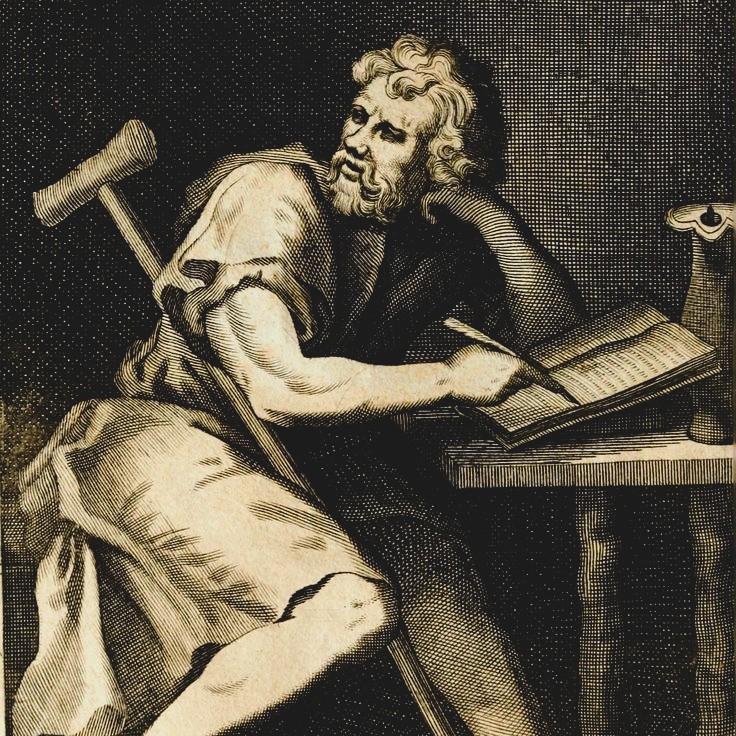
Epictetus lived during the mature Roman phase of Stoicism, a philosophical school originally founded in Hellenistic Athens by Zeno of Citium several centuries earlier and subsequently developed by philosophers including Chrysippus, before being adapted and popularized within Roman intellectual and public life by figures including Seneca and, later, Epictetus himself.
As a former slave who gained his freedom and went on to teach philosophy to audiences that included members of the Roman elite, Epictetus occupied an unusual social position within Roman intellectual life, bringing a distinctive perspective shaped by direct personal experience of legal bondage to a philosophical tradition more commonly associated with Roman senators and emperors.
Epictetus's teaching career was also directly shaped by significant political events of his era, including his eventual exile from Rome under the emperor Domitian's broader expulsion of philosophers, an event that led him to establish his own influential school in the Greek city of Nicopolis, where he would teach for the remainder of his life.
Epictetus's Early Life as a Slave
Epictetus was born in Hierapolis, in the region of Phrygia in Asia Minor, into slavery, and he spent his early life as the property of Epaphroditus, a wealthy and influential freedman who himself served as a secretary to the Roman emperor Nero, placing the young Epictetus in close proximity to the highest circles of Roman imperial power despite his own legally unfree status.
According to traditional accounts, Epictetus suffered a permanent physical disability, reportedly a lame leg, possibly resulting from mistreatment during his enslavement, though the precise circumstances remain uncertain, an experience that later Stoic tradition sometimes cited as illustrating his own philosophical example of maintaining inner tranquility despite significant physical hardship and past suffering.
Despite his legally unfree status, Epictetus's owner permitted him to study philosophy, and he eventually gained his freedom, likely sometime after Nero's death, after which he began teaching philosophy publicly, an extraordinary personal trajectory from enslavement to becoming one of the most respected and influential philosophical teachers of his generation.
Epictetus's Teacher: Musonius Rufus
Epictetus received his philosophical training under Musonius Rufus, a prominent Roman Stoic teacher known for his own practical and demanding approach to Stoic ethics, emphasizing rigorous philosophical discipline applied directly to concrete questions of daily conduct rather than abstract theoretical speculation detached from actual lived experience.
Musonius Rufus's influence on Epictetus proved decisive, shaping the distinctively practical, demanding, and conversationally direct teaching style that would come to characterize Epictetus's own subsequent philosophical career, including his consistent emphasis on applying Stoic principles immediately and rigorously to the actual circumstances of a student's daily life rather than treating philosophy as a purely academic or theoretical pursuit.
This inherited emphasis on practical philosophical training, traceable through Musonius Rufus back to earlier Stoic tradition, established the foundation for Epictetus's own later teaching method at Nicopolis, where he would similarly insist that genuine philosophical understanding must be demonstrated through consistent practical application rather than merely theoretical mastery of Stoic doctrine.
Epictetus's Exile and School in Nicopolis
Epictetus taught philosophy in Rome for a significant period before the emperor Domitian ordered the expulsion of philosophers from the city, likely around 93 CE, an event that forced Epictetus, along with other philosophers, to leave Rome and relocate elsewhere within the Roman world.
Following this exile, Epictetus established an influential philosophical school in Nicopolis, a Greek city in the region of Epirus, where he would teach for the remainder of his long life, attracting students from across the Roman world, including individuals of considerable social standing who traveled specifically to study under his instruction.
Epictetus's school at Nicopolis became renowned for its rigorous and practically demanding curriculum, and it was here that his student Arrian, who would later become a significant historian and Roman official in his own right, attended his lectures and carefully recorded the teachings that would eventually be preserved as the Discourses and the Enchiridion.
What Did Epictetus Believe?
Epictetus's philosophy centers on the foundational Stoic conviction that genuine human flourishing depends entirely on the proper exercise of one's own judgment and will, rather than on external circumstances such as wealth, social status, physical health, or even political freedom, which Epictetus consistently treated as fundamentally indifferent to a person's genuine happiness and moral character.
Central to this philosophy is Epictetus's insistence that human beings should direct their entire effort and attention toward what genuinely lies within their own power, namely their own judgments, desires, and choices, while training themselves to accept with complete equanimity everything that lies outside this power, including the actions of others and the broader course of external events.
Epictetus also emphasized that this philosophical discipline must be practiced continuously and rigorously through daily exercise rather than merely understood intellectually, insisting that genuine philosophical progress requires consistent, active effort to apply Stoic principles to the actual, concrete circumstances of everyday life rather than remaining at the level of abstract theoretical comprehension.
Scholars of ancient philosophy continue to study how Epictetus's surviving teachings, preserved entirely through Arrian's transcription, relate to broader Stoic doctrine developed by earlier figures including Zeno and Chrysippus, but his practical and remarkably clear articulation of Stoic ethics is consistently recognized as one of the most influential and accessible expressions of Stoic philosophy to survive from antiquity.
The Enchiridion: Epictetus's Handbook
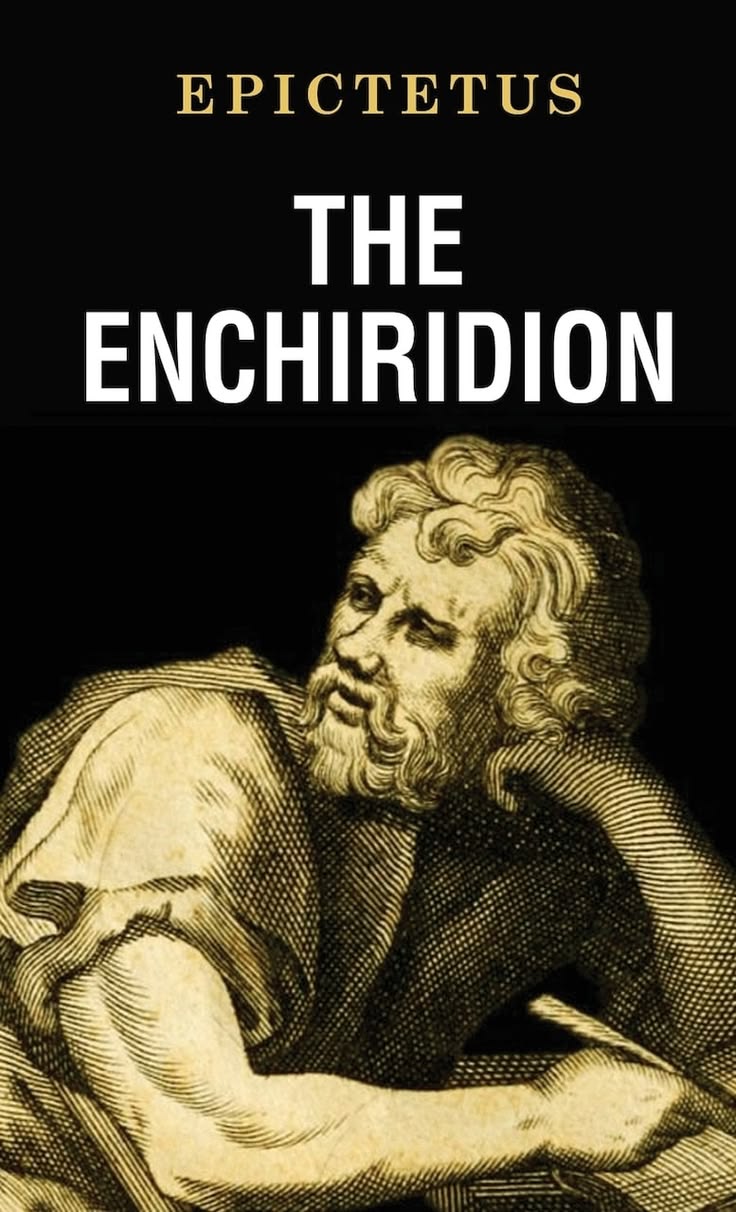
The Enchiridion, meaning "handbook" or "manual" in Greek, is a concise summary of Epictetus's core Stoic teachings, compiled by his student Arrian from the much longer Discourses, intended to serve as a short, portable, practical guide for readers seeking to apply Stoic principles directly to the challenges of daily life.
The work opens with a direct statement of the dichotomy of control, immediately establishing the foundational distinction between what lies within a person's power and what does not, before proceeding through a series of brief, practically oriented chapters addressing specific situations and challenges, including how to respond to insult, loss, and the death of loved ones.
Because of its brevity, clarity, and directly practical orientation, the Enchiridion has remained one of the most widely translated and continuously read texts of ancient Stoic philosophy, serving for many centuries as an accessible entry point into Stoic thought for readers without specialized philosophical training.
The Discourses: Arrian's Record of Epictetus's Teaching
The Discourses, a considerably longer and more extensive work than the Enchiridion, presents Arrian's detailed transcription of Epictetus's actual classroom teaching, preserving the philosopher's characteristic conversational, often confrontational teaching style, complete with direct questioning of students and vivid illustrative examples drawn from everyday life.
Unlike the more condensed and systematically organized Enchiridion, the Discourses retain much of the spontaneous, exploratory character of live philosophical instruction, including Epictetus's characteristic use of pointed rhetorical questions, direct address to individual students, and extended engagement with specific practical dilemmas his students brought to him.
Although only a portion of the originally recorded Discourses survives to the present day, the surviving material remains an invaluable primary source for understanding both the specific content of Epictetus's philosophy and the distinctive practical and personally engaged teaching method through which he conveyed Stoic principles to his students at Nicopolis.
The Dichotomy of Control Explained
The dichotomy of control, the foundational principle opening the Enchiridion, divides everything a person might encounter into two categories: what lies within our own power, namely our own judgments, desires, and choices, and what does not, including our physical body, reputation, property, and the actions and opinions of other people.
Epictetus argued that genuine peace of mind and freedom depend entirely on correctly recognizing and respecting this distinction, directing one's effort and concern exclusively toward what remains within one's own power while cultivating calm acceptance toward everything outside it, since attempting to control what genuinely lies beyond our power inevitably produces frustration, disappointment, and unnecessary suffering.
This principle proved foundational not only for Epictetus's own philosophy but for the entire subsequent Stoic tradition, directly shaping Marcus Aurelius's own later Meditations, and continuing today as one of the most widely cited and practically applied principles within contemporary popular philosophy and modern Stoic practice.
Prohairesis: The Faculty of Moral Choice
Prohairesis, a Greek term often translated as "moral choice" or "will," names Epictetus's central concept for the distinctly human faculty of rational judgment and choice that he considered the true seat of a person's moral character, located entirely within a person's own power regardless of any external circumstance, including even physical enslavement.
Epictetus argued that this faculty of prohairesis remains permanently free and inviolable, since no external power, however great, can force a person's rational judgment or moral choice against their own will, a conviction that allowed Epictetus, himself a former slave, to insist that genuine freedom is fundamentally an internal, moral condition rather than merely an external legal or political status.
This concept of prohairesis proved central to Epictetus's broader ethical framework, since he consistently located moral responsibility, virtue, and vice entirely within this internal faculty of choice, treating external actions and circumstances as morally significant only insofar as they reflect the underlying quality of a person's own prohairesis.
The Discipline of Desire
Epictetus's discipline of desire addresses how a person should properly direct their desires and aversions, teaching that one should desire only what genuinely lies within one's own power to attain and should feel aversion only toward what genuinely lies within one's own power to avoid, since desiring or fearing external outcomes beyond one's control inevitably produces frustration and disturbance.
This discipline requires a fundamental reorientation of ordinary human desire, redirecting attention away from external outcomes, such as wealth, health, or reputation, that remain ultimately beyond a person's complete control, and toward one's own internal judgments and moral character, which remain entirely within a person's own power to cultivate and maintain.
By properly training this discipline of desire, Epictetus argued that a person could achieve genuine freedom from the disturbance and disappointment that inevitably follows from desiring things outside one's control, a training he presented as requiring sustained daily practice rather than a single act of intellectual understanding.
The Discipline of Action
Epictetus's discipline of action addresses how a person should properly conduct their outward behavior and social relationships, emphasizing that a person should perform their appropriate duties and social roles with care and diligence while maintaining inner detachment from whether these actions ultimately succeed in producing their intended external outcome.
This discipline required Epictetus's students to act responsibly and conscientiously within their various social roles and relationships, including family, civic, and professional obligations, while simultaneously recognizing that the ultimate success or failure of any particular action often depends on external factors genuinely beyond their control.
By combining conscientious external action with proper internal detachment from outcomes, Epictetus argued that a person could fulfill their social and ethical responsibilities fully while still maintaining the inner tranquility that comes from recognizing the fundamental distinction between one's own effort, which remains within one's power, and its ultimate result, which often does not.
The Discipline of Assent
Epictetus's discipline of assent addresses how a person should properly evaluate and respond to their own initial impressions and judgments about events, teaching that a person should carefully examine each impression before granting it rational assent, rather than automatically accepting initial, often distorted or exaggerated, emotional reactions as accurate representations of reality.
This discipline requires developing the capacity to pause between an initial impression, such as the immediate emotional reaction to an insult or misfortune, and one's considered rational judgment about that impression, allowing a person to examine critically whether their initial reaction accurately reflects the true nature and significance of the situation.
Through this careful discipline of assent, Epictetus argued that a person could avoid being controlled by immediate, often exaggerated emotional reactions, instead cultivating the capacity for calm, rational evaluation that allows genuine Stoic wisdom and equanimity to guide their actual judgments and subsequent behavior.
Epictetus on Freedom and Slavery
Epictetus's own biography as a former slave shaped one of his most philosophically distinctive and personally compelling contributions: his insistence that genuine freedom is fundamentally an internal, moral condition rather than merely a matter of external legal or political status, since even a legally free person remains genuinely enslaved if their judgment is controlled by fear, desire, or external opinion.
Conversely, Epictetus argued that even a person in legal bondage, as he himself had once been, could remain genuinely free in the most philosophically significant sense, since their own faculty of judgment and moral choice, their prohairesis, remains permanently beyond any external power's capacity to control or coerce, regardless of their formal legal status.
This distinctive philosophical treatment of freedom and slavery, grounded directly in Epictetus's own lived experience, gives his philosophy a particularly vivid and personally authoritative quality, illustrating how his own biography directly informed and deepened one of Stoicism's most enduringly significant philosophical contributions.
Epictetus on Role Ethics: Playing Your Part Well
Epictetus developed an influential ethical metaphor comparing human life to a theatrical performance, arguing that each person is assigned a particular role or set of roles by circumstance, including their family relationships, social position, and specific life situation, and that genuine virtue consists in playing whatever role one has been assigned as well as possible, rather than in choosing or controlling the role itself.
According to this framework, a person cannot always choose the specific circumstances or social role they occupy, whether born into wealth or poverty, health or illness, but they retain complete control over how skillfully and virtuously they perform whatever role circumstance has actually assigned them, a distinction that connects directly to Epictetus's broader dichotomy of control.
This role-based ethical framework proved influential for later Stoic and virtue ethics more broadly, offering a way of reconciling apparent inequality in life circumstances with Stoic egalitarianism regarding moral worth, since a person born into humble circumstances could, in principle, achieve moral excellence fully equal to that of someone born into greater privilege by performing their own assigned role with equal skill and virtue.
Epictetus on Cosmopolitanism
Epictetus embraced the broader Stoic doctrine of cosmopolitanism, the conviction that all human beings, regardless of their specific nationality, social status, or legal condition, share a fundamental common identity as rational beings and citizens of a single universal cosmic community, a doctrine that carried particular personal resonance given his own experience moving from slavery to respected philosophical teacher.
This cosmopolitan conviction shaped Epictetus's broader ethical teaching, encouraging his students to recognize their fundamental kinship with all other rational human beings and to extend appropriate care and concern beyond narrow ties of family or nationality toward the broader human community as a whole, reflecting the universal scope of Stoic ethical concern.
Epictetus's cosmopolitanism connects directly to his broader emphasis on the internal, universal faculty of prohairesis as the true seat of human dignity and moral worth, since this faculty, shared equally by every rational human being regardless of external social status, provided the philosophical foundation for his conviction that fundamental human dignity transcends any particular social or political arrangement.
Epictetus on Death and Acceptance
Epictetus consistently taught that death, along with illness, loss, and other significant hardships, belongs firmly to the category of things outside human control, and that genuine wisdom requires accepting these natural events with calm equanimity rather than resisting them with fear or excessive grief that only compounds unnecessary suffering.
This teaching extended to Epictetus's guidance regarding the loss of loved ones, famously advising his students to remember, even while embracing a child or spouse, that they are embracing a mortal being whose loss remains always possible, not to diminish the value of the relationship but to cultivate a realistic acceptance that could soften the shock of eventual, inevitable loss.
Epictetus's teaching on death and acceptance reflects his broader philosophical conviction that resisting the natural, unavoidable course of events produces only unnecessary additional suffering, while genuine wisdom lies in directing all available effort toward what remains within one's control, namely one's own judgment and response to loss, rather than toward the impossible task of avoiding mortality itself.
Epictetus's View of God and Providence
Epictetus maintained the broader Stoic theological conviction that the universe is governed by a rational, providential divine order, often identified with Zeus or simply described as God, and that human beings, as rational creatures, possess a distinctive capacity to understand and consciously align themselves with this providential cosmic order.
This theological framework shaped Epictetus's broader ethical teaching, since he consistently encouraged his students to view their own particular life circumstances, including apparent hardships, as assigned to them by this providential divine order for ultimately beneficial reasons, even when the specific benefit might not be immediately apparent from a purely human perspective.
Epictetus's conception of divine providence connects directly to his broader teaching on accepting external circumstances with equanimity, since recognizing one's particular life situation as part of a larger providential order provided additional philosophical and theological grounding for the practical Stoic discipline of accepting what lies beyond one's own control.
Epictetus and Cynicism's Influence
Epictetus expressed considerable admiration for the ancient Greek philosophical tradition of Cynicism, particularly its founding figure Diogenes of Sinope, praising the Cynic commitment to radical simplicity, freedom from conventional social attachment, and outspoken willingness to challenge prevailing social convention in pursuit of genuine philosophical virtue.
Epictetus's own teaching incorporated significant elements of this Cynic influence, particularly in his emphasis on freedom from attachment to external possessions and social status, and in his encouragement of a demanding, even confrontational teaching style designed to challenge his students' complacent assumptions rather than simply providing comfortable intellectual reassurance.
This connection between Stoicism and Cynicism reflects the broader historical relationship between the two schools, since Stoicism itself had originally developed partly out of earlier Cynic philosophy, and Epictetus's own particular emphasis on rigorous, practically demanding philosophical training illustrates this shared inheritance within his distinctive version of Stoic teaching.
Epictetus's Influence on Marcus Aurelius
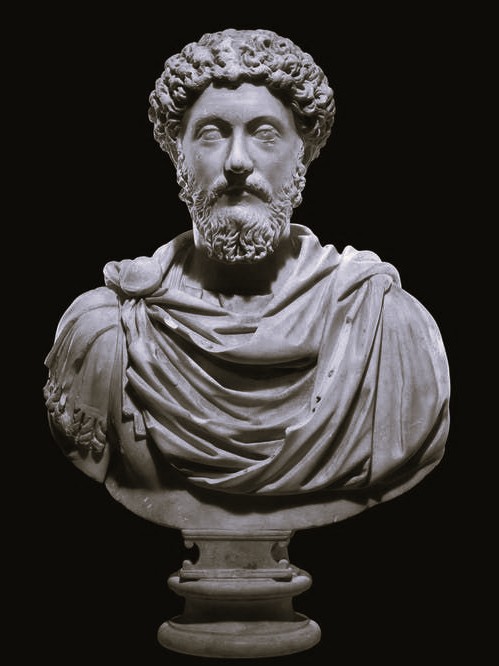
Epictetus exercised profound and directly documented influence on the Roman emperor Marcus Aurelius, who encountered Epictetus's teaching through the notes of his own tutor Junius Rusticus, despite the two philosophers never meeting directly, since Epictetus had already died before Marcus Aurelius reached adulthood.
Marcus Aurelius's own Meditations contains numerous direct references and clear conceptual debts to Epictetus's teaching, particularly regarding the dichotomy of control and the emphasis on maintaining disciplined inner judgment regardless of external circumstance, demonstrating how thoroughly Epictetus's specific formulation of Stoic ethics shaped the private philosophical reflections of one of history's most powerful rulers.
This direct influence illustrates the remarkable historical trajectory of Epictetus's philosophy, moving from a former slave's demanding classroom teaching in provincial Nicopolis to shaping the private philosophical reflections of a Roman emperor governing the vast Roman Empire, a testament to the genuine universal accessibility Epictetus himself insisted Stoic wisdom possessed.
Epictetus Compared with Seneca
Epictetus is frequently discussed alongside the earlier Roman Stoic philosopher Seneca, since both thinkers contributed significantly to the practical, ethically focused character of Roman Stoicism, though their specific social positions and philosophical styles differed considerably, with Seneca writing as a wealthy Roman senator and imperial advisor while Epictetus taught as a former slave addressing students directly through spoken instruction.
Seneca's surviving philosophical writing, including his letters and essays, tends toward a more polished, literary Latin prose style addressed to specific individual correspondents, while Epictetus's teaching, preserved through Arrian's Greek transcription, retains the more direct, conversational, and often confrontational character of live philosophical instruction delivered to a classroom of students.
Despite these differences in style and social position, both philosophers shared the core Roman Stoic conviction that philosophy must be practically applied to daily conduct rather than remaining a purely theoretical pursuit, and both continue to be studied together as complementary and mutually illuminating voices within the broader tradition of Roman Stoic ethics.
Epictetus Compared with Zeno and Chrysippus
Epictetus's philosophy stands in direct historical continuity with the earlier Hellenistic founders of Stoicism, particularly Zeno of Citium, who originally established the school in Athens, and Chrysippus, whose extensive systematic writing significantly developed and formalized Stoic logic, physics, and ethics during the school's early development.
Where Zeno and Chrysippus developed much of the detailed technical philosophical system underlying Stoic physics and logic, Epictetus's own surviving teaching focuses considerably more narrowly and intensely on practical ethics, offering far less extensive treatment of the more technical logical and physical dimensions of Stoic philosophical theory that had occupied these earlier founding figures.
This difference in emphasis reflects a broader historical pattern within the development of Roman Stoicism, in which later Roman Stoic teachers, including Epictetus and Seneca, increasingly concentrated their teaching on practical ethical application rather than the more comprehensive technical philosophical system that had characterized the school's earlier Hellenistic development under Zeno and Chrysippus.
Epictetus and Modern Cognitive Behavioral Therapy
Epictetus's teaching on the discipline of assent, particularly his insistence that human disturbance results not from external events themselves but from our own judgments about those events, has been widely and explicitly cited as a significant historical precursor to modern cognitive behavioral therapy, a contemporary psychological treatment approach developed in the twentieth century.
Psychologists including Albert Ellis, a founder of rational emotive behavior therapy, and Aaron Beck, a founder of cognitive therapy, have directly credited Epictetus's ancient Stoic insight, that people are disturbed not by events themselves but by their own interpretations and judgments about those events, as foundational inspiration for their own modern therapeutic approaches to treating anxiety, depression, and other psychological difficulties.
This significant modern psychological application of Epictetus's ancient philosophical teaching illustrates the remarkable continuing practical relevance of his specific insights into the relationship between judgment, emotion, and human wellbeing, extending his influence well beyond academic philosophy into contemporary clinical psychological practice.
Common Misconceptions About Epictetus
One persistent misconception treats Epictetus's Stoic acceptance of what lies outside one's control as a form of passive resignation or emotional suppression, overlooking that his philosophy actually demands active, ongoing effort within one's own sphere of genuine control, including vigorous moral and social action within one's assigned roles and responsibilities.
Another common misconception assumes Epictetus's philosophy simply reflects generic ancient wisdom without recognizing the considerable technical philosophical precision underlying concepts such as prohairesis and the three disciplines of desire, action, and assent, which together constitute a carefully structured and systematically developed philosophical framework rather than a loose collection of general inspirational sayings.
A further misconception overlooks the significance of Epictetus's own biography as a former slave in shaping his philosophy, treating his teaching as generic Stoic doctrine without recognizing how directly his personal experience of bondage and subsequent freedom informed and deepened his distinctive treatment of the relationship between external circumstance and genuine inner freedom.
Epictetus's Legacy in Modern Stoicism
Epictetus's philosophical legacy extends across an unusually wide range of subsequent intellectual history, directly shaping Marcus Aurelius's own influential Meditations and continuing to serve, through the Enchiridion and Discourses, as one of the most accessible and widely translated introductions to Stoic philosophy available to modern readers.
His practical, demanding, and psychologically insightful approach to Stoic ethics has proven especially significant for the substantial contemporary revival of interest in Stoic philosophy often called modern Stoicism, which draws heavily on Epictetus's specific formulations, particularly the dichotomy of control, as practical resources for resilience and emotional regulation in modern daily life.
Today, Epictetus is widely recognized as one of the most significant and enduringly practical philosophers of the ancient world, whose teaching continues to shape not only academic philosophy but contemporary psychology, self-help literature, and popular philosophical discussion of resilience and personal freedom around the world.
Epictetus: Main Philosophical Ideas
Because Epictetus's teaching survives entirely through his student Arrian's careful transcription rather than his own direct writing, his central ideas are often summarized under a small number of key themes drawn from the Enchiridion and the surviving Discourses.
The Dichotomy of Control
Human beings should direct all effort toward what lies within their own power, namely their judgments and choices, while accepting everything else with equanimity.
Prohairesis
The faculty of rational moral choice remains permanently free and inviolable, regardless of any external circumstance, including enslavement.
The Three Disciplines
Epictetus organized Stoic practice around the disciplines of desire, action, and assent, each governing a different aspect of human judgment and behavior.
Freedom as an Internal Condition
Genuine freedom depends on the quality of one's own judgment rather than on external legal or political status.
Philosophy as Daily Practice
Epictetus insisted that Stoic principles must be applied continuously through active daily practice rather than merely understood intellectually.
What Do We Actually Know About Epictetus's Philosophy?
Because Epictetus wrote nothing himself, relying entirely on his student Arrian's transcription of his teaching, and because he lived within a period with more limited surviving documentation than later Roman history, several specific biographical details remain less certain than for some other ancient philosophers, though the core content of his philosophy is well preserved through the Enchiridion and Discourses.
Relatively Well-Attested
- Epictetus was born into slavery in Hierapolis and later gained his freedom.
- He studied under the Stoic teacher Musonius Rufus.
- He was exiled from Rome under Domitian and established a school in Nicopolis.
- His teachings were recorded by his student Arrian as the Discourses and the Enchiridion.
- His teaching directly influenced Marcus Aurelius's Meditations.
Areas of Ongoing Scholarly Debate
- The precise circumstances of his physical disability and early life as a slave.
- How faithfully Arrian's transcription preserves Epictetus's exact original teaching versus Arrian's own editorial shaping.
- How Epictetus's specific ethical emphasis relates to the more technical logical and physical dimensions of earlier Hellenistic Stoic theory.
Why Is Epictetus Important in Philosophy?
Epictetus is important because he articulated one of the clearest, most practically accessible, and most personally tested formulations of Stoic ethics in the entire ancient world, directly shaping later Stoic thought and continuing to offer practical guidance for resilience and inner freedom today.
His philosophical legacy raises a fundamental question that remains central to ethics and philosophy of mind: Can genuine freedom and human flourishing be achieved entirely through the proper exercise of one's own judgment, regardless of external circumstance, even including conditions as extreme as slavery?
Epictetus's importance therefore does not depend on resolving every scholarly debate about the precise details of his biography. His significance comes from his role in providing one of history's most practically influential articulations of Stoic philosophy, a legacy that continues to shape ethics, psychology, and popular philosophy today.
Epictetus Explained Simply
Epictetus was a Greek Stoic philosopher, born into slavery, who taught that genuine freedom and happiness depend entirely on properly directing our judgment toward what lies within our own power while accepting with equanimity everything outside it.
Instead of treating external circumstances such as wealth, health, or even legal freedom as essential to genuine happiness, Epictetus's philosophy insists that the only thing truly ours is our own faculty of judgment and choice, a conviction preserved for later readers through his student Arrian's Enchiridion and Discourses.
- Philosopher: Epictetus
- Period: c. 50–135 CE
- Tradition: Stoicism
- Major works: The Enchiridion and the Discourses
- Central concern: Inner freedom through the proper exercise of judgment
- Key principle: The dichotomy of control
A Principle Central to Epictetus's Philosophy
“Men are disturbed not by things, but by the views which they take of things.”
Frequently Asked Questions About Epictetus
Who was Epictetus?
Epictetus was a Greek Stoic philosopher, born into slavery, whose teachings, preserved by his student Arrian in the Discourses and the Enchiridion, developed the dichotomy of control and a philosophy of inner freedom that profoundly influenced Marcus Aurelius and modern Stoicism.
What is the dichotomy of control?
The dichotomy of control is Epictetus's foundational Stoic principle that everything can be divided into what is within our power, namely our own judgments and choices, and what is not, including external events, other people's actions, and our reputation.
What is the Enchiridion?
The Enchiridion, or Handbook, is a concise summary of Epictetus's core Stoic teachings compiled by his student Arrian, intended as a short, practical guide for applying Stoic principles to daily life.
What is prohairesis?
Prohairesis is Epictetus's term for the faculty of rational moral choice, which he held remains permanently free and inviolable regardless of any external circumstance, including slavery.
Was Epictetus really a slave?
Yes, Epictetus was born into slavery in Hierapolis and later gained his freedom, an experience that directly shaped his philosophical emphasis on freedom as an internal, moral condition rather than merely a legal status.
What are Epictetus's three disciplines?
Epictetus organized Stoic practice around the discipline of desire, governing what we want and avoid; the discipline of action, governing our conduct and duties; and the discipline of assent, governing how we evaluate our own impressions.
How did Epictetus influence Marcus Aurelius?
Marcus Aurelius encountered Epictetus's teaching through his tutor Junius Rusticus, and Epictetus's dichotomy of control and emphasis on disciplined judgment directly shaped Marcus Aurelius's own Meditations.
How is Epictetus connected to modern psychology?
Epictetus's teaching that people are disturbed by their judgments about events rather than the events themselves directly inspired the founders of cognitive behavioral therapy and rational emotive behavior therapy.
How is Epictetus different from Seneca?
Seneca wrote as a wealthy Roman senator in polished literary prose, while Epictetus taught as a former slave through direct, conversational instruction later transcribed by his student Arrian.
Why is Epictetus important today?
Epictetus remains important because his dichotomy of control and practical Stoic teachings continue to influence modern Stoicism, cognitive behavioral therapy, and popular philosophy on resilience and inner freedom.
Related Thinkers
Epictetus belongs to the wider tradition of Stoic and ancient Greco-Roman philosophy. Explore thinkers who shaped and responded to many of the same ethical questions.
Philosophy Branches Connected to Epictetus
Epictetus's philosophical legacy is particularly important for ethics, where philosophers investigate virtue and the good life, and for epistemology, which examines how judgment shapes human experience.
Why Epictetus Still Matters
Epictetus did not simply inherit and repeat earlier Stoic doctrine; he tested it directly against his own extraordinary personal experience of slavery and freedom, producing one of the most practically compelling and personally authoritative articulations of Stoic ethics ever taught.
Yet the questions associated with Epictetus remain fundamental to philosophy: What genuinely lies within our power? Can freedom exist independently of external circumstance? How should judgment govern our response to hardship and loss?
The philosophy of inner freedom he taught across decades at Nicopolis transformed these questions into one of the most enduringly practical and influential bodies of ethical thought in the ancient world. His emphasis on the dichotomy of control, prohairesis, and disciplined judgment made Epictetus one of the most significant and widely applied philosophers in history.
Explore Great Philosophers