Who Was Ibn Khaldun?
Ibn Khaldun (1332–1406 CE) was a North African historian, political thinker, jurist, diplomat, and one of the most original theorists of human society in the medieval world. Born in Tunis, he spent much of his life moving between the political and intellectual centers of North Africa and later Egypt. He is best known for the Muqaddimah, the famous introduction to his universal history.
In the Muqaddimah, Ibn Khaldun developed a systematic attempt to understand the forces behind the rise and decline of dynasties and civilizations. He examined social organization, political authority, economic activity, education, population, urban life, and the relationship between nomadic and settled communities. His aim was not merely to describe historical events, but to explain the underlying patterns that made those events possible.
A central concept in his thought is asabiyyah, often translated as group solidarity or social cohesion. Ibn Khaldun argued that strong forms of collective solidarity could help groups acquire political power and establish dynasties. Over time, however, prosperity, luxury, political stability, and changing social conditions could weaken the cohesion that had originally contributed to a dynasty's strength.
Ibn Khaldun lived during a period of frequent political change across the Maghrib and the wider Mediterranean world. His experience as a court official, diplomat, scholar, and political participant gave him direct knowledge of dynastic rivalry and the instability of political power. These experiences strongly influenced his analysis of states, rulers, tribal groups, and urban societies.
His philosophy of history was remarkable because it emphasized the need to examine historical reports critically. Ibn Khaldun argued that historians should consider whether an account is socially, politically, economically, and practically possible rather than accepting every transmitted report without examination. He therefore developed an important method for investigating the causes and conditions behind historical events.
For these reasons, Ibn Khaldun occupies a distinctive place in the history of historiography, social thought, political theory, economics, and the philosophy of history. Although modern labels such as "sociologist" must be used carefully when applied to a fourteenth-century thinker, his systematic study of social structures and historical change has led many later scholars to regard him as an important precursor to several modern social sciences.
Ibn Khaldun: Quick Facts
- Full name — Abū Zayd ʿAbd al-Raḥmān ibn Khaldūn
- Born — 1332 CE
- Died — 1406 CE
- Born in — Tunis
- Tradition — Islamic philosophy, historiography, social and political thought
- Best-known work — Muqaddimah
- Major concept — ʿasabiyyah, often translated as group solidarity or social cohesion
- Major subjects — History, civilization, society, politics, economics, education, and human organization
- Important concept — ʿumrān, the study of human social organization and civilization
- Known for — Critical historical methodology and theories of social and political change
Ibn Khaldun's Early Life and Historical Background
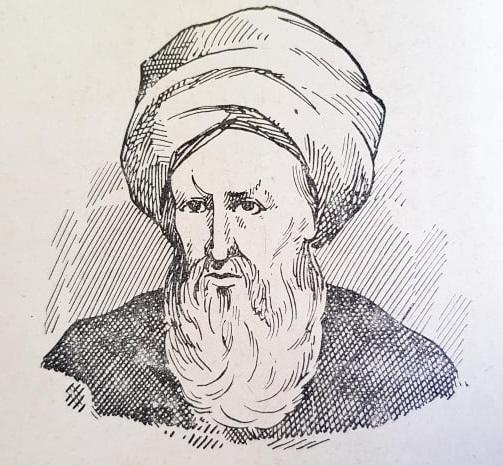
Ibn Khaldun was born in Tunis in 1332 into a family that had long been associated with scholarship and public service. His family claimed South Arabian origins and had lived for centuries in Al-Andalus before migrating to North Africa. In Tunis, Ibn Khaldun received the extensive education expected of a member of a learned Muslim family.
His education included the Quran, Arabic language and grammar, jurisprudence, hadith, theology, rhetoric, poetry, and other branches of learning. He also encountered philosophical and logical traditions that formed part of the wider intellectual culture of the medieval Islamic world. This broad education later enabled him to draw upon religious, historical, philosophical, and political sources.
Ibn Khaldun's early life took place during a period of political fragmentation and frequent dynastic conflict across the Maghreb. Hafsid, Marinid, and Abd al-Wadid rulers competed for influence, while tribal groups, cities, and regional dynasties formed shifting political alliances. The devastation caused by the Black Death also profoundly affected his generation and disrupted his own family life.
These experiences became important to Ibn Khaldun's later study of history. Instead of treating political events as isolated occurrences, he attempted to understand the social conditions that made particular forms of political organization possible. His lifelong experience of political instability would eventually become one of the foundations of his analysis of dynasties, social cohesion, and civilization.
Ibn Khaldun's Political Career and Travels
Ibn Khaldun's intellectual development was closely connected with an unusually active political career. He served rulers and governments in different parts of North Africa, held administrative and diplomatic positions, and experienced both political advancement and imprisonment. His career took him through important centers including Fez, Granada, Tunis, and Cairo.
During his time in Granada, Ibn Khaldun carried out a diplomatic mission to the court of Pedro I of Castile. He later returned to North Africa and continued to move among competing courts and political factions. These experiences gave him firsthand knowledge of dynastic rivalry, diplomacy, administration, and the instability of political power.
After years of political uncertainty, Ibn Khaldun temporarily withdrew from active public life and spent time at Qal'at Ibn Salama in present-day Algeria. It was during this period of relative seclusion that he began writing the great historical work for which he would become famous, including the Muqaddimah.
Ibn Khaldun later settled in Cairo, where he spent the final decades of his life as a scholar, teacher, and jurist. He was repeatedly appointed to the office of chief Maliki judge and also travelled to Syria, where he famously encountered Timur during the events surrounding the siege of Damascus. His political philosophy was therefore shaped by direct experience as well as theoretical study.
What Was Ibn Khaldun's Philosophy?
Ibn Khaldun's philosophy focused especially on the structure and development of human society. Rather than concentrating primarily on metaphysical questions, his most original work examined how people form communities, establish political authority, produce wealth, build cities, and create forms of civilization.
His approach to history sought to discover patterns and causal relationships behind historical events. Ibn Khaldun argued that historians should examine whether reported events were compatible with the known conditions of society, political organization, economics, geography, and human behavior.
A central concept in his thought was human social organization, which he regarded as essential to the proper study of history. Historical events could not be understood merely by studying individual rulers because political power depended upon broader social relationships and material conditions.
His thought therefore connects philosophy of history, social theory, political philosophy, economics, historiography, and Islamic intellectual thought. Ibn Khaldun's originality lies largely in his attempt to bring these different areas together into a systematic explanation of historical and social change.
Ibn Khaldun and Islamic Philosophy
Ibn Khaldun developed his ideas within the intellectual world of medieval Islam. His education was deeply grounded in the Islamic religious sciences, especially law and theology, and he later served as a Maliki judge. Questions concerning religion, political authority, law, and human society therefore formed part of the intellectual environment in which he worked.
He was also familiar with the classical philosophical tradition of falsafa, including thinkers such as Al-Farabi, Ibn Sina (Avicenna), and Ibn Rushd (Averroes). However, Ibn Khaldun became increasingly critical of relying upon traditional philosophical methods alone when investigating political and social realities.
His most distinctive intellectual contribution was therefore not a new metaphysical system comparable to those of Avicenna or Averroes. Instead, he developed an analytical investigation of human social organization and historical change based on the conditions that shape real communities and political institutions.
Ibn Khaldun consequently occupies an unusual position in the history of Islamic philosophy and medieval intellectual history. He inherited philosophical traditions while directing much of his most original attention toward history, civilization, political authority, and the causes of social transformation.
Ibn Khaldun's Philosophy of History
Ibn Khaldun's philosophy of history is one of the most distinctive aspects of his thought. He believed that history should involve more than collecting and transmitting stories about rulers and events. Historians should investigate causes and determine whether reported events are socially and materially plausible.
His method required attention to political institutions, economic conditions, social organization, population, geography, climate, and relations between different communities. A historical report could not be judged properly without knowledge of the circumstances in which human societies actually function.
Ibn Khaldun was particularly concerned with distinguishing truth from falsehood in historical reporting. He recognized that exaggeration, political bias, uncritical transmission, and ignorance of social conditions could lead historians to preserve accounts that were improbable or impossible.
His philosophy of history consequently treats historical change as something that can be investigated through recurring social mechanisms. Although he did not claim that every event followed a rigid mechanical law, he believed that knowledge of human society could provide principles for explaining why historical events occur.
The Muqaddimah: Ibn Khaldun's Masterpiece
The Muqaddimah, often translated as The Introduction or known in older European scholarship as the Prolegomena, is Ibn Khaldun's most famous work. It was originally written as the introductory volume to his much larger universal history, the Kitab al-Ibar, but it became one of the most important works of medieval historical and social thought in its own right.
In the Muqaddimah, Ibn Khaldun examines human social organization, civilization, political authority, economic activity, education, geography, climate, nomadic and settled life, and the rise and decline of ruling dynasties.
The work is particularly important because Ibn Khaldun attempts to establish principles for understanding society and evaluating historical reports. He argues that historians need knowledge of the nature of civilization and human social organization in order to judge whether particular claims are possible.
The Muqaddimah of Ibn Khaldun is therefore central to discussions of historiography, political thought, the philosophy of history, and the long intellectual history that eventually produced the modern social sciences.
What Is Ibn Khaldun's Theory of Asabiyyah?
ʿAsabiyyah is one of the most famous concepts in Ibn Khaldun's thought. It is commonly translated as group feeling, group solidarity, or social cohesion, although no single English expression fully captures its meaning in every context.
Ibn Khaldun used the concept to explain how groups develop the ability to cooperate, defend themselves, support common claims, and establish political authority. A community possessing strong ʿasabiyyah may have greater collective strength than a politically established group whose internal cohesion has weakened.
The concept is especially important in his analysis of tribal and kinship-based groups, but it should not be reduced simply to tribal loyalty. Ibn Khaldun uses it more broadly to describe the collective power created by social bonds and shared commitment.
Religion can also strengthen collective solidarity in Ibn Khaldun's account by giving groups an additional source of common purpose. ʿAsabiyyah therefore became one of the central concepts through which he explained the relationship between society, collective power, political authority, and historical change.
Ibn Khaldun and the Rise and Fall of Civilizations
Ibn Khaldun's analysis of civilization examines how human communities develop different forms of social and political organization. His account pays particular attention to the movement from relatively simple and strongly cohesive groups toward more complex forms of settled and urban civilization.
A group possessing strong ʿasabiyyah may acquire political authority and establish a ruling dynasty. Once political power becomes secure, however, the dynasty develops institutions, administration, military structures, taxation, and the material conditions associated with more complex urban life.
Over time, the social conditions that originally produced political strength may change. Later generations can become increasingly removed from the circumstances that created their original solidarity and may depend more heavily upon institutions and established political power.
Ibn Khaldun therefore connected historical rise and decline with changes in social cohesion, political authority, economic conditions, and forms of settlement. His theory is best understood as an analysis of recurring tendencies in dynastic and civilizational development rather than a simple prediction that every civilization follows an identical timetable.
Ibn Khaldun's Theory of Dynastic Cycles
Ibn Khaldun is famous for describing recurring patterns in the rise and decline of ruling dynasties. A new dynasty may emerge from a group possessing strong social solidarity, military capacity, and the ability to organize collective political action.
After gaining power, rulers gradually establish more stable political institutions and enjoy the benefits of wealth, urban life, and administrative organization. Later generations may become accustomed to conditions very different from those experienced by the founders of the dynasty.
As the original cohesion weakens, political authority may become more dependent upon taxation, professional armies, bureaucracy, and coercive institutions. At the same time, another group possessing stronger collective solidarity may become capable of challenging the established ruling order.
This provides the basis for Ibn Khaldun's influential analysis of dynastic change. His theory should not be understood as an exact law requiring every dynasty to rise and fall in precisely the same way, but as an attempt to identify recurring social processes behind political transformation.
Ibn Khaldun and the Science of Human Society
Ibn Khaldun proposed a systematic investigation of human social organization. He regarded knowledge of society and civilization as necessary for understanding history correctly, because political events occur within broader social and material conditions.
His approach considered collective solidarity, political authority, economic production, population, geography, climate, institutions, education, and different forms of settlement. These factors were not treated as completely independent because changes in one area could affect the development of others.
The Arabic concept of ʿumrān became central to this project. Through the study of ʿumrān, Ibn Khaldun sought to understand the general characteristics of human civilization and the conditions under which different forms of society emerge.
This search for general principles of social life is one reason Ibn Khaldun is frequently discussed as an important precursor to modern social science. His intellectual framework, however, belongs to the fourteenth-century Islamic world and should not simply be treated as modern sociology under another name.
Ibn Khaldun's Concept of Umran
The Arabic concept of ʿumrān is central to Ibn Khaldun's study of history and society. It is often translated using terms such as civilization, social organization, or human civilization, although its meaning is broader than any single modern English equivalent and refers fundamentally to the ways human beings live together and organize collective life.
Ibn Khaldun understood human beings as dependent upon cooperation. People join together to meet material needs, provide security, divide labor, establish political authority, and create the institutions through which increasingly complex forms of social life and civilization can develop.
His analysis of ʿumrān therefore includes the relationships between human communities, economic production, political authority, cities, nomadic and settled ways of life, education, culture, and historical development. These different aspects of society must be understood in relation to one another rather than as isolated historical facts.
Ibn Khaldun's study of ʿumrān also provides the foundation for his historical method. To determine whether a reported historical event is plausible, the historian must understand the general conditions and limits governing the social organization of human beings. In this sense, the study of society becomes an essential tool for critically evaluating historical accounts.
Why Is Ibn Khaldun Important to Sociology and Social Theory?
Ibn Khaldun is often described as an important forerunner of sociology because he attempted to identify systematic principles governing human societies and historical change. His study of ʿumrān, or human social organization and civilization, sought to understand the conditions that shape collective life rather than merely describing individual historical events.
Instead of explaining political events only through the decisions of individual rulers, Ibn Khaldun examined broader social structures such as group solidarity, economic production, political institutions, population, urbanization, and relations between nomadic and settled communities. He treated these forces as interconnected elements that could influence the development and transformation of societies.
His work is particularly important because it asks questions that later became central to social theory: How do groups maintain cohesion? Why does political authority emerge? How do economic and social conditions affect power? Why do states and societies undergo transformation or decline? Ibn Khaldun sought explanations based on recurring features of human social life.
Nevertheless, Ibn Khaldun should not simply be described as a modern sociologist born centuries before sociology existed as an academic discipline. It is more historically accurate to regard him as a major precursor to sociology and social science whose original analysis of society and historical change developed within a distinctive medieval Islamic intellectual context.
Ibn Khaldun's Political Philosophy and Theory of the State
Ibn Khaldun's political philosophy examines why political authority emerges and how states acquire and maintain power. Human beings depend upon social cooperation to satisfy their needs, but social life also involves conflict, competition, and the need for an authority capable of restraining injustice and maintaining order.
Strong group solidarity can allow a community to establish political dominance. Ibn Khaldun associated the transformation of collective strength into ruling authority with mulk, a term that can refer to kingship, royal authority, dominion, or sovereign power. Group solidarity therefore plays an important role in explaining how a ruling dynasty can initially acquire political control.
Once a state becomes established, political authority develops beyond the original cohesion of the ruling group. Government requires administration, taxation, military organization, laws, and other institutions capable of maintaining authority over a larger and more complex society.
Ibn Khaldun therefore studied the state as a social and historical institution rather than treating political authority as independent from the society that supports it. The relationship between ʿasabiyyah, political power, economic resources, and state institutions is consequently one of the central themes of his political thought.
Ibn Khaldun's Philosophy of Economics
Economic activity occupies an important place in Ibn Khaldun's analysis of society. He examined labor, production, trade, wealth, taxation, population, and the relationship between economic activity and political authority as interconnected features of human civilization.
Ibn Khaldun understood human cooperation as essential to production. Individuals cannot independently produce everything required for social life, and the division of occupations allows communities to develop crafts, specialized skills, and forms of production that would be impossible through isolated individual effort.
Economic development is also closely connected with urban life. As cities grow, increasing population, specialization, crafts, trade, and demand can support more complex forms of economic and cultural activity. Prosperous urban civilization, however, also depends upon the wider political and social conditions that sustain it.
His economic ideas form part of a broader social theory because economic conditions influence government revenue, urban prosperity, political stability, and the capacity of societies to sustain complex institutions. For Ibn Khaldun, economic life could not be separated completely from the historical development of states and civilizations.
Ibn Khaldun on Labor, Wealth, and Taxation
Ibn Khaldun gave human labor and productive activity an important role in his explanation of wealth. Natural resources alone do not produce the goods required for human civilization; human effort, skills, crafts, and cooperation transform available materials into useful products and sources of livelihood.
He also examined the relationship between taxation and political power. Governments require revenue to maintain their institutions, armies, and administration, but the demands placed upon producers and merchants can affect economic activity and the prosperity of society.
Ibn Khaldun argued that excessively burdensome taxation could weaken people's incentives and capacity to engage in productive activity. If production and economic activity declined, the taxable base could eventually shrink, undermining the government revenue that heavy taxation had originally sought to increase.
His analysis of labor, taxation, wealth, and economic production has consequently attracted considerable attention in the history of economic thought. It should, however, be understood within his wider analysis of political authority, social organization, dynastic development, and historical change rather than as an isolated modern economic theory.
Ibn Khaldun on Nomadic and Urban Society
A major distinction in Ibn Khaldun's social theory is between nomadic or desert life and settled urban civilization. He did not treat these simply as two unrelated ways of life but as different forms of social organization with distinct economic, political, and cultural characteristics.
Groups living more mobile and relatively austere lives could possess strong collective solidarity and military cohesion. Their social organization often depended more directly upon kinship, mutual support, and the collective ability to defend common interests.
Settled and urban societies, by contrast, could develop greater specialization, wealth, administration, architecture, learning, crafts, and cultural production. Their complexity was one of the achievements of civilization, not merely a sign of decline.
Ibn Khaldun used the interaction between these forms of social organization to explain political transformation and dynastic change. His analysis therefore concerns the changing relationship between collective solidarity, political power, urban civilization, and historical development.
Ibn Khaldun's Method of Studying History
Ibn Khaldun argued that historians should critically examine the reports they receive. Historical information should be tested against knowledge of social conditions, political organization, economics, population, geography, and the normal possibilities of human society.
This approach challenged the uncritical acceptance of transmitted narratives. Ibn Khaldun recognized that historians could repeat exaggerations, misunderstand numerical information, favor particular rulers or groups, or preserve stories without considering whether they were actually possible.
Knowledge of ʿumrān, or human civilization and social organization, therefore becomes a critical tool for evaluating the past. The historian must understand how societies function before deciding whether a report about them deserves to be accepted.
His critical methodology is one of the reasons the Muqaddimah remains important to historians and philosophers interested in the explanation of historical events. Ibn Khaldun sought not only to know what happened, but also to understand the conditions that made events possible.
Ibn Khaldun on Education and Knowledge
Ibn Khaldun also wrote extensively about education and the acquisition of knowledge. He examined how students learn intellectual disciplines and argued that understanding develops gradually rather than appearing fully formed at the beginning of study.
He criticized educational methods that overwhelm students with difficult material before they have acquired the foundations necessary to understand it. Instruction, in his view, should proceed through stages that gradually strengthen the learner's intellectual capacity.
Ibn Khaldun also emphasized the importance of repeated engagement with a subject. Knowledge becomes stronger when students return to a discipline at increasingly advanced levels rather than attempting to master every complexity immediately.
His reflections on education demonstrate that Ibn Khaldun's social thought extended beyond politics and history into questions about knowledge, learning, intellectual development, and cultural transmission.
Ibn Khaldun, Religion, and Civilization
Religion is an important element in Ibn Khaldun's analysis of political and social organization. Religious commitment can provide groups with a shared purpose and moral orientation, strengthening their capacity for collective action and helping unite people whose narrower interests or rivalries might otherwise divide them.
In his historical analysis, a religious mission can strengthen ʿasabiyyah, or group solidarity, by directing collective energy toward a common cause. Ibn Khaldun therefore considered religion capable of helping groups overcome internal rivalries and form larger and more unified political organizations.
At the same time, Ibn Khaldun did not explain political history through religion alone. Religious movements operate within particular social and historical circumstances, while political power remains connected with collective organization, leadership, material resources, and the wider conditions of civilization.
He therefore considered religion alongside ʿasabiyyah, political authority, law, and historical circumstances when explaining the development of states and civilizations. This approach reflects the broader character of Ibn Khaldun's thought, in which religious, social, political, and economic forces interact in the historical development of human communities.
Major Works of Ibn Khaldun
Ibn Khaldun's most important writings are connected with his great historical project. His autobiography also provides an unusually rich account of his political career, travels, intellectual development, and the turbulent world in which he lived.
- Muqaddimah — The celebrated introduction to Ibn Khaldun's larger historical work, containing his analysis of society, civilization, political authority, economics, education, and historical change.
- Kitab al-Ibar — Ibn Khaldun's great universal history, dealing with the history of Arabs, Berbers, and other peoples. The Muqaddimah was originally written as its introduction.
- Al-Taʿrif bi-Ibn Khaldun — His autobiographical work, commonly known as his autobiography, describing his life, travels, political career, scholarly activity, and the wider historical world in which he lived.
Ibn Khaldun's Main Philosophical Ideas
1. History Should Be Explained, Not Merely Recorded
Ibn Khaldun believed historians should investigate the causes and conditions behind events and evaluate reports according to the known realities of human society and civilization.
2. Asabiyyah Creates Collective Political Power
Strong group solidarity can enable communities to cooperate, defend common interests, establish authority, and become powerful political forces.
3. Civilization Changes Through Social Forces
Historical development is influenced by social cohesion, political authority, economic production, geography, religion, and changing forms of settlement and social organization.
4. Economic Activity Shapes Political Life
Labor, production, taxation, wealth, and urban prosperity influence government revenue, political institutions, and the strength of civilization.
5. Dynasties Can Rise and Decline
Political dynasties may emerge through strong collective solidarity and later weaken as the social conditions that originally produced their political strength change.
Ibn Khaldun and Modern Sociology and Social Science
Ibn Khaldun's work has attracted considerable modern attention because many of the questions he investigated resemble problems later studied by sociology, economics, political science, social history, and anthropology.
His concepts of social solidarity, civilization, political power, economic production, taxation, education, and historical change provide a remarkably broad framework for investigating human society.
What makes his work especially significant is his attempt to connect different areas of social life. Political authority cannot be fully understood without examining social cohesion, and economic conditions cannot be completely separated from the development of cities, states, and institutions.
It is therefore more historically accurate to describe Ibn Khaldun as a major precursor or forerunner of modern social science than to claim that he simply practiced modern sociology in a contemporary disciplinary sense.
Ibn Khaldun's Influence and Legacy
Ibn Khaldun's intellectual legacy extends across the study of history, civilization, politics, economics, education, and society. His systematic attempt to explain historical change made him an especially important figure in the history of historiography and the philosophy of history.
The Muqaddimah has subsequently been studied by historians, philosophers, economists, sociologists, political theorists, and scholars of Islamic intellectual history. Its influence has also grown substantially in the modern period as scholars have re-examined the history of social and political thought.
His ideas about ʿasabiyyah, ʿumrān, dynastic change, taxation, labor, education, and social organization continue to make Ibn Khaldun relevant to discussions of historical explanation and social theory.
His lasting importance lies partly in his intellectual method. Ibn Khaldun insisted that the study of the past requires knowledge of the society in which historical events occur. This effort to connect historical evidence with broader social explanation remains one of the most distinctive achievements of his thought.
Ibn Khaldun's Philosophy Explained Simply
Ibn Khaldun can be understood as a thinker who wanted to discover why societies become powerful, how political systems develop, and why civilizations and ruling dynasties eventually experience transformation and decline.
- Why do people form societies? Human beings depend on cooperation to satisfy their needs, protect themselves, and create the conditions necessary for civilization.
- What is asabiyyah? It is group solidarity or collective cohesion that can give a community the strength to cooperate and exercise political power.
- Why do dynasties rise? Groups with strong collective solidarity and political organization can acquire authority and establish new ruling dynasties.
- Why do dynasties decline? The social conditions and solidarity that originally created political strength can weaken as dynasties become increasingly dependent on established institutions, wealth, and coercive power.
- Why is the Muqaddimah important? It provides a systematic investigation of history, society, civilization, politics, economics, education, and the causes of historical change.
- Why is Ibn Khaldun important today? His work developed important questions about society and historical explanation that continue to be studied in sociology, economics, political science, and social history.
Frequently Asked Questions About Ibn Khaldun
Who was Ibn Khaldun?
Ibn Khaldun was a fourteenth-century North African historian, philosopher, political thinker, and social theorist best known for the Muqaddimah and his theories of society, civilization, political power, and historical change.
What is Ibn Khaldun famous for?
Ibn Khaldun is famous for the Muqaddimah, his philosophy of history, theory of asabiyyah, analysis of civilization and dynasties, and influential ideas about society, politics, and economics.
What was Ibn Khaldun's philosophy?
Ibn Khaldun's philosophy focused on human society, civilization, historical causation, political authority, economic activity, and social cohesion. His work connected philosophy of history with systematic social analysis.
What is the Muqaddimah by Ibn Khaldun?
The Muqaddimah is Ibn Khaldun's famous introduction to his larger historical work. It discusses history, society, civilization, politics, economics, education, and the rise and decline of dynasties.
What is Ibn Khaldun's theory of asabiyyah?
Ibn Khaldun's theory of asabiyyah explains how group solidarity or social cohesion can give communities the collective strength needed to establish political authority and maintain power.
What does asabiyyah mean?
Asabiyyah is an Arabic concept commonly translated as group solidarity, social cohesion, or group feeling. In Ibn Khaldun's philosophy, it is an important force behind collective political action.
Why is Ibn Khaldun important in the philosophy of history?
Ibn Khaldun is important because he attempted to explain historical events through underlying social, political, economic, and environmental causes rather than simply recording historical narratives.
Was Ibn Khaldun a philosopher?
Ibn Khaldun is widely studied as a philosopher of history, social theorist, historian, and political thinker. His work does not fit neatly into only one modern academic discipline.
Is Ibn Khaldun the father of sociology?
Ibn Khaldun is frequently described as a forerunner or precursor of sociology because of his systematic study of society, social cohesion, political organization, and historical change. Calling him simply the "father of sociology" can be misleading because modern sociology developed as a distinct discipline much later.
What did Ibn Khaldun say about civilization?
Ibn Khaldun analyzed civilization as a changing form of social organization influenced by group solidarity, political authority, economic production, urbanization, taxation, and other social forces.
What was Ibn Khaldun's theory of the rise and fall of civilizations?
Ibn Khaldun argued that political groups with strong social solidarity can establish dynasties, while later generations may lose the cohesion and qualities that originally enabled political expansion. This contributes to patterns of dynastic rise and decline.
What did Ibn Khaldun believe about economics?
Ibn Khaldun connected economic prosperity with labor, production, cooperation, markets, taxation, and political stability. His economic observations are an important part of his wider theory of society.
What did Ibn Khaldun say about taxation?
Ibn Khaldun examined the relationship between taxation and economic activity. He argued that taxation can affect incentives and productive activity and connected the financial strength of a state with the wider condition of its economy.
What is Ibn Khaldun's concept of umran?
Umran refers broadly to human social organization and civilization. Ibn Khaldun used the concept in his attempt to understand how people cooperate and how different forms of society develop.
How did Ibn Khaldun study history?
Ibn Khaldun believed historical reports should be critically examined against the realities of society. He considered political, economic, geographical, and social conditions when determining whether historical claims were plausible.
Why is Ibn Khaldun important today?
Ibn Khaldun remains important because his theories connect history, sociology, political thought, economics, and the study of civilization. His work continues to be examined in modern social and historical theory.
Related Islamic and Medieval Philosophers
Explore other major thinkers connected with Islamic philosophy, medieval intellectual history, political thought, philosophy of history, and the development of Arabic philosophical traditions.
Related Areas of Philosophy
Ibn Khaldun's work connects philosophy of history with social theory, political philosophy, economics, Islamic philosophy, sociology, civilization studies, and the history of political thought.
Why Ibn Khaldun Still Matters
Ibn Khaldun occupies a remarkable position in the history of philosophy, historiography, and social thought. Through the Muqaddimah, he developed a systematic approach to understanding human society, political authority, economic activity, and civilization.
His concepts of asabiyyah, umran, social cohesion, dynastic change, taxation, labor, and civilization provide a framework for explaining historical transformation. His philosophy of history was therefore concerned not merely with what happened, but with why societies change.
Understanding Ibn Khaldun also provides an important bridge between medieval Islamic intellectual history and later developments in sociology, economics, political science, and social theory.
Explore Great Philosophers