Who Was Vatsyayana?
Vatsyayana, also known by the fuller name Vatsyayana Pakshilasvamin, was an ancient Indian philosopher whose exact dates remain uncertain, with scholarly estimates ranging from around the second century CE to the fifth century CE. He is remembered chiefly as the author of the Nyaya Bhashya, the earliest surviving and most authoritative commentary on the Nyaya Sutras traditionally attributed to the sage Akshapada Gautama.
Vatsyayana is especially associated with systematizing and defending a rigorous theory of how human beings can arrive at reliable knowledge. Rather than treating logic and debate as mere rhetorical tools, the philosophy associated with him treats careful reasoning, precise definition, and structured argument as essential instruments for distinguishing true belief from false belief in every area of life.
Through his commentary, Vatsyayana helped transform the relatively terse aphorisms of the Nyaya Sutras into a fully articulated philosophical system, explaining and defending its account of the four valid means of knowledge, its detailed theory of logical inference, and its classification of the different forms that philosophical debate can take.
Because so little is known of his personal life outside his own writing, historians rely almost entirely on the Nyaya Bhashya itself, along with later commentaries responding to it, to reconstruct Vatsyayana's philosophical contribution. His lasting importance nonetheless remains foundational, since his commentary became the base text upon which centuries of subsequent Nyaya philosophy, and much of classical Indian logic more broadly, continued to build.
Vatsyayana: Quick Facts
- Name — Vatsyayana (Vatsyayana Pakshilasvamin)
- Period — Uncertain; scholarly estimates range from the 2nd to the 5th century CE
- From — Ancient India; specific region uncertain
- Philosophical period — Classical Indian philosophy
- Associated with — Nyaya philosophy and Indian logic
- Known for — The Nyaya Bhashya, the foundational commentary on the Nyaya Sutras
- Root text he commented on — The Nyaya Sutras of Akshapada Gautama
- Core theory — The four pramanas, or valid means of knowledge
- Later respondent — Uddyotakara, who defended his work in the Nyaya Varttika
- Historical importance — Founder of the classical commentarial tradition of Nyaya philosophy
Vatsyayana and the Rise of Classical Indian Logic
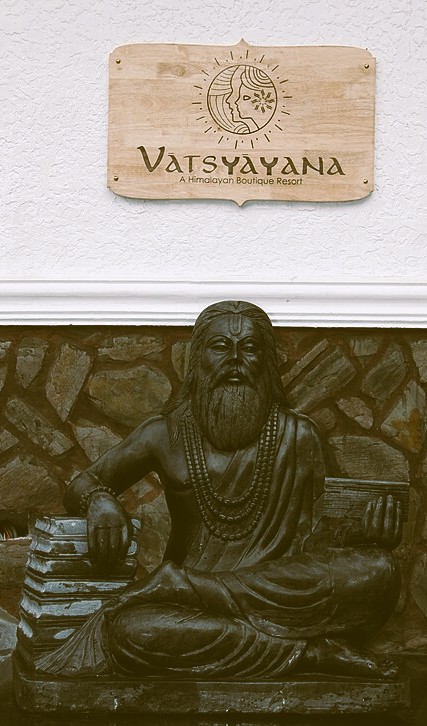
Vatsyayana lived during a period in which Indian philosophy was becoming increasingly organized into distinct schools, each defending its own account of reality, knowledge, and liberation through structured argument and public debate. Nyaya, the school with which Vatsyayana is most closely associated, developed specifically around the disciplined analysis of reasoning itself, making it one of the six classical schools, or darshanas, of orthodox Hindu philosophy.
This period also saw extensive philosophical exchange, and often sharp rivalry, between Nyaya thinkers and Buddhist philosophers, whose own traditions of logic and epistemology, associated with figures such as Nagarjuna and later Dignaga, frequently challenged core Nyaya assumptions about perception, inference, and the reality of the external world. Vatsyayana's Nyaya Bhashya engages directly with several of these Buddhist objections, defending the Nyaya account of valid knowledge against rival interpretations.
Public philosophical debate held genuine social and intellectual stakes in this environment, since royal courts and monastic institutions across ancient India often hosted formal disputations between representatives of different schools. This context helps explain why Nyaya philosophy, and Vatsyayana's systematic treatment of debate procedure in particular, placed such heavy emphasis on precisely distinguishing legitimate argument from mere rhetorical trickery.
In the tradition associated with Vatsyayana, philosophical inquiry therefore combined a serious metaphysical and epistemological project, explaining how reliable knowledge of the world is possible at all, with an intensely practical concern for the disciplined conduct of argument, ensuring that Nyaya philosophy remained closely tied to the lived practice of debate throughout its classical history.
Who Was Vatsyayana and What Did He Do?
Remarkably little can be established with confidence about Vatsyayana's personal life, since almost nothing beyond his own philosophical writing survives to document his biography. Traditional sources give him the fuller name Pakshilasvamin Vatsyayana, but they offer few verifiable details about his family background, teachers, or the particular region of India in which he lived and worked.
What historians can establish with much greater confidence is his intellectual achievement: the composition of the Nyaya Bhashya, a detailed prose commentary that explains, defends, and considerably expands upon the concise aphoristic verses of the Nyaya Sutras attributed to Akshapada Gautama. This commentary became so influential that it effectively determined how later generations of philosophers, both within and outside the Nyaya school, would read and interpret the root text itself.
A significant complication in discussing Vatsyayana's life concerns his name, since a work with considerable cultural influence far beyond philosophy, the Kama Sutra, is traditionally attributed to an author also called Vatsyayana, specifically Vatsyayana Mallanaga. Most modern scholars treat the philosopher of the Nyaya Bhashya and the author of the Kama Sutra as two distinct individuals who happened to share a common name, though the question has occasionally been debated within the history of Indology.
Vatsyayana's philosophical influence can be traced most clearly through the response his work generated among later thinkers, particularly the philosopher Uddyotakara, who composed the Nyaya Varttika as a sub-commentary specifically defending Vatsyayana's positions against further objections raised by Buddhist logicians, especially Dignaga.
What can be established more securely than any detail of his personal biography is the sheer durability of Vatsyayana's intellectual legacy, since his commentary continued to anchor Nyaya philosophical discussion for many centuries, eventually feeding into the later development of Navya-Nyaya, or "New Nyaya," which refined his logical framework using even more precise technical vocabulary.
What Did Vatsyayana Believe?
Vatsyayana's philosophy is preserved almost entirely through the Nyaya Bhashya, his systematic commentary on the Nyaya Sutras, in which he explains, defends, and elaborates the core claims of classical Nyaya rather than presenting an entirely independent system of his own invention.
At the center of this philosophy lies the conviction that reliable knowledge of reality is genuinely possible, and that this knowledge can be secured through four distinct and carefully defined means, or pramanas: direct perception, logical inference, comparison or analogy, and reliable verbal testimony. Vatsyayana treats each of these means as a legitimate and irreducible source of true belief, resisting attempts by rival schools to reduce all knowledge to a single privileged method.
Vatsyayana's commentary also defends a broadly realist view of the external world, holding that the objects of ordinary perception, including physical bodies and their qualities, exist independently of the act of perceiving them. This position stood in direct tension with various Buddhist philosophical traditions that questioned the ultimate reality or permanence of such external objects, and much of the Nyaya Bhashya is devoted to defending Nyaya realism against these objections.
Beyond questions of perception and inference, Vatsyayana's philosophy addresses the nature of doubt, the purpose or goal that motivates inquiry, the use of illustrative examples in argument, and the precise conditions under which a debate can be considered fairly won or lost, treating all of these as philosophically significant categories deserving careful definition rather than incidental features of argument.
Scholars continue to debate the precise extent of Vatsyayana's own originality as opposed to his role as a systematizer and defender of ideas already present, in more compressed form, within the Nyaya Sutras themselves, but his commentary is consistently credited with giving these ideas their first fully developed philosophical expression.
What Is Nyaya Philosophy?
Nyaya, a Sanskrit term often translated as "rule," "method," or "logic," is the school of Indian philosophy most closely associated with the systematic study of reasoning, debate, and the means by which valid knowledge can be obtained.
Nyaya is traditionally counted among the six classical schools, or darshanas, of orthodox Hindu philosophy, and it developed a particularly close relationship with Vaisheshika, a school focused on the categorization of substances and qualities in the natural world, with the two traditions eventually merging into a single combined system in later centuries.
Where several other Indian philosophical schools center primarily on questions of liberation, ritual, or the ultimate nature of the self, Nyaya distinguishes itself through its intense focus on epistemology and formal argument, treating the correct understanding of how knowledge is acquired and validated as a necessary foundation for resolving any other philosophical question responsibly.
It is therefore more accurate to describe Nyaya as a rigorous methodology for securing and testing knowledge claims than as a single doctrine about the ultimate nature of reality, since Nyaya philosophers, following the lead established by Vatsyayana's commentary, applied their logical framework to a very wide range of metaphysical, ethical, and religious questions debated across classical Indian philosophy.
Vatsyayana on the Four Pramanas, or Sources of Valid Knowledge
Pratyaksha, or direct perception, is treated by Vatsyayana as the most immediate source of knowledge, arising when a sense organ comes into contact with its object under suitable conditions, producing a cognition that is neither derived through inference nor mediated by verbal description.
Anumana, or inference, allows knowledge of something not directly perceived to be established through its reliable connection with something that is perceived, such as inferring the presence of fire from the sight of smoke on a distant hill. Vatsyayana's commentary devotes considerable attention to explaining exactly what kind of connection between two things, later technically termed pervasion, is strong enough to license a valid inference.
Upamana, or comparison, is described as the means by which a person comes to know the meaning of an unfamiliar word through its stated similarity to something already familiar, such as learning what a wild ox is by being told it resembles a domestic cow, a modest but philosophically distinctive category that Nyaya insists cannot simply be reduced to inference or testimony.
Shabda, or verbal testimony, refers to knowledge gained through the trustworthy statement of a reliable speaker, including especially the statements of sacred scripture. Vatsyayana's commentary carefully specifies the conditions under which testimony can be considered a genuinely valid and independent source of knowledge rather than a disguised form of inference from the speaker's presumed reliability.
Together, these four pramanas form the epistemological core of Vatsyayana's philosophy, providing a comprehensive account of how human beings can responsibly claim to know anything at all, and this fourfold framework became one of the most widely referenced and debated theories of knowledge across the entire later history of classical Indian philosophy.
The Five-Membered Syllogism in Vatsyayana's Nyaya Philosophy
One of the most distinctive logical contributions associated with the Nyaya tradition, and explained in detail in Vatsyayana's commentary, is a structured five-part form of argument used to demonstrate a conclusion publicly and persuasively during formal philosophical debate.
The five members of this classical syllogism are the pratijna, or proposition to be proved, the hetu, or reason offered in support of it, the udaharana, or general example illustrating the underlying principle, the upanaya, or application of that principle to the specific case at hand, and finally the nigamana, or restated conclusion confirming that the original proposition has been established.
A classical illustration of this structure begins with the claim that a distant hill has fire upon it, supported by the reason that smoke is visible there, illustrated by the general example that wherever there is smoke there is fire, as in a kitchen hearth, applied to the specific case of the hill in question, and concluded by restating that the hill therefore has fire.
Vatsyayana's careful explanation of this five-part structure, together with his detailed treatment of the underlying relation between reason and conclusion, helped establish Nyaya as one of the most historically important traditions of formal logical argument to develop independently within ancient Indian philosophy, comparable in ambition, though differing considerably in method, to the syllogistic logic developed within the Greek philosophical tradition.
Vatsyayana on Vada, Jalpa, and Vitanda: The Theory of Debate
Alongside its epistemology and logic, Vatsyayana's Nyaya Bhashya offers one of the most detailed classical treatments of the different forms that philosophical debate itself can take, distinguishing sharply between honest inquiry and various forms of merely combative argument.
Vada describes honest philosophical discussion conducted between two parties who are both genuinely committed to discovering the truth, governed by mutually accepted rules of evidence and reasoning rather than by a desire simply to defeat an opponent regardless of the merits of the case.
Jalpa, by contrast, describes a more combative style of debate in which victory itself becomes an acceptable goal, permitting the use of legitimate but also more aggressive rhetorical tactics, provided the underlying rules of formal debate are still nominally respected.
Vitanda describes an even more destructive form of debate in which a participant seeks only to refute an opponent's position without being obligated to defend any positive thesis of their own, a strategy Vatsyayana's tradition treats with considerable philosophical suspicion even while acknowledging its practical prevalence in real philosophical disputation.
By carefully distinguishing these categories, along with related concepts such as fallacious reasoning, or hetvabhasa, and illegitimate quibbling, or chala, Vatsyayana's commentary provided later Indian philosophers with an unusually precise vocabulary for evaluating the integrity of an argument independently of whether that argument happened to succeed in persuading an audience.
The Nyaya Bhashya: Vatsyayana's Foundational Commentary
The Nyaya Bhashya is Vatsyayana's central surviving work and the single text upon which almost his entire philosophical reputation depends, offering a detailed sutra-by-sutra commentary on the Nyaya Sutras traditionally attributed to Akshapada Gautama.
Rather than merely paraphrasing the often extremely terse aphorisms of the root text, Vatsyayana's commentary supplies extensive explanation, illustrative examples, and sustained argument, effectively transforming a compressed set of technical definitions into a fully articulated philosophical system capable of engaging seriously with rival schools of thought.
The Nyaya Bhashya proceeds systematically through the sixteen categories, or padarthas, enumerated in the Nyaya Sutras, including the means of knowledge, the objects of knowledge, doubt, purpose, illustrative example, established conclusion, the members of the syllogism, hypothetical reasoning, ascertainment, and the various forms of debate discussed above, treating each category as deserving careful independent philosophical definition.
Because of the exceptional influence of this commentary, later scholars often describe the entire subsequent development of classical Nyaya, and much of its ongoing engagement with Buddhist logicians and other rival schools, as effectively continuing a conversation that Vatsyayana's Nyaya Bhashya was the first to articulate in fully systematic philosophical form.
Vatsyayana and the Debate with Buddhist Logicians
A substantial portion of Vatsyayana's philosophical energy in the Nyaya Bhashya is devoted to defending the Nyaya theory of knowledge against objections raised by Buddhist philosophers, who frequently challenged Nyaya's confident realism about perception, inference, and the existence of stable external objects.
Where certain Buddhist philosophical traditions associated with figures such as Nagarjuna questioned whether any fixed, essential nature could be attributed to things at all, Vatsyayana's commentary insists that ordinary experience genuinely reveals real, stable objects possessing determinate qualities, and that the categories of Nyaya logic accurately track the actual structure of the perceived world rather than merely reflecting convenient but ultimately empty conceptual constructions.
This philosophical exchange continued well beyond Vatsyayana's own lifetime, most notably in the sustained critique offered by the Buddhist logician Dignaga, whose own innovations in the theory of inference prompted a direct defense of Vatsyayana's positions by the later Nyaya philosopher Uddyotakara in his Nyaya Varttika.
This extended debate between Nyaya realism and various Buddhist alternatives is now recognized by historians of philosophy as one of the most sophisticated and sustained exchanges in the history of comparative epistemology anywhere in the ancient world, and Vatsyayana's Nyaya Bhashya stands at its historical foundation.
Vatsyayana's Influence on Later Nyaya Philosophy
Vatsyayana's Nyaya Bhashya established the foundational vocabulary and argumentative style upon which many subsequent generations of Nyaya philosophers continued to build, ensuring that his particular formulations of the four pramanas and the five-membered syllogism remained central reference points for centuries of later commentary.
Later Nyaya thinkers, including Uddyotakara and, still later, Vachaspati Mishra and Udayana, wrote extended sub-commentaries that refined, defended, and occasionally revised Vatsyayana's original explanations in response to continuing philosophical challenges, particularly from Buddhist and Mimamsa rivals.
This ongoing commentarial tradition eventually gave rise, many centuries after Vatsyayana's own lifetime, to Navya-Nyaya, or "New Nyaya," a highly technical later school associated especially with the philosopher Gangesha, which developed an extraordinarily precise formal vocabulary for analyzing knowledge and inference that continued to draw on the basic framework Vatsyayana had first systematically articulated.
Through this long chain of commentary and refinement, Vatsyayana's influence extended far beyond his own historical moment, helping establish logic and epistemology as enduring and continuously developing subjects of study within the broader landscape of classical and medieval Indian philosophy.
Vatsyayana the Philosopher and the Author of the Kama Sutra
A recurring point of confusion in discussions of Vatsyayana concerns his name, since the celebrated Sanskrit text known as the Kama Sutra is traditionally attributed to an author also called Vatsyayana, more precisely Vatsyayana Mallanaga.
The two works could scarcely differ more in subject matter, since the Nyaya Bhashya is a highly technical philosophical commentary concerned with logic and epistemology, while the Kama Sutra is a treatise on the art of living well, including sections on courtship, pleasure, and household life, composed for an altogether different audience and purpose.
Because Sanskrit authors of this period frequently shared common names, and because reliable biographical information about either author is extremely limited, historians of Indian literature and philosophy generally treat the philosopher of the Nyaya Bhashya and the author of the Kama Sutra as two distinct individuals, distinguished in modern scholarship by their fuller names, Pakshilasvamin and Mallanaga respectively.
This distinction matters for anyone researching Vatsyayana online or in reference works, since search results and general summaries can easily conflate the two figures; the Vatsyayana discussed on this page is specifically the Nyaya philosopher and author of the Nyaya Bhashya, not the author of the Kama Sutra.
Vatsyayana: Main Philosophical Ideas
Because Vatsyayana's philosophy survives almost entirely through a single systematic commentary, his central ideas are often summarized under a small number of key headings drawn directly from the structure of the Nyaya Bhashya.
The Four Pramanas
Vatsyayana systematically defended perception, inference, comparison, and testimony as four distinct and irreducible sources of valid knowledge.
Nyaya Realism
His commentary defends the view that the objects of ordinary experience are genuinely real and possess stable, determinate qualities independent of the act of perceiving them.
The Five-Membered Syllogism
Vatsyayana explained and defended a structured five-part method of argument used to establish a conclusion clearly and persuasively in formal philosophical debate.
Rigorous Debate Theory
His treatment of vada, jalpa, and vitanda distinguished honest philosophical inquiry from more combative or purely destructive forms of argument.
Systematic Commentary as Philosophical Method
Vatsyayana expressed his philosophy through detailed, sutra-by- sutra commentary, treating careful textual explanation as inseparable from independent philosophical argument.
What Do We Actually Know About Vatsyayana?
Vatsyayana is a clear example of the difficulty involved in studying ancient Indian philosophers whose reputations rest almost entirely on a single surviving text, with very little independent biographical evidence to draw upon.
Relatively Well-Attested
- Vatsyayana is the author of the Nyaya Bhashya, the earliest surviving commentary on the Nyaya Sutras.
- His commentary systematically defends the theory of the four pramanas.
- His work directly engages with objections raised by Buddhist philosophers.
- His commentary was later defended and extended by Uddyotakara in the Nyaya Varttika.
- His framework decisively shaped the later development of Navya-Nyaya.
Traditionally Reported
- His fuller traditional name, Pakshilasvamin.
- His association with the broader Nyaya commentarial tradition following Akshapada Gautama.
Uncertain or Disputed
- The precise period in which Vatsyayana lived.
- The region of ancient India in which he was based.
- Whether he should be identified with, or clearly distinguished from, Vatsyayana Mallanaga, the traditional author of the Kama Sutra.
- The extent to which specific arguments in the Nyaya Bhashya originated with Vatsyayana himself as opposed to earlier, now-lost commentarial traditions.
Why Is Vatsyayana Important in Indian Philosophy?
Vatsyayana is important because his commentary gave classical Nyaya philosophy its first fully systematic expression, turning a compressed set of aphorisms into a rigorous and extensively argued theory of knowledge, logic, and debate that would shape Indian philosophy for centuries.
His philosophical legacy raises a fundamental question that remains central to epistemology: What distinct methods can reliably justify a claim to knowledge, and how can careful reasoning distinguish genuine insight from merely persuasive argument?
This question has continued to shape debates across the history of Indian philosophy, as later Nyaya thinkers, Buddhist logicians, and philosophers from rival schools examined how Vatsyayana's account of perception, inference, comparison, and testimony held up under continued philosophical scrutiny.
Vatsyayana's importance therefore does not depend on resolving every uncertainty about his personal biography. His significance comes from his place as the philosopher who gave Nyaya logic and epistemology their foundational systematic voice, a contribution that continued to shape Indian philosophical method long after his own lifetime.
Vatsyayana Explained Simply
Vatsyayana was an ancient Indian philosopher who wrote the Nyaya Bhashya, the foundational commentary on the Nyaya Sutras, giving classical Nyaya philosophy its first fully developed account of logic, debate, and the theory of knowledge.
Instead of treating reasoning and argument as merely practical tools for winning disputes, Vatsyayana's philosophy insists that careful logical method is the very foundation for distinguishing true knowledge from false belief, structured around four distinct and reliable sources of valid knowledge.
His explanation of the five-membered syllogism and his careful classification of different forms of debate remain among the most distinctive and influential contributions of ancient Indian philosophy to the wider study of logic and argumentation.
- Philosopher: Vatsyayana (Pakshilasvamin)
- Period: Uncertain; roughly 2nd–5th century CE
- Tradition: Nyaya philosophy
- Major work: The Nyaya Bhashya
- Central concern: The valid means of acquiring true knowledge
- Associated theory: The four pramanas
- Key logical contribution: The five-membered syllogism
- Later defender: Uddyotakara, author of the Nyaya Varttika
A Principle Central to Vatsyayana's Nyaya Philosophy
“Right knowledge leads to right conduct.”
Frequently Asked Questions About Vatsyayana
Who was Vatsyayana?
Vatsyayana, also known as Vatsyayana Pakshilasvamin, was an ancient Indian philosopher who wrote the Nyaya Bhashya, the earliest surviving and most authoritative commentary on the Nyaya Sutras of Akshapada Gautama.
What is Vatsyayana famous for?
Vatsyayana is famous for composing the Nyaya Bhashya, the foundational commentary that systematized Nyaya philosophy's theory of the four pramanas, the five-membered syllogism, and the classification of philosophical debate.
What did Vatsyayana believe?
Vatsyayana defended a realist theory of knowledge, holding that reliable knowledge of the world is possible through four distinct means: perception, inference, comparison, and verbal testimony, and that the objects of experience are genuinely real.
What is Nyaya philosophy?
Nyaya is one of the six classical schools of Indian philosophy, focused on logic, debate, and epistemology, particularly the theory of pramanas, or the valid means by which human beings can acquire true knowledge.
What are the four pramanas in Vatsyayana's philosophy?
The four pramanas are pratyaksha, or direct perception, anumana, or inference, upamana, or comparison, and shabda, or reliable verbal testimony, each treated by Vatsyayana as a distinct and irreducible source of valid knowledge.
What is the five-membered syllogism?
The five-membered syllogism is a structured method of argument explained in Vatsyayana's Nyaya Bhashya, consisting of the proposition, the reason, the general example, the application, and the conclusion, used to demonstrate a claim in formal debate.
What are vada, jalpa, and vitanda?
Vada, jalpa, and vitanda are three forms of philosophical debate distinguished by Vatsyayana: vada is honest inquiry aimed at truth, jalpa is combative debate aimed at victory, and vitanda is purely destructive debate that seeks only to refute an opponent.
Is the Vatsyayana of the Nyaya Bhashya the same person who wrote the Kama Sutra?
Most modern scholars treat them as two different authors who happened to share the same name; the Kama Sutra was composed by Vatsyayana Mallanaga, while the Nyaya Bhashya was composed by Vatsyayana Pakshilasvamin, a philosopher of logic and epistemology.
How did Vatsyayana influence later Indian philosophy?
Vatsyayana's Nyaya Bhashya became the base text for centuries of later Nyaya commentary, including Uddyotakara's Nyaya Varttika, and its framework fed directly into the later development of Navya-Nyaya, or New Nyaya.
Why is Vatsyayana important today?
Vatsyayana remains important because his systematic account of knowledge, inference, and debate continues to inform the study of classical Indian logic and offers a valuable point of comparison with other ancient traditions of epistemology and argumentation.
Related Indian Philosophers
Vatsyayana belongs to the wider tradition of classical Indian philosophy. Explore philosophers who developed different approaches to knowledge, logic, and ultimate reality.
Philosophy Branches Connected to Vatsyayana
Vatsyayana's philosophical legacy is particularly important for epistemology, where philosophers investigate the valid means of acquiring knowledge, and for logic, which examines the structure of sound reasoning and argument.
Why Vatsyayana Still Matters
Vatsyayana did not compose an entirely independent philosophical treatise in the manner of some later systematic thinkers, but his commentary on the Nyaya Sutras proved so influential that it effectively became the foundation of classical Nyaya philosophy as it would be studied and debated for centuries afterward.
Yet the questions associated with Vatsyayana remain fundamental to philosophy: What methods can we trust to deliver genuine knowledge? How should a fair and honest argument be conducted? What separates careful reasoning from mere persuasive trickery?
The Nyaya tradition he helped systematize transformed these questions into one of the most detailed and rigorously argued theories of knowledge and logic produced anywhere in the ancient world. Its emphasis on the four pramanas, the five-membered syllogism, and the careful classification of debate made Vatsyayana one of the foundational figures in the history of Indian philosophy.
Explore Great Philosophers